Looking for Connections at Groot Vader’s Bosch

As a child growing up in the late fifties and early sixties, I remember being told stories about my Scottish ancestors, the Moodies. At the time they didn’t have much meaning for me. My youthful eyes and mind were saturated with the world I saw immediately around me. The family tree could wait until later.

Later came, sooner than expected. Suddenly those stories began to gain resonance. I guess it is an age thing. When you are a child knowing who fits in where or how you got from there to here is of no real consequence.

That changes as you grow older. Suddenly aware that time is breathing down your neck, you start feeling this urge to go back and delve in to the past, to rediscover your roots and to explore your ancestry in all its intricate twists and turns.

It is certainly a subject which appears to have occupied my sister Penny’s mind, perhaps because she is a Social Anthropologist with an interest in ancestor belief. While lecturing at Rhodes University, in Grahamstown, she did some research in to our family line and discovered the location of the farm where the Moodies had first settled when they arrived in the Western Cape.

How they got to be there happened like this. In 1815 Benjamin Moodie, the eldest son of James, the 9th Laird of Melsetter on the Orkney Islands, had inherited the family manor house and estate and, with it, all the accumulated family debts. There seemed no way of extricating himself from this financial mess other than by selling off the ancestral seat. This he reluctantly decided to do.

The ancestral seat of the Moodies at Melsetter, Isle of Hoy, Orkney Islands. Picture courtesy of Penny Bernard.

Having performed this sorrowful duty he felt the need to make a fresh start. Casting his his eyes around for a new country to light out to he settled on the Cape of Good Hope because it seemed “the most likely colony in which he could attain an independent livelihood with a less violent alteration in his habits than might be expected of most persons.”

Benjamin arrived in the Cape full of ideas on how to create a new society on the empty land. In his mind he seems to have imagined a reborn feudal Scotland rising out of the dry African veld with himself restored to his rightful role of Lord of the Manor.

It didn’t turn out quite like that.

No sooner had he landed then all his grandiose plans began to unravel. Most of the 200-odd artisans he had bought over with him to form the nucleus of his new community promptly deserted him, the help he had countered on receiving from the government was not forthcoming and his business partner let him down. For their part local Cape community greeted his whole emigration scheme with bemused scepticism.

There was something rather romantic and audacious and wildly impractical about Benjamin Moodie’s dream, so when Penny announced that she intended to make a journey to the farm on which he settled in the Overberg and asked if I would like to join her I signed up on the dot.

Captain Benjamin Moodie, 9th Laird of Melsetter, Orkney Islands.

On one level my pilgrimage – if it can be called that – was undertaken for my parents, two pioneering individualists in their own right. I wanted to go where they had been unable to go, stand where they had never stood and then bring back some sort of relic or memento to prove that I had honoured their memory (in the end, I settled for a bottle of farm honey).

Tumbled cloud occupied much of the sky as we set out from Cape Town, with rain threatening. For much of our journey we found ourselves chasing a large rainbow which arched over the road like some sort of welcoming celestial escort. Penny was quick to see the significance: “It’s the ancestral spirits come to guide us home!”. Even I, a man of no fixed faith or conviction, wanted to believe this was true.

Back in 1817 the journey from Cape Town to the farm had been a long, hot, dusty, arduous, one, taking many days and involved scaling, on horseback, the ragged peaks of the Hottentot’s Holland mountain range. Today it take three-hours on the N3.

Groot Vader’s Bosch (literally “Grandfather’s Wood”. It was named in honour of Roelof Oelofse who owned the land in 1723), where Benjamin Moodie first settled, is situated about 25 kilometres east of Swellendam on the slopes of the Langeberg. John Wedderburn Moodie, who followed his elder brother out to South Africa, described this last leg of the journey in his book Ten Years in South Africa

Our course skirted the base of these mountains which in height, as well as beauty of form, exceeded anything we had yet witnessed in African scenery. I had already noticed the progressive improvement in the verdure of the country the further we advanced eastwards. The tract between Swellendam and Groot Vader’s Bosch suddenly assumed a new character; and the grass that clothed the narrow valley between the mountains and the lower range of hills to the right of the road, though far inferior to that of our English pastures, was of a fresher green and a more succulent description than any we had yet seen.

The Langeberg. View towards Swellendam.

As we crossed over the farm boundary I could feel a sudden heightening of my own emotions. An emigrant to South Africa myself, I had often felt short of roots and reasons. Coming to Groot Vader’s Bosch was my way of trying to find a point of connection. I hoped to lay a few old ghosts to rest – and perhaps stir up a few new ones – and come to terms with my own belated movement south.

Benjamin Moodies’ farm originally consisted of over 20 000 acres of land and stretched clear to the top of the Langeberg. Over the years it has, however, been subdivided and parcelled off among his descendants while other parts have been sold off to stave off the creditors.

Through a peculiar accident of geology, the upper portions are covered by a thick pelt of indigenous forest, a characteristic which renders it quite distinct from the rest of the range which is mostly treeless. The ready supply of timber made it a very attractive destination for the early Trek Boers. If you hunt around you can still find the remains of their simple, sun-baked clay brick houses, some dating back to the 1720s.

Now protected, this forest – the largest west of Knysna – forms part of the Groot Vader’s Bosch Reserve and Wilderness Area and is, among other things, a popular destination for birders. The Knysna Woodpecker, Victorin’s Warbler, Cape Siskin and Orange-bellied Sunbird all occur here.

The Langeberg at Groot Vader’s Bosch. The indigenous forest is in the valley below.

Penny had arranged for us to stay on Honeywood Farm a sub-division of the original estate – whose present owner, John Moodie, keeps bees and cattle, as well as renting out holiday cottages. She had put in a special request to him that we be allowed to stay in Quince Cottage because its name reminded her of our mother, Monica.

John, himself, turned out to be the most obliging of hosts, taking time off to show us around the farm and arranging for us to visit the original Groot Vader’s Bisch homestead on the next door farm which belonged to his cousin, Keith.

His father, then a remarkably sprightly 92-year old who everybody simply referred to as “The General”, still lived on the farm at that stage.
An interesting person in his own right, he had once served as SA Army Chief of Staff and as a military attaché in Switzerland. The treasured family heirlooms had been entrusted to his care.

These included a “silver headed double gilt and richly ornamented Turkish scimitar, stiletto and a Field Marshall’s baton of some quality and style” (Burrows) presented to James, Seventh Laird of Melsetter, by a grateful King Charles of Spain for his role in relieving the siege of Diena during the Spanish War of Succession. There is also the original letter of commendation which King Charles sent to Queen Anne telling her of James services.

Another treasured possession was a large studio portrait of the venerable James, executed on orders of the Queen herself by the royal court painter. With his this, aquiline features, I could see a strong family resemblance between him and “The General”.

The gathering clouds eventually disgorged themselves during the night bringing much needed relief after a long, dry, spell, in the district. I rose early the next morning and went for a walk. On my right the mountains stretched off in to the blue distance. Above them ragged slivers of light cut through the clouds; below them the whole Swellendam Valley was laid out like a relief map in brilliant acrylic colours.

When John Wedderburn Moodie came riding up this valley he had also been enraptured by the scenes that greeted him, describing, in poetic detail, how he had encountered numerous groups of Khoikhoi maidens bathing in the tree-lined pools along the river.

The stream which caught JW Moodie’s fancy…

There were no such scenes to greet us when we followed the same river but our first view of the house in which Benjamin lived was, however, no less exciting for that.

Built in the latter half of the 18th century by Jacobus Steyn, Groot Vader’s Bosch is reputed to be the oldest original farmhouse still standing in tthe Overberg. In a departure from the norm it was built without the usual elaborate end-gables, so typical of the period and so beloved by generations of South African landscape painters. It is a distinction it shares with only two other buildings in the district – the famous Drostdy in Swellendam and Westfield, Benjamin Moodie’s other property near Port Beaufort which he built in 1820 and which he modelled on Groot Vader’s Bosch..

Groot Vader’s Bosch. Front view.

Constructed largely from local materials, it was a house built to last; to be handed down to grandchildren to grow up in and farm in turn. Its posts, beams and floorboards came from the hardwood forests in the nearby hills, its roof was shaggily thatched with local grass, the mud bricks for its walls manufactured on site.

Despite its strictly utilitarian character design, it is still an imposing building, one which must have seemed a worthy successor to the old manor house the Moodie’s left behind in Scotland.

Inside the old co-existed convivially with the new. Although there were plenty of reminders of its history there was none of that self-conscious reverence for the past you get in some stately old homes. This was still a working house on a working farm and exuded a warm, comfortable, unassuming, lived-in feel.

Groot Vader’s Bosch. Side view.

In the front of the house, beyond a trim garden shaded by some towering trees, several fields of lush pasture-land shelved gently down to a small spruit concealed behind a wild tangle of briers. Upstream the country grew increasing broken and hilly until, through a narrow cleft, the mountains soared in to view.

Only a few metres from the house is a long, low-roofed sprawling where they milk their herd of dairy cows. As we rounded the building we were met by a scurry of wings: swallows had built their mud nests under the eaves. Some of them looked like they had been there as long as the dairy which is even older than the main house.

Dairy cows. Groot Vader’s Bosch.

In Benjamin Moodie’s time there had evidently been been an orchard and a vineyard which yielded “seven or eight leaguers of indifferent wine, and about a leaguer of tolerable brandy”. Above the house there is a little hilltop cemetery in which generations of Moodies lie buried.

Later, back at Quince Cottage, I wandered outside under the clear night sky and thought about the happy impulse which had brought me here. Although this was my first visit there was a familiarity about the surroundings I found slightly disconcerting. Perhaps it was because the mountains seemed to echo the ones I had grown up amongst in Nyanga; perhaps it had something to do with a deeper, collective, memory. I wasn’t quite clear myself.

Whatever the answer was to this conundrum I was glad I had come. It was good to be able to add a bit of flesh to the bare bones of family history; to have gone back and seen where our African adventure started…

Footnote: my family is descended, on my father’s mother’s side, from Benjamin’s first-born son, James. For some reason, lost in the mists of time, he was disinherited which meant Groot Vader’s Bosch was inherited by the second son and was passed down to his descendants.

Remembering Reg – A Tribute to my Father, Wing Commander R.N.Stidolph DFC

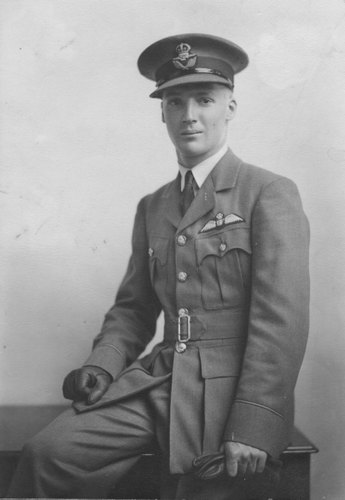
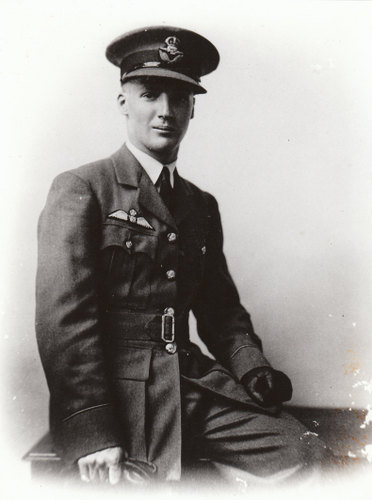
My father, Wing Commander Reginald Neville Stidolph, in RAF.

QUOTE: I could ask, ‘Why risk it?’ as I have been asked since, and I could answer, ‘Each to his element.’ By his nature a sailor must sail, a flyer must fly.

Beryl Markham on why she flew across the Atlantic to America (West With the Night)

xxx

During my teenage years, when we were living in the back of beyond, in Nyanga North, my father was seldom at home.

This was because the small amount of capital he had used to establish our farm was nearly exhausted. After several years of struggle against drought, disease, crop failure, packs of ravenous hyena, a pride of lion and the Land Bank, he had come to the realization that the only way to avoid getting deeper in to debt was for him to return to his old job – flying aeroplanes – leaving my mother behind to struggle on as best she could without him.

For the next seven-years my father all but disappeared out of our lives; the only communication, besides a monthly cheque, being the occasional scribbled letter from such exotic, far-off locations as the Persian Gulf, Sudan and Sierra Leone.

Although he was not present in the flesh, he was always there in spirit. The farm had been his dream and by working it, my mother and the rest of us children were, in a sense, living it for him.

By the time he finally returned home, I had already left school and gone to university. Because of this I still did not see a great deal of him although I did sometimes go and stay with him during my holidays when he was working for WENELA, based in Francistown, Botswana.

I came to love these visits especially because my father would usually arrange to take me up in the air with him. I would take an old camp chair and a Thermos of tea and sit up in the cockpit of the old DC3 or DC4 where I had an eagle’s view over the ground below.

Botswana is a country in which distances seem endless. Flying across the sparsely inhabited landscape, the plains stretch out for miles and miles and you really get to see how huge the Kalahari, Makgadikgadi Pans and Okavango Swamps are.

The droning engines. Flying over the Okavango Swamps in December 1970. Picture courtesy of Pete Stidolph.

There was something wonderful about flying in those jolting, rickety, oil-leaking old planes with their loud, droning engines. This was air travel before they took the edge and excitement out of it.

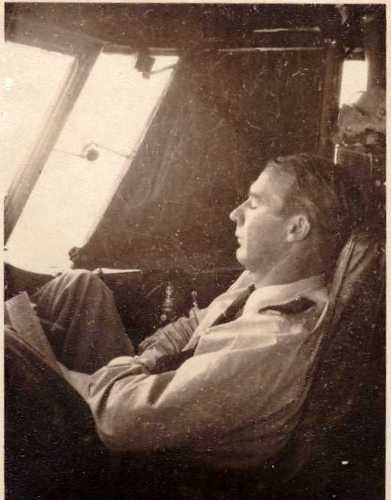
Being at the controls was so second nature to my father that he used to switch on to auto-pilot and sleep for most of the journey. Amazingly, he always knew exactly when to wake up.

Snooze time…


Not every flight went according to schedule. I remember the one time we had to change direction because a solid wall of angry, dark, rain clouds was advancing towards us at rapid speed with huge bolts of lightning slashing angrily out below them.

Storm over Botswana. Picture courtesy of Pete Stidolph.

We managed to outrun the full force of the storm, landing in Francistown just as it hit us. “I think we need a beer after that!” my father said, once we were safely inside the hangar, so we jumped in to his car and sped off to the Horseshoe Bar, just opposite the station in to which the old steam trains came puffing.

Flying in such conditions certainly provided its own unique set of challenges. On another occasion, a rhino came thundering on to the dirt airstrip, in a maelstrom of dust, just as we were about to touch down at Shakawe, at the northern tip of the Swamps, forcing my father to pull the plane’s nose back up in to the air.

It is not something I could imagine happening at, say, Heathrow or JFK Airport…

Sadly, it was only right at the end of his life that I began to spend a lot of time with my father and got to understand him better. He was retired and living with my mother on Bowmont, a small farm in the Midlands area. In the years that remained to him he was to suffer agonies from multiple myeloma (or myelomatosis), a particularly vicious strain of cancer that attacked his bones and caused them to disintegrate.

I had a job in nearby Gwelo (now Gweru) so I used to motor up most weekends to make sure they were okay. Eventually, I resigned and moved on to the farm full time.

In a strange way his illness brought us closer together.

As a child I had always been slightly in awe of my father. To me he was this outgoing, glamorous, figure who flew aeroplanes and for large tracts of time had been absent from my life, working in distant locations that I only knew as places on a map.

His life had all the ingredients an impressionable young boy could ask for – plot, action, adventure, a dashing hero. What I didn’t realise back then was that he never saw it quite like that. Nor did I fully understand the impact the war had on him.

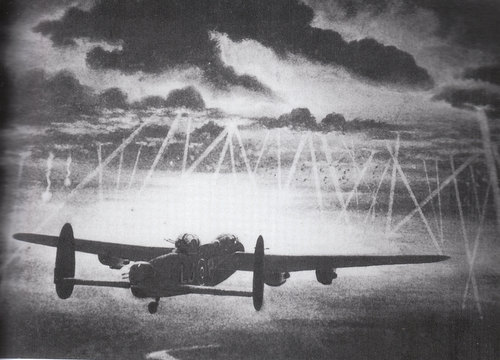
Perhaps it was his awareness that he would not last much longer or maybe it was the fact that I was now a serving soldier myself but for the first time in his life he began to open up about his experiences as a bomber pilot during the war. He talked about what it was like flying at night in slow, heavy bombers and being picked up in the lattice of searchlights and being strafed by the German anti-aircraft guns. He told me about the fear and how he had always tried to fly higher than everybody else in the hope that it would make it more difficult for the Germans to shoot him down.

He had served in all the major theatres of the war.

Starting off as a Flight Lieutenant he was promoted to Wing Commander in August 1941, an enormous responsibility to be placed on the shoulders of a young man still in his early twenties and one which must have forced him to mature at a very rapid rate. As the officer commanding 113 Squadron he saw action in North Africa and was also stationed, for a while, on Malta. At Giarabub (Italian for Jarabub), a remote oasis in the eastern Libyan desert, he got a taste of what it was like to be on the receiving end when his squadron and ground crew were bombed by the Luftwaffe while they were living among the gullies and wadis (see pic below).

In December 1941, he led the first group of bomber planes on the long flight to Burma, arriving there just as the unstoppable Japanese army was about to begin its long sweep through Malaya, Singapore and Hong Kong; even crossing the borders of India itself.

The road to Mandalay, Burma. My father seated.

His exploits in the area did not go unnoticed. He gets a mention in the book Retreat in the East by O.D.Gallagher, who was the London Daily Express’s war correspondent in Malaya and Burma (published by George Harrop, 1942). The author flew with my father on one of his missions. He also appears, together with other members of 113 Squadron, in a 22nd February, 1942, British Paramount newsreel (“Burma Blenheim Bomber Boys Part 1”) covering the retreat.

I only recently got to see this news clip. It felt quite strange looking down the long passage of time and seeing my father as a young man, surrounded by his crew. They all looked tanned and fit in their khaki outfits and surprisingly relaxed, given the hammering the British were taking, but also a little self-conscious, pinning their smiles on for the benefit of the cameraman.

After his stint in the Far East he returned to Bomber Command and took part in some of the big raids over Europe. Among them was one which the Times of London, on November 20, 1943, described as the largest ever over Berlin: “In half an hour a great force of Lancasters dropped more than 350 4,000lb block-busters on the German capital, in addition to a great weight of incendiary bombs”. A total of 32 bombers were lost.

One of the many planes he flew was the legendary “Just Jane” which would go on to complete a total of 123 sorties. It was only one of 35 Lancasters to achieve the “Ton-Up” mile-stone during the war. It is included in the book Ton-up Lancs: A Photographic History of the 35 Lancasters That Each Completed 100 Sorties by Norman Franks (Published by Bounty Books).

He is also mentioned in Bruce Barrymore Halpenny’s Action Stations 2: Military airfields of Lincolnshire and the East Midlands while the same author devotes an entire chapter – headed A Rhodesian’s adventure over Stettin – to his exploits in To Shatter the Sky: Bomber Airfield at War (Published by Patrick Stephens Cambridge).

There is another, later, film by British Pathe (“Berlin Raids 1943”) which features an interview with my father, this one taken after he had just returned from leading a huge bombing raid on Berlin. It tells a different story to the earlier newsreel. You can see from his eyes that the strain of the war has begun to take its toll, the smiles have all gone and there is a faint tremor in his voice as he talks.

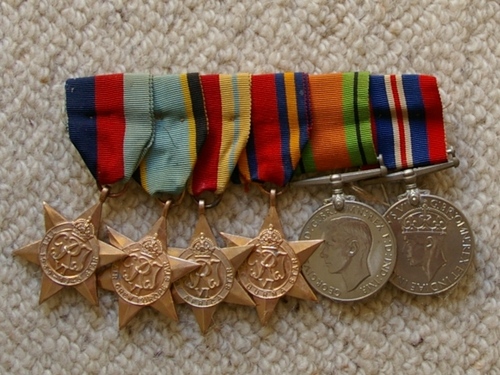
He was awarded the Distinguished Flying Cross for bringing his badly shot-up Lancaster safely back to England (see citation below*) after a bomb drop over Stettin. It warranted a story in the Rhodesia Herald back home.

Sitting listening to him talking about those times I began to get a glimpse of what it must have been like, piloting a four-engined Lancaster, taxi-ing down the runway and then lurching off into the dark, rainy night and heading out across the channel to drop thousands of tons worth of bombs on some heavily defended target. In the back of his mind there must have always been the fear he might not return or see his family again.

He was, in fact, one of the exceptionally luck ones who did survive the war – virtually every other pilot on his officers’ training course was killed in action.

By any standards he lived a full life. At the end of the war, as part of the Berlin Airlift, he started flying a plane that was already a legend and remains so today – the DC3 or Douglas Dakota. Considered a reliable old warhorse it was a plane that would play a large part in and shape his future.

After demobilisation he returned to Southern Rhodesia and become a commercial pilot working for Central African Airways flying both inside and outside the country.

In those days the flight from Salisbury to London took six-days and by the end of it a strong sense of comradeship had invariably developed between passengers and crew.

He resigned from CAA in 1956 after a dispute and joined Hunting Clan Airways, principally flying within Southern Rhodesia and further afield to Tanzania, Kenya, Mozambique and South Africa. My main memory of those days is him returning home from Vilanculos in Mozambique weighed down with big demijohns of Portuguese wine, coconuts and apple boxes full of fresh crab.

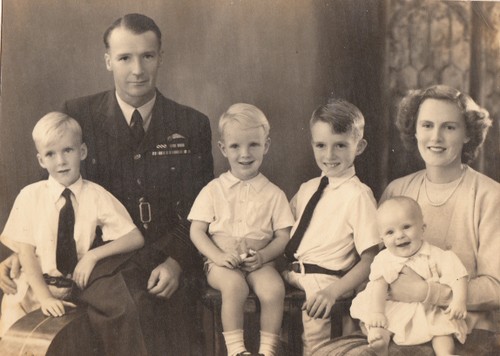
With young family – from left: Paul, Peter, Patrick, Anthony.

As an airman he lived in a more swashbuckling era when commercial aviation was still in its infancy and few people thought of going by plane, the majority opting to travel by ship. Flying in and out of dusty, fly-infected airfields in those rattling, bouncy, propeller-driven crates with a minimum of on-board comforts and only limited navigation aids it was an adventure.

It was a lifestyle which certainly suited my father. A non-conformist in a uniform, who somehow managed to combine a strong sense of duty with an inate rebelliousness, he never cared much for the rigidly scheduled, heavily regulated industry flying was to become with planes cruising in the stratosphere with hundreds of passengers, air-conditioning, on-flight movies and pre-prepared meals.

He was, however, very excited by his late conversion to flying jets.
As a pilot he had gone where he wanted, he had travelled the length and breadth of the continent in the days before Rhodesia had become a pariah state, cut off from the rest of the world and when Africa was still accessible to all. Equally at home gambling in a casino on the French Riviera or marooned on some remote frontier, he liked solitude and rough living but also good company, friends, good food and drink and laughter.

You never knew who you might find breakfasting in the kitchen after a night out at the local pub. One such person was an engineer named John Louch who needed a place to stay for the night and ended up living in our Francistown house for two-years.

He was good at what he did and his colleagues always talked with reverence of Dad’s flying skills. It was easy to understand why my mother had been so attracted to him when she had first met him as a young flight officer fresh out from Rhodesia. In her memoirs, she recalls how she had lived all her life in country villages “not knowing any boys, let alone glamorous young men”.

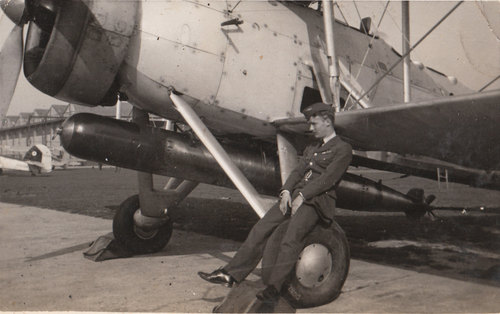
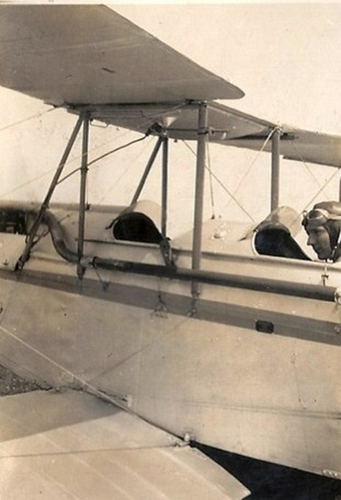
Equally smitten with the shy but beautiful young English rose, my father went out of his way to impress, even going so far as to swoop down low over her school in his open cockpit bi-plane – a highly illegal act – while she was playing netball, causing her to fall and graze her knee. Handsome, ebullient and full of life, he was a born optimist with a natural talent for minimising life’s problems and a great faith in his own ability to get a job done.

My father (briefly sporting a moustache) and mother, Wing Commander and Mrs Stidolph.

He had charm, wit and sparkle. He could also be irritable, quick tempered, impetuous, tactless and impatient – personality traits which, I suspect, could be partly traced back to the accumalative stress of flying on so many dangerous missions during the war.

Beneath his jovial, practical, no nonsense, manner and intolerance of dull people and wishy-washy thinking, lay a vein of creativeness which found expression in his, at times, rather Heath Robinson inventions and in fixing up dilapidated old cars (he didn’t buy second hand, more like – tenth hand).

His creativity did not end there. In his early years he had dabbled in oil paintings – one of his pictures (of a demijohn of wine) hung on the wall of every house we ever lived in. It was rather good.

I didn’t realise until after he died and I got to read some of the poignant letters he had written home to my mother that he had also once harboured ambitions to be a writer. That he had a talent for it is certainly born out in a wonderfully evocative piece he wrote titled: A Trip from Muscat through Oman to Qatar in the Persian Gulf.

Despite his foray in to farming he remained first and last a pilot. From an early age he had been obsessed with the romance of flying and the sound of humming propellors – even defying his father’s orders by signing up with the RAF before the war– and it was here he really made his mark. During his career he completed 23,817 hours of flying over 42-years, including over 20,000 hours in command. He flew 48 types of aircraft for eight organisations on three continents in 44 countries. He landed in over 350 different airfield.

To the end he remained very much his own man and, despite his illness, still retained something of his old zest for life and vitality. He was larger-than-life, one of a kind, a bit of a legend.

Like his beloved Dakotas, they don’t make them like that any more…

* The award was gazetted on the 25 January 1944 (Issue 36346, pages 481 – 482) and reads:

Distinguished Flying Cross.

Wing Commander Reginald Neville Stidolph (375I3). Reserve of Air Force Officers, No. 61 Squadron.
One night in January, 1944, this officer was the pilot of an aircraft detailed to attack Stettin. Soon after bombing the target the aircraft was attacked by a fighter. The enemy aircraft was eventually driven off, however, and was seen to dive steeply smoke pouring from one of its engines. In the encounter, Wing Commander Stidolph’s aircraft sustained extensive damage, making it extremely hard to control; 1 engine was also rendered useless and had to be feathered. In spite of this Wing Commander Stidolph flew the disabled aircraft to an airfield in this country and effected a safe landing. He displayed skill, courage and resolution of a high order. This officer has completed very many attacks against targets such as Berlin, Hamburg and Dusseldorf.

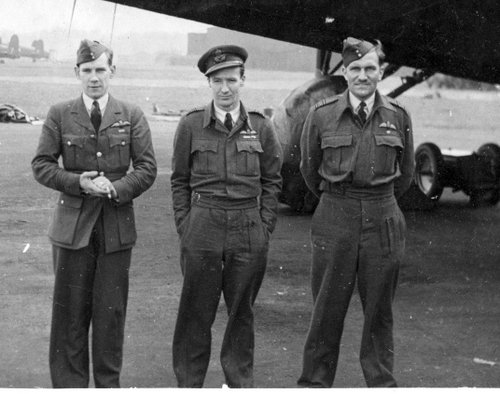
The above are three of the squadrons my father served in and whose badges hang on my wall. There were others…

GALLERY:

(1) My father joined the RAF, before the war, in November 1935 and served right through to its end in 1945. Here are more some photographs from that period.

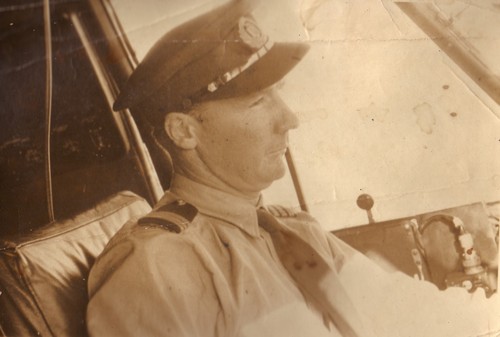
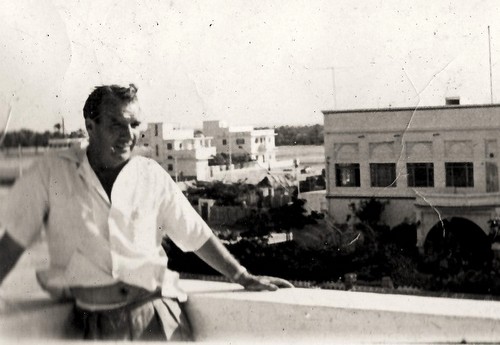
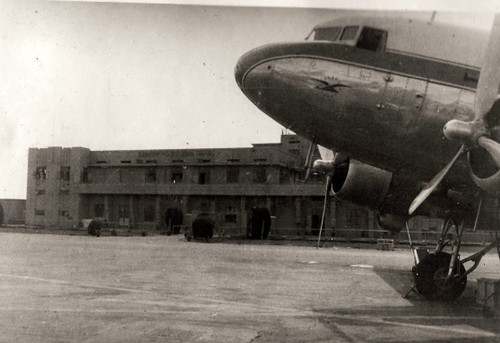
(2) From March, 1960, to about February, 1966 my father worked outside the country, based, in turn, at Bahrein in the Persian Gulf, Sierra Leone and in Khartoum where he was employed by Sudan Airways.The following photos come from this period of his life:


ACKNOWLEDGEMENTS: A special thanks to my brother, Patrick, whose extensive research in to my father’s flying career I have been able to draw on here. Pat’s research now forms part of the No50 and No61 Squadron Association official record.It was Patrick who also drew my attention to an article written by Ross Dix-Peek about my father’s war-time career.