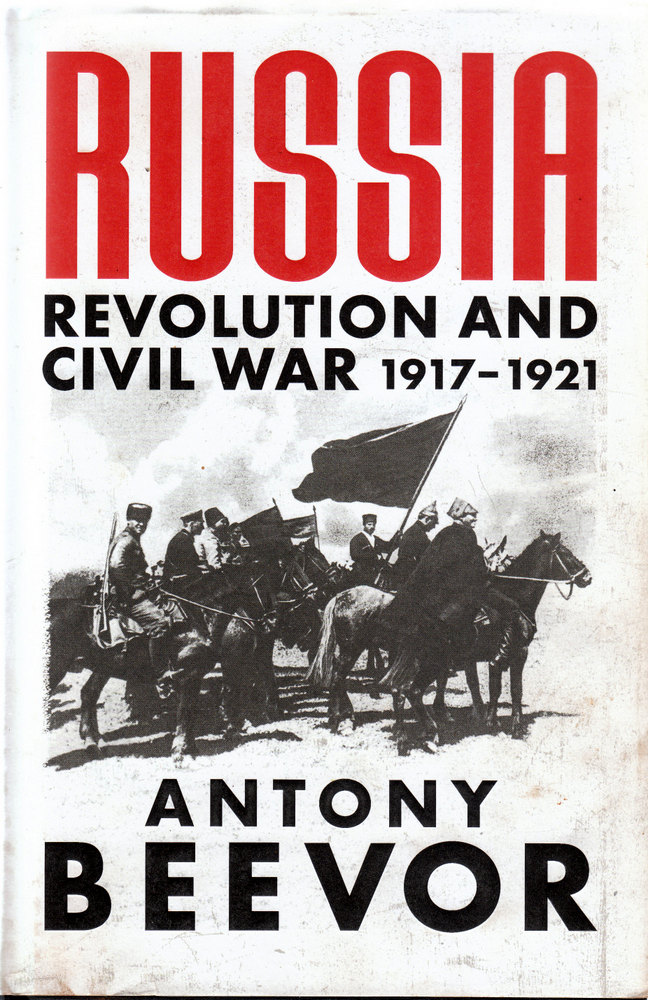
Just over a century ago, Russian society suffered a massive convulsion, the after-shocks of which are still being felt across the world to this day. A widespread discontent amongst peasants, workers and soldiers, serving on the WW1 battle fronts, both with Tzarist imperial rule and a system of government they regarded as anachronistic, corrupt, extremely unequal and exploitative, led to a series of revolts and uprisings which culminated in the overthrow of the Romanov dynasty. The deposed monarchy was replaced by a liberal Provisional government (Duma) which did not last long and was, in turn, overthrown by the Bolshevik Revolution of October 1917.
The Bolsheviks were, by no means, the majority party but their leader Vladimir Lenin – ably assisted by Trotsky and Stalin – was more than happy to sacrifice ethics on the altar of the cause, tell useful lies and suppress harmful truths if it got him what he wanted. Their ruthlessness, obsessive vision and scorn for all forms of conventional morality helped propel them into power.
In Marxist mythology, both the revolution and civil war that followed are usually cast in heroic terms but the reality, as this book makes only too clear, was anything but with both sides displaying an almost limitless capacity for killing once the means were in their hands – thanks in part to an indoctrination programme that persuaded murderers that their victims deserved their fate.
The more vulnerable or threatened they felt, the more brutal they got. Terror begot yet more terror.
Most famous amongst the many murders carried out was that of Tzar Alexander and his family, whose execution, in cold blood, represented, in the author’s words, “a declaration of total war in which the ‘sanctity of human life’, as well as notions of guilt and innocence, counted for nothing.”
Opposing the Bolshevik’s Red Army were the Whites, a somewhat shaky and improbable alliance of moderate socialists, reactionary monarchists and members of the old military officer class. Like the Bolsheviks, they were quickly corrupted by the cause and perpetrated their share of horrors and atrocities. At various stages, both sides were aided and assisted by several outside powers, including the US, England, Germany, France, Poland, China and Japan..
Riven with internal divisions and wide ideological differences, the Whites, in the end, proved, no match for the single-minded dedication and relentless determination of the Reds. Their victory helped usher in the modern era of the all-powerful, all-seeing state.
In this fascinating and meticulously researched account author Anthony Beevor, who earned plaudits for his previous book Stalingrad, takes the reader on a chronological journey through events, showing how an incompetent and out-of-touch tsar, a group of ruthless revolutionaries and a catastrophic world war, all combined to plunge Russia into a maelstrom of human hatred and destruction. Offering new insights and drawing imaginatively on a range of eyewitness accounts, it provides a powerful panorama of a watershed moment in history
With Vladimir Putin seeking to rehabilitate the memory of Josef Stalin with his own dangerous gamble in Ukraine, the legacy of these years remains as relevant now as it ever did.
It is why histories like this one must continue to be written and read.
Published by Jonathan Ball
The Anglo-Boer War which took place between 1899 and 1902 was one of the seminal events in South African history. It came about as the result of a deliberately aggressive policy adopted by imperial Britain – and in particular the high commissioner at the Cape, Sir Alfred Milner (hence its other name: Milner’s War) – towards the Boers of the Transvaal and Orange Free State republics. The major prize on offer was control of the incredibly rich Rand goldfields.
In the end, it did not turn out to be the quick dust-up many of the British had anticipated and for a while, the Boers actually held the upper hand, a situation which only changed when the British poured in more troops. At the end of the conflict, twenty-five thousand British and imperial troops were dead, many of them by disease rather than enemy fire.
More than this, it provided Britain with its first taste of modern warfare and it proved a humiliating lesson for a country which then laid claim to a substantial portion of the world.
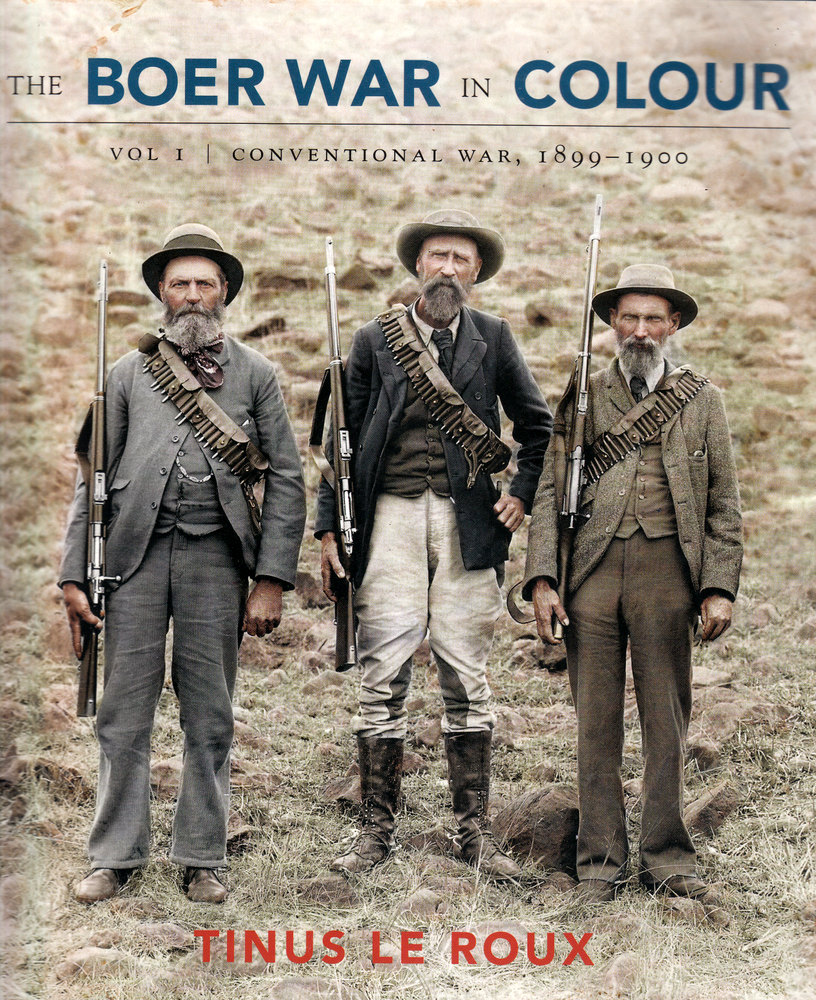
The war was also modern in the sense that it was one of the first to be photographed extensively thanks to advances in photographic technology and the introduction of hand-held cameras. Tinus Le Roux, a South African photographer, has sifted through thousands of these old black and white photographs and selected a representative sample which he has then hand-coloured with the aid of a computer to give them an added freshness and lustre.
Put together in chronological order, the first volume of his The Boer War in Colour covers the conventional phase of the war, from October 1899 to September 1900. The result is a triumph of judgement and selection, that offers a vivid new picture of a country preparing for and then torn apart by what effectively became a civil war; a war that left behind a legacy of bitterness that still lingers on today. Famous faces are there but perhaps it is the portraits of ordinary burghers, civilians and soldiers going about their everyday business in a time of great upheaval and change that gives these iconic historical photos their power and poignancy.
Although its importance has long since declined, the “Great North Road” was, in its time, one of South Africa’s most famous roads and considered of great strategic value, in spite of the fact it passed through some of the harshest, driest, least populated parts of the country. Skirting, for much of its length, the north-western border of the country, it was the original highway into the interior and favoured by many of the early traders, hunters, transport riders and missionaries. The significance of the road was not lost on the politicians either. The conniving arch-imperialist Cecil John Rhodes saw it as the key to British expansionism, and the opening up of the African continent. As part of his plan to outflank and contain the Boers (as well as ward off the threat posed by the Portuguese in the East and the Germans in the West), he sent his ‘Pioneer Column’ up it to annexe all the land north of the Limpopo.
Adding to its allure for me was the fact my ancestors also toiled up it in their ox-wagons, in 1892, as part of what became known as the Moodie Trek (see Travels Back: Trekking with the Moodies). Having received the blessing of Rhodes, they had set out with high hopes for their promised land but within a year of attaining it, their leader was dead. Unable to carve out a life there, many of the others drifted on.
A rebel group, who, on reaching Fort Victoria, had elected to continue on to Salisbury in the north rather than struggle on to their original destination – Gazaland in the east -, fared slightly better, in many cases finding a more permanent base to operate from.
After the demands and travails of their journey it must have felt good to be able to put down roots although, having only been established a few years earlier with the arrival of the Pioneer Column, Fort Salisbury was still barely a town. A few robust iron and wood structures, as well as mud-brick houses, had sprung up alongside the tents and grass-thatched, pole ‘n daga huts of the original settlement. It still had a frontier feel, a hint of the American Wild West with its wagons, stagecoaches, noisy bars and men on horseback with guns.
Stagecoach (Pic: Stidolph family collection)
Determined to establish their place in the sun, my ancestors wasted little time. Within months, another thatched hut had been added to all the others – a photograph from the time dutifully records it as “Moodies First House in Salisbury”. From an architectural standpoint, it wouldn’t have won any design awards but judging by their self-confident, languorous poses its occupants were pleased enough. It was a start. Wanting a place he could call his own my great-grandfather John Warren Nesbitt lit upon a happy patch of fertile agricultural land in the Mazoe Valley, just north of Salisbury – an area which would play a small part in my family annals as we shall see. Unfortunately, it was here the sins of his past caught up with him for he was told by the BSA Company that he could not register it because he had broken the terms he had agreed to when he signed up for the Moodie Trek. Undeterred he would go on to acquire two other farms, one in Goromonzi and one in Nyanga, both of which he duly named after himself (Warrendale)
Moodie’s first house in Salisbury.
Not too surprisingly, this willy-nilly parcelling out of land among the white settlers, at the expense of the local tribes, caused a certain amount of resentment and bitterness, as well as a desire to shake off the yoke of the invaders. In 1896, the Ndebele, who had occupied much of what came to be known as Matabeleland, launched the first sustained campaign against a colonial authority anywhere in Africa. Although a warlike people (they had conducted periodic raids into Shona country) with numbers on their side, they had no answer to the British Maxim Machine Gun and the revolt was eventually crushed. The settlers who had helped suppress it were rewarded with yet more land.
Salisbury laager. Note Maxim gun.
In Mashonaland, the white community was caught napping a little later on when – encouraged by the failure of the Jameson Raid in South Africa – the supposedly more docile, downtrodden Shona also rose up in a similar rebellion. My great-grandmother Marjorie Coleman and her two grand-daughters Josephine ( better known as Josie – my father’s mother) and Nora were to get a foretaste of what was to come when they narrowly escaped being killed as they were returning from Umtali to Salisbury and found themselves surrounded by an armed horde. Fortunately for them, the order to kill all white people would only come a few hours later and they were allowed to continue on unmolested.
In the short but bloody conflict which ensued another relative, Randolph Cosby Nesbitt – the brother of John Warren and uncle of my father – would distinguish himself as one of the heroes of the beleaguered white community holed up behind their defensive laager in Salisbury.
A captain in the Mashonaland Mounted Police during the rebellion, he led a patrol consisting of only 13 men to rescue a group of miners who had been surrounded by over a thousand rebels, armed with an assortment of Lee- Metfords, Martini-Henrys and old muzzle loaders, at the Alice Gold Mine in the Mazoe valley. J.W.Salthouse, the manager of the mine, had had the good sense to fit out a wagonette with bulletproof iron sheets to give protection to the women and one sick man. Riding alongside this, Randolph and his men succeeded in getting the beleaguered party – which included three women – back to Salisbury, some 27 miles away, despite coming under particularly heavy fire as they fought their way through the long grass and well wooded, hilly country that bordered the Tatagura river, on the side of which the road ran. Considering how outnumbered they were, their casualties were surprisingly light, with only three of the small rescue party being killed and five wounded. The arrival of the exhausted little group back at the Salisbury laager was greeted with gasps of astonishment as everybody had given them up as dead.
For his actions Randolph was awarded the Victoria Cross (see picture below), the first Rhodesian to receive Britain’s highest award for gallantry and combat. As a national hero, his medal used to be housed in the National Museum in Salisbury. The famous episode also became the subject of a popular book – Remember Mazoe by Geoffrey Bond.
There exists a snapshot of Randolph in officer’s regalia posing outside the old BSAP Mess in Nyanga, the same area where we would, much later, buy our own farm. Backdropped by a high mountain and a house that looks like it was built by elves, it is a study in contrasts and, somehow, captures an era.
With his snowy hair, military dress, spread-eagled legs and a mouth masked by a large moustache, he looks every inch an imperial officer. Handsome with something of a sportsman’s build, he comes over as a man who cannot imagine failure and who is clearly accustomed to being in a position of authority, command and living a life of discipline and order. From every pore, he projects purpose and certainty. Tough, resourceful and obviously used to leading from the front, one can easily imagine him remaining calm and collected in the face of overwhelming odds.
Sitting beside him, the loyal, supportive, spouse, his wife cuts a more demure, feminine figure although, in her own way, she, too, exudes an air of quiet competence. Calm, steady-eyed, in her sun hat and long dress, one can easily imagine her organising tea parties or quietly setting out to recreate the comforts and dignities of the Victorian upper-middle class in the depths of the African bush.
Standing behind them are two, uniformed black servants. They are staring dutifully at the camera but with looks, one can’t quite interpret. Whatever they are thinking, they are not letting on
In the light of history, there is a slightly surreal quality to the picture. Little could that imposing couple have foreseen or foretold that within eighty years their secure, timeless, confident world would be gone; the era of their mastery would be over, the colonial order they represented would be dismembered, their monopoly of political power lost or that White Rhodesia would have been swept away.
Within nationalist historiography, the African resistance of 1896-7 became popularly known as the First Chimurenga War and provided both an inspiration and a dress rehearsal for what was to come. Seventy years later the country would once again find itself facing an armed uprising as the ZANLA and ZIPRA forces led by Robert Mugabe and Joshua Nkomo clashed with the Rhodesian security forces of Ian Smith. This time around, the Shona – who would go on to become the dominant political group in an independent Zimbabwe – were better prepared and better equipped. They ensured they had plenty of weapons, something the Soviets, who were then involved in some Empire-building of their own, were only too happy to supply. Once they had replaced the white government they turned their attention to their former foe, the Ndebele, settling a few old scores with the help of some instructors from North Korea.
Largely ignorant of (or perhaps just indifferent to) the cataclysm of social change their arrival had unleashed on the local tribes and happily oblivious of what lay ahead, the whites carried on creating new urban centres and taming the land. Not without reason, they were immensely proud of what they were able to achieve in so short a period of time. The tribes who had been ejected from the more fertile, productive land, however, probably saw it through more jaundiced eyes. When her husband died, Marjorie Coleman opened the first boarding house in Salisbury which, although on a small two-room structure, was evidently able to accommodate 32 boarders at a time. Ironically my grandmother’s sister Nora, who achieved the rare distinction of living in the country longer than any other white, would survive to see both the first and second Chimurenga wars and the rapid dismantling of all of Rhodes’s dreams for the country.
Although Nora would live on to become the grand old lady of Rhodesia, her sister, Josephine, having given birth to four children, including my father, would die, while she was in confinement with her fifth, Joseph, on the 21st of August 1921. She was only 33. From the pictures I have seen of her, she was an attractive lady, with a smile both gentle and a little whimsical.
Sarah Susannah Nesbitt (centre) and her daughters Josephine and Nora.
Her husband, Alan Stidolph, a slightly more austere figure, later got remarried to Marion Hughes and around 1948 they moved to Broadlands Avenue on the Avondale Ridge, in Salisbury, where they built a double-storey house, named Badsel after the family home in Kent.
Alan Stidolph – lying in front, mysteriously clutching the end of the walking stick. I am not sure who the others are. (Pic: Stidolph family collection)
When Alan died he was buried in the nearby Avondale Church where my father’s ashes would, in turn, be interred.
There are numerous other black-and-white photos from these bygone eras stored away in my files under the heading ‘Family Mix’. And what a mix they are. Frozen in time and place with their peculiar hairstyles (the ladies’ abundant hair usually bobbed up on top), strange clothing, their starched and frilled dresses, their old-fashioned jackets, neck-ties and wide-brimmed hats, their pipes, their faithful mutts and gawky children (is that really my father in flannels with a tennis racket?), they provide a link to a now departed world of over-dressed Europeans and half-naked Africans, of conflicting cultures, class systems, languages and tribal differences. Precious keepsakes of the past, the pictures also help give these now long-dead relatives an identity, a sort of existence, a life of their own – although, since they left so little behind in the way of letters or memoirs, their stories must, sadly, remain forever incomplete, their inner lives mostly unknowable.
Spectres in a hazy, monotone landscape, they glitter on the edge of my imagination but I can never quite grasp them.
GALLERY
Some more photos from the Stidolph family collection:
This photo is titled ‘Picnic on the Shashe River’ although the surrounding trees, which look like Miombo woodland, suggest another location. I have no idea who any of the people are but they presumably have some connection with my family. From the family collection. Again, I have no idea who the man with the pipe is but the photo does give you a good idea of the master/servant relationships of the time Picnic time. My father, Reginald Neville Stidolph (top left), his mother, Josie (top left second) and father, Alan (top left third). Around 1920.Stidolph offspring. From top left: Jack (killed WW2), Harold, Joyce, Reginald (my father)My father as a tennis playerMy father’s siblings: Phyllis, Jack (who later served in the RAF and was killed during WW2) and Harold at the wheel (who would go on to become the Provincial magistrate for Matabeleland). Kutema in the background.My father’s Uncle Randolph’s medals.
ACKNOWLEDGEMENTS:
Many thanks to my eldest brother, Patrick Stdolph, whose research into our family history filled in many of the blanks…


 Stidy's Eye