“Asia,” declared Metternich, “begins at the Landstrasse” – that is the road that runs out of Vienna to the East. And it certainly felt like we had crossed some sort of frontier when, back in 1989, my three travelling companions and I found ourselves marooned among the milling mob at the Hungarian border post.
It was my first introduction to Communist-style bureaucracy and I can’t say it created a favourable impression. Indeed, my immediate reaction was to turn and flee back the way we had come.
Finally on the road again, after what seemed a nightmarish eternity, the first thing I noticed were the cars – strange, box-like little contraptions belching carbon monoxide and emitting a most curious noise. Compared to all the top-of-the-range Mercedes Audis and BMWs we had passed by on the other side of the border they seemed positively prehistoric. It certainly gave you some idea of just how far behind the West the Soviet-bloc countries were in terms of living standards. That didn’t stop their drivers from travelling at death-defying speeds though.
We finally got to Budapest. Before we could book our accommodation we had to check in with the authorities, explaining who we were and our reasons and intentions, a routine formality wherever you visited communist countries. Thereafter we were left in peace, free to go where we liked.
This surprised me. It was not at all what I had anticipated.
I had expected to find myself succumbing to a mood of creeping paranoia like I was participating in some third-rate spy-thriller. I kept checking to make sure but no one was trailing us, their hat pulled low over their eyes. As far as I was aware there were no bugs in our room, nor were they searched while we were out. Contrary to expectation, I didn’t feel deeply guilty, like I was alone and powerless in a world profoundly, morally hostile. Quite the reverse in fact.
I liked Budapest immediately. I thought it was a most handsome city.
Straddling the Danube (saturated in blood, grime, phosphates and mud, the river was anything but blue), it is divided into two parts – the hilly sections to the West of the Danube River from Buda while Pest lies on the flat side on the opposite bank. Of the two Buda, with its royal palace looked the older but is, in fact, the later settlement.
View across the Danube to Buda with its royal castle.
Pest, whose name is taken from the Slav word for ‘oven’ (don’t ask me why), has been razed to the ground several times, thus precipitating the move to the hillier, more defendable, side of the river. It didn’t do much good. Hungary came under Turkish rule after the disastrous battle of Mohacs in 1526.
The Turks were finally driven out in 1686.
The two towns were only properly linked in 1840 with the construction of the Great Chain Bridge across the Danube. This famous landmark was the work of William Tierney Clark, a Scotsman who was also responsible for the Hammersmith Bridge in London. The British connection goes further. The Hungarian Parliament, lying along the banks of the Danube on the Pest side, is partly modelled on the neo-Gothic Palace of Westminster.
View across the Danube to Pest with Houses of Parliament.
During the 1848 uprising against Austria, British opinion was very much on the Hungarian side. Combine this with a mutual love of horses and you begin to understand why, when Hungary decided to open up its links with the West, Margaret Thatcher was the first NATO leader they invited to visit.
As a former capital of the Hapsburg Empire, Budapest is full of reminders of a more regal past.
The skyline on the Buda side is dominated by the Matthias Church, an impressive Gothic structure which takes its name from Matthias Corvinus (ruled 1458-90), who established Buda as one of the great Renaissance courts of Europe.
Immediately to the south of it lies another set of imposing buildings – the old royal palace, another legacy of the days when Hungary formed part of the ‘Dual Monarchy’ with Austria, governing an area which included parts of present-day Czechoslovakia and Romania, as well as Transylvania which, at the time of my visit, still remained a thorn of contention because of the Romanian government’s treatment of the ethnic Hungarians living there.
The Magyars, who make up the bulk of Hungary’s population fiercely proud and independent. While nominally part of the Warsaw Pact, its government was always regarded as the most liberal of the communist regimes, allowing private enterprise and developing links with the West. Their nationalism found its physical outlet at the Hosack or Heroes Square erected at the turn of the century in Pest to commemorate the Kingdom of Hungary’s survival into the new century and the thousandth anniversary of the Magyar conquest.
Heroes SquareDetail in Heroes Square
This reverence for a more glorious past also finds expression in the National Museum which houses the country’s most treasured relic – the royal crown of Hungary. This crown – with its famous crooked cross – lies in full state in its own darkened chamber, zealously guarded over by several fierce-looking policemen. That so much importance should be attached to a symbol of imperialism and vanished pomp struck me as ironic given the country’s supposed commitment to egalitarianism..
The Magyar language is one of the most impenetrable in Europe which made communication difficult. Unlike most other languages in Europe, it is not of Indo-European origin but is more closely related to Estonian and Finnish. The word for “Cheers”, for example, was a real tongue-twister: “egeszsegedre”. I found it helped to have had a few beers before attempting to pronounce it…
Having visited all these famous sites, and a few more, we were in dire need of refreshment, so popped into Gerbeauds in Pest, one of the most famous coffee houses in Hungary whose confectionery rivalled the best in Paris and Vienna – at a fraction of the price. In this august old establishment with its elaborate art-nouveau furniture, heavy wallpaper and eighteenth-century prints you could get an idea a glimpse of what life must have been like at the turn of the century when Budapest still formed part of aristocracy’s playground.
In a similar vein, the Café Hungaria is also still known by its pre-communist name – Café New York. For a brief period of its history, when Stalin was still calling the shots, this glittering example of Baroque/Rococo/Art Nouveau/Eclectic and any other art form you care to name was actually converted into a warehouse. Since then, the building has been restored to its former glory and is very much like it must have been when it was a favourite gathering place for artists and intellectuals. The cuisine here, as in other restaurants in Hungary, was excellent and again relatively cheap.
The inconsistencies between the theory and practice of communism also manifested themselves in the Rozsadomb, the exclusive Rose Hill section of Buda, where the original middle-class victims of Marxist socialism found themselves replaced by the new Party elite who had quickly realised that power meant little unless converted to wealth. With their manicured lawns, their lavish lifestyle contrasted sharply with the poorer classes forced to eke out an existence across the river, in the more shabby, run-down, commercial Pest.
As Orwell showed in Animal Farm, revolutions all too often end up with those who have risen from the bottom assuming the habits and trappings of the oppressive power they have just replaced. Africa has proved no exception to this rule…
It was equally obvious, too, that many people had given up on the dream. Rather than pouring over their copies of Das Kapital, the youth seemed more obsessed with Western-style pop culture. Most of the movies being shown were of American origin and many Hungarians tuned in to Western radio and TV stations rather than their own which was, admittedly, easy to understand if you watched the fare being dished up on Russian TV. Most of the graffiti I saw was pro-pop rather than anti-imperialist (Duran Duran and Queen seemed to have been particular favourites).
The weirdest of all, for me at least, was to discover a “Rhodesia is Super” sticker stuck to the windscreen of a car parked down a side street in Pest. What, I wondered, would Robert Mugabe have made of that?
Nor had Communist contribution to local architecture been distinguished by its display of good taste. Budapest, like most other Soviet-bloc countries, has its share of dreary, dehumanised, soul-less grey apartment blocks although these, along with the factories, were mostly confined to the outskirts of town. There seemed to be few pollution controls in this grim, industrial wasteland. The air reeked of dust and smoke and chemicals and the water had a strange metallic taste.
I imagined some grim-faced apparatchik explaining the rationale behind it thus: “We need the factories to produce the cement required to build the apartment blocks that house the workers who work in the factories who produce the cement…”
This dreary uniformity was more than compensated for by the bustle of inner-city life. There was a vibrancy, a sense of the Orient, a dishevelled charm about Budapest. Unlike neighbouring Czechoslovakia, which I also visited, they didn’t browbeat you with ideology. There were very few of those familiar symbols of totalitarian dictatorship – the red stars, the statues of workers in heroic poses, the weird sculptures representing international socialist solidarity, the pictures of the party faithful (all stony-faced and irredeemably ugly), the hammers and sickles.
Inner city life – old buildings in Pest.
While the Hungarian version of communism was by no means as extreme or nasty as the jack-booted versions practised elsewhere, it did leave me wondering why people opt for these authoritarian forms of government!
Margaret Atwood, who wrote the dystopian Handmaid’s Tale, provided a probable reason when she wrote; “True dictatorships do not come in in good times. They come in in bad times when people are ready to give up some of their freedoms to someone – anyone – who can take control and promise them better times”
This certainly seems equally true of our own morally confused and uncertain times…
Since childhood, I have always been a compulsive walker but, in recent years, the habit has taken on a more urgent aspect. Only too aware of the passing years, it has become a vanity issue, part of my need to achieve something measurable and definable before the lights go out. To prove to myself I still have it in me. That I am not completely past my prime.
To this end I like, every now and again, to test myself by undertaking a seriously long hike. Which is where the Wild Coast comes in. I have now done the Wild Coast Sun to Mtentu hike four times. Each time we have followed more or less the same route. Each time, it has felt different.
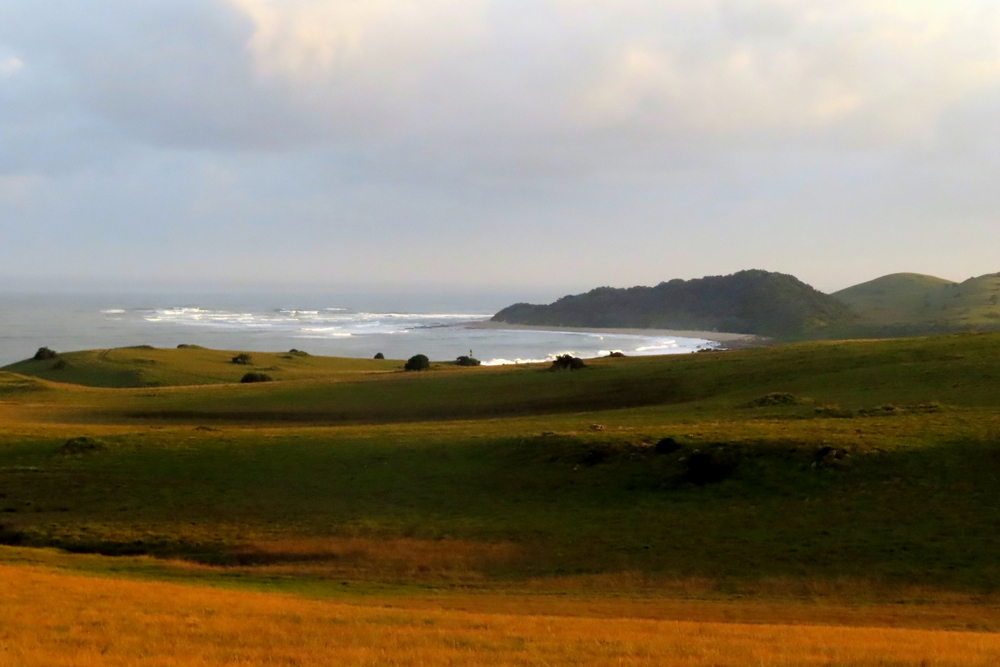
It is a beautiful hike. The Wild Coast has its own unique atmosphere and character. It is like travelling through a time warp, being one of the few places where you can still get a glimpse of what the South African coastline must have looked like before the property developers moved in and – all in the name of progress of course – stripped it of everything that made it special in the first place.
The Wild Coast.
An opportunity to go there again fortuitously presented itself, when Mary Ann, my regular hiking companion and long-time side-kick, decided she wanted to celebrate her birthday there. When it arrived, I readily accepted her invitation. Here, was another chance to prove my metal, get the muscles working again, pump some fresh salt air into my (chlorine-damaged – don’t ask!) lungs. I wanted a little of that swagger that comes from testing yourself against nature and coming out triumphant on the other side.
For me, the wilderness is, however, more than just, a resource to be mastered or a place where I go to prove how tough and resilient I am. There is a spiritual element to my meanderings. Released from all obligations, it is a way of reconnecting with myself, feeding my soul, transcending the monotony and tedium of everyday life and getting that sense of emotional engagement that comes from immersing yourself in the beauty of a place. Fording the rivers, hiking along the deserted beaches, listening to the reassuring crash and hiss of the waves breaking alongside you as you walk becomes a form of secular pilgrimage, an exercise in humility, a way of savouring the grandeur of sacred nature.
Along the way you get to know your fellow hikers a little better, and become part of an informal clump sharing a simple objective – get to your next destination.
Determined to be fit for the hike I went into training, scrambling up and down the rocky slopes of the farm. The closer we got to our day of departure, the more my excitement grew. Alas, fate has other plans for me. An old hernia problem chose to flare up again. I consulted a specialist. He told me an operation was necessary. He also advised me against putting too much strain on the offending appendage which is what would happen, he informed me, if I walked the distance required, especially the uphill parts.
I was determined I was not going to miss out. Fortunately, it turned out I was not the only one sporting an injury. Another past hiker had damaged her foot and conveniently for me had decided to drive to Mtentu in her 4X4 (my old banger would not have made it over the Transkei roads).
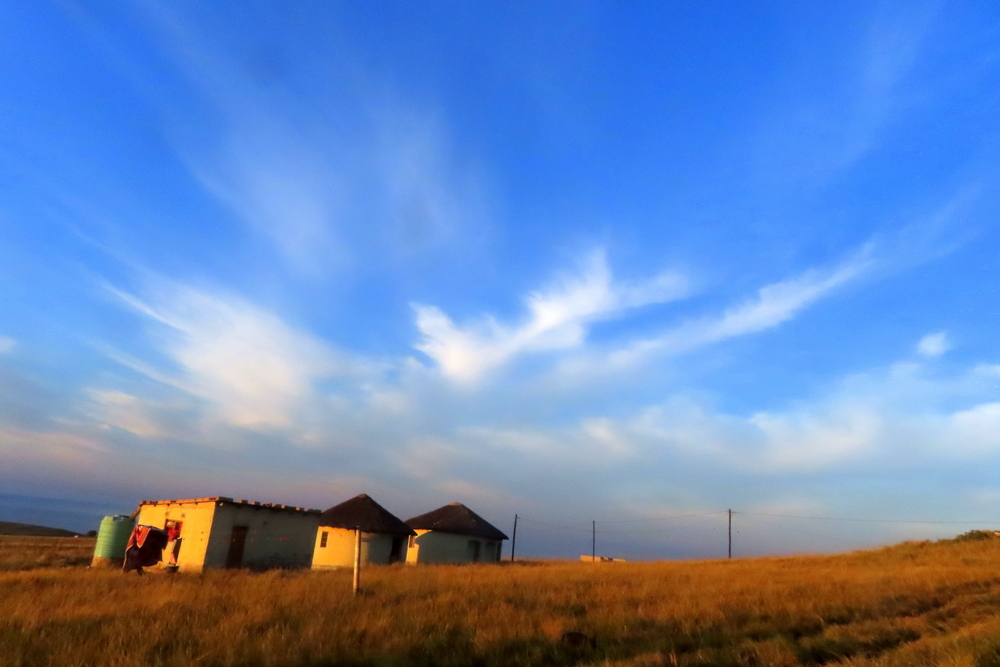
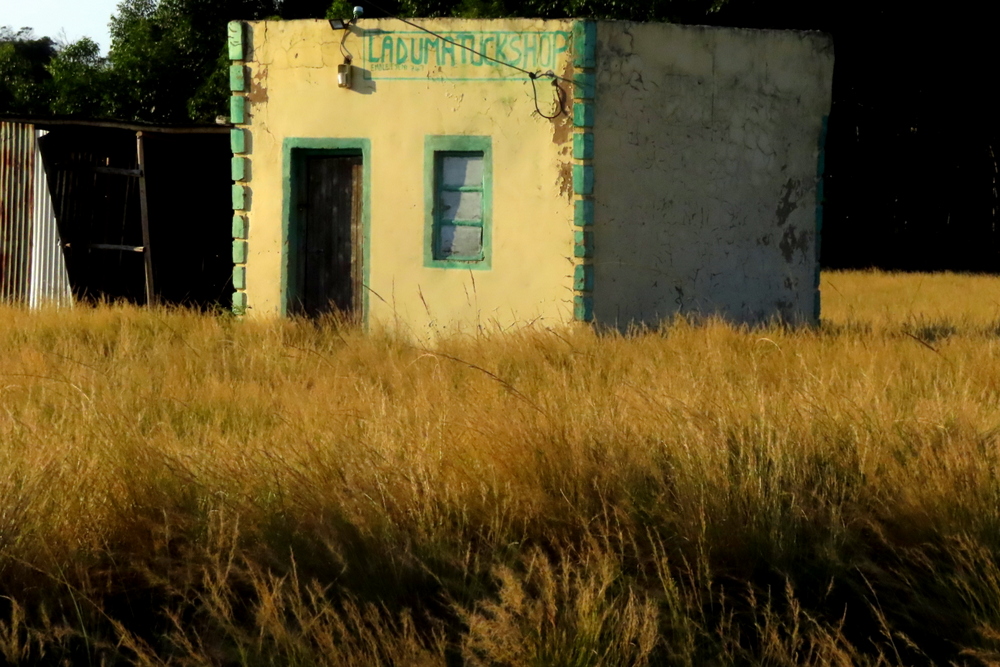
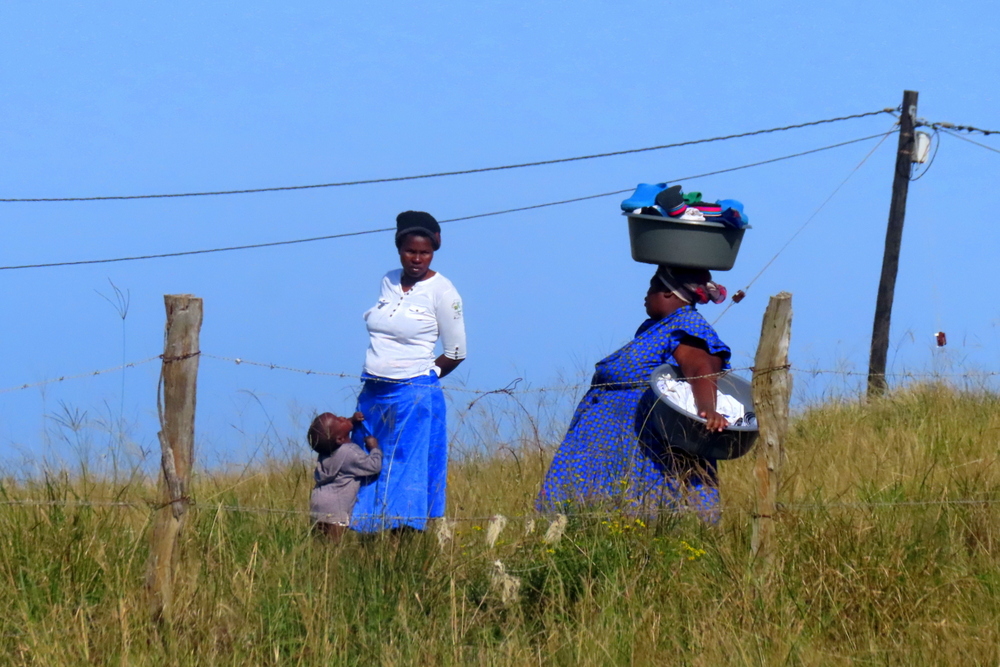
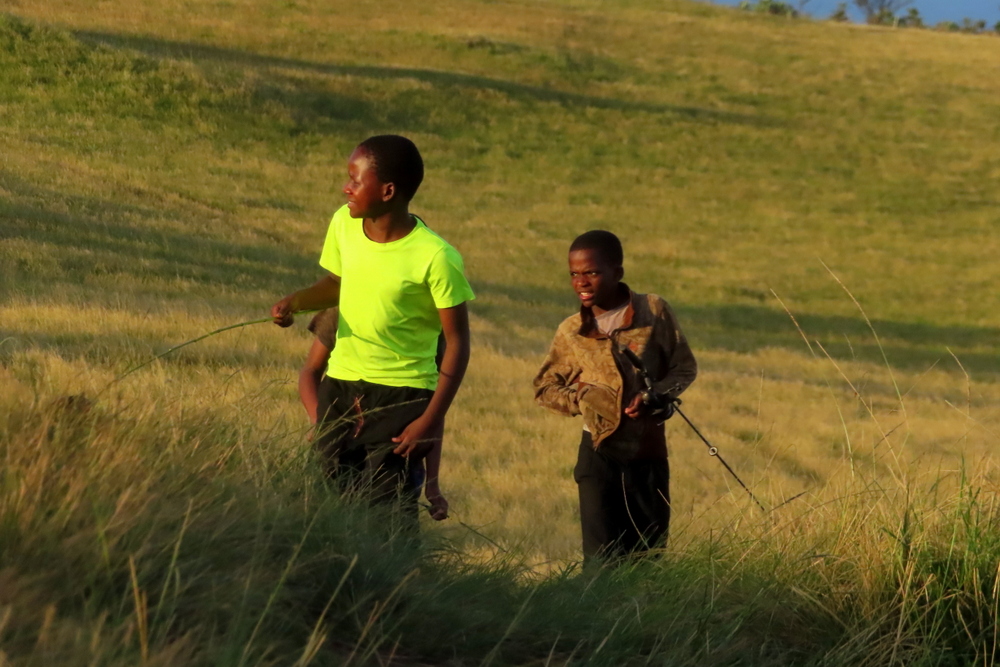
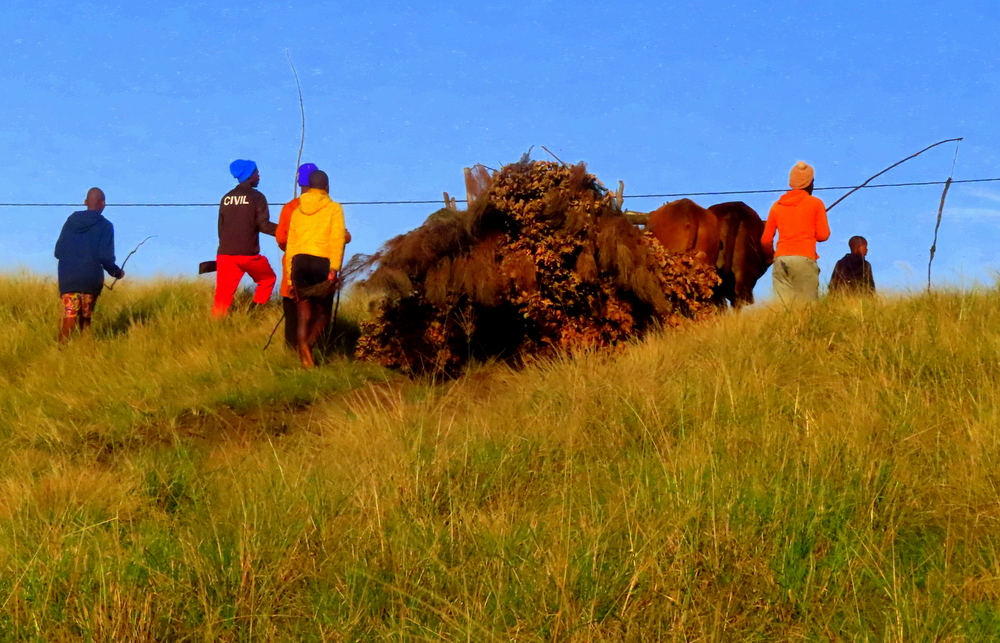
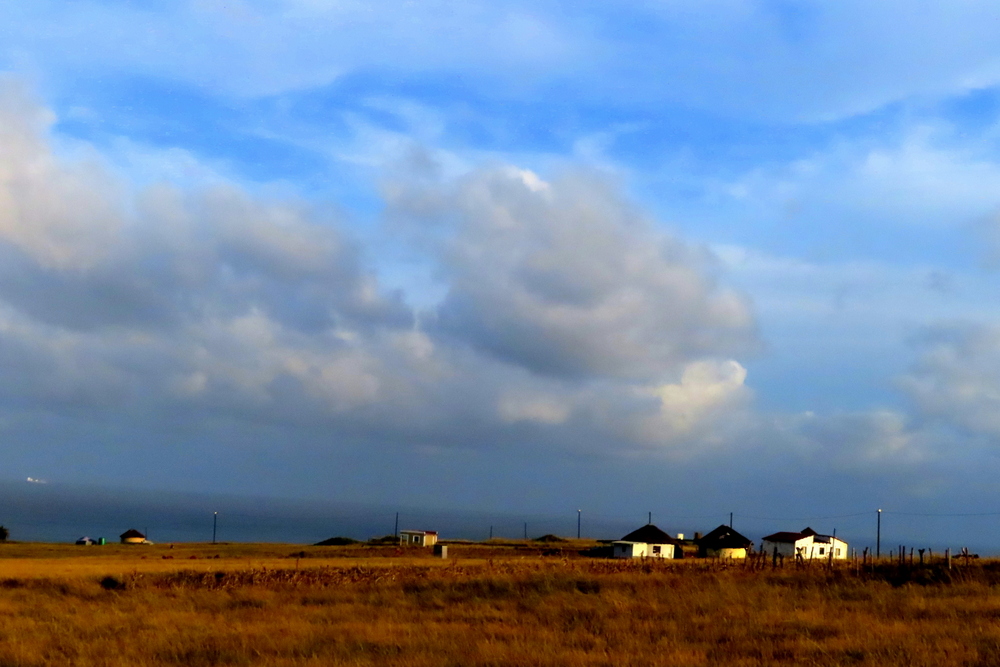
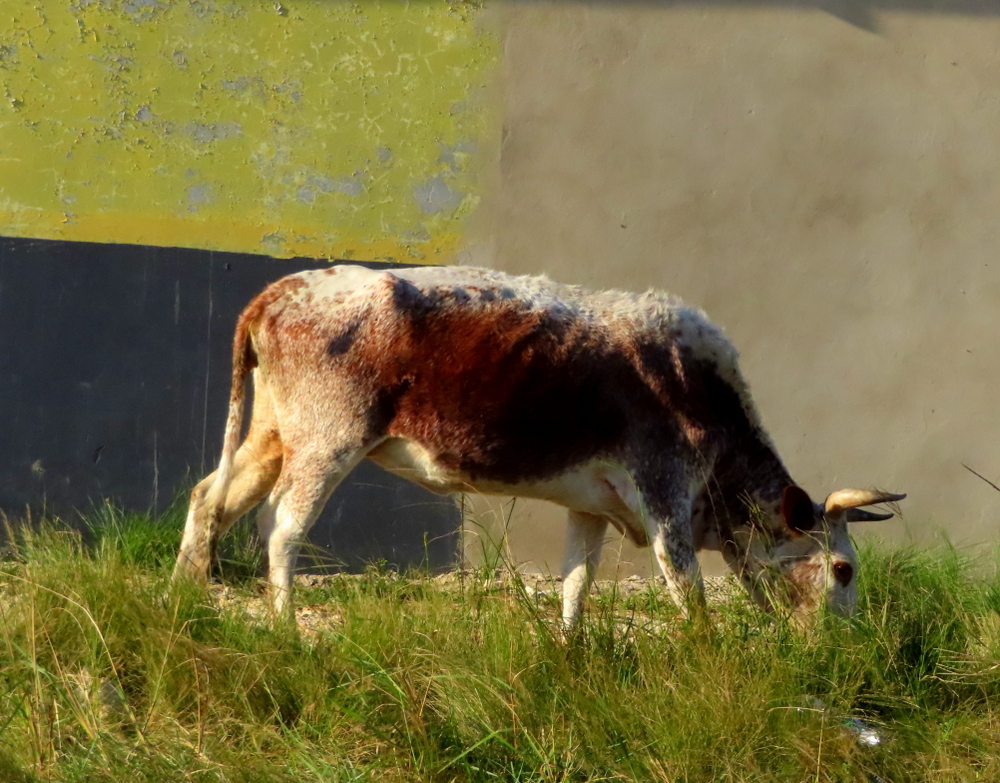
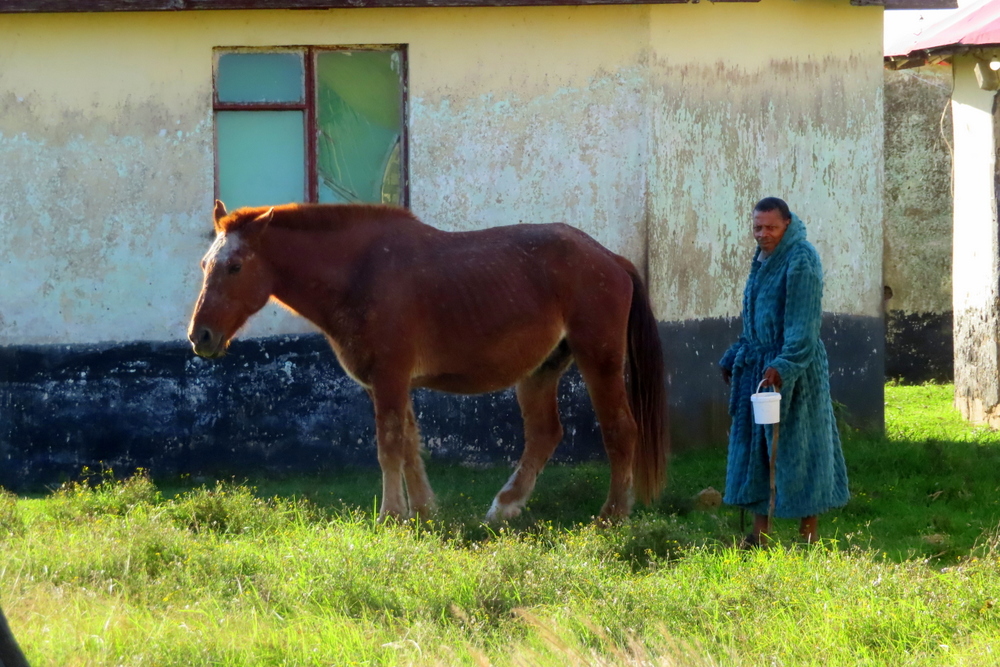
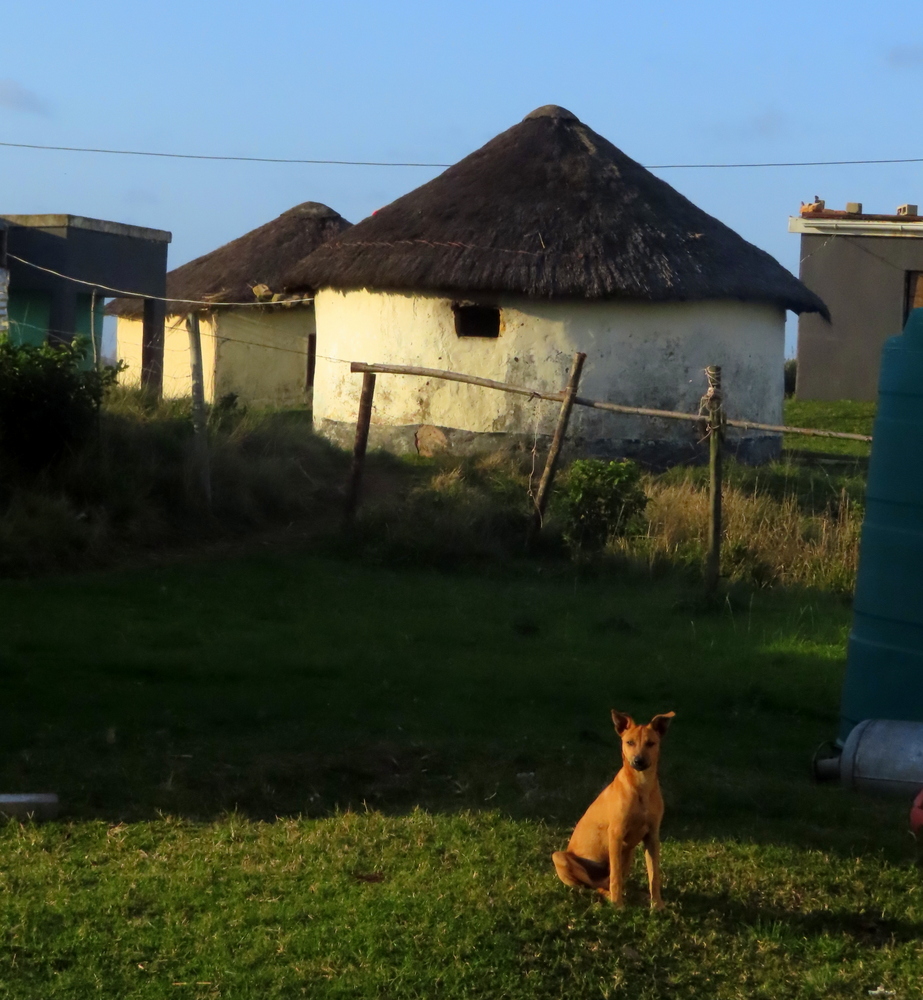
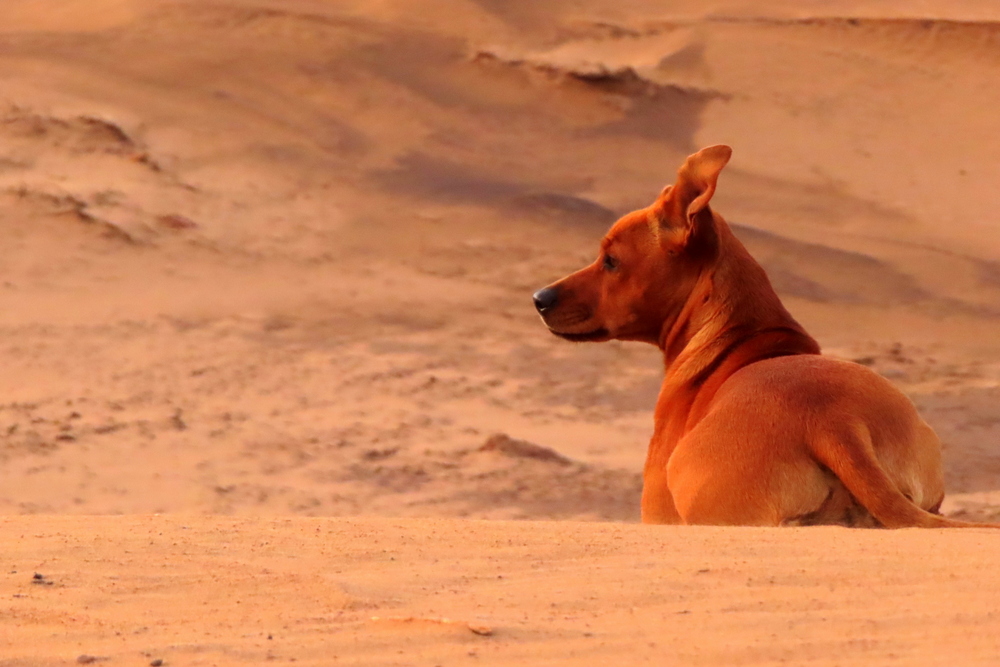
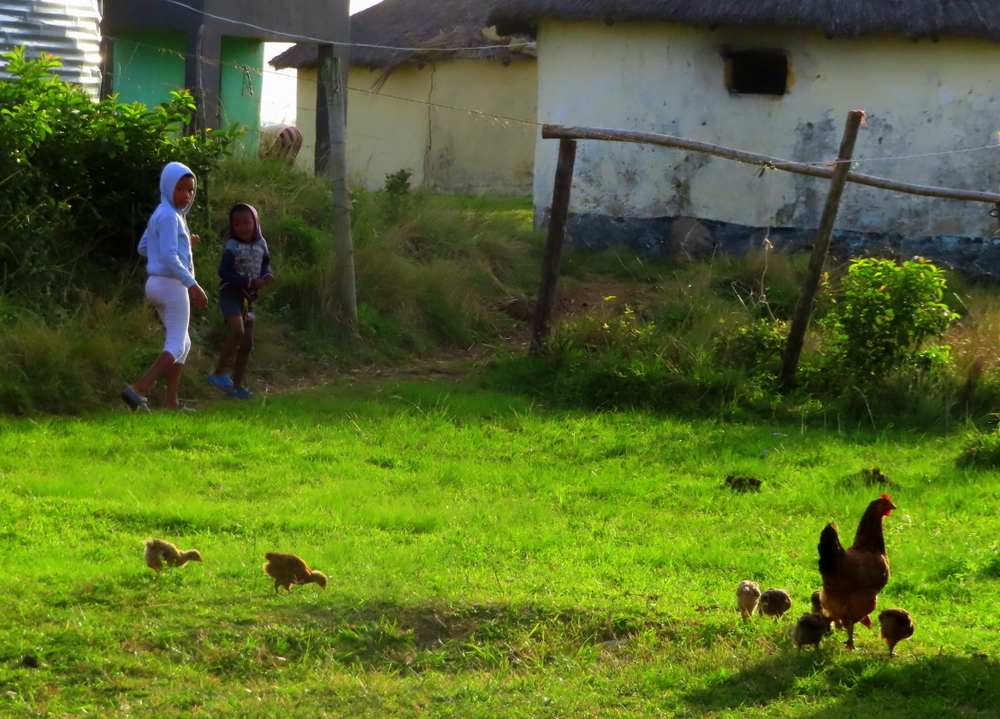
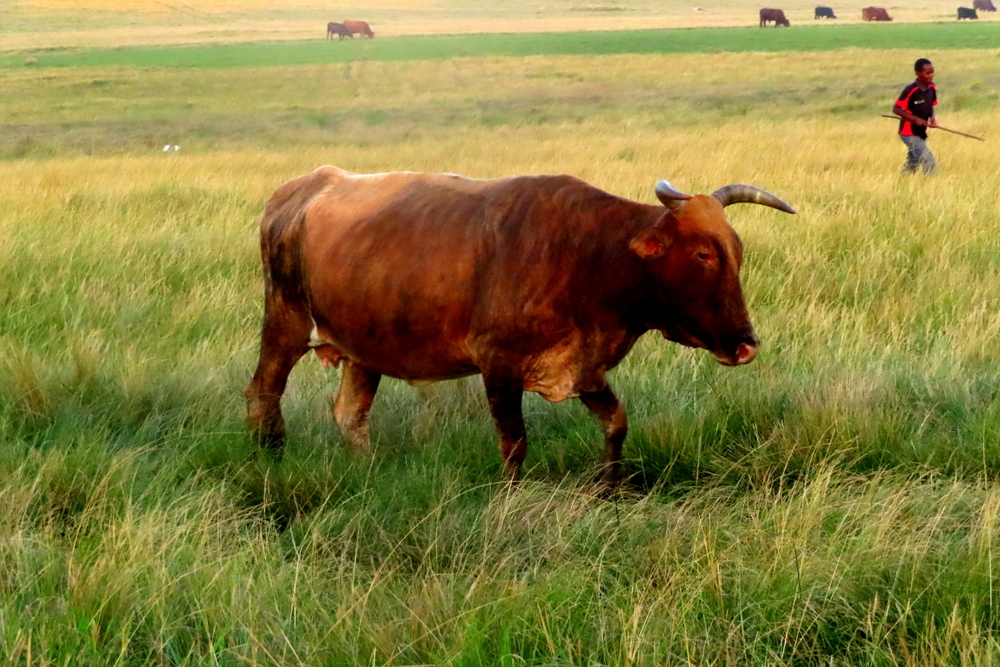
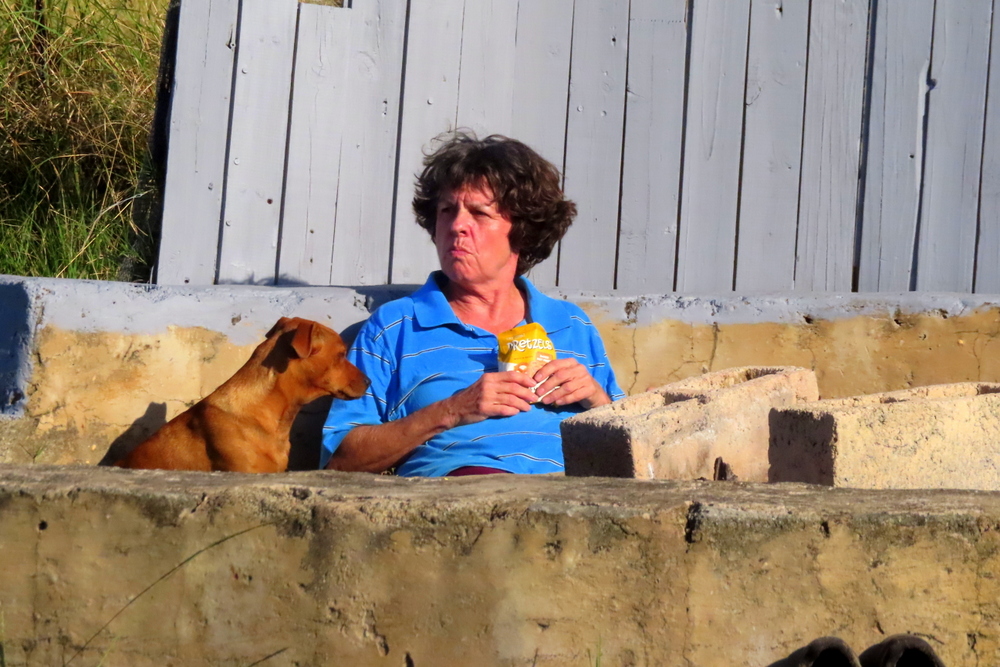
And so, while the others were hiking along the beach, we set off. The dirt road – or rather excuse for one – on which we found ourselves travelling wound its way through rolling hills, slashed by the odd river gorges, towards the coastline. The landscape was dotted with traditional thatched rondavels although in places these had been replaced by more Western-style rectangular houses with pillars and corrugated iron roofs. There were groups of cattle everywhere. Sometimes small boys and herders would appear mysteriously from nowhere and wave at us, There were also dogs, some a lot less friendly than others. They would come bursting out of the hut yapping their heads off as we drove past.
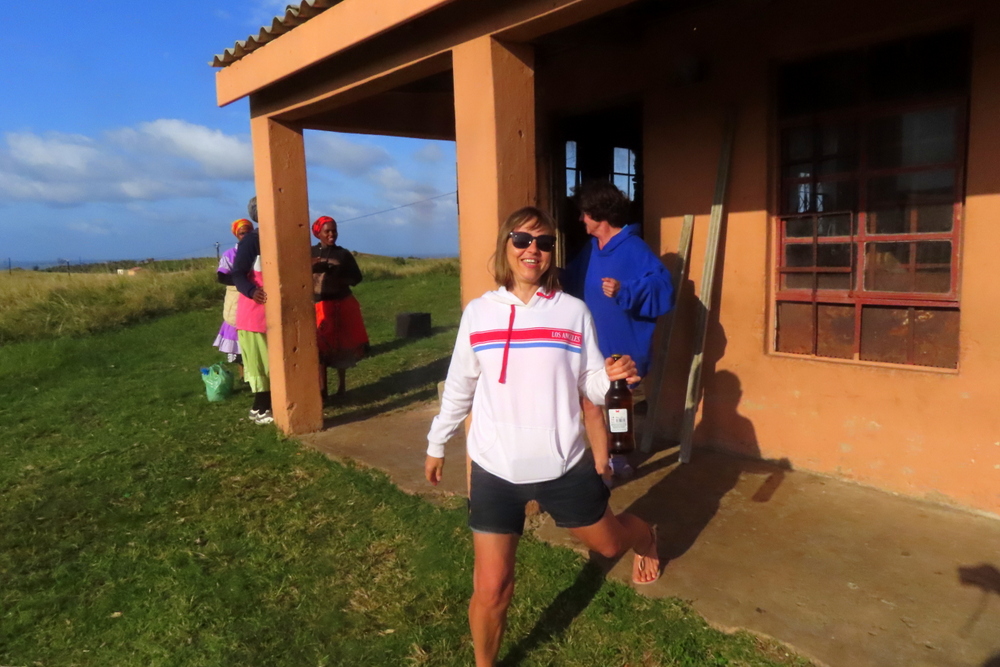
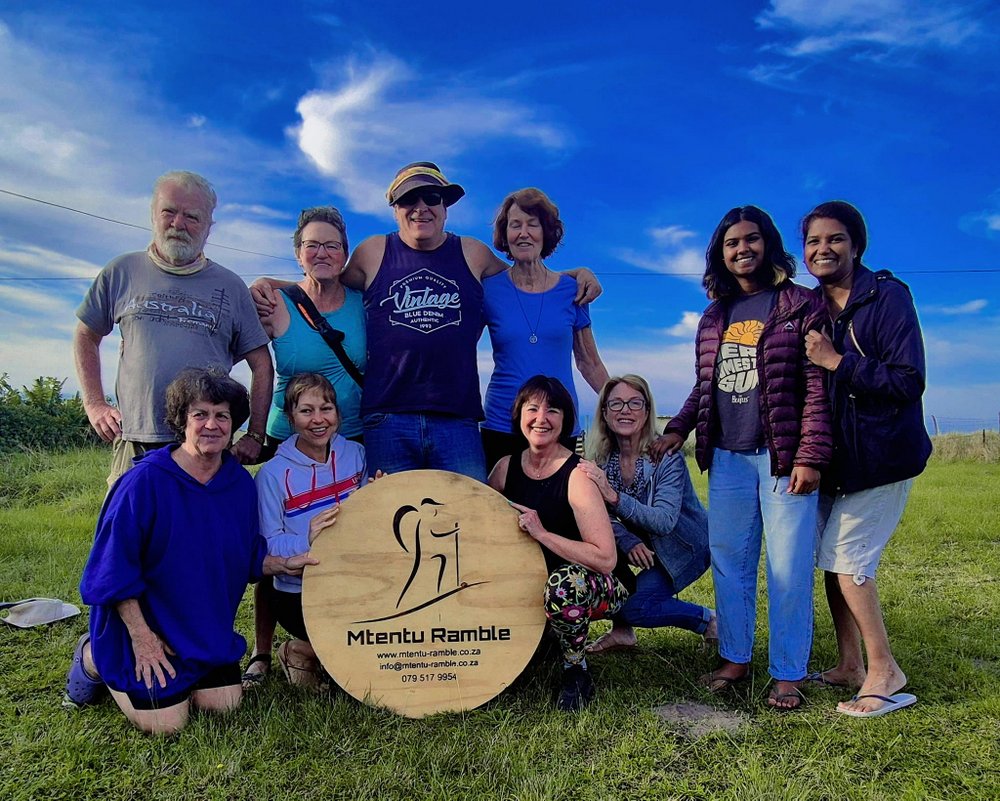
We eventually reached our destination – a simple, dormitory-like, structure built of cement and stone and capped with corrugated iron – ‘” The Hiking [formerly Fishin’] Shack” – set amidst a scattering of thatched huts and outbuildings which belonged to a respected local leader. Here, we were received with the same wonderful warmth we had on our previous visits by our host, Kelly Hein who runs the Mtentu Ramble ( http://www.mtentu-ramble.co.za/ ) and her family. I immediately felt at home.
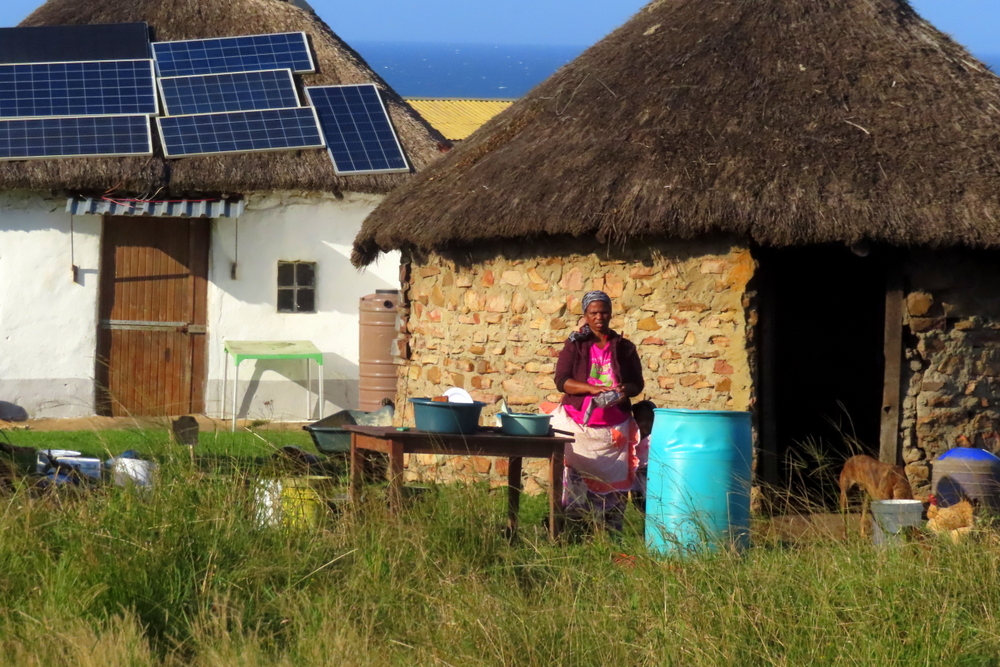
The Pondo, who inhabit this southern part of the Transkei, continue to live a way of life that has changed little over the centuries although you can see signs that the 21st Century has begun to encroach even here. The last time we visited, the area had not been connected to the national grid but now virtually every hut you passed had an electricity pole standing sentry-like outside. I was sure the hut inhabitants must have drawn comfort from the fact they were no longer being discriminated against and could now share the joys of load-shedding, courtesy of the ANC Government and Eskom. As if half anticipating this, many of the dwellings had solar panels attached, higgledy-piggledy, to their roofs. There were other signs of the influx of Western consumerist values. Many of the houses, for example, had large, twin-cab bakkies parked outside of them, a sure indication of increasing affluence and upward mobility.
Not wanting to be dismissed as a romantic traditionalist, stuck in a discredited past, I shrugged my shoulders and tried to feel philosophical about it all. At times, it is better not to arrive with pre-packaged notions of what a place should look like..
After lunch, we set off northwards towards the estuary, where we planned to wait for the rest of the group slogging their way down the coast. We had barely got a hundred metres or so when we were greeted by the somewhat incongruous sight of three Ground Hornbills striding purposefully through the blonde tufted grass. Their size is always a tremendous surprise. Immense and black with their huge beak, seductive, boudoir-fluttering eyelashes and red throat and facial patches, they are one of the most engaging of birds. When they spotted us, they veered off back the way they had come and disappeared over the ridge.
Thrilled by this welcoming and seemingly prearranged encounter with these now endangered birds (our good fortune was to continue – we saw another four as we drove out at the end of the trip), we carried on. We had left it too late, however, to greet the wearied hikers at the estuary. Hungry and tired of waiting for us to arrive with their packed lunches, they had pressed on regardless, so we met them at the halfway point.
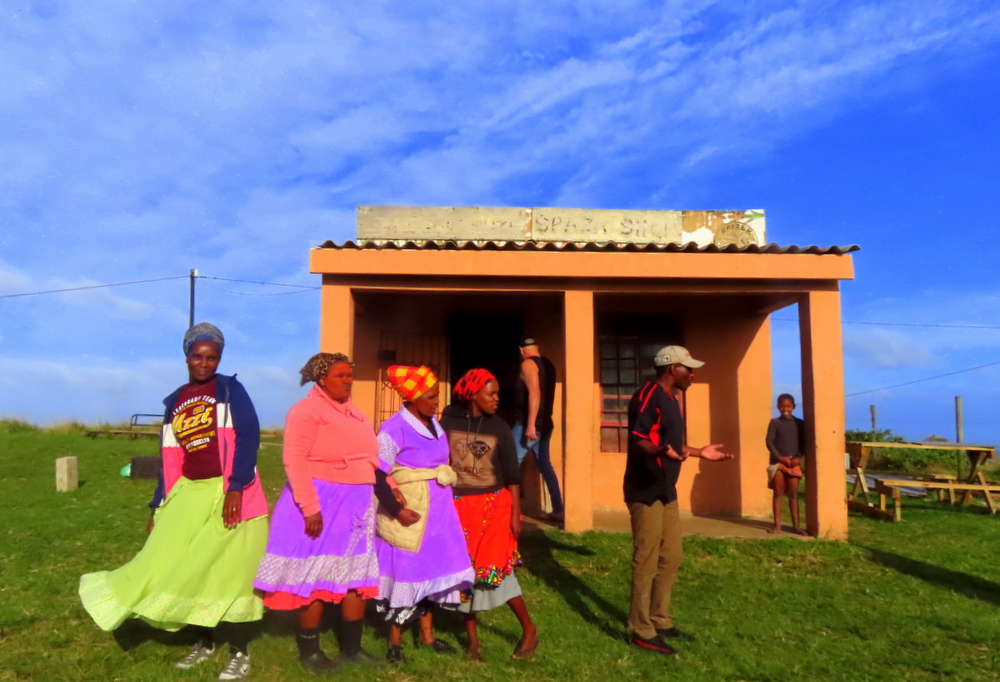
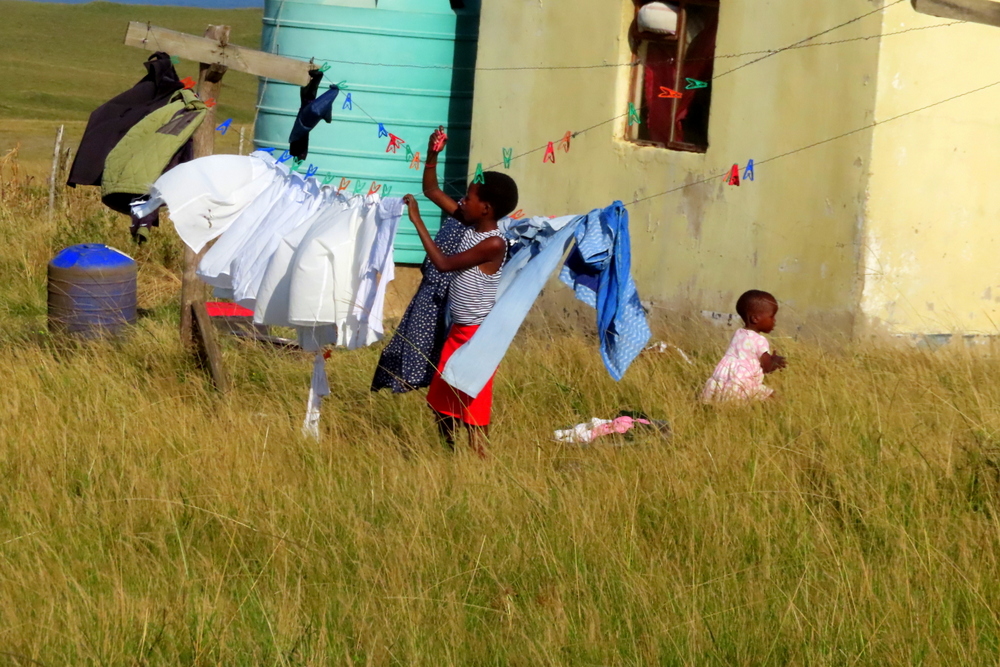
The afternoon passed. It was nearly sunset. Glorifying in the voluptuous twilight, I strolled up the road that leads past the local shebeen which, at all hours of the day and night, seemed to be alive with stumbling drunks. A group of uniformed school children trooped by. I strolled on, soaking up the atmosphere. Below me, a few horned cattle, followed by a flock of goats, were slowly wending their way home. A few independent-minded pigs snuffled in the rubbish. Washing flapped on washing lines.
The local shebeen.
It felt wonderful to have escaped all those demons masquerading under the guise of the new technology and the ubiquitous cellphone (although – since the small hillock above our shack was the one point where you could occasionally get a signal – a few of my fellow hikers were frantically waving their phones around in the air as they desperately struggled to establish contact with their loved ones). Resigned to the fact that not many people would likely be missing me, I had other thoughts on my mind. Watching the flecked white horses out at sea and the waves crashing and wheezing into the shingle, I felt a wonderful sense of peace and tranquillity.
Although it looked calm enough now, the weather along the coastline can rapidly change. The sky can curdle and blacken with thunder. Bolts of lightning will lighten up the ocean and the sky above it. Battered by strong winds and violent storms, the Wild Coast earned a bad reputation and presented a formidable challenge to the early European sailors (their modern counterparts too). Adding to the hazards of the route were the hidden shallows and underwater rocks; many ships got wrecked in these treacherous waters. You pass a few such rotting hulks on the hike, their rusted ribs and skeletons protruding above the sand or lying, scattered in pieces, over the weed-encrusted rocks.
The Transkei region has an equally turbulent history. The Kei River, further south, in Xhosa territory, once marked the thin dividing line where two alien cultures met: the white settlers moving north from the Cape and the black tribes pushing south, who were themselves part of a much larger migration which had its roots in Central Africa. Needless to say, it became an area of huge friction which lasted over many years and led to the outbreak of numerous frontier wars, in which some of my ancestors fought, earning them a black mark in revisionist history.
In the bad old days of Apartheid, the Transkei was turned into a supposedly self-governing – if impoverished – Bantustan with its own fake border posts and puppet government. Resistance to the system soon arose, with many of the leading figures of the liberation struggle coming from these parts, the most famous, obviously, being Nelson Mandela.
But that was then. Now was now. Turning my collar against the sudden chill wind that had come sweeping in from the sea, I crunched back towards where the sun was sending golden bars of light onto the surrounding hills,
The next morning, woken by the crowing of the noisy rooster next door, I got up early, wanting to catch the rising sun. On the one side of the horizon, the long vapour trail of a climbing jet sliced up the grey-blue dawn. On the other side, yellow-bellied from the rising sun, an endless caravan of clouds drifted over the ocean to wherever it is clouds go. Sitting on the verandah, sipping my mug of coffee, this was followed by the propitious sight of three Grey Crowned Cranes, propelling themselves through the cold, still, air with measured wing beats, their long elegant necks outstretched in front and legs trailing behind. Cranes are special. Shy and wary, it is always a privilege to encounter them anywhere in the wild; here it seemed especially so, almost a blessing, a sign of good things to come..
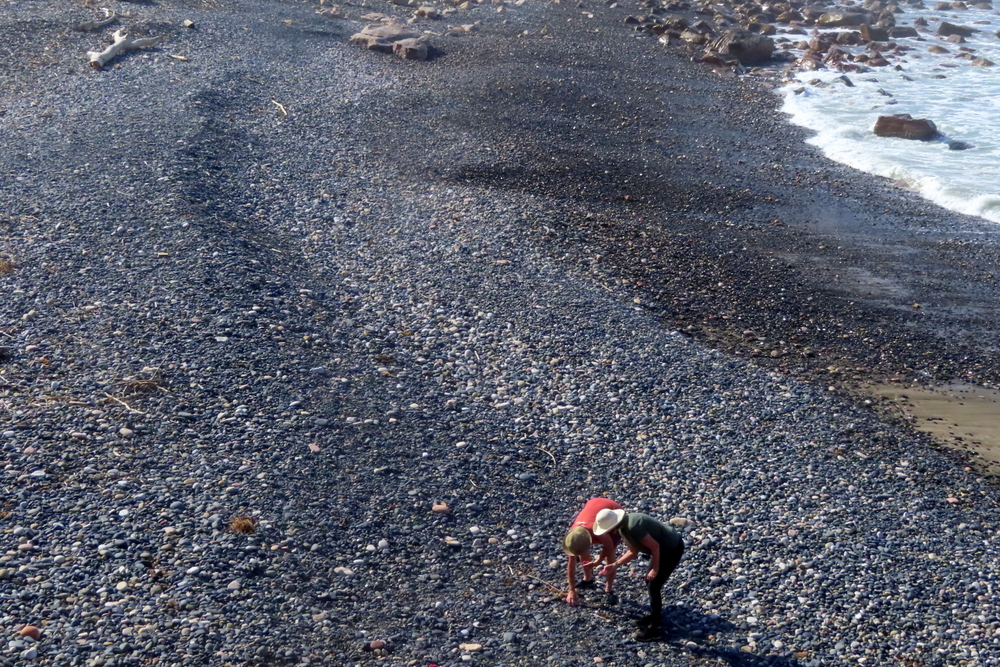
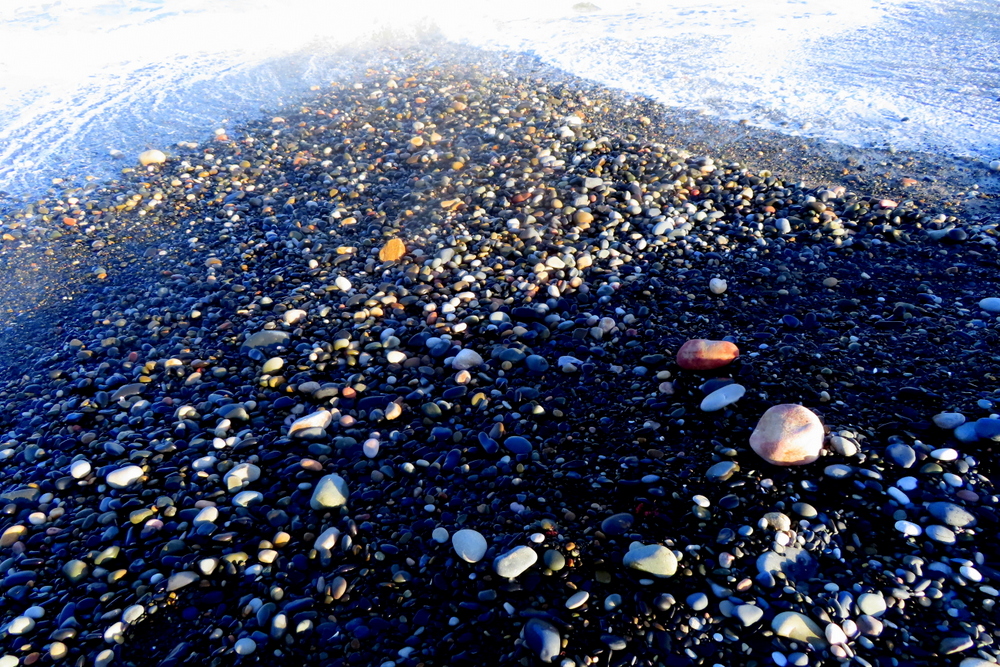
After a delicious breakfast, we decided to head down to the nearby Pebble Beach. Sunshine was bejewelling the dew that still lay on the fields as we squelched our way down through the grassy sponge to where the waves were collapsing and wheezing into the shingle on this secluded and deserted beach. Not wanting to get their stomachs wet by lying on the soaked grass, hordes of goats snoozed in the middle of the road.
Pebble Beach.
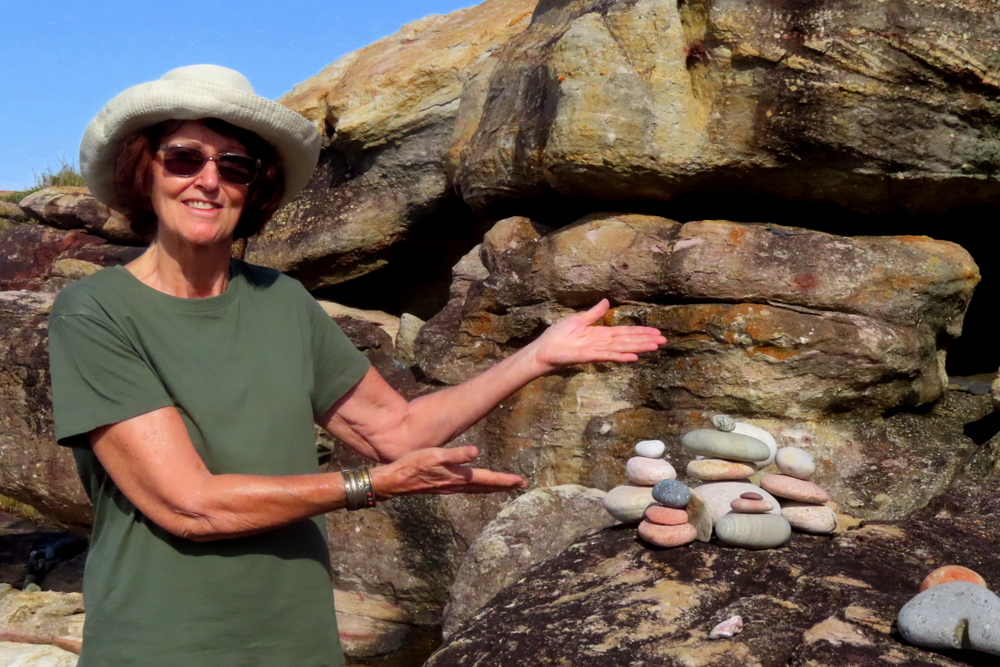
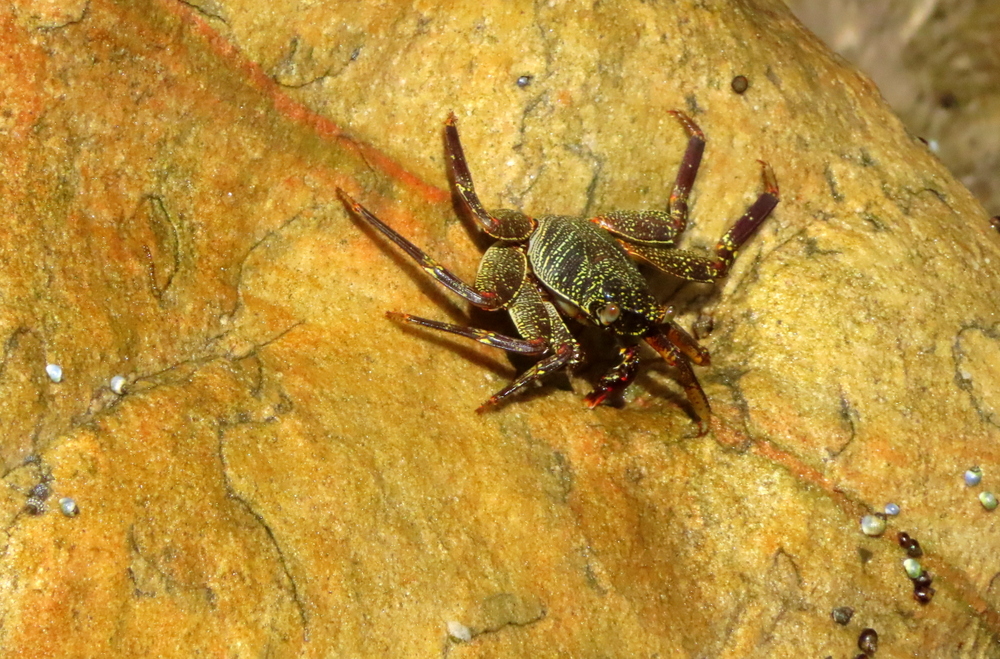
We spent a happy hour or two strolling up and down the beach, stooping over every now and again to pick up and inspect a stone whose surface had been polished smooth and shiny by the tumbling action of the waves. Afterwards, I stood on the outcrop of rocks, that protruded out at the one end of the beach, and watched the crabs playing Russian Roulette with the incoming tide as it surged up through the crevasses and exploded into the sky in a whale-like plume (late on, we saw several of those leviathans cavorting in the currents). The sea in front of me heaved with belches of brilliance and the waves crashed around.. Everything about the morning was magical: being surrounded by water, the pleasing tidiness of the hills behind us, the foraging cattle and goats, the small rural settlements scattered like wheat chaff along the horizon. A solitary Jackal Buzzard suddenly swooped over the hill and then hung in the air like some hovering messenger from the gods.
Down by the seaside with Mary Ann…A crab, waiting for the waves to surge in.
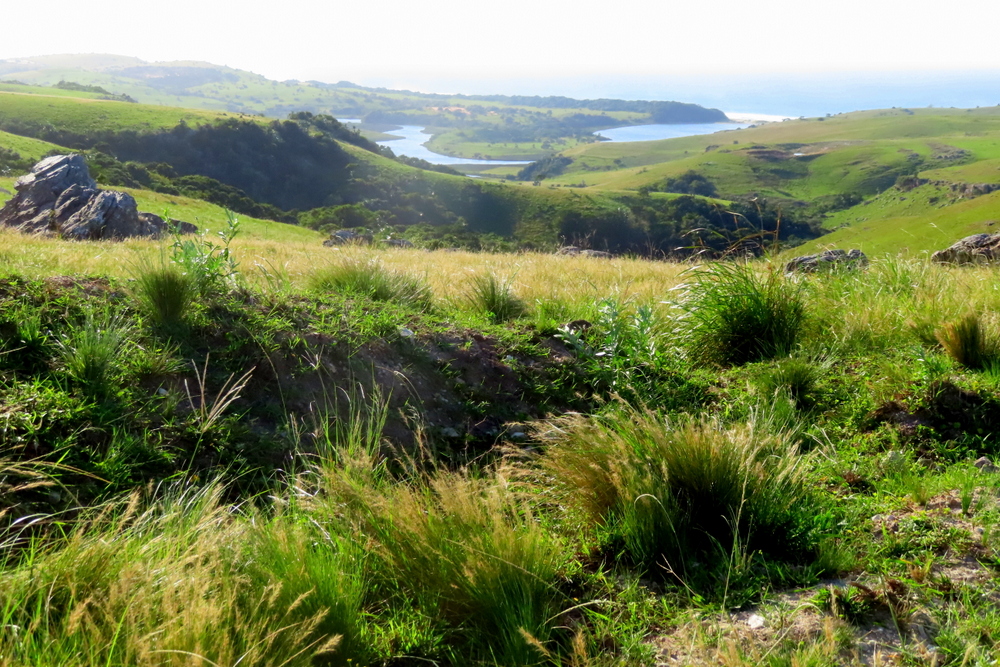
Later, a few of us went for another walk across the rolling countryside. The sun had dipped behind the distant hills but there was still plenty of light in the sky so instead of following the others back to the shack afterwards, I headed further up the road on my own. To my left a herd of cattle were standing atop a ridge, contentedly chewing the cud. I decided to go towards them. At the top, I stopped and surveyed the beautiful view. To my left, a winding river snaked its way through the hills before opening up into a reed-lined estuary over which an occasional heron drifted. In front lay the ocean, stretching out forever under an empty sky. To my right, I could make out the prominent bluff that marks the point where the Mtentu River enters the Indian Ocean. It all seemed ethereal, dream-like, a shifting evanescent panorama.
With the light rapidly fading, I turned and started back along the path. My reverie was interrupted when I became aware of a figure staggering towards me, arms waving frantically, trying to attract my attention. I instantly recognised him. He was one of the noisy revellers I had seen outside the shebeen earlier on, the one proudly sporting a brand new ANC Youth League T-shirt.
My habit of snapping away with a camera at anything that captures my fancy was about to land me in trouble…
Initially menacing the young man demanded to know who I was, why was I there and what was my reason for taking photographs? Was I a journalist, he asked suspiciously? “No,” I said, not strictly honestly (although, in fact, I’m a political cartoonist) -” I’m just an old man – a mkhulu – enjoying the view and taking in the sea air”. He seemed unconvinced by my explanation. Another barrage of questions and accusations followed which I had some difficulty following because of his confused diction and somewhat inebriated state. Then, his attitude abruptly changed. He gave me an ingratiating smile, bent over and scooped up a rusted old enamel dish lying abandoned in the grass. “” Here”, he exclaimed with a beam, “A gift for you. Something to remind you of the Transkei”. I thanked him profusely and – keen to avoid further inquisition – hastened back to the safety of our shack.
I felt saddened by the encounter. With national elections looming, part of my reason for coming to the Wild Coast had been to try and escape the bluster, sanctimony, slogans and ideological posturing. Now, I felt like I had been yanked out of my imagined pastoral idyll and thrust back into the harsh reality of modern-day South African politics.
The mood soon passed. Sitting outside under a star-smattered sky, the air wet from the sea mist and the faint taste of wood smoke drifting past, I witnessed one of those beautiful, long enchanting slides of a shooting star falling through the heavens. The good omens were piling up. Mary Ann’s birthday – which we were to celebrate with a sumptuous paella (Kelly’s cooking again) and bottles of champagne – had really received the blessing of the gods.
Another pleasurable surprise lay ahead. Peering through the encroaching darkness I next made out the outline of a cruise liner, steaming southwards like a massive, lit-up fairy castle. The contrast between it and our own simple rustic setting could hardly have been more striking. As I sat there, watching its progress, it suddenly dawned on me that this was the very ship transporting my geologist brother from Australia who I had arranged to meet in a few days, after he had docked in Cape Town. It was another sign from above..
Straining my eyes, I watched the ship until it was nothing more than a distant speck, Then it vanished and everything went dark again.
The next day, I sprang out of bed with a purpose. The Transkei interior gives rise to several major rivers and numerous lesser ones. The Mtentu, which passes through a steep cliff-lined gorge before discharging its contents into the Indian Ocean is one of the Wild Coast’s iconic rivers. Navigable for some distance, we hoped to canoe a small section of it.
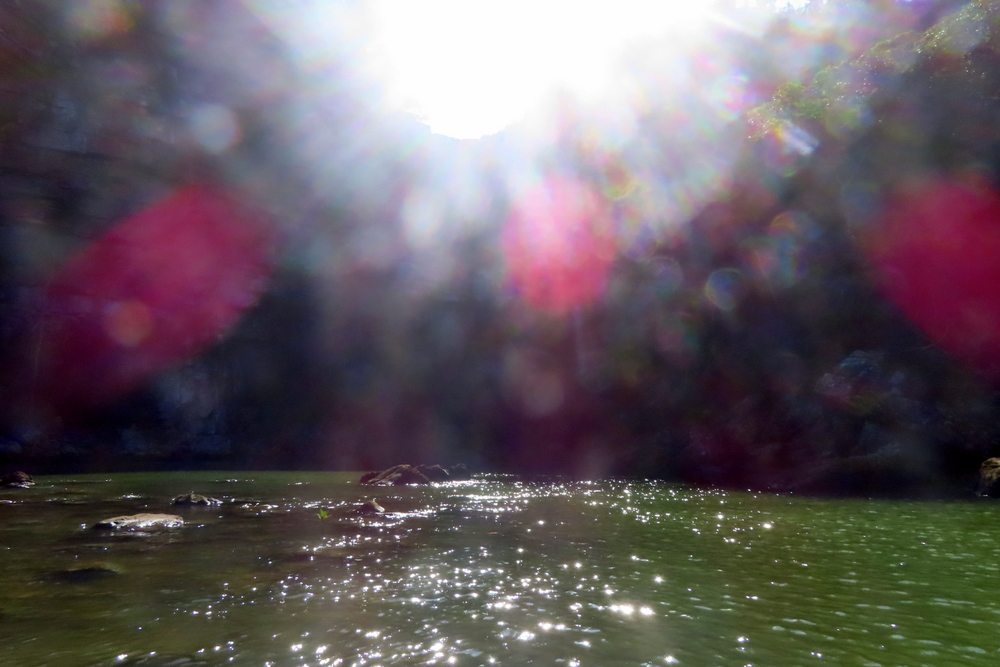
The Mtentu River Gorge.
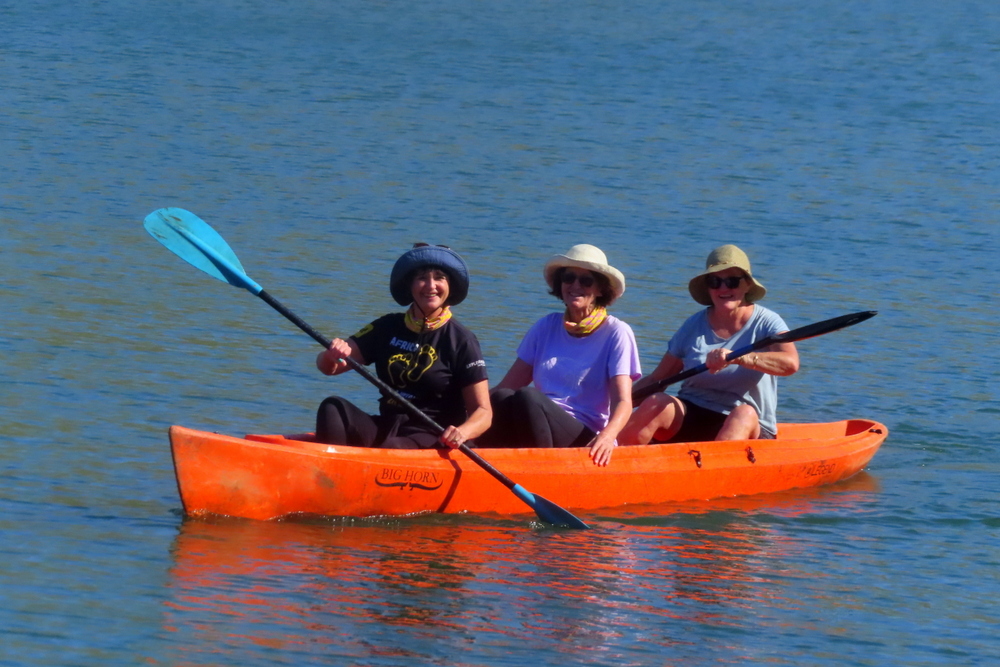
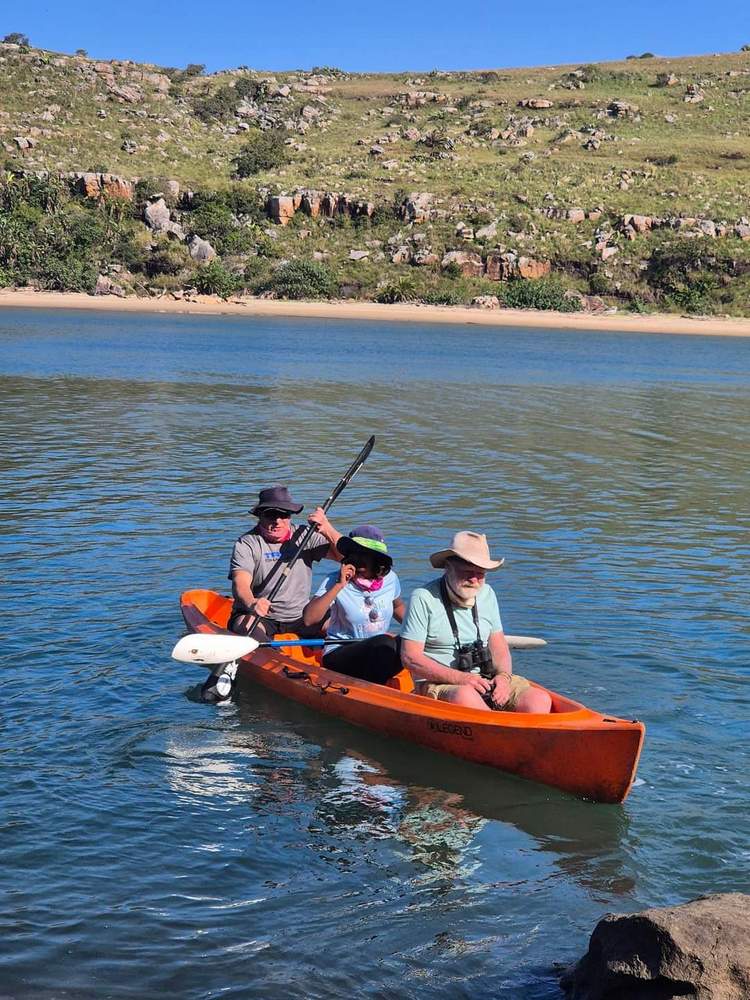
As it rose above a rampart of cloud hovering above the Agulhas Current, the morning sun was whispering enthralling promises of things to come as we headed down the winding track that led towards the river. Reaching its shore we clambered into the bright orange hire canoe, that had been made available to us, and turned its nose upriver towards the interior. Then, we started paddling.
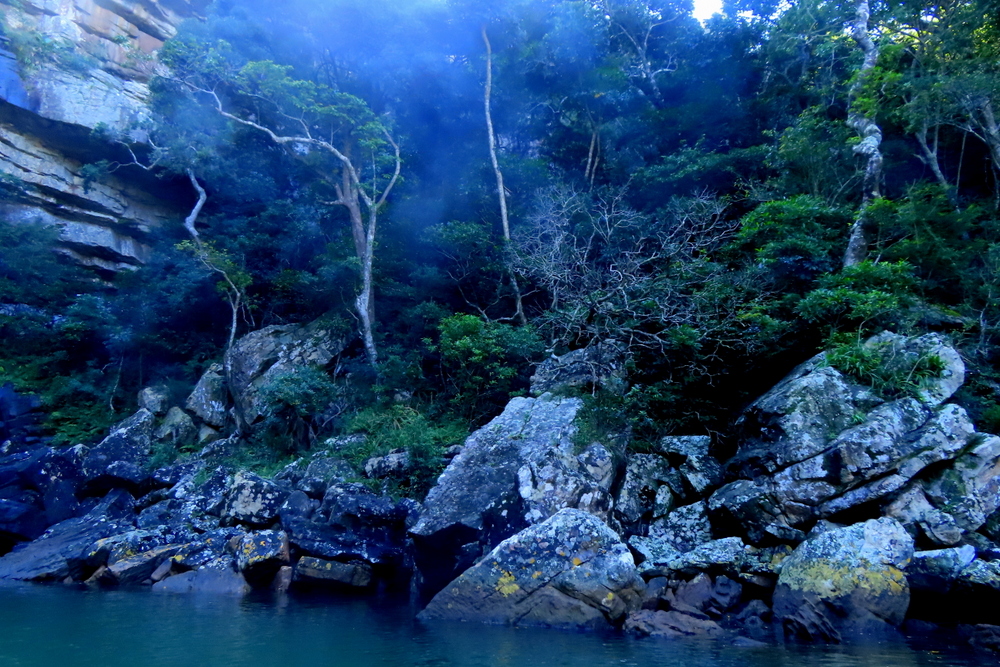
The Mtentu Gorge has an enchantment about it. Sitting in the brow of the canoe, I felt a bit like Marlowe in Conrad’s Heart of Darkness, on a journey into the unknown. As we paddled, the river seemed to close in on us, tall trees and tangled masses of vegetation crowded down the steep cliffs, in an impenetrable thicket, to the water’s edge. Patches of mangrove clung to the shores (I had hoped to catch a sighting of the elusive Mangrove Kingfisher but I was to be disappointed). In places, the choppy waters, snatching this way and that, had ripped caves of soil out of the bank, leaving hundreds of metres of exposed rock and overhang.
A tangled mass of rocks and vegetation.
There was no sign of human habitation or any indication that anybody had penetrated the pristine jungle of trees along its shoreline in aeons. Apart from the odd bird and jumping fish, we appeared to be absolutely alone, face to face with the very elements of creation (although the last time we had been here, Tom Cruise had spent the day buzzing up and down the river in a yellow biplane filming a sequence for the latest Mission Impossible). Drifting through that quiet, deserted, mysterious landscape, with only the sound of the paddles sluicing through the water and the distant roar of the breakers crashing along the river mouth, everything seemed just right. I felt I had all my heart could desire in these troubled times – calm, peace, serenity and a timeless beauty.
A journey into the unknown…
Rounding a corner, a waterfall on the right of the river, hove into view. Ian Tyrer, our (highly recommended) hike leader, who was paddling, arced the canoe close to the bank, before guiding it expertly through the rocks up to its base. Positioning ourselves so that we could best take in the spectacle, we sat quietly for a while in the shade cast along the edges of the river bed by the forest giants and high cliffs watching the cascade of water falling over the lip of rock high above us. As we sat, cloudy layers of falling moisture splattered softly on and around us.
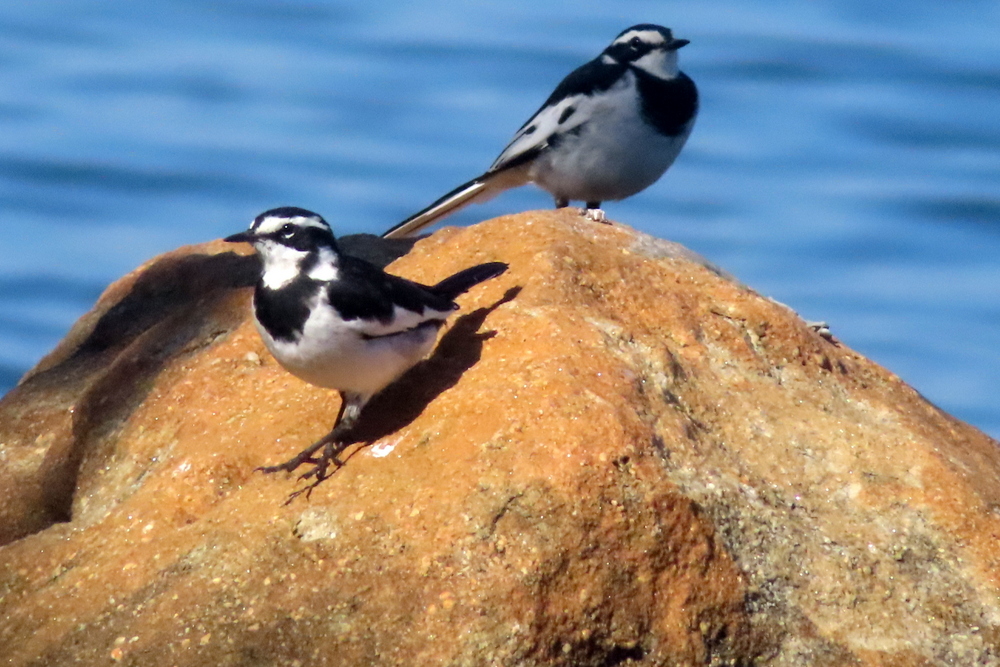
Having reached this dramatic landmark, we turned and headed back the way we had come ( I would loved to have explored further). By now we were approaching lunchtime and the weather had begun to change. Staccato gusts of wind jabbed the water, causing it to splash and thump against the side of the canoe. Ian paddled close to the banks where the water spirits were not so intent on upturning us, directing the canoe past a point where an enormous tree had been thrown into the shallows by some past flood, its twisted form providing a convenient observation point for kingfishers and cormorants. Further on, a pair of tail-bobbing Pied Wagtails struck poses on a rock and watched, with bemusement, our progress, as we battled against the tide.
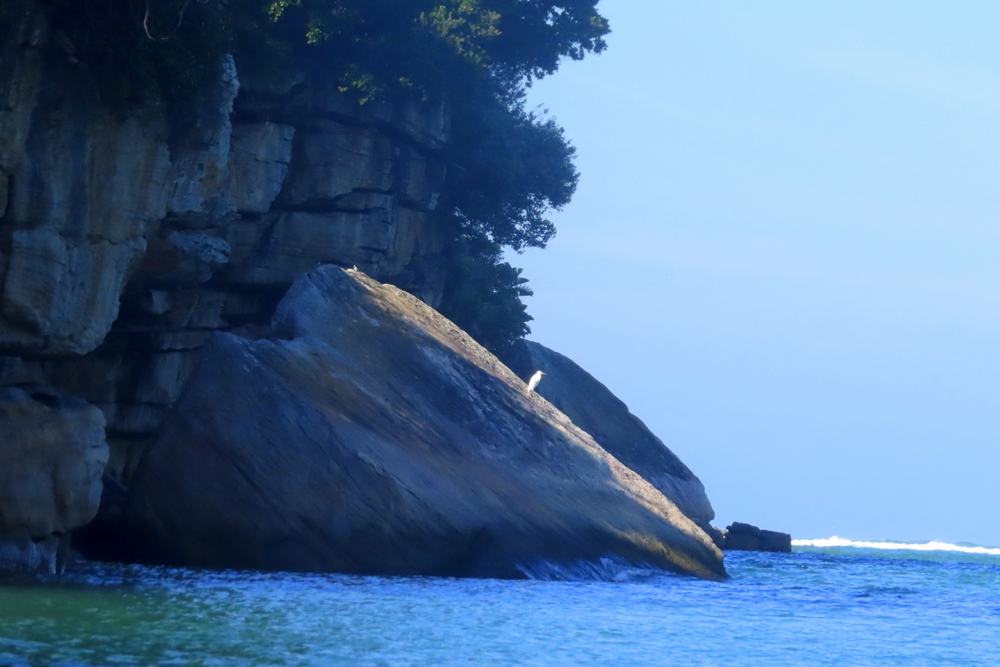
Instead of pulling in at our launching spot, Ian decided to head on down the river towards where the waves were breaking. Acting like some self-anointed guardian to this wild sanctuary, a solitary egret stood erect on a large sloping rock that demarcated the entrance to the river. By this stage, the swell was getting stronger so Ian called a halt. Turning the canoe around, we headed home.
And so the last day of our trip drew to a close.
That evening, I sat down and, over another beer, totted up the total distance I had walked during the course of the three days. It amounted to over thirty kilometres. Although it had not been my only motive for coming on this pilgrimage, it was an achievement of sorts, especially considering I had not done the main beach walk of about 25 kilometres.
Driving back to my home at Curry’s Post the next day, I felt I had notched up another successful jaunt to the Wild Coast. Not only had it met my inner needs but I had proved there was life in the old dog – that being me – yet…
GALLERY:
More Wild Coast Scenes:
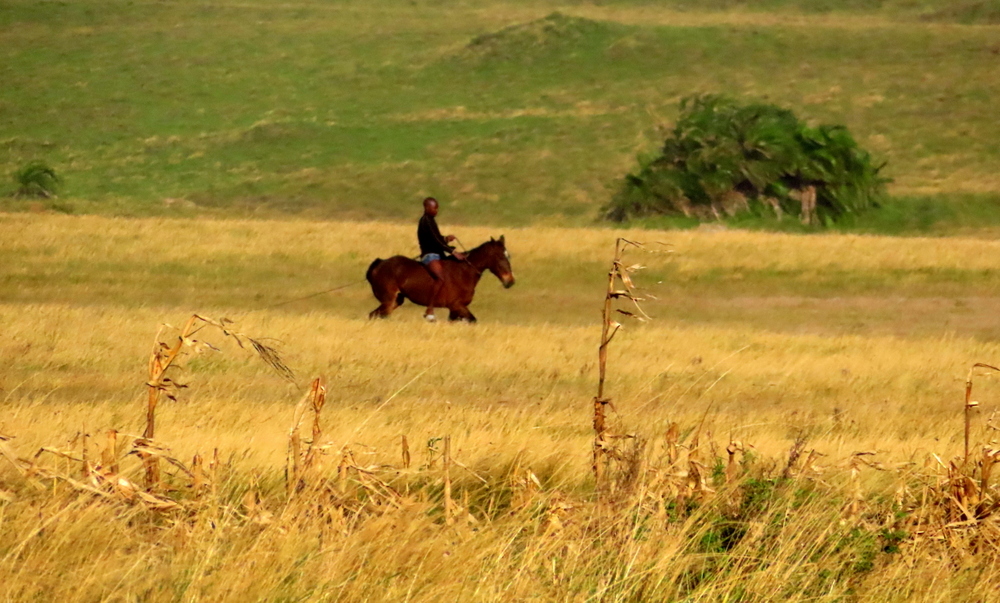
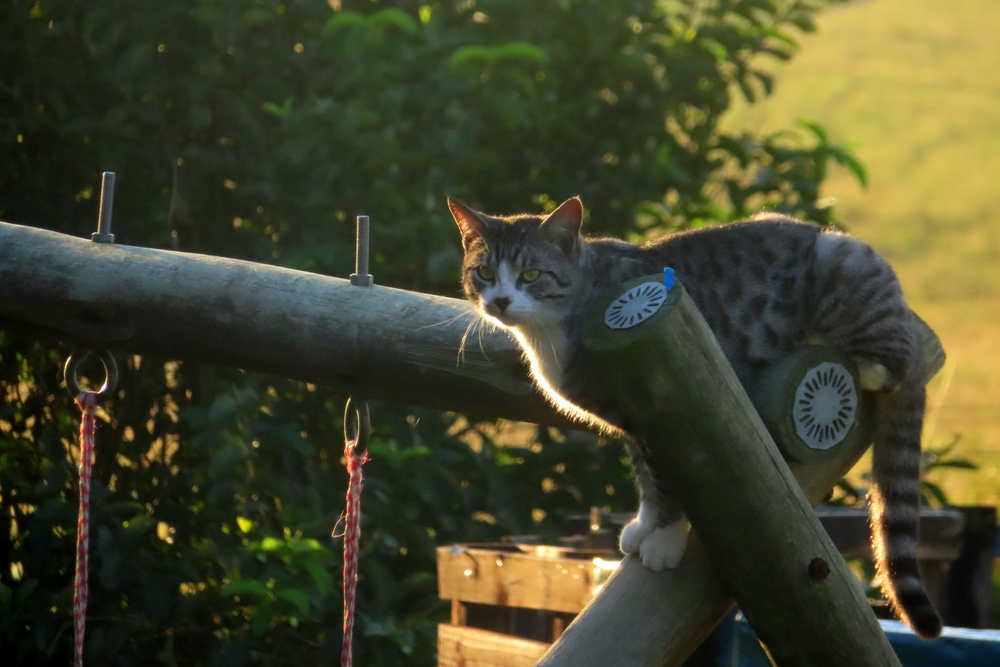
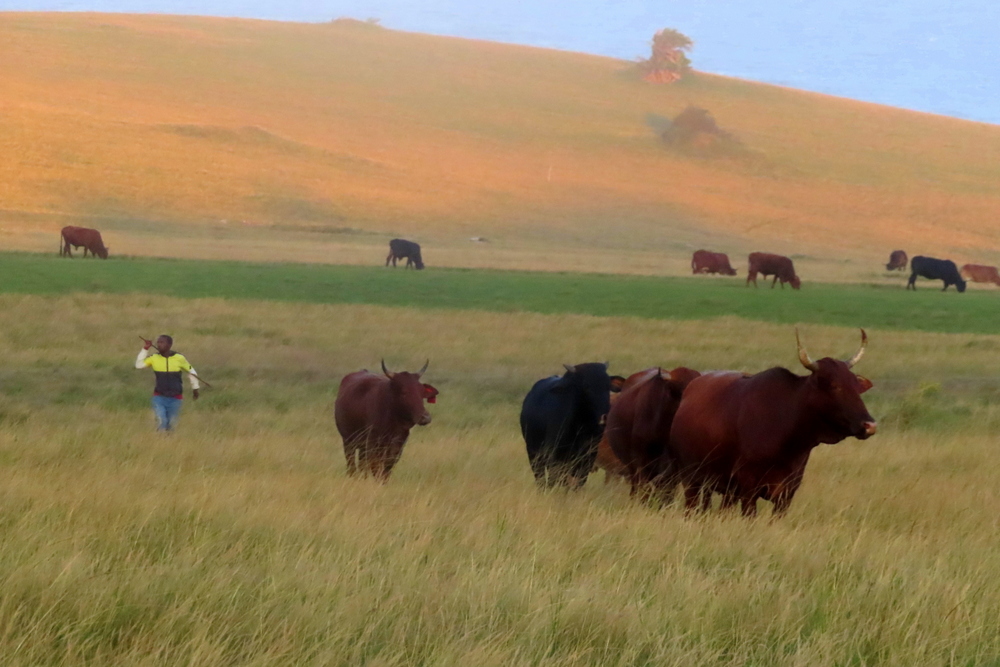
Wild Coast Scenes with Animals:
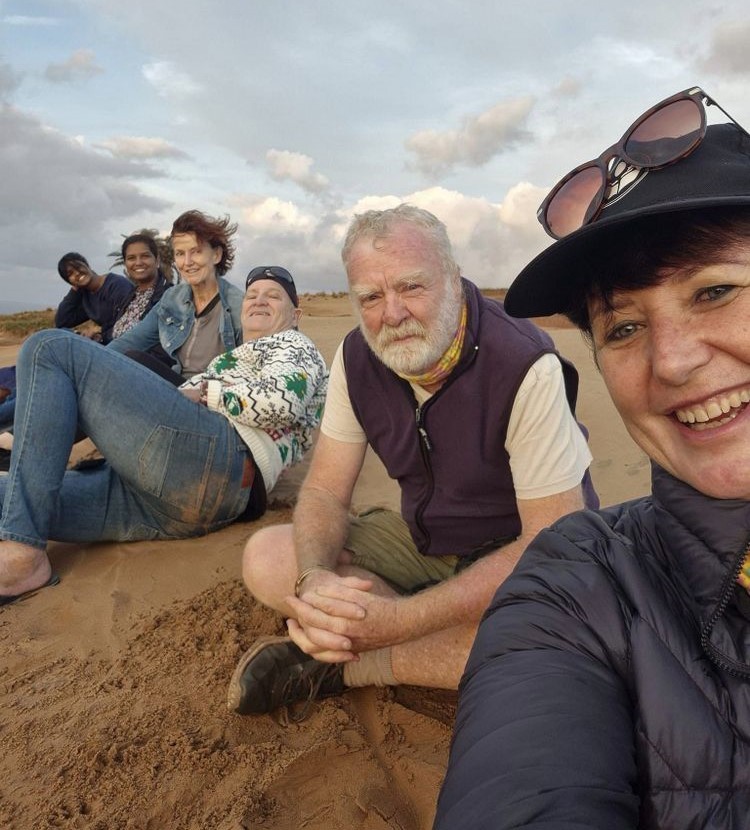
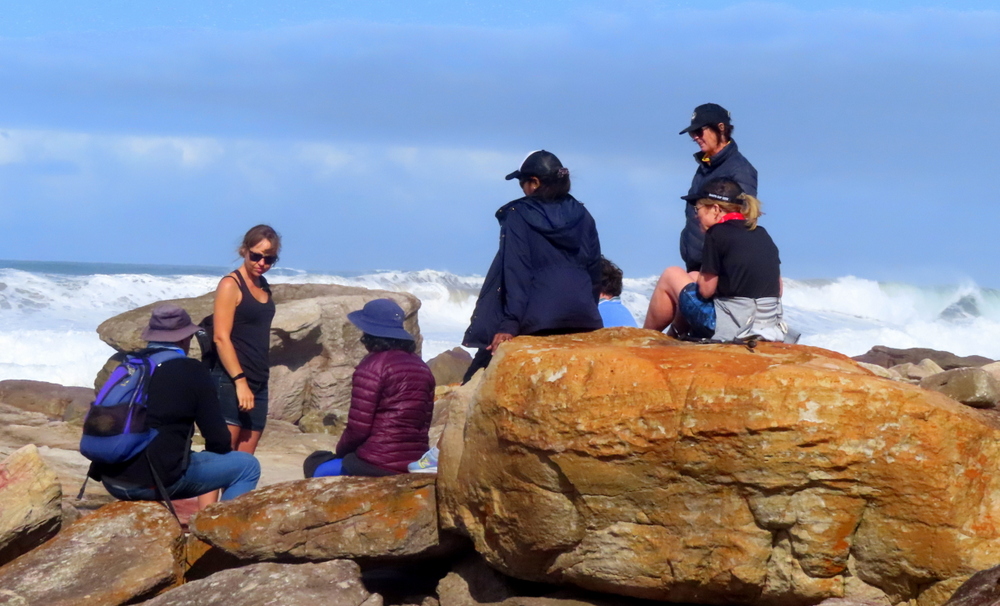
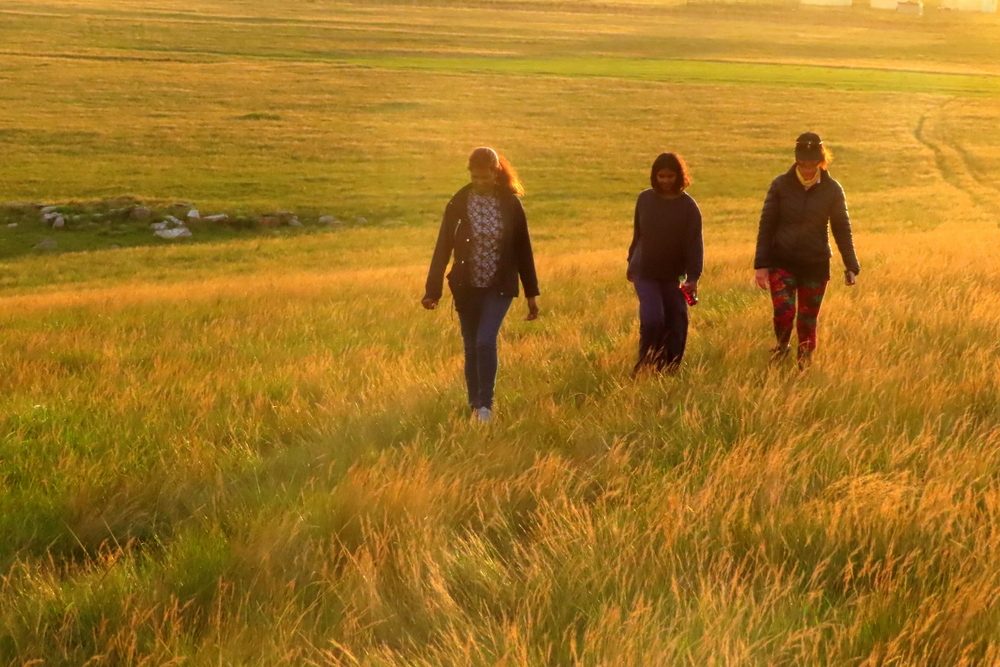
Wild Coast Hikers:
Pic courtesy of Mandy Tyrer.Pic courtesy of Mandy TyrerPic courtesy of Mandy Tyrer
In late 1989 I made a journey through parts of Austria, Hungary and Czechoslovakia, taking in the three main cities of the old Hapsburg Empire – Vienna, Budapest and Prague. Hungary and Czechoslovakia, at that stage, were still nominally under Soviet rule and forty years of Communism had obviously left its imprint but you could still get a sense of their shared cultural and historical heritage and old links.
Shortly after I returned, I wrote several articles about my experiences which I never did anything with at the time but which – having tightened them up a little – I have now decided to post as a Blog in the hope they will provide a brief glimpse into what life was like in that fascinating part of the world back then.
I begin with my impressions of Prague even though that was, in fact, the last of the three cities I visited.
Prague, with the Vitava River in the foreground. Hradcany Castle on the other side.
1989 found me at a loose end.
I had previously resigned from my job as features editor at SCOPE to take up a position at the newly formed Laughing Stock Magazine in Johannesburg. After barely nine months, I quit that too because all the signs were telling me I was on a doomed ship.
I did not feel inclined to go down with it.
I didn’t feel like facing the grind of walking the streets again looking for work. So, I did what I often do when in an awkward spot – I bought an air ticket and headed overseas. I had already been to Britain and the continent several times. This time I wanted to undertake a different journey. I wanted to go somewhere that entailed an element of risk.
As it turned out, my English cousin, Rebecca, who had just graduated from Oxford, and two of her friends were planning a car trip through three of the countries that constituted the old Hapsburg Empire – Austria, Hungary and Czechoslovakia. One of the places on their must-visit wish- list was Prague.
Despite the fact it was still under repressive Soviet rule, the city was becoming a chic place to visit. Even though I am probably an unlikely candidate in the eyes of others, I decided I could do chic.
First, I had to go through the tiresome business of getting my papers.
It was probably a coincidence but the day after I visited the Czechoslovakian Embassy in Kensington Gardens to obtain my visa the British government expelled three Czech diplomats from the country. As it was I was too busy marvelling over the fact a communist country was prepared to have me – an unfashionable White South African – as their guest to pay much attention to this West-East spat! As a member of a pariah state, I had expected to be immediately shown the door. Instead, I was treated with an indifference that seemed almost indecent.
We entered the country, at the Slovakian end, via Hungary. The contrast between the two countries was sobering. If our first border crossing had been a lesson in bureaucracy at its most bewildering this one was an education in power. With pistols strapped to their wastes, the Czech border guards were cold and officious, demanding our passports and then taking them away for a sufficiently long time to make one realise how extraordinarily helpless one can feel.
Brno, en-route to Prague. There was something little sinister about the tower at the end of the bridge. Note grey tenement blocks behind…
This was more the Le Carre country I had expected.
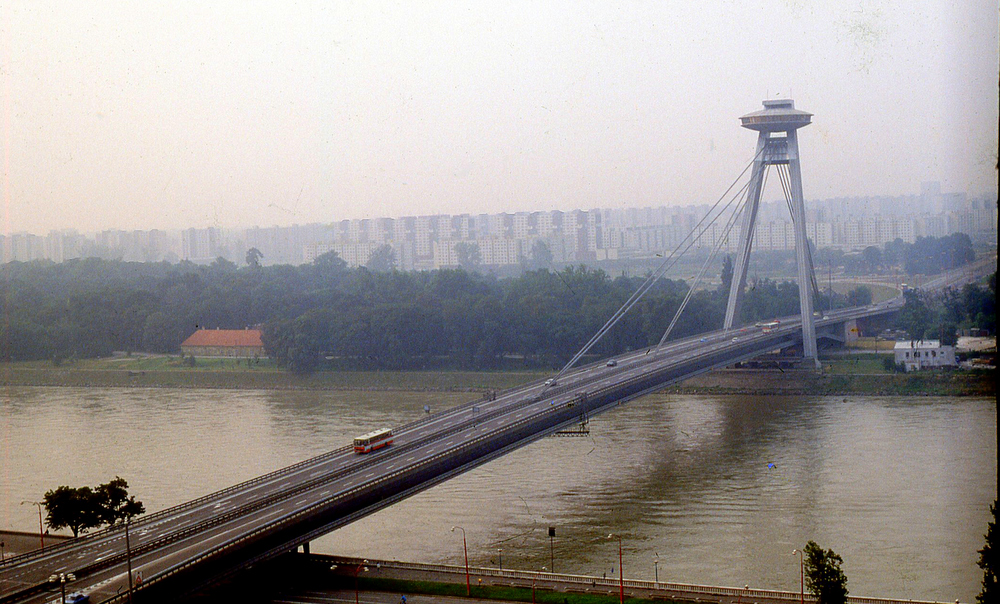
Having given us this crude reminder of what might lie in store for us, they waved us through the border post. As we drove into Slovakia, I wondered what lay ahead. The countryside we passed through did little to reassure me or allay my fears. Parts of it were badly polluted, the forests dying from acid rain. Elsewhere, great concrete blocks marched higgledy-piggledy, mile after mile.
My anxiety eased a little once we got to our destination.
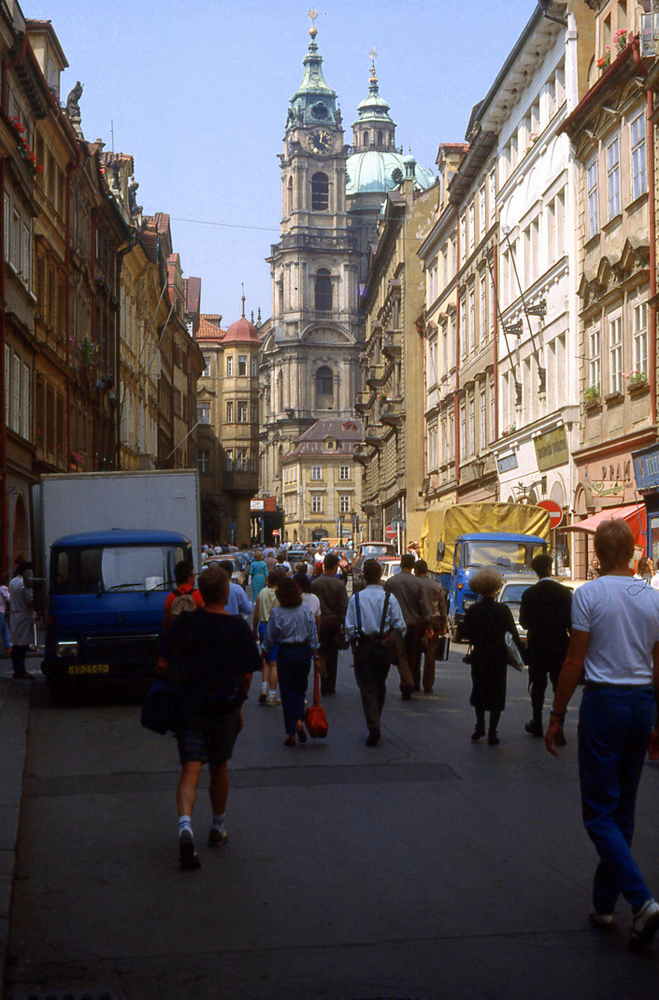
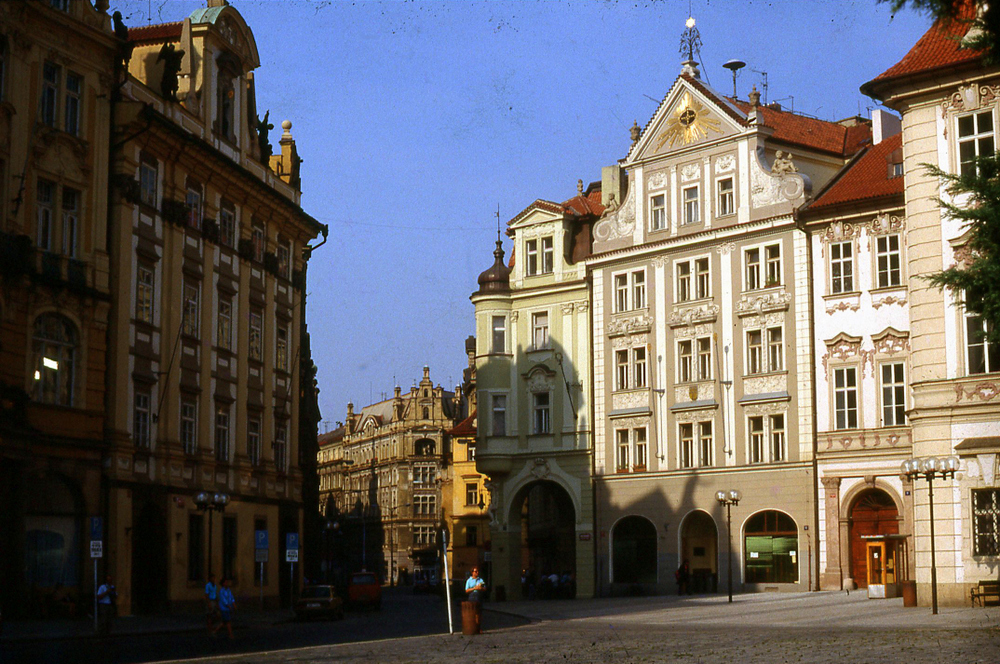
Prague, or at least the old parts of it, is one of the handsomest cities in Europe. When we visited it still possessed a decaying grandeur, a faded old-world charm. Having escaped bombing during the Second World War, virtually every epoch of European architecture was still splendidly represented.
With its constant surveillance of its citizens and intolerance of public opposition, the Czech Government may not have been the most open-minded or benevolent in the world but they at least recognised what Prague represented and had been remarkably sensitive when it came to preserving the unique heritage of the city. There had been no mad-cap Ceausecu-style leadership here, bulldozing down beautiful, historic, buildings and displacing whole communities in pursuit of some nightmare vision of a Marxist Utopia. Nor had the city been swamped by Western-style consumerism and kitsch. There were no burger joints or trendy boutiques. No neon lights nor flashy advertising had been allowed to impugn the city’s ancient dignity.
Even the display of communist symbols, so common elsewhere, had been kept to a minimum.
We arrived to find a city not really geared towards tourism. Although they welcomed the money we brought with us (in our case English pounds), the authorities were still highly suspicious of foreigners. We were not allowed to choose our own hotel to stay in, the state had its own special ones reserved for us suspect Westerners.
There were not many of these and the one they selected for us must have been the worst of the lot. Situated in a filthy, run-down, seedy part of town, it looked semi-derelict and was covered in grime and soot. My companions were appalled but we had no choice. The hotel would have to do. We signed the miles of paperwork and regulations the police required because we were suspect Westerners and carted our bags inside.
There was a young Czech soldier staying in the room next to mine. He had a woman with him. She may just have been his girlfriend but I doubted it. She seemed much more worldly-wise and older than the fresh-faced youth who was barely out of his teens. It tended to confirm my suspicions the establishment doubled up as a house of ill-repute
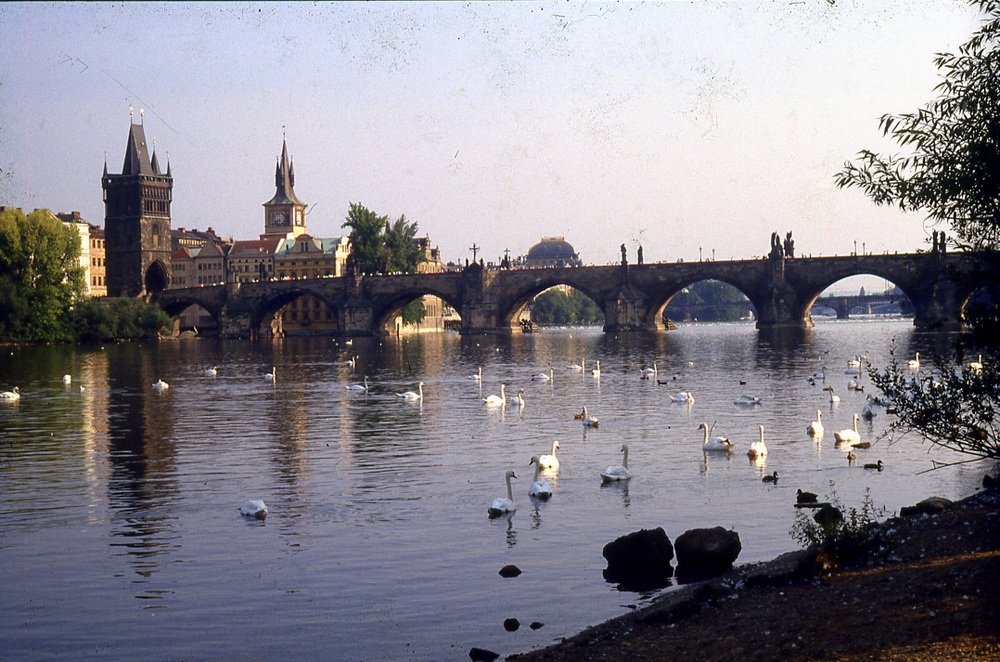
After a barely edible dinner, we headed for Charles Bridge (Karluv Most).
Charles Bridge.
Just as anybody who spends time in London inevitably winds up at Tower Bridge so, too, does Charles Bridge provide a focal point for Prague. With its slightly curved and cobbled surface, this famous pedestrian bridge was begun in the 1300s but not completed for some 50 years. At a later date, 26 statues depicting St Francis Xavier and his pious companions were erected along the sides. Perhaps the most interesting of these is St John Nepomuk, the patron saint of Bohemia, who, legend has it, was flung from the bridge by order of Wenzel IV for refusing to reveal what his wife, the empress, had said in confession.
His body is said to have floated for a considerable time in the river with five brilliant stars hovering above his head.
The bridge links the two most interesting quarters of the city. On the one side lies the old town and Jewish Quarter (Josefov); on the other lies the Hradcany Castle. Protestant nobles threw two Catholic counsellors out of the window of this castle on 23rd May 1618, thus precipitating the Thirty Years War, one of the bloodiest conflicts in European history (the counsellors, who landed in a dung heap, survived)
During the day the bridge thronged with tourists, at night a different atmosphere prevailed: it had become a rallying point for protest against the ruling regime. Soapbox politicians held forth about the evils of the system while long-haired hippies strummed guitars and sang Dylan’s “The Times They Are A-Changin’” and John Lennon’s “Imagine”.
It took me back to the anti-Vietnam protests of the Sixties and Seventies.
Standing in the misty moonlight with the silent, silvery, river flowing underneath, I got the impression that the younger generation, in particular, no longer cared about what they said or did. The fact that such dissent was now tolerated did, at least, indicate the old climate of fear and silence was beginning to thaw.
I struck up a conversation with an English-speaking Czech who turned out to be a lecturer at the local university. When I remarked on the beauty of the city, he shrugged his shoulders and said: “Yes, it is pretty but it would be even prettier without the communists!”
The next morning, I wanted to see more of it. I started at Wenceslas Square which is not really a square but a very broad boulevard that forms the neo-classical part of town above the older parts of Prague. The far end of the square is dominated by the theatre while along its sides were numerous shops, hotels (including the Art-Nouveau Hotel Europa) and restaurants – although we found the cuisine a disappointment after Budapest.
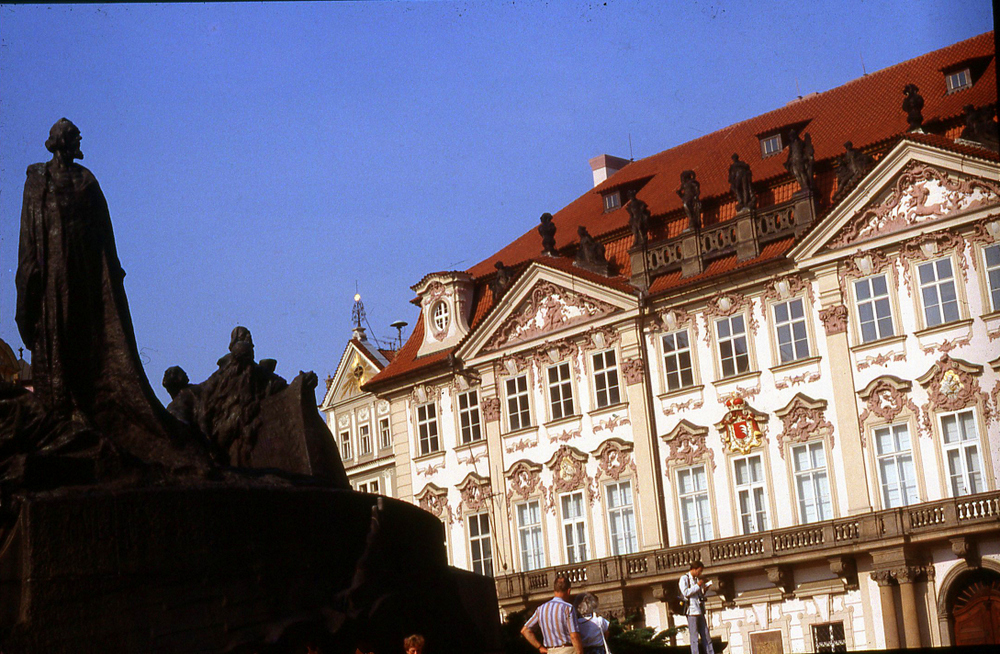
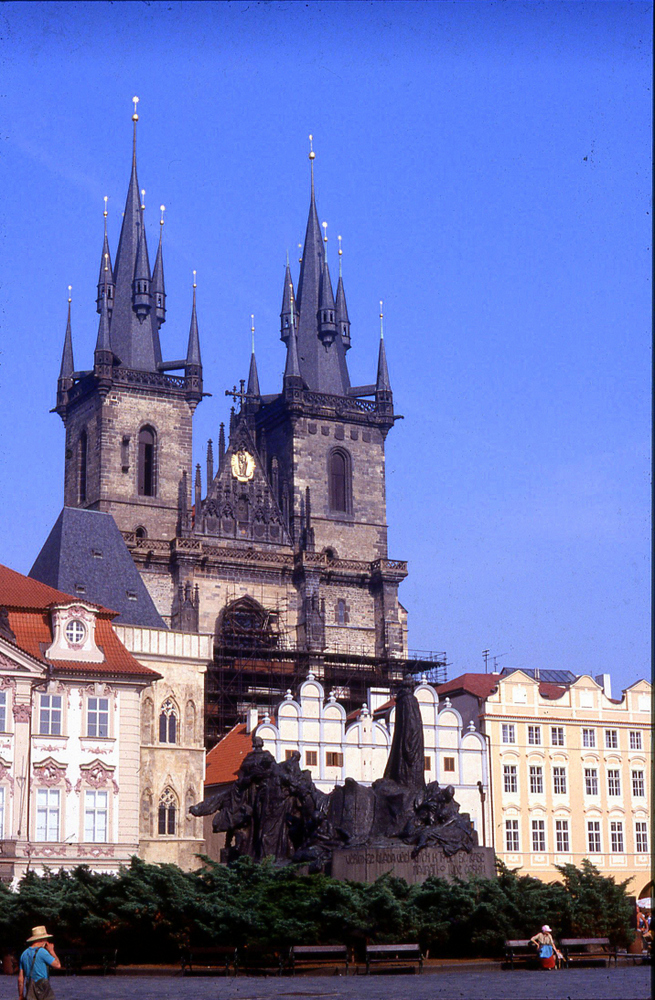
From WenceslasSquare, I headed, via the old Powder Tower, to Staromestke Namesti in the Old Quarter. With its rich Baroque facades, this square is one of the most stunning sights in Prague. It includes the Town Hall with its tower and astronomical clock dating from the 1400s, the glorious twin-towered Teyn Church and – in the middle of the square – a straggling mass of statues erected in 1915 to commemorate the 500th anniversary of the death of John Hus, the celebrated orator, reformer and champion of Czech nationalism whose execution at the hands of the Germans led to the Hussite Wars.
Starometski Namesti.
Not far from here is the old Jewish Quarter which dates back from the 10th Century and is one of the oldest ghettoes in Europe. It also contains surely one of the oddest sights in Central Europe – over 20,000 graves piled one behind one another with hardly a gap in between.
Near the entrance to the cemetery is a small museum which houses a collection of drawings and poems by Jewish children, many of whom died in the concentration camps of Terezin and Auschwitz. Drawn in the art classes the Nazis allowed the children to attend – mostly for propaganda purposes – they show how conflicting realities can co-exist. While some paintings capture innocent childhood preoccupations, others depict far more painful scenes as the children become increasingly aware of the grim reality of their circumstances and the horrors being perpetrated around them. Poignant and intensely moving, they serve as a grim reminder of how easily people can lapse into barbarism and cruelty when ideology gets twisted to serve the most awful of ends.
Indeed, it is hard to believe Franz Kafka died ten years before the first concentration camp was built because if anybody understood oppressive bureaucracy and the true nature of totalitarianism, in the marrow of their bones, it was surely he. A native of Prague, he was born and brought up in the Jewish Quarter and also lived along the Zlata ulicka (Golden Lane) up by the castle.
I was a little disappointed to discover, though, that the one museum I had specifically wanted to visit was closed. This was the Museum of the National Security Corps and the Army of the Ministry of Interior where you got to see how the authorities previously dealt with those who disagreed with their policies. The prize exhibit was the stuffed remains of the dog famous for having caught more people trying to escape to the West than any other mutt on the military payroll.
A little later on, I was to get my own small lesson on how the authoritarian propaganda machine in communist countries worked. Tired from all the tramping, I was sitting at a pavement café, sipping a cup of sickly sweet coffee when a loud, disembodied voice suddenly started barking out worked instructions directly above my head. The effect was startling in the extreme, especially when it was picked up and parroted from the top of virtually every street light in the vicinity. It took a few terrifying seconds for me to figure out the sound had come from a series of loudspeakers rigged around the city. For me, this was Big Brother come to life, not that it seemed to have the slightest effect on the ordinary citizenry around me who simply ignored it and carried on with their lives. I found their response oddly reassuring.
Used to the living standards of the West, I quickly came to realise how unnaturally difficult all the rules, regulations, excessive formalities and mountainous and highly inefficient bureaucracy made life for such ordinary folk. The currency, for example, was surreal with a huge difference between the official rate (16 korunas) and what you could exchange it for on the black market (between 40 and 50 korunas)if you were prepared to take the risk. In Prague, everybody seemed to be in on the game. You could hardly take two steps without somebody sidling up to you and whispering in your ear “Tauschen? Change money?”
Several years later, I would experience the same sort of thing in that other socialist paradise – Zimbabwe.
The next day I headed up to the castle, passing several dagger-thrusting titans who looked like they would slice your head off if you so much as dropped an ice cream or said anything derogatory about the state. This feeling was more than offset when I came to the magnificent Gothic cathedral of St Vitus with its soaring pinnacles and towers. Inside is the impressive Monument of the Kings, the hereditary burial place of the Bohemian monarchs.
Wandering around the interior, noticing all the devotees and worshippers and how lavishly the church had been restored, I realised that the bad old days when Communism persecuted the Church had largely gone.
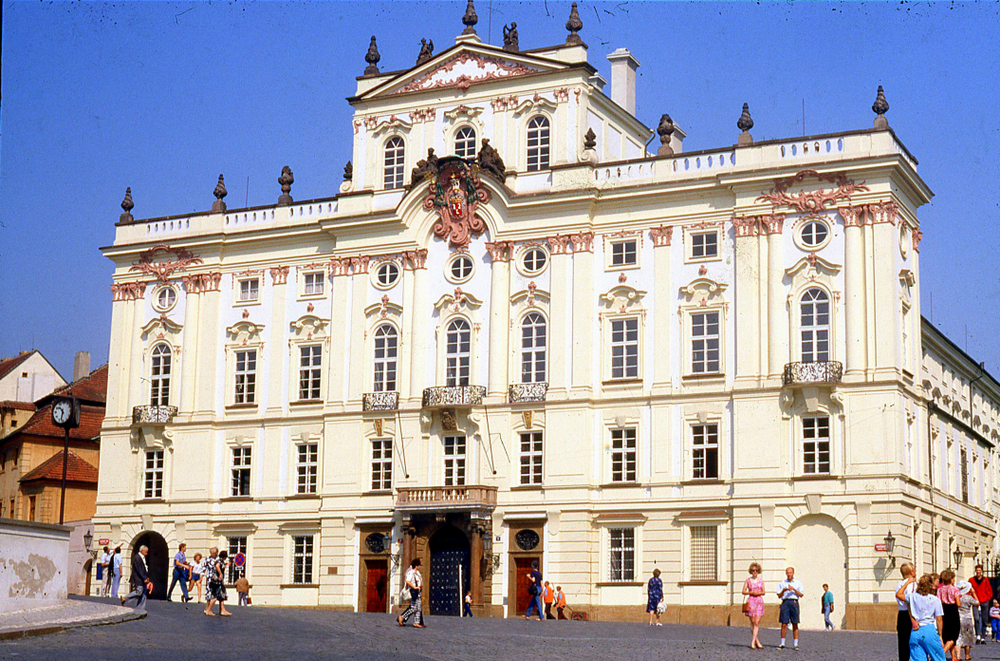
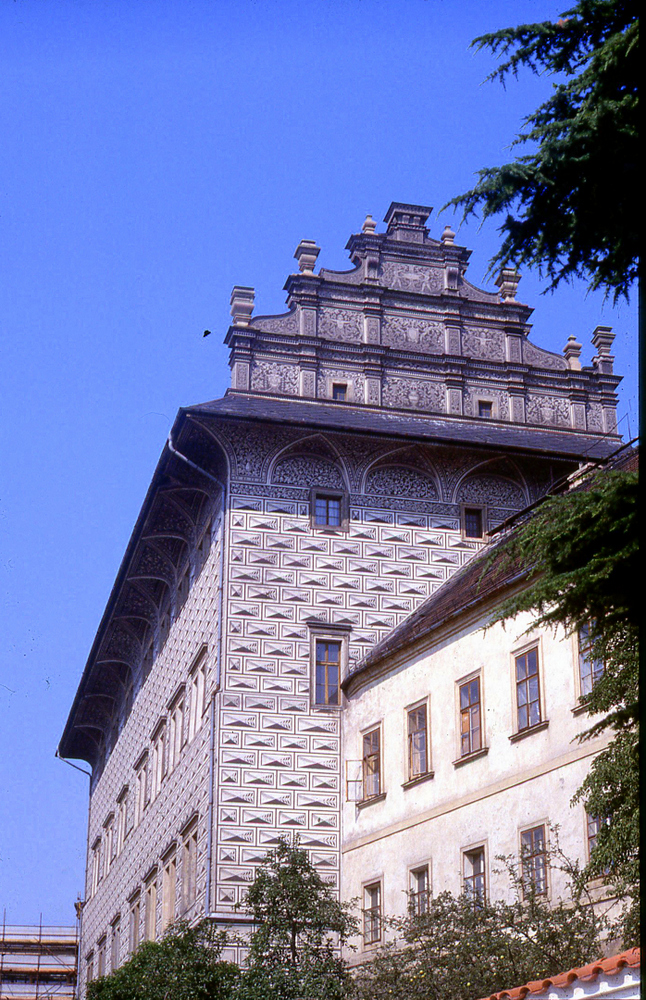
The next stop on my itinerary was the Hradcanske namesti which had been preferred as a location to Vienna for much of the filming of Amadeus because it was considered more authentic of the period. Besides providing a panoramic view over the city, this area contains many fine old buildings, churches and beautiful Baroque facades.
One of the beautiful buildings where the film Amadeus was shot.
On my way down from the castle, I ducked into the U Bonaparta on the Nerudova, a large, vaulted, cellar covered in Napoleonic paraphernalia and with long wooden tables where they serve beer with a good, frothy head. Grabbing my tankard of excellent Czech Pilsener (the Czech food may have been lousy but the beer made up for it), I sat down at a table next to one occupied by a gang of ageing bikers sporting colourful bandannas, presided over by a large, patriarchal figure with shoulder length hair and a flowing white beer.
They were all in high spirits, a stark contrast to a group of gloomy conscripts in uniform sitting at another table near mine. I got the distinct feeling that national service in the U.S.S.R. was not proving to be the high point of their lives. Having been forced to serve in the military back home, they had my sympathy.
Indeed, it hadn’t taken me more than a few days behind the Iron Curtain to realise that Communism had not resulted in the ‘classless’ society of model of proletarians it was supposed to produce. On the contrary, it seemed to have brought about a great deal of unhappiness, shirking, cynicism and distrust in the all-powerful machine.
Another protester I had met that evening on Charles Bridge had summed it up this way: “There are three types of Czechs – the ones who only live to drink and fiddle the system; the ones who listen and care but do nothing. Finally, there are people like us who try to make a difference but, alas, we are in a minority. And the secret police know their business!”
Later that night, in yet another stuffy, smoke-filled, tavern, I got chatting to a young artist trying to sell his paintings (if I had the spare cash I would have bought one). Marvelling at his felicity in both English and German, I asked him if he spoke Russian as well. He gave that same apologetic grin I had come to recognise during my brief stopover in Prague and said: “Yes – I am sorry to say!”
Safely back in South Africa, several months later, I thought of him and those unhappy conscripts and the protesters on the bridge, when I switched on the news and heard that the Soviet Union – and its satellite states – that had once looked like it was due to last for some time yet, had come tumbling down.
That was not the only momentous world event to take place back then. It was followed, shortly afterwards, by the collapse of the once seemingly indestructible Apartheid regime. For a brief while there was a feeling of euphoria., a hope that this was the beginning of a brand-new era. Sadly, it was not destined to last…
GALLERY:
Some more Prague scenes:
REFERENCES:
A Guide to Central Europe by Richard Bassett (Published by Viking)
Travellers Soviet Union & Eastern Europe Survival Kit by Simon Calder (Published by Vacation Work)


















 Stidy's Eye