Msunduzi Municipality claimed to have made progress in clawing back millions owed by defaulters, but serious questions loomed over the effectiveness and cost-efficiency of the recovery process.
Ongoing testimony before the Madlanga Commission of Inquiry has revealed deep divisions and bitter infighting, as well as criminal infiltration, within South Africa’s police force.
DA leader John Steenhuisen’s controversial decision to ask President Cyril Ramaphosa to replace Minister of the Environment, Forestry and Fisheries Dion George with party spokesperson Willie Aucamp exposed deep divisions within the DA.
Imprisoned tenderpreneur Vusimuzi “Cat” Matlala claimed he paid former Police Minister Bheki Cele R500 000 at his penthouse.
US Secretary of State Mark Rubio confirmed that the US intended to ban South Africa from the G20.
The ANC scrambled to stabilise its hold on KwaZulu-Natal as the Government of Provincial Unity (GPU) faced a critical test when the MK Party motion of no confidence in Premier Thami Ntuli was to be debated.
KwaZulu-Natal Premier Thumi Ntuli survived an MK Party motion of no confidence, after a chaotic sitting of the KZN Legislature in which the motion was ultimately defeated.
Consumers received another shock when electricity tariffs for the next two years were hiked after the National Regulator of SA (Nersa) said it found errors in its price determination announced in January.
Writing in his weekly newsletter, From the Desk of a President, President Cyril Ramaphosa called on South Africans to work together to build a society where corruption is unable to take root.
The Madlanga Commission of Inquiry into criminality, political interference and corruption in the criminal justice system got underway.
In a wandering speech to the United Nations, which contained no shortage of false claims and contradictions, US President Donald Trump dismissed climate change as “the greatest con job ever perpetrated on the world” and blasted wind farms and other renewable energy projects.
EFF leader, Julius Malema, was found guilty of the unlawful possession of a firearm and ammunition, discharging a firearm in a public space, failure to take reasonable precautions to avoid dangers to persons and reckless endangerment. Calling the decision “racist”, he has vowed to fight the sentence.
The KwaZulu-Natal government of provincial unity (GPU) was on shaky ground amid growing calls from within the ANC for the party’s withdrawal from the coalition government. Compromising the IFP, DA and ANC, the KZN GPU has faced turbulence since its formation in June 2024.
The factional fights amongst the police top brass were again brought into sharp relief at the Madlanga Commission of Inquiry, further eroding public confidence in SAPS’ ability to deal with the rising crime levels.
The Gauteng Division of the High Court of Pretoria gave former president Jacob Zuma 60 days to pay back nearly R29-million, plus interest, in state money that was unlawfully used to pay his legal fees and related expenses.
Cogta threw down the gauntlet at Msunduzi Municipality, rejecting its attempt to stop a provincial forensic investigation into allegations of maladministration, corruption and non-statutory compliance.
Pressure mounted on President Cyril Ramaphosa to return from the BRICS summit in Brazil to take decisive action over an unfolding political crisis involving serious political allegations made by KwaZulu-Natal police commissioner Lieutenant-General Nhlanhla Mkhwanazi. In the same week, US President Donald Trump announced a 30% blanket tariff on South African goods, adding to the country’s economic woes.
President Cyril Ramaphosa has appointed a commission of inquiry to investigate the alleged infiltration of South Africa’s law enforcement agencies by criminal syndicates. While some welcomed the scope and urgency of the inquiry, others accused the president of abdicating leadership and acting too late in the face of what they called a deepening national crisis.
The MK Party tabled a motion of no confidence in Cyril Ramaphosa, citing his “failure to act decisively against state-owned enterprises and government institutions” as one of the reasons why corruption-accused former president Jacob Zuma wanted to remove the president.
July was a month marked by more explosive revelations, while the perception of a government that acts only under pressure, and often without meaningful consequence, continued to damage confidence in public institutions.
Seven legacy foundations, including the Thabo Mbeki and Desmond and Leah Tutu legacy foundations, withdrew from the National Dialogue Preparatory Task Team, citing government control and rushed planning. The Democratic Alliance, Action SA, and FF+ also withdrew, for similar reasons.
July’s annual consumer price inflation hit the highest level since September 2024. The increase was fuelled by rising food prices – especially beef – and new municipal tariff hikes.
KwaZulu-Natal Treasury MEC François Rodgers placed the provincial Department of Education under administration. The department had been under scrutiny following allegations that officials subverted procurement processes when awarding National School Nutrition Programme (NSNP) tenders.
The National Treasury announced that Finance Minister Enoch Gondongwana would re-table the 2025 revised Budget on May 21. The announcement came three days after Gondongwana’s withdrawal of his earlier Budget, which included the contentious proposal to increase VAT by 0,5%.
The High Court reserved judgment on the DA’s legal challenge to the Employment Equity Amendment Act, which the party said imposes unconstitutional racial quotas that harm minorities and threaten economic growth. The case looked set to place further strain on the already fragile Government of National Unity (GNU).
Unemployment in South Africa rose by a full percentage point in the first quarter of 2025, with the economy shedding 291,000 jobs. Only 16,8 million South Africans were now employed, down from 17,1 million in the fourth quarter of 2024.
Despite the choreographed theatrics and humiliating spectacle staged by Donald Trump at their White House meeting, President Cyril Ramaphosa’s team, which included golfers Ernie Els and Retief Goosen, successfully reset relations, paving the way for future trade opportunities with South Africa’s second-largest trading partner.
Several Economic Freedom Front (EFF) members, including party leader Julius Malema, were forcibly removed from the National Assembly for disruptive behaviour during President Cyril Ramaphosa’s Question and Answer session. Earlier, Malema had vowed he would not be intimidated by Donald Trump, after the US President played a video of him chanting “Kill the Boer” during his White House meeting with Ramaphosa.
Floyd Shivambu became the latest high-profile casualty in the uMkhonto we-Sizwe (MK) Party when he was removed from his powerful post as Secretary-General just a week after fellow EFF defector Mzwanele Manyi was fired as Chief Whip in Parliament.
As wind, cold, and rain left a trail of destruction across KwaZulu-Natal and the country, US President Donald Trump continued to cause havoc across the globe, including Africa, with his tariffs and unpredictable policies.
With most of the world’s nuclear-armed states continuing to modernise their arsenals and the Middle East conflict escalating as Israel and Iran launched missiles at each other, the world became a more dangerous place than it had been for decades.
The entry of the United States into the Israel–Iran conflict created a huge headache for the South African government. While the country had always enjoyed warm diplomatic relations with Tehran, it could not risk further alienating the Trump administration, given that the relationship was already on life support.
Faced with skyrocketing debt, an underperforming economy, and unrealised forecasts, Finance Minister Enoch Gondongwana returned to the drawing board after his 2025 Budget, which proposed a 2% VAT increase, was rejected.
Following its poor performance in the 2024 general election, the ANC announced a new reconfigured leadership structure in KwaZulu-Natal – a move which caused a rise in tensions within the party because it favoured President Ramaphosa’s allies.
With some of the Government of National Unity’s (GNU) partners opposing it, Finance Minister Enoch Gondongwana’s proposed budget, which included a controversial VAT hike, faced significant parliamentary challenges due to the ANC’s lack of a majority.
In response to the US government’s expulsion of South Africa’s ambassador to Washington, Ebrahim Rasool, President Cyril Ramaphosa claimed he was not deterred by the recent tensions between the two countries. He believed the historic relationship would “outlive the current bumpy patch.”
EFF leader Julius Malema ignited fresh controversy after leading the “Kill the Boer” struggle song at a Human Rights Day rally. This time, US President Donald Trump entered the fray, lambasting South Africa in a strongly worded statement, thus stoking an already tense atmosphere between the two countries following the recent expulsion of the SA Ambassador to Washington, Ebrahim Rasool.
Against the backdrop of President Trump’s punitive tariffs against South Africa, the GNU came unstuck over the National Assembly’s vote on the Budget’s fiscal framework.
Winds of accountability swept through Msunduzi City Hall as a high-level intervention team, led by former Finance MEC Ravi Pillay, began its work.
Just weeks after publicly welcoming a provincial investigation into Msunduzi Municipality and calling for the “best investigators”, Mayor Mzimkhulu Thebolla asked for the probe to be halted…
In response to mounting pressure against it, the Treasury issued an overnight statement announcing that Finance Minister Enoch Gondongwana would be reversing the decision to hike VAT.
In his New Year address, President Cyril Ramaphosa said South Africa had made great progress in 2024. However, there still remains an urgent need to create more jobs, ensure all people receive quality service and fix water supply problems.
ANC President Cyril Ramaphosa broke his silence on the SACP’s decision to contest the 2026 local elections on their own, warning that dismantling the tripartite alliance would “weaken the national democratic movement.” Despite leading the rival MK party, former president Jacob Zuma, meanwhile, demanded that he be reinstated in the ANC by the end of January. The ruling party dismissed his demand as “mischievous.”
The world braced itself for the return of the polarising figure of Donald Trump as the 47th president of the United States. On the campaign trail, Trump had announced wide-reaching plans, including the mass deportations of immigrants and sweeping tariffs that economists warned could have a drastic effect on the economy. He also threatened to rename the Gulf of Mexico, take over the Panama Canal, make Canada part of the United States and buy Greenland.
In launching his “Masterplan” to tackle the city’s dire state, Msunduzi Municipality Mayor Mzimkhulu Thebolla finally admitted to what residents have been complaining about for years.
President Cyril Ramaphosa signed into law a bill allowing for the seizure of land without compensation – a move that put him at odds with some of the other parties in the Government of National Unity.
President Cyril Ramaphosa’s SONA address came at a time when South Africa’s relations with Rwanda were souring as security deteriorated in the eastern DR Congo. US President Donald Trump also threatened to cut funding over South Africa’s land policy, which allowed for the confiscation of land without compensation.
As the United States announced new tariffs on steel and aluminium, EU chief Maros Sefcovic said it was a “lose-lose” scenario. “By imposing tariffs, the US will be taxing its own citizens, raising costs for its own business, and fuelling inflation,” he cautioned.
The last-minute cancellation of the 2025 budget speech exposed deep divisions within the fragile Government of National Unity, with the ANC appearing to believe it still held the upper hand after informing coalition partners of the 2% VAT hike at the last moment.
In his Medium-Term Budget Policy Statement, Finance Minister Enoch Godongwana doubled down on budget costs and put in measures to stimulate growth.
The United States of America elected Donald John Trump as its 47th president, choosing a candidate who has promised to put America on a different path. This decision has significant implications for South Africa.
Former EFF chairperson Dali Mpofu became the latest high-profile member to defect to Jacob Zuma’s uMkhonto we Sizwe Party (MK Party). The exodus of members was predicted to continue.
Public hearings began on Eskom’s proposed 36,1% tariff hike, amidst widespread concern that the increase will worsen the struggle of already vulnerable South Africans.
Former president Jacob Zuma rejected the ANC’s decision to expel him from the party. Zuma’s problems with the ANC started in December 2023, when he announced he was campaigning for the MK Party.
Thembi Simelane’s reshuffle from Justice Minister to Human Settlements Minister ignited sharp criticism, with opposition parties accusing President Cyril Ramaphosa of political manoeuvring. Simelane has been linked to the VBS scandal.
Ahead of its elective conference, EFF leader Julius Malema declared the Jacob Zuma-led MK Party its “biggest enemy” as senior members of the leftist party continue to defect to it.
Agriculture Minister (and leader of the Democratic Alliance) John Steenhuisen’s decision to appoint the controversial right-wing podcaster Roman Cabanac as his Chief of Staff attracted widespread criticism including from its GNU partner, the ANC. The DA also distanced itself from the matter…
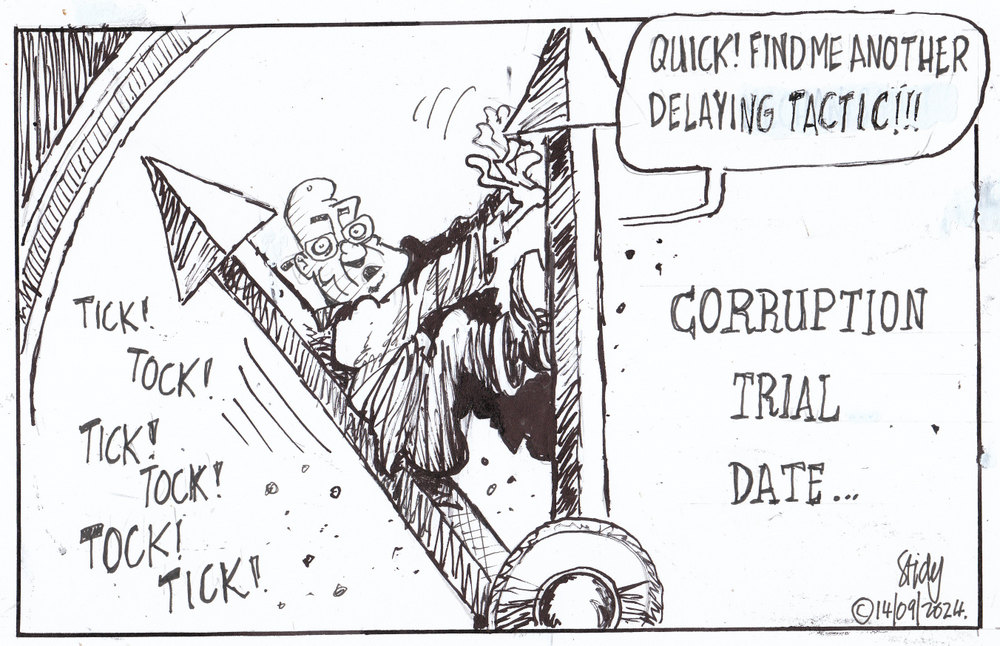
Jacob Zuma’s lawyers unsuccessfully protested over his corruption trial date remaining set for April 2024, as the state confirmed it would fight for the former president to finally go to trial – regardless of his latest appeal to force prosecutor Downer’s removal
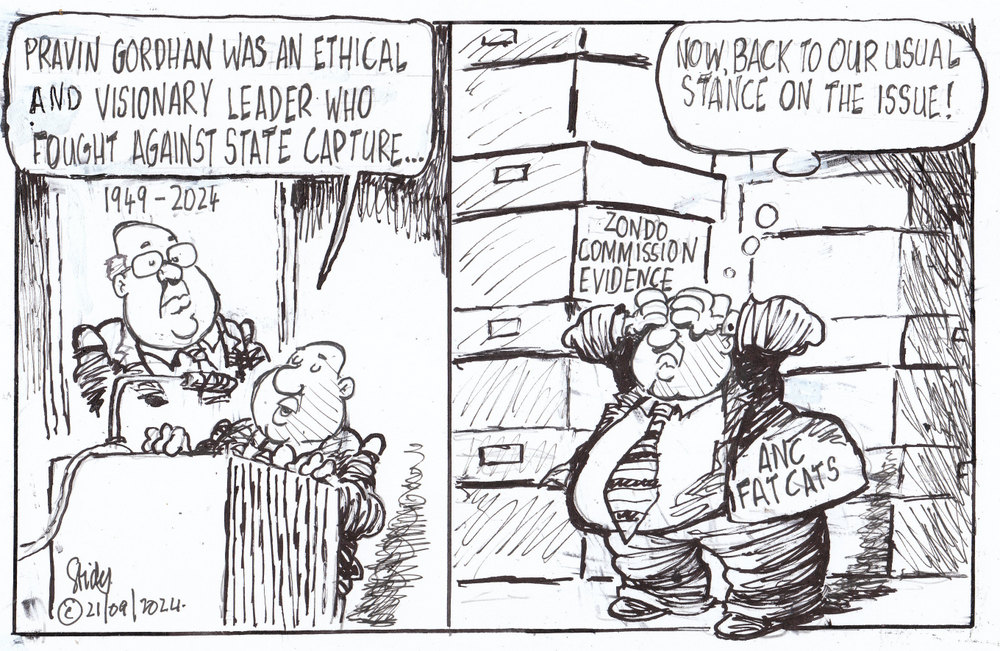
The former Public Enterprises minister, Pravin Gordhan, died at the age of 75 after a battle with cancer. Speaking on behalf of the Gordhan family, the executive director of the Ahmed Kathrada Foundation, Neeshan Balton, accused the ANC of employing double standards saying the party wished to portray itself as championing everything Gordhan stood for while it had ‘crooks in parliament’ who represent everything he stood against.
The good news about an interest rate cut and drop in the fuel price was offset by the bad news that Eskom had submitted an application to Nersa for a proposed 36.15% hike during its 2026 financial year.
After more than a decade of consultations, Msunduzi Municipality, together with nearby towns such as Richmond, could soon be amalgamated into a metropolitan area, a move that promises a significant boost in national funding. While welcoming this news, various stakeholders said the municipality must first address its ongoing service delivery problems and allegations of maladministration.
The KwaZulu-Natal Government of Provincial Unity (GPU) marked its 100-day anniversary in office by highlighting its achievements and presenting a united political front amid concerns about the stability of the coalition government. Within the ANC, speculation had been rife that some members, especially in Gauteng, were unhappy at the party’s decision to work with the Democratic Alliance (DA).
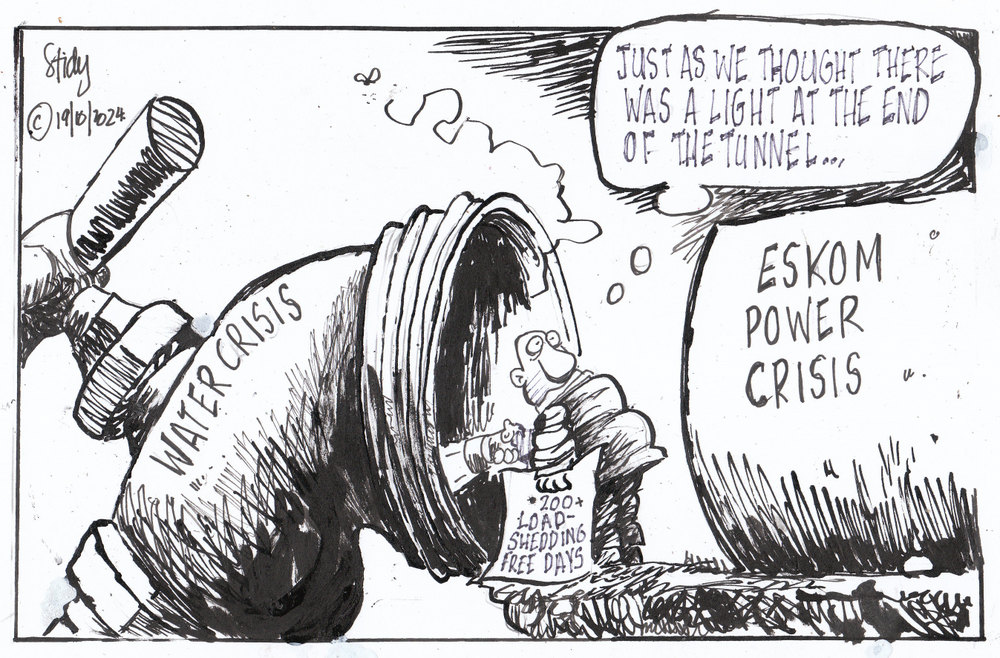
Just days after Msunduzi Municipality and uMngeni-Thukela Water announced city-wide water restrictions, the region was plunged into a major water crisis, leaving large parts without water or experiencing drastically reduced water pressure. Ethekwini Municipality and various parts of Gauteng also faced water restrictions exacerbated, in part, by failing infrastructure.
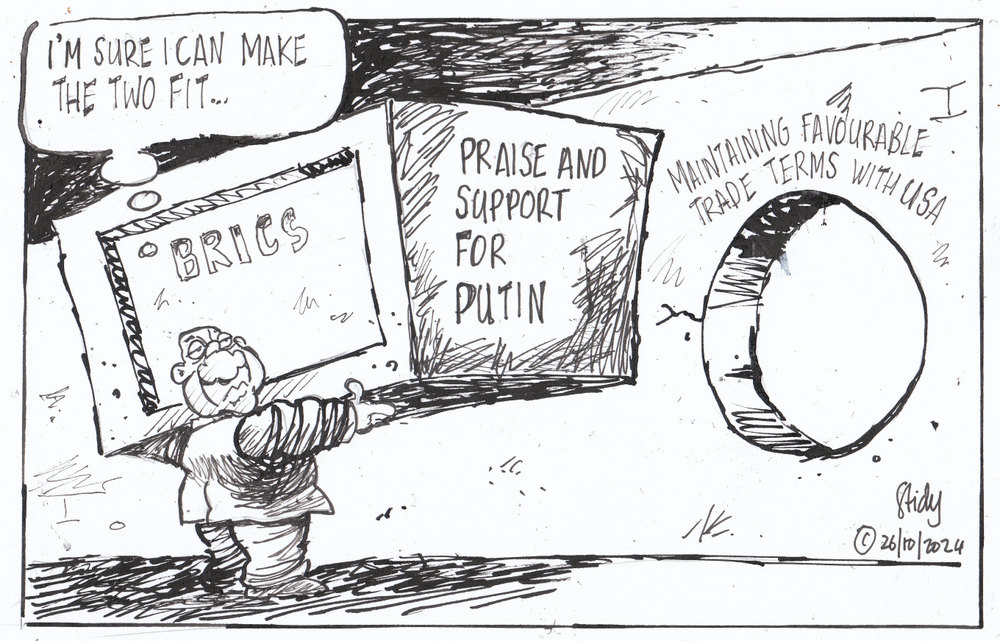
Some of Russia’s key allies rallied around President Vladimir Putin on the first day of a major summit that the Kremlin hoped would show Western attempts to isolate it over Ukraine had failed. While urging an end to the conflict, South Africa’s President Cyril Ramaphosa praised Moscow as a “valued ally” during his meeting with Putin.
After much waiting, debating, and negotiating, the President announced an expanded GNU cabinet consisting of 32 ministers and 43 deputy ministers. Meanwhile, the country braced itself for a rocky ride, with the president having to navigate a landscape of competing interests while striving to maintain balance, coherence, and unity within his own party.
In the first contentious vote in the National Assembly since the formation of the Government of National Unity (GNU), the DA, FF and several smaller parties broke ranks with their ANC partner over the election of the disgraced Judge John Hlophe to serve on the Judicial Services Commission (JSC).
South Africa felt the impact of global warming as large parts of KwaZulu-Natal were devastated by severe fires while Cape Town was hit by heavy rain, gale-force winds and flooding. According to climate modelling studies and research, the country will become prone to more heat waves, drought and heavy rainfall.
MPs aligned to the Government of National Unity grouping, which includes the ANC, DA and IFP, rallied behind President Cyril Ramaphosa amid attacks from the progressive caucus composed of MPs from the uMkhonto we Sizwe Party (MK) and the EFF.
The Gauteng Division of the High Court ruled that health legislation requiring doctors and health practitioners to obtain a çertificate of need before being allowed to practice in a particular area was unconstitutional. The requirement had been a cornerstone of the proposed National Health Insurance.
The seemingly fragile KwaZulu-Natal government of national unity proved to be resilient in face of speculations that the uMkhonto we Sizwe Party’s (MK Party) dominance in the KZN Provincial Legislature would undermine it.
Maritzburg United, the oldest professional football team in Pietermaritzburg, decided to relocate to Durban, drawing to a close an era and a long-standing battle to secure a “home ground” at the Harry Gwala Stadium.
EFF Deputy-President Floyd Shivambu defected to the recently-formed MK Party, led by Jacob Zuma, causing its biggest rupture since the party was launched eleven years before. Shivambu, who had been implicated in the VBS scandal, had been promised a senior position in the party alongside several state-capture suspects whom Zuma had recently appointed as MPs.
An investigation revealed that Justice Minister Thembi Simelane took a loan of more than a half million rand from an organisation that brokered unlawful investments into the VBS Bank by the Polokwane Municipality – while she was mayor of the city in 2016. Amongst those calling for her to step down were the EFF who had also been implicated in the VBS scandal.
Reflecting on 30 years of freedom, former president Thabo Mbeki described his successor Jacob Zuma as a wolf in sheep’s clothing. Mbeki said most of the country’s crises, including load shedding and the collapse of the South African Revenue Service had been orchestrated by the counter-revolution.
Suspended Msunduzi manager Lulamile Mapholoba said he would head to the High Court seeking an urgent interdict to get his job back. Mapholoba returned to work briefly following the Durban labour court judgement, which found his suspension in February unlawful.
President Cyril Ramaphosa signed the National Health Insurance Bill (NHI) into law, setting in motion the government’s fiercely contested plan for universal health coverage and prompting immediate legal challenges.
The Constitutional Court ruled that graft-tainted former president turned firebrand opposition challenger Jacob Zuma, is ineligible to stand for parliament. The top court backed an electoral commission decision that Zuma’s previous conviction for contempt of court prevents him from becoming a Member of Parliament, ruling that the constitution bars anyone sentenced to more than 12 months in jail, from doing so.
With voter discontent rising and shifting political alliances, the 2024 elections were marked by uncertainty and a desire for change.
In their first elections, the Umkhonto weSizwe (MK) Party swept the floor in KwaZulu-Natal securing 45.35% of the vote. The IFP got 18% while the ANC – who previously held the province – managed only 17%. In other news, a devastating tornado ripped through Tongaat in KwaZulu-Natal causing extensive damage to homes and infrastructure.
The MK Party instructed its MP members candidates not to attend the National Assembly swearing-in ceremony where the party’s 58 members would have been sworn in as members of Parliament. It also rejected the government of national unity (GNU) proposed by the ANC after the general elections produced no outright winner nationally.
At his second-term inauguration, President Cyril Ramaphosa struck an inclusive and unifying note while welcoming South Africa’s new reality. But behind the scenes, there were already signs the Government of National Unity (GNU) faced a rocky road ahead…
Impeached Western Cape Judge President John Hlophe was appointed Parliamentary leader for Jacob Zuma’s MY Party, marking a contentious new development in the country’s legislative history…