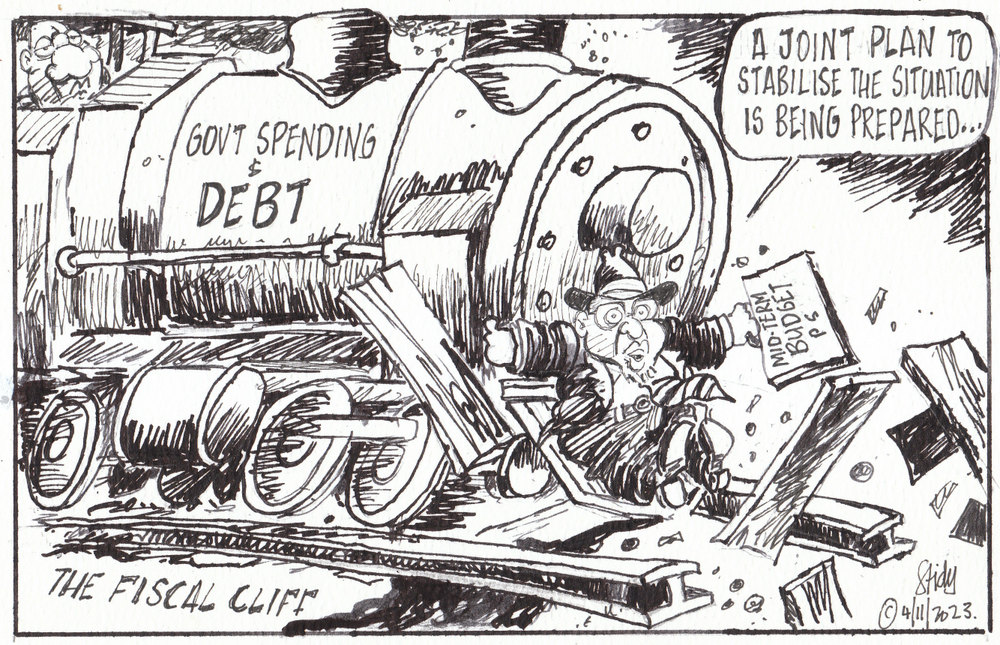
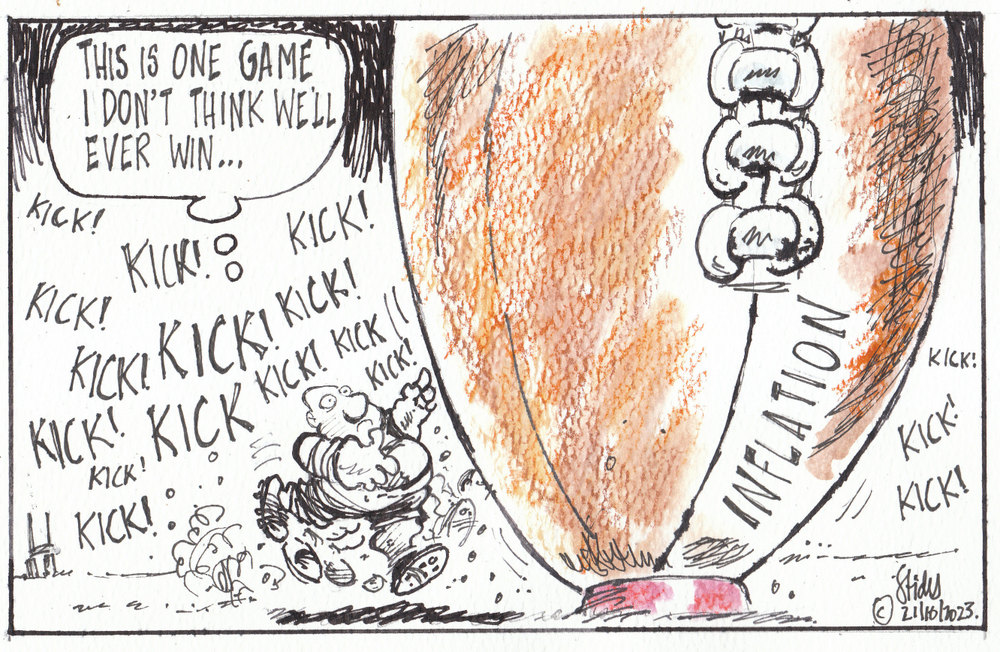
As the government’s financial woes worsened, Finance Minister Enoch Godongwana slashed the department’s spending as part of an initiative to conserve money and avert a “fiscal crisis”.
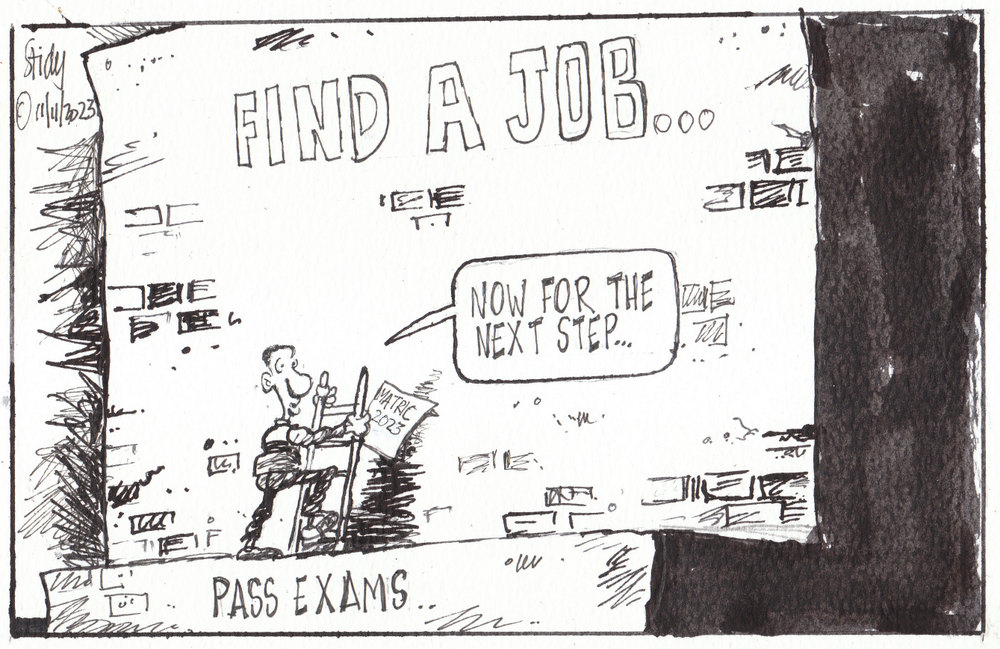
As the matric class 2023 sat for final examinations youth unemployment remained distressingly high.
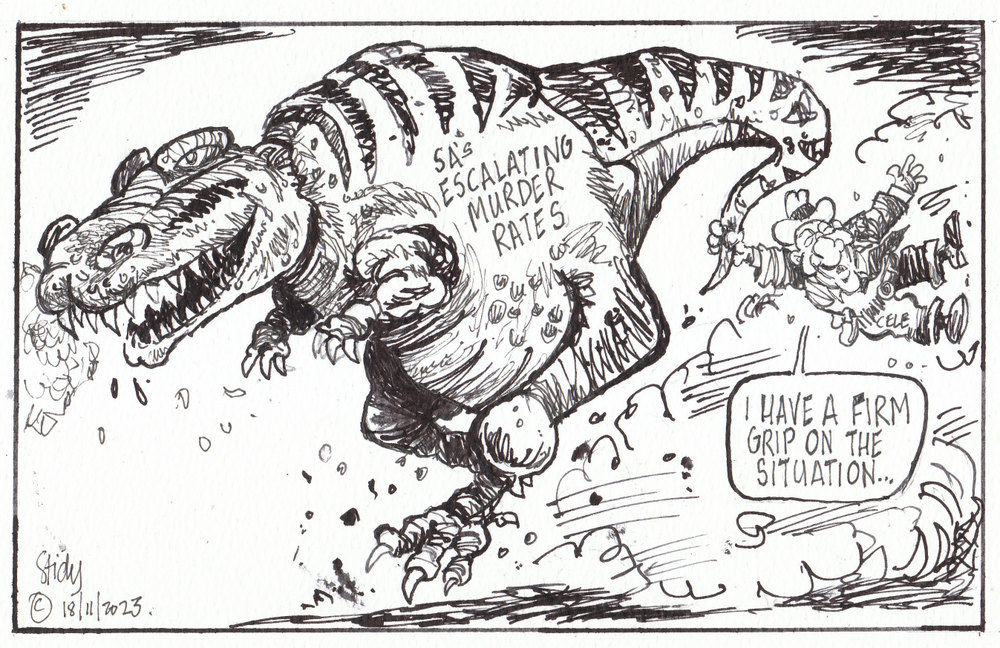
The murder rate in South Africa reached its highest mark in twenty years, with the police powerless to arrest the rising tide of death.
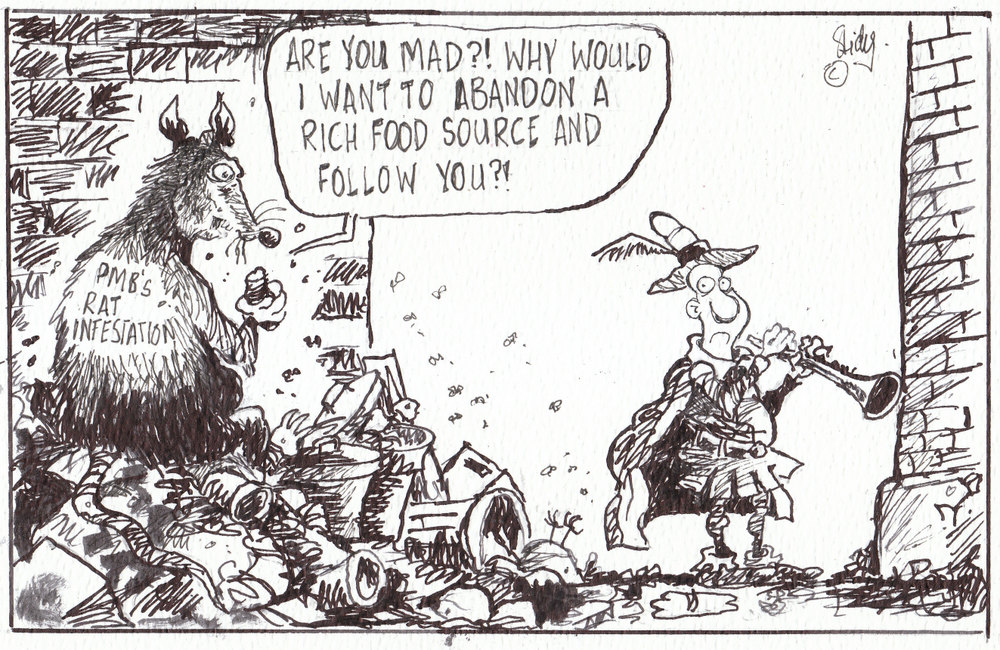
Dozens of state employees who work at a government department in the Pietermaritzburg city centre had to flee their building because of a rat infestation.
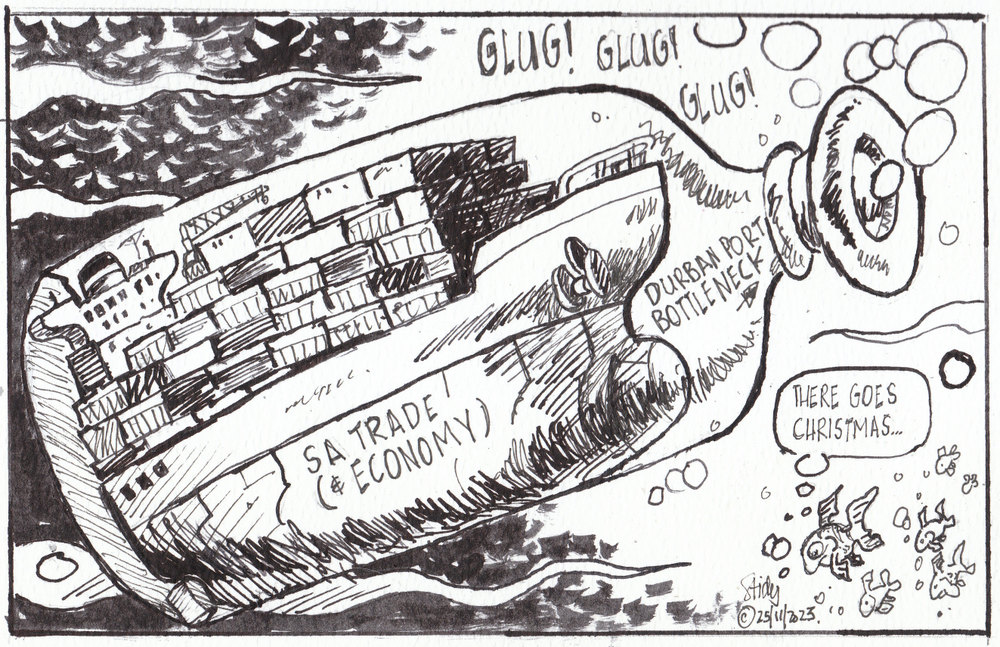
There was chaos at the Durban port as the facility battled a backlog of shipping containers that needed to be processed. Some 57 ships, some heavily laden with festive season goods for the retail industry, were anchored in the outer holding facility awaiting permission to enter the port and offload their cargo.
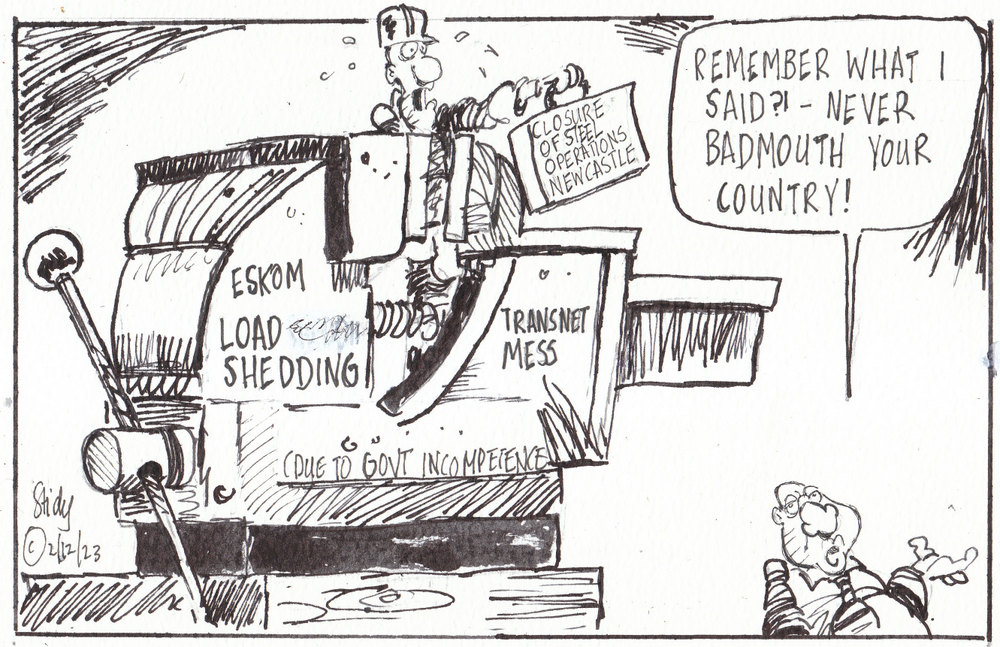
The announcement that Arcelor-Mittal was to close its long steel operations in Newcastle and Vereeniging delivered a devastating blow to the economies of both towns with up to 3500 jobs on the line. The company attributed some of the reasons for the closure to include the current energy crisis and the collapse of South Africa’s logistics and transport infrastructure.
Humanity faced a ‘devastating domino effect’ as the planet warmed, scientists warned as world leaders met for the Cop 28 climate summit in Dubai.
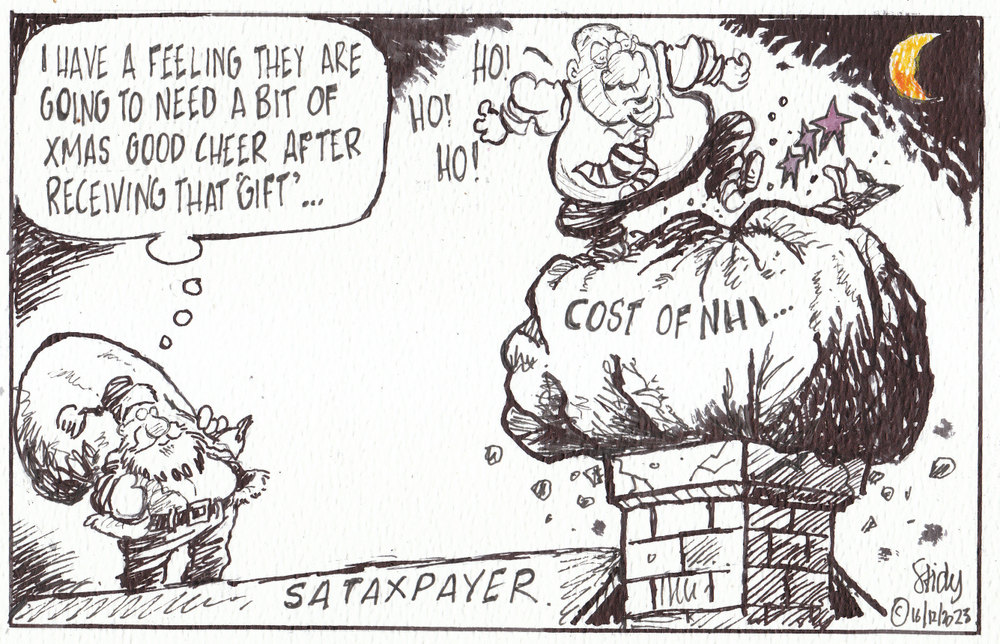
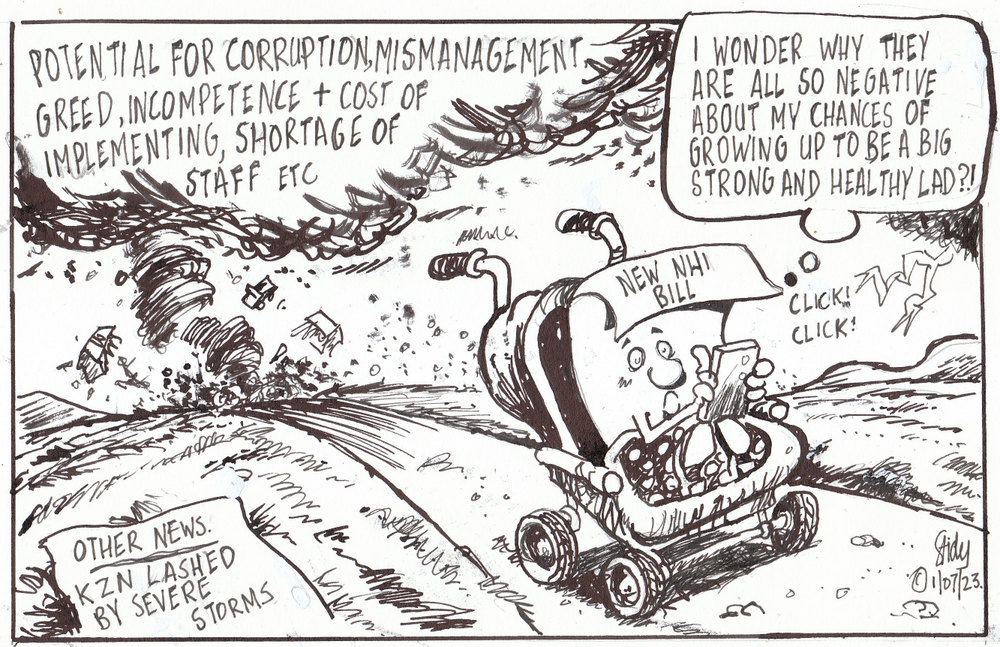
The IFP were the latest party to reject the ANC-backed National Health Bill (NHI). Critics of the bill said it was unworkable in its current form and ran the risk of collapsing an already struggling healthcare system.
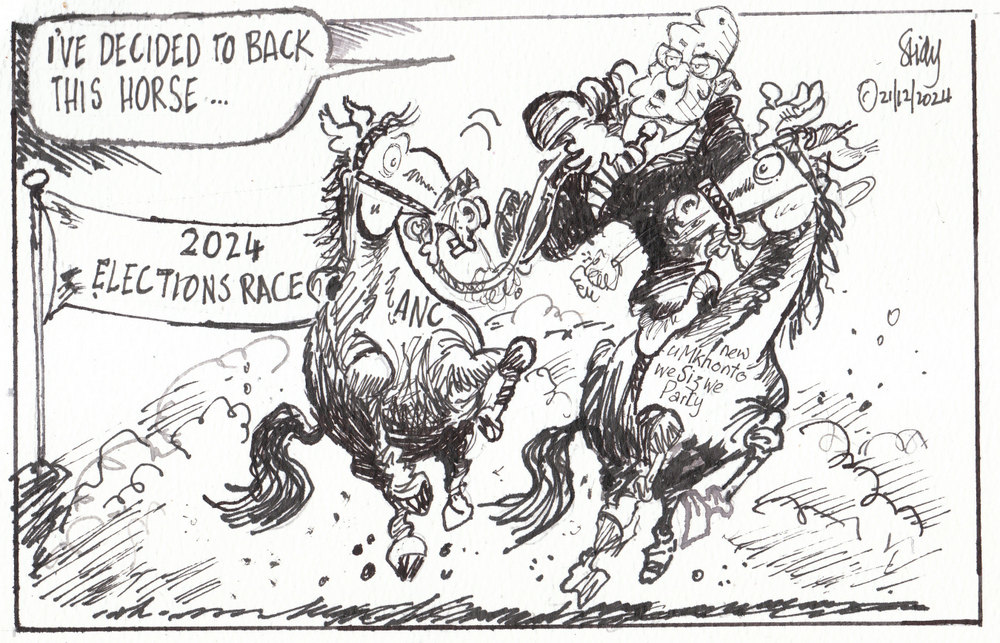
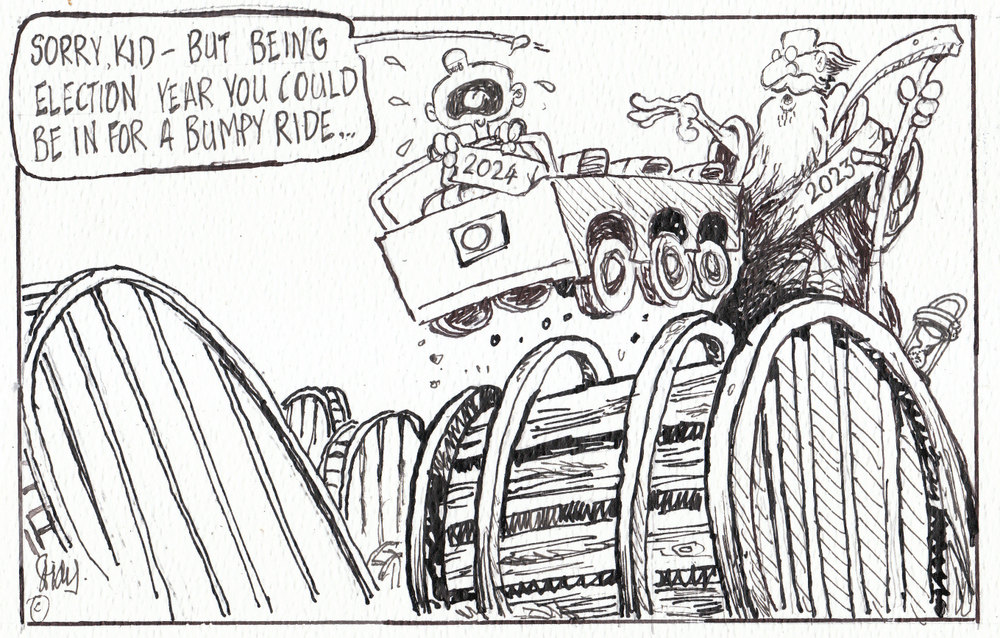
Former president Jacob Zuma created another headache for the ruling ANC when he announced, at a press briefing in Johannesburg, that he would be voting for the newly-formed uMkhonto weSizwe party in the 2024 elections.
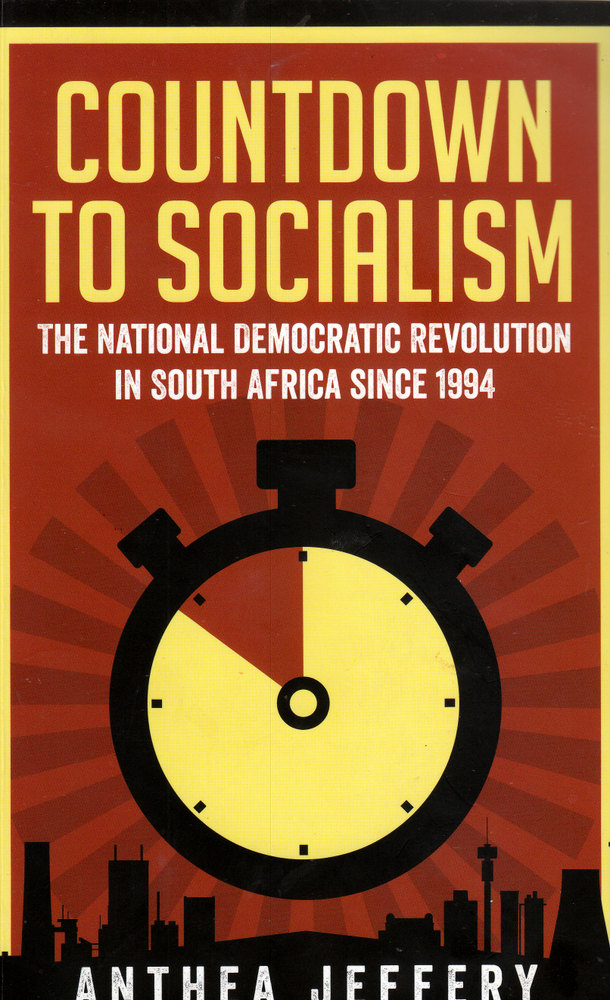
At the time of South Africa’s independence, many observers were lulled into thinking that the ANC was committed to a free and open liberal democracy in which state power would be constrained and the government would be accountable to the individuals who voted it into office. Given the role the party had played in deliberations for South Africa’s much-lauded new constitution such optimism was, in the circumstances, perhaps understandable.
It was also, in the view of the author of this, at times, rather unsettling book, wrong. Far from embracing the neo-liberal narrative with its focus on individuals rather than classes and its built-in system of checks and balances, Jeffery maintains the ANC was only paying lip service to these ideals to buy itself time while it set about strengthening and consolidating its power. For them, the attainment of majority rule marked the first step in a zero-sum game aimed at extending government power and control over every aspect of South African life, while at the same time expanding dependence on the state. Egged on by their alliance party, the SACP, they have remained committed to their mission of “progressive transformation”, the goal of which is to turn South Africa from a capitalist into a socialist country and, ultimately, a communist one. The key to understanding all of this is spelt out in their ‘national democratic revolution’ (NDR) which displays a latent Marxist contempt for liberty and conveniently means that, once the ANC has won the battle of ideas, you won’t need other parties or an independent press because they will have become ideologically redundant.
Throughout the course of her book, Jeffery shows how many of these NDR ‘interventions’ have, in effect, already been implemented. Instrumental to it all, has been the ANC’s policy of cadre deployment – whereby people are promoted to important positions because of their ideological leanings and loyalty to the party rather than their competency, relevant qualifications or ability to perform the job. The effects of this policy, coupled with a now extensive patronage system, have become only too apparent – a bloated, dysfunctional bureaucracy, collapsing infrastructure (think Eskom, Transnet, SAA etc.) and an economy heading towards the edge of the fiscal cliff.
In spite of the negative impact on the country, the prospects of the party changing policy direction, at this stage, appear remote. Jeffery believes that those who hoped that Cyril Ramaphosa would introduce business-friendly reforms when he replaced Jacob Zuma as president of the country badly misjudged the man and that he, too, remains steadfastly committed to the NDR. She also argues that it is a misconception to think that there is a deep ideological divide within the ANC between the Ramaphosa faction and the Zuma RET one.
Jeffery, Head of Policy Research at the Institute of Race Relations, appears vastly well-informed on the subject. Her scholarly, well-paced and unblinkered analysis of our current situation serves as a timely reassessment of where we might be headed under ANC rule. Adding credence to her arguments is that much of her material is taken directly from the ANC’s and SACP’s policy documents and statements.
Published by Penguin Random House
South Africa is a country of great natural beauty with a rich, if turbulent, history. Needless to say, its landscape has evoked a variety of responses from a whole medley of writers. Wanting to taste their experiences, as well as see the land through the eyes of these writers, author Justin Fox decided to set off in the footsteps of some of the big guns of South African literature, exploring those parts of the country which the particular author’s name has become associated with.
Packed solid with vivid chapters and fascinating vignettes, the resultant book is very much a spirited celebration, an elegy to South Africa itself.
Fox’s quest begins, appropriately enough, in the Eastern Cape, the province which provided a home to one of the pioneering giants of South African literature – Olive Schreiner. Her book, The Story of African Farm, which manages to convey both the vastness and the special quality of the arid Karoo and the sense of solitude and insignificance which came from living in it, has gone on to assume the status of a South African classic.
A compilation of this nature could also, obviously, not overlook a writer of the stature of JM Coetzee, the winner of the Nobel Prize for Literature and (twice) the Booker. Using his Life & Times of Michael K as a rough guide Fox undertakes an insightful and movingly described journey back to the farm in the Moordenaars Karoo where Coetzee spent part of his youth.
The other notable authors he includes in his survey are Herman Charles Bosman (the Groot Marico), Eugene Marais (Waterberg), Dalene Matthee (the Knysna forests), Zakes Mda (the Transkei), Sir Percy Fitzpatrick (of Jock of the Bushveld fame) and Deneys Reitz’s accounts of his experiences in the Cape interior during the Anglo-Boer War.
Fox who received his doctorate in English at Oxford and was a research fellow at the University of Cape Town, is an exceptional writer with an ability to draw readers into his experiences with the precision and exact observation of his prose. Wonderfully pictorial, his prose catches with sketch-like deftness the particular feel and spirit – the genii loci – of the places he visits. Like the authors he admires, his passion for the South African landscape shines through on every page.
There is a flip side to this, an emotional sub-text. Amid the beauty, Fox also finds a country beset with crime, corruption and vanishing services where the initial optimism engendered by Nelson Mandela’s release has long since faded, The rural areas have not escaped this spreading malaise and many modern writers also find themselves confronted with the same difficult question that so many other South Africans do – whether to leave or stay? The reactions among them have differed. Coetzee, whose writings have explored the themes of guilt and shame which come from living in a country with a history of apartheid, elected to immigrate to Australia. The poet Stephen Watson, on the other hand, found the thought of severing links with his beloved Cederberg too great an ask and stayed on (although he has since died).
I am heading south, from my home at Curry’s Post, in the cool, misty KwaZulu-Natal Midlands, towards the eastern Karoo. I am a man on a mission, in search of stimulating scenes and artistic inspiration. I am confident I’ll find what I seek down there.
It is a journey I have made many times but the suddenness of the change in the countryside always surprises me. You cross over the border and the pine plantations and green pastures of KZN disappear out of sight in the rearview mirror. The rivers are fewer, the trees become small, stunted and windswept, and the veld is dry, earthy and dotted with grey scrub, cactus-like plants, aloes and succulents. It is an enormous, dramatic landscape that completely dwarfs you and makes you feel very small. Vast sun-baked, plains stretch out on either side, blue mountains shimmer in the midday heat; krantzes, kloofs and flat-topped kopjes dance by. The dorps and settlements get smaller, the traffic lighter, and there is less and less sign of human occupation.
The Plains of Camdeboo.
As you drive, you are constantly aware of the vast horizons and the space between them and you.`It is strange to think this area was once a vast lake inhabited by giant reptiles, who left their bones behind for palaeontologists to puzzle over millions of years later.
The deeper I penetrate, the more the Karoo begins to work its magic. There is something about this empty, quiet, timeless landscape that eats into my soul. Although it is very different to the country I grew up in, I still feel an instinctive connection with the dry Karoo. Maybe it is because it feels so ancient and exudes such an air of mystery. Like the sedimentary rocks that dominate much of its geology, layers and layers of history lie embedded here, dating back to the beginning of time. If you choose the right spot, you can find yourself looking at more or less the same scene someone thousands of years ago would have seen. Perhaps this gives the Karoo its unique atmosphere, the sense that you are moving amongst ancient spirits. Plus, that huge blue-domed sky which dominates everything and the slightly ethereal quality of the light.
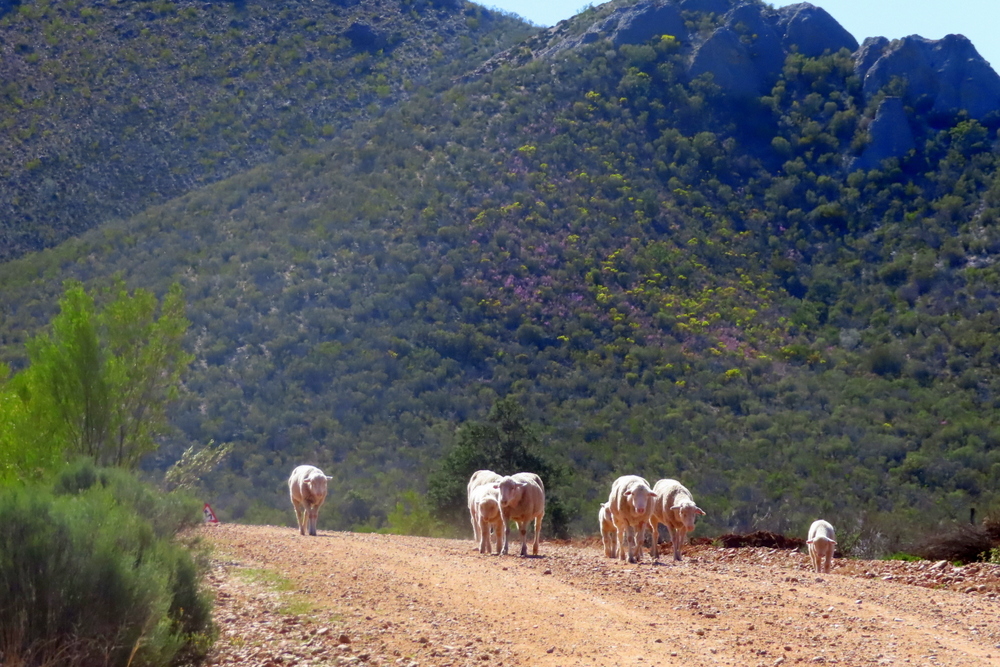
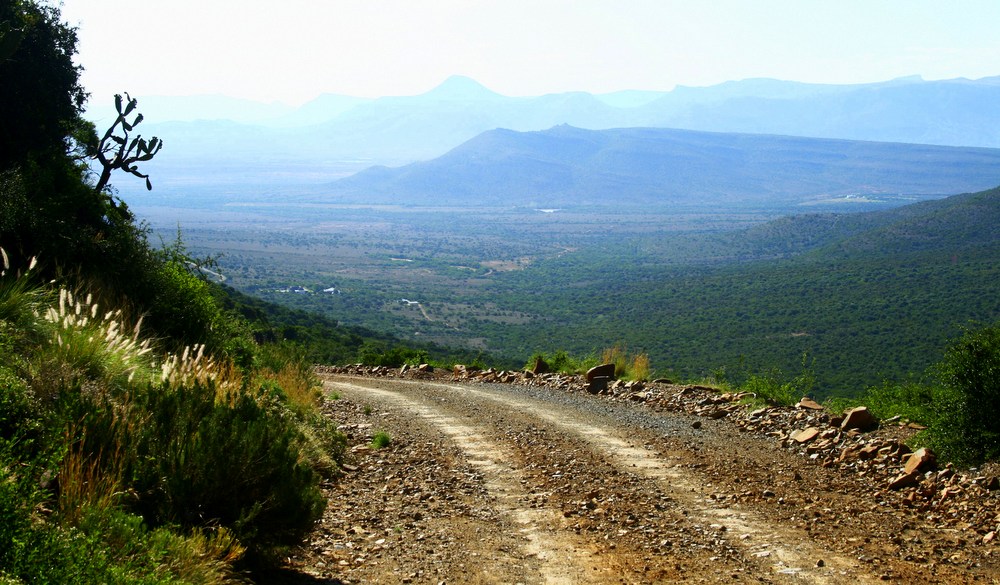
I drive on through a dry, rocky, mountainous country. Hills lead to more hills, the road rises and drops and rises again. The sun is shining straight on the windscreen. The occasional farm roads, grey and rutted, branch off the main road I’m on. I call it a main road but there is so little traffic it is almost a ghost road. Travelling down these side roads the clouds of dust you are kicking up behind you mix with the medicinal-like smell of the plants that grow on the stony slopes.
It is like travelling back in time, you still get a glimpse of what life must have been like centuries ago, back in the days of the trekboers and the travellers, farmers and townsfolk. And before that Khoekoi and San whose demise is one of the great tragedies of Africa.
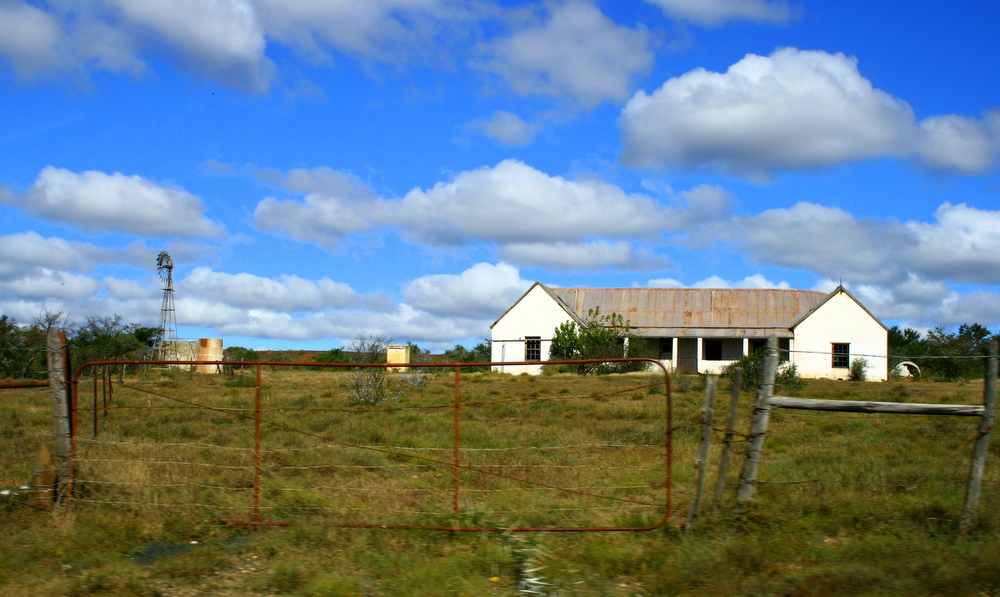
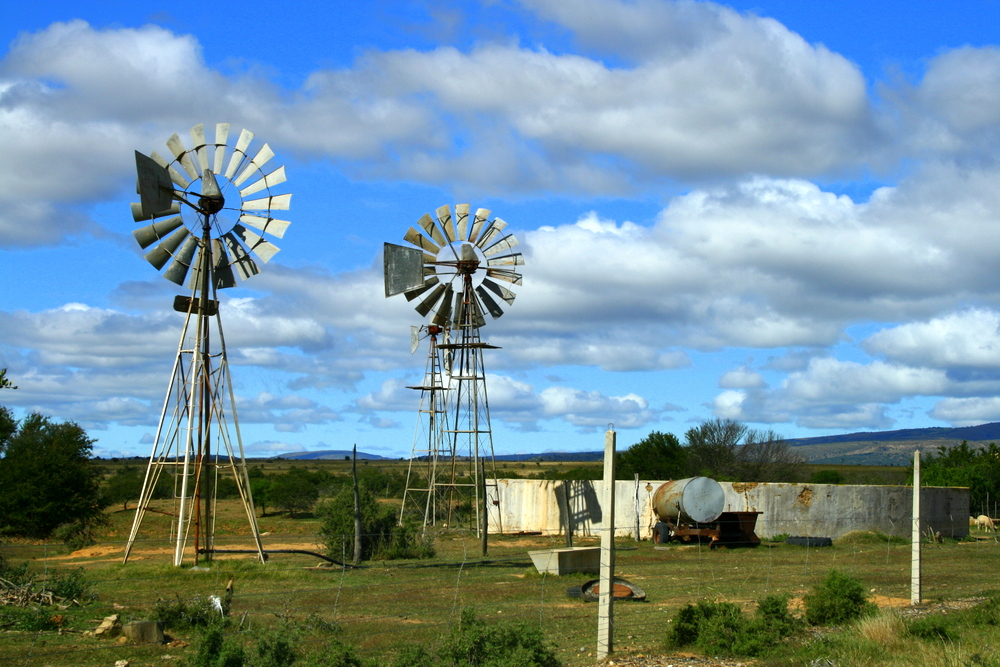
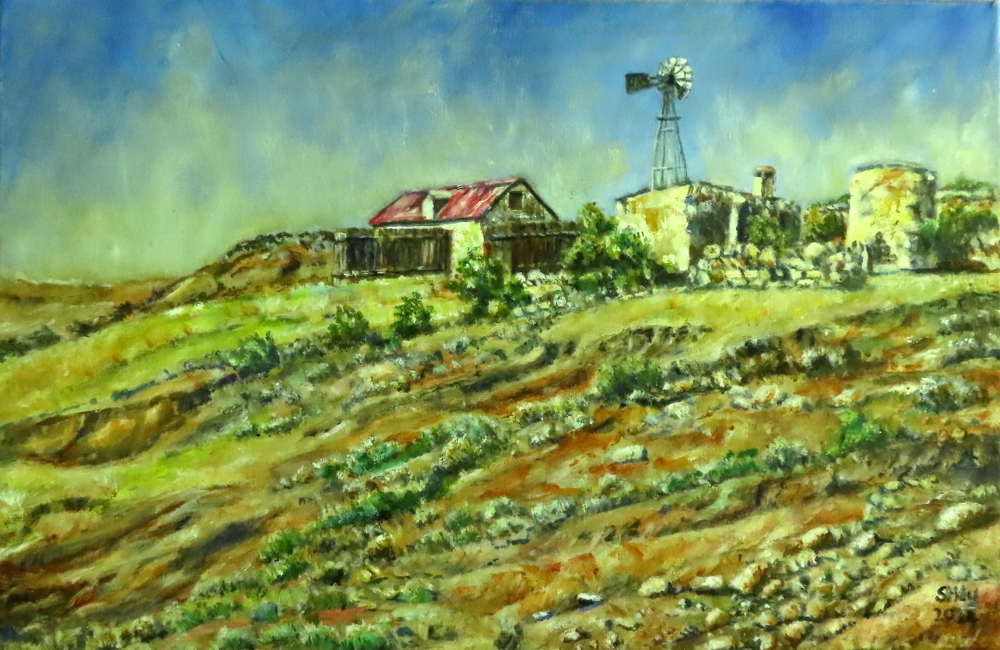
Every now and again a lonely farmhouse swims into view. Most of these old homesteads follow a fairly simple structure with a few outbuildings scattered around the back. Usually, there is a clanking windmill, a cement reservoir in which life-preserving water is stored, a few fruit trees, some drystone enclosures, a sheep kraal, possibly a chicken coop and a collection of labourers cottages situated some distance away. Often there is a graveyard where generations of the same family lie buried.
The farmhouse has always occupied an iconic place in white South African mythology (especially Afrikaner). Wanting land they could call their own, many of the early Dutch settlers, believing it was God’s will that they should do so, packed up their possessions and pushed on deeper and deeper into the interior. If conquest was their questionable motive, they were still, undoubtedly, courageous. Trekking across the dry wasteland, under a burning sun, in their creaking wagons and spans of puffing oxen, they would come to be seen by their descendants, as heroic figures, tough and resourceful, pioneering individualists who helped forge a new nation, giving it an identity rooted in the soil. As each farm was pegged out, it became a further outreach of civilisation, another step in the taming of the land, a further extension of the frontier and of European domination and influence – not that such a harsh environment could ever be truly mastered or contained. The elements always had the final say.
Nevertheless, their love affair with the country and its wild landscape had begun. Perhaps not too surprisingly, the stark beauty of the Eastern Cape has evoked a lot of literary (and artistic) responses (to get some idea of how influential it has been see The Literary Guide to the Eastern Cape: Places and the Voices of Writers by Jeanette Eve). The Cradock area, just up the road, for example, provided the backdrop to one of South Africa’s first and greatest novels – Olive Schreiner’s classic The Story of an African Farm.
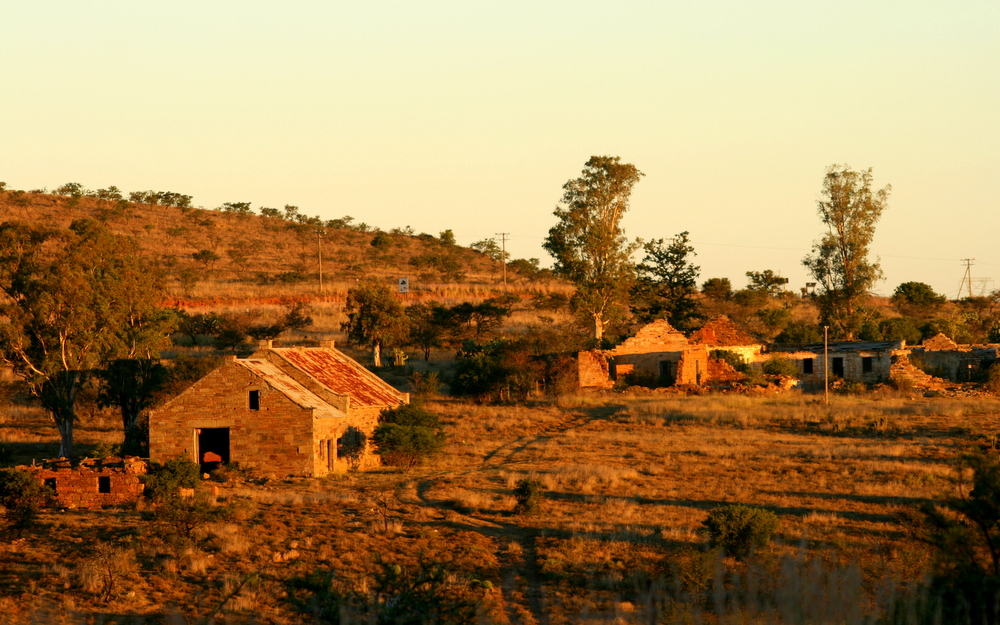
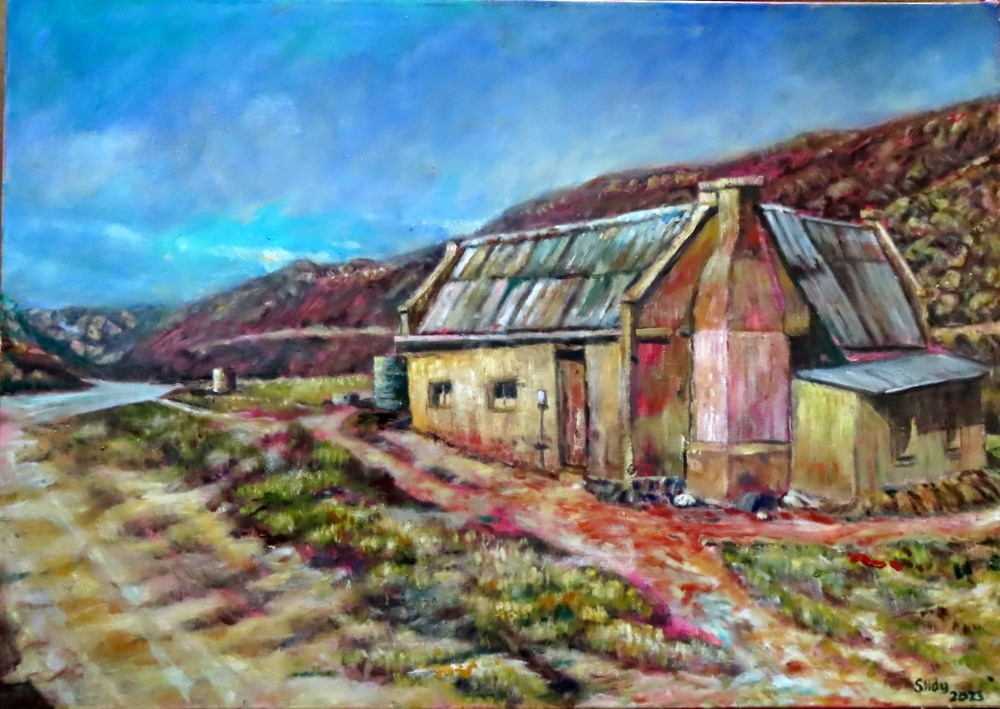
It was not always so empty here. From the number of abandoned farmhouses I see on my journey, I can tell a lot of these areas once supported bigger (white) populations than they do now. Poor soils, years of unremitting drought, isolation, poverty, the extremes of temperature, and changing social and economic circumstances – all have taken their toll on the farming community. Other farms have been amalgamated and turned into larger wildlife ranches, partly restoring the land to the way it once was, except there is still a profit motive behind it.
Nowadays, a new factor has come into play. The political winds have changed and are now blowing in the opposite direction. With white ownership of the land becoming increasingly tenuous under the post-apartheid government there has been a steady migration away from the land generations of farmers once assumed was their birthright. With the passing years there will, no doubt, be fewer and fewer of them.
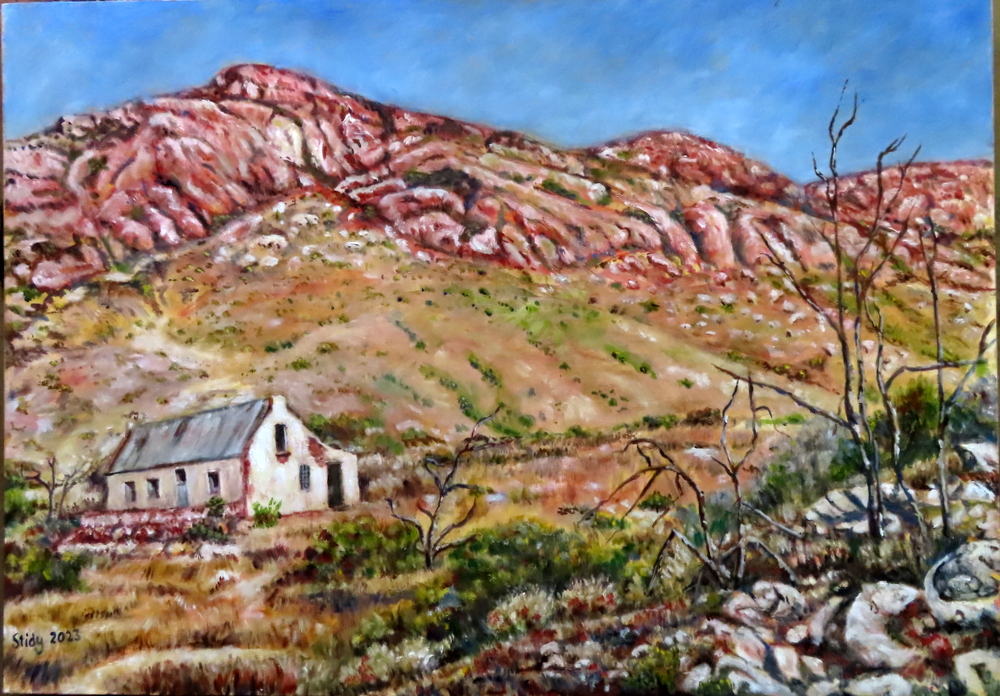
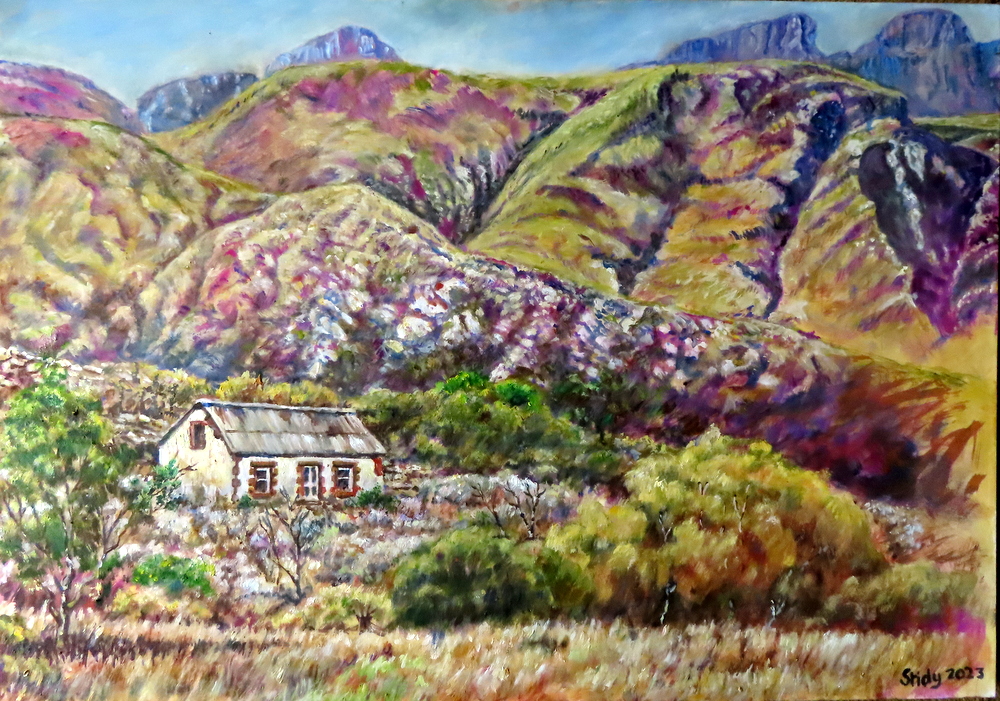
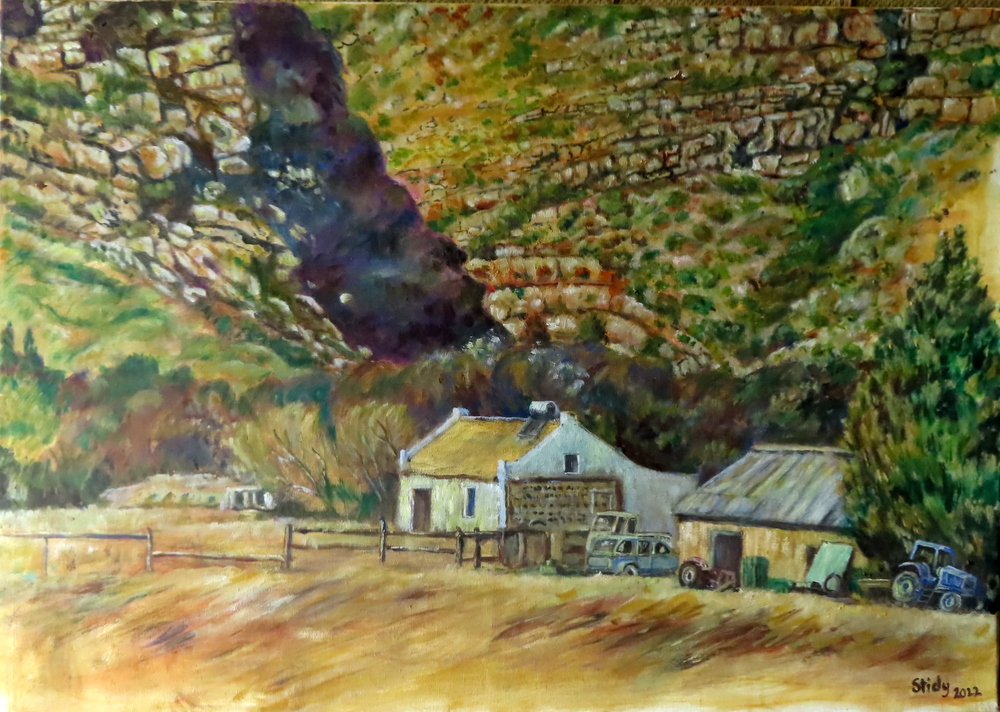
Maybe that is why I feel this compulsion to try and capture on canvas the unique feel of some of these lizard-haunted old buildings before they melt back into the ground from which they were created. Irrespective of how you see the past, they are part of it, a memorial to a particular time in South Africa’s history, now fast fading. What also impresses me, from an artist’s point of view, is how harmoniously these old houses blend into their backgrounds and become part of the land. They have character. They have souls. They have paid their dues. In this respect, they differ greatly from much of our ugly, intrusive, modern architecture.
Rounding a sharp corner, I spot a solitary homestead which fits my artistic needs perfectly. I pull over onto the side of the road and step out to take a few photographs of it. Like a deserted ship marooned in a vast ocean of rock, there is a melancholy, a haunting sadness about it as it stands alone and neglected, completely dwarfed by a huge slab of mountainside behind it. I find myself wondering about who its owners were and what drove them to carve out a life in such an isolated spot? And why did they leave? Even though it is no longer physically inhabited you can still feel their shadowy presence. Once there was life here, it housed not only people but hopes and dreams. Now, it stands deserted and empty, a humbling reminder of life’s impermanence and time’s inexorable march.
Another abandoned homestead, the Kouga Mountains area.
Having, for the sake of my painting, tried to absorb as much of the spirit of the place (the genii loci) as possible in such a ridiculously short time, I jump back into the car and drive down the winding road. As the car’s wheels crunch along the gravel, I find my mind drifting back to the farm (subsequently part of a black resettlement scheme) I was raised on, in Nyanga North, in Zimbabwe’s Eastern Highlands. It was also situated in a stunningly beautiful part of the world. It, too, imprinted itself on my youthful mind and remains forever locked in my heart. It was here my obsession with mountainscapes and remote places began.
It is never easy to leave a place, a home with its familiar sights and sounds, its rhythms and associations, its flowers and trees, its birds and animals, its daily routines. Sometimes, however, one has no choice but to love and let go. Although one is physically no longer present it is never a complete break. Every person takes their experiences and memories away with them, They lodge themselves in our psyche, become part of who we are, and affect the way we see and understand the world.
One’s love of the land can also find expression in paintings…
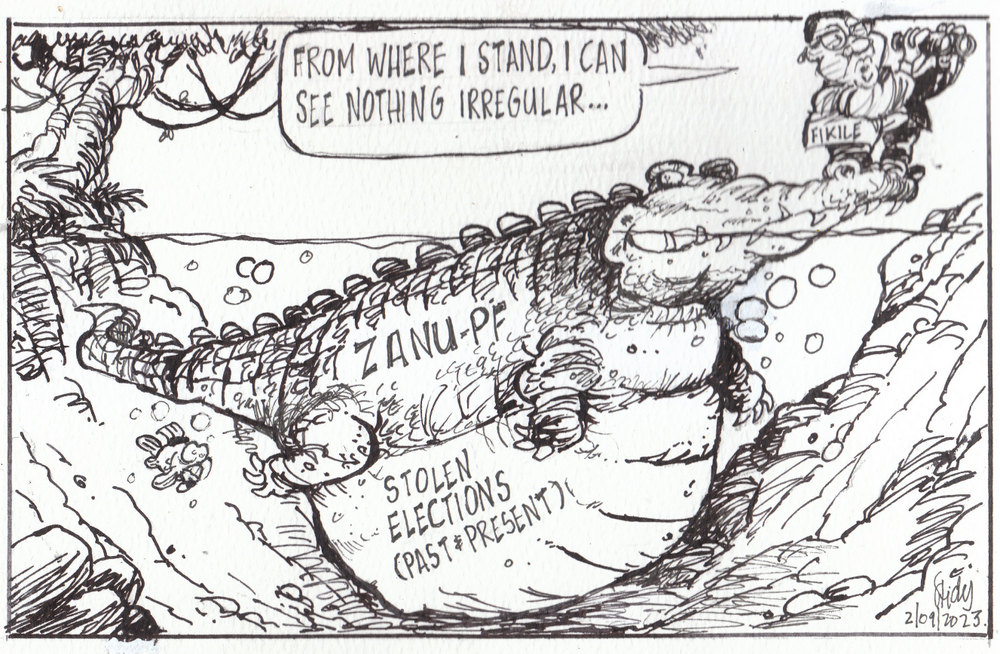
The ANC Secretary-General Fikile Mbalula was quick to congratulate Zimbabwean President Emmerson Mnangagwa and his party ZANU-PF on their election victory despite it being clear from the findings of the Southern African Development Community (SADC) observer team that the election was illegitimate from start to finish.
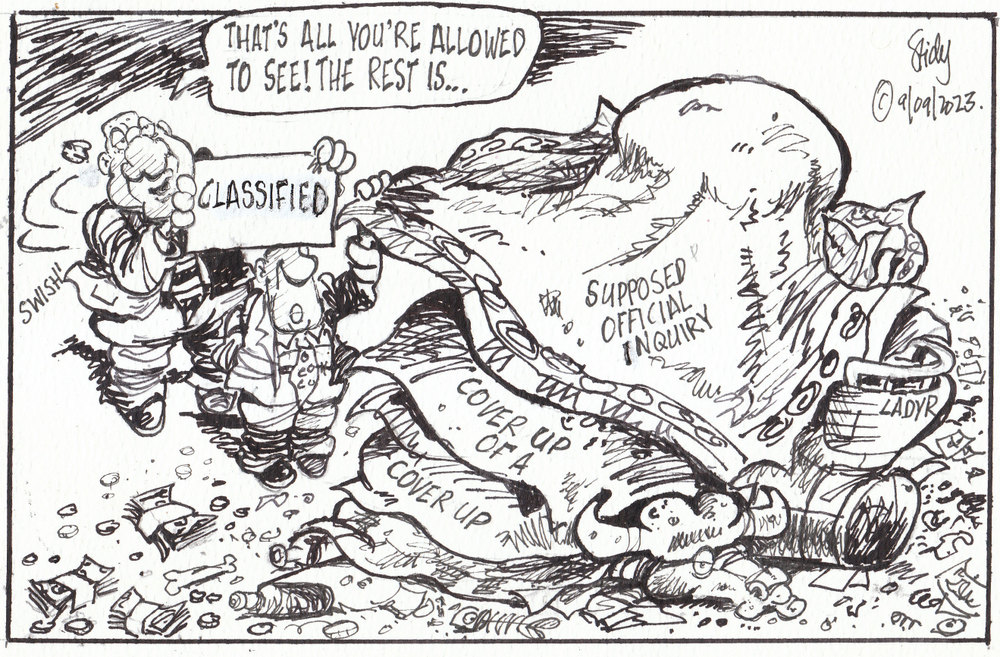
The executive summary of the report into the controversial docking of a Russian ship in Simon’s Town raised more questions than it answered. Despite the highly limited information contained in the summary, an accompanying state from the presidency made the official stance clear “Due to the classified nature of the evidence that informed the report, the government will not publicly engage further on the substance of the report”.
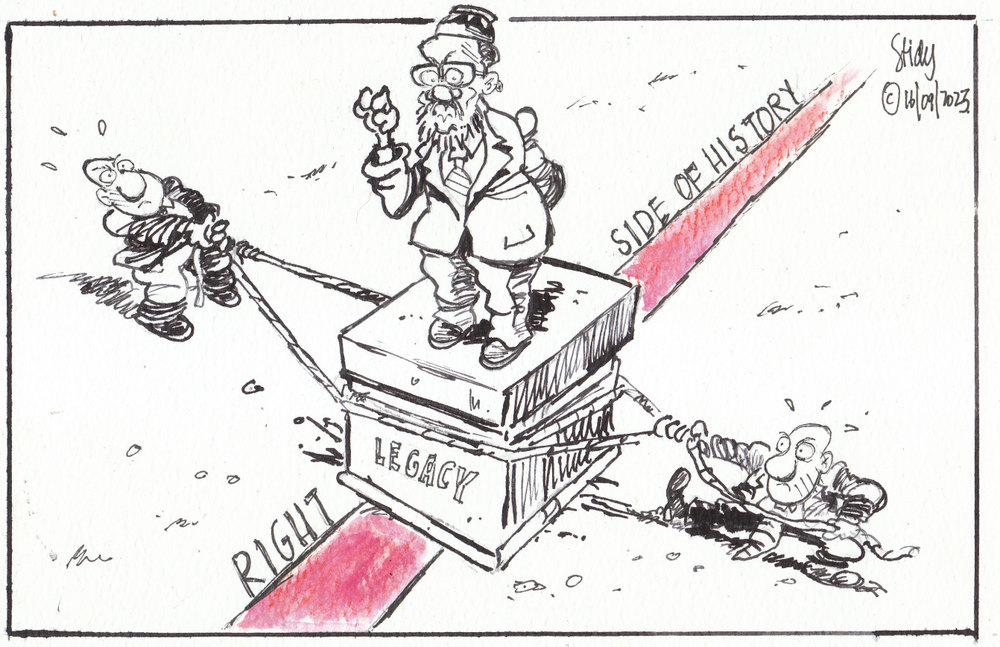
With the death of IFP founder Prince Magosuthu Buthelezi, the IFP in the uMgungundlovu District launched a campaign to have more buildings and public spaces named in his honour. The ANC in the province was divided on how to remember him with many still regard him as an “: apartheid government collaborator”.
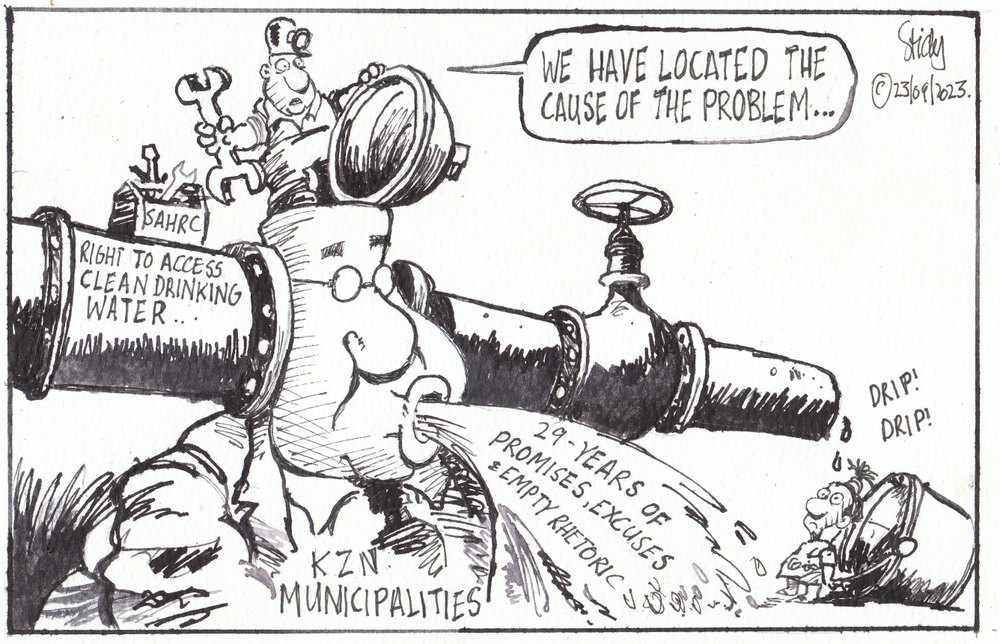
The South African Human Rights Commission (SAHRC) found that in KwaZulu-Natal municipalities and water service authorities (WSA) have violated resident’s rights to access clean drinking water.
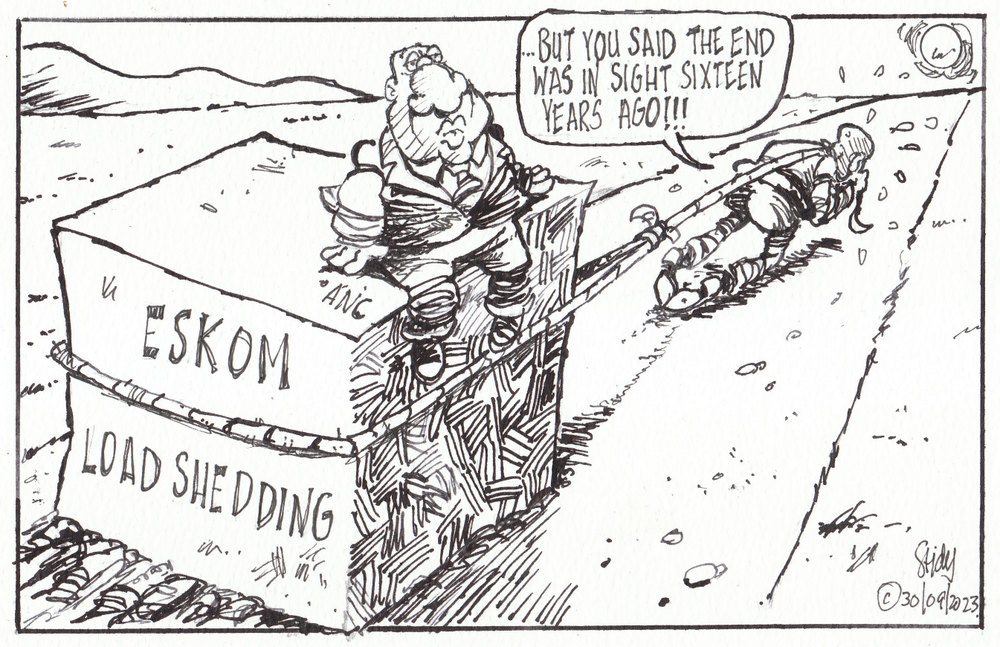
Giving an update on plans to deal with the many crises affecting the country, President Cyril Ramaphosa repeated his old promise to end load shedding.
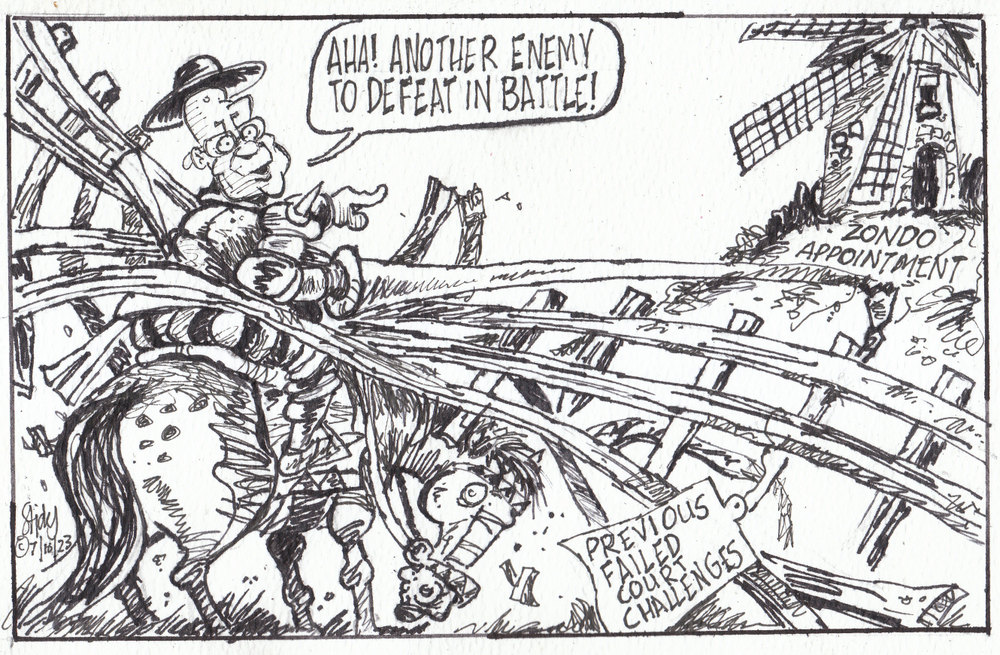
In another act of political theatre – which most experts dismissed as legal nonsense – former president Jacob Zuma and the Jacob Zuma Foundation approached the courts to review and set aside the “inexplicable” appointment of Chief Justice Raymond Zondo.
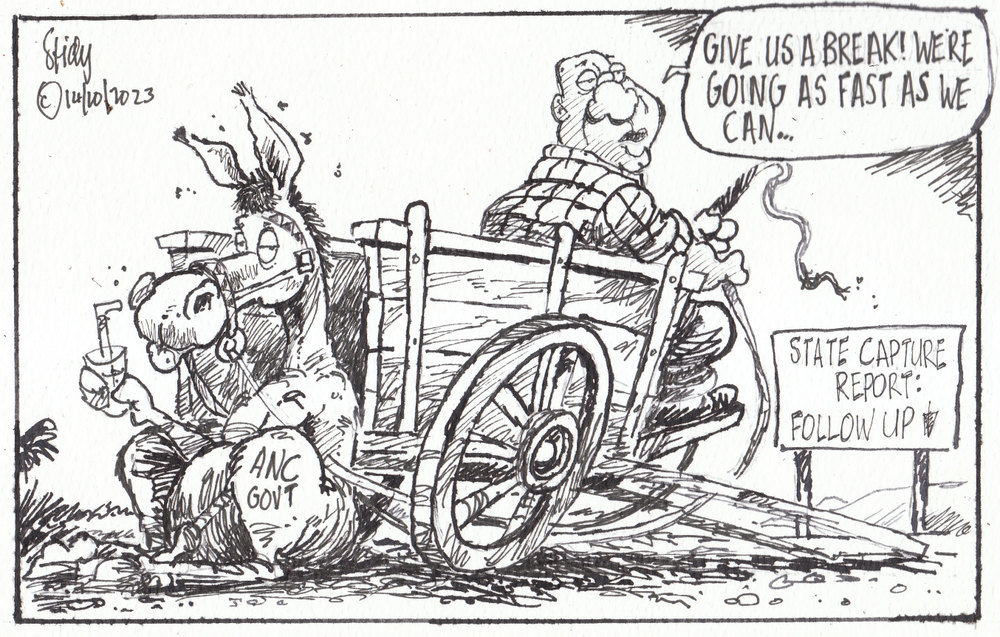
Although the ANC instituted the Zondo Commission into State Capture and accepted its findings, it has done little to defend or follow up on them.
The Pietermaritzburg Economic Justice and Dignity group (PMBEJD) warned of unprecedented economic hardships for the poor should the SA Reserve Bank respond to the current price surge by increasing interest rates.
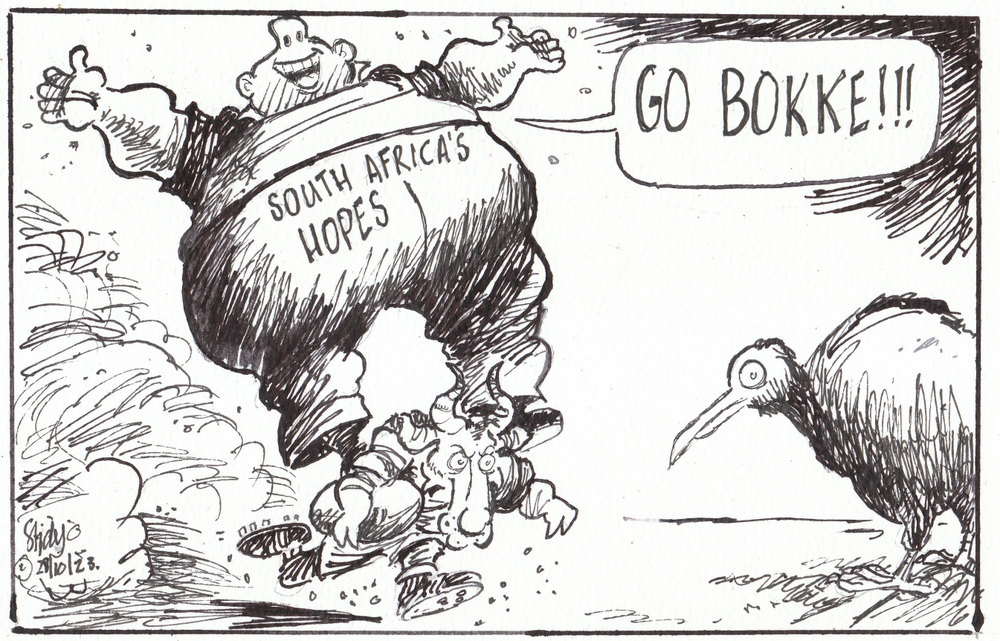
Excitement was running high ahead of the Rugby World Cup final between traditional rivals South Africa and New Zealand. In the end, the Springboks made it back-to-back RWC wins when they held off their traditional rivals 12-11. South Africa also won the title for a record fourth time.
If I had to name the two cartoonists who have “influenced” me the most in my career it would be Carl Giles and Ronald Searle even though their styles are poles apart.
It was Giles who first got me into cartooning.
As a child, my parents used to give me his annual Christmas present every year. His cartoons had an immediate impact on my youthful mind. I fell in love with his drawings of English towns and the countryside and the bustling, chaotic, lawless world of his “family”.
It all seemed so cosily, quintessentially British even though, at that stage, I had never been anywhere near the country. When I finally did and saw how accurate his portrayal was it only made me admire his genius more.
I discovered Ronald Searle a little later on and was equally enthralled. If Carl Giles made me decide I wanted to be a cartoonist, Ronald Searle, with his darker, more hard-hitting brand of, humour became the one I wanted to be like. Not for nothing has Searle been described as “the most joyously vengeful pictorial satirist since Cruikshank.”
A superb graphic artist with a decidedly quirky sense of humour, his trademark scratchy, ink-splattered-style of drawing and taste for the grotesque have proved to be hugely influential and he has been widely imitated by a whole range of cartoonists, among them Gerald Scarfe, Ralph Steadman and the Americans Pat Oliphant, Jeff MacNelly and Mike Peters.
‘War and Patriotism’. The Great British Songbook
Searle, himself, often expressed surprise at people’s reaction to his, at times, heavily distorted caricatures. In the introduction to his book ‘Ronald Searle in Perspective,’ he wrote: “I had the inborn advantage of the eccentric, the abnormal seeming to me… perfectly normal and not at all a caricature of ‘proper’ behaviour as demanded by ‘them’ from outside.”
Born in England in 1920, Searle was forced to leave school at 15 because his family could not afford further education. Taking a job as a solicitor’s clerk, he financed his evening art classes out of his own earnings. While thus employed he started sending his cartoons to the Cambridge Daily News who were only too happy to publish them. In 1938 he won a full-time scholarship to a local art school.
Enlisting in the Territorial Army at the outbreak of the Second World War, Searle was captured by the Japanese and forced to work on the infamous ‘Death Railway’ from Siam to Burma where, along with his fellow POWs, he endured numerous harsh beatings at the hands of his captors (including one where they smashed his hands), starvation, dysentery, Dengue fever and malaria, as well as witnessing the death of many of his comrades.
Corpse at Bukit Timah, Singapore, January-February,1942
At significant personal risk to himself and using whatever scraps of paper he could lay his hands on, Searle set about portraying the squalid conditions of camp life; the harrowing set of drawings he produced during this period provided a uniquely important record of the horrors of war.
The publication of Searle’s wartime drawings was followed by the St Trinians series, for which he is still probably best known and whose legacy he came, in later years, to regard as something of a burden. Almost as well known were his illustrations for Geoffrey Willans’s series of books about the myopic schoolboy Nigel Molesworth, also known as ‘The Curse of St Custard’s’.
Searle’s wartime experiences undoubtedly affected his worldview and darkened his humour; under his scabrous pen forms began to billow, bulge and explode, lines stabbed and splattered. It also seems to have affected his attitude to his home country.
In 1961 he suddenly packed his bags and quit England for good, taking up residence with his second wife in a remote village in Haute Provence where he continued to develop his artistic range and powers of invention in a dazzling flow of cartoons, portrait caricatures, reportage pieces and illustrations for such popular books as The Rake’s Progress, From frozen North to Filthy Lucre, Searle’s Cats, The Square Egg, The King of Beasts and Other Creatures and The Illustrated Winespeak.
Elegant but lacks backbone. From The Illustrated Winespeak
Unquestionably, one of the most important cartoonists and social commentators of the past century, Ronald Searle’s drawings have come to be admired by his fellow cartoonists, the public, art critics and historians, and even by his victims. Refusing to recognise the limits imposed by decorum or good taste, he turned his art into a powerful – and amusing – weapon. He will be remembered, in the words of the writer Stephen Heller, as “a satiric magician, able with the flick of a pen to anthropomorphise the most unlikely beast into a reflection of man’s foibles.”
At its peak, the British Empire was the largest formal empire the world had ever seen. For better or worse it had a massive impact on history and helped shape the international order as we know it today. We still live in its shadow.
Amongst its many exports were its people. It is estimated that between the early 1600s and the 1950s, more than 20 million people left the British Isles and settled across the globe. The majority did not return.
Author Bryan Rostrom’s ancestors were part of this mass exodus like many English-speaking white South Africans. Lured by the promise of adventure or hoping to find a better life they scattered across the globe. One branch ended up in China during the Boxer Rebellion. His great-grandfather settled in Australia where he made a fortune in business, gathering, in the process, what appeared to be a priceless collection of paintings by the old masters – only for it to emerge, later, that he had been duped and they were mostly good forgeries. Alas, his vast wealth was quickly squandered by his offspring,
Fusing history with memoir, Rostrom uses his ancestor’s lives as the central plank in a fascinating study of 18th and 19th-century globalisation and an all-but vanished world, where colonial politics is interspersed with striking personalities and some entertaining anecdotes. A cherished family legend had it, for example, that a distinguished seafaring ancestor of his was eaten alive by a queen on the island of Tahiti. His subsequent research revealed a slightly less gruesome but no less fascinating tale
Both Rostrom’s grandparents opted to try their luck in South Africa although they were separated from each other by what the author refers to as “an abyss of class”. As editor of several influential papers, Lewis Rose got to rub shoulders with some of the richest, most powerful and most influential people in society. His views were heavily patronising (especially on the issue of race), decidedly jingoistic and very much representative of the British establishment at that time. His other grandfather, Bill Rostrom, was a more elusive character who became deeply involved in trade union activities. As a printer, he helped produce the financially strapped Communist Party “organ”.
The media business appears to have run in the family blood. An ex-South African amateur middleweight boxing champion and former war correspondent, Rostrom’s father lived a peripatetic life as a journalist, travelling the globe. His son followed in his footsteps. Coming of age under apartheid, in a society in which discrimination was still rife, he began to find his political views diverging from those of his ancestors (his father had also been an enthusiast of the Empire). At university, he became an activist although he happily admits he wasn’t very good at it. Like many (white) rebels at the time he experienced some uncertainty as to his real aims, especially as he was only too aware of the privileged status his skin colour afforded him. Unwilling to serve in the army he skipped the country and was later stripped of his South African citizenship for doing so.
He returned, after independence, to find a country grappling with a whole new set of challenges.
In trawling back through his family history, Rostrom does a brilliant job holding a mirror up to the social conventions and political beliefs of the day. Written with veteran assurance and brimming with believable characters and rich social detail, his concise, pithy and fast-paced narrative pedals along with never a dull paragraph.
Published by Jonathan Ball
The Anglo-Boer War, fought between the British Empire and the two Boer Republics, was one of the pivotal events in South African history. At the time, the Boers lacked a formal army but didn’t need one. They were tough and self-sufficient, they were excellent shots, skilled horsemen and they knew the country. The British, convinced of their natural superiority to these supposedly rough and unsophisticated farmers, would soon discover just how badly they had underestimated their opponents The conflict, most in Britain had believed would quickly and easily be won, would drag on for years as the Boers resorted to stubborn guerilla tactics.
Amongst those who answered the call to arms were four Free State farmers – the Moolman brothers, Michael, Chris, Pieter and Lool. Believing that God and justice were on their side, their decision to take up arms has not been a difficult one. Full of youthful enthusiasm and excited by the prospect of adventure, they marched off to battle with little idea of the ordeal that awaited them.
They would soon find themselves in the thick of battle. Chris, for example, would find himself fighting in the legendary Battle of Magersfontein – which turned out to be a stunning Boer victory although many of those participating in it had not realised it at the time – and Lool in Colesberg. In the end, though, all four were captured and sent to internment camps: Michael to Bermuda, Chris and Peter were exiled to Ceylon while Lool was held in Green Point Camp in Cape Town where he subsequently died.
For the Boers, used to a life of freedom and wide open spaces, life in the camps proved a humiliating experience, especially for the married men who suffered the most, separated from their loved ones. What saved those who did not succumb to disease was their pride and determination not to be crushed by the conditions.
Remarkably, three of the Moolman brothers kept diaries, the only known instance of this happening in the Boer War. These were passed down through the generations and eventually came into the hands of the author (whose husband is the grandson of Michael) who has used them as the basis for a stirring narrative of what turned out to be a courageous but doomed military endeavour.
In rescuing from obscurity the lives of these four ordinary Boer soldiers, she has managed to throw new light on both familiar and not-so-familiar events. Such an account was needed especially as most of the English-language books written after the war have tended to reflect the Anglophile position.
South Africa’s National Assembly approved the National Health Insurance Bill which aims to ensure all South Africans have access to quality healthcare, a plan its critics argue will be financially unsustainable and impossible to implement effectively.
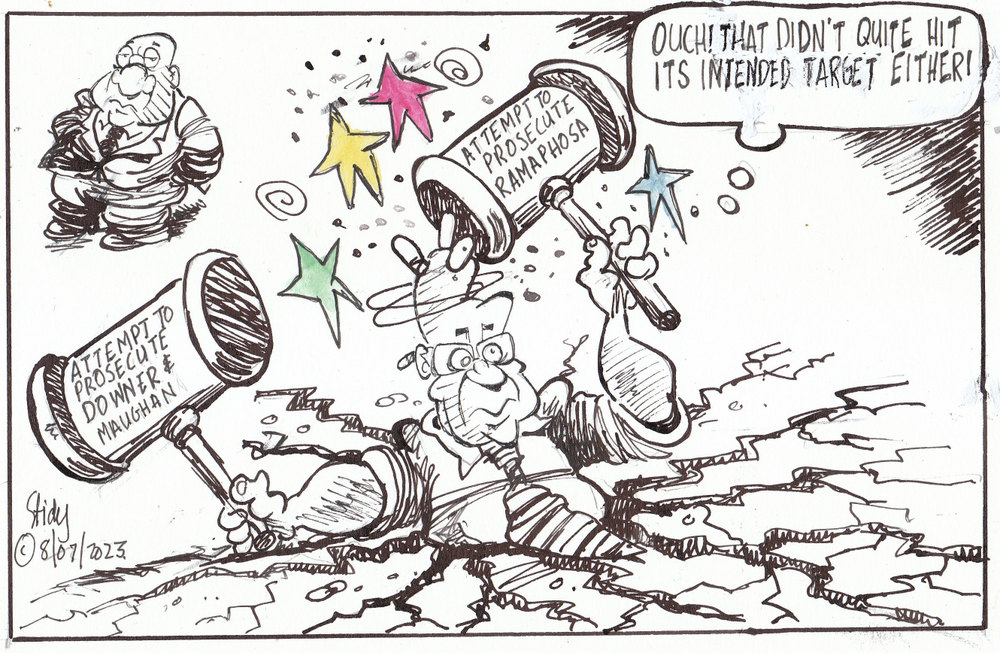
The High Court delivered a fresh blow to ex-president Jacob Zuma when it brushed aside his attempt to privately prosecute President Cyril Ramaphosa…
President Cyril Ramaphosa blamed the COVID-19 pandemic, state capture and the continued economic downturn for why the new dawn he had promised when he took office had not materialised.
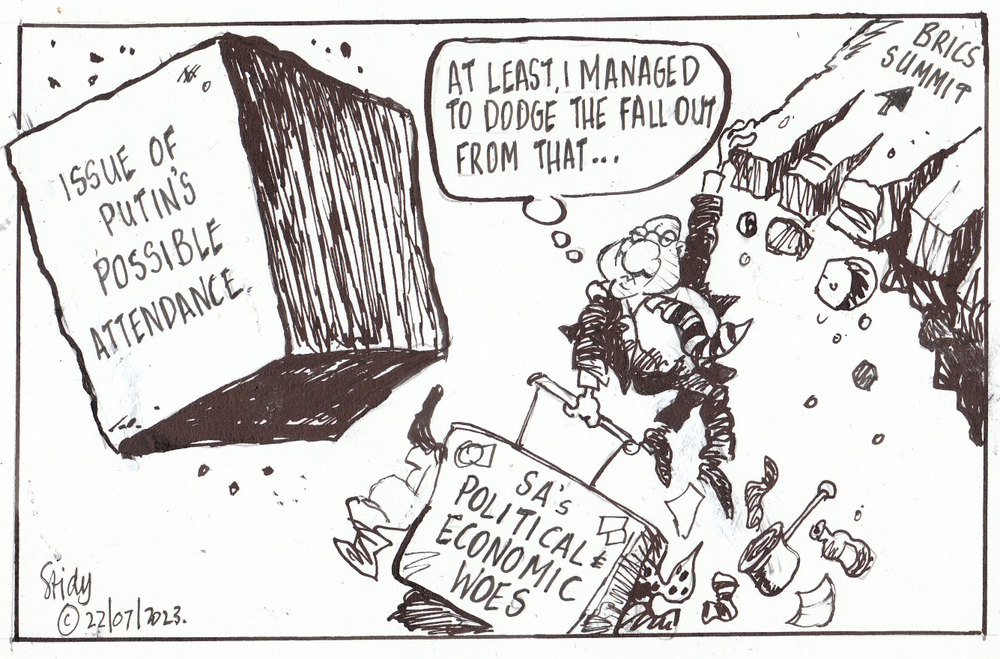
A possible diplomatic crisis was averted when the Presidency announced that Russia’s President Putin would not attend the BRICS summit in South Africa in August.
ANC Secretary-General called on Public Services Minister Pravin Gordhan to shape up or ship out, due to his slow pace in getting things to turn around at Transnet.
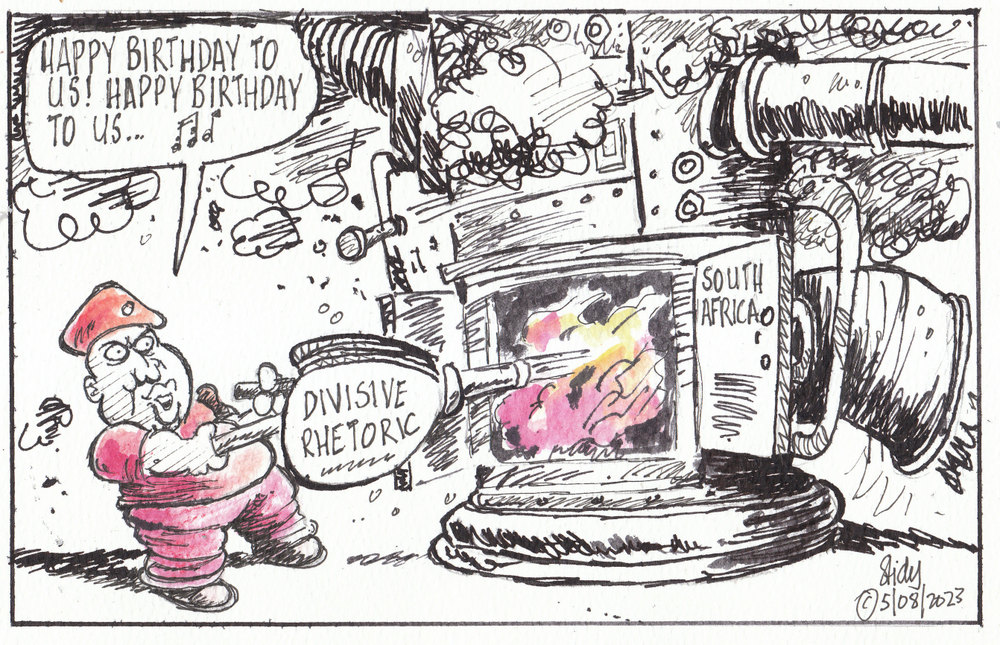
Julius Malema and thousands of his supporters chanted “Kill the Boer, kill the farmer” at the EFF’s 10th-anniversary celebrations held in the FNB stadium.
Msunduzi Municipalities’s waste management came under scrutiny following sewage blockages in various residential areas and in and around the CBD. Service provision appeared to have taken a back seat while the municipality redistributed funds for the renovation of halls and funding a millionaire’s football club…
Seven political parties accepted an invitation by the DA to attend a national convention at the Emperor’s Palace, Kempton Park. They kicked off the event with a pledge to put aside their differences to dethrone the ANC from power after the 2024 national elections.
Six countries including two African countries made the cut to join BRICS. President Cyril Ramaphosa announced that Argentina, Egypt, Ethiopia, Iran, Saudi Arabia and the UAE will become BRICS members in 2024.
I stood on the deck of the lodge watching the broken white water as it fought and funnelled its way through a series of rapids and cataracts that had been cut into the cracked and fissured seams of rock below. At a point, to my left, its numerous strands converged into a single gushing torrent before plunging over a small waterfall into a narrow ravine and then meandering off towards the distant red cliffs.
View from Olifants Camp.
The trellised patchwork of islands, sandbanks, spits, reed beds and rocky promontories immediately above it was alert with life. On one of the larger islands, a bloat of hippos lay stretched out, comatose, in the sand, lapping up the last warming rays of the sun. Just across the way, another, smaller group had marked out their separate slice of prime riverside real estate. Stately water buck, with their white rump and course grey hair, stood in small groups by the water’s edge scanning the bush for any hidden dangers before stepping gingerly down to drink. They had good reason to be cautious. Not far from where the one lot was, several huge basking crocodiles lay supine on the bank. In a nearby pool, I could just make out the long snout and dinosaur eyes of another as it floated, log-like, just below the surface.
As the sun sank lower, the hippo began to lift their dusty bulks and move, either to where there was grass to eat or by simply lumbering into the fast-flowing river beside them, snorting up clouds of bubbles as they did. Directly beneath me, several large elephants, their calves in tow, ploughed their way through the reed beds, leaving behind a ruined bog of mud and crushed vegetation. A pair of quarrelsome Egyptian Geese shouted rancorously about who knows what before flying off down the river to their nightly roosting spot.
On the far side of the river, the trees stretched away, seemingly forever, under an arch of empty blue sky. There were no buildings, no people, nothing to suggest that this landscape had ever been inhabited by anything but animals. There are tourists in the park, of course, plenty of them. Driving around under the supervision of the tour operators in especially converted game-viewing vehicles and decked out in their idea of appropriate bush wear, many of them look strangely ill at ease and out of place in this primordial landscape. Watching some of them earlier, as they gathered for an afternoon drive, I could not help but think of Joseph Conrad’s baffled ‘pilgrims’ in his dark tale about a boat trip up another mighty African river (the Congo) – Heart Darkness.
Raising my binoculars, I scanned upstream. In the far distance a herd of elephants, their thirst slaked, trekked in single file across the sand towards the surrounding woodlands. Led by the senior matriarch, they flowed along in a steady swaying motion, their large, sensitive, ears flapping gently, their trunks hanging slackly down. Despite their immense size, elephants can move surprisingly quietly, sometimes only the low rumble of their stomachs giving their presence away.
They moved with all the solemn dignity of a line of monks heading to evening vespers. I found it all deeply moving.
Indeed, if I didn’t know better, I would have sworn the whole scene had been deliberately conjured up by the park authorities just to show me why the river had been so named.
A major tributary of the Limpopo, the Olifants is one of the iconic Kruger rivers. Its camp, built on the steep shoulder of a hill just where the river abruptly bends, has, to my mind, the most breathtaking view in the entire park. I don’t normally get to stay in it because it doesn’t have a campsite where I can pitch my tent – which is as far as my limited travel budget normally allows – but this time I was doing it some style thanks to the kindness of other family members. I was enjoying the upgrade, to say nothing of the view.
Downstream at dawn.Upstream…
I have always felt a strong affinity for rivers, especially African ones. In Conrad’s famous novella, the Congo River comes to symbolise the more evil aspects of man, as well the moral confusion its narrator, Marlow, experiences as he steams up it in search of the elusive Mr Kurz. For me, though, the river in front of me had far less sinister associations. As it twisted and turned and hammered its way through the hard, layered, rock of the Lebombo mountain range, it got me thinking about the passing of time.
The Olifants begins its journey somewhere up on the high plateau of Mpumalanga, drops down through the craggy peaks of northern Drakensberg and then snakes its way, serpent-like, across the great plain below. Along the way it faces challenges, difficulties and threats as it is forced to assess and choose options best suited to making progress. These periods of turbulence are followed by passages of calm and smooth going where it is able, quite literally, to go with the flow. Towards the end, it slows down to a point of torpor before dissipating into the Limpopo and then, finally, the sea. Having had to navigate some perilous waters of my own, I was only too aware of what point of that journey my life had reached. It made me a little uneasy – and all the more determined to make the most of this trip.
On another level, the Olifants River encapsulated everything I love about the Bushveld and this magnificent last refuge of large animals. Staring out over its shimmering pools, piles of driftwood and darkening shadows I, once again, found my imagination fired by its vast mysteries and remote beauties.
We were lucky enough to have a pride of lions come down to drink from the Olifants, directly opposite our lodge…
By now the sun had sunk beneath the horizon. With its departure, scores of bats came hurtling out from their roosts and headed out over the water, their bodies silhouetted black against the orange-red sky. On cue, the dark, falcon-like, form of a Bat Hawk came slashing through the sky in hot pursuit. A rare resident, whose distribution in South Africa is confined mostly to Kruger and northern Kwa-Zulu Natal this secretive bird, which roosts by day, is not often seen.
It was obviously not the only creature out on the hunt that night. As I took another sip of beer, I heard a scuffling sound from an area of dry grass just outside the electrified fence. Leaning over the guard rail, I caught a glimpse of a black-backed, short-legged, busy-looking, animal scuttling quickly on the ground. It was a Honey Badger, notorious for its ferocity if cornered, whose coarse hair and thick skin helps protect it from bee stings.
Sitting in the dark blue light, with Venus glittering brightly just above the horizon, I could imagine the countryside below us alive with similar hungry eyes – lion, leopard, hyena, wild dog, jackal – while shadowy herds, sensing their not-so-friendly intentions, stood in the darkness, frozen with fear.
After dinner. which we ate outside under the stars, I lay in bed listening to the comforting sound of the river below. It felt wonderful to be enveloped once more in these familiar surroundings. I looked forward to the next days’ explorations, wondering what they would bring?
Olifants lies within a transition zone between three ecosystems. It is here that the open savannah country, typical of the Satara area, gives way to Mopani, by far the most dominant tree of the northern section of the park. It also marks the beginning of baobab country. To the east stretches the Lebombo mountain chain– which starts in KZN and runs through the entire length of Swaziland before entering the park. Studded with rocks, thorns, bushwillows and candelabra-like euphorbia its forms the spine of the park.
VonWeilligh’s Baobab.
The next day, we got up before the sun and headed along the road that leads past VonWeilligh’s Baobab stopping off at the viewpoint along the way. We arrived just in time to see the sun rise over the same impressive cliffs that I had admired through my binoculars the evening before.
I usually travel to Kruger at the height of summer – to catch the returning migrants – when the temperatures regularly rise into the forties, so the chill came as a surprise. Pale gold in the early morning light, we could sense the countryside around us coming to life. As the sky lightened in the east, a whole chorus of birds began twittering in the trees, as if paying homage to the dawn of a new day. Doves pumped their throats in vigorous coooi-ing (“How’s father, how’s father?!”). Fork-tailed Drongoes performed acrobatics in the cold air. Spurfowl scolded. Waggle-tailed impala scampered about, no doubt relieved to have survived another night. Giraffes arched their necks to nibble on tree tops. In the grass beside the road, I saw a Red-crested Korhaan still bunched up in a round, feathery ball because of the cold.
A lone Spotted Hyena came loping up the road. It stopped for a few moments directly in front of the car and fixed its cadaverous eyes on us like it was some escapee from the underworld with an unusual tale to tell. Then it made a small diversion, trotted around the side of the vehicle, gave one last look back and disappeared back into the shadowy world it had emerged from.
We moved on, searching with hopeful eyes for more exciting sightings. The highlight of our drive up from Malelane had been spotting a leopard (actually, someone else had spotted it, we had just joined the general vehicular mayhem and excitement created by the sighting). On the move, a leopard can radiate menace and deadly intention but sprawled out, fast asleep in the fork of a gnarled old tree, this one looked as harmless as any domestic tabby cat. I could almost imagine it purring with contentment if I had climbed up the tree and stroked it.
Now it was our turn for lions. This time we had them all to ourselves, without all the jostling-for-position vehicles blocking our view. There are few more sights in nature more awe-inspiring than a pride of lions returning from a night hunt and this lot really was impressive. The large, shaggy-maned, male crossed the road ahead of us, its walk low-slung and easy. It appeared completely indifferent to our presence, not even casting a side-long glance in our direction as it disappeared into the trees on the other side. A young lioness was more curious, coming right up to the edge of the car, the gold cat’s sun-flecked eyes shimmering with hidden lights as she stared up at me. Sitting next to my open window, worrying about the possibility she saw me as a potential meal, I suddenly became aware of just how close she was.
We drove on. Two round-haunched zebra stood rock-still on the crest of the road before us, considering their options before moving on towards the distant horizon. I wondered if the bush telegraph had told them about the lion…
Later, we came across a family of hyenas who had taken up residence in a network of old burrows by the side of the road. Accustomed to cameras and faces in cars, they were not the slightest put out by our proximity to their lair. In the background, lay the mother, fast asleep in the shade of a mopani tree. As we pulled to a stop, one of her cubs stuck its head out of its hole, eyed us quizzically and, obviously decided to extend us some hospitality, for it came frolicking towards us. The curious youngster gave our car a quick, 360degree inspection, sniffing here and there – my brother-in-law had a few anxious moments because he thought it was about to bite a chunk out of the back tyre of his brand new car – and then went back to its hole, plonking itself alongside the entrance and going to sleep too, its social obligations for the day completed.
I felt well pleased. It is always an event to see two of the Big Cats in so many days and has a bunch of hyenas thrown in as a bonus, a small triumph scored. Now, I just needed Wild Dog but – alas – on that score, I would once again be disappointed…
Over the next few days, though, we continued to traverse this landscape with the same sense of wonder, immersing ourselves in the daily rhythms of the animals.
We travelled south towards Satara, via Balule and the Nwanetsi river route, where the country opens up into grassland populated by companies of zebra and wildebeest. There were more elephants, trundling along in the yellow light of dawn. As always, the matriarch led the way knowing, from years of experience, where the best grazing lay. At a small drift, we came upon a quaint Little and Large scene – an elephant siphoning up voluminous amounts of liquid from the same spot a mother spurfowl and her chicks were sipping much more delicately. The small birds seemed completely unfazed by the size and proximity of their drinking companion.
Little and Large…
Besides the big rivers – Crocodile, Shingwedzi, Olifants, Letaba, Luvuvhu, the Limpopo – many smaller rivulets run through Kruger although most remain dry outside the rainy season. It is always worth stopping at these quieter, more secluded, roadside pools as you never know what you might find skulking around the margins. Often they provide a home for herons, egrets, storks and stilts, waders, Three-banded Plovers, as well as the shy Black Crake with its bright red beak and legs. Amongst the reeds and greenery, you may be lucky enough to catch a glimpse of the brilliant orange and sapphire plumage of the Malachite Kingfisher just before it plunges into the water. Brighter than any illustration could be, this beautiful little bird is but one of the many species of kingfisher that occur in the park.
Malachite KingfisherThree-banded PloverBlack Crake (Juvenile – no red legs and beak)Little Egret, Saddle-billed Stork, Great White Egret.
Changing direction, the next day, we travelled north along the Letaba River to the camp bearing that name. Up until that point we had hardly seen another soul but that all changed when we got there and ran slap-bang into the very thing I had been seeking to avoid because it rather undercuts the whole wilderness experience – a seething mass of humanity. Most of them were either on their cellphones, guzzling cool drinks with exuberant lust or wolfing down junk food. Even Kruger, it seems, is not safe from the consumer society and with the ever-increasing volumes of tourist traffic overcrowding could become a problem.
But we had better things to occupy our minds with. The next day we cut westwards following the meandering path of the Timbabvati River, not too far from the area famed for its white lions. We didn’t see them but we did see two standard-model female lions lying in the shade by the river. They too ignored us, just another carload of gaping sight-seers. Several kilometres on we also came across a handsome old boy lying prostrate in the golden grass. He blended in so well, you could barely make him out.
Impalas are plentiful in this part of the park, so the lion’s presence hardly came as a surprise. More easily overlooked and solitary in habits were the steenbok. Graceful, soft-furred little creatures, their diminutive size makes them look especially vulnerable but they somehow survive in this harsh environment. Like other buck, they live a life of constant chase and evasion.
SteenbokImpala
Then there were the birds. With over 500 species recorded, Kruger is a birder heaven. It is also a great place for raptors. I dutifully ticked off Martial Eagle, African Hawk Eagle, Fish Eagle, Tawny Eagle, and Brown Snake Eagle. The open grasslands in the central regions of the park are also good places to see Secretary Birds (actually an eagle with very long legs), Kori Bustard (the heaviest flying bird in the world), and the lugubrious Southern Ground Hornbill (we were lucky enough to have three separate sightings. They are now listed as Threatened in many parts of their range).
Kori BustardSouthern Ground Hornbill
Heading homeward at the end of our trip, we came across another solitary leopard striding purposefully through the grass by the side of the road. Unlike the one we had seen coming in, it looked neither relaxed nor friendly. Openly disdainful of our presence, it didn’t bother to look back as I clicked away on my camera.
A bit further on, we chanced upon a wake of vultures sitting hunched up on the canopies of the surrounding trees, still digesting the carrion from a nearby lion kill. Because of their rather unsavoury habit of sticking their long, naked necks deep into the putrescence, vultures don’t enjoy the most favourable of reputations. I must confess, however, to having a peculiar fondness for these greedy, squabbling, big-beaked, gimpy-eyed, angry-looking, scavenger birds. As a cartoonist, I find them wonderful to draw. Amongst this group – made up mostly of the White-backed – I was pleased to see a White-headed Vulture, now very rare outside the major game reserves.
White-headed VultureWhite-backed Vultures
Our encounter with vultures did not end there. My brother-in-law had told me of a place, further south, where flocks of vultures like to regularly gather on the banks of a river for a daily dust bath. Sure enough, when we drew up on the bridge, there they all were, just downstream, dancing around one another in cantering hops, their enormous wings outstretched, their white back marking clearly displayed. They looked like priesthood initiates participating in some archaic, secretive, sacrificial ritual.
White-backed Vultures.
Why they chose this particular spot to perform their ceremonial ablutions is unclear. I was still pondering the mystery of this when we crossed over the Crocodile River (also aptly named) and exited the park. Suddenly, we were no longer in the heart of the wilderness but buzzing along a two-lane highway crammed solid with huge trucks, speeding cars and maniacal drivers.
Caught up in the juggernaut, reality began to seep back in. My escape from civilisation was over. Now, I was headed back to a world of responsibilities and commitments; to say nothing of difficult people, dysfunctional municipalities, corrupt and inept politicians, crumbling infrastructure and load shedding, all of which it is my job, as a cartoonist, to dutifully portray and comment on. I had to fight my every instinct which was to turn around and flee back to the far more agreeable company of the vultures…
Olifants RiverOlifant River looking up stream towards camp (on hill)Elephants, OlifantsMore elephants, OlifantsHippos, OlifantsMore hippos, OlifantsElephant, OlifantsSunset over OlifantsWaterbuckTimbavatie River TwoLioness, Timbavati areaSpot the lion?Kudu – blending in.Giraffer with Red-billed OxpeckerWater MonitorTree SquirrelDwarf MongeeseLeadwoodCollared SunbirdYellow-billed HornbillWhite-bellied SunbirdOlifants River near Balule
The battle of Blood River, fought at Ncome on 16th December 1838, was an event that has come to assume great symbolic importance for both Boer and Zulu. Given the political hinterland, it is perhaps hardly surprising that certain generic preoccupations can be identified and that there should be a wide divergence in opinion as to the significance of the battle. To justify their expansionism and territorial ambitions, the Boers took it as a sign that they were indeed a chosen people and God wanted them to have the land. In addition, their triumph against a much larger force was seen as just retribution for, what they regarded as, the treachery of the Zulu king, Dingane (who had earlier ordered the killing of the Boer leader Piet Retief and his companions).
In the eyes of the Zulu nation, the battle had different connotations. Far from being the villain of the piece, many came to regard Dingane, in the words of the author, as “an African king who strove as best he could to preserve his kingdom and his people from invading white settlers.” Today, there are many who continue to honour him as an important early liberation hero.
Historian John Laband, who has earned a reputation for his painfully meticulous research and commitment to the pursuit of historical truth, deserves much admiration for the way he has sifted through the conflicting versions and accounts to present a compelling and convincing narrative of what actually transpired. In performing this delicate balancing act, he has produced the first book in English that engages with the war between the Boers and the Zulu in its wider context or takes the Zulu evidence into proper account.
For the sake of completeness and coherence, he travels back in time to show how the conflict had its origins in the breakdown of security during the Frontier wars and also came about because of the desire of the Dutch settlers to escape British rule in the Cape. This dissatisfaction resulted in another important historical saga which came to loom large in Afrikaner consciousness and myth-making – the Great Trek. The northward movement of these ’emigrant farmers’ into the interior of South Africa led to growing tensions and conflict as they came into contact with the various tribes already settled on the land. Laband gives a gripping account of the desperate stratagems employed by the powerful Ndebele under their charismatic leader Mzilikazi as they attempted to halt the advance of the trekkers. Having ultimately defeated the warlike tribe, a section of the trek, under Piet Retief, hived off eastwards towards the rich green pastures of what is now modern-day KwaZulu-Natal.
Even after they had decisively beaten Dingane’s Zulu army, the Boers continued to regard him as an existential menace which partly explains why they decided to back Mpande in his plot to overthrow his half-brother and seize the throne. Throughout all of this, the British Government was reluctant to support the Boer campaign because it threatened the stability of the entire region although, paradoxically, they would later go on to wage their own war against the Zulu kingdom.
No mere military narrative, Laband’s account of this chain of events provides a crisp and vivid introduction to the subject and is inter-dispersed with striking personalities (like King Shaka) and intriguing eyewitness accounts, Along the way, there are some interesting digressions with the author revelling in explaining fascinating things that most readers will know little about – for example, the type of weapons favoured by the settlers in Southern Africa.
Overall, the book should appeal to both the general reader and the academic community, not just for its encyclopaedic nature but for the obvious quality of the scholarship.
published by Viking
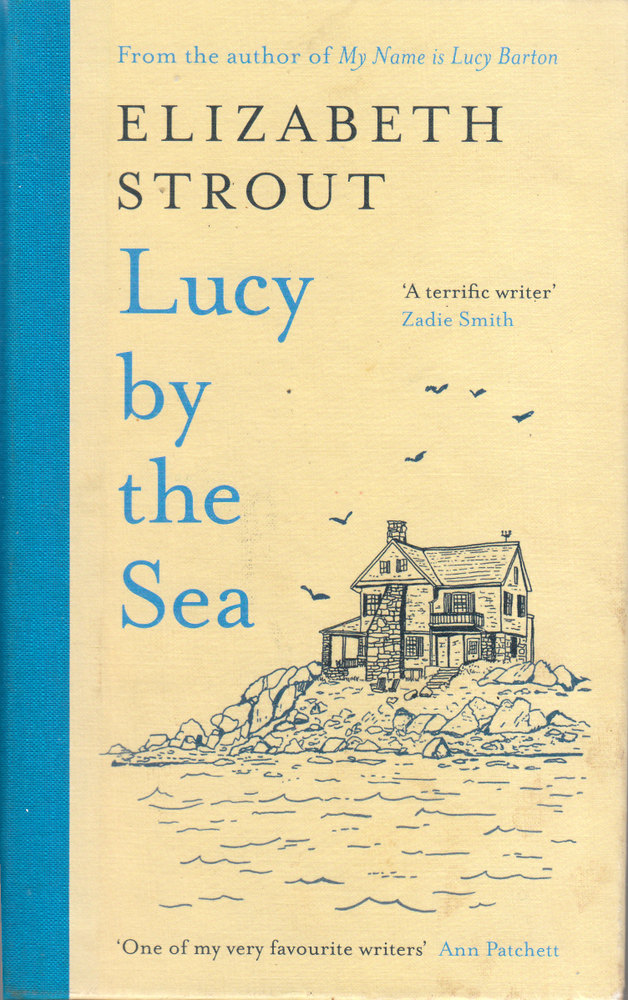
Lucy, the heroine of Elizabeth Strout’s new novel is an elderly writer living alone in New York. Out of the blue, she receives a call from her ex-husband, William, who suggests she leave her apartment and join him in a house he has rented on the coast of Maine. After some hesitation – and on the understanding, it will only be for a few weeks – she agrees. Although his reasons for wanting her to spend time with him are not immediately spelt out, it soon becomes apparent it is because he is concerned about the approaching Covid-19 pandemic and the effect it could have on her safety, health and well-being. There is also obviously still some residual affection lurking in the background.
At first, Lucy feels a bit out of place in her new environment. The social and physical restrictions put in place because of the virus make it difficult to interact with others or meet new people. There is widespread fear and panic. Lucy encounters some initial hostility from a few of the locals who are instinctively suspicious of outsiders, especially ones from New York.
Slowly, however, she finds herself succumbing to the daily routines and the sleepy charm of the place. When her romance with William rekindles, she decides to sell her New York apartment and move in full-time.
Written in the first person, Lucy by The Sea has a raw episodic quality which, at times, makes it feel more like an autobiography than fiction. Failed romance is the slow pulse that beats underneath the placid surface of much of it. As the novel carefully unfolds, we learn more not only about Lucy’s two past marriages past but the complicated relationships between her family and children. The joys of friendship, the slight betrayals and the changes that events in the larger world can enforce on it are all meticulously observed. Strout portrays their interconnectedness and intertwined variety with warmth of understanding and delicacy of touch.
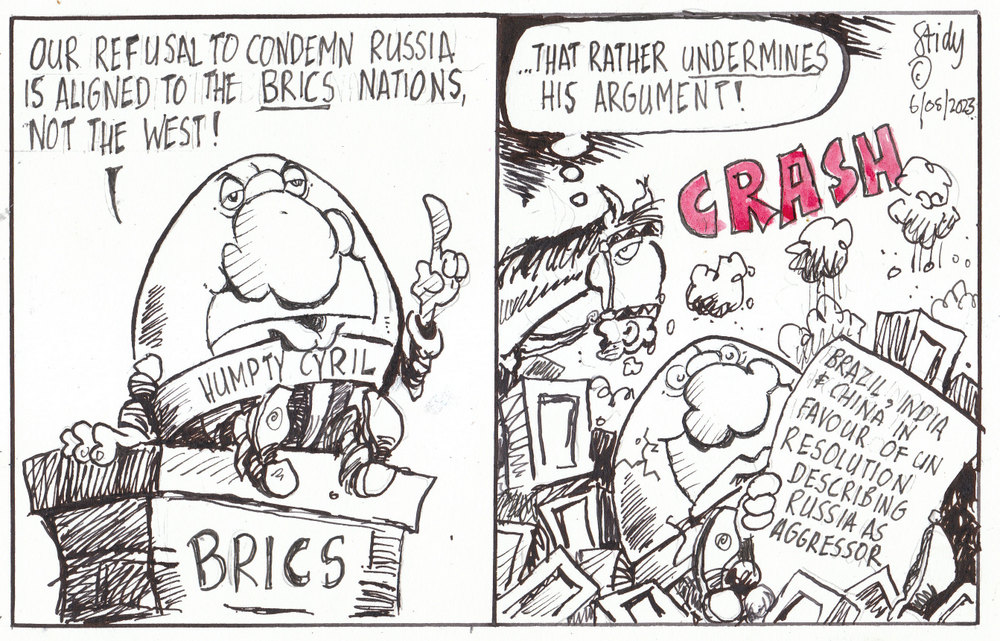
The South African government’s justification for its moral dereliction in relation to the Russian invasion of Ukraine was dealt a severe blow after the majority of BRICS nations voted for a UN resolution which described Russia as the aggressor in Ukraine and Georgia.
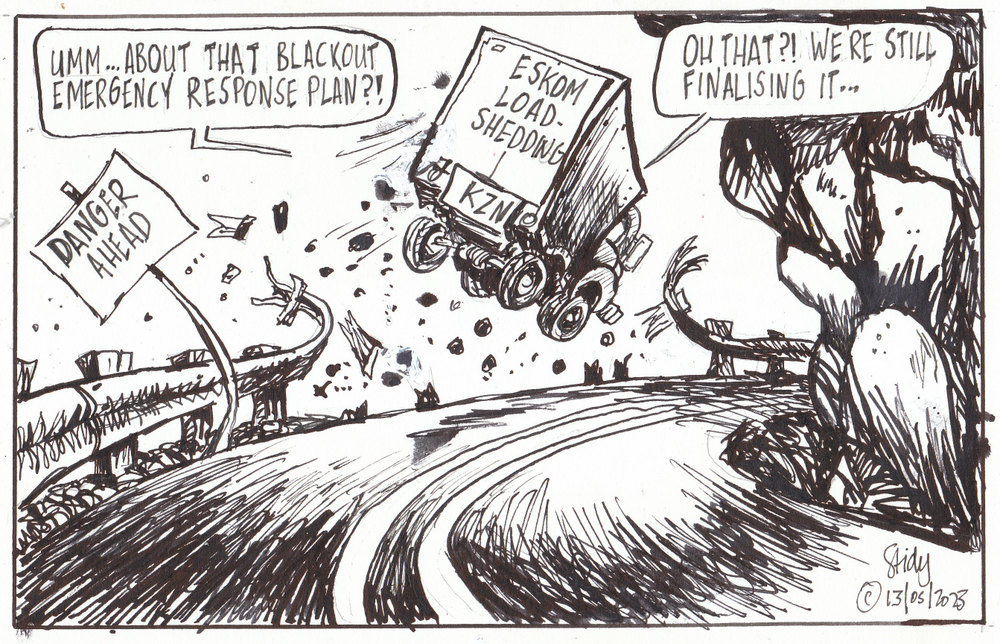
The KZN provincial government had still not finalised its blackout emergency plan despite electricity minister Kgosientsho Ramokgopa warning the public to expect the power supply problem to worsen during winter.
The US accused South Africa of providing ammunition to Russia through a Russian ship, the Lady R, that docked at Simon’s Town in December 20022 – an accusation the government immediately denied. With Eskom’s power problem growing worse, unemployment reaching record highs, crime levels soaring and numerous other issues facing President Cyril Ramaphosa, South Africa’s growth outlook looked bleak.
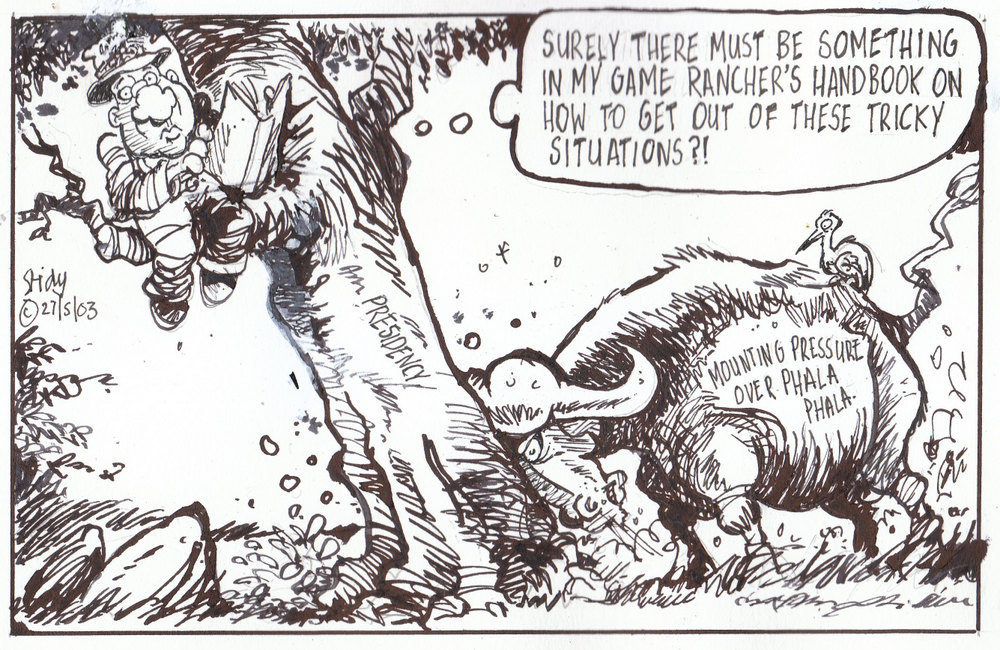
Opposition parties urged the National Prosecuting Authority to take action against President Cyril Ramaphosa over the Phala Phala scandal. This was in the wake of the announcement by the presidency that Ramaphosa would no longer be challenging the validity of the Phala Phala report by the Section 89 independent panel.
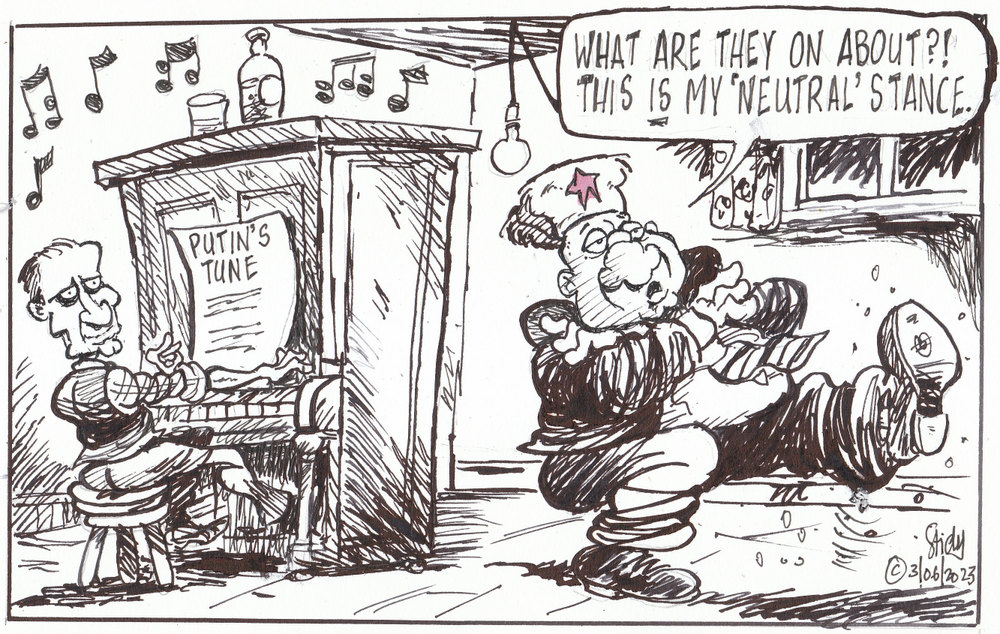
President Cyril Ramaphosa insisted that South Africa’s non-aligned position does not favour Russia in its war with Ukraine, even as it faces pressure from some of its main partners to change course.
The High Court in Pietermaritzburg ruled that former president Jacob Zuma’s private prosecution of journalist Karyn Maughan had the hallmarks of a SLAPP suit, designed to harass and intimidate.
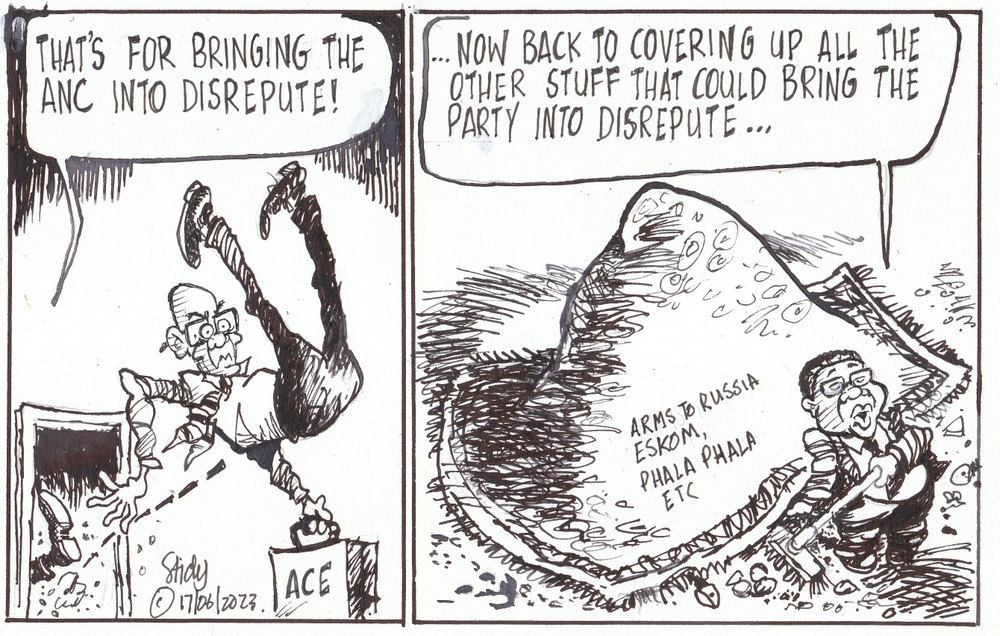
The ANC finally cut ties with its former secretary-general Ace Magashule, slapping him with a permanent expulsion. This after he missed the deadline to oppose the party’s National Disciplinary Committee (NDC) findings against him.
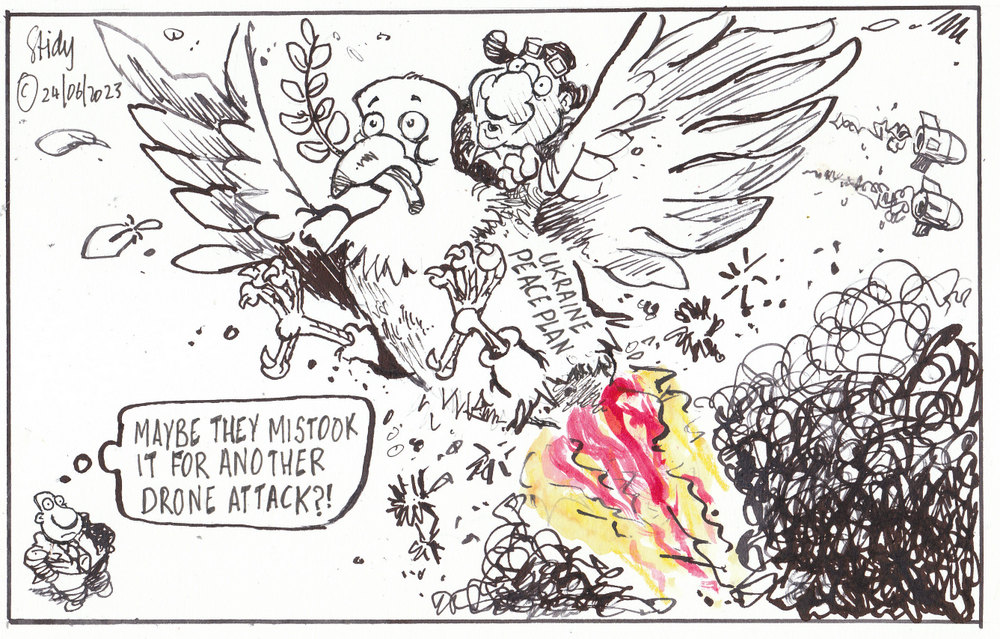
An African peace mission, spearheaded by President Cyril Ramaphosa, drew widespread criticism with some calling it a “failed PR stunt”. Both Ukrainian president Volodymyo Zelenski and his Russian counterpart, Vladimir Putin, rejected the 10-point peace plan.











 Stidy's Eye