Msunduzi Municipality claimed to have made progress in clawing back millions owed by defaulters, but serious questions loomed over the effectiveness and cost-efficiency of the recovery process.
Ongoing testimony before the Madlanga Commission of Inquiry has revealed deep divisions and bitter infighting, as well as criminal infiltration, within South Africa’s police force.
DA leader John Steenhuisen’s controversial decision to ask President Cyril Ramaphosa to replace Minister of the Environment, Forestry and Fisheries Dion George with party spokesperson Willie Aucamp exposed deep divisions within the DA.
Imprisoned tenderpreneur Vusimuzi “Cat” Matlala claimed he paid former Police Minister Bheki Cele R500 000 at his penthouse.
US Secretary of State Mark Rubio confirmed that the US intended to ban South Africa from the G20.
The ANC scrambled to stabilise its hold on KwaZulu-Natal as the Government of Provincial Unity (GPU) faced a critical test when the MK Party motion of no confidence in Premier Thami Ntuli was to be debated.
KwaZulu-Natal Premier Thumi Ntuli survived an MK Party motion of no confidence, after a chaotic sitting of the KZN Legislature in which the motion was ultimately defeated.
Consumers received another shock when electricity tariffs for the next two years were hiked after the National Regulator of SA (Nersa) said it found errors in its price determination announced in January.
Writing in his weekly newsletter, From the Desk of a President, President Cyril Ramaphosa called on South Africans to work together to build a society where corruption is unable to take root.
The Madlanga Commission of Inquiry into criminality, political interference and corruption in the criminal justice system got underway.
In a wandering speech to the United Nations, which contained no shortage of false claims and contradictions, US President Donald Trump dismissed climate change as “the greatest con job ever perpetrated on the world” and blasted wind farms and other renewable energy projects.
EFF leader, Julius Malema, was found guilty of the unlawful possession of a firearm and ammunition, discharging a firearm in a public space, failure to take reasonable precautions to avoid dangers to persons and reckless endangerment. Calling the decision “racist”, he has vowed to fight the sentence.
The KwaZulu-Natal government of provincial unity (GPU) was on shaky ground amid growing calls from within the ANC for the party’s withdrawal from the coalition government. Compromising the IFP, DA and ANC, the KZN GPU has faced turbulence since its formation in June 2024.
The factional fights amongst the police top brass were again brought into sharp relief at the Madlanga Commission of Inquiry, further eroding public confidence in SAPS’ ability to deal with the rising crime levels.
The Gauteng Division of the High Court of Pretoria gave former president Jacob Zuma 60 days to pay back nearly R29-million, plus interest, in state money that was unlawfully used to pay his legal fees and related expenses.
Ever since he first entered politics, Julius Malema has – like Donald Trump in America – been a divisive and controversial figure, a fact he has been only too happy to exploit to his advantage. Loathed by one section of the public, worshipped by another, over the years, a great deal of speculation has whirled around who he is and what drives his ambition. Many questions have also arisen as to how he has been able to underpin his lavish lifestyle. In this compelling, convincing and meticulously researched book, investigative reporters Micah Reddy and Pauli Van Wyk tear away the veil to reveal the unsettling truth.
Although not intended as a biography (Malema, unsurprisingly, refused to have anything to do with the authors), the book does give a brief resume of his career. Brought up in poverty, Malema became politicised at an early age. At school, he did not do well academically, although he would later explain this away by saying it was because he was too busy with politics. His less-than-stellar academic performance in no way dampened his unwavering thirst for power. He quickly made his presence felt. His personal charisma and larger-than-life personality went hand in hand with an instinctive feel for the masses which saw him rapidly rise through the political ranks until he eventually became president of the ANC Youth League.
As a member of the new elite, Malema openly displayed the self-regard and sense of entitlement that has become the trademarks of far too many of post-colonial Africa’s leaders. Like many others, too, he would use his new position to benefit from government tenders; in his case, mostly in Limpopo.
Malema was initially a fervent supporter of Jacob Zuma, vociferously defending the then Deputy President when he was charged with rape and playing an important role in his campaign to unseat Thabo Mbeki as president of the ANC. His outspokenness soon got him into trouble with the ANC hierarchy, however, and, despite his avowals of permanent support, he would later turn on Zuma after he expelled the young firebrand from the ANC for fomenting divisions and bringing the party into disrepute (ironically, Zuma would later suffer a similar fate).
Determined not to be silenced, Malema responded by forming the Economic Freedom Front (EFF), which advocated the radical redistribution of land and the nationalisation of mines. He was joined by his sidekick and former deputy president of the ANCYL, Floyd Shivambu, who would also become implicated in his share of shady financial and business activities (Shivambu would later deal a big blow to the EFF when, in a headline-grabbing move, he defected to Zuma’s newly formed MK Party. He did not last long there). As the undisputed leader and dominant member of the party, Malema was now able to unleash his demagogic talent freely.
Despite his pro-poor stance and professed aversion to Western capitalism, Malema has displayed few, if any, principles when it comes to accumulating wealth. Like many a populist leader, he has not been afraid to mix his political interests with his business ones or to use his political connections to bankroll both his party and himself. The proceeds from the latter went into luxury items, fleets of cars and a multitude of mansions, farms and properties.
Malema did his best to cover his tracks, but the press soon got wind of his activities and various investigations followed. Despite all the evidence that has been uncovered showing how he has benefited from his back-room deals, Malema has proved singularly adept at exploiting South Africa’s weak justice system and avoiding accountability.
In this deeply researched piece of investigative reporting, the authors provide a lengthy and detailed charge sheet of these. Looming large among the many cases is the scandal surrounding the Venda-based VBS Mutual Bank. A community-based bank, focusing on serving people with modest incomes, it collapsed in 2018 after being looted by corrupt municipal officials, middlemen, politicians, auditors, and even members of the Venda royalty, who had defrauded it of around R2 billion. As a result, many poor and elderly rural folk lost their life savings. Needless to say, both Malema and Shivambu were implicated in the unfolding scandal.
So far, the two politicians have managed to elude being brought to book for these and other corruption allegations, although investigations continue.
Engrossing and revelatory, Malema: Money. Power. Patronage provides a mountain of information on how Malema and other self-styled revolutionaries in the EFF have managed to enrich themselves, all in the name of the people. In doing so, the book also lifts the lid on the amoral careerism and licensed larceny that have become a defining characteristic of South African politics. Sadly, far too many members of the former liberation movements seem to have abandoned the fundamental values that first nourished them and learnt to tolerate the intolerable…
Published by UJ Press
In this well-researched, scholarly overview, the author provides detailed insights into the factors that led to the 2017 overthrow of the long-time Zimbabwean president, Robert Mugabe. One of the major focus points of the book is the often-overlooked role gender played in this and other military coups.
Tendi argues that Grace Mugabe – often sneeringly referred to as Gucci Grace because of her expensive tastes and extravagant lifestyle – was deliberately cast, by the coup plotters, as a scheming femme fatale, who had taken advantage of her husband’s frail health and declining mental state to position herself to take over the reins of power. This scapegoating of the First Lady was used as a cover for the general’s real motivations for the coup – to ensure that their preferred candidate, the recently sacked deputy president, Emmerson Mnangagwa (who they believed would protect their interests and positions. Mugabe was, reputedly, planning to get rid of some of them, and his rebuff of the generals when they sought a meeting with him to discuss their grievances was, undoubtedly, one of the main catalysts for the coup), would become president and not Mugabe’s own choice for successor – Dr Sydney Sekeramayi.
To bolster the case, as well as making it more appealing to the rank and file, the coup leaders portrayed Mnangagwa as a strong, bold, decisive, masculine figure as opposed to the more reserved, unassuming and, by implication, less manly, Sekeremayi. Mugabe was, likewise, feminised as “an old man” who had lost much of his former charisma and power and was, therefore, no longer up to ruling.
In addition to this, Tendi successfully demolishes the argument, put out at the time, that Mugabe’s overthrow was somehow not really a coup, in the strict sense of its definition, or that it differed markedly from how others had played out elsewhere in Africa. Because of Mugabe’s widespread unpopularity, both within and outside the country, coupled with the general feeling he had long overstayed his welcome in office, the AU and most Western leaders were happy to go along with this fiction. As a result, there was minimal public condemnation. There were even suggestions that Britain, for one, may have had a hand in what transpired or at least given tacit support to the Mnangagwa faction. The book includes personal testimonies and much interesting anecdotage from diplomats and politicians, in this connection.
Sadly, any hopes that the coup would usher in a better Zimbabwe would soon be dashed. As the author observes, most coups by generals tend to have conservative outcomes, and Zimbabwe proved no exception. There has been little meaningful change to the political status quo. Women’s participation in politics has declined, and there has been further repression and ongoing human rights abuses.
As Associate Professor of African Politics at the University of Oxford, Tendi has done his research, and his book includes a great deal of revealing behind-the-scenes detail. The most vivid parts of the book are those describing the fractured civil-military relations, and Mugabe’s failure to address or immediately deal with the generals’ grievances, an uncharacteristic lapse in judgment which resulted in the ageing president’s downfall. The author’s academic background does, however, occasionally show through in the numerous references to other scholars’ work and some rather dry theorising, which tends to slow down the pace of the narrative.
That said, The Overthrow of Robert Mugabe: Gender, Coups and Diplomats remains an important and engaging account of a pivotal moment in Zimbabwe’s recent history.
The National Treasury announced that Finance Minister Enoch Gondongwana would re-table the 2025 revised Budget on May 21. The announcement came three days after Gondongwana’s withdrawal of his earlier Budget, which included the contentious proposal to increase VAT by 0,5%.
The High Court reserved judgment on the DA’s legal challenge to the Employment Equity Amendment Act, which the party said imposes unconstitutional racial quotas that harm minorities and threaten economic growth. The case looked set to place further strain on the already fragile Government of National Unity (GNU).
Unemployment in South Africa rose by a full percentage point in the first quarter of 2025, with the economy shedding 291,000 jobs. Only 16,8 million South Africans were now employed, down from 17,1 million in the fourth quarter of 2024.
Despite the choreographed theatrics and humiliating spectacle staged by Donald Trump at their White House meeting, President Cyril Ramaphosa’s team, which included golfers Ernie Els and Retief Goosen, successfully reset relations, paving the way for future trade opportunities with South Africa’s second-largest trading partner.
Several Economic Freedom Front (EFF) members, including party leader Julius Malema, were forcibly removed from the National Assembly for disruptive behaviour during President Cyril Ramaphosa’s Question and Answer session. Earlier, Malema had vowed he would not be intimidated by Donald Trump, after the US President played a video of him chanting “Kill the Boer” during his White House meeting with Ramaphosa.
Floyd Shivambu became the latest high-profile casualty in the uMkhonto we-Sizwe (MK) Party when he was removed from his powerful post as Secretary-General just a week after fellow EFF defector Mzwanele Manyi was fired as Chief Whip in Parliament.
As wind, cold, and rain left a trail of destruction across KwaZulu-Natal and the country, US President Donald Trump continued to cause havoc across the globe, including Africa, with his tariffs and unpredictable policies.
With most of the world’s nuclear-armed states continuing to modernise their arsenals and the Middle East conflict escalating as Israel and Iran launched missiles at each other, the world became a more dangerous place than it had been for decades.
The entry of the United States into the Israel–Iran conflict created a huge headache for the South African government. While the country had always enjoyed warm diplomatic relations with Tehran, it could not risk further alienating the Trump administration, given that the relationship was already on life support.
In his New Year address, President Cyril Ramaphosa said South Africa had made great progress in 2024. However, there still remains an urgent need to create more jobs, ensure all people receive quality service and fix water supply problems.
ANC President Cyril Ramaphosa broke his silence on the SACP’s decision to contest the 2026 local elections on their own, warning that dismantling the tripartite alliance would “weaken the national democratic movement.” Despite leading the rival MK party, former president Jacob Zuma, meanwhile, demanded that he be reinstated in the ANC by the end of January. The ruling party dismissed his demand as “mischievous.”
The world braced itself for the return of the polarising figure of Donald Trump as the 47th president of the United States. On the campaign trail, Trump had announced wide-reaching plans, including the mass deportations of immigrants and sweeping tariffs that economists warned could have a drastic effect on the economy. He also threatened to rename the Gulf of Mexico, take over the Panama Canal, make Canada part of the United States and buy Greenland.
In launching his “Masterplan” to tackle the city’s dire state, Msunduzi Municipality Mayor Mzimkhulu Thebolla finally admitted to what residents have been complaining about for years.
President Cyril Ramaphosa signed into law a bill allowing for the seizure of land without compensation – a move that put him at odds with some of the other parties in the Government of National Unity.
President Cyril Ramaphosa’s SONA address came at a time when South Africa’s relations with Rwanda were souring as security deteriorated in the eastern DR Congo. US President Donald Trump also threatened to cut funding over South Africa’s land policy, which allowed for the confiscation of land without compensation.
As the United States announced new tariffs on steel and aluminium, EU chief Maros Sefcovic said it was a “lose-lose” scenario. “By imposing tariffs, the US will be taxing its own citizens, raising costs for its own business, and fuelling inflation,” he cautioned.
The last-minute cancellation of the 2025 budget speech exposed deep divisions within the fragile Government of National Unity, with the ANC appearing to believe it still held the upper hand after informing coalition partners of the 2% VAT hike at the last moment.
In his Medium-Term Budget Policy Statement, Finance Minister Enoch Godongwana doubled down on budget costs and put in measures to stimulate growth.
The United States of America elected Donald John Trump as its 47th president, choosing a candidate who has promised to put America on a different path. This decision has significant implications for South Africa.
Former EFF chairperson Dali Mpofu became the latest high-profile member to defect to Jacob Zuma’s uMkhonto we Sizwe Party (MK Party). The exodus of members was predicted to continue.
Public hearings began on Eskom’s proposed 36,1% tariff hike, amidst widespread concern that the increase will worsen the struggle of already vulnerable South Africans.
Former president Jacob Zuma rejected the ANC’s decision to expel him from the party. Zuma’s problems with the ANC started in December 2023, when he announced he was campaigning for the MK Party.
Thembi Simelane’s reshuffle from Justice Minister to Human Settlements Minister ignited sharp criticism, with opposition parties accusing President Cyril Ramaphosa of political manoeuvring. Simelane has been linked to the VBS scandal.
Ahead of its elective conference, EFF leader Julius Malema declared the Jacob Zuma-led MK Party its “biggest enemy” as senior members of the leftist party continue to defect to it.
KwaZulu-Natal opposition parties described Premier Nomusa Dube-Ncube’s State of the Province Address as an “election speech”. In her speech, Dube-Ncube focused on the provincial government’s recent achievements, as well as tracing the ANC government’s achievements from around 2024 when ruling party deployees assumed key positions in the KZN provincial cabinet.
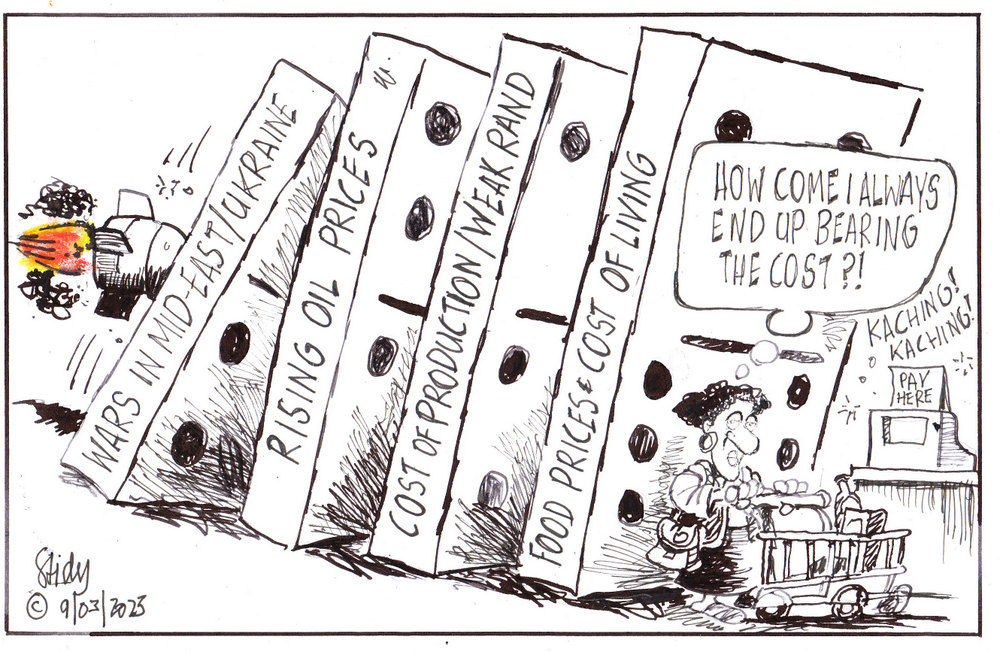
In a blow for cash-strapped consumers, there was another steep increase in the fuel price with petrol going up by R1,20 per litre while diesel increased by R1,18.
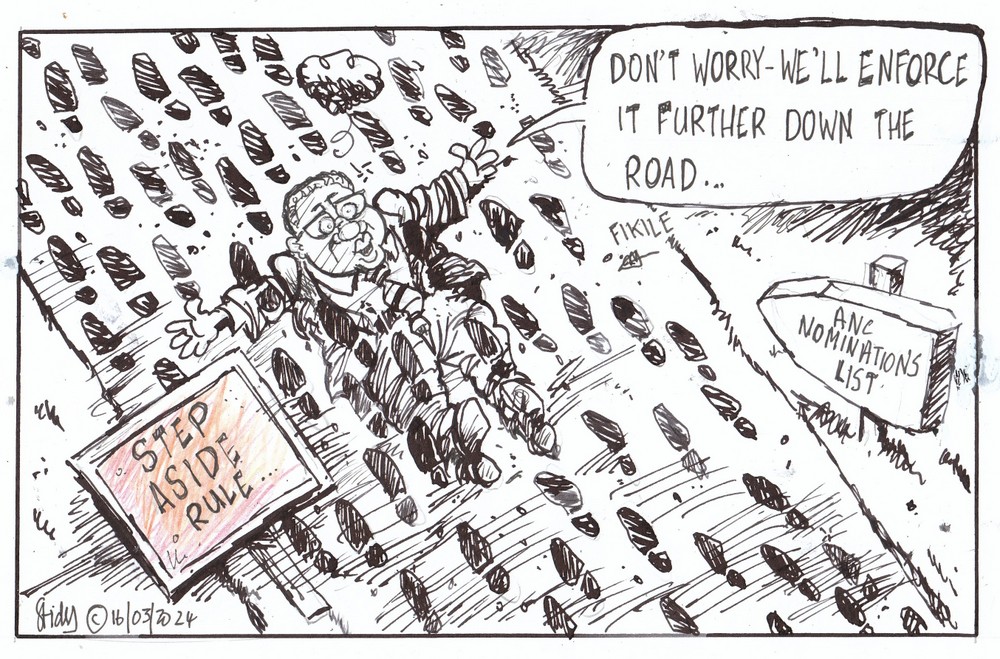
Despite promising that they would not include ANC members who have been implicated in State Capture, a number of them made it back onto their nomination lists for the 2024 elections.
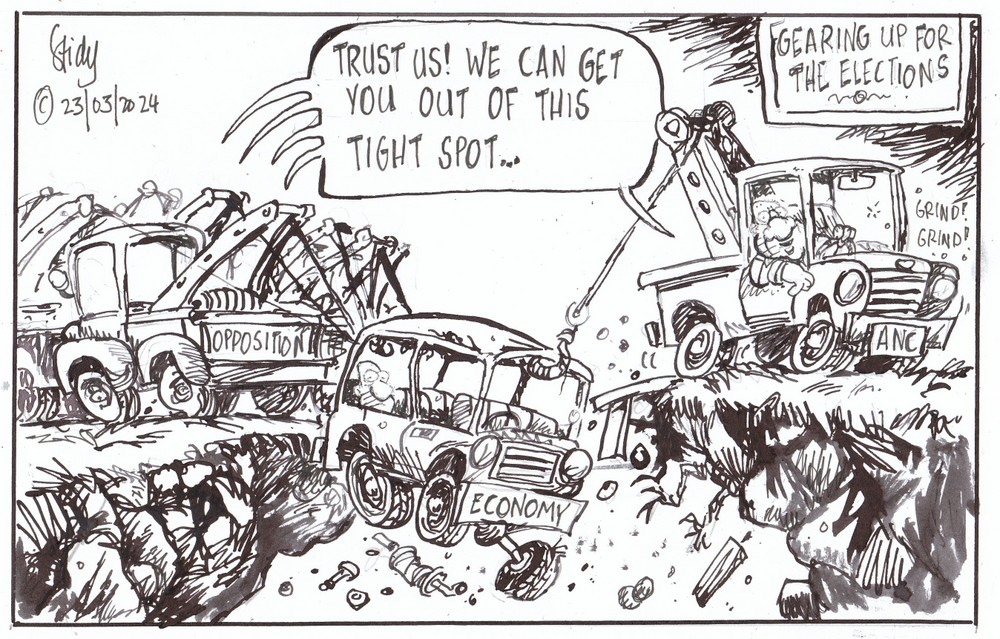
Election season got into full swing with the various parties all promising they had the solution for the country’s myriad problems.
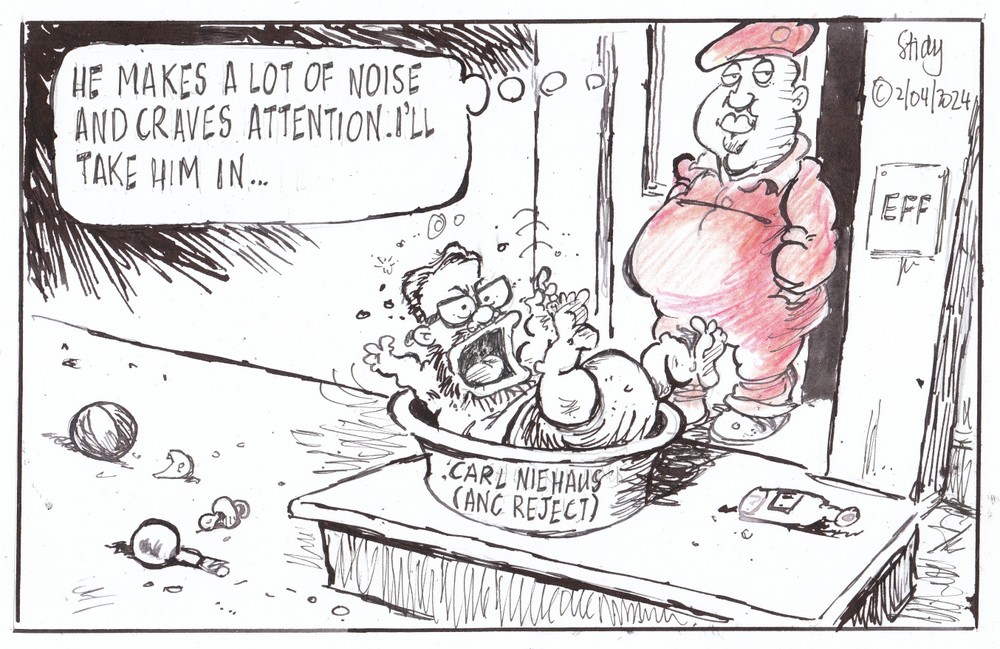
Former ANC member veteran and African Radical Economic Transformation Alliance (Areta) leader Carl Niehaus was among the top candidates on the Economic Freedom Forum (EFF) list of people headed for the National Assembly after the elections were held. Niehaus joined the Red Berets after dumping his party, Areta, which he founded after he left the ANC.
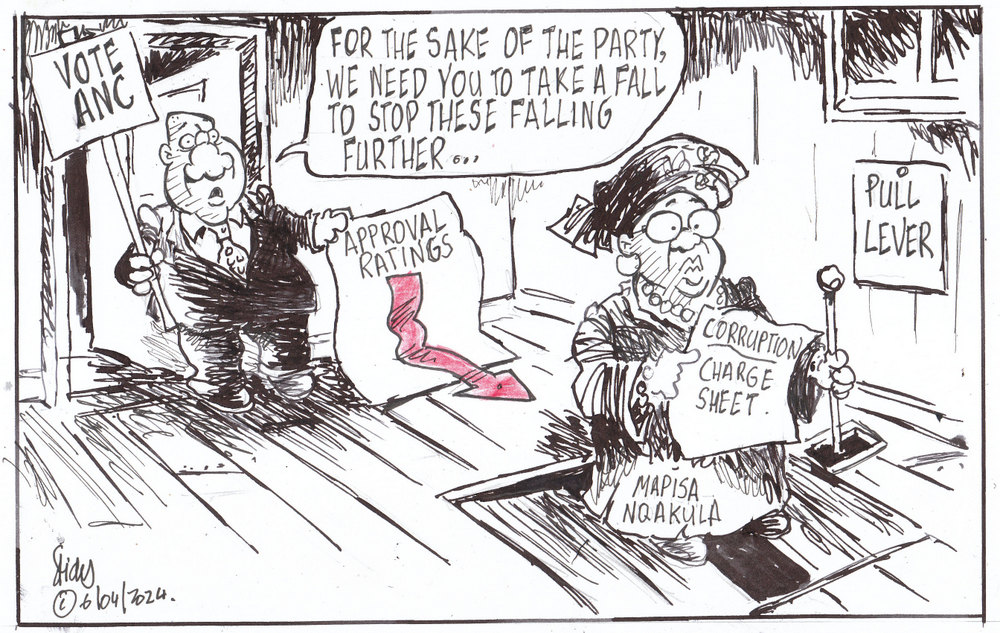
ANC leaders close to corruption accused National Assembly Speaker Nosivwe Mapisa-Nqakula of encouraging her to resign to save the party the embarrassment of defending her during a pending motion of no-confidence.
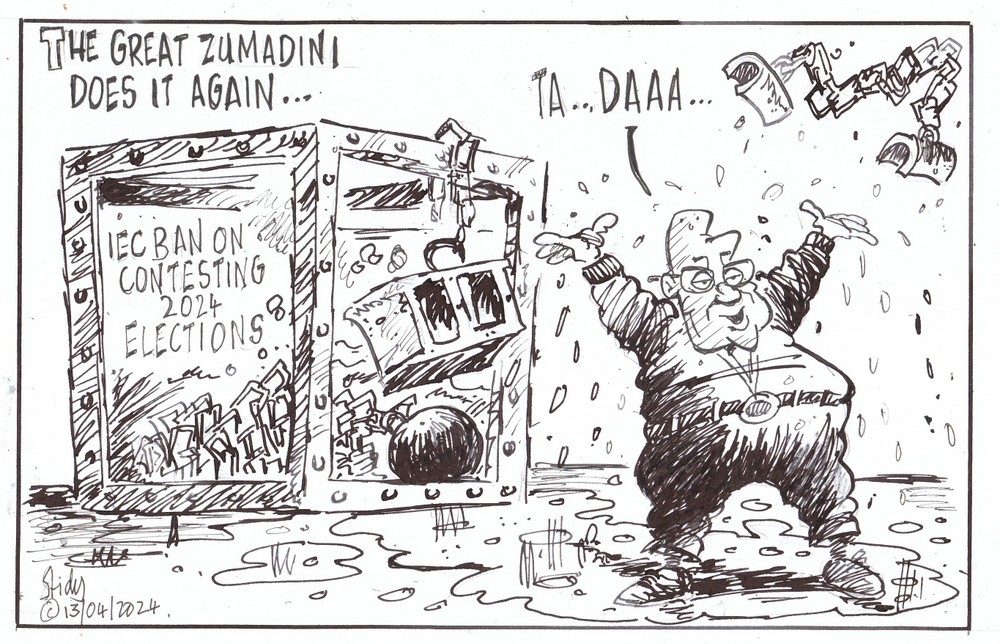
The Electoral Court overturned an IEC ban and declared former president Jacob Zuma free to stand in the 2024 elections despite his criminal conviction.
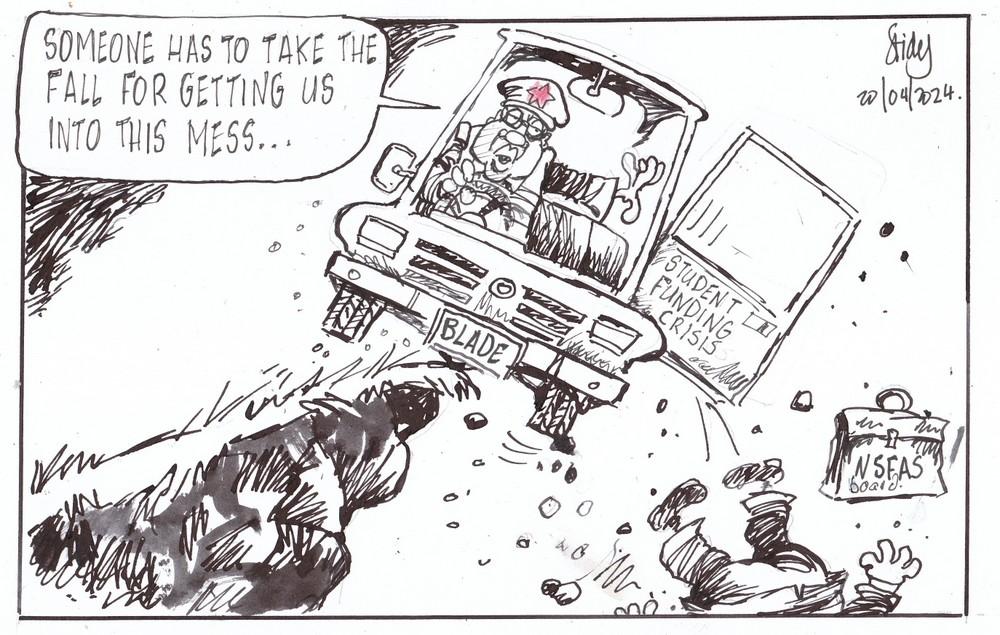
Higher Education Minister Blade Nzimande said he had dissolved the embattled National Student Financial Aid Scheme (NSFAS) board because of the member’s inability to carry out basic responsibilities, including the payment of student allowances.
On the campaign trail in KwaZulu-Natal, President Cyril Ramaophosa vowed there was “no turning back on the implementation of the NHI”, which he said was part of the ANC’s programme to bridge the gap between the rich and the poor.
A Pietermaritzburg architectural landmark, the Post Office in Langalibele Street, was described as being in a state of “disrepair” and “unhygienic”. One of the reasons many of the South African Post Office facilities are falling apart is that the entity is bankrupt and hasn’t been able to pay rentals and utility bills for water and electricity.
An angry ANC Secretary-General, Fikile Mbablula dropped a bombshell when he admitted the ANC tricked Parliament into protecting ex-president Jacob Zuma in the Nkandla “fire pool” debacle.Commenting on his disclosure, ANC National Chairman, Gwede Mantashe, warned ANC leaders to count their words or they will “catch fire”.
While the ANC geared up for elections, former president Jacob Zuma continued to campaign for the newly-formed MK party while insisting he remained an ANC member. KZN was hit by yet more devastating storms which caused widespread damage.
With R4,8 trillion in national debt and a looming fiscal crunch, Finance Minister Enoch Gondongwana faced a difficult balancing act as he prepared the country’s budget. As is customary, he called on South Africans to share their suggestions on the matter.
In a widely expected move, the ANC suspended former president Jacob Zuma, just months before the national elections. Earlier, Zuma had denounced the ANC leadership and said he would be voting for the newly formed MK Party.
As President Cyril Ramaphosa rose to deliver his annual SONA address, opposition parties were smelling blood with polls indicating the ANC would not get a 50% majority. The president, however, remained bullish about the party’s prospects in the forthcoming national elections.
With the latest poll showing support for former president Jacob Zuma’s uMkhonto weSizwe party in KwaZulu-Natal at 24%, the ANC leadership was in a desperate attempt to stop members from defecting to the party. ANC Musa Dladla regional chairman Musa Cebekhulu conceded that some members had joined the party but denied a mass exodus.
Budget 2024: The Treasury managed to avoid a debt blow-out and reverse a plan to implement big departmental budget cuts by asking the Reserve Bank for help. It planned to directly withdraw R150 billion from the accumulated fund of the Gold and Foreign Exchange Contingency Reserve.
At the time of South Africa’s independence, many observers were lulled into thinking that the ANC was committed to a free and open liberal democracy in which state power would be constrained and the government would be accountable to the individuals who voted it into office. Given the role the party had played in deliberations for South Africa’s much-lauded new constitution such optimism was, in the circumstances, perhaps understandable.
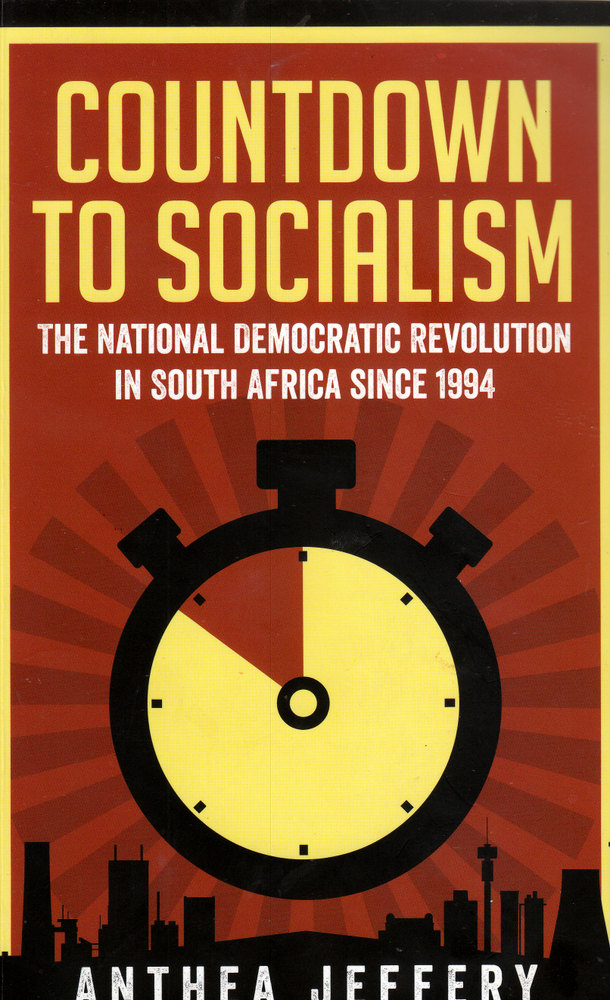
It was also, in the view of the author of this, at times, rather unsettling book, wrong. Far from embracing the neo-liberal narrative with its focus on individuals rather than classes and its built-in system of checks and balances, Jeffery maintains the ANC was only paying lip service to these ideals to buy itself time while it set about strengthening and consolidating its power. For them, the attainment of majority rule marked the first step in a zero-sum game aimed at extending government power and control over every aspect of South African life, while at the same time expanding dependence on the state. Egged on by their alliance party, the SACP, they have remained committed to their mission of “progressive transformation”, the goal of which is to turn South Africa from a capitalist into a socialist country and, ultimately, a communist one. The key to understanding all of this is spelt out in their ‘national democratic revolution’ (NDR) which displays a latent Marxist contempt for liberty and conveniently means that, once the ANC has won the battle of ideas, you won’t need other parties or an independent press because they will have become ideologically redundant.
Throughout the course of her book, Jeffery shows how many of these NDR ‘interventions’ have, in effect, already been implemented. Instrumental to it all, has been the ANC’s policy of cadre deployment – whereby people are promoted to important positions because of their ideological leanings and loyalty to the party rather than their competency, relevant qualifications or ability to perform the job. The effects of this policy, coupled with a now extensive patronage system, have become only too apparent – a bloated, dysfunctional bureaucracy, collapsing infrastructure (think Eskom, Transnet, SAA etc.) and an economy heading towards the edge of the fiscal cliff.
In spite of the negative impact on the country, the prospects of the party changing policy direction, at this stage, appear remote. Jeffery believes that those who hoped that Cyril Ramaphosa would introduce business-friendly reforms when he replaced Jacob Zuma as president of the country badly misjudged the man and that he, too, remains steadfastly committed to the NDR. She also argues that it is a misconception to think that there is a deep ideological divide within the ANC between the Ramaphosa faction and the Zuma RET one.
Jeffery, Head of Policy Research at the Institute of Race Relations, appears vastly well-informed on the subject. Her scholarly, well-paced and unblinkered analysis of our current situation serves as a timely reassessment of where we might be headed under ANC rule. Adding credence to her arguments is that much of her material is taken directly from the ANC’s and SACP’s policy documents and statements.
Published by Penguin Random House
South Africa is a country of great natural beauty with a rich, if turbulent, history. Needless to say, its landscape has evoked a variety of responses from a whole medley of writers. Wanting to taste their experiences, as well as see the land through the eyes of these writers, author Justin Fox decided to set off in the footsteps of some of the big guns of South African literature, exploring those parts of the country which the particular author’s name has become associated with.
Packed solid with vivid chapters and fascinating vignettes, the resultant book is very much a spirited celebration, an elegy to South Africa itself.
Fox’s quest begins, appropriately enough, in the Eastern Cape, the province which provided a home to one of the pioneering giants of South African literature – Olive Schreiner. Her book, The Story of African Farm, which manages to convey both the vastness and the special quality of the arid Karoo and the sense of solitude and insignificance which came from living in it, has gone on to assume the status of a South African classic.
A compilation of this nature could also, obviously, not overlook a writer of the stature of JM Coetzee, the winner of the Nobel Prize for Literature and (twice) the Booker. Using his Life & Times of Michael K as a rough guide Fox undertakes an insightful and movingly described journey back to the farm in the Moordenaars Karoo where Coetzee spent part of his youth.
The other notable authors he includes in his survey are Herman Charles Bosman (the Groot Marico), Eugene Marais (Waterberg), Dalene Matthee (the Knysna forests), Zakes Mda (the Transkei), Sir Percy Fitzpatrick (of Jock of the Bushveld fame) and Deneys Reitz’s accounts of his experiences in the Cape interior during the Anglo-Boer War.
Fox who received his doctorate in English at Oxford and was a research fellow at the University of Cape Town, is an exceptional writer with an ability to draw readers into his experiences with the precision and exact observation of his prose. Wonderfully pictorial, his prose catches with sketch-like deftness the particular feel and spirit – the genii loci – of the places he visits. Like the authors he admires, his passion for the South African landscape shines through on every page.
There is a flip side to this, an emotional sub-text. Amid the beauty, Fox also finds a country beset with crime, corruption and vanishing services where the initial optimism engendered by Nelson Mandela’s release has long since faded, The rural areas have not escaped this spreading malaise and many modern writers also find themselves confronted with the same difficult question that so many other South Africans do – whether to leave or stay? The reactions among them have differed. Coetzee, whose writings have explored the themes of guilt and shame which come from living in a country with a history of apartheid, elected to immigrate to Australia. The poet Stephen Watson, on the other hand, found the thought of severing links with his beloved Cederberg too great an ask and stayed on (although he has since died).
What was supposed to be a Kwa-Zulu-Natal debate on Premier Nomusa Dube-Ncube’s State of the Province Address degenerated into a mudslinging match between the ANC and the IFP. The ANC and IFP, the two dominant parties in KZN, are currently embroiled in a war of words as each one seeks to gain the upper hand ahead of next year’s general elections.
President Cyril Ramaphosa’s long-awaited cabinet reshuffle proved somewhat underwhelming and did not see the materialisation of the wide-ranging reconfiguration of government that many hoped for. Instead, the president moved around ministers and dropped three – the minister of tourism Lindiwe Sisulu, sport, arts and culture Nathi Mthetwa and the minister responsible for women, youth and persons with disabilities Nkoana Malte-Mashoahane.
The Economic Freedom Front announced a national shutdown for Monday, March 20 to protest against load-shedding, sparking fears of violence and looting.
While EFF leader Julius Malema described his party’s national shut-down as the most successful in South African history, opposition parties said it only highlighted their lack of support…
Two “significant employers” have threatened to relocate their operations if the proposed tariff hikes are approved, the Pietermaritzburg and Midlands Chamber of Business (PMCB) said. The increases ranged from seven per cent to a staggering 8546,2%.
Former US president Donald Trump was indicted over hush money payments made to a porn star during his 2016 campaign, making him the first president to face criminal charges.
Msunduzi ratepayers were in shock and confusion after they found themselves sitting with two bills in one month following the introduction of the city’s twice-month billing cycle system.
KZN Premier Nomuse-Ncube announced a full-scale investigation into the province’s school nutrition programme after an outcry over how it was being run. Several schools in the province suspended classes after service providers failed to deliver adequate food to the schools.






 Stidy's Eye