The Government of National Unity (GNU) faced a critical year, navigating internal policy disagreements and public scepticism while preparing for pivotal local government elections at the end of the year.
With his attack on Venezuela and threatened invasion of Greenland, US President Donald Trump continued to shred the last vestiges of international law, replacing it with an order where superpowers exercised unrestrained dominion over their spheres of influence.
The NFP’s withdrawal from the KwaZulu-Natal government of provincial unity (GPU) destabilised the governing arrangement and opened the door for the EFF to potentially assume a king-maker role in the provincial legislature.
South Africa faced mounting pressure to explain Iran’s participation in naval drills off Cape Town, a move that further soured South Africa’s already fractious relations with the US. In response, the Presidency claimed it had issued a directive to Defence Minister Angie Motshega to cancel Iran’s involvement.
Five years after the initial outbreak of foot and mouth disease in South Africa, and two months after the minister of agriculture announced a “comprehensive national vaccination campaign” there was still no mass availability of effective vaccines. In the meantime, farmers were losing millions in production losses, livestock deaths and the destruction of generic material built up over decades.
DA leader John Steenhuisen announced that he would not seek a third term as party leader, saying he wanted to concentrate on his portfolio as Minister of Agriculture and fighting the ongoing foot and mouth outbreak. According to reports, he was pressured into leaving following bruising inter-party controversies over the previous three months.
In his State of the Nation address, President Cyril Ramaphosa cited the strengthening of the rand against the dollar and the country’s removal from the grey list as some of the key indicators that the country is making progress.
KwaZulu-Natal’s economy could face one of its most severe shocks in decades if sugar giant Tongaat Hulett collapses, with government and business leaders warning that thousands of jobs and the entire agricultural value chain were at risk.
South Africa’s water crisis continued to worsen, fuelled by mismanagement, ageing infrastructure and the deliberate vandalisation of water treatment plants.
Ever since he first entered politics, Julius Malema has – like Donald Trump in America – been a divisive and controversial figure, a fact he has been only too happy to exploit to his advantage. Loathed by one section of the public, worshipped by another, over the years, a great deal of speculation has whirled around who he is and what drives his ambition. Many questions have also arisen as to how he has been able to underpin his lavish lifestyle. In this compelling, convincing and meticulously researched book, investigative reporters Micah Reddy and Pauli Van Wyk tear away the veil to reveal the unsettling truth.
Although not intended as a biography (Malema, unsurprisingly, refused to have anything to do with the authors), the book does give a brief resume of his career. Brought up in poverty, Malema became politicised at an early age. At school, he did not do well academically, although he would later explain this away by saying it was because he was too busy with politics. His less-than-stellar academic performance in no way dampened his unwavering thirst for power. He quickly made his presence felt. His personal charisma and larger-than-life personality went hand in hand with an instinctive feel for the masses which saw him rapidly rise through the political ranks until he eventually became president of the ANC Youth League.
As a member of the new elite, Malema openly displayed the self-regard and sense of entitlement that has become the trademarks of far too many of post-colonial Africa’s leaders. Like many others, too, he would use his new position to benefit from government tenders; in his case, mostly in Limpopo.
Malema was initially a fervent supporter of Jacob Zuma, vociferously defending the then Deputy President when he was charged with rape and playing an important role in his campaign to unseat Thabo Mbeki as president of the ANC. His outspokenness soon got him into trouble with the ANC hierarchy, however, and, despite his avowals of permanent support, he would later turn on Zuma after he expelled the young firebrand from the ANC for fomenting divisions and bringing the party into disrepute (ironically, Zuma would later suffer a similar fate).
Determined not to be silenced, Malema responded by forming the Economic Freedom Front (EFF), which advocated the radical redistribution of land and the nationalisation of mines. He was joined by his sidekick and former deputy president of the ANCYL, Floyd Shivambu, who would also become implicated in his share of shady financial and business activities (Shivambu would later deal a big blow to the EFF when, in a headline-grabbing move, he defected to Zuma’s newly formed MK Party. He did not last long there). As the undisputed leader and dominant member of the party, Malema was now able to unleash his demagogic talent freely.
Despite his pro-poor stance and professed aversion to Western capitalism, Malema has displayed few, if any, principles when it comes to accumulating wealth. Like many a populist leader, he has not been afraid to mix his political interests with his business ones or to use his political connections to bankroll both his party and himself. The proceeds from the latter went into luxury items, fleets of cars and a multitude of mansions, farms and properties.
Malema did his best to cover his tracks, but the press soon got wind of his activities and various investigations followed. Despite all the evidence that has been uncovered showing how he has benefited from his back-room deals, Malema has proved singularly adept at exploiting South Africa’s weak justice system and avoiding accountability.
In this deeply researched piece of investigative reporting, the authors provide a lengthy and detailed charge sheet of these. Looming large among the many cases is the scandal surrounding the Venda-based VBS Mutual Bank. A community-based bank, focusing on serving people with modest incomes, it collapsed in 2018 after being looted by corrupt municipal officials, middlemen, politicians, auditors, and even members of the Venda royalty, who had defrauded it of around R2 billion. As a result, many poor and elderly rural folk lost their life savings. Needless to say, both Malema and Shivambu were implicated in the unfolding scandal.
So far, the two politicians have managed to elude being brought to book for these and other corruption allegations, although investigations continue.
Engrossing and revelatory, Malema: Money. Power. Patronage provides a mountain of information on how Malema and other self-styled revolutionaries in the EFF have managed to enrich themselves, all in the name of the people. In doing so, the book also lifts the lid on the amoral careerism and licensed larceny that have become a defining characteristic of South African politics. Sadly, far too many members of the former liberation movements seem to have abandoned the fundamental values that first nourished them and learnt to tolerate the intolerable…
Published by UJ Press
In this well-researched, scholarly overview, the author provides detailed insights into the factors that led to the 2017 overthrow of the long-time Zimbabwean president, Robert Mugabe. One of the major focus points of the book is the often-overlooked role gender played in this and other military coups.
Tendi argues that Grace Mugabe – often sneeringly referred to as Gucci Grace because of her expensive tastes and extravagant lifestyle – was deliberately cast, by the coup plotters, as a scheming femme fatale, who had taken advantage of her husband’s frail health and declining mental state to position herself to take over the reins of power. This scapegoating of the First Lady was used as a cover for the general’s real motivations for the coup – to ensure that their preferred candidate, the recently sacked deputy president, Emmerson Mnangagwa (who they believed would protect their interests and positions. Mugabe was, reputedly, planning to get rid of some of them, and his rebuff of the generals when they sought a meeting with him to discuss their grievances was, undoubtedly, one of the main catalysts for the coup), would become president and not Mugabe’s own choice for successor – Dr Sydney Sekeramayi.
To bolster the case, as well as making it more appealing to the rank and file, the coup leaders portrayed Mnangagwa as a strong, bold, decisive, masculine figure as opposed to the more reserved, unassuming and, by implication, less manly, Sekeremayi. Mugabe was, likewise, feminised as “an old man” who had lost much of his former charisma and power and was, therefore, no longer up to ruling.
In addition to this, Tendi successfully demolishes the argument, put out at the time, that Mugabe’s overthrow was somehow not really a coup, in the strict sense of its definition, or that it differed markedly from how others had played out elsewhere in Africa. Because of Mugabe’s widespread unpopularity, both within and outside the country, coupled with the general feeling he had long overstayed his welcome in office, the AU and most Western leaders were happy to go along with this fiction. As a result, there was minimal public condemnation. There were even suggestions that Britain, for one, may have had a hand in what transpired or at least given tacit support to the Mnangagwa faction. The book includes personal testimonies and much interesting anecdotage from diplomats and politicians, in this connection.
Sadly, any hopes that the coup would usher in a better Zimbabwe would soon be dashed. As the author observes, most coups by generals tend to have conservative outcomes, and Zimbabwe proved no exception. There has been little meaningful change to the political status quo. Women’s participation in politics has declined, and there has been further repression and ongoing human rights abuses.
As Associate Professor of African Politics at the University of Oxford, Tendi has done his research, and his book includes a great deal of revealing behind-the-scenes detail. The most vivid parts of the book are those describing the fractured civil-military relations, and Mugabe’s failure to address or immediately deal with the generals’ grievances, an uncharacteristic lapse in judgment which resulted in the ageing president’s downfall. The author’s academic background does, however, occasionally show through in the numerous references to other scholars’ work and some rather dry theorising, which tends to slow down the pace of the narrative.
That said, The Overthrow of Robert Mugabe: Gender, Coups and Diplomats remains an important and engaging account of a pivotal moment in Zimbabwe’s recent history.
The National Treasury announced that Finance Minister Enoch Gondongwana would re-table the 2025 revised Budget on May 21. The announcement came three days after Gondongwana’s withdrawal of his earlier Budget, which included the contentious proposal to increase VAT by 0,5%.
The High Court reserved judgment on the DA’s legal challenge to the Employment Equity Amendment Act, which the party said imposes unconstitutional racial quotas that harm minorities and threaten economic growth. The case looked set to place further strain on the already fragile Government of National Unity (GNU).
Unemployment in South Africa rose by a full percentage point in the first quarter of 2025, with the economy shedding 291,000 jobs. Only 16,8 million South Africans were now employed, down from 17,1 million in the fourth quarter of 2024.
Despite the choreographed theatrics and humiliating spectacle staged by Donald Trump at their White House meeting, President Cyril Ramaphosa’s team, which included golfers Ernie Els and Retief Goosen, successfully reset relations, paving the way for future trade opportunities with South Africa’s second-largest trading partner.
Several Economic Freedom Front (EFF) members, including party leader Julius Malema, were forcibly removed from the National Assembly for disruptive behaviour during President Cyril Ramaphosa’s Question and Answer session. Earlier, Malema had vowed he would not be intimidated by Donald Trump, after the US President played a video of him chanting “Kill the Boer” during his White House meeting with Ramaphosa.
Floyd Shivambu became the latest high-profile casualty in the uMkhonto we-Sizwe (MK) Party when he was removed from his powerful post as Secretary-General just a week after fellow EFF defector Mzwanele Manyi was fired as Chief Whip in Parliament.
As wind, cold, and rain left a trail of destruction across KwaZulu-Natal and the country, US President Donald Trump continued to cause havoc across the globe, including Africa, with his tariffs and unpredictable policies.
With most of the world’s nuclear-armed states continuing to modernise their arsenals and the Middle East conflict escalating as Israel and Iran launched missiles at each other, the world became a more dangerous place than it had been for decades.
The entry of the United States into the Israel–Iran conflict created a huge headache for the South African government. While the country had always enjoyed warm diplomatic relations with Tehran, it could not risk further alienating the Trump administration, given that the relationship was already on life support.
Faced with skyrocketing debt, an underperforming economy, and unrealised forecasts, Finance Minister Enoch Gondongwana returned to the drawing board after his 2025 Budget, which proposed a 2% VAT increase, was rejected.
Following its poor performance in the 2024 general election, the ANC announced a new reconfigured leadership structure in KwaZulu-Natal – a move which caused a rise in tensions within the party because it favoured President Ramaphosa’s allies.
With some of the Government of National Unity’s (GNU) partners opposing it, Finance Minister Enoch Gondongwana’s proposed budget, which included a controversial VAT hike, faced significant parliamentary challenges due to the ANC’s lack of a majority.
In response to the US government’s expulsion of South Africa’s ambassador to Washington, Ebrahim Rasool, President Cyril Ramaphosa claimed he was not deterred by the recent tensions between the two countries. He believed the historic relationship would “outlive the current bumpy patch.”
EFF leader Julius Malema ignited fresh controversy after leading the “Kill the Boer” struggle song at a Human Rights Day rally. This time, US President Donald Trump entered the fray, lambasting South Africa in a strongly worded statement, thus stoking an already tense atmosphere between the two countries following the recent expulsion of the SA Ambassador to Washington, Ebrahim Rasool.
Against the backdrop of President Trump’s punitive tariffs against South Africa, the GNU came unstuck over the National Assembly’s vote on the Budget’s fiscal framework.
Winds of accountability swept through Msunduzi City Hall as a high-level intervention team, led by former Finance MEC Ravi Pillay, began its work.
Just weeks after publicly welcoming a provincial investigation into Msunduzi Municipality and calling for the “best investigators”, Mayor Mzimkhulu Thebolla asked for the probe to be halted…
In response to mounting pressure against it, the Treasury issued an overnight statement announcing that Finance Minister Enoch Gondongwana would be reversing the decision to hike VAT.
In his Medium-Term Budget Policy Statement, Finance Minister Enoch Godongwana doubled down on budget costs and put in measures to stimulate growth.
The United States of America elected Donald John Trump as its 47th president, choosing a candidate who has promised to put America on a different path. This decision has significant implications for South Africa.
Former EFF chairperson Dali Mpofu became the latest high-profile member to defect to Jacob Zuma’s uMkhonto we Sizwe Party (MK Party). The exodus of members was predicted to continue.
Public hearings began on Eskom’s proposed 36,1% tariff hike, amidst widespread concern that the increase will worsen the struggle of already vulnerable South Africans.
Former president Jacob Zuma rejected the ANC’s decision to expel him from the party. Zuma’s problems with the ANC started in December 2023, when he announced he was campaigning for the MK Party.
Thembi Simelane’s reshuffle from Justice Minister to Human Settlements Minister ignited sharp criticism, with opposition parties accusing President Cyril Ramaphosa of political manoeuvring. Simelane has been linked to the VBS scandal.
Ahead of its elective conference, EFF leader Julius Malema declared the Jacob Zuma-led MK Party its “biggest enemy” as senior members of the leftist party continue to defect to it.
After much waiting, debating, and negotiating, the President announced an expanded GNU cabinet consisting of 32 ministers and 43 deputy ministers. Meanwhile, the country braced itself for a rocky ride, with the president having to navigate a landscape of competing interests while striving to maintain balance, coherence, and unity within his own party.
In the first contentious vote in the National Assembly since the formation of the Government of National Unity (GNU), the DA, FF and several smaller parties broke ranks with their ANC partner over the election of the disgraced Judge John Hlophe to serve on the Judicial Services Commission (JSC).
South Africa felt the impact of global warming as large parts of KwaZulu-Natal were devastated by severe fires while Cape Town was hit by heavy rain, gale-force winds and flooding. According to climate modelling studies and research, the country will become prone to more heat waves, drought and heavy rainfall.
MPs aligned to the Government of National Unity grouping, which includes the ANC, DA and IFP, rallied behind President Cyril Ramaphosa amid attacks from the progressive caucus composed of MPs from the uMkhonto we Sizwe Party (MK) and the EFF.
The Gauteng Division of the High Court ruled that health legislation requiring doctors and health practitioners to obtain a çertificate of need before being allowed to practice in a particular area was unconstitutional. The requirement had been a cornerstone of the proposed National Health Insurance.
The seemingly fragile KwaZulu-Natal government of national unity proved to be resilient in face of speculations that the uMkhonto we Sizwe Party’s (MK Party) dominance in the KZN Provincial Legislature would undermine it.
Maritzburg United, the oldest professional football team in Pietermaritzburg, decided to relocate to Durban, drawing to a close an era and a long-standing battle to secure a “home ground” at the Harry Gwala Stadium.
EFF Deputy-President Floyd Shivambu defected to the recently-formed MK Party, led by Jacob Zuma, causing its biggest rupture since the party was launched eleven years before. Shivambu, who had been implicated in the VBS scandal, had been promised a senior position in the party alongside several state-capture suspects whom Zuma had recently appointed as MPs.
An investigation revealed that Justice Minister Thembi Simelane took a loan of more than a half million rand from an organisation that brokered unlawful investments into the VBS Bank by the Polokwane Municipality – while she was mayor of the city in 2016. Amongst those calling for her to step down were the EFF who had also been implicated in the VBS scandal.
KwaZulu-Natal opposition parties described Premier Nomusa Dube-Ncube’s State of the Province Address as an “election speech”. In her speech, Dube-Ncube focused on the provincial government’s recent achievements, as well as tracing the ANC government’s achievements from around 2024 when ruling party deployees assumed key positions in the KZN provincial cabinet.
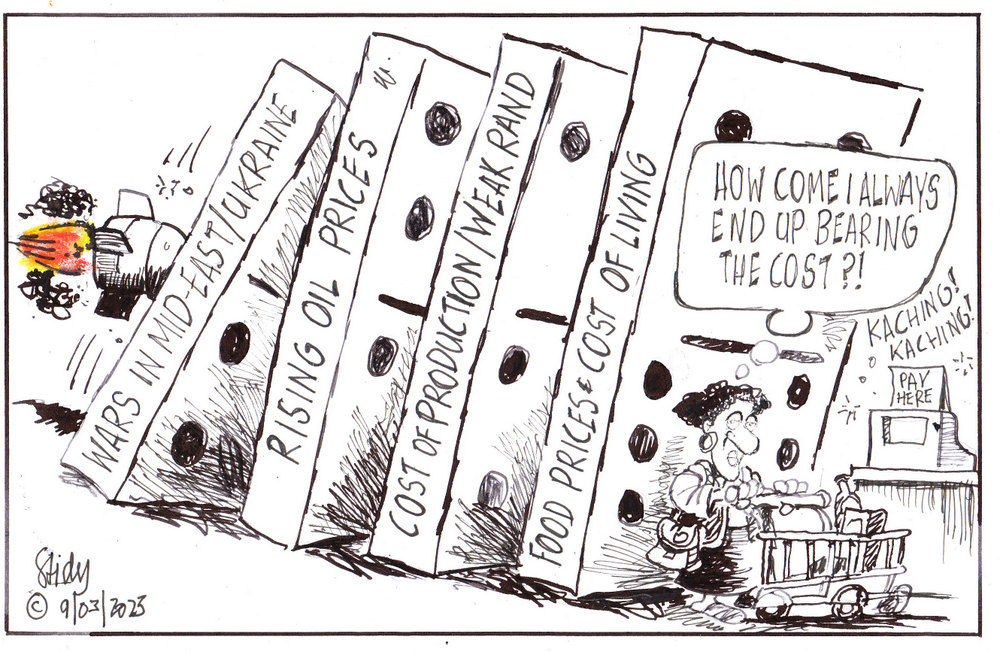
In a blow for cash-strapped consumers, there was another steep increase in the fuel price with petrol going up by R1,20 per litre while diesel increased by R1,18.
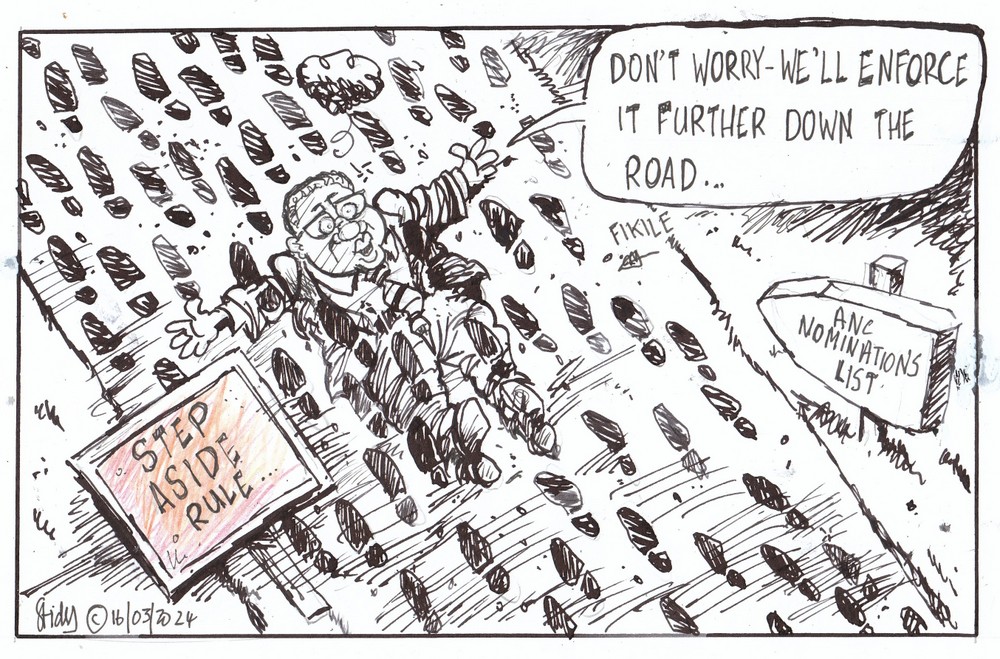
Despite promising that they would not include ANC members who have been implicated in State Capture, a number of them made it back onto their nomination lists for the 2024 elections.
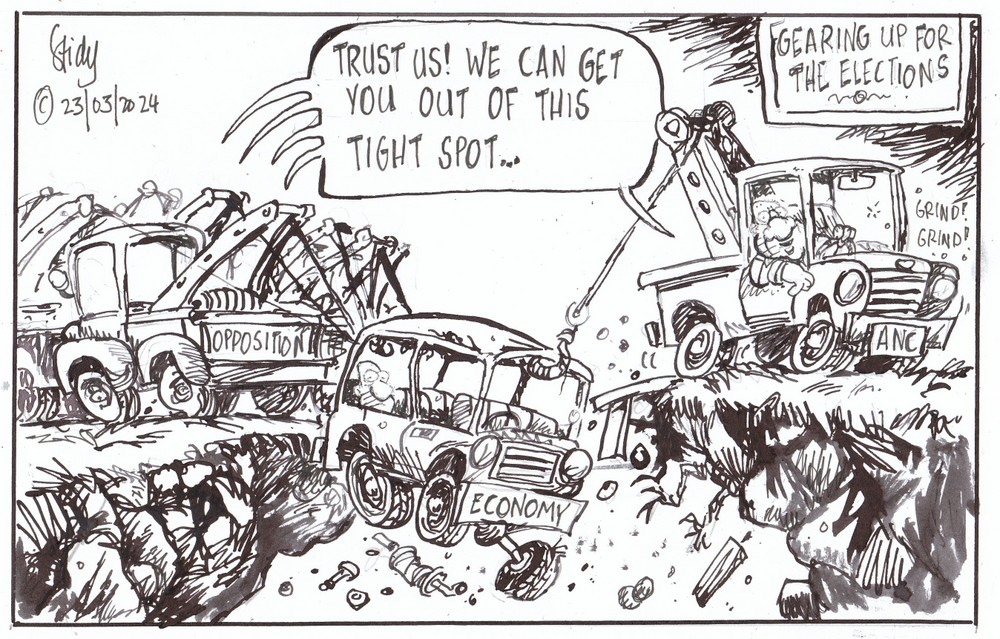
Election season got into full swing with the various parties all promising they had the solution for the country’s myriad problems.
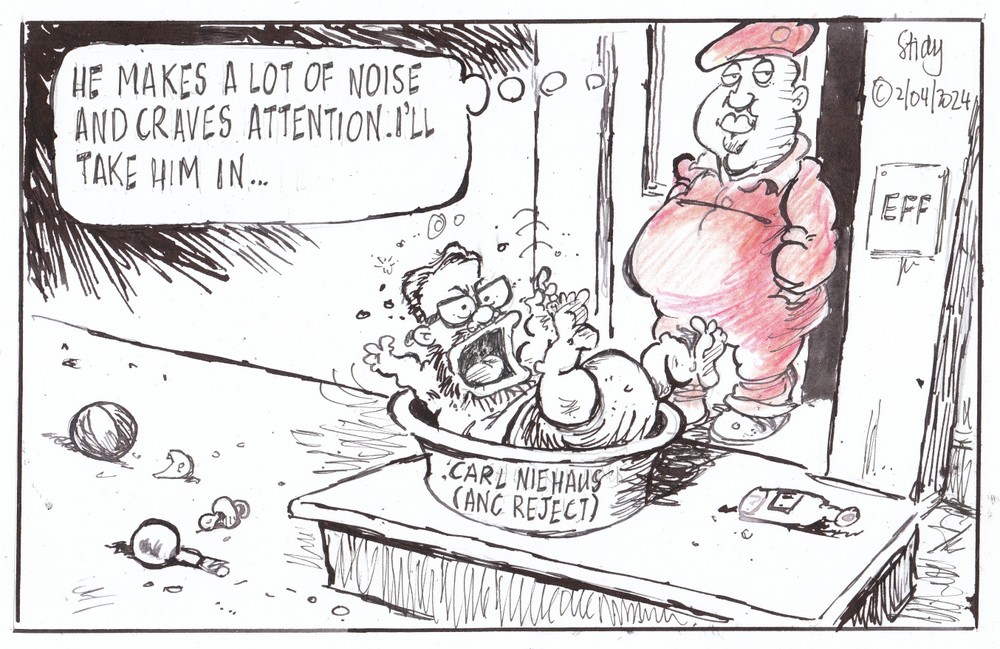
Former ANC member veteran and African Radical Economic Transformation Alliance (Areta) leader Carl Niehaus was among the top candidates on the Economic Freedom Forum (EFF) list of people headed for the National Assembly after the elections were held. Niehaus joined the Red Berets after dumping his party, Areta, which he founded after he left the ANC.
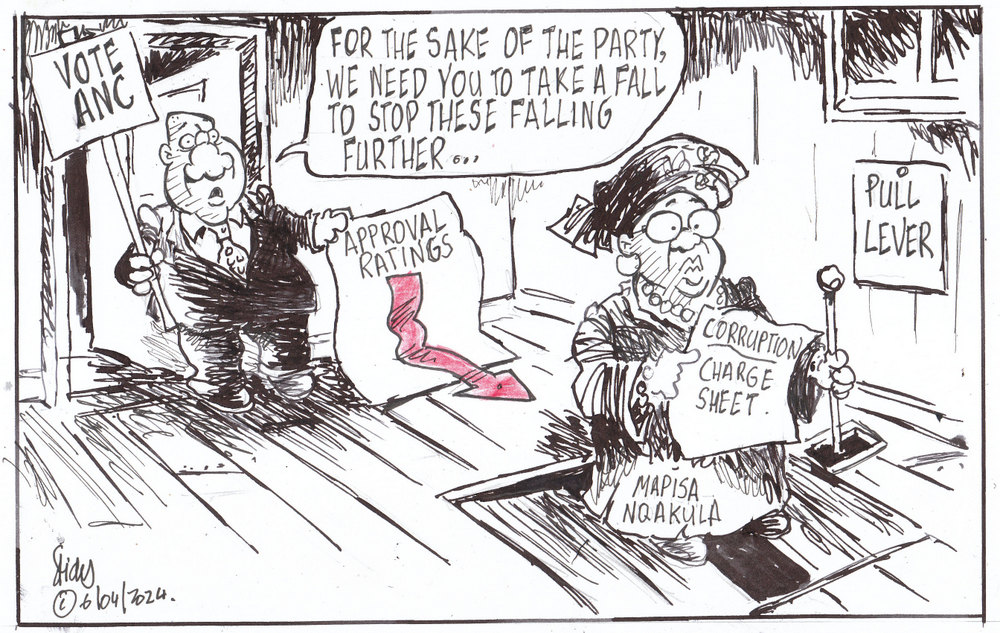
ANC leaders close to corruption accused National Assembly Speaker Nosivwe Mapisa-Nqakula of encouraging her to resign to save the party the embarrassment of defending her during a pending motion of no-confidence.
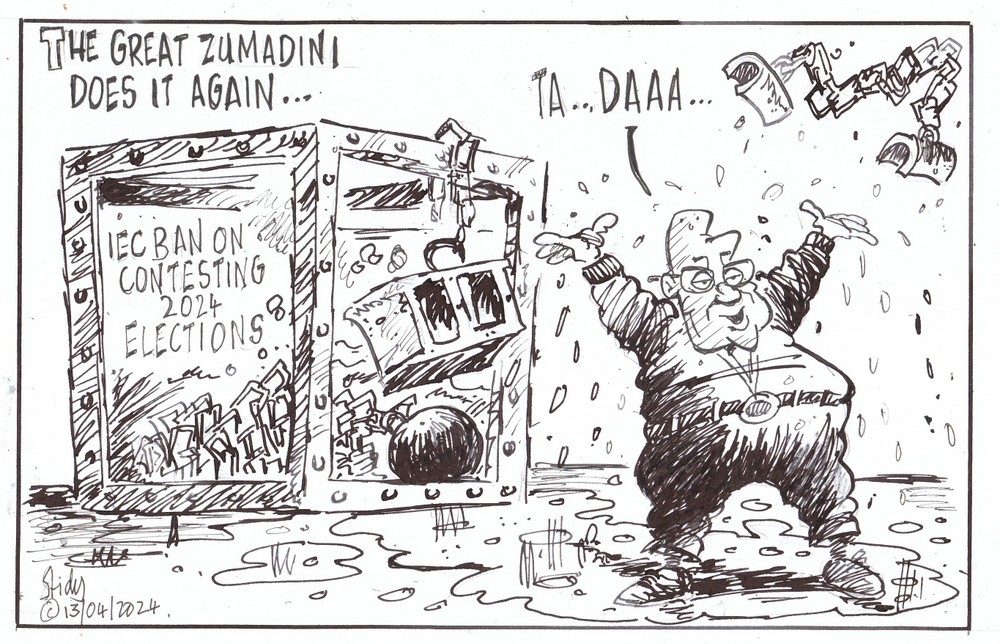
The Electoral Court overturned an IEC ban and declared former president Jacob Zuma free to stand in the 2024 elections despite his criminal conviction.
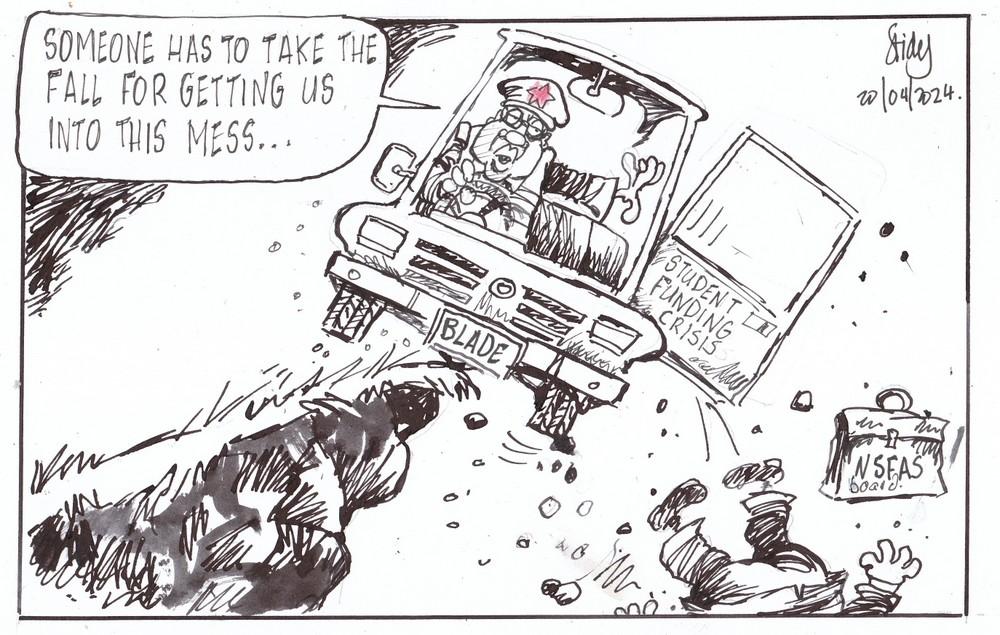
Higher Education Minister Blade Nzimande said he had dissolved the embattled National Student Financial Aid Scheme (NSFAS) board because of the member’s inability to carry out basic responsibilities, including the payment of student allowances.
On the campaign trail in KwaZulu-Natal, President Cyril Ramaophosa vowed there was “no turning back on the implementation of the NHI”, which he said was part of the ANC’s programme to bridge the gap between the rich and the poor.
What was supposed to be a Kwa-Zulu-Natal debate on Premier Nomusa Dube-Ncube’s State of the Province Address degenerated into a mudslinging match between the ANC and the IFP. The ANC and IFP, the two dominant parties in KZN, are currently embroiled in a war of words as each one seeks to gain the upper hand ahead of next year’s general elections.
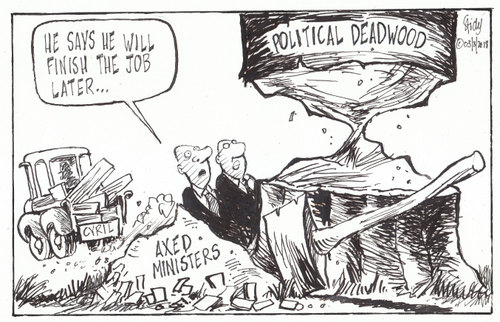
President Cyril Ramaphosa’s long-awaited cabinet reshuffle proved somewhat underwhelming and did not see the materialisation of the wide-ranging reconfiguration of government that many hoped for. Instead, the president moved around ministers and dropped three – the minister of tourism Lindiwe Sisulu, sport, arts and culture Nathi Mthetwa and the minister responsible for women, youth and persons with disabilities Nkoana Malte-Mashoahane.
The Economic Freedom Front announced a national shutdown for Monday, March 20 to protest against load-shedding, sparking fears of violence and looting.
While EFF leader Julius Malema described his party’s national shut-down as the most successful in South African history, opposition parties said it only highlighted their lack of support…
Two “significant employers” have threatened to relocate their operations if the proposed tariff hikes are approved, the Pietermaritzburg and Midlands Chamber of Business (PMCB) said. The increases ranged from seven per cent to a staggering 8546,2%.
Former US president Donald Trump was indicted over hush money payments made to a porn star during his 2016 campaign, making him the first president to face criminal charges.
Msunduzi ratepayers were in shock and confusion after they found themselves sitting with two bills in one month following the introduction of the city’s twice-month billing cycle system.
KZN Premier Nomuse-Ncube announced a full-scale investigation into the province’s school nutrition programme after an outcry over how it was being run. Several schools in the province suspended classes after service providers failed to deliver adequate food to the schools.
Hours after hundreds of President Donald Trump’s supporters stormed the US Capitol in a harrowing assault on American democracy, a shaken Congress finally certified Democrat Joe Biden’s election victory. Immediately afterwards the White House released a statement from Trump promising an “orderly transition” when Biden is sworn in to office on 20th January although he repeated his false claims that he won the November election.
It was a dark start to the year as residents living in large parts of Pietermaritzburg, Hilton and Howick West found themselves without electricity for up to seven-days. Besides causing widespread anger and frustration, the severe electricity disruptions plaguing the city also posed a threat to the local economy as industries considered pulling out and potential investors were scared away. To overhaul the entire ageing infrastructure will cost the bankrupt municipality at least R4 billion.
The alcohol sales ban was extended along with other restrictions as part of adjusted lockdown Level 3, President Cyril Ramaphosa announced in an address to the nation. On the much-anticipated vaccine roll-out in the country, Ramaphosa, without giving a time frame, said “South Africa’s vaccine strategy is well underway,
Joe Biden was sworn in as the president of the United States, pledging to unite a deeply divided nation reeling from the Covid-19 pandemic. Faced with a country whose fissures have been widened by a brutal wedge over the past four years, he acknowledged the social wasteland he had inherited, but emphasised unity, conciliation and called for an end to the “uncivil war” that had ravaged the country. In an extremely rare move his predecessor, Donald Trump, chose not to attend the ceremony.
Heavy rain, with flooding in places, hit the northern parts of South Africa as Cyclone Eloise moved down the Mozambique Channel – with more large downpours falling in KZN later in the week. At the same time, the murky world of spies, black ops and the unauthorised spending of millions of rand took centre stage at the Zondo Enquiry as evidence concerning the activities of the secretive State Security Agency (SSA) was heard. In a related ruling, Concourt ordered former president Jacob Zuma to obey all summons issued against him by the State Capture Enquiry and appear before it – saying he does not have the right to remain silent in proceedings.
ANC secretary-general Ace Magashule reacted defensively in an effort to deflect questions about Jacob Zuma’s defiance of state capture saying the former president should not be suspended from the party he believes in. “Leave president Zuma alone,” he said. Magashule, himself, was granted bail of R200 000 after he was arrested on 21 charges of fraud and corruption, alternatively theft and money laundering, stemming from the Free State asbestos scandal.
Glossing over government’s plans to vaccinate the nation to beat Covid-19, President Cyril Ramaphosa focused on South Africa’s economic recovery from the pandemic in his State of the Nation Address, in a thinly populated National Assembly Chamber. Adding to the many problems the under pressure Ramaphosa faces was the news that EFF leader, Julius Malema, had travelled to Nkandla to have tea with his long time adversary, former president Jacob Zuma, as part of a plan to form a broad alliance to undermine both the president and the Zondo Commission.
The first group of KwaZulu-Natal healthcare workers got their Covid-19 jab amid an outcry from doctors over the slow pace at which government is procuring vaccine. The South African Medical Association (Sama), which initially supported government’s vaccine procurement plan, said its members were becoming disillusioned with the manner in which the entire vaccination programme was unfolding. “We are worried that the target to vaccinate 40 million people by the end of the year will not be achieved,” Sama KwaZulu-Natal provincial chairperson Dr Zanele Bikitshe said.
Taxpayers were able to breathe a sigh of some relief as Finance Minister Tito Mboweni tabled a 2021 Budget free from substantial tax hikes aimed at bank-rolling South Africa’s Covid-19 vaccination programme. The sting in the tail – for smokers and drinkers anyway – was that excise duties on tobacco and alcohol would increase on average by eight per cent – double the rate of inflation.
NOTE: In addition to my normal weekly cartoons for the Weekend Witness, I did two extra ones for the paper in February:
(1). A cartoon celebrating the 175th anniversary of The Witness, the oldest continuously published newspaper in South Africa:
(2) A farewell cartoon for editor Yves Vanderhaeghen who retired from the Witness at the end of February, 2021:
Here is another selection of my political cartoons from 2018. Besides providing a pictorial history of some of the people, ideas and events that helped shape the year they will also, hopefully, give some clues as to where we may be headed in 2019.
Our erstwhile Number One, for example, has shown little inclination to emulate his predecessor, Thabo Mbeki, by fading quietly in to the background – so it almost inevitable we will be hearing a lot more about Jacob Zuma. You can take it as read, too, that Julius Malema and the EFF will continue to push the boundaries of acceptable political behaviour and that Eskom will make the news for all the wrong reasons. Likewise, SAA, SABC and all our cash-strapped, disintegrating municipalities.
There will also be more stories about corruption and the misuse of public funds.
Another opportunity to practice my craft…
Internationally, you can rely on US President Donald Trump to keep banging on about his wretched Wall with Mexico while Britain will still be foundering on the rocks of Brexit.
If nothing else they will all provide abundant material for political cartoonists to practice their art…
So watch this space…
Jacob Zuma struggles to accept his days as the President of South Africa are numbered.
New President Cyril Ramaphosa doesn’t quite complete the job.
US President Donald Trump’s twin obsessions.
The DA loses some of the moral high ground with its mishandling of the Patricia De Lille affair.
Msunduzi’s long-suffering residents face more problems with their underperforming municipality.
NHI – big on ambition, lacking in detail.
Ex-President Jacob Zuma continues to live a charmed life
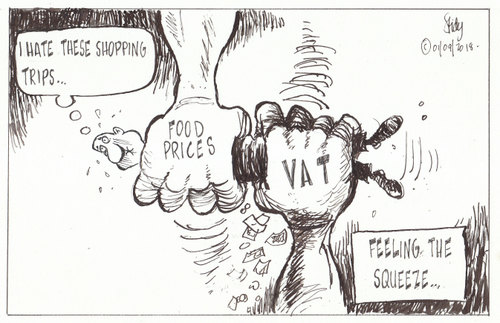
Consumers feel the squeeze after a VAT hike.
Uncertainty over the land issue continues to weigh down the economy.
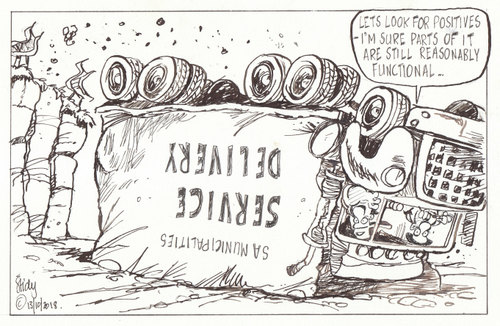
Service delivery fails to improve.
EFF leader, Julius Malema, gets hoisted on his own petard.
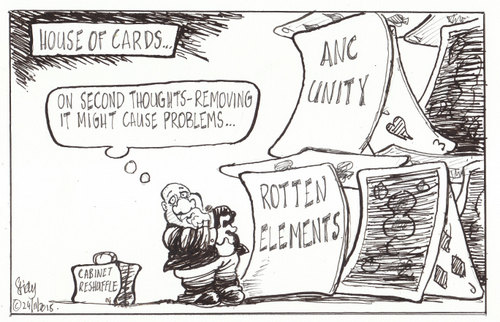
President Cyril Ramaphosa faces some big decisions…








 Stidy's Eye