Fifty-odd years on, the Rhodesia Bush War has become a mere footnote in history. Outside of a few grizzled old veterans, whose numbers continue to dwindle each year, it is no longer a subject on which most people bother to dwell. For a substantial part of my early adulthood, however, it cast a deep shadow over my life. It still, periodically, comes back to haunt me.


As fate would have it, I got called up to do my National Service on the 3rd of January 1973, barely a month after the opening shots of the war (in its new phase) were fired. For every able-bodied white boy in Rhodesia over the age of 18 years going to Llewellyn Barracks, just outside Bulawayo, for basic training, was considered an important rite of passage, part of the painful process of growing up and developing discipline, a test by fire, an initiation into adulthood. You went in there a boy and – so the reasoning went – came out a man.
It was a piece of mythologising I never completely bought into.
On one level, I suppose I was lucky in that my schooling had partly prepared me for the rigours and discipline of military life. In a sense, its conventions were all familiar to me.
At the tender age of seven, I had been despatched by train to boarding school on the other side of the country, first at Rhodes Estate Preparatory School (REPS) in the Matopos Hills, and then, later, to Plumtree and Umtali Boys High School, three institutions of learning modelled, to varying degree, on the UK public school system and reproducing many of the features of its English prototype – an emphasis on sporting prowess (especially cricket and rugby), healthy outdoor activities, house masters, prefects and fags and a curriculum which affirmed the values and virtues of European culture.
Having spent eleven years of life at boarding school I had some inkling of what awaited me in the army but that knowledge did not bring me any comfort. Contrary to popular belief my school days were not the happiest of my life and I had been mightily relieved to finally escape the narrow confines of hostel life. Having tasted a measure of freedom at university I now had no desire to return to the bottom of the pecking order or become part of a culture in which once again I would find myself in a subordinate position, unable to answer back and where I could expect to be shouted at and belittled.
The day before I was due to enlist I shaved off my moustache and sideburns, which I had cultivated at university as a declaration of independence, and went to my local barber for the obligatory short, back and sides, army-style haircut. As I stood staring into the mirror, afterwards I realised it was not just my hair that had got flushed down the plughole – with it had gone my freedom. I was about to become official government property with an army number that would, henceforth, always appear before my rank (rifleman) and name. These I would be required to yell out, in a thunderous voice, on parade (my “thunderous” voice failed to impress).
And so, feeling once again like a new boy on his first day at school – anxious, apprehensive and slightly queasy (but doing my best not to show it) – I stood on the platform of Salisbury station waiting for the night train (the same train that used to take me to boarding school) that would deliver me to my fate. As I sat staring out the window as we clattered off into the surrounding gloom, I had a frightened sense of being in the wrong place and that this was not supposed to be happening to me. At some point on our journey down the tracks, I fell asleep, lulled by the methodical, rocking motion of the train. I awoke around 5 o’clock the next morning just as the train pulled into Heany Junction, a nondescript railway siding stuck in the middle of the veldt, just north of Bulawayo. Here, a convoy of Bedford RL trucks stood lined up on the side of the road. There were cries, lurchings and trampings in the corridor as all the young conscripts came stumbling out of their compartments.
Before we properly knew what had hit us, we were standing on a dark platform, clutching our suitcases. At the same time, the regular sergeants who had been sent to greet us, disdainfully barked out a string of orders: As I stood there with all the others, clutching my suitcase, I realised that my life as I knew it was about to change and not in a way I wanted.
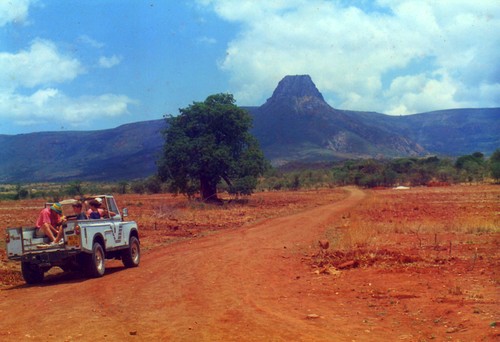
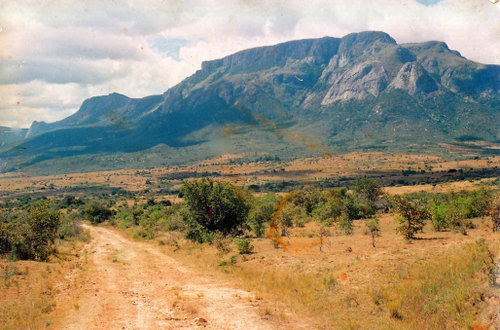
The drive from the siding to Llewellyn Barracks did little to dispel the feeling of emptiness of this place, nor my growing sense of apprehension. Everywhere around us, dry, dusty thornveld rolled out across the sun-baked plain.
Our barracks were not exactly five-star accommodation. Originally built to serve as a World War 2 air training base, they had been converted to their present use with the establishment of 2 Rhodesia Regiment. Climbing off the truck I stood for a moment, trying to get a feel for the place. Metal is not the medium of passion and the ugly array of prefabricated corrugated iron buildings that greeted us did little to revive my rapidly flagging spirits. The place was as Spartan as I had expected and grim beyond belief.
Standing before my allocated bed, I realised I was going to need a strategy to survive and decided the best way was to try and blend unobtrusively into the background.
For the next two-and-a-half months I would make it my business to try to keep out of the way as much as I possibly could but despite my best intentions, I somehow always managed to end up being noticed (maybe it was the blond hair), especially on the parade ground where my inability to keep in step (a lifelong problem for me, in more ways than one)) proved a distinct handicap. Nor did it help that I have always been deplorably untidy. Try as I might I could never get my boots and buckles shiny enough, my beret was always at the wrong angle and, most damning of all, I could never get the correct spacing between the layers of my puttees.
Indeed, any hopes I might have entertained of being cut out for the military life were quickly dispelled by the Company Sergeant-Major who informed me, in front of the whole barrack room that I was the most unsoldier-like soldier he had ever had the displeasure to encounter in all his years in the army. That was fine by me. I had no designs on turning myself into a goose-stepping automaton. If he had meant it as a criticism, I took it as a compliment.
It was this disinclination to give every part of myself to the cause that, in a sense, disqualified me from ever becoming a good soldier, for in the army you were expected to think and act as one. To this end, I soon realised, that the basic point of training is to strip you down and then build you in its mould, to get you to a point where you trust those around you with your life. In such an environment there is no place for difference or diversity.
All this I understood. My problem was that I had already spent more than five years out of school, during which I had worked and also been to university. There, I was encouraged to think for myself and began to question some of my most basic assumptions about the society in which I had grown up. In short, I had got used to being treated like an adult.
Some people actually love military life because of the sense of order and structure it brings to their lives. They like the feeling of brotherhood, of being part of a large family. For them there is something galvanising about the lifestyle, it gives them a sense of identity and purpose and makes them feel alive.
I was not one of those. The endless drills, inspections, being forced to do everything at the double, the menial tasks, the constant ridicule, bawling outs and being punished for the most modest of dress imperfections, the expectation of blind obedience, all combined to wear me out.
Short of going AWOL and spending the rest of my life in exile there was not much I could do about it. I had not reached a position where I was prepared to risk alienating family and friends by taking such drastic action. And so I just gritted my teeth and settled in for the long haul.
After our basic training was completed, our company was despatched first to the Kariba Dam area and then, later, to the sharp end in the North-East section of the country.
Although I was only too aware that there could well be someone out there carrying a bullet with my name on it, I felt happier in the bush. As someone who had grown up on a farm, I found it far more my natural medium than the parade square. I still wasn’t sure I was ready for combat but at least the discipline wasn’t as strict and the distinction between officer and men began to gradually erode. Not that our conditions were cause for much cheer. Sapped by the physical demands of life on patrol, we were hot, cold, filthy, hungry, thirsty and very weary for large chunks of the time. Trapped in this semi-animal existence, my world shrank. Mostly, I was stuck with just the six men in my “stick”. I would depend on them if I found myself coming under unfriendly fire. Facing an invisible enemy most of the time, it was inevitable that our lives would become deeply intertwined and that a strong bond developed between us.
My year’s national service finally came to an end but my life as a reluctant conscript did not. At the beginning of hostilities, the politicians were serenely confident we could easily defeat the enemy. I was not so sure. As the conflict dragged on and the nationwide security situation continued to deteriorate, it seemed increasingly unlikely that there would be a good end. The unpalatable reality was that our battlefield successes were not winning us the war
And so, for the next seven years, I was obliged to put my future on hold, as I found myself subject to an increasing number of call-ups.. Like many others, I came to view these as an unwelcome but necessary duty. A grind. We did not get much recognition. As an ordinary territorial foot soldier, our lives lacked the exotic flourishes that characterised the more glamorous regular units like the Selous Scouts (with their shaggy beards and matted hair), the secretive SAS and the Rhodesia Light Infantry (RLI).
A letter (dated 3rd March 1979), I wrote to my sister in South Africa, just before the elections that ushered in the short-lived Zimbabwe-Rhodesia government captured my mood at the time:
“I just hope it [the six-week call-up II was on] is worth it and that something concrete comes out of the election although I am sceptical. Unless there is a massive change of heart on the part of Britain, the US and the OAU I can see no withdrawal of sanctions, no end of the war and no recognition…the only difference will be that we will no longer have an exclusively white government.”
My fears proved correct.
Running out of options and boxed into a corner, the once obdurate Rhodesian Prime Minister, Ian Smith, was eventually forced to the negotiation table. The subsequent peace agreement led to an election which – despite a lot of wishful thinking on the part of many whites – resulted in Robert Mugabe’s ZANU-PF inevitable victory. Tired, unsettled and emotionally exhausted, I handed in my weapon at the Drill Hall and walked out of its gates for the last time – a free man. I won’t pretend I wasn’t glad it was over. Having finally received my discharge, I had one main thought in mind – to put the war behind me and move on.
And so I got up, brushed myself off, and set about rebuilding my life. I headed south to the port city of Durban, hoping to recover some degree of normality even though I was only too aware that White South Africa still had to face its own day of reckoning. I deliberately chose a job – cartooning – where I knew there would be little regimentation and I could be as rebellious against authority as I liked (and not have to fear the consequences). With a few exceptions, I didn’t bother to keep in contact with any of my former comrades. I didn’t attend any military reunions, nor did I join any of the groups that sprung up all over the place, lamenting the passing of the old White Rhodesia. I tried to blank it all out. I had no wish to become a prisoner of the past, locked in perpetual bitterness and regret, still harping on about how the politicians had betrayed us…
Possibly that was a mistake. Perhaps it would have been cathartic to share memories with those who had been through similar experiences. Maybe it could have helped with the healing and provided a comfort blanket of familiarity and support.
Certainly, the passing of two of my close friends, Kevin Ekblad and Graham “Big Bert” Lancaster, from my National Service days, brought the war back into abrupt focus for me. Although I hadn’t seen either of them for several years, their deaths hit me unexpectedly hard. Deeply saddened, I found myself sifting through old memories, searching for salient images that reminded me of our time together in the deep bush.

We all had different perspectives on the war. Mine are probably more cynical than most. What was it all about? Had the sacrifices of those who had died, believing they were doing the right thing by fighting, been worth it? Was ours a lost cause, doomed to end in tears? Could there have been a different outcome had we settled earlier? By refusing to make meaningful concessions to more moderate leaders, right at the beginning, did we not cede the moral high ground to Robert Mugabe? Would the birth of independence not have been smoother and more amicable had we not gone on fighting as long as we did?
It is narrowly possible that there could have been a more positive ending although we shall never really know.
Compounding the tragedy, for me at least, was what happened after the guns stopped firing. With ‘liberation’ duly achieved, the incoming revolutionary government soon forgot the lofty ideals and talk of reconciliation. As so often happened in post-independent Africa, power became concentrated in the hands of a corrupt and incompetent elite, backed up by a brutal security apparatus. Despite the economy going into free fall and basic services collapsing, many of them became spectacularly wealthy
For good or ill, though, the war happened and I was part of it. As pointless and futile as it now often seems, it wasn’t a completely wasted experience. Having to survive in that sweat-soaked, dust-clinging, hostile environment taught me things about myself I probably would not have otherwise known. It made me appreciate the small things we take for granted – a comfortable bed, a hot bath, a good meal, and female company.
In life, there are times when we are faced with nothing but hard choices. In the army, I learnt how to cope and just keep soldiering on. It gave me a deeper understanding of who I am. I had seen only too clearly how war can coarsen one’s sensibilities. I emerged from it with a clearer idea of what sort of man I wanted to be and what I did not. In the aftermath, I became much more wary, too, about what causes I supported. It left me with an abiding distrust of politicians and institutions which I have been able to fashion into an emotionally satisfying career – political cartooning…




 Stidy's Eye