Walking Back to Happiness…

: If you are in a bad mood go for a walk, if you are still in a bad mood, go for another walk.”-Hippocrates
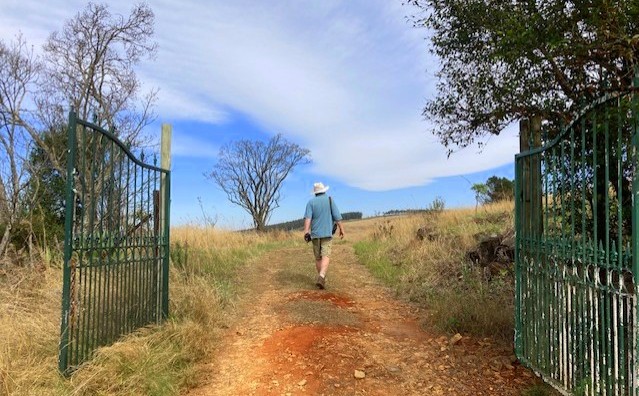
Pic courtesy of Sally Scott.

I can feel the sun on my back, already warm as toast, as I set out through the farm gate following the road that leads down to the protea field and then past the tall pines where a clamorous row of black crows are having a huge argument over which direction to fly. I know in a general way where I am headed and what I will most likely encounter along the way although each day always brings its subtle differences. I don’t, normally, wonder too deeply about my motivations for doing what I am doing. Going for a walk is just something I do and enjoy. I find it healing. Outdoor therapy. It helps me to think. It is my form of meditation. If I am feeling down in the dumps it gets me – mostly – back on the right track.

There are no limits to where I walk. I am quite happy to keep exploring the same patch of ground because over time you develop a sense of intimacy with it that comes from an accumulation of particular observations. Likewise, there is a special fascination in testing one’s expectations in less familiar backgrounds. The important point, I think, is to be able to relish both the ordinary and the extraordinary.

The habit of walking manifested itself at a very early age. When I was about three years old my father, an airline pilot with a yen for country life, decided to relocate us from our house in the then Salisbury (now Harare) to a smallholding in Umwindsidale, about thirty kilometres outside town. He chose to call our new home “Dovery” after the crooning Cape Turtle Doves that were such a feature of the place. For me, their call remains one of Africa’s most beautiful, evocative and comforting sounds.

My main memory of the property is the view which was spectacular. From our front verandah, we looked over an open stretch of land, extensively cultivated, along whose edges the Umwindsi (now Mvinzi) River flowed, its path marked by an outline of dark green. Beyond this fertile plain stretched a further succession of hills and valleys, blue and hazy, each one becoming successively paler, in turn, as they rose to meet the sky. From an early age, I liked to create worlds of my own, in which I could slip away unnoticed and undisturbed and the countryside that surrounded our home provided plenty of places where I could do just that.

Umwindsi (Mvinzi) river with my brothers and sister. I am on the left.

The Umwindsi was a lovely little rivulet that tumbled and crawled and blundered its way through a network of rocks, roots and tall shady trees. For a young child, it was a magical place and I spent a lot of time adventuring up and down it, playing in the pools and exploring its secret places to see what lay hidden there.

It was also the ideal preparation ground for our next grand adventure – a move to a remote farm at the northern extreme of the Nyanga mountain range.

The farm occupied a broad stretch of land, mostly valley but bordered on two sides by mountains. Jutting out from the main range were several castellated buttresses which stood like imperious guardians, mute witnesses to the goings on below. Along the floor of the valley stretched miles of grassland with woody patches, winding rivers which fed into one another and soft hills inset with elephant-coloured boulders, many covered with old stone walls, left behind by some forgotten people. Over it hung the intense blue sky of Africa.
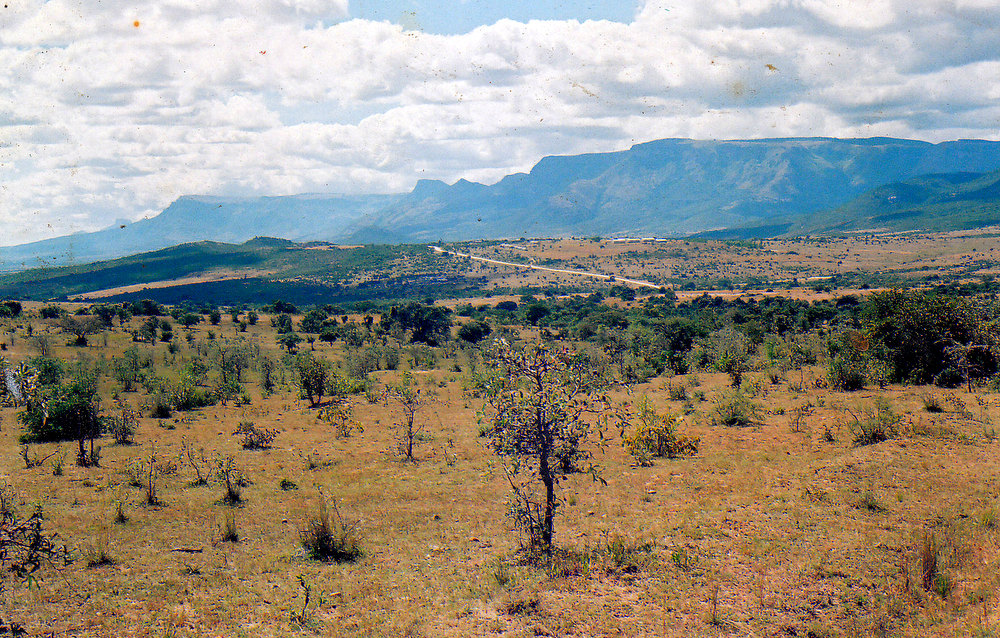
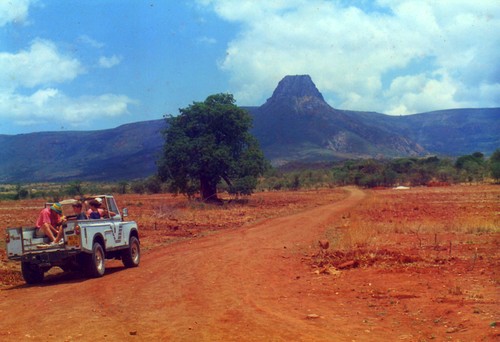
The Old Dutch Settlement Road, Nyanga. Our farm was at the end of the range.

The land on our farm hadn’t been worked for many years and felt wild and untamed. At the night the wind would howl down from the mountains and the very air seemed to seethe with phantoms, both good and bad. They whispered to me as I lay in my bed with only a flickering candle, on the table next to me, to keep the shadows at bay. In the moonlight, the whole landscape beyond my window seemed to possess a strange alchemy all of its own, a spirit ancient and impassive permeating the land.
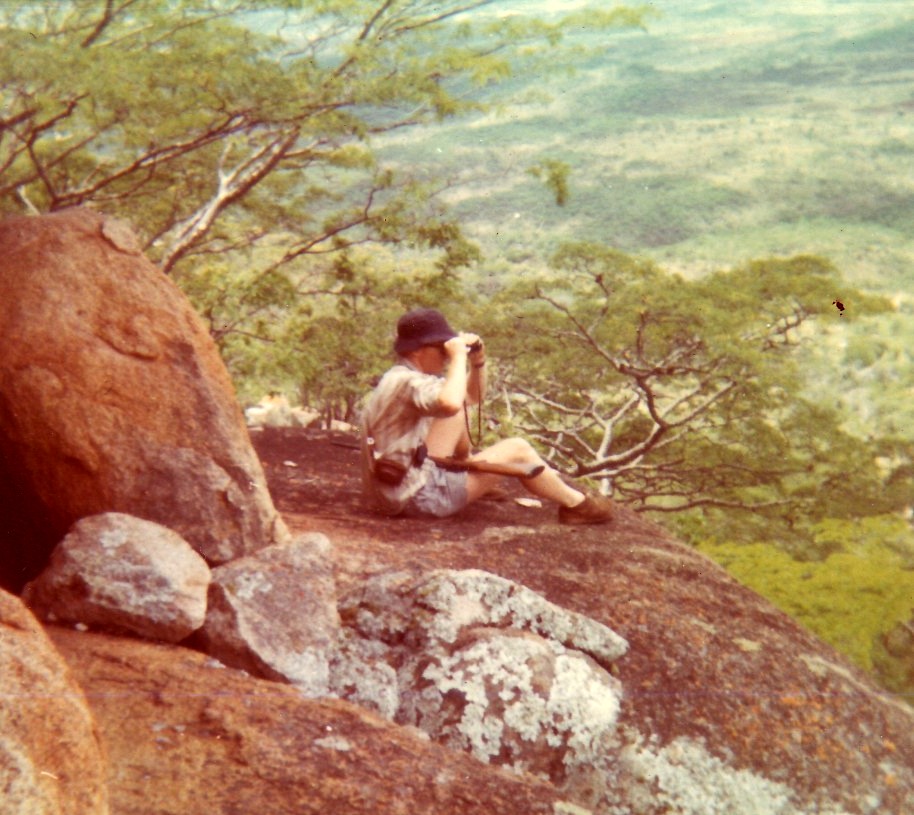
There was much to discover and endless opportunities for exploration. Most mornings when the sky was clean and ready for whatever lay ahead I would set out into the wilderness to see what I could find. I learnt to watch, wonder and recognise all the landmarks: the curves in the road, the shape of the hills, the twists and turns of the mountain streams, the outlines of the fields, the size and weird contortions of the baobab trees. No horizon seemed too far away. The more I saw, the more the place insinuated its way into my soul. It deepened my love for Africa. Sometimes I would go with my elder brother Pete – an avid birder even back then – mostly I would go on my own with just the farm dogs for company. My memory of these walks and the years on the farm have never left me.

It wasn’t just at home that I walked. Bastions of robust sportsmanship, all three of the boarding schools I attended -REPS in the Matopos, Plumtree on the Botswana border and UBHS in the Eastern Highlands – encouraged healthy outdoor activities, seeing it as an essential element in character-building. Most weekends would find me exploring the surrounding countryside.

On the summit of Cecil Kop, Umtali (now Mutare). I am in the middle. My brother Pete is on the left and my friend Stu Taylor is on the right.

Eventually, the idyll came to an end. My life took a turn for the worse. Bad replaced good. War broke out. I got called up.

As an ordinary foot soldier in the army, I got to do a great deal of walking although most of it was not voluntary or even pleasant. Having bullets and mortar bombs whizz past me didn’t add to the enjoyment.

Getting shot at or mortared was not the only thing which occupied my mind patrolling in the stupefying heat of the Zambezi valley. On foot in Africa, one will sooner or later have a hair-raising experience with a wild animal. Of them all, I think it was the lone Black Rhino I was most scared of. To have one suddenly come crashing through the bushes is not an experience I want to repeat too often although I had my fair share of scrapes with this cantankerous character.

On patrol in the Zambezi Valley

Still, the army toughened me up, got me superbly fit and introduced me to some wonderful new scenery so I mustn’t grumble.

The Rhodesian Bush War finally dragged on to its inevitable conclusion. I got discharged. Like all wars, the conflict marked our lives. It left a lasting legacy. In my case, I don’t think I emerged from it suffering from Post Combat Stress Syndrome or anything as dramatic or personality-changing as that. Still, it did leave me with a vague sense of melancholy, restlessness and an inability to settle down. Unsure what to do, the horizons seemed to close in around me. I felt trapped and constricted.

Bored stiff with my office job in the Mining Commissioner’s office in Gweru, I resigned and moved onto my parent’s new farm at Battlefields, near the Midlands town of Kadoma. Needing time to think, I walked and walked. By the end of it, there was hardly an inch of the farm I didn’t know. Walking had, once again, become my solace, my cure. It also made me realise it was time to move on. To go somewhere new. To start my life again in a place where I wasn’t surrounded by the constant reminders of the futility of what I had been through.

And so I packed my bags and moved to South Africa. With me went my nostalgia for landscape which I quickly transferred to my new surroundings. I set about exploring the country. I went on birding expeditions to Marakele, Mapungubwe, Kruger and the Richtersveld. I trundled through the Little Karoo and Baviaanskloof. I walked on the Wild Coast to the sound of crashing breakers. With my sister, the artist Sally Scott, and her family I made countless trips to the Drakensberg. We slept in caves, hiked along numerous mountain trails and plunged into icy rivers.
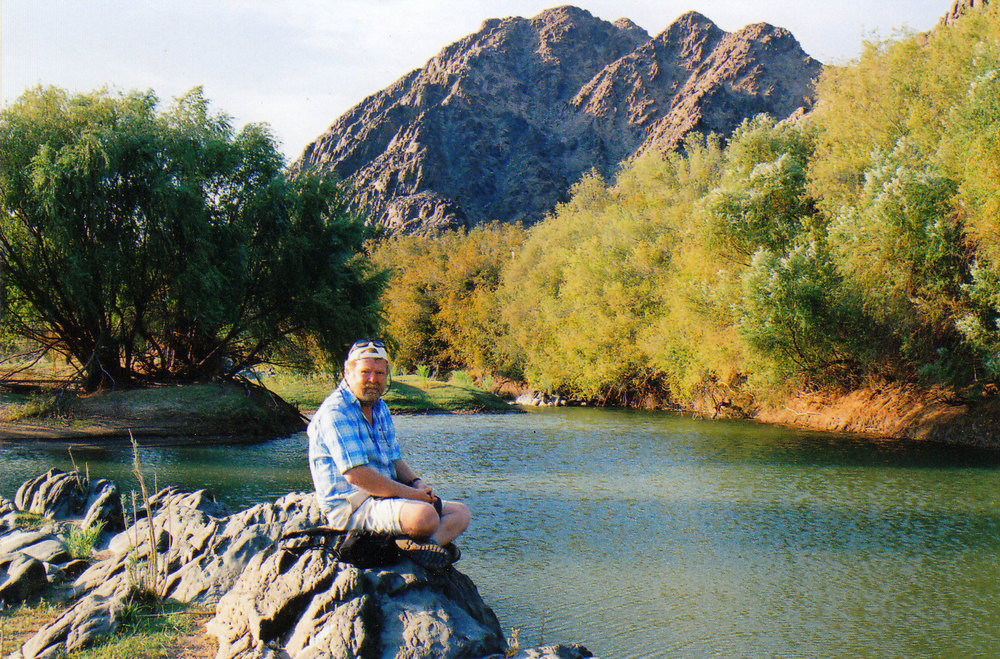
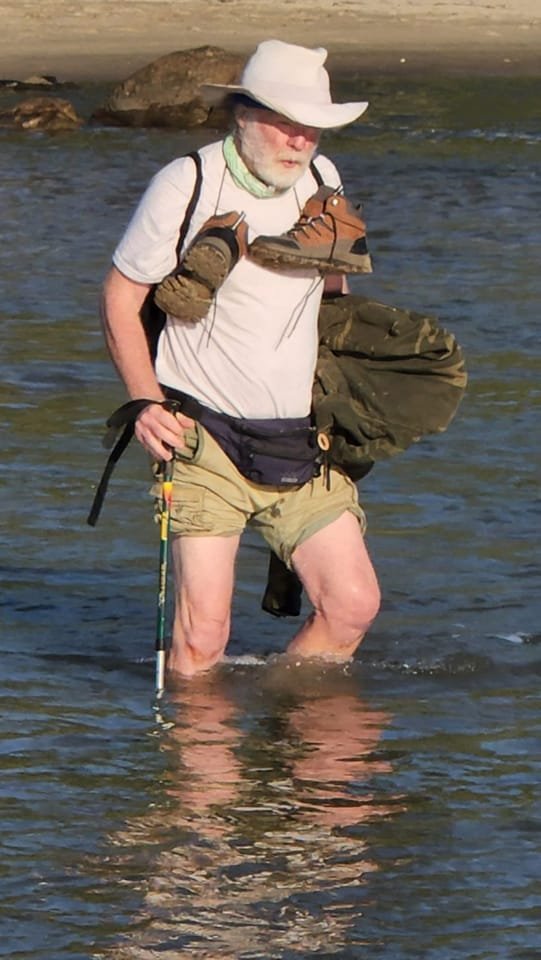
The Drakensberg had a different feel from the mountains I had grown up amongst in Nyanga. Higher, more precipitous, austere, jagged, cold and with fewer trees they were inhabited by a different set of gods and mountain deities. I loved it all the same. Climbing them, I always felt I had risen above the material plane and entered another, more enchanted, realm. The scenery and views left me breathless.

Mont-aux-Sources, Drakensberg, with my nephew Craig Scott.

When I wasn’t out walking, I worked as a political cartoonist in Pietermaritzburg. As I got older, I grew increasingly disenchanted with city living. Some friends suggested I move up to their farm, high on a hill overlooking the Karkloof Valley. Viewed through the soft, filtered light of the swirling mist, there was something dream-like about its beauty; my heart was immediately smitten with delight. I accepted.
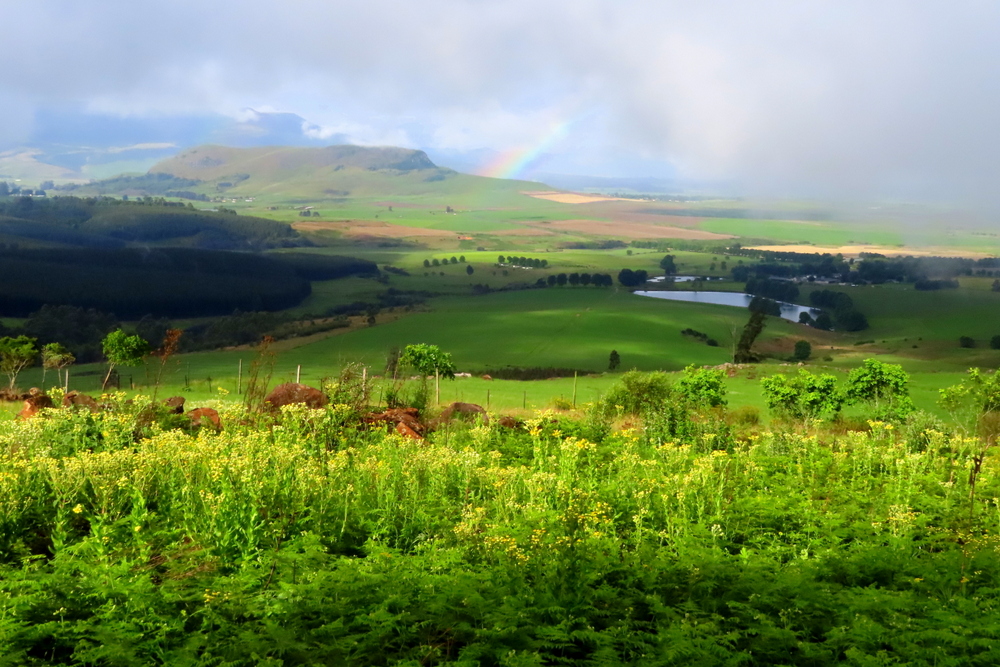
The Karkloof Valley. The view from our farm.

Moving into the country changed the shape of my life. It helped renew my sense of deep connection with the natural world. I spent many happy hours tramping over a familiar circuit of paths, seldom meeting a single person en route. Revelling in the sense of discovery and freedom that comes with this, I developed an increasingly close and intimate relationship with the local flora and fauna. However, nature still managed to spring surprises on me.
Lockdown came. I had always thought that the advances in modern medicine would provide a solution for everything but Covid, at least initially, proved me wrong. The virus transported us all back to the fear-ridden, helpless days of the Great Plague. It reminded us of just how vulnerable we still are and demonstrated that we are still at the mercy of the whims of nature.

Over the next two years my life – like many others – took on a slightly surreal aspect. As part of the locked-down community, I found the days blurring together. Whether it was Monday or Friday came to hold no interest for me. Alone in the house, isolated from the world, I lived in silence and solitude, with only the sound of birdsong, the whistle of a reedbuck, the howl of a jackal and the croaking frogs to sustain me. When I went to town, which was not often, I talked through a mask to other people wearing masks. It felt a little weird and dehumanising at first but I got used to it.

The national confinement stretched on through the months that followed with intermittent breaks. In the end, I learnt to get used to a world with little direct communication, so much so that I almost began to prefer it that way. Again, it was my walks which brought me the most relief, gave meaning to my life, helped me feel less trapped and provided me with a sense of quietude which conquered despair. I was lucky living in the country because the people living in town weren’t permitted to go beyond their front gates whereas I had our entire farm to roam over.
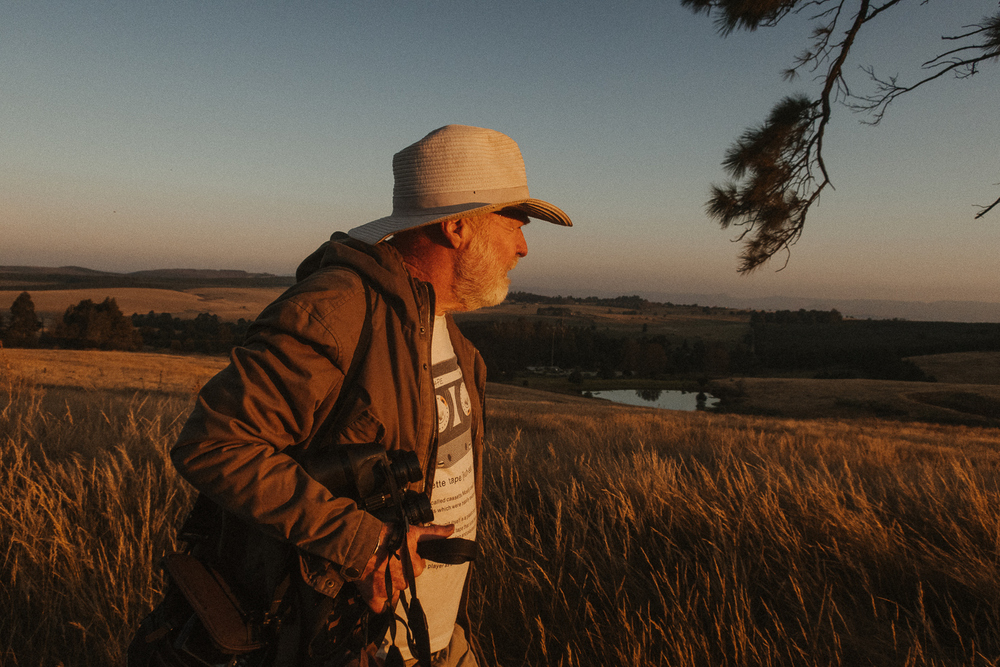
Heading outPic courtesy of Craig Scott.

If you had to ask me then why I walk so much, I would have to concede that – apart from the obvious health benefits – it stems back to a longing to be the boy I once was, innocent again and seeing the world for the first time. My walks remind me of a more carefree period of my life. More than that, though, they have become part of a growing awareness of myself, an increasing reflectiveness and a developing sense of my place in the world and the environment. It nourishes my sense of self-sufficiency. It makes it easier to exist in these tumultuous times.

Time has, of course, dissipated some of my innate restlessness but while I still have the energy in my legs and air in my lungs I intend to keep walking…

Dusting my Soul

Art washes away from the soul the dust of everyday life”

Pablo Picasso

Confession time (in case it isn’t obvious): my name is Anthony Stidolph (aka Stidy) and I am an art addict. It is my form of DIY therapy, my way of coping with what seems an increasingly dangerous and dysfunctional world. I am a believer in art’s healing properties, and its ability to refresh and reinvigorate. It can help the head, mend the heart (and – when it is not going the way you want it to – drive you to distraction).

When I studied art at school – obtaining a distinction at Ó’ Level – I always found myself naturally attracted to drawing rather than painting. I was certainly more proficient in it. My early attempts at putting paint (back then this was limited to prehistoric powder paints which I never got the hang of) on paper were mostly an unmitigated mess. And so pencil, pen and ink became my chosen instruments and when I decided to make a career out of my art, it was to cartooning I turned.

It was only later, with the prospect of retirement looming, that I finally plucked up the courage to venture into colour once more. Thinking big, I decided to go the whole hog and start with oils, which I had never used before. I did this mostly because I knew oil can stand much more abuse in its handling than other mediums (such as watercolour). Any mistakes or errors can be easily covered. You can constantly construct and reconstruct, at leisure.

My first efforts were very tentative and not too successful. Expanding my range made me only more conscious of my lack of experience in this field. I went through periods of doubt and self-questioning. Had I left it too late in my creative life to indulge my craving for colour and pick up the necessary skills to be any good at it? Held on a leash for so long, I did not know quite how to channel my creative energy.

I am nothing if not obsessive, however. I battled on doggedly. My moods continued to alternate between youthful enthusiasm and discouragement. Finally, I began to enjoy it. I discovered that if you are more relaxed, you can concentrate better.

Although I did not take up painting until the middle years of my life, intimations of a desire to do so appeared much earlier. In some ways, my long career as a cartoonist laid the groundwork for what followed. For a start, I had learnt that it is not necessarily part of the job to copy nature exactly as it is and that by simplifying it and omitting the superfluous you could signal just as much and also make your art more immediately accessible.

As with cartooning, too, you begin to develop your own style over time too, almost unconsciously. It is like a signature, your personal handwriting, something that develops without you having to think too much about it. Aspects of your personality, preoccupations and predispositions begin to shine through.

Having decided to take the plunge into oils, it was almost inevitable that I should be drawn to landscape painting. I grew up on a remote but beautiful farm in Zimbabwe’s Eastern Highlands. It was situated in a wilderness of mountains, kopjes and hills. In every distance stood strange shrouded landscapes, dotted with baobabs and inset with rivers and fleeting pools. Mysterious, unmortared, stone ruins, scarcely touched by archaeologists, stretched for miles upon miles along the valley floors and right up onto the mountain slopes into the narrowest of crevasses and the steepest cliff faces.

These magical scenes provided a treasury of wonders for a lively, enquiring mind.

To take up landscape painting – or at least be successful – I think you have to have this inherent sensitivity or “feel” for scenery. This is the unteachable part of it. In my lifetime, I have seen way too many landscape paintings which, while technically competent, just lack this intrinsic thrill – or SOUL. It is merely painting by formula, there is no sense of an aesthetic experience, they lack the understanding that comes from constant association with a scene. It is landscape done through a tourist’s rather than a painter’s eye.

Over the succeeding years, I have continued to plug away at my painting, trying hard to establish a balance between seeing and imagining while exploring the possibilities and harmonies of colour and form. I lay no claim to having in any way mastered the subject. I am only too aware of my limitations and shortcomings (I battle with my greens, for example). However, I am not yet ready to throw in the towel or toss away my paintbrushes. I plan to carry on looking and thinking and experiencing and practising, knowing that in art, knowledge assists invention and helps you overcome creative obstacles.

The alternative – which I don’t fancy – is to do an “art detox” and quit…
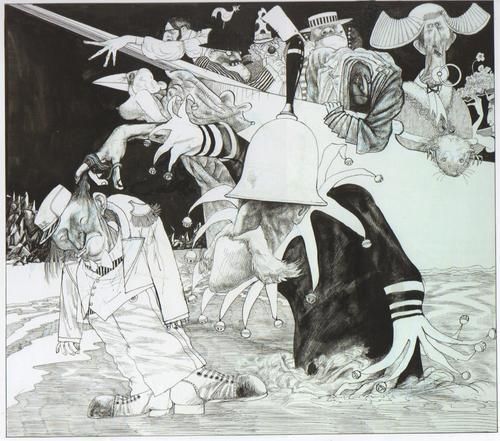
PORTFOLIO:

Herewith is a selection of my paintings which I have divided into sections.

NYANGA SCENES

I have cherished my memories of the Nyanga landscape all my life so it was inevitable they should insinuate their way into my painting and that I should try to recapture the warm feelings I had about them.

BAOBAB PAINTINGS

With its gigantesque bulk and primitive appearance, the baobab is undoubtedly the tree of Africa. I also love painting them…

KZN SCENES

These days I don’t have to stray to find too far to find scenes to paint. The beautiful Karkloof Valley, where I live, is full of them…

OTHER PAINTINGS

I still love travelling further afield though. The Bushveld and the Karoo are two favourite destinations…

Accessing the Past in Lockdown

“Somewhere, deep down in the heart of each one of us, something yearns for the old land, and the old kindly people”

R.L.Stevenson

Maybe it has something to do with the current uncertainty, the depth of longing for all to be well again, but as lockdown drags on I find my thoughts drifting back, more and more often, to my youth. Right now, it seems a much safer place to be. At least you have the comfort of knowing what happened and how it all worked out.

I think there is more to it, though, than a mere desire to retreat to the warmth and innocence of childhood. All our lives are an amalgam of past, present and future. Trying to see clearly and to record what has been seen helps me work out how I got from there to here.

It is also a chance to meet my parents again, back the way they used to be. Each generation passes on something to the next and by looking afresh at what they did and thought is a way of discovering how they have lived on through me.

The difficulty of doing this is, of course, being able to gain access to one’s past. Over the years my memories have grown hazy and dim. The further back I go, the more fragmentary they become.

Sometimes they takes on the aura of a dream, a few tangible threads emerge from the miasma that is my brain. I clutch at their dim outline. At other times, just looking at an old photograph or reading an old letter, will bring long-forgotten things back to the surface.

What I am certain of is that the pivotal event of my early life occurred when I was about nine-years old. It was the year my father decided to relocate us from our smallholding outside of Salisbury to a remote farm in the Eastern Highlands of Nyanga. If anything can be termed a life-changing experience for me, this was it.

The property he purchased was in an incredibly beautiful part of the world.

I can still recall, with pin-point clarity, the journey there, driving up through the granite hills and miombo woodland, along a winding road to a crest where the small Nyanga Village lay. From here, the trail dropped down, with sudden abruptness, in to a huge valley, speckled with rocks, bushes and shadows, shimmering in the parchment dry heat as it receded in to the far haze.

View over valley, Nyanga.

Along its eastern flank rose the solid wall of the main Nyanga range. Running parallel to it, on the other side of the enormous valley, ran the Nyangombe River, which would later join the Ruenya which, in turn, flowed in to the mighty Zambezi. Beyond that lay more hills and mountains.

In contrast to the sweltering valley, the plateau on top of the mountains was cool and covered in open moorland and icy streams and seemed hardly Africa. In the rainy season, waves of multi-shadowed clouds would come rolling ponderously over them in never-ending processions.

For a boy of my romantic disposition it was like entering an enchanted world. All was mysterious, unexplored, rich with infinite possibilities. I loved the wildness, the sense of freedom.

Years later, as an undergraduate, I would read Wordsworth’s poem, “The Prelude”. It struck an immediate chord in me:

Fair seed-time had my soul, and I grew up

Foster’d alike by beauty and by fear;

Much favour’d in my birthplace, and no less

In that beloved Vale to which, erelong,

I was transplanted. Well I call to mind

(‘Twas at an early age, ere I had seen

Nine summers) when upon the mountain slope

The frost and breath of frosty wind had snapp’d…”

The mountains Wordsworth was writing about were those of the English Lake District. Mine were distinctly African ones.

There were many of them. On the Eastern side of the farm, the great brooding presence of Mount Muozi rose abruptly up from the plain to its castle-like knob. Even when covered in cloud you could feel its presence; its spirit seemed to permeate the very air. There was something ancient and troubling and mysterious about it which undoubtedly explained why it was held in awe by the locals and had become the focal point for an important rain-making cult.

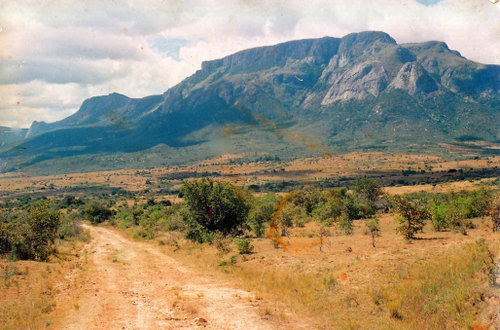
View from old lands towards Muozi mountain. Note baobab.

The closer you got to it, the higher it towered above you. Again, the words of Wordsworth’s “The Prelude” seemed to fit:

…growing still in stature, the huge Cliff

Rose up between me and the stars, and still,

With measured motion, like a living thing,

Strode after me…”

Looking north, from the top of the castle, the main range surged away to Nyangui (“The Place of Shouting”), the big, bulky, colossus that marked the end of the Nyanga range, as well as serving as our corner boundary. It was also the mountain from which our farm took its name.

Nyangui (“The Place of Shouting”) mountain. Picture courtesy of Patrick Stidolph.

If Muozi looked like a vessel striving to break loose of its moorings than Nyangui was the bulwark that anchored it back.

Like Muozi, though, it could, when the mood took it, get quite spooky, radiating an air of almost tangible menace, especially when the skies grew sullen and arbitrary bolts of lightning started slashing through the sky. At certain times of the year the wind would grow wild and angry and come hurling down its slopes with an almost end-of-the world fury.

The other mountain which looms large in my childhood memories is Sedze although it was not actually on our farm but situated further back, towards the Nyanga village.

Sedze (‘Rhino’) mountain.

At the one end of it, just above Bende Gap, rose two great rock pinnacles, steeper and more pronounced than any others in the range. From the innermost of the two towers, the mountain sloped upwards in to a massive, domed, bulky, behemoth of rock fitted with clefts and rib-like fissures that gave it the appearance of some ancient animal afflicted by a strange lethargy.

Because of its resemblance to a sleeping pachyderm we always called it the “Rhino” mountain.

Returning from boarding school I always felt elated and light-headed to see the “Rhino” and yet at the same time near to tears because it meant I was almost home again.

Although it slopes were steep and uninhabited, the valley floor below was littered with scores of thatched huts and cattle kraals and patches of cultivated lands. Straggling along the top of one ridge, along which the road traversed, was a cluster of little shops with corrugated iron roofs. This was the Sedze Business Centre. For some reason these old buildings imprinted themselves in my mind; so much so that years later I felt compelled to do a painting of them.

Sedze mountain. View from Business Centre. Painting by Anthony Stidolph.

Our own house was a low rambling affair, close to a stream that ran down from Muozi. Later, my one brother, Paul, would build a slightly more elaborate and stylish homestead near a rocky outcrop, using white quartz for the walls and thatch for the roof. Positioned next to an old baobab, it commanded tremendous views over the surrounding mountains

Having laid idle for years, turning this stretch of Africa back in to a farm was hard work. There was plenty of bush to clear, furrows to dig, fences to put up. Because we were always short of cash, all the children were expected to chip in during the school holidays.

We were always a close family. The bond between us all, already strong, was strengthened during the Nyanga years.

In some ways it was a cloistered childhood. Outside my siblings and the farm mutts I had no companions or acquaintances to share it with. This did not make me unhappy or fretful. Nor did it bother me that I was not able to participate in all the entertainments and amusements – movies, parties, dating, sport – that other teenagers took as a matter of course.

Being so restricted and yet so active actually had its benefits even if I didn’t always fully appreciate them at the time. I developed an early love of nature which has never left me. I created a world of my own in to which I could slip away unnoticed. I learnt how to fall back on my own resources.

When I was not on the farm, I was away at boarding school, an institution I hated because it took me away from my beloved mountains. What strikes me now is the narrowness of life in it.

Ours was, of course, a segregated society and only white boys were allowed to attend the school. Beyond the cleaners, the ground staff and the kitchen workers we had little personal contact with the local African population.

It was a life, into which the great affairs of the world seemed hardly to intrude. Nor did any of us ever really bother to question the racial and quasi-Imperial doctrines of the time or the fairness of the system in to which we had, as relatively privileged white children, been born.

It was only during my final years at boarding school that the world of politics began to force its way in to my life.

In elections held in December, 1962, the right-wing Rhodesian Front, who had promised to deal ruthlessly with the nationalist menace and to entrench white rule permanently, had swept to power. One of their first demands was that the country be granted independence.

For the next three years the RF Government would be engaged in a series of fruitless negotiations with the British. With the situation at stalemate, it had become more and more obvious that we were headed for some sort of showdown. As young and ill-informed as I was, even I had become aware that, beneath the carefree surface of my life, the political sands were shifting fast.

On the 11th November, 1965, it finally happened. For weeks beforehand there had been much talk and speculation and an atmosphere of considerable excitement had built up, even among us schoolboys. Now, before a hushed nation, Smith made his big announcement – Rhodesia had declared its independence from Britain.

The effect was dramatic. Suddenly, politics occupied the minds of everybody in the country from the remote farms to the government offices, from prospector to priest.

It was an epochal event. Not only did it change the course of all our lives but it would eventually trigger a lot of soul-searching for me.

Caught in the same fusion of fear and excitement as everybody else, slowly, hesitantly, my attitudes began to change. Over the following years I would increasingly find myself wondering about the wisdom of the course of action the RF government had embarked on, especially once the Rhodesian Bush War began to exact its heavy toll.

I also started to look more critically at the society I had grown up in. Cut off as I was from the mainstream, even I could see that Rhodesia was not exactly a centre of cosmopolitan artistic energy and progressive thinking.

My family background, no doubt, played a factor in this growing awareness of the world around me. As a pilot, my father had travelled the length and breadth of the continent, as well as working in Arabia and Europe. Unlike many of his fellow countrymen who were hidebound, conformist and set in their ways of thinking (little realising they represented an age that was passing) his exposure to other people and cultures had left him relatively open-minded and tolerant about politics and race.

My parents and youngest sister: Monica, Nicky and Reg Stidolph. Nyangui in background.

Although he exuded a natural authority, my father was also at heart, something of an outsider, a maverick, a free thinker. While I may not have inherited his unwavering self-confidence, I like to think I did get a dose of his individualism, curiosity and refusal to be pigeon-holed.

In other areas we were different. I was the fourth son in a family of seven children and this undoubtedly impinged on my temperament. Whereas my three elder brothers were practical like my father I took after my mother, inheriting her artistic side. Unlike my brothers, too, I had no aptitude for the sciences.

Looking back at it all now, from the perspective of old age, I realise how much of my character and how many of my views and attitudes were forged back then. It also makes me realise how lucky I was to have the childhood I did.

Living in those beautiful surroundings helped foster my imagination. It taught me to see things and to value solitude and worship the ordinary dirt that sustains us. It also showed me that without peace and quiet you can miss your inner voice.

In that sense, those early years of deprivation and isolation helped prepare me for life under lockdown. I grew up used to keeping my own counsel and finding my way through the thickets.

Of course, the fact that I now live in one of the most breathtakingly scenic parts of the KwaZulu-Natal Midlands – the Karkloof – also made my incarceration a lot easier to bear…

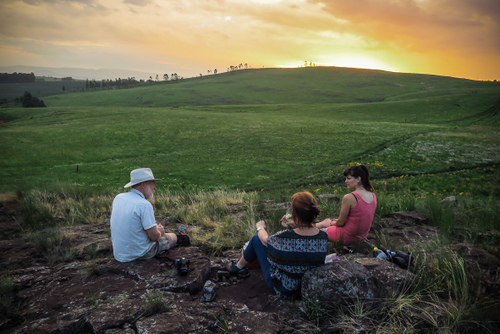
Sunset over Kusane Farm in pre-Lockdown days. Myself, sister Sally and her daughter-in-law, Tammy. Picture courtesy of Craig Scott.

Booking out in Lockdown

If there is one thing the Covid-19 pandemic has bought in to sharp contrast it is the deep divisions within society. Whereas some, have grown weary in the face of the protracted lockdown and adapted a devil-may-care attitude towards it, others have continued to shy away away from any form of social contact, concerned the virus is still raging.

Like many people, I have, at times, found myself perplexed by the ANC governments handling of the crisis. Some of its more stringent rules and regulations, for example, seem to have very little to do with logic or rationality or protecting our health. By the same token I can understand the need for caution and am reluctant to take any unnecessary risks which might expose me to Covid-19.

In part this stems from hard experience. Because of my compromised immune system (in my case damaged lungs) I have suffered from three bouts of pneumonia in the past. The first was so debilitating there were times when I wondered whether I was going to make it through.

It was, without doubt, the most frightening experience of my life and cured me of any appetite for misplaced displays of false bravado.

Which has meant that I have spent most of my lockdown time incarcerated alone at home. It is not something that has bothered me too much. There is solace to be found in solitude.

One of the few things I have missed, though, is my weekly trip to the Karkloof Farmer’s market. For me it has become a regular Saturday morning ritual.

Normally, I like to rise early and set off across the valley when it is still flooded in a honey-tinted light. No matter the time of the year, it is invariably beautiful then, with the sun’s rays lancing the plain in shafts, creating long shadows behind the rocks and trees.

The air is fresh, too, with a tingling, clean smell and the grass seems to dance as the wind ruffles through it. On the other side of the valley, the Karkloof hills rise up blue and purple and mauve and pink against the soft, early morning sky.

Sometimes, if I am really lucky, I might even get to see some cranes.

Wattled Crane, Karkloof.

Once inside the large, metal-framed hall, my first order of business is to visit the coffee stand. The lady who works behind the till knows me so well I don’t even need to give her my order – one Americano with hot milk. I then take my cup of steaming coffee out to the verandah where I sit and watch the dairy cows grazing in the pasture below.

My next port of call is the artisan bread stall and then the Greytown cheese maker whose mature Boerekaas cheese I love. After that I might buy a steak for my evening braai.

The final and – by far – most important part of the ritual involves browsing through Huddy’s second hand book stall, in the far corner of the hall. Over the years it has proved to be a veritable treasure trove for me and I have uncovered many gems.

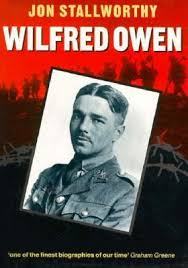
I have always loved the war poets, especially Wilfred Owen, so was thrilled to pick up an excellent biography on him by Jon Stallworthy, as well as one on Siegfried Sassoon written by John Stuart Roberts.

In similar vein, I was also able to obtain John Garth’s Tolkien and the Great War.

All three books are meticulously researched and exceptionally well written, describing, in detail, not only Sassoon, Owen and Tolkien’s experiences in the trenches of the first world war but showing how each, in turn, tried come to terms with the horrors they had seen.

While, obviously, not the most cheering of subjects to read about at a time when we are faced with our own insistent drums of doom they do serve as a reminder that troubles are constant, a given in life.

Perhaps because my father worked there, I have always been fascinated by the legend of “Arabia” and in tracing its development in the successive stories of the explorers who helped to create it.

Although these early travellers were, for the most part, men, one of the exceptions to the rule was the indefatigable Gertrude Bell. Wanting to find out more about what drove this exceptional woman, I was very pleased to be able procure a copy of Janet Wallach’s Desert Queen: The Extraordinary Life of Gertrude Bell.

A woman of fierce intelligence and focus- she was the first woman to graduate from Oxford with a history degree – her bold expeditions deep in to the Arabian desert led to a passion for the Middle East that lasted to the end of her life (she is buried in Baghdad). Her sensitivity towards its people and their culture set her apart from many of her era. Finding an ally and kindred spirit in TE Lawrence, of Lawrence of Arabia fame, she would go on to play an instrumental role in the creation of the modern state of Iraq.

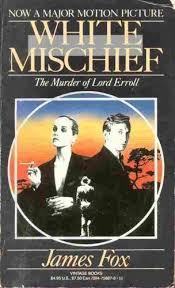
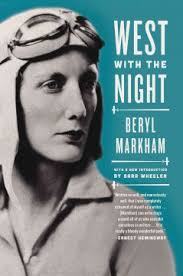
When I was going through my Kenya colonial history phase, it was at Huddy’s I found Elspeth Huxley’s marvelously evocative The Flame Trees of Thika, The Mottled Lizard, Out in the Midday Sun and Nellie: Letters from Africa; as well as James Fox’s White Mischief and Beryl Markham’s superb West with the Night, which Ernest Hemingway bluntly described as a “bloody, wonderful book.”

When this endless source of good books dried up because of lockdown, I was forced to fall back on my own resources. I decided now might be a good time as any to give my private library a revisit.

I began by dipping in to the four-edition Collected Essays, Journalism and Letters of George Orwell because I felt that if anybody could help me make sense of our confused and unsettling times it was him.

I discovered Orwell at a relatively early age and he has remained a strong, if not always comforting, presence in my life ever since. With his unflinching honesty and clear, precise, prose style he has, over the years, proved an incomparable guide for me.

As a young man, Orwell fought in the Spanish Civil War and subsequently wrote about it in Homage to Catalonia. The experience left deep emotional scars but also provided him with a valuable insight in to two of the major social dislocations of the Twentieth Century – in the shape of the former Soviet Union and the former Third Reich who, in supporting the opposing sides in the civil war, fought what has been called a “world war by proxy”.

Orwell’s fear of the dangers posed by autocratic leaders and absolutist governments would later find expression in the two books for which he is most famously remembered.

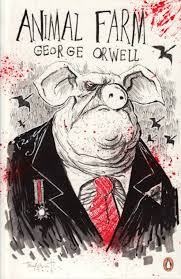
In his allegorical fable, Animal Farm, he showed just how easily those who have toppled a repressive regime can take on its trapping and habits. Having lived through a couple of revolutions myself, this is something I have got to see, first hand, in both Zimbabwe under ZANU-PF and in South Africa under the ANC.

There are other interesting parallels with today. Decades before “political correctness” and “cancel culture” became recognisable concepts, Orwell battled to get his trenchant masterpiece published because it was so obviously aimed at the Soviet Union who had been Britain’s ally during the second world war.

Orwell’s bullying boar, Napoleon, was transparently Stalin; his intellectual idealist rival, Snowball, obviously Trotsky. The prophet of revolution, Old Major, was a compound Marx and Lenin.

His usual publisher, Victor Gollancz rejected the book, as did Faber and Faber whose then director was no other than TS Eliot. Jonathan Cape also turned it down because he thought it unduly offensive to make the Bolsheviks pigs. Orwell responded by writing “balls” in the margin of the rejection letter.

The book was eventually published by Secker in August, 1945.

In his last, chilling, work, 1984, Orwell offered a similarly scary scenario, opening a horrific vista in to a suffocating world of party tyranny and non-stop surveillance.

Orwell’s writings would, in turn, influence a new generation of writers who picked up his torch of idealist humanitarianism. Amongst these is Margaret Atwood whose own books – such as Oryx and Crake, The Handmaid’s Tale and The Year of the Flood – have offered fictional excursions in to a nightmare world that could be just around the corner.

The warning signs are certainly there. It is not news that something is badly wrong with America, to say nothing of what is going on in both China and Putin’s Russia.

Indeed, with state surveillance back with a vengeance and fake news everywhere, I often find myself wondering what Orwell would have made of our times and how he would have reacted to the likes of Donald Trump, a man whose greed, small-mindedness, lack of empathy for the sufferings of others, promiscuous lying and abuse of language, encapsulates so many of the vices he warned us against.

Before sitting down to write both Animal Farm and 1984, Orwell obviously posed himself the question – what happens if we continue down the road we are already on? At a time when the dumbness of the many plays in to the hands of the scheming few it is perhaps something we ought to be asking ourselves now…

Having reacquainted myself with Orwell, I decided I might as well go the whole hog and read some Atwood too, so got out my copy of Curious Pursuits, a collection of her essays and journalism from 1970 to 2005.

Despite Atwood’s own dystopian visions of our future, her writing in this book is full of humour, charm and telling detail. A common theme in many of her essays is how women negotiate society’s obstacles.

Not too surprisingly, the book also includes an essay on Orwell in which Atwood acknowledges the debt she owes to the author and talks about the influence he had on her own writing.

Also, of great interest to me, was her Introduction to ‘Roughing it in the Bushby Susanna Moodie because Moodie was married to a distant ancestor of mine.

Atwood is obviously an admirer, having also brought out The Journals of Susanna Moodie (first published in 1970), regarded by many as her most fully realised volume of poetry.

Hoping that it, too, might reveal some concealed truths about our topsy-turvy times, I also dug out my copy of Lewis Carroll’s epic nonsense poem, The Hunting of the Snark,

For some reason, I have always found it more accessible and much funnier than Carroll’s Alice in Wonderland books.

For those unfamiliar with the poem, it describes the adventures of nine tradesmen (all of whose professions begin with the letter ‘B’) and a beaver who embark on a quest to capture a “Snark”. There search is not made any easier by the fact that none of them actually knows what a Snark is although there is a worry it could be a “Boojum”, an equally mysterious creature which can “suddenly and softly vanish you away”.

Their method of luring the Snark out of its hiding place is eccentric, to say the least:

They sought it with thimbles, they sought it with care;

They pursued it with forks and hope;

They threatened its life with a railways share;

They charmed it with smiles and soap”.

Making a hard task even more difficult is the fact that the map they are using to look for the Snark is completely blank…

The Hunting of the Snark was originally illustrated by Henry Holiday. Again, I must confess, I prefer the more recent, 1976 ,Ralph Steadman drawings because his wonderfully warped, ink-splattered style seems custom-designed for Carroll’s off-the-wall, phantasmagorical tale..

Another odd fact about the poem is that Carroll reputedly wrote it backwards, writing the last sentence first.

There have been numerous theories as to what it all actually means. Some see the voyage as a search for truth and meaning; others think it is about the pursuit of happiness (a view Carroll, himself, apparantly favoured). There is another view that it deals with our existential angst.

This last theory ties in with my interpretation of the poem – that what they are desperately seeking is a cure for Covid-19.

Why else would they hunt it with soap?

The Hunt for the Karkloof Blue

The Karkloof Blue

As part of my plan of self-improvement to fill in the days I was stuck in lock-down, I decided to develop a new interest – butterfly spotting.

I make no bones about it. When I fixate on something, I don’t like to let go. As a political cartoonist, Robert Mugabe, Jacob Zuma and Donald Trump have all, in turn, become objects for both my anger and relentless scorn.

The flip side to this is my obsessive quest to find beauty and it is here the butterflies come in.

I like to hunt things not because I have any desire to capture or kill them but because of the sense of discovery it brings. Through acquaintance and experience comes knowledge.

I don’t know enough about butterflies to know if my local patch is a particularly good spot for them or not but they are here and this is where we both play out the daily drama of our lives. Like astronauts in a spaceship we are fellow-travellers, co-habitants in this capsule we call Earth. My joy stems from the search, the exercise of a skill and the intense pleasure that comes finding out who I share my space with..

I always enjoy these field excursions. There is a comforting familiarity about this countryside. I have walked it many times. Over the years I have got to know all the landmarks and a lot of the wildlife.

I know this stretch of grasslands is home to a little group of Wailing Cisticolas and that, on misty mornings, the Black Crows like to call from the top of those three pines. That odd-shaped cluster of rocks is the playground for a family of cheery, chatty, Buff-streaked Chats.

The Yellow Warblers prefer the boggy patch down by the river. Invariably there will be a wagtail or two there as well where the stream runs fastest over the rocks.

And that cluster of pines over there? That is where the Long-crested Eagle has its nest.

It is not just the birds. Oribi and reedbuck are sometimes to be seen in that valley on the other side of the fence. There is an old Bushbuck ram who sometimes emerges from our small indigenous forest.

I have also stumbled on several puff-adders, lying doggo on this path. Them, I give a wide berth.

I have not been specifically studying them for all that long but already I have discovered that a surprising number of butterflies live here too.

As I walk along the path they come flapping and gliding, undulating and all but loop-the-looping. They can be difficult to get near even when they have settled on the ground. I wonder whether they have some sort of in-built sonar system that alerts them to my presence or whether they just pick up the vibrations of my boots hitting the ground?

There is still a lot to learn. With birds you can refine your focus by what you know about their preferences and behaviour. With butterflies I don’t have that sort of accumulated knowledge and experience. I am coming in half blind. I have to slowly feel my way.

I have no ‘hit list’ of butterflies I expect to see (other than the one who inspired this piece). I will accept whatever comes along.

I am beginning to make some progress. I now recognise an assortment of garden specials like the Garden Inspector (Precis ceryne ceryne), the Garden Acraea (Acraea horta), the Rainforest Brown (Cassionyympha cassius) and the Polka Dot (Pardopsis punctatissima). On Rubble Row there are usually African Monarchs (Danaus chrysippus) and Yellow Pansies (Junonia hierta cebrene).

A bit further down the path – almost half-way to the river – there is a bank where the African Jokers (my spirit butterfly, I have decided) like to hangout. This is where I also recorded my first Bush Bronze (Cacyreus lingeus), a small but beautifully patterned butterfly.

Betwixt and between are a whole assortment of other butterflies, large, medium and small. And mostly colourful. Many are as stunning as their names suggest…

By constantly checking my butterfly field book* to identify the ones I am unfamiliar with I am slowly beginning to learn more about their characteristics, behaviour and preferred habitat.

I have also discovered the Karkloof, where I live, is home to one of the rarest of them all – the Karkloof Blue (Orachrysops ariadne. Also known as the Karkloof Cupid).

It is so rare that when ESKOM threatened to run a line of massive electricity pylons through our pristine, beautiful, valley, a group of concerned local conservationists and farmers banded together and used its highly threatened status as one of their arguments to oppose the construction.

Indeed the Karkloof Blue is so rare, the Midland Meander Association have adopted it as their symbol and made saving it part of their mission statement.

Flipping a little further through the pages of my book I discovered it is not the only butterfly that takes its name from the area. There is also the Karkloof Charanx (Charaxes karkloof. Also known as the Karkloof Emperor) and the Karkloof Russet (Aloeides susanae. Also known as Susan’s Copper).

Now I am getting in to this butterfly thing, I must look out for them too.

I decided to devote my main focus, however, to tracking down the Karkloof Blue, transferring the same obsessions I normally employ when birding. Its flight period is March-April which cuts down my window of opportunity considerably.

Before setting out to look for it, though, I needed to know more about my quarry.

The Field Guide describes it as “Colonial in steep-sided grass gullies near Afromontane forest.” That sounded a bit like our part of the world. Especially the ‘colonial’ bit…

Wanting to find out more I turned, next, to the University of Google:

Endemic to the mist-belt grassland of KwaZulu-Natal, the Karkloof Blue is on the IUCN Red List of Endangered Species.

Extensive burning, alien encroachment and livestock have all led to its decline as its habitat has been systematically destroyed. With only only three known colonies, one of which is in the Karkloof, it is now regarded as an indicator species.

Fires and alien encroachment

The statistics make grim reading: due to afforestation and cultivation at least 92% of the Mist-belt grassland has been transformed, with only 1% in good condition remaining.

It seems pretty obvious to me that the Karkloof Blue is not the only creatures whose habitat is being destroyed in these ways. I am sure countless other insects, reptiles and rodents are experiencing a similar fate and this, in turn, must be having a ripple effect on the birds and animals that prey on them.

It is worrying. I suppose it all comes down to that spaceship analogy I used earlier on. We need to realise we only have limited resources and the more we destroy or pollute them, the more we threaten our own future survival.

As sad and distressing as I find this, I intend to persist in my efforts to track down the Karkloof Blue. So far, I have come across a few blue butterflies that come close but don’t quite fit the bill. There is the African Grass (or Sooty) Blue (Zizzeeria knysna), the Common Zebra Blue (Leptotes pirithous pirithous) and the Pea Blue (Lampides boeticus).

But no Karkloof Blue.

With winter fast approaching and its flight period closing down, I decided to postpone my search until next season. Then, I intend to look harder, thinking about the best likely habitat and hoping for that lucky break and familiar surge of excitement that comes from finding something new.

I can feel it. I can sense it. I know it is out there somewhere in the rolling green ocean of grass, just waiting to be found.

It is the lure of the rare. The Karkloof Blue has become my Moby Dick. My White (Blue?) Whale.

*Field Guide to the Butterflies of South Africa by Steve Woodhall (published by Struik Nature).

The Gardening Bug

You know you are getting a little long in the tooth when you start referring to your youth as “back in those days” – as if they were, somehow, inherently different to the present. In some ways they were.

For a start, the country I was born in had a different name and we were still living in the ‘British Colonial Era’, an era now rapidly becoming distant history. Because we lived before the modern age of mass consumerism our attitude to the subject of food wasn’t quite the same either.

Waste was frowned on so we were more careful about what we did with what we ate. We planned ahead. We paid attention to the little things. We made the most of what we had and were thankful for what we got.

Thrifty to a fault, my parents, for example, did not believe in paying good money for what we could produce or grow ourselves. Because of this, one of their first priorities when we moved out to our farm, Nyangui, in Nyanga North, was to establish a vegetable garden. From its unpromising, heavy clay soils Devite, our gardener who had come with us from Salisbury (now Harare), would do his best to coax cabbages, cauliflower, spinach, radish, carrots, lettuces, rhubarb, beans, peas, onions, asparagus, strawberries, gooseberries etc.

Our garden at Nyangui. Veg garden in front, house and flower garden (concealed) behind. Mt Muozi in background.

I also planted lots of fruit trees including citrus, guavas, peach and mangoes. Later, I would go on to create my own vineyard on the other side of the river.

Bent on self-sufficiency, we would further supplement the table by keeping chickens for eggs and for eating and a small herd of dairy cows which Devite’s other duty was to milk. The manure they provided was, in turn, used to fertilise our garden.

We were practising permaculture before the term was even thought of.

I think my mother would have disapproved of today’s throwaway society. Bought up in an era of war-time rationing and austerity, she did not believe in letting anything go to waste. Everything that could not be used immediately had to be preserved.

Our bathroom doubled up as a pantry with shelf upon shelf packed solid with bottled fruit and vegetables, pickles, home-made jams etc. Some of these bottles would remain unopened for years.

Besides growing our own fruit (mostly sub-tropical) we also had easy access to the Nyanga orchards. My father quickly became friends with Bud Payne, who was in charge of the Nyanga Experimental Station. He kept us well supplied with the most delicious, mouth-watering, deciduous fruit and charged us next to nothing for it.

Maybe my taste buds have dulled down over the years but the fruit you buy in the shops these days just doesn’t seem to have the same taste it did back then (although I suspect it may have to do something with the fact that the fruit is now mostly picked before it is properly ripe and then kept in cold storage). There also seem to be fewer varieties available – what has happened, for example, to all the Muscat types of grape with their excitingly aromatic taste? Is it that these particular species just don’t produce enough fruit and are therefore deemed economically unsuitable?

With so much modern fruit carefully bred to appeal to consumers reared on a sugary diet, I even find myself wondering if it is as nutritious as it used to be?

Busy as she always was there was one other thing my mother always found time to do – create and maintain a flower garden. She was quintessentially English in this respect, believing that wherever she went a large, well-tended garden was an essential part of the family.

The one she designed at Nyangui sprawled over the side of the hill near the front our house and contained a mixture of exotic and indigenous plants. It was watered by the same furrow that fed our hydraulic ram.

On my walks across the countryside I would always be on the lookout for orchids and wild lilies and aloes and other wild flowers I could bring home for her.

My close relationship with the earth changed when I decided to become a city-dweller. I stopped growing my own food or raising it in the form of an animal or a bird. Instead I started going to the place the food is – mostly the local supermarket

I didn’t hoard stuff like my mother and father did in the event of what they liked to call “a rainy day”. I lost my connection with the dirt and the dust.

Life has a funny habit, though, of not letting you forget your roots.

In 2017 I found myself living on a farm overlooking the Karkloof. I suddenly had the two things my adult life had previously lacked – time and lots of land. The temptation was too great to resist. I felt that old familiar stirring. My gardening bug was back!

The gardens I created weren’t exact carbon copies of those of my youth. There was a slight shift in emphasis.

Unlike the reckless, uncaring, denialist-in-chief who sits in the Oval Office I do believe in climate change – or at least I am not willing to take the chance it is all a hoax. I wanted to do my bit to counter it. I planted lots of indigenous trees on the hillside above my house – stinkwood, bushwillow, yellowwood, sneezewood, boer-bean, wild pear, cat thorn, knobwood, tree fuschia, fever trees, paper-barked thorn, sweet thorn and a lot more besides.

I wanted to create a light ecological footprint, as the Greens folk say.

Probably the greatest difference between now and then was that, for the first time in my life, I decided to venture in to my mother’s domain by creating a full-scale flower garden (rather than just having a few pot plants scattered on my verandah). Taking my cue from her I tried to make it as natural and informal as possible blending the plants and shrubs and flowers in with the copious amounts of rock we have (mostly dolerite) scattered all over the property.

My flower garden

In addition to the indigenous trees, I put in lots of aloes (including Aloe ferox, marlothi, cooperii and arborscens) to give colour to the garden in winter and provide a food source for the sunbirds and other nectar-lovers. The owners of Kusane farm, William and Karen, also built a few ponds, in one of which I put some Banded Tilapia (Tilapia sparrmanii) which Michael, the farm manager had caught in a local dam.

Black-headed Oriole in Aloe ferox.

There were other areas in which my approach to gardening underwent a fundamental change.

When we started farming in Rhodesia (now Zimbabwe), the age of full blown pesticides had just arrived. Not knowing any better I happily sprayed the muck all over my vines and fruit trees.

The effect of these poisons on humans – and the whole environment for that matter – was, of course, not fully understood back in those days (yes! I’ve said it again!).

Now I know better. I am aware of the dangers and avoid using them. This was another reason I wanted to grow my own vegetables. I wanted to be sure I was not shovelling carcinogens and other poisonous chemicals down my gullet.

My first onion crop.

For similar reasons, I also chose not to use inorganic fertilizer but instead made use of all the manure produced by the chickens and William and Karens two sheep, Harriet and Mara.

The Kusane hens – examining the effects their manure has on plant growth.

It has been a lot of hard work but I have found it very satisfying, even therapeutic.

Although I haven’t got around to bottling any fruit just yet, I like to think my parents, if they were alive, would approve….