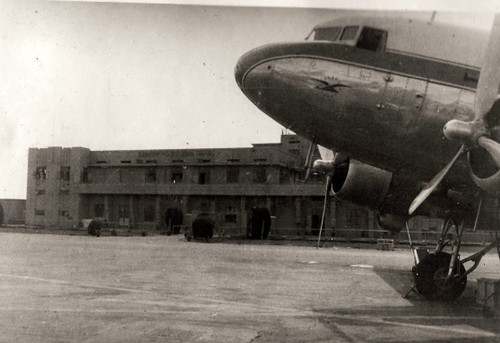
Bush Happy Amongst the Baobabs

‘No soldier ever really survives a war’.

Audie Murphy

That morning, I was woken by the alarm of bird calls; the sky was turquoise, becoming lighter close to the pencil-line horizon. I levered myself upright and began putting on my boots. Motionless, the land lay stretched out below me.

Charged with the army’s acrid coffee, I was sitting up against a large boulder enjoying the cool, morning air when the quiet was punctured by the dry snapping of rifle fire on the valley floor below. It didn’t take me long to grasp what had happened. One of our patrols had got caught up in what sounded like a very serious firefight.

Almost immediately our radio crackled into life. ZANLA forces had been encountered in large numbers. Our orders were to sweep down from our OP (Observation Point) in the foothills of the Mavuradonha Mountains and attempt to engage them from the rear (they had fled by the time we got there but they came back later and found us).

As I grabbed my rifle and webbing and slung on my backpack I found myself thinking, once again, about the weird unreality of it all. How in the hell had I, a pacifist by nature, managed to get myself mixed up in this vicious bush war? Landed in this strange situation where the unfamiliar had suddenly become familiar?

It was not a war of my choosing, nor one I particularly wanted to be part of. Even today I still cannot adequately explain why I stuck it out until the bitter end of the conflict and carried on fighting long after many of those who had believed far more passionately in the cause than I had decided to call it quits – “gapped it” to use the slang of the day – and left the country. It is also no use pretending I was anything else but an extremely reluctant soldier or that I showed any real aptitude or talent for military life. Indeed, for the most part, I never felt I was anything more than a resentful, inadequate, half-trained civilian.

Looking back across the years I sometimes have difficulty recognising that man in the grubby camouflaged kit as myself; there is an abiding strangeness about it all. It is as if I am looking into a broken mirror and all those experiences happened to someone who looked like me but was in fact an impostor. For me, the past is, indeed, another country.

An abiding strangeness. At Marymount Mission, in the extreme North-East of the country, near where the Mazowe River crosses into Mozambique. This was on my last call-up.

And yet, now that I reflect back on it, I realise the army was not all bad. It had some value. Firstly, it tested me in ways I would never have otherwise known. I learnt about physical and mental hardship, about dealing with extremes and staring into the abyss. I discovered what it was like being stripped down to my most basic self. At various stages, I was the hottest, coldest, most tired, thirstiest, hungriest, terrified, angry and miserable (but not the happiest) I have ever been in my life.

The fact that I survived these in extremis tribulations and emerged from it frayed, disenchanted and proud afterwards was, I suppose, an achievement of sorts.

Secondly, the army took me into areas I would have not otherwise seen and in so doing heightened my appreciation and love of the African landscape. In some perverse way, all the discomfort, fatigue and fear I experienced during those war days became a form of mini catharsis; it made me feel more part of the bush. We even had a term for it, one that suggested a temporarily disarranged self – one became “bush happy”.

The landscape affected me in other ways. Not sure whether my role was that of the hunter or the hunted I found my senses becoming sharpened to the sounds and smells of the bush. Far from the comforting normality of civilian life, I became increasingly feral in my habits, always watching and listening for anything that might threaten my chances of getting out alive.

For much of my initial national service – and in the subsequent seven years of military call-ups – the regiment I was with operated in the extreme North-East of the country, an area where civil administration, outside a few sandbagged strong points, had all but broken down. Not too far from the border with Mozambique, it was among the harshest and most rugged landscapes in all of the then Rhodesia and, along the escarpment itself, virtually uninhabited.
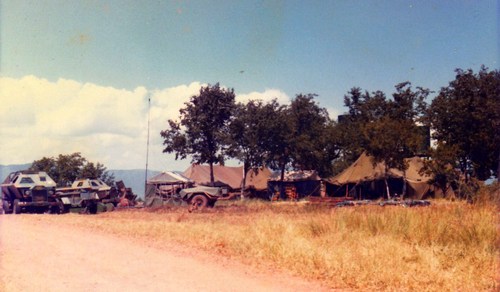
Assembly Point Alpha, Hoya, near Mozambique border, 1980. Mavuradonha is in the background. It was here my war came to an end

What always struck me most about this landscape – apart from the heat and general sense of discomfort – was the feeling of immensity it evoked. Behind us, the Mavuradonha Mountains rose in a steep pitch from the Zambezi valley floor while ahead of us a vast plain stretched out almost without undulation. And beyond that lay more of the same, hundreds and hundreds of kilometres of raw, unspoilt, and untrammelled country leading up through Mozambique and then into the rest of Africa.
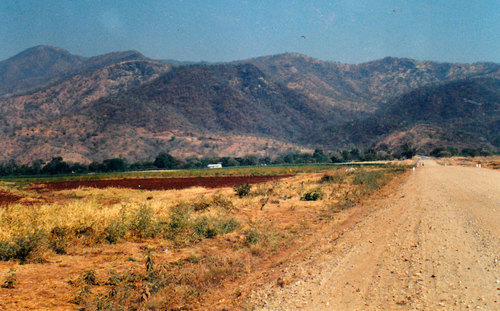
Mavuradonha, near Mzaribani. I took this pic on a return trip several years after the war ended.

The more time I spent in it the more I began to see the beauty in the timelessness and silence and hugeness of the land. The sheer vastness of it seemed to be immeasurably increased by the dryness. Then there was the silence, broken only by the occasional bird song or jackal howl at night or a sudden gust of wind blowing in waves of warm air. It is a kind of silence you just don’t get in the normal, urban world with its bustle and false pleasures.

This, in turn, brought with it a vague feeling of loneliness, a sense of being cast off from familiar moorings, an awareness that there was no one else within easy reach. Strangely enough, this only added to its appeal.

Operating in this sort of country was never easy. In summer the heat could be stupefying. Weighed down by my heavy pack and ammo I could feel the sweat trickling down my back and soaking my shirt. It chafed between my thighs.

On patrol. The bicycle we found abandoned in the middle of nowhere

Thirst could plague us like a nagging toothache. We had to develop the will to endure it. Because we only carried a couple of bottles each, I was forced to restrict it to little sips. On several occasions, I suffered from severe leg cramps. Most awful of all was the time I collapsed from heat exhaustion and complete dehydration. My legs refused to function, my tongue became dry and swollen, like an old piece of leather while my throat felt like it was coated with fur.

If it wasn’t for a spotter plane that picked up our distress call and later returned to drop water, I often wonder if I might ever have got out…

The heat was not the only thing we had to contend with. The Shona word Mavuradonha roughly translates as Land of Falling Water and as the season progressed you could understand how it got its name. After months of nothing but sun and dust, the weather would begin to change. It would grow more unsettled and windy, moving smells around. Tall, purple-bottomed clouds would build-up to the north.

Once the rains broke we were put through the whole gamut: heavy rains, moist, intermittent rains, a half-hour sprinkle, a thundershower, drizzle. Our clothes and equipment became cold, damp, smelly. At night we had to endure all the discomforts as it poured down on us. Now and again, especially in the early stages of the storm, the darkness would be torn away for a second by a dazzling flash of lightning which would bathe the surrounding bush in a strange, otherworldly light. Then the thunder would roll, like the sound of cannon fire, and we would lie there dazed and stupefied and shivering in our sopping wet sleeping bags while the rain came pelting down around us.

Usually, the storm would pass as quickly as it came, the wind would die down and we would do our best to get back to sleep. In the morning the sun would shine through the wet leaves to where we lay sodden and miserable. Once we had dried out our gear and re-oiled our rifles we would continue on our patrol.

We couldn’t drop our guard. Such is the nature of guerilla warfare that we never really knew who we could trust – if, indeed, we could trust anyone – amongst the local civilian population. In most villages we visited the response was usually muted – neither friendly nor unfriendly. It was difficult to know, too, who the locals were more scared of offending – us or the other side. Many, accused of being “sell-outs”, had been arbitrarily killed by the guerillas as a warning of what would happen to those who chose to betray them. Others had been caught in cross-fire between the opposing forces and died that way.

While the more cautious hedged their bets, I am sure many did want to see a more representative government, one not made up solely of whites. For all we knew they could be in direct contact with the ZANLA forces, maybe even feeding them and passing on information about our movements.

In this sense, the war had already begun to highlight something of considerable political significance – it provided the ultimate test of the black “povos” ( English translation: the masses, the common people) real feelings. Although it helped, of course, to be armed we could never quite escape this sense of hidden danger or that, outside of our fellow soldiers, there was no one we could rely on.

Mavuradonha, view from the infamous Alpha Trail, scene of many ambushes and – before it was tarred – landmines.

For the most part, we operated in five-man ‘sticks’ sometimes linking up with another stick at night for added security. Patrolling in such small groups through a potentially hostile country, where the loyalty of the locals could not be relied on, I did my best to keep my eyes open, my mind alert to my surroundings or any movement in my peripheral vision. Alone like that, it was easy to feel eyes watching us, indeed the suspicions of being followed and watched became a constant companion. The uncertainty weighed on our minds.

Towards evening we would usually stop for one last brew-up before moving into our final position for the night. It was the time of day I liked most. There is something about the dissipating violet light as the sun sinks which makes everything seem, holy, natural and familiar. It is a time when earth, rock and sky seem to marry, a time when surrounded by the great wall of the mountain the landscape seemed to acquire an uplifting, transcendental quality. I could feel its beauty penetrating my soul. It made me feel grateful for being alive, grateful for having survived another day, grateful that I would shortly be able to sleep.
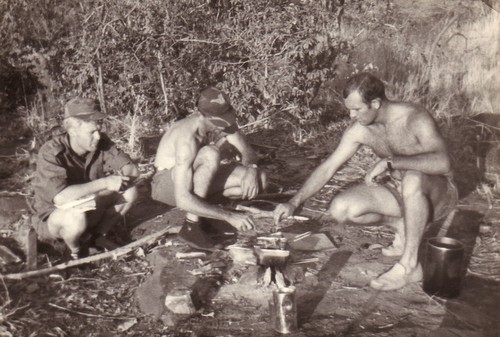
Cook-up time in Zambezi Valley.

Far from the big city lights or man-made pollution, the night swarmed with stars while the sky above us seemed bigger than any I had ever seen before. Sitting in the middle of nowhere, staring into the enormity of space and feeling, in the most animal sense, my infinite littleness it was often hard to make sense of all. Perhaps that was the point of it. To make us feel very small, to remind us that we are just a speck and that our time on earth is short and fleeting.

Of what importance was I, caught up in this forgotten, war, in the grand scheme of things? Like many a soldier before me, I was forced to acknowledge the helplessness and insignificance of my lot – while at the same time cursing the old folk who had got us into this jam.

Not that these moments of philosophical introspection lasted long. Where, the night before, the world had seemed ethereal, dream-like, in the morning light I was only too aware of its hard contours, its physicality and my sense of discomfort.

One experience, in particular, still haunts my memory. It was our first major cross-border excursion into Mozambique, an exhausting march not made easier by the fact I was suffering from severe diarrhoea during the high summer heat and only had a limited amount of water to drink. There was something strange and spellbinding about crossing into an enemy country. It was like we had been passed through more than just a physical boundary. We had entered another dimension, reached the very edge of the known world. Civilisation, as I knew it, seemed a very long way away.

The further we penetrated, the more cracked, bleached, and wild the country became. The heat left me breathless. After days of tramping through the dry, Mopani-dominated scenery the vegetation suddenly began to green up and thicken and in the distance, we could make out the unmistakable sound of flowing water. We had reached the Zambezi.

The broadening river was full of cigar-shaped islands covered with reeds. Tall vegetable ivory palm trees, massive Ana trees and Natal Mahogany’s dotted the far shore under which grew a mass of riotous vegetation. Fed by several additional large tributaries the river had grown even wider and more powerful and imposing than the one I was familiar with, stretching out before us like a rumpled sheet of blue vinyl and measuring a good kilometre or two from side to side.

The emptiness of the country we had passed through was reflected in the emptiness of the river and its banks. There were no signs of human activity: no men polling along in dugouts, no fishermen, no women washing, no children playing on the water’s edge and no domestic animals. Indeed, the scene before us had probably changed little since David Livingstone and his mutinous crew came steaming up the river in the Lady Nyassa all those years ago.

The landscape itself – aside from the river – was similarly devoid of feature. No cliffs nor distant mountains were framing the river valley. There were few roads or paths to follow and the odd villages we passed through had long since been deserted. It all seemed strangely peaceful. For all intents and purposes, it appeared to be uninhabited although we knew were not alone. Somewhere out there was not only ZANLA but the Mozambique resistance movement, Frelimo, as well.

That thought kept us on our toes.

Reluctant to leave the cooling shade of the river we lingered as long as we could before turning around and heading back to our extraction point where we were due to be picked up and choppered back to our military base in Musengezi, just across the Rhodesian border. We could see no sign of life from the air either as we flew over the baked, engulfing landscape; just trees and more trees stretching from horizon line to horizon line.

Helicopter pick-up in typical dry season Zambezi Valley bush.

So undifferentiated was the landscape that if not for the occasional baobab, I would have lost all sense of perspective. Looking like prehistoric animals with enormous bodies and a multitude of limbs spreading out laterally, as if they wanted to pluck us from the sky, they towered above the surrounding trees.

As we skimmed over their outstretched branches, I remember thinking to myself that winning a war in this sort of country would be virtually impossible. All the enemy had to do was stage hit and run attacks and then allow themselves to be swallowed up by the empty space where no one was likely to notice them because there were so few people to notice anything and those that there were would be unlikely to be in any hurry to trek to the nearest Security Force outpost to report what they had seen.

Time, the Great Revealer, would prove me correct on this point…

Remembering Reg – A Tribute to my Father, Wing Commander R.N.Stidolph DFC

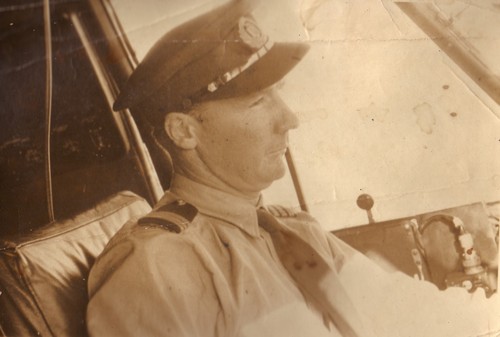
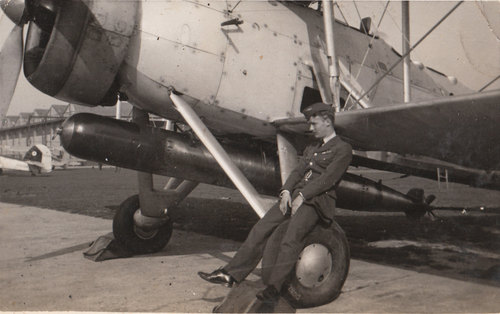
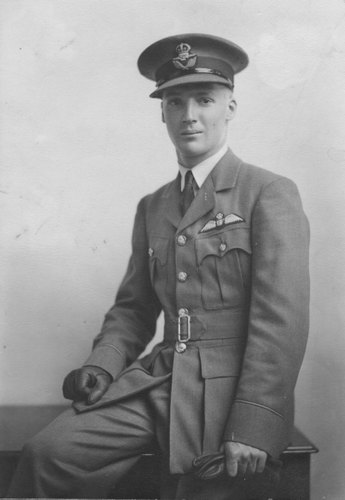
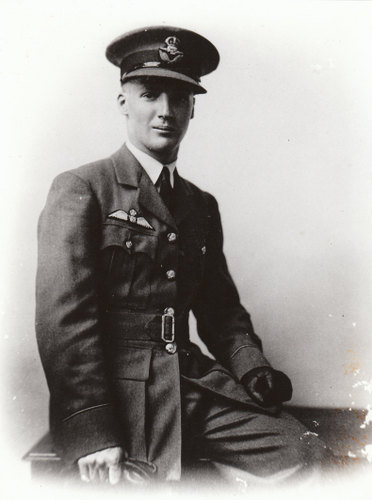
My father, Wing Commander Reginald Neville Stidolph, in RAF.

QUOTE: I could ask, ‘Why risk it?’ as I have been asked since, and I could answer, ‘Each to his element.’ By his nature a sailor must sail, a flyer must fly.

Beryl Markham on why she flew across the Atlantic to America (West With the Night)

xxx

During my teenage years, when we were living in the back of beyond, in Nyanga North, my father was seldom at home.

This was because the small amount of capital he had used to establish our farm was nearly exhausted. After several years of struggle against drought, disease, crop failure, packs of ravenous hyena, a pride of lion and the Land Bank, he had come to the realization that the only way to avoid getting deeper in to debt was for him to return to his old job – flying aeroplanes – leaving my mother behind to struggle on as best she could without him.

For the next seven-years my father all but disappeared out of our lives; the only communication, besides a monthly cheque, being the occasional scribbled letter from such exotic, far-off locations as the Persian Gulf, Sudan and Sierra Leone.

Although he was not present in the flesh, he was always there in spirit. The farm had been his dream and by working it, my mother and the rest of us children were, in a sense, living it for him.

By the time he finally returned home, I had already left school and gone to university. Because of this I still did not see a great deal of him although I did sometimes go and stay with him during my holidays when he was working for WENELA, based in Francistown, Botswana.

I came to love these visits especially because my father would usually arrange to take me up in the air with him. I would take an old camp chair and a Thermos of tea and sit up in the cockpit of the old DC3 or DC4 where I had an eagle’s view over the ground below.

Botswana is a country in which distances seem endless. Flying across the sparsely inhabited landscape, the plains stretch out for miles and miles and you really get to see how huge the Kalahari, Makgadikgadi Pans and Okavango Swamps are.

The droning engines. Flying over the Okavango Swamps in December 1970. Picture courtesy of Pete Stidolph.

There was something wonderful about flying in those jolting, rickety, oil-leaking old planes with their loud, droning engines. This was air travel before they took the edge and excitement out of it.

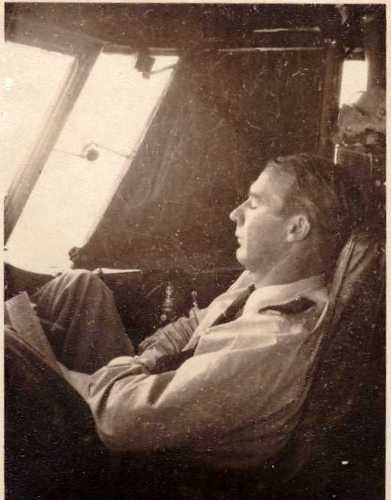
Being at the controls was so second nature to my father that he used to switch on to auto-pilot and sleep for most of the journey. Amazingly, he always knew exactly when to wake up.

Snooze time…


Not every flight went according to schedule. I remember the one time we had to change direction because a solid wall of angry, dark, rain clouds was advancing towards us at rapid speed with huge bolts of lightning slashing angrily out below them.

Storm over Botswana. Picture courtesy of Pete Stidolph.

We managed to outrun the full force of the storm, landing in Francistown just as it hit us. “I think we need a beer after that!” my father said, once we were safely inside the hangar, so we jumped in to his car and sped off to the Horseshoe Bar, just opposite the station in to which the old steam trains came puffing.

Flying in such conditions certainly provided its own unique set of challenges. On another occasion, a rhino came thundering on to the dirt airstrip, in a maelstrom of dust, just as we were about to touch down at Shakawe, at the northern tip of the Swamps, forcing my father to pull the plane’s nose back up in to the air.

It is not something I could imagine happening at, say, Heathrow or JFK Airport…

Sadly, it was only right at the end of his life that I began to spend a lot of time with my father and got to understand him better. He was retired and living with my mother on Bowmont, a small farm in the Midlands area. In the years that remained to him he was to suffer agonies from multiple myeloma (or myelomatosis), a particularly vicious strain of cancer that attacked his bones and caused them to disintegrate.

I had a job in nearby Gwelo (now Gweru) so I used to motor up most weekends to make sure they were okay. Eventually, I resigned and moved on to the farm full time.

In a strange way his illness brought us closer together.

As a child I had always been slightly in awe of my father. To me he was this outgoing, glamorous, figure who flew aeroplanes and for large tracts of time had been absent from my life, working in distant locations that I only knew as places on a map.

His life had all the ingredients an impressionable young boy could ask for – plot, action, adventure, a dashing hero. What I didn’t realise back then was that he never saw it quite like that. Nor did I fully understand the impact the war had on him.

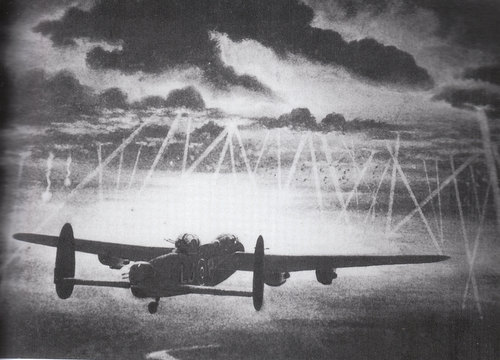
Perhaps it was his awareness that he would not last much longer or maybe it was the fact that I was now a serving soldier myself but for the first time in his life he began to open up about his experiences as a bomber pilot during the war. He talked about what it was like flying at night in slow, heavy bombers and being picked up in the lattice of searchlights and being strafed by the German anti-aircraft guns. He told me about the fear and how he had always tried to fly higher than everybody else in the hope that it would make it more difficult for the Germans to shoot him down.

He had served in all the major theatres of the war.

Starting off as a Flight Lieutenant he was promoted to Wing Commander in August 1941, an enormous responsibility to be placed on the shoulders of a young man still in his early twenties and one which must have forced him to mature at a very rapid rate. As the officer commanding 113 Squadron he saw action in North Africa and was also stationed, for a while, on Malta. At Giarabub (Italian for Jarabub), a remote oasis in the eastern Libyan desert, he got a taste of what it was like to be on the receiving end when his squadron and ground crew were bombed by the Luftwaffe while they were living among the gullies and wadis (see pic below).

In December 1941, he led the first group of bomber planes on the long flight to Burma, arriving there just as the unstoppable Japanese army was about to begin its long sweep through Malaya, Singapore and Hong Kong; even crossing the borders of India itself.

The road to Mandalay, Burma. My father seated.

His exploits in the area did not go unnoticed. He gets a mention in the book Retreat in the East by O.D.Gallagher, who was the London Daily Express’s war correspondent in Malaya and Burma (published by George Harrop, 1942). The author flew with my father on one of his missions. He also appears, together with other members of 113 Squadron, in a 22nd February, 1942, British Paramount newsreel (“Burma Blenheim Bomber Boys Part 1”) covering the retreat.

I only recently got to see this news clip. It felt quite strange looking down the long passage of time and seeing my father as a young man, surrounded by his crew. They all looked tanned and fit in their khaki outfits and surprisingly relaxed, given the hammering the British were taking, but also a little self-conscious, pinning their smiles on for the benefit of the cameraman.

After his stint in the Far East he returned to Bomber Command and took part in some of the big raids over Europe. Among them was one which the Times of London, on November 20, 1943, described as the largest ever over Berlin: “In half an hour a great force of Lancasters dropped more than 350 4,000lb block-busters on the German capital, in addition to a great weight of incendiary bombs”. A total of 32 bombers were lost.

One of the many planes he flew was the legendary “Just Jane” which would go on to complete a total of 123 sorties. It was only one of 35 Lancasters to achieve the “Ton-Up” mile-stone during the war. It is included in the book Ton-up Lancs: A Photographic History of the 35 Lancasters That Each Completed 100 Sorties by Norman Franks (Published by Bounty Books).

He is also mentioned in Bruce Barrymore Halpenny’s Action Stations 2: Military airfields of Lincolnshire and the East Midlands while the same author devotes an entire chapter – headed A Rhodesian’s adventure over Stettin – to his exploits in To Shatter the Sky: Bomber Airfield at War (Published by Patrick Stephens Cambridge).

There is another, later, film by British Pathe (“Berlin Raids 1943”) which features an interview with my father, this one taken after he had just returned from leading a huge bombing raid on Berlin. It tells a different story to the earlier newsreel. You can see from his eyes that the strain of the war has begun to take its toll, the smiles have all gone and there is a faint tremor in his voice as he talks.

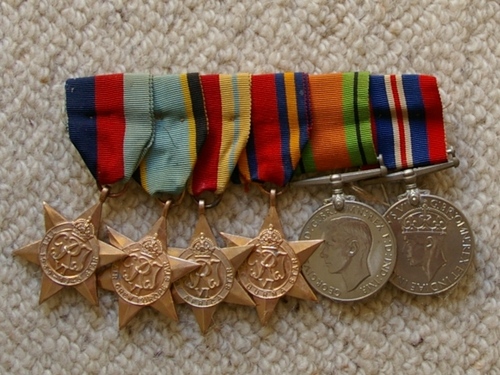
He was awarded the Distinguished Flying Cross for bringing his badly shot-up Lancaster safely back to England (see citation below*) after a bomb drop over Stettin. It warranted a story in the Rhodesia Herald back home.

Sitting listening to him talking about those times I began to get a glimpse of what it must have been like, piloting a four-engined Lancaster, taxi-ing down the runway and then lurching off into the dark, rainy night and heading out across the channel to drop thousands of tons worth of bombs on some heavily defended target. In the back of his mind there must have always been the fear he might not return or see his family again.

He was, in fact, one of the exceptionally luck ones who did survive the war – virtually every other pilot on his officers’ training course was killed in action.

By any standards he lived a full life. At the end of the war, as part of the Berlin Airlift, he started flying a plane that was already a legend and remains so today – the DC3 or Douglas Dakota. Considered a reliable old warhorse it was a plane that would play a large part in and shape his future.

After demobilisation he returned to Southern Rhodesia and become a commercial pilot working for Central African Airways flying both inside and outside the country.

In those days the flight from Salisbury to London took six-days and by the end of it a strong sense of comradeship had invariably developed between passengers and crew.

He resigned from CAA in 1956 after a dispute and joined Hunting Clan Airways, principally flying within Southern Rhodesia and further afield to Tanzania, Kenya, Mozambique and South Africa. My main memory of those days is him returning home from Vilanculos in Mozambique weighed down with big demijohns of Portuguese wine, coconuts and apple boxes full of fresh crab.

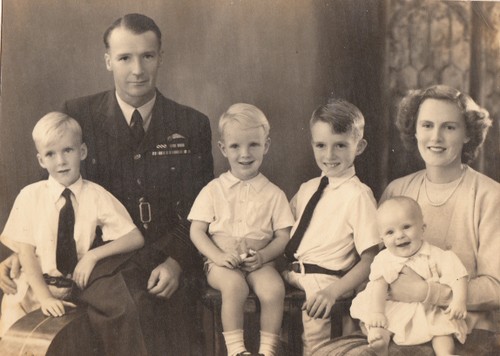
With young family – from left: Paul, Peter, Patrick, Anthony.

As an airman he lived in a more swashbuckling era when commercial aviation was still in its infancy and few people thought of going by plane, the majority opting to travel by ship. Flying in and out of dusty, fly-infected airfields in those rattling, bouncy, propeller-driven crates with a minimum of on-board comforts and only limited navigation aids it was an adventure.

It was a lifestyle which certainly suited my father. A non-conformist in a uniform, who somehow managed to combine a strong sense of duty with an inate rebelliousness, he never cared much for the rigidly scheduled, heavily regulated industry flying was to become with planes cruising in the stratosphere with hundreds of passengers, air-conditioning, on-flight movies and pre-prepared meals.

He was, however, very excited by his late conversion to flying jets.

As a pilot he had gone where he wanted, he had travelled the length and breadth of the continent in the days before Rhodesia had become a pariah state, cut off from the rest of the world and when Africa was still accessible to all. Equally at home gambling in a casino on the French Riviera or marooned on some remote frontier, he liked solitude and rough living but also good company, friends, good food and drink and laughter.

You never knew who you might find breakfasting in the kitchen after a night out at the local pub. One such person was an engineer named John Louch who needed a place to stay for the night and ended up living in our Francistown house for two-years.

He was good at what he did and his colleagues always talked with reverence of Dad’s flying skills. It was easy to understand why my mother had been so attracted to him when she had first met him as a young flight officer fresh out from Rhodesia. In her memoirs, she recalls how she had lived all her life in country villages “not knowing any boys, let alone glamorous young men”.

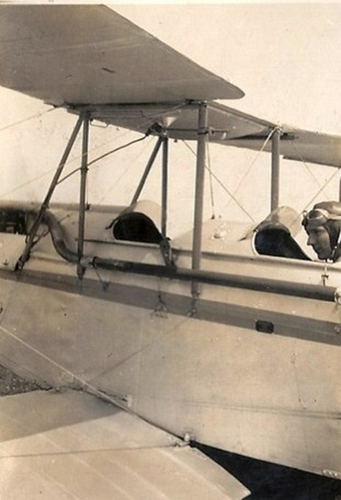
Equally smitten with the shy but beautiful young English rose, my father went out of his way to impress, even going so far as to swoop down low over her school in his open cockpit bi-plane – a highly illegal act – while she was playing netball, causing her to fall and graze her knee. Handsome, ebullient and full of life, he was a born optimist with a natural talent for minimising life’s problems and a great faith in his own ability to get a job done.

My father (briefly sporting a moustache) and mother, Wing Commander and Mrs Stidolph.

He had charm, wit and sparkle. He could also be irritable, quick tempered, impetuous, tactless and impatient – personality traits which, I suspect, could be partly traced back to the accumalative stress of flying on so many dangerous missions during the war.

Beneath his jovial, practical, no nonsense, manner and intolerance of dull people and wishy-washy thinking, lay a vein of creativeness which found expression in his, at times, rather Heath Robinson inventions and in fixing up dilapidated old cars (he didn’t buy second hand, more like – tenth hand).

His creativity did not end there. In his early years he had dabbled in oil paintings – one of his pictures (of a demijohn of wine) hung on the wall of every house we ever lived in. It was rather good.

I didn’t realise until after he died and I got to read some of the poignant letters he had written home to my mother that he had also once harboured ambitions to be a writer. That he had a talent for it is certainly born out in a wonderfully evocative piece he wrote titled: A Trip from Muscat through Oman to Qatar in the Persian Gulf.

Despite his foray in to farming he remained first and last a pilot. From an early age he had been obsessed with the romance of flying and the sound of humming propellors – even defying his father’s orders by signing up with the RAF before the war– and it was here he really made his mark. During his career he completed 23,817 hours of flying over 42-years, including over 20,000 hours in command. He flew 48 types of aircraft for eight organisations on three continents in 44 countries. He landed in over 350 different airfield.

To the end he remained very much his own man and, despite his illness, still retained something of his old zest for life and vitality. He was larger-than-life, one of a kind, a bit of a legend.

Like his beloved Dakotas, they don’t make them like that any more…

* The award was gazetted on the 25 January 1944 (Issue 36346, pages 481 – 482) and reads:

Distinguished Flying Cross.

Wing Commander Reginald Neville Stidolph (375I3). Reserve of Air Force Officers, No. 61 Squadron.
One night in January, 1944, this officer was the pilot of an aircraft detailed to attack Stettin. Soon after bombing the target the aircraft was attacked by a fighter. The enemy aircraft was eventually driven off, however, and was seen to dive steeply smoke pouring from one of its engines. In the encounter, Wing Commander Stidolph’s aircraft sustained extensive damage, making it extremely hard to control; 1 engine was also rendered useless and had to be feathered. In spite of this Wing Commander Stidolph flew the disabled aircraft to an airfield in this country and effected a safe landing. He displayed skill, courage and resolution of a high order. This officer has completed very many attacks against targets such as Berlin, Hamburg and Dusseldorf.

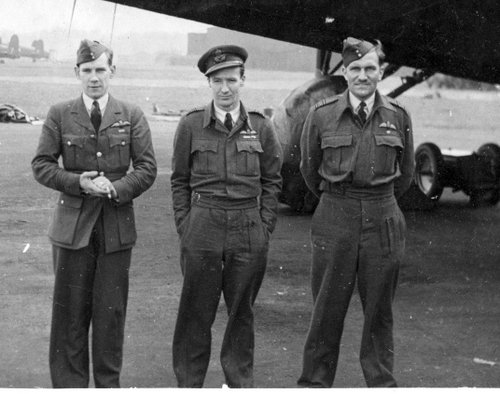
The above are three of the squadrons my father served in and whose badges hang on my wall. There were others…

GALLERY:

(1) My father joined the RAF, before the war, in November 1935 and served right through to its end in 1945. Here are more some photographs from that period.

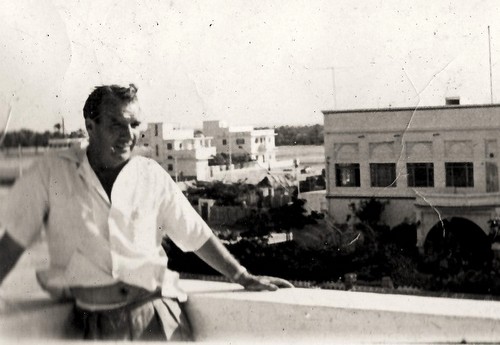
(2) From March, 1960, to about February, 1966 my father worked outside the country, based, in turn, at Bahrein in the Persian Gulf, Sierra Leone and in Khartoum where he was employed by Sudan Airways.The following photos come from this period of his life:


ACKNOWLEDGEMENTS: A special thanks to my brother, Patrick, whose extensive research in to my father’s flying career I have been able to draw on here. Pat’s research now forms part of the No50 and No61 Squadron Association official record.It was Patrick who also drew my attention to an article written by Ross Dix-Peek about my father’s war-time career.