Since childhood, I have always been a compulsive walker but, in recent years, the habit has taken on a more urgent aspect. Only too aware of the passing years, it has become a vanity issue, part of my need to achieve something measurable and definable before the lights go out. To prove to myself I still have it in me. That I am not completely past my prime.
To this end I like, every now and again, to test myself by undertaking a seriously long hike. Which is where the Wild Coast comes in. I have now done the Wild Coast Sun to Mtentu hike four times. Each time we have followed more or less the same route. Each time, it has felt different.
It is a beautiful hike. The Wild Coast has its own unique atmosphere and character. It is like travelling through a time warp, being one of the few places where you can still get a glimpse of what the South African coastline must have looked like before the property developers moved in and – all in the name of progress of course – stripped it of everything that made it special in the first place.
An opportunity to go there again fortuitously presented itself, when Mary Ann, my regular hiking companion and long-time side-kick, decided she wanted to celebrate her birthday there. When it arrived, I readily accepted her invitation. Here, was another chance to prove my metal, get the muscles working again, pump some fresh salt air into my (chlorine-damaged – don’t ask!) lungs. I wanted a little of that swagger that comes from testing yourself against nature and coming out triumphant on the other side.
For me, the wilderness is, however, more than just, a resource to be mastered or a place where I go to prove how tough and resilient I am. There is a spiritual element to my meanderings. Released from all obligations, it is a way of reconnecting with myself, feeding my soul, transcending the monotony and tedium of everyday life and getting that sense of emotional engagement that comes from immersing yourself in the beauty of a place. Fording the rivers, hiking along the deserted beaches, listening to the reassuring crash and hiss of the waves breaking alongside you as you walk becomes a form of secular pilgrimage, an exercise in humility, a way of savouring the grandeur of sacred nature.
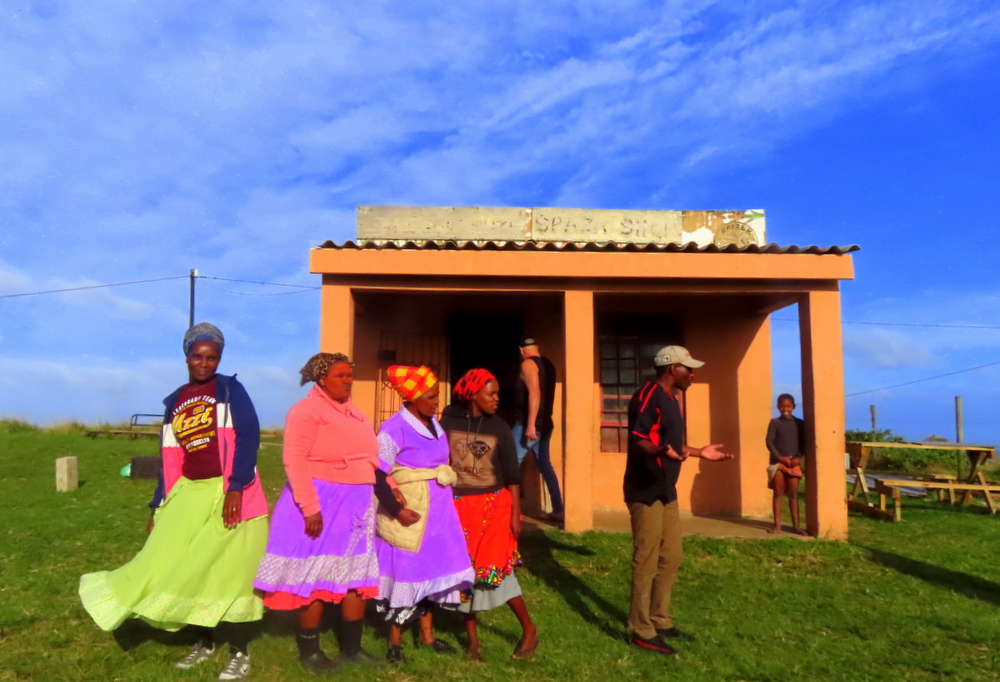
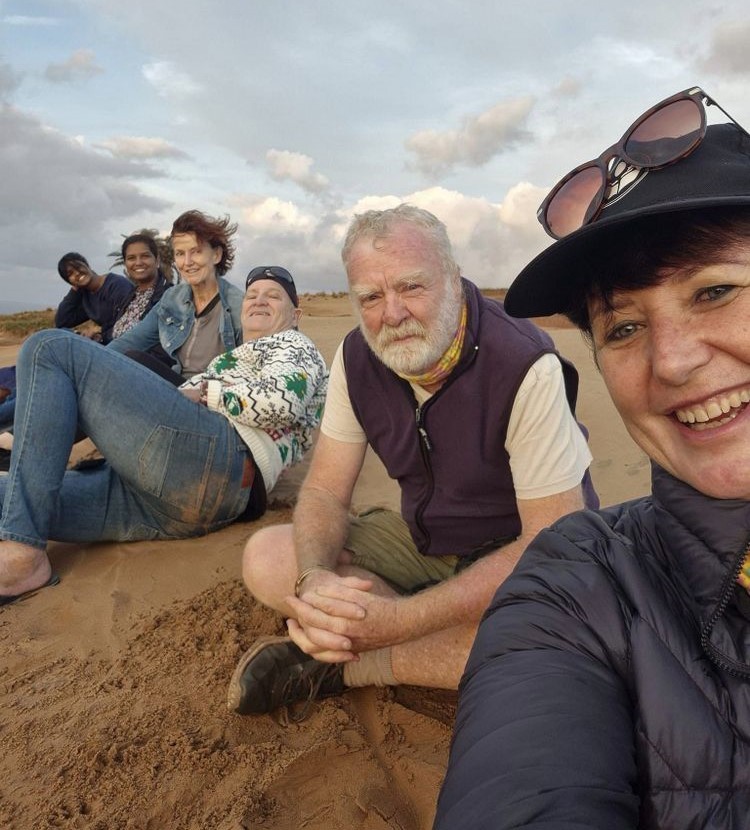
Along the way you get to know your fellow hikers a little better, and become part of an informal clump sharing a simple objective – get to your next destination.
Determined to be fit for the hike I went into training, scrambling up and down the rocky slopes of the farm. The closer we got to our day of departure, the more my excitement grew. Alas, fate has other plans for me. An old hernia problem chose to flare up again. I consulted a specialist. He told me an operation was necessary. He also advised me against putting too much strain on the offending appendage which is what would happen, he informed me, if I walked the distance required, especially the uphill parts.
I was determined I was not going to miss out. Fortunately, it turned out I was not the only one sporting an injury. Another past hiker had damaged her foot and conveniently for me had decided to drive to Mtentu in her 4X4 (my old banger would not have made it over the Transkei roads).
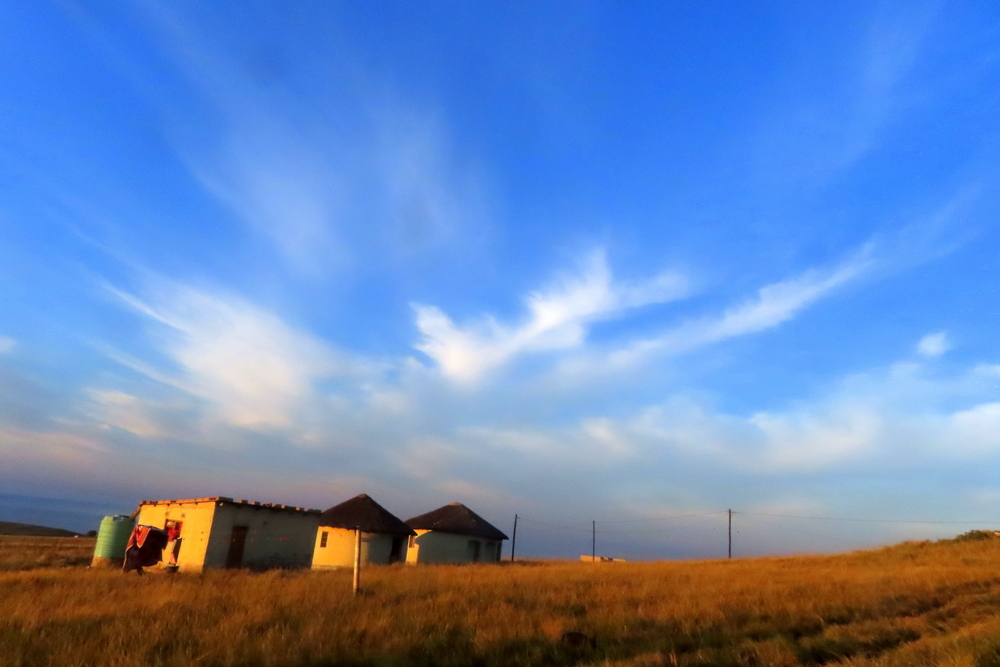
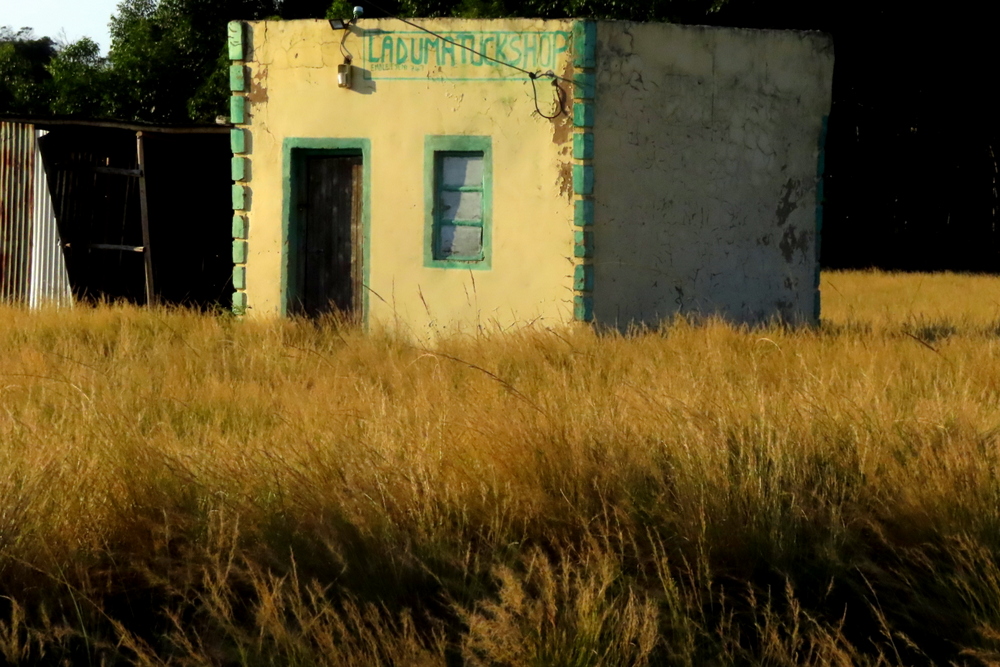
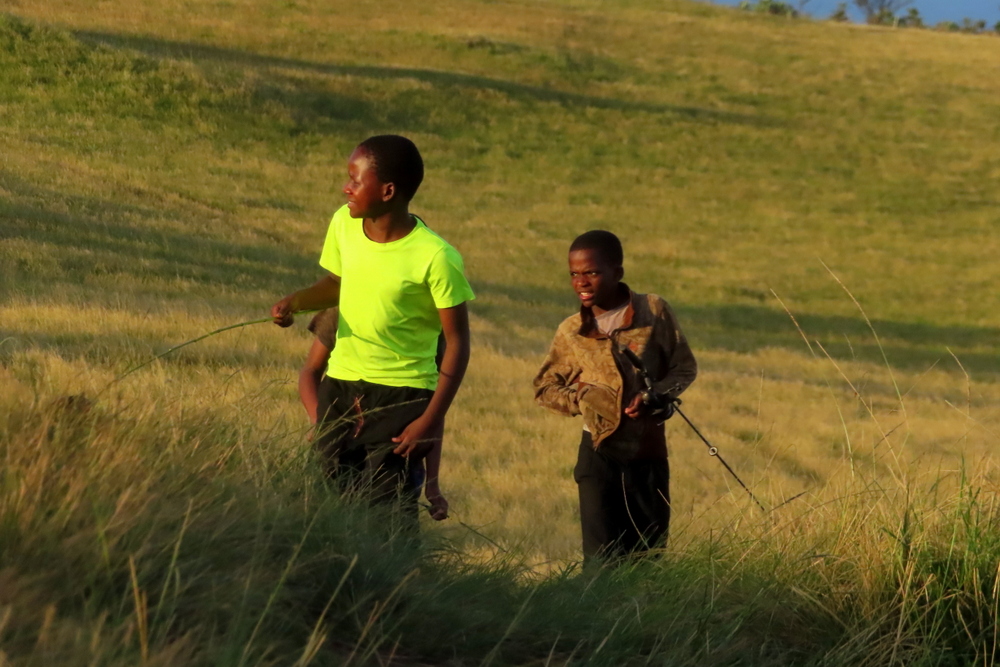
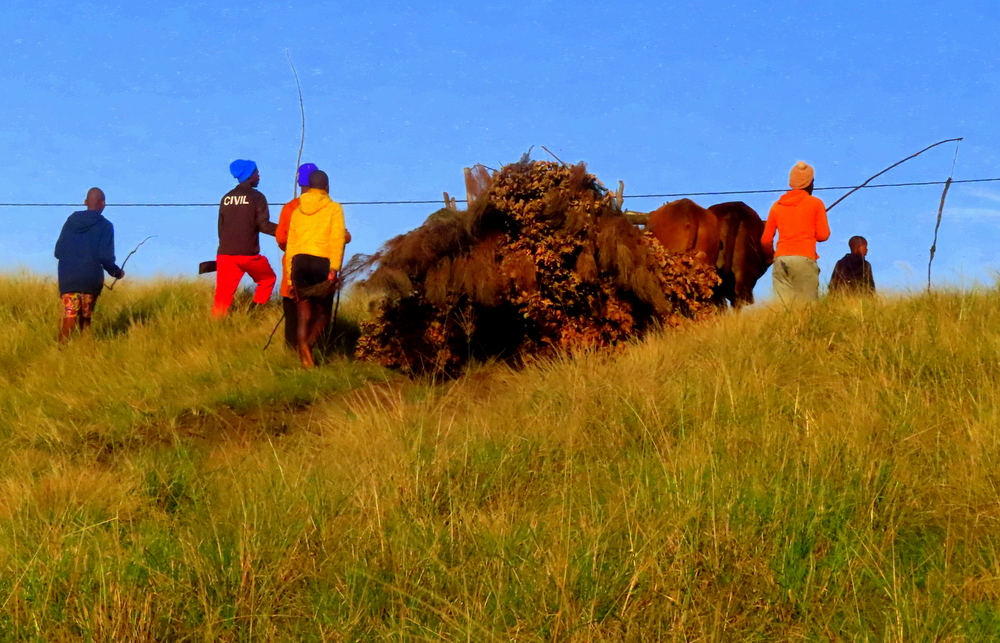
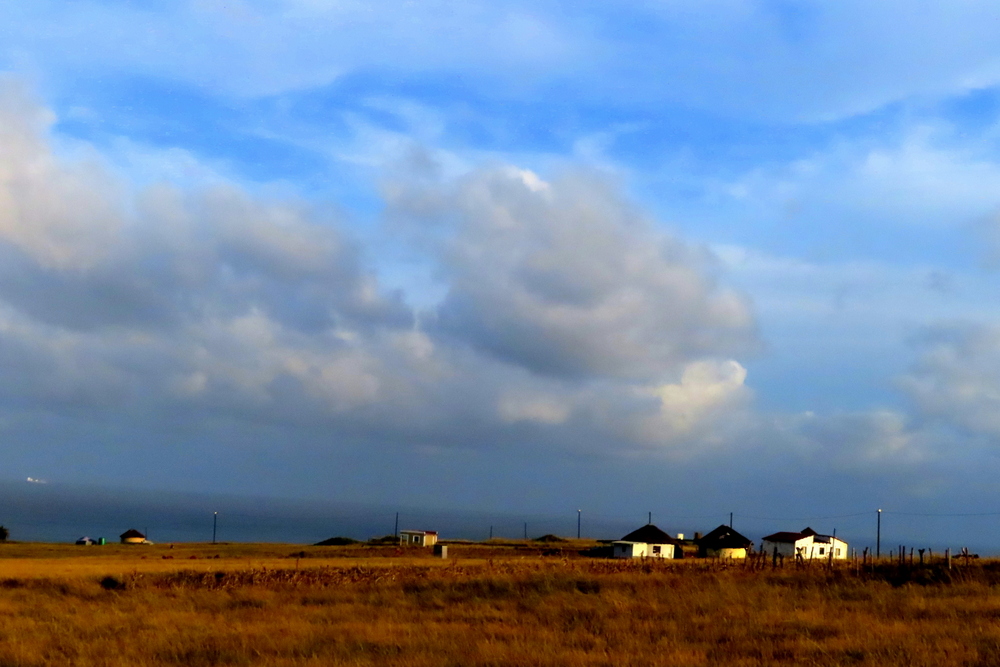
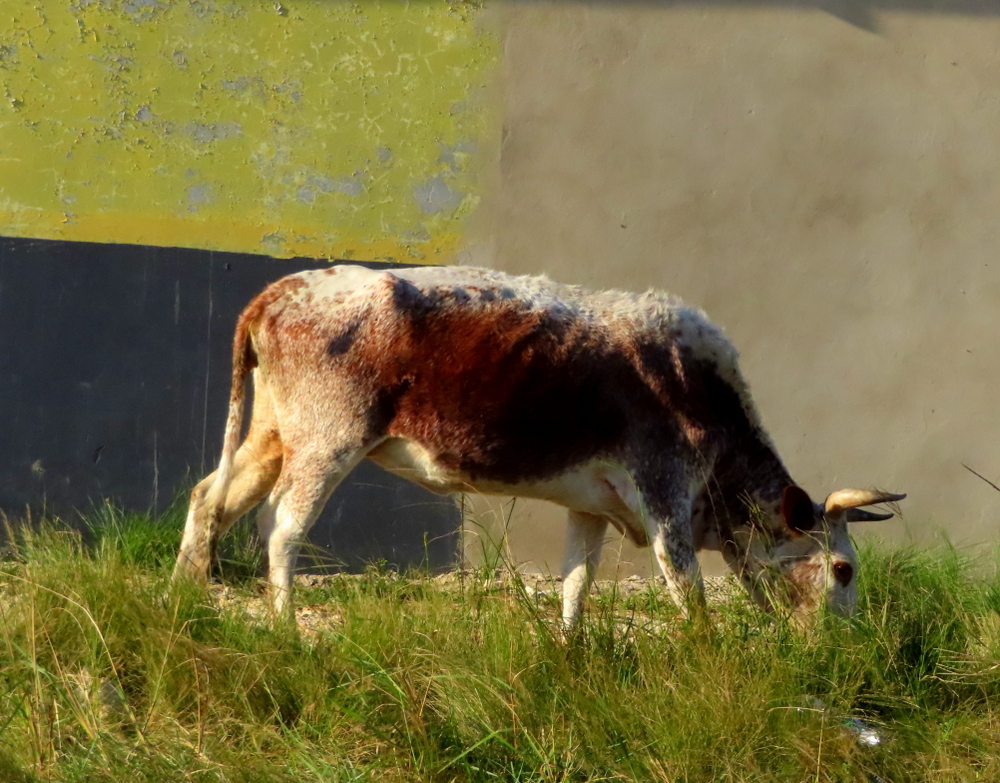
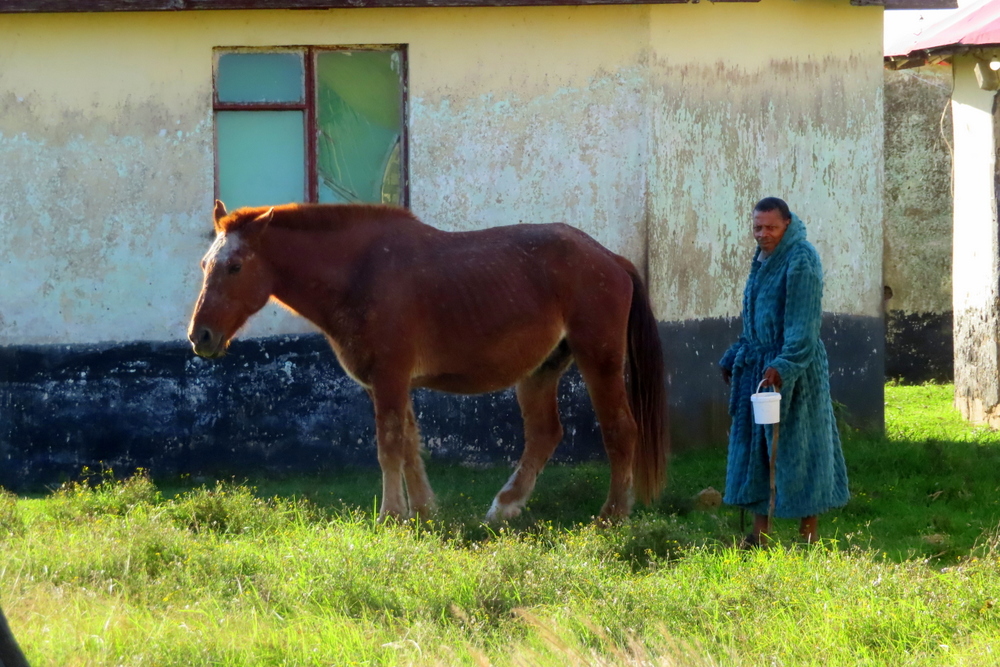
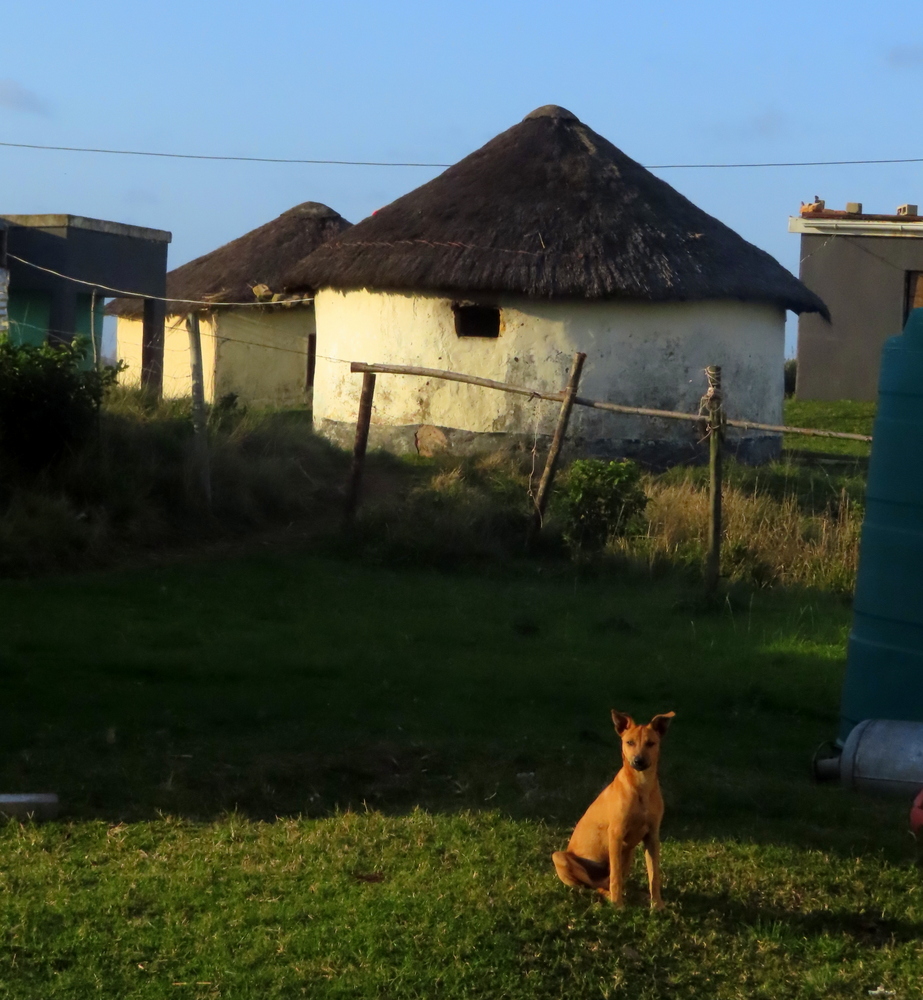
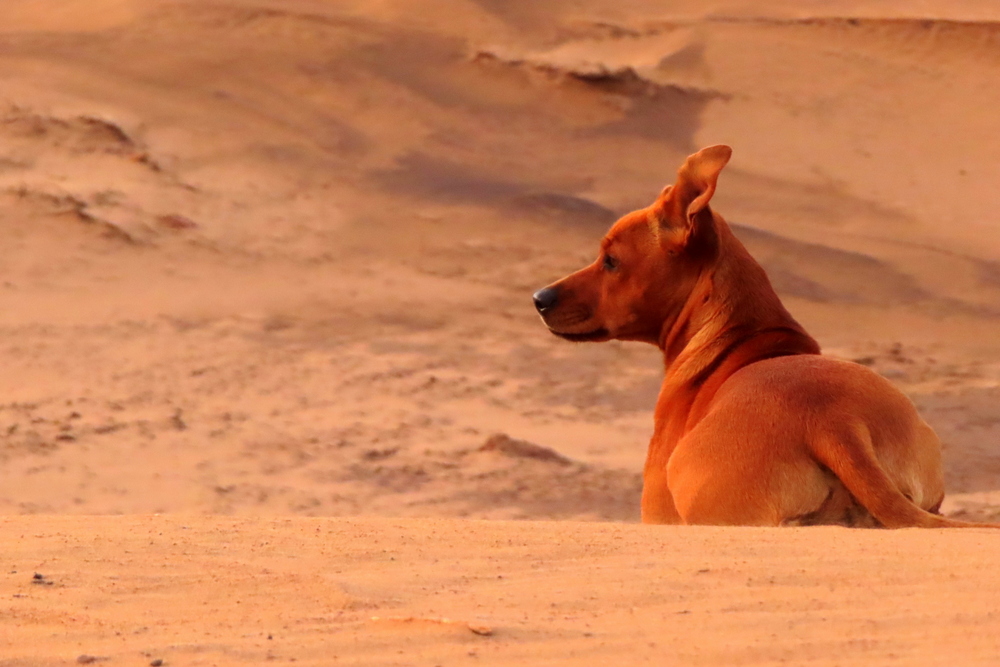
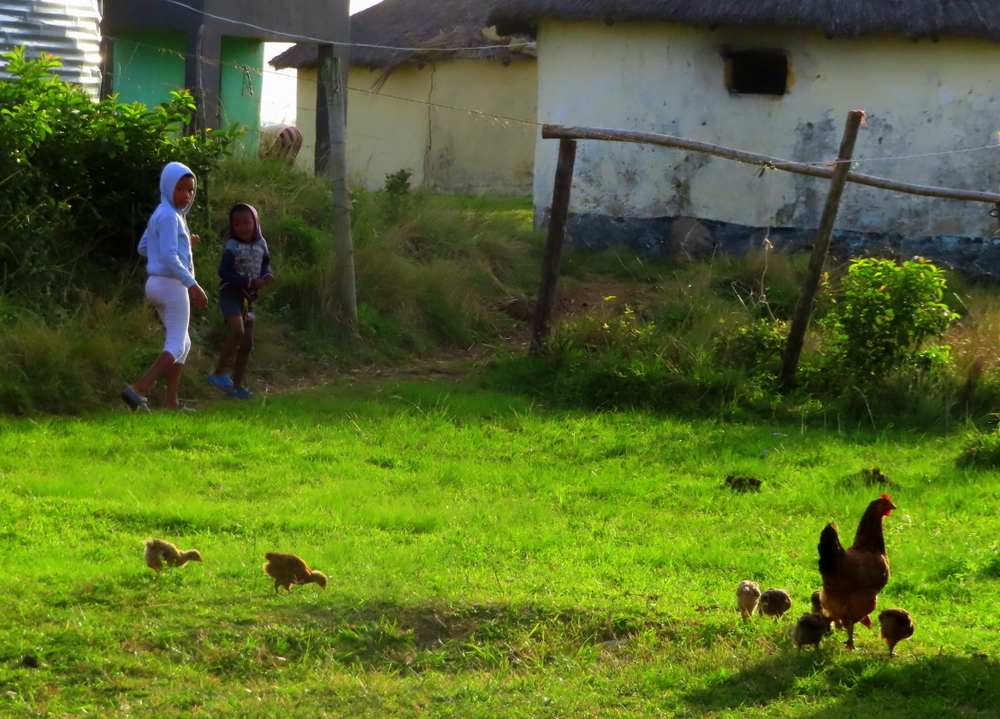
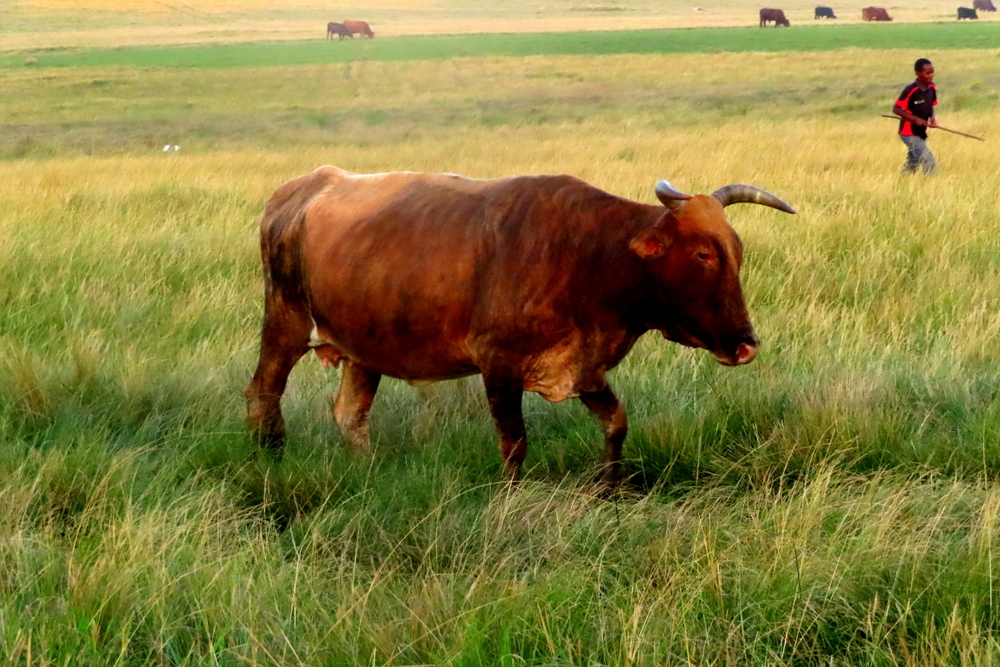
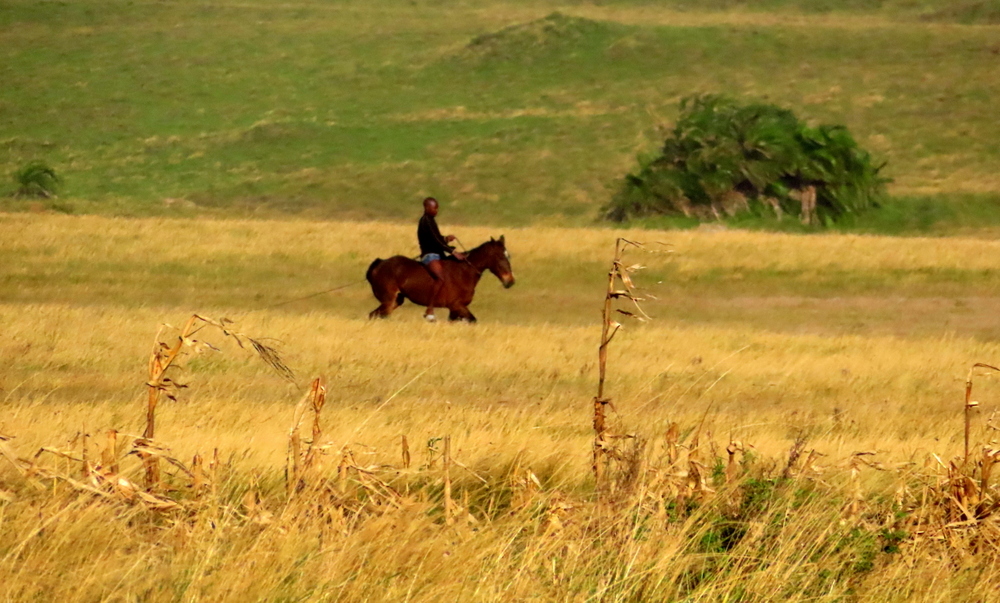
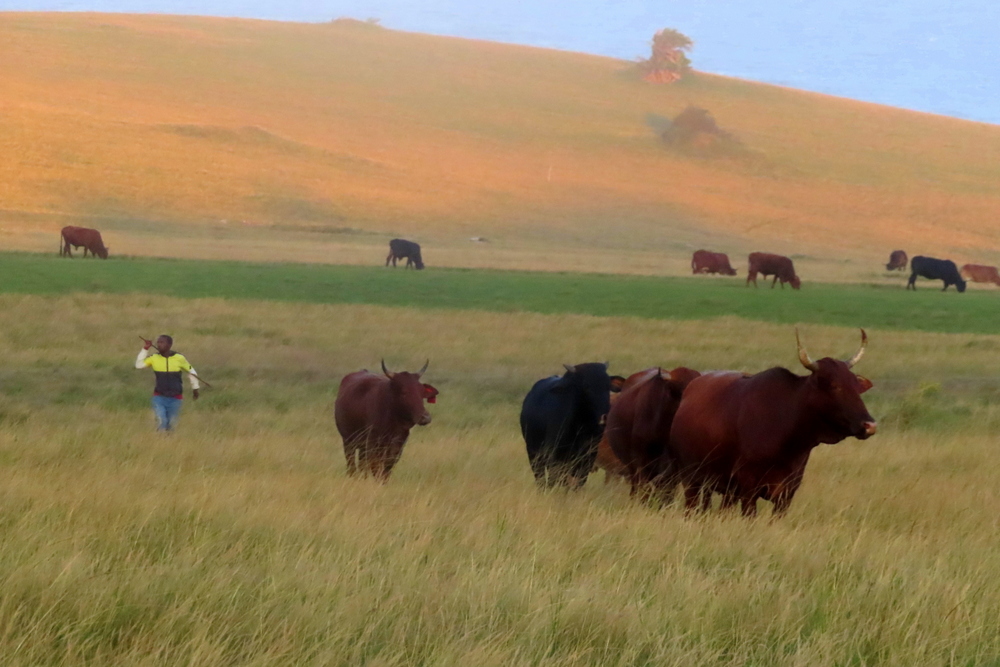
And so, while the others were hiking along the beach, we set off. The dirt road – or rather excuse for one – on which we found ourselves travelling wound its way through rolling hills, slashed by the odd river gorges, towards the coastline. The landscape was dotted with traditional thatched rondavels although in places these had been replaced by more Western-style rectangular houses with pillars and corrugated iron roofs. There were groups of cattle everywhere. Sometimes small boys and herders would appear mysteriously from nowhere and wave at us, There were also dogs, some a lot less friendly than others. They would come bursting out of the hut yapping their heads off as we drove past.


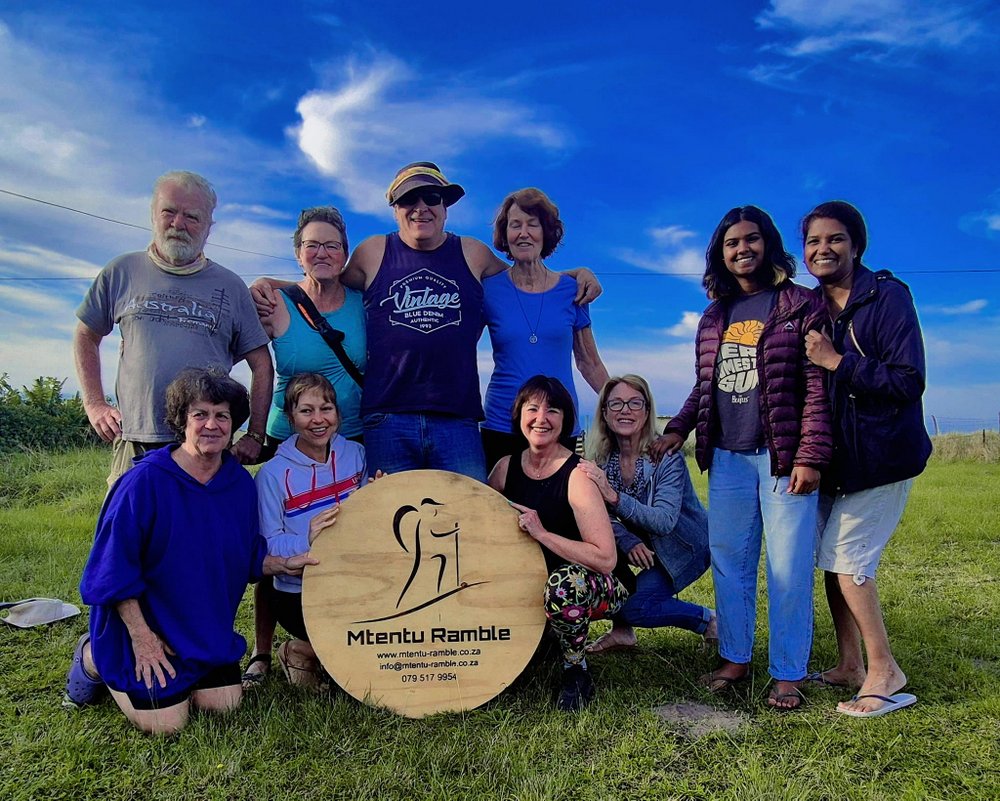
We eventually reached our destination – a simple, dormitory-like, structure built of cement and stone and capped with corrugated iron – ‘” The Hiking [formerly Fishin’] Shack” – set amidst a scattering of thatched huts and outbuildings which belonged to a respected local leader. Here, we were received with the same wonderful warmth we had on our previous visits by our host, Kelly Hein who runs the Mtentu Ramble ( http://www.mtentu-ramble.co.za/ ) and her family. I immediately felt at home.

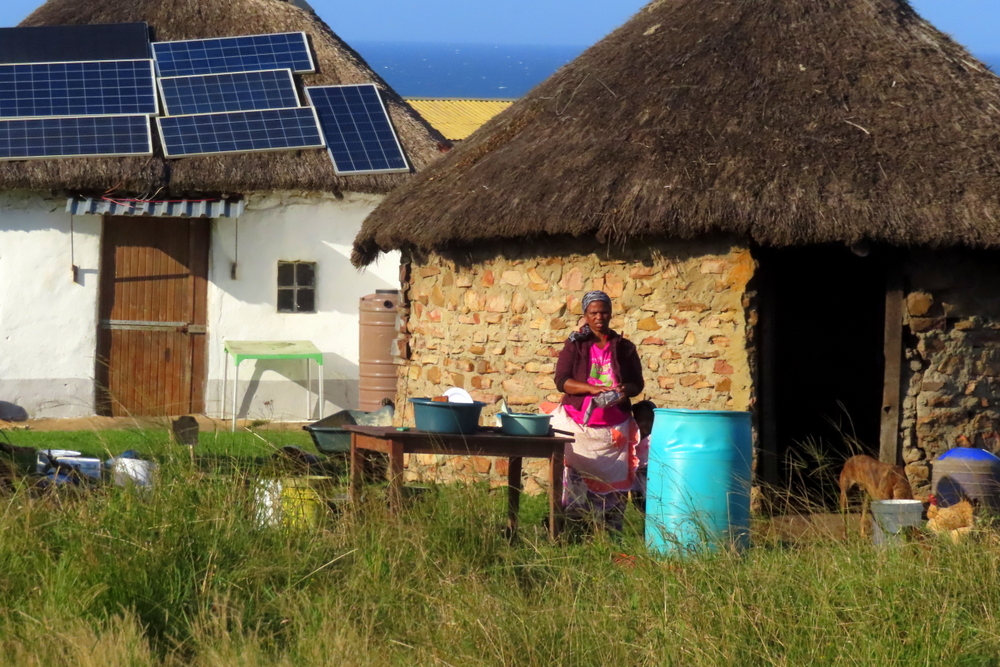
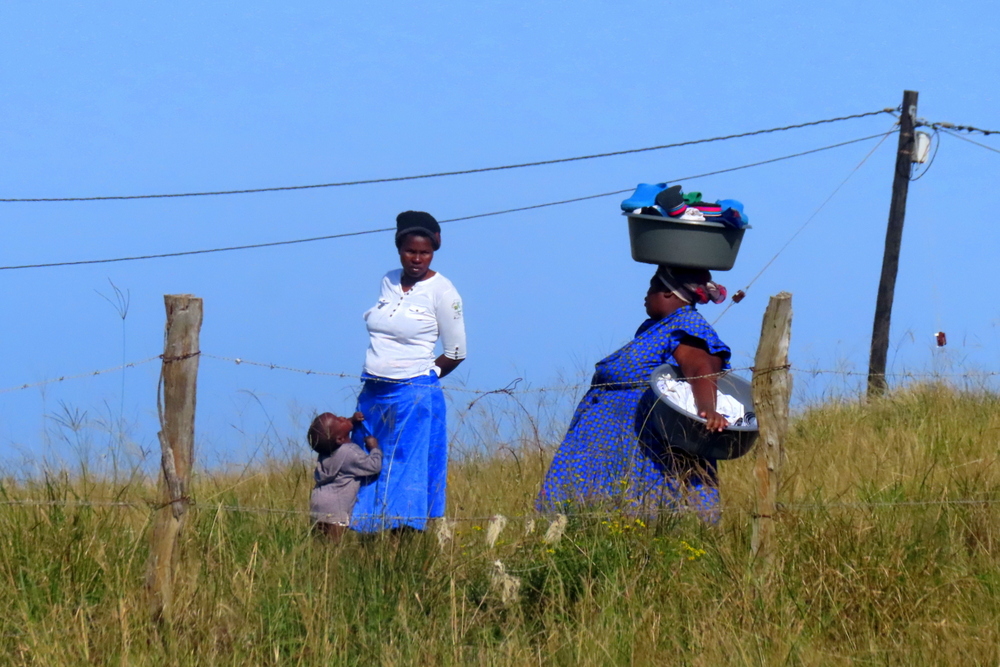
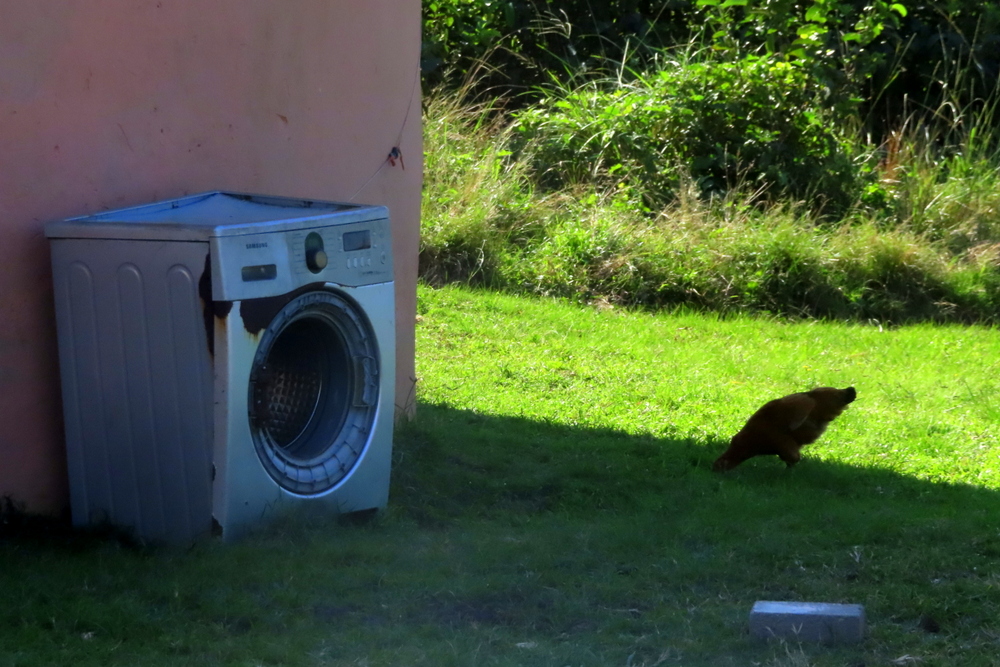
The Pondo, who inhabit this southern part of the Transkei, continue to live a way of life that has changed little over the centuries although you can see signs that the 21st Century has begun to encroach even here. The last time we visited, the area had not been connected to the national grid but now virtually every hut you passed had an electricity pole standing sentry-like outside. I was sure the hut inhabitants must have drawn comfort from the fact they were no longer being discriminated against and could now share the joys of load-shedding, courtesy of the ANC Government and Eskom. As if half anticipating this, many of the dwellings had solar panels attached, higgledy-piggledy, to their roofs. There were other signs of the influx of Western consumerist values. Many of the houses, for example, had large, twin-cab bakkies parked outside of them, a sure indication of increasing affluence and upward mobility.
Not wanting to be dismissed as a romantic traditionalist, stuck in a discredited past, I shrugged my shoulders and tried to feel philosophical about it all. At times, it is better not to arrive with pre-packaged notions of what a place should look like..
After lunch, we set off northwards towards the estuary, where we planned to wait for the rest of the group slogging their way down the coast. We had barely got a hundred metres or so when we were greeted by the somewhat incongruous sight of three Ground Hornbills striding purposefully through the blonde tufted grass. Their size is always a tremendous surprise. Immense and black with their huge beak, seductive, boudoir-fluttering eyelashes and red throat and facial patches, they are one of the most engaging of birds. When they spotted us, they veered off back the way they had come and disappeared over the ridge.
Thrilled by this welcoming and seemingly prearranged encounter with these now endangered birds (our good fortune was to continue – we saw another four as we drove out at the end of the trip), we carried on. We had left it too late, however, to greet the wearied hikers at the estuary. Hungry and tired of waiting for us to arrive with their packed lunches, they had pressed on regardless, so we met them at the halfway point.
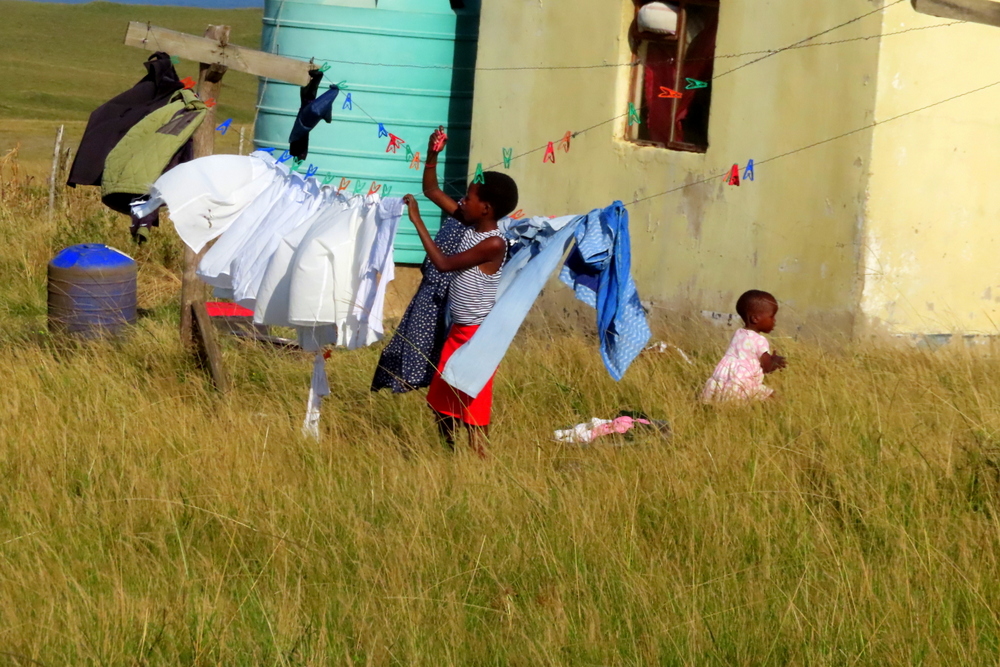
The afternoon passed. It was nearly sunset. Glorifying in the voluptuous twilight, I strolled up the road that leads past the local shebeen which, at all hours of the day and night, seemed to be alive with stumbling drunks. A group of uniformed school children trooped by. I strolled on, soaking up the atmosphere. Below me, a few horned cattle, followed by a flock of goats, were slowly wending their way home. A few independent-minded pigs snuffled in the rubbish. Washing flapped on washing lines.
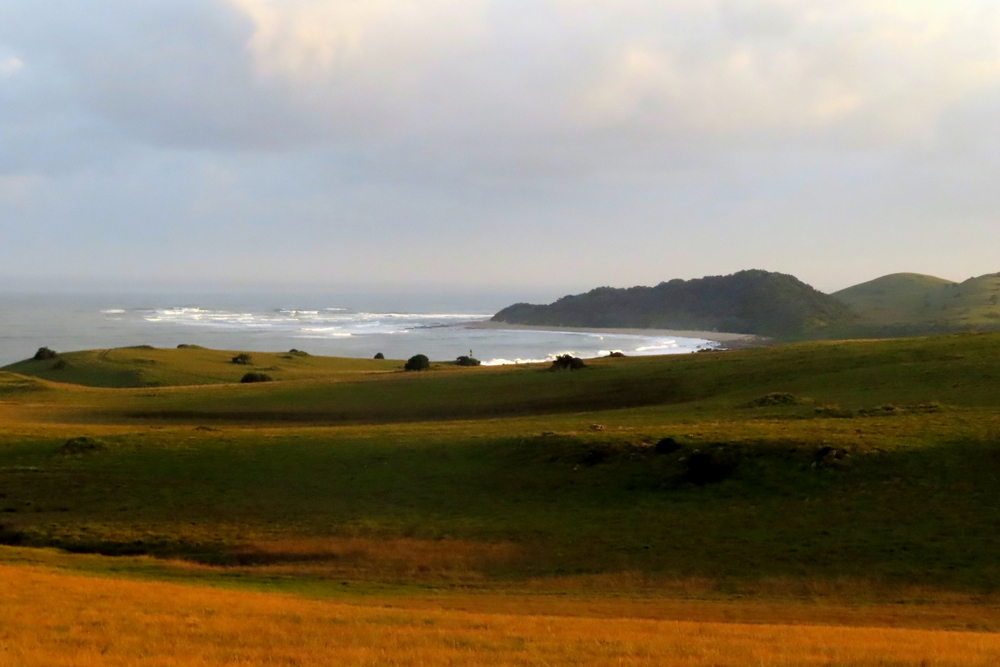
It felt wonderful to have escaped all those demons masquerading under the guise of the new technology and the ubiquitous cellphone (although – since the small hillock above our shack was the one point where you could occasionally get a signal – a few of my fellow hikers were frantically waving their phones around in the air as they desperately struggled to establish contact with their loved ones). Resigned to the fact that not many people would likely be missing me, I had other thoughts on my mind. Watching the flecked white horses out at sea and the waves crashing and wheezing into the shingle, I felt a wonderful sense of peace and tranquillity.

Although it looked calm enough now, the weather along the coastline can rapidly change. The sky can curdle and blacken with thunder. Bolts of lightning will lighten up the ocean and the sky above it. Battered by strong winds and violent storms, the Wild Coast earned a bad reputation and presented a formidable challenge to the early European sailors (their modern counterparts too). Adding to the hazards of the route were the hidden shallows and underwater rocks; many ships got wrecked in these treacherous waters. You pass a few such rotting hulks on the hike, their rusted ribs and skeletons protruding above the sand or lying, scattered in pieces, over the weed-encrusted rocks.
The Transkei region has an equally turbulent history. The Kei River, further south, in Xhosa territory, once marked the thin dividing line where two alien cultures met: the white settlers moving north from the Cape and the black tribes pushing south, who were themselves part of a much larger migration which had its roots in Central Africa. Needless to say, it became an area of huge friction which lasted over many years and led to the outbreak of numerous frontier wars, in which some of my ancestors fought, earning them a black mark in revisionist history.
In the bad old days of Apartheid, the Transkei was turned into a supposedly self-governing – if impoverished – Bantustan with its own fake border posts and puppet government. Resistance to the system soon arose, with many of the leading figures of the liberation struggle coming from these parts, the most famous, obviously, being Nelson Mandela.
But that was then. Now was now. Turning my collar against the sudden chill wind that had come sweeping in from the sea, I crunched back towards where the sun was sending golden bars of light onto the surrounding hills,
The next morning, woken by the crowing of the noisy rooster next door, I got up early, wanting to catch the rising sun. On the one side of the horizon, the long vapour trail of a climbing jet sliced up the grey-blue dawn. On the other side, yellow-bellied from the rising sun, an endless caravan of clouds drifted over the ocean to wherever it is clouds go. Sitting on the verandah, sipping my mug of coffee, this was followed by the propitious sight of three Grey Crowned Cranes, propelling themselves through the cold, still, air with measured wing beats, their long elegant necks outstretched in front and legs trailing behind. Cranes are special. Shy and wary, it is always a privilege to encounter them anywhere in the wild; here it seemed especially so, almost a blessing, a sign of good things to come..
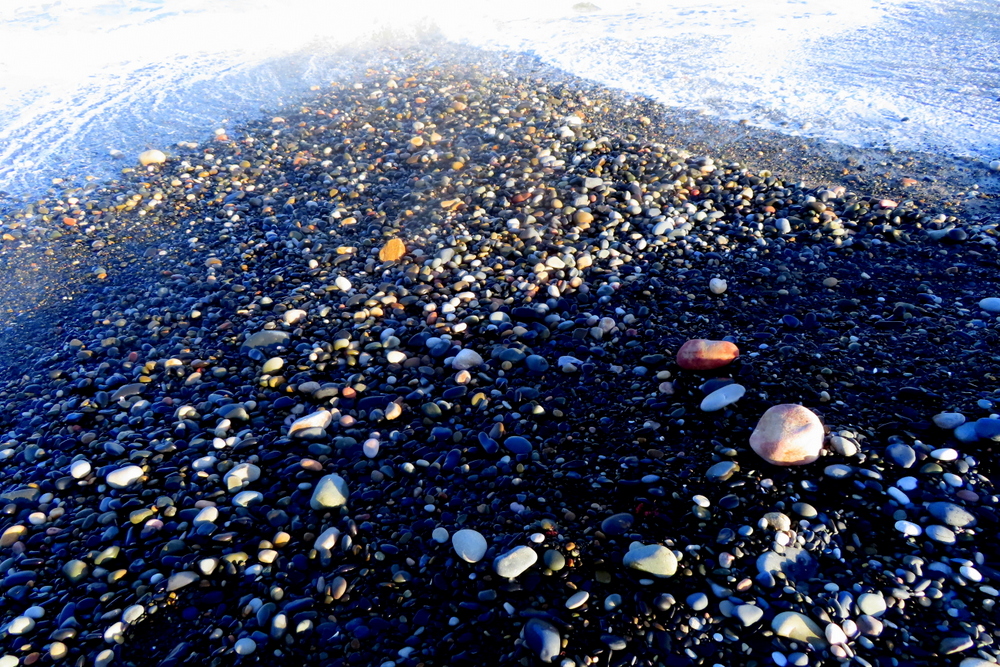
After a delicious breakfast, we decided to head down to the nearby Pebble Beach. Sunshine was bejewelling the dew that still lay on the fields as we squelched our way down through the grassy sponge to where the waves were collapsing and wheezing into the shingle on this secluded and deserted beach. Not wanting to get their stomachs wet by lying on the soaked grass, hordes of goats snoozed in the middle of the road.
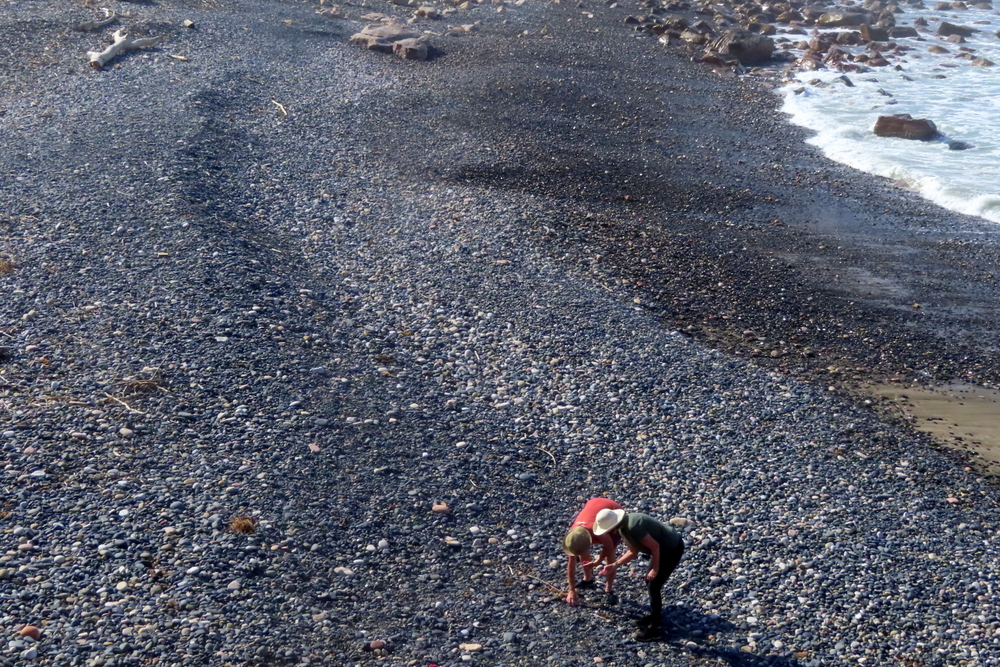
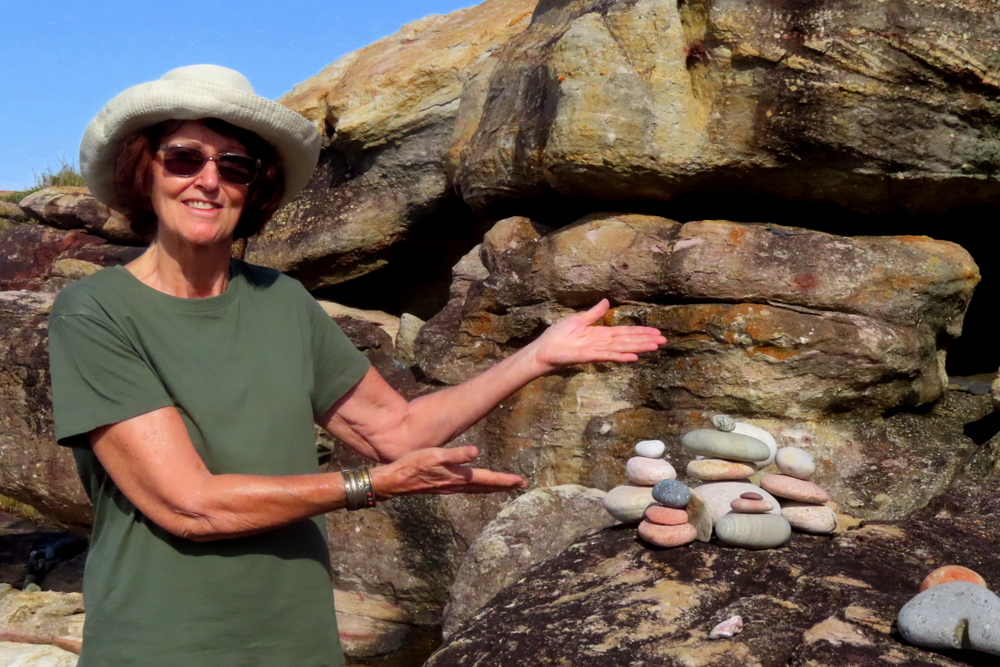
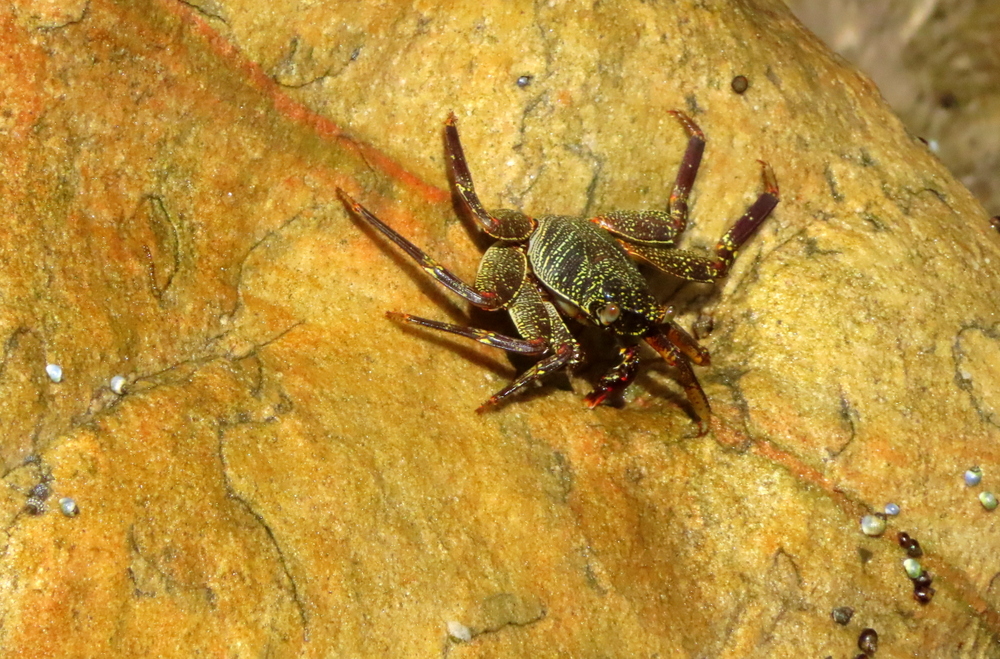
We spent a happy hour or two strolling up and down the beach, stooping over every now and again to pick up and inspect a stone whose surface had been polished smooth and shiny by the tumbling action of the waves. Afterwards, I stood on the outcrop of rocks, that protruded out at the one end of the beach, and watched the crabs playing Russian Roulette with the incoming tide as it surged up through the crevasses and exploded into the sky in a whale-like plume (late on, we saw several of those leviathans cavorting in the currents). The sea in front of me heaved with belches of brilliance and the waves crashed around.. Everything about the morning was magical: being surrounded by water, the pleasing tidiness of the hills behind us, the foraging cattle and goats, the small rural settlements scattered like wheat chaff along the horizon. A solitary Jackal Buzzard suddenly swooped over the hill and then hung in the air like some hovering messenger from the gods.
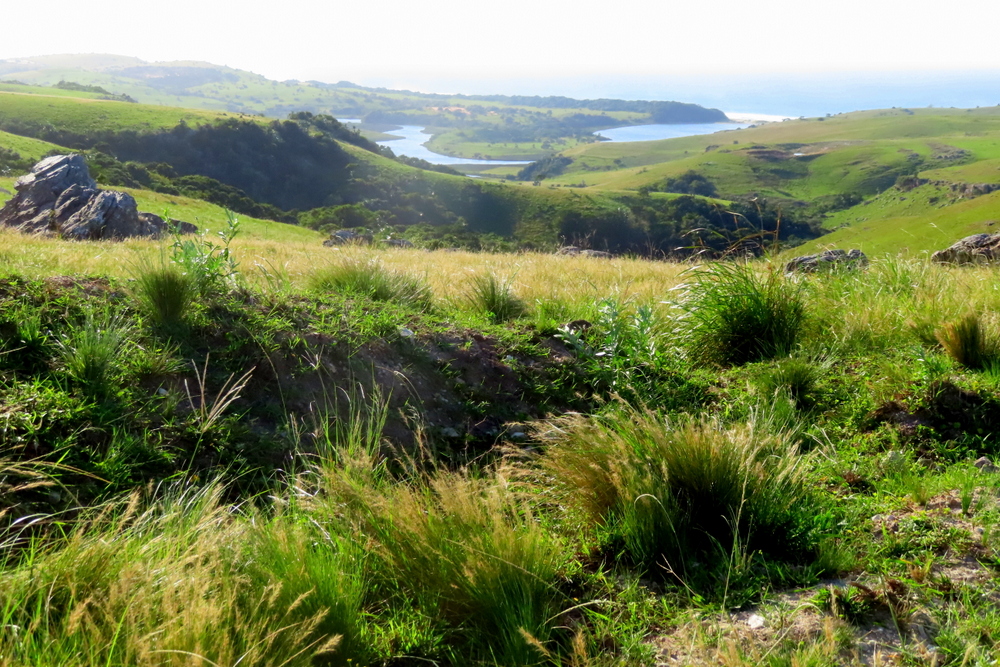
Later, a few of us went for another walk across the rolling countryside. The sun had dipped behind the distant hills but there was still plenty of light in the sky so instead of following the others back to the shack afterwards, I headed further up the road on my own. To my left a herd of cattle were standing atop a ridge, contentedly chewing the cud. I decided to go towards them. At the top, I stopped and surveyed the beautiful view. To my left, a winding river snaked its way through the hills before opening up into a reed-lined estuary over which an occasional heron drifted. In front lay the ocean, stretching out forever under an empty sky. To my right, I could make out the prominent bluff that marks the point where the Mtentu River enters the Indian Ocean. It all seemed ethereal, dream-like, a shifting evanescent panorama.
With the light rapidly fading, I turned and started back along the path. My reverie was interrupted when I became aware of a figure staggering towards me, arms waving frantically, trying to attract my attention. I instantly recognised him. He was one of the noisy revellers I had seen outside the shebeen earlier on, the one proudly sporting a brand new ANC Youth League T-shirt.
My habit of snapping away with a camera at anything that captures my fancy was about to land me in trouble…
Initially menacing the young man demanded to know who I was, why was I there and what was my reason for taking photographs? Was I a journalist, he asked suspiciously? “No,” I said, not strictly honestly (although, in fact, I’m a political cartoonist) -” I’m just an old man – a mkhulu – enjoying the view and taking in the sea air”. He seemed unconvinced by my explanation. Another barrage of questions and accusations followed which I had some difficulty following because of his confused diction and somewhat inebriated state. Then, his attitude abruptly changed. He gave me an ingratiating smile, bent over and scooped up a rusted old enamel dish lying abandoned in the grass. “” Here”, he exclaimed with a beam, “A gift for you. Something to remind you of the Transkei”. I thanked him profusely and – keen to avoid further inquisition – hastened back to the safety of our shack.
I felt saddened by the encounter. With national elections looming, part of my reason for coming to the Wild Coast had been to try and escape the bluster, sanctimony, slogans and ideological posturing. Now, I felt like I had been yanked out of my imagined pastoral idyll and thrust back into the harsh reality of modern-day South African politics.
The mood soon passed. Sitting outside under a star-smattered sky, the air wet from the sea mist and the faint taste of wood smoke drifting past, I witnessed one of those beautiful, long enchanting slides of a shooting star falling through the heavens. The good omens were piling up. Mary Ann’s birthday – which we were to celebrate with a sumptuous paella (Kelly’s cooking again) and bottles of champagne – had really received the blessing of the gods.
Another pleasurable surprise lay ahead. Peering through the encroaching darkness I next made out the outline of a cruise liner, steaming southwards like a massive, lit-up fairy castle. The contrast between it and our own simple rustic setting could hardly have been more striking. As I sat there, watching its progress, it suddenly dawned on me that this was the very ship transporting my geologist brother from Australia who I had arranged to meet in a few days, after he had docked in Cape Town. It was another sign from above..
Straining my eyes, I watched the ship until it was nothing more than a distant speck, Then it vanished and everything went dark again.
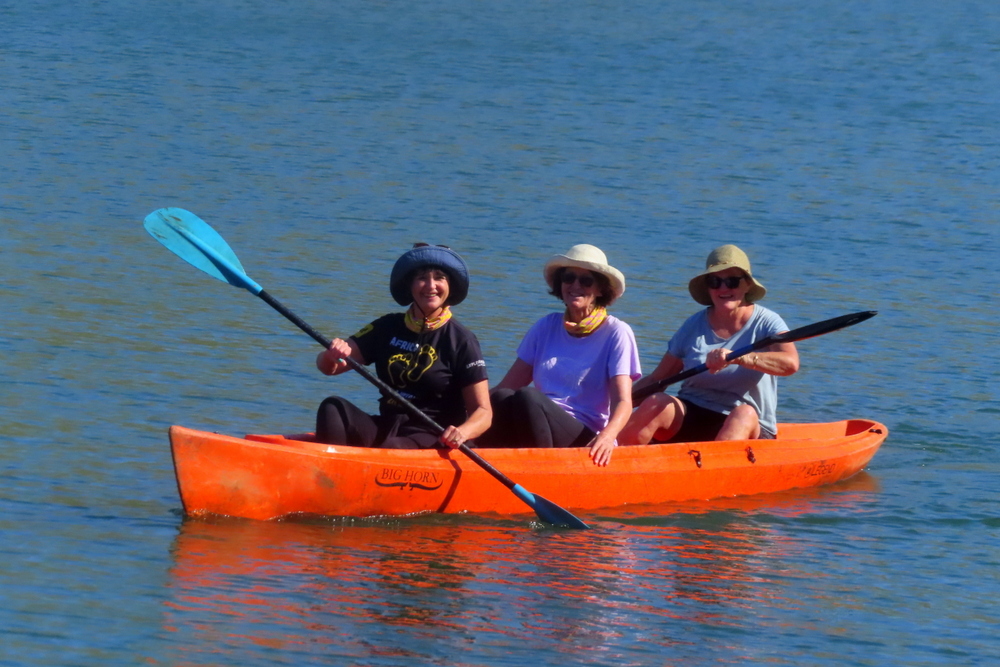
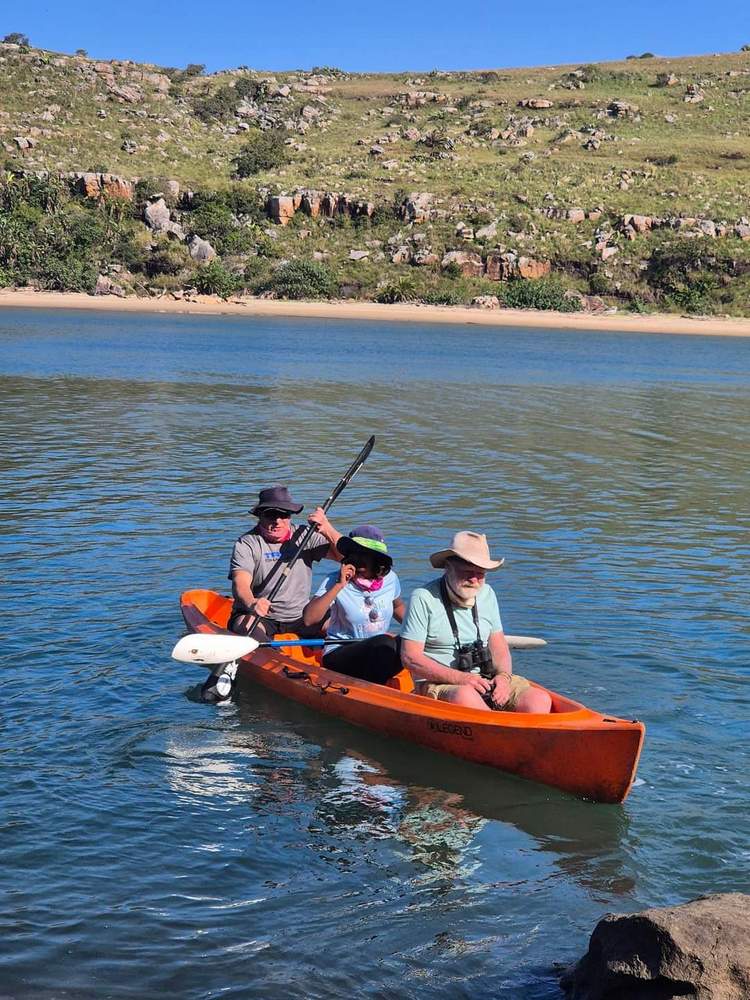
The next day, I sprang out of bed with a purpose. The Transkei interior gives rise to several major rivers and numerous lesser ones. The Mtentu, which passes through a steep cliff-lined gorge before discharging its contents into the Indian Ocean is one of the Wild Coast’s iconic rivers. Navigable for some distance, we hoped to canoe a small section of it.

As it rose above a rampart of cloud hovering above the Agulhas Current, the morning sun was whispering enthralling promises of things to come as we headed down the winding track that led towards the river. Reaching its shore we clambered into the bright orange hire canoe, that had been made available to us, and turned its nose upriver towards the interior. Then, we started paddling.
The Mtentu Gorge has an enchantment about it. Sitting in the brow of the canoe, I felt a bit like Marlowe in Conrad’s Heart of Darkness, on a journey into the unknown. As we paddled, the river seemed to close in on us, tall trees and tangled masses of vegetation crowded down the steep cliffs, in an impenetrable thicket, to the water’s edge. Patches of mangrove clung to the shores (I had hoped to catch a sighting of the elusive Mangrove Kingfisher but I was to be disappointed). In places, the choppy waters, snatching this way and that, had ripped caves of soil out of the bank, leaving hundreds of metres of exposed rock and overhang.
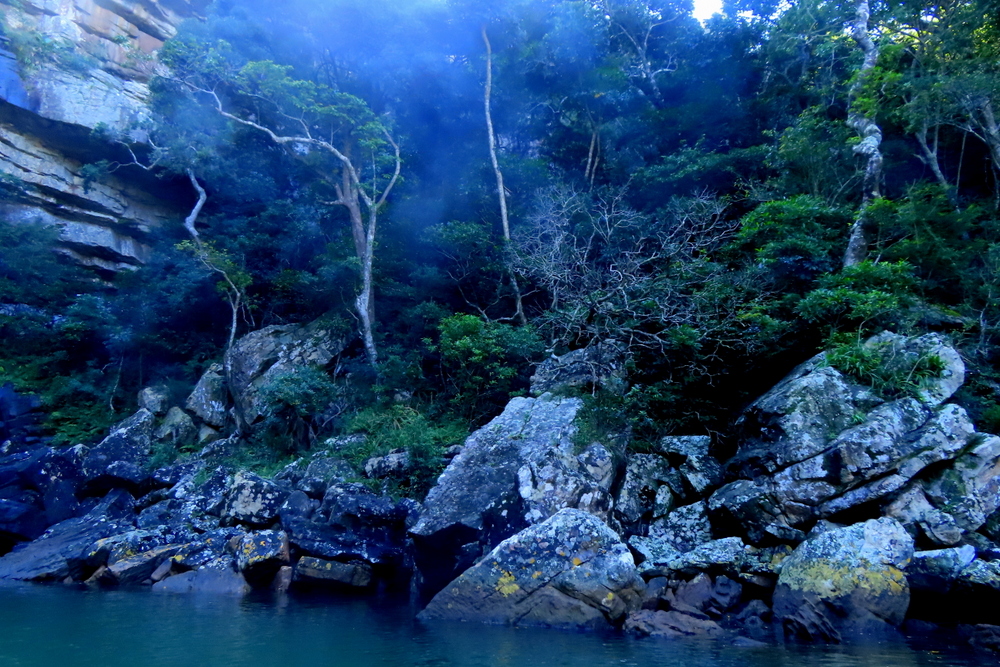
There was no sign of human habitation or any indication that anybody had penetrated the pristine jungle of trees along its shoreline in aeons. Apart from the odd bird and jumping fish, we appeared to be absolutely alone, face to face with the very elements of creation (although the last time we had been here, Tom Cruise had spent the day buzzing up and down the river in a yellow biplane filming a sequence for the latest Mission Impossible). Drifting through that quiet, deserted, mysterious landscape, with only the sound of the paddles sluicing through the water and the distant roar of the breakers crashing along the river mouth, everything seemed just right. I felt I had all my heart could desire in these troubled times – calm, peace, serenity and a timeless beauty.
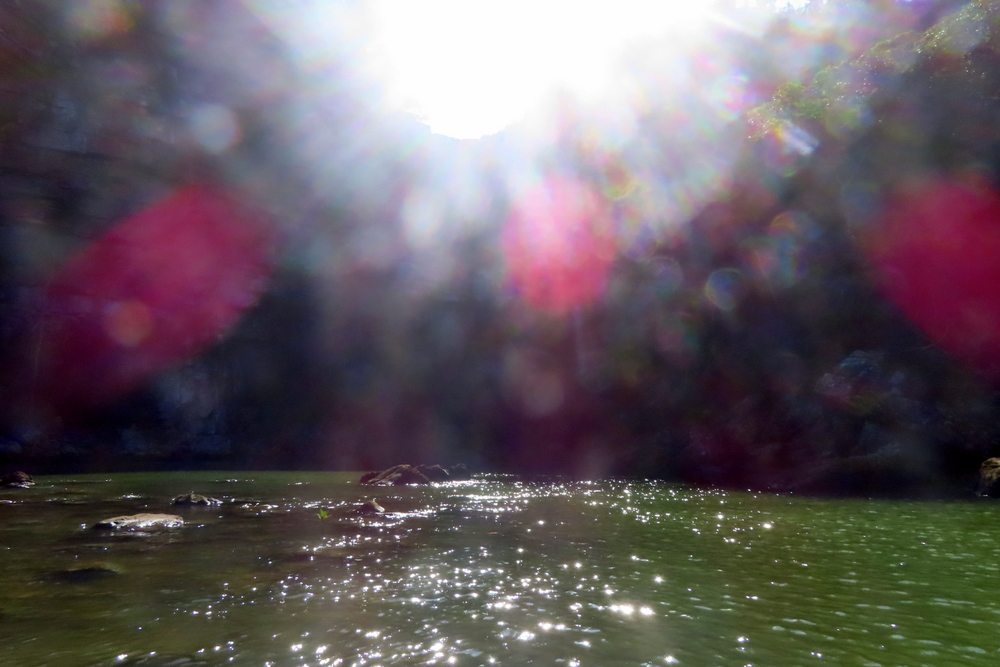
Rounding a corner, a waterfall on the right of the river, hove into view. Ian Tyrer, our (highly recommended) hike leader, who was paddling, arced the canoe close to the bank, before guiding it expertly through the rocks up to its base. Positioning ourselves so that we could best take in the spectacle, we sat quietly for a while in the shade cast along the edges of the river bed by the forest giants and high cliffs watching the cascade of water falling over the lip of rock high above us. As we sat, cloudy layers of falling moisture splattered softly on and around us.
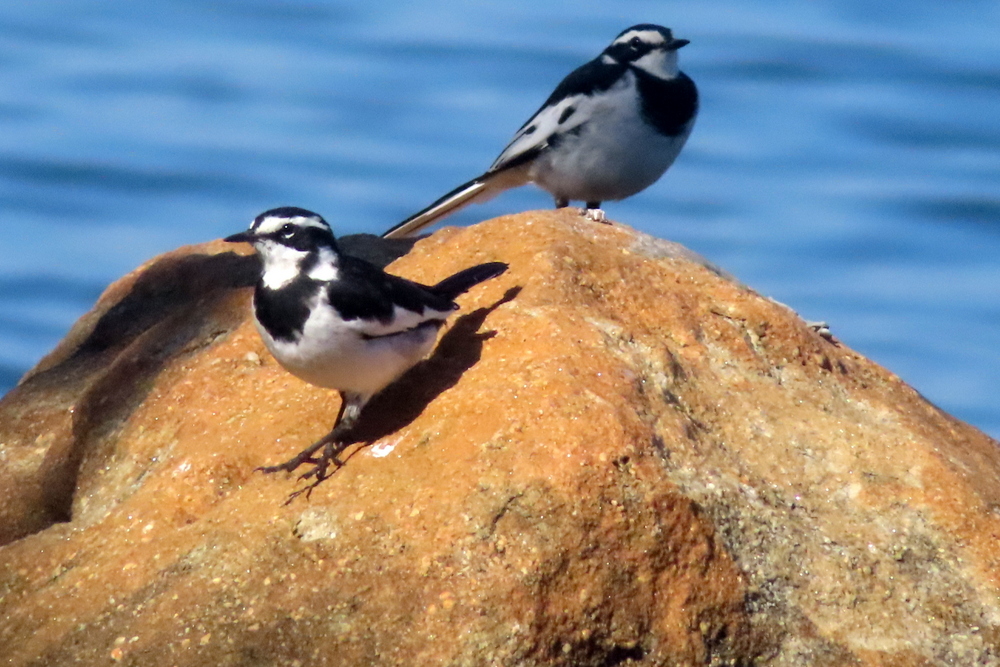
Having reached this dramatic landmark, we turned and headed back the way we had come ( I would loved to have explored further). By now we were approaching lunchtime and the weather had begun to change. Staccato gusts of wind jabbed the water, causing it to splash and thump against the side of the canoe. Ian paddled close to the banks where the water spirits were not so intent on upturning us, directing the canoe past a point where an enormous tree had been thrown into the shallows by some past flood, its twisted form providing a convenient observation point for kingfishers and cormorants. Further on, a pair of tail-bobbing Pied Wagtails struck poses on a rock and watched, with bemusement, our progress, as we battled against the tide.
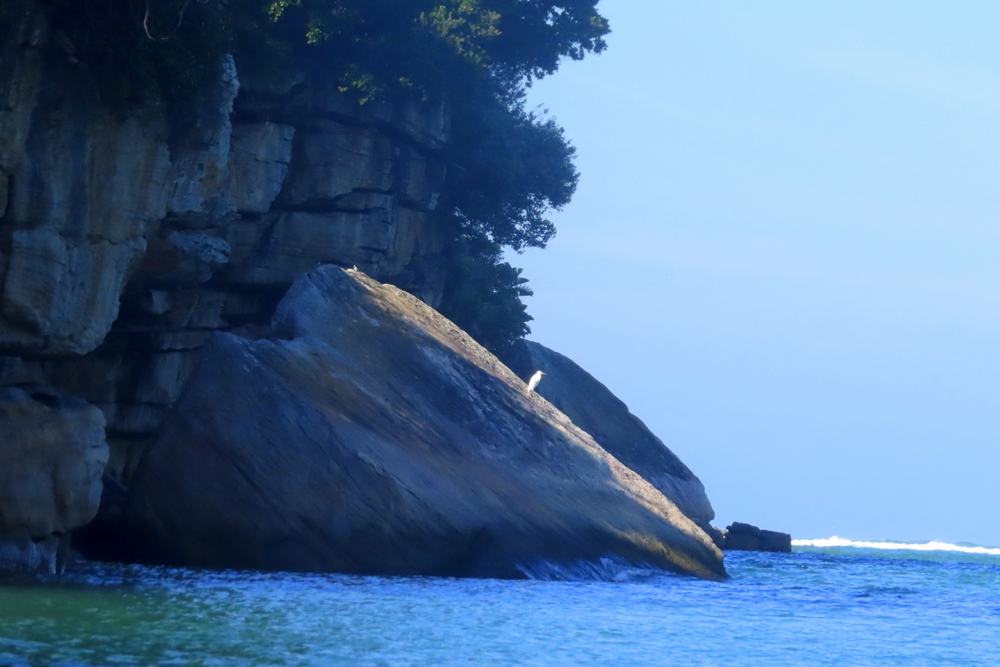
Instead of pulling in at our launching spot, Ian decided to head on down the river towards where the waves were breaking. Acting like some self-anointed guardian to this wild sanctuary, a solitary egret stood erect on a large sloping rock that demarcated the entrance to the river. By this stage, the swell was getting stronger so Ian called a halt. Turning the canoe around, we headed home.
And so the last day of our trip drew to a close.
That evening, I sat down and, over another beer, totted up the total distance I had walked during the course of the three days. It amounted to over thirty kilometres. Although it had not been my only motive for coming on this pilgrimage, it was an achievement of sorts, especially considering I had not done the main beach walk of about 25 kilometres.
Driving back to my home at Curry’s Post the next day, I felt I had notched up another successful jaunt to the Wild Coast. Not only had it met my inner needs but I had proved there was life in the old dog – that being me – yet…
GALLERY:
More Wild Coast Scenes:




Wild Coast Scenes with Animals:




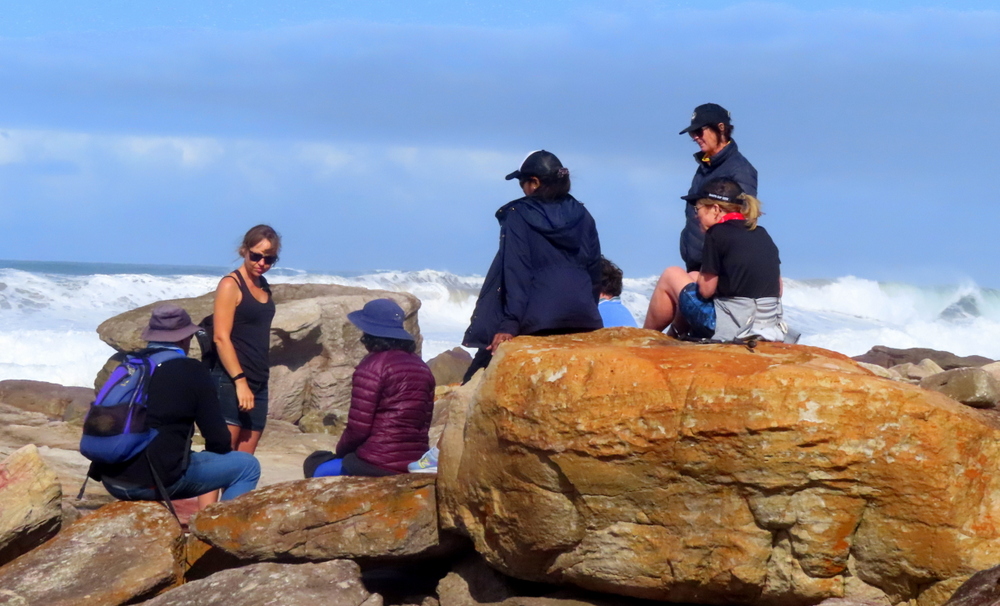
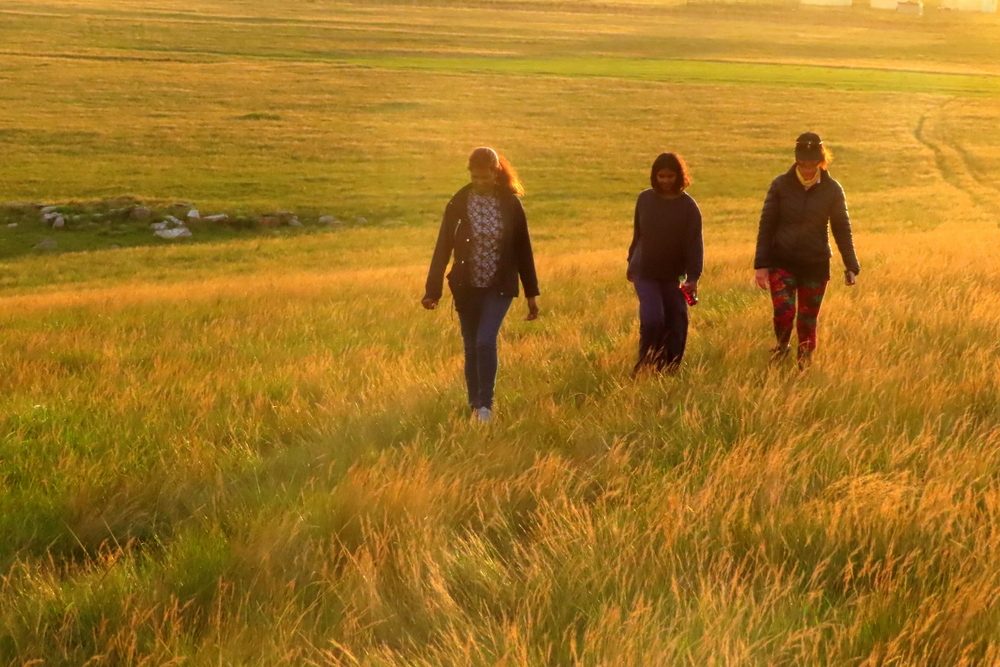
Wild Coast Hikers:





 Stidy's Eye