Walking Back to Happiness…

: If you are in a bad mood go for a walk, if you are still in a bad mood, go for another walk.”-Hippocrates
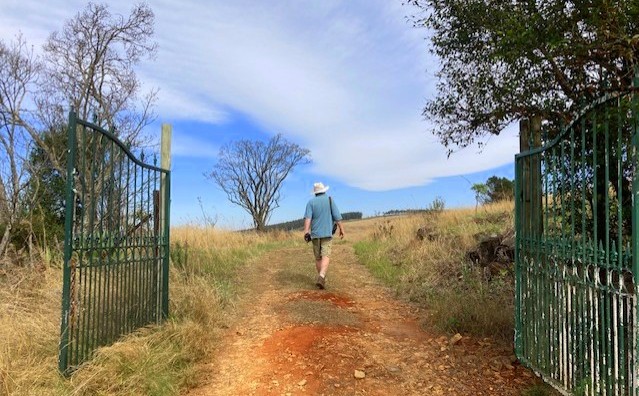
Pic courtesy of Sally Scott.

I can feel the sun on my back, already warm as toast, as I set out through the farm gate following the road that leads down to the protea field and then past the tall pines where a clamorous row of black crows are having a huge argument over which direction to fly. I know in a general way where I am headed and what I will most likely encounter along the way although each day always brings its subtle differences. I don’t, normally, wonder too deeply about my motivations for doing what I am doing. Going for a walk is just something I do and enjoy. I find it healing. Outdoor therapy. It helps me to think. It is my form of meditation. If I am feeling down in the dumps it gets me – mostly – back on the right track.

There are no limits to where I walk. I am quite happy to keep exploring the same patch of ground because over time you develop a sense of intimacy with it that comes from an accumulation of particular observations. Likewise, there is a special fascination in testing one’s expectations in less familiar backgrounds. The important point, I think, is to be able to relish both the ordinary and the extraordinary.

The habit of walking manifested itself at a very early age. When I was about three years old my father, an airline pilot with a yen for country life, decided to relocate us from our house in the then Salisbury (now Harare) to a smallholding in Umwindsidale, about thirty kilometres outside town. He chose to call our new home “Dovery” after the crooning Cape Turtle Doves that were such a feature of the place. For me, their call remains one of Africa’s most beautiful, evocative and comforting sounds.

My main memory of the property is the view which was spectacular. From our front verandah, we looked over an open stretch of land, extensively cultivated, along whose edges the Umwindsi (now Mvinzi) River flowed, its path marked by an outline of dark green. Beyond this fertile plain stretched a further succession of hills and valleys, blue and hazy, each one becoming successively paler, in turn, as they rose to meet the sky. From an early age, I liked to create worlds of my own, in which I could slip away unnoticed and undisturbed and the countryside that surrounded our home provided plenty of places where I could do just that.

Umwindsi (Mvinzi) river with my brothers and sister. I am on the left.

The Umwindsi was a lovely little rivulet that tumbled and crawled and blundered its way through a network of rocks, roots and tall shady trees. For a young child, it was a magical place and I spent a lot of time adventuring up and down it, playing in the pools and exploring its secret places to see what lay hidden there.

It was also the ideal preparation ground for our next grand adventure – a move to a remote farm at the northern extreme of the Nyanga mountain range.

The farm occupied a broad stretch of land, mostly valley but bordered on two sides by mountains. Jutting out from the main range were several castellated buttresses which stood like imperious guardians, mute witnesses to the goings on below. Along the floor of the valley stretched miles of grassland with woody patches, winding rivers which fed into one another and soft hills inset with elephant-coloured boulders, many covered with old stone walls, left behind by some forgotten people. Over it hung the intense blue sky of Africa.
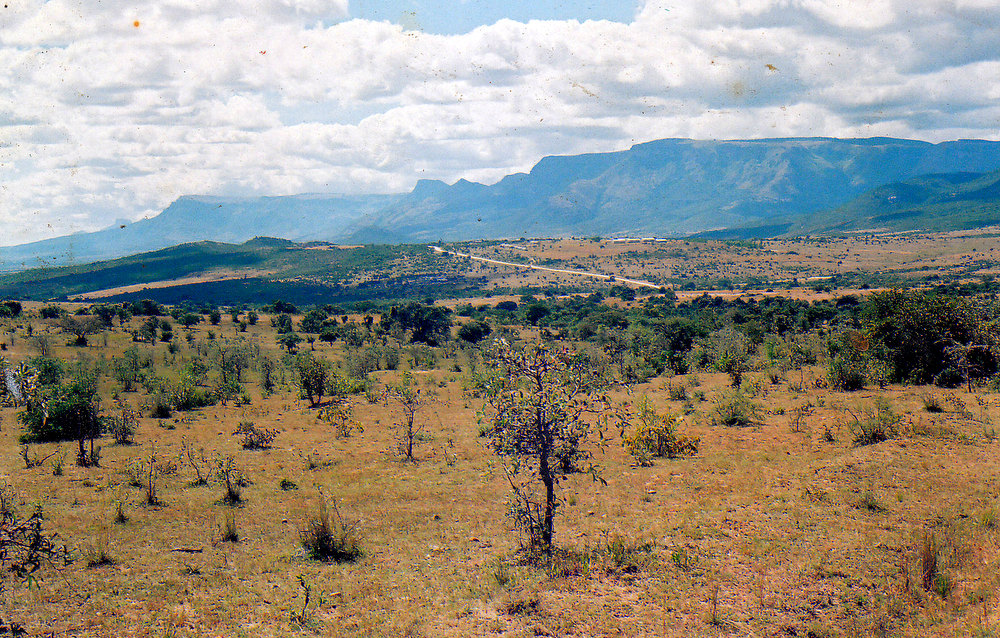
The Old Dutch Settlement Road, Nyanga. Our farm was at the end of the range.

The land on our farm hadn’t been worked for many years and felt wild and untamed. At the night the wind would howl down from the mountains and the very air seemed to seethe with phantoms, both good and bad. They whispered to me as I lay in my bed with only a flickering candle, on the table next to me, to keep the shadows at bay. In the moonlight, the whole landscape beyond my window seemed to possess a strange alchemy all of its own, a spirit ancient and impassive permeating the land.
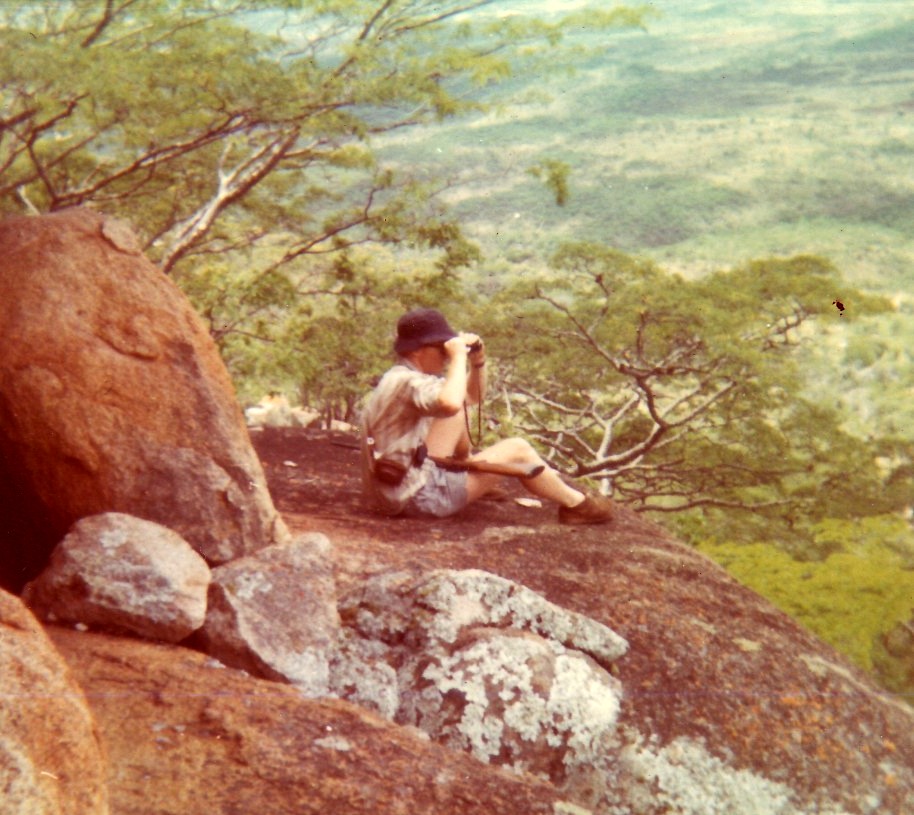
There was much to discover and endless opportunities for exploration. Most mornings when the sky was clean and ready for whatever lay ahead I would set out into the wilderness to see what I could find. I learnt to watch, wonder and recognise all the landmarks: the curves in the road, the shape of the hills, the twists and turns of the mountain streams, the outlines of the fields, the size and weird contortions of the baobab trees. No horizon seemed too far away. The more I saw, the more the place insinuated its way into my soul. It deepened my love for Africa. Sometimes I would go with my elder brother Pete – an avid birder even back then – mostly I would go on my own with just the farm dogs for company. My memory of these walks and the years on the farm have never left me.

It wasn’t just at home that I walked. Bastions of robust sportsmanship, all three of the boarding schools I attended -REPS in the Matopos, Plumtree on the Botswana border and UBHS in the Eastern Highlands – encouraged healthy outdoor activities, seeing it as an essential element in character-building. Most weekends would find me exploring the surrounding countryside.

On the summit of Cecil Kop, Umtali (now Mutare). I am in the middle. My brother Pete is on the left and my friend Stu Taylor is on the right.

Eventually, the idyll came to an end. My life took a turn for the worse. Bad replaced good. War broke out. I got called up.

As an ordinary foot soldier in the army, I got to do a great deal of walking although most of it was not voluntary or even pleasant. Having bullets and mortar bombs whizz past me didn’t add to the enjoyment.

Getting shot at or mortared was not the only thing which occupied my mind patrolling in the stupefying heat of the Zambezi valley. On foot in Africa, one will sooner or later have a hair-raising experience with a wild animal. Of them all, I think it was the lone Black Rhino I was most scared of. To have one suddenly come crashing through the bushes is not an experience I want to repeat too often although I had my fair share of scrapes with this cantankerous character.

On patrol in the Zambezi Valley

Still, the army toughened me up, got me superbly fit and introduced me to some wonderful new scenery so I mustn’t grumble.

The Rhodesian Bush War finally dragged on to its inevitable conclusion. I got discharged. Like all wars, the conflict marked our lives. It left a lasting legacy. In my case, I don’t think I emerged from it suffering from Post Combat Stress Syndrome or anything as dramatic or personality-changing as that. Still, it did leave me with a vague sense of melancholy, restlessness and an inability to settle down. Unsure what to do, the horizons seemed to close in around me. I felt trapped and constricted.

Bored stiff with my office job in the Mining Commissioner’s office in Gweru, I resigned and moved onto my parent’s new farm at Battlefields, near the Midlands town of Kadoma. Needing time to think, I walked and walked. By the end of it, there was hardly an inch of the farm I didn’t know. Walking had, once again, become my solace, my cure. It also made me realise it was time to move on. To go somewhere new. To start my life again in a place where I wasn’t surrounded by the constant reminders of the futility of what I had been through.

And so I packed my bags and moved to South Africa. With me went my nostalgia for landscape which I quickly transferred to my new surroundings. I set about exploring the country. I went on birding expeditions to Marakele, Mapungubwe, Kruger and the Richtersveld. I trundled through the Little Karoo and Baviaanskloof. I walked on the Wild Coast to the sound of crashing breakers. With my sister, the artist Sally Scott, and her family I made countless trips to the Drakensberg. We slept in caves, hiked along numerous mountain trails and plunged into icy rivers.
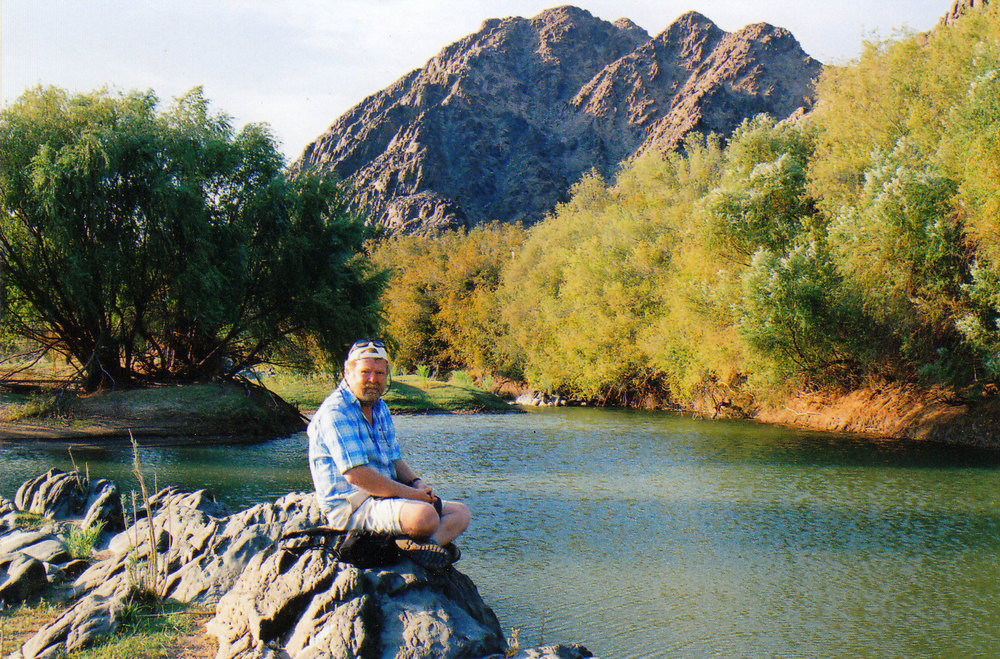
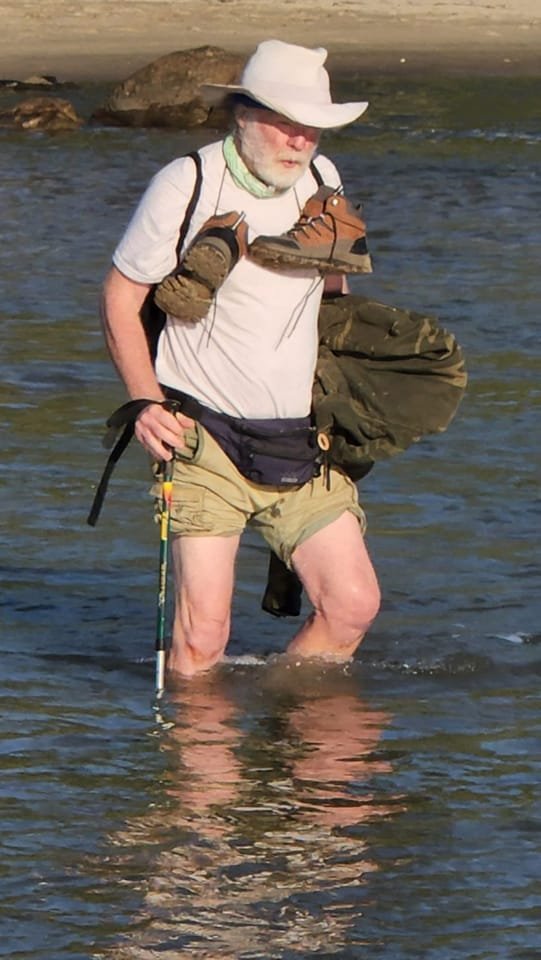
The Drakensberg had a different feel from the mountains I had grown up amongst in Nyanga. Higher, more precipitous, austere, jagged, cold and with fewer trees they were inhabited by a different set of gods and mountain deities. I loved it all the same. Climbing them, I always felt I had risen above the material plane and entered another, more enchanted, realm. The scenery and views left me breathless.

Mont-aux-Sources, Drakensberg, with my nephew Craig Scott.

When I wasn’t out walking, I worked as a political cartoonist in Pietermaritzburg. As I got older, I grew increasingly disenchanted with city living. Some friends suggested I move up to their farm, high on a hill overlooking the Karkloof Valley. Viewed through the soft, filtered light of the swirling mist, there was something dream-like about its beauty; my heart was immediately smitten with delight. I accepted.
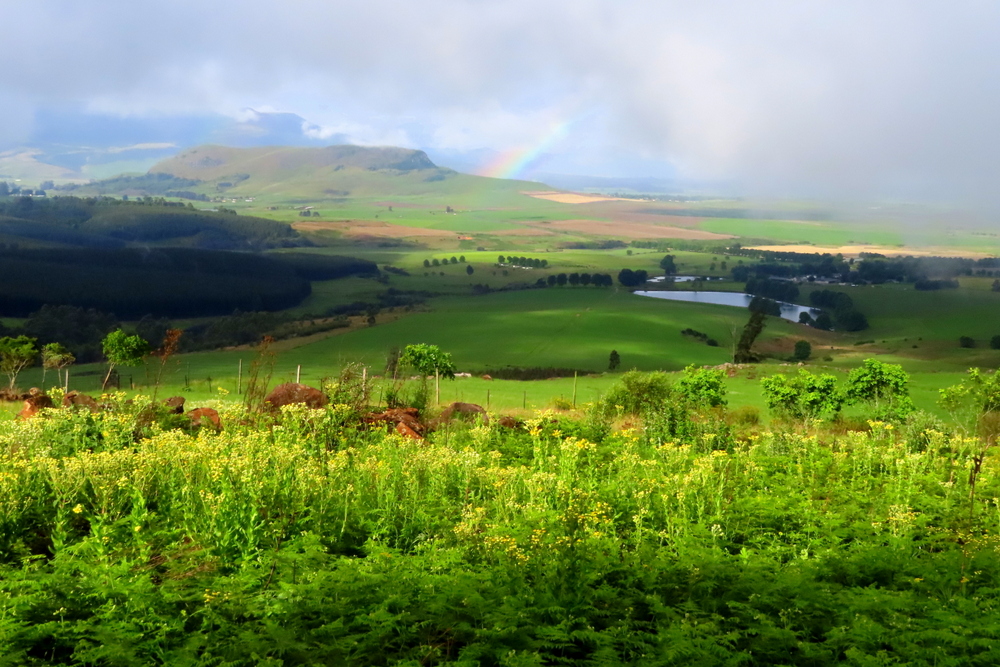
The Karkloof Valley. The view from our farm.

Moving into the country changed the shape of my life. It helped renew my sense of deep connection with the natural world. I spent many happy hours tramping over a familiar circuit of paths, seldom meeting a single person en route. Revelling in the sense of discovery and freedom that comes with this, I developed an increasingly close and intimate relationship with the local flora and fauna. However, nature still managed to spring surprises on me.
Lockdown came. I had always thought that the advances in modern medicine would provide a solution for everything but Covid, at least initially, proved me wrong. The virus transported us all back to the fear-ridden, helpless days of the Great Plague. It reminded us of just how vulnerable we still are and demonstrated that we are still at the mercy of the whims of nature.

Over the next two years my life – like many others – took on a slightly surreal aspect. As part of the locked-down community, I found the days blurring together. Whether it was Monday or Friday came to hold no interest for me. Alone in the house, isolated from the world, I lived in silence and solitude, with only the sound of birdsong, the whistle of a reedbuck, the howl of a jackal and the croaking frogs to sustain me. When I went to town, which was not often, I talked through a mask to other people wearing masks. It felt a little weird and dehumanising at first but I got used to it.

The national confinement stretched on through the months that followed with intermittent breaks. In the end, I learnt to get used to a world with little direct communication, so much so that I almost began to prefer it that way. Again, it was my walks which brought me the most relief, gave meaning to my life, helped me feel less trapped and provided me with a sense of quietude which conquered despair. I was lucky living in the country because the people living in town weren’t permitted to go beyond their front gates whereas I had our entire farm to roam over.
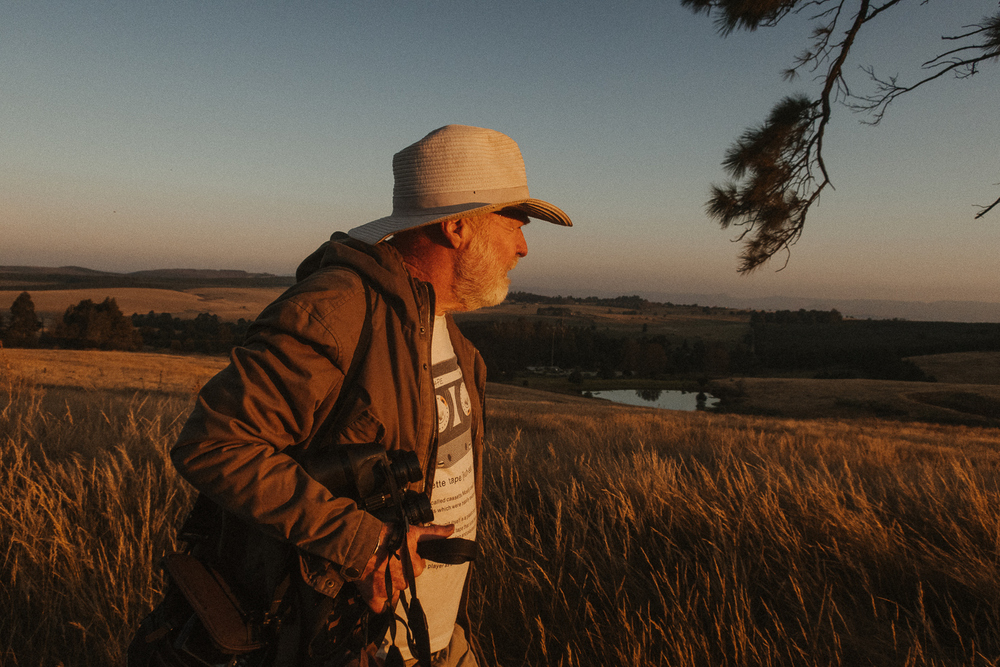
Heading outPic courtesy of Craig Scott.

If you had to ask me then why I walk so much, I would have to concede that – apart from the obvious health benefits – it stems back to a longing to be the boy I once was, innocent again and seeing the world for the first time. My walks remind me of a more carefree period of my life. More than that, though, they have become part of a growing awareness of myself, an increasing reflectiveness and a developing sense of my place in the world and the environment. It nourishes my sense of self-sufficiency. It makes it easier to exist in these tumultuous times.

Time has, of course, dissipated some of my innate restlessness but while I still have the energy in my legs and air in my lungs I intend to keep walking…

A Tribute to my Mother: Monica Mary Stidolph

If she had lived my mother would have turned a hundred this year. To mark this milestone, I decided to write this tribute to her

My mother was one of life’s naturally good people; someone who managed to combine intelligence and kindness with an innate graciousness. Although she lived by clear standards of morality, she eschewed the judgemental; throughout her long and not always easy life, she remained a devoted mother and constant wife.

Born at Cassington in Oxfordshire on the 15th April, 1920, her father, Sydney Ralph Bridgen (who had married Helen Perkins), a veteran of the WW1 trenches, taught at the local school.

Helen & Sydney Bridgen.

He would later assume the headship at King Sorbonne in Hampshire and then, in 1928, Herstmonceux. It was in this idyllic, semi-rural setting that my mother spent most of her formative years.

She had a happy, if sheltered, childhood. Her family – which included her two sisters (Barbara and Marguerite) and brother (Harry) – was close and supportive. From her father she inherited a love of the English country side and also his creative genes.

She was especially interested in English, History and Art and showed real talent in these subjects. Her father encouraged her literary efforts. One of her poems, To a Seagull, appeared in Cornhill Magazine in July, 1936, its then editor, Lord Gorell, commenting that “for one of your age your lines show very considerable promise”. Another poem, Sussex Downs, which she wrote and illustrated when she was only thirteen was published in the Daily Mail.

Monica Bridgen, 1934.

She excelled in art. Her drawings were really wonderful, so delicate and full of life and yet also extraordinarily confident for someone who had only just turned seventeen and often appeared unsure of herself. She won several Royal Drawing Awards.

My mother was particularly close to her brother Harry who, at the outbreak of the Second World War, would join the RAF. It was Harry who arrived home on pass, one weekend, with a group of his air-force colleagues.

Amongst them was a young RAF officer from Southern Rhodesia, Reginald Neville Stidolph. He was handsome and full of charm and in outlook and background very different from the few young men the shy, young, English rose had met. The attraction seems to have been instant and mutual. Putting on a posh accent my father’s first words were “Introduce me….please!”

They were married on the 10th July, 1940, in Herstmonceux. Progress in the romance was curtailed when, on the 22nd August, my father flew back to Alexandria in Egypt where he was stationed. He would not return until March, 1943, two and a half years later.

Such was the schizoid life of a bomber pilot trying to conduct a relationship during a war.

Nine months after they got married my eldest brother, Patrick Alan, was born. In my mother’s version of the story he arrived by candle-light at Monk’s Rest, the long time Bridgen home in Herstmonceux, as German planes dropped incendiary bombs all around the village.

Monica Stidolph with Patrick. 1941.

A second son, Andrew Paul Rosslyn, would also be born during the course of the war.

At the end of the war, my father was keen to get back to Africa and so, for my mother, there had to be a parting, sad like all farewells. Leaving the only world she had known she climbed on board the Carnavon Castle with her two young sons and set sail for Cape Town – and a new life.

My mother and unknown child, leaving England.

I have often wondered what she must have felt as she stood on the deck, watching the coast of England sinking in to the ship’s wake. No doubt there must have been a sense of expectation and adventure, mingled with the inevitable regret. I imagine she must have been nervous about the new challenges which faced her, whether she was equal to them only time would tell.

How my mother, Monica Stidolph, imagined Africa would be

My mother’s first home was in the suburb of Parktown, in Salisbury, near to the airport where my father was now working as a pilot for Central African Airways. It was here my brother Peter and I were born although I have little recollection of the place.

Monica Stidolph with her four boys – Paul, Patrick, Anthony and Peter. Parktown.

Having settled in to her new home my mother set about doing what was expected of a woman in her position back then. Forsaking her artistic interests she devoted her life to motherhood and keeping a tidy house.

For his part, my father – who had always hankered after having a place in the country – decided to scout out what smallholdings were available within a reasonable distance of Salisbury. In the end he brought one, about thirty acres, in Umwindsidale, just off the Enterprise road.

The only building on the property was a long rectangular room made of mud and grass and local poles which had a corrugated-iron roof and a floor of beaten earth. It was here we all lived, cheek by jowl, while my father set about building a new home which he loosely modelled on the traditional Cape Dutch style of house.

My main memory of the property is the view which was spectacular. Immediately below our front verandah was a long, wide valley, extensively cultivated, along whose edges the Umwindsi River flowed, its path marked by an outline of dark green. Beyond this fertile plain stretched a further succession of hills and valleys, blue and hazy, each one becoming successively paler, in turn, as they rose to meet the sky.

When I was nine or thereabouts my father decided the time had finally come to go the whole hog and buy a proper farm. A natural optimist, once he had chosen a course of action he was not one to be easily diverted from it. More cautious by nature, my mother, I think, had her reservations but eventually succumbed to the idea and allowed herself to be swept along by my father’s enthusiasm.

I was away at boarding school at REPS, in the Matopos hills, when my father set out in search of his dream property. As it turned out he settled for the first one he laid his eyes on. Situated at the end of the Nyanga range the farm was, indeed, very beautiful although whether it would prove suitable for agriculture was a question which still had to be answered.

Consisting of five separate farms – Wheatlands, Barrydale, Groenfontein, Ellenvale and Witte Kopjes – it was in the shape of an inverted ‘L’ with its two northern-most beacons being situated on the top of Mount Nyangui (my father decided to apply this name to the whole farm) and Muchena respectively.

Nyangui (“The Place of Shouting”) mountain with baobab and old lands. Picture courtesy of Patrick Stidolph.

The rest of the farm was low-lying with a long strip of red land, held between two rivers: the Mwenje and the Pendeke. To the west and north lay the Zimbiti Tribal Trust Land, on the eastern side it was flanked by the Nyangui Forest Reserve.

It was also the last white, commercial farm, in the district, and some distance from the nearest rail head. Beyond it lay even more broken country with yet more hills covered in ancient terraces and fortifications, stretching down to the Ruenya River. Very few whites ever visited this part of the world although there were two Catholic missions – Elim and Avila.

On the other side of the Ruenya was Makaha – literally meaning “Wild Country”. It certainly was. A gold belt in this area had drawn some early prospectors, including the German, Carl Peters, whose name you forever find cropping up all over Africa. He claimed them for Germany as the Kaiser Wilhelm Goldfields in 1892. The name was used for the whole area until the war with Germany broke out in 1915, when it was hastily dropped.

This, then, was our new home. If Southern Rhodesia was little more than a distant outpost of the British Empire, we occupied a very remote corner of that outpost.

For my mother, surveying the farm for the first time, it must have seemed a long way from the small English village she had left behind; the enormous view down the sun-drenched valley with the mountains running alongside, the tall, billowing clouds, the emptiness, the sense of space.

There was much to do. The farm hadn’t been worked for years so there were lands to stump and clear, furrows to dig, paddocks to fence off. While the land was being cleared, a house of sorts was built, using mud and local rock, next to the small stream which had a waterfall with a pool below. Upstream from that was a wide reed bed in which a family of wild pig and a large python lived.

When my father bought the farm he had great plans for it. He wanted to make good. He visualised a future in which the farm would prosper to the point where it could one day be divided up and each portion left to one of his sons to run in turn.

The reality turned out somewhat different for reasons which were not altogether his fault.

Although situated in a beautiful part of Rhodesia, it was not good agricultural country. The soils were mostly poor, the rainfall patchy and unreliable. We were also very far from the markets. My father had little capital to start with and soon found himself indebted to the Land bank.

Inspecting the cattle. Anthony, Monica, Reg and Peter Stidolph.

The time would come when he would be forced to take stock. We were far from prosperous. Going through the bank statements and farm books it became obvious to my father that there was no way we could get out of the slough we were in, if we continued as we were.

He needed to find more money. The most obvious way to do this was for him to return to his old job as a pilot.

And so the next eight-years or so my father all but disappeared out of lives, working, at first, in the Persian Gulf and then, later, the Sudan and Sierra Leone.

In his absence my mother was left to cope with the running the farm, as well as raising six (later seven) children, as best she could. Even though it must have seemed miles away from the world she imagined when she first came out to Africa, it was a struggle she faced courageously.

With her children away at boarding school, it was an isolated life. Her only neighbours, Old Man Mienie and his wife, lived about 10km away. Visitors were few and far between – the occasional animal health inspector come to check the cattle, the odd policeman on patrol. Sometimes our relations, the MacKenzie’s, would motor up from Salisbury for a visit.

There was no electricity so my mother had to rely on candles and paraffin lamps (and later gas) for lighting. Our water was pumped up to a tank on the hill behind our house by a hydraulic ram that fed off a furrow. In the early days she had to boil it in a drum on an outside fire and it was here she did her cooking too.

When we started out we could not afford a tractor so had to rely on oxen to pull the single furrow plough. It was a slow, laborious process and because we could not afford too much labour either, us children were also expected to muck in.

The weather was changeable. In the dry season bush fires were a constant threat. Hot, dry winds seemed to suck all the goodness out of everything. Drought could ruin the crops and enfeeble the cattle to the point where they gave up hope and died.

You never could predict when the rains would arrive and when they did you could never tell what they would do. Sometimes the storms moved in narrow swaths, drenching one part of the farm but completely missing the next.

It was very easy to think that there was indeed, some capricious mind behind it all, a mind that took a certain impish delight in seeing your moods oscillate between hope and despair..

Despite having no background in agriculture my mother battled on as best she could. The farm consumed her life. Just when it seemed it was finally about to start paying for itself a new, more ominous, threat loomed on the horizon: the outbreak of the Rhodesian Bush War in the early1970s.

When my mother was eventually forced to leave Nyangui because of the deteriorating security situation she floundered and then recovered but, deep down, I sensed her life had been irreparably altered. It was like a light had switched off inside her and she was never quite able to regain her old enthusiasm.

Thereafter she accepted whatever hand fate chose to deal her with an almost Buddha-like stoicism. Nevertheless, I think she was happy enough in Francistown where she moved to join my father who was flying for WENELA and then later Bowmont, the small farm they purchased near Kadoma.

Some years after my my father died she married our next door neighbour, Jim Hastings, a small-worker who set up a three-stamp mill on the property to crush for gold. When Zimbabwe started to go through a rather tumultous patch in its history, it was decided they should both move on to my brother Peter’s tobacco farm, Sangalolo, in Karoi.

When his farm was seized during Robert Mugabe’s violent and chaotic land grab we arranged for her to come down South Africa to live with my sister, Penny, and her husband , Ric, in Grahamstown. All three of my sisters lived in the area and I was able to come down on regular visits from Pietermaritzburg, so she was loved and well cared for.

Her final years were peaceful and happy. After the hard life and sacrifices she had made it was the least she deserved.

My mother in old age with Henry the cat.

When I think of my mother the qualities which stand out for me are her honesty, her integrity, her decency and her quiet strength. She played the hand she had been given, she was never one to complain about her lot. Despite having led a life mostly cut-off from normal society, she showed no sign of being lonely; on the contrary she seemed to derive a certain comfort from the solitude.

Like many married women of that generation, her life involved compromises which left her talents unfulfilled. I have always thought it sad that she gave up on her art at such an early age. It is one of the reasons I felt compelled to persist with my own efforts. I wanted to live the life she could have had.

Although she remained reticent on the subject, I don’t think she had many regrets about this sacrifice. Her children came first. She was certainly proud of us. “I didn’t produce a single dud,” she liked to say towards the end of her life.

That we turned out the way we did was largely due to her.

My hope is that as she lay dying, with her three loving daughters by her side, she got an inkling of how much we appreciated what she had sacrificed for us and how much she would be missed…

MORE EXAMPLES OF MONICA BRIDGEN’S ARTWORK:

The following drawings were mostly done when my mother was only seventeen..

POEMS OF MONICA BRIDGEN:

ACKNOWLEDGEMENTS:

Many thanks to my brother, Patrick, for researching our family tree and to my mother, Monica, whose own memoirs I drew on for this tribute.

The Circle of Life

Away to the north of Nyanga, in Zimbabwe, at the base of the range of mountains that forms its eastern wall, there was, once, an isolated group of farms. In a gesture which seemed quite out of character for a man who had never shown much sympathy for the Boer cause – and had, indeed, gone out of his way to thwart their political ambitions – they had been granted to a small party of Afrikaner farmers by the arch-imperialist, Cecil John Rhodes, himself.

In recognition of this fact, the dirt road that ran through the middle of them was known, in years gone by, as “The Old Dutch Settlement Road”.

The Old Dutch Settlement Road, looking from our farm towards Nyanga.

Although seldom visited by all the tourists who like to holiday in the more temperate Nyanga uplands (many staying at Rhodes’ old estate), it is an area I used to know well because it was here we had once farmed too.

When we arrived in the district, back in the 1950s, there was only one surviving remnant of this original group – Gert “Old Man” Mienie who farmed at Cream of Tartar Kops. A jovial giant of a man with twinkling eyes and invariably dressed in stained khaki, he had worked as a transport rider before ending up in Nyanga North where he grew mealies and farmed cattle.

Long before it became fashionable to do so Gert Mienie lived totally off the grid. He had a house generator that operated off a Pelton wheel with buckets on a water furrow. His wife made soap and candles from the fat stored in the tails of their Blackhead Persian sheep. They never bought medicines either, preferring to manufacture their own concoctions which they used to treat both man and beast.

He also had his own brandy still while his old ox-wagon remained parked around the back.

Mr and Mrs Gert Mienie with my parents, Reg and Monica Stidolph. Cream of Tartar Kops.

Although the rest of these pioneering farmers had either long since left or died, their presence still lingered on in the names of many of the properties – Witte Kopjes, Groenfontein, Summershoek, Doornhoek, Flaknek etc. Mount Pleasant, the farm to our immediate south, on which there stood the remains of some crumbling tobacco barns, was still referred to, in our day, as Bekker’s Place.

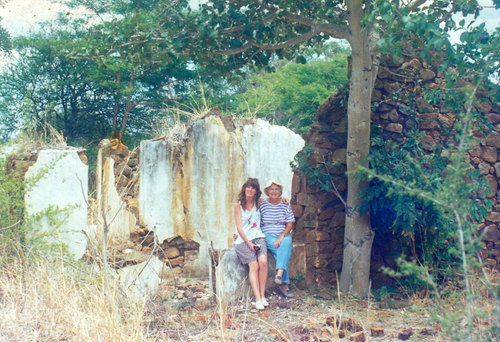
If you hunted around you could occasionally stumble upon the remains of their old homes (there was one on Witte Koppies, for example, which had been built out of white quartz quarried from the nearby hill) and even the odd graveyard. The two young Oosthuizen children who lay buried on our farm had both died of Black-water Fever back in the early 1900s, a common cause of death in those days.

There was something quite sepulchral about the mountain-fringed valley in which they had chosen to live. Maybe it had something to do with all the old ruins, perhaps it was the mountains themselves, with their constantly changing moods, but there seemed to be a presence here, a spirit. I sometimes felt I was walking among ghosts I could never see.

I had some idea who they belonged too. The original Afrikaners who had settled here, courtesy of Mr CJ Rhodes, had not been the first cultivators of this land to have suddenly packed up and left without explanation.

There had been others before them.

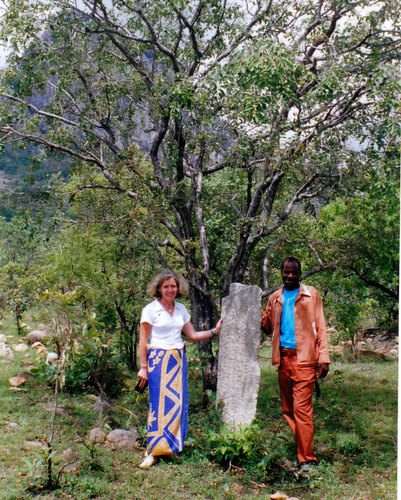
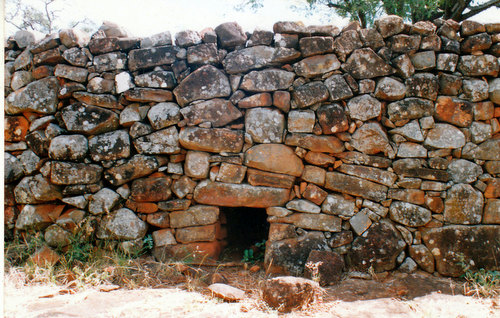
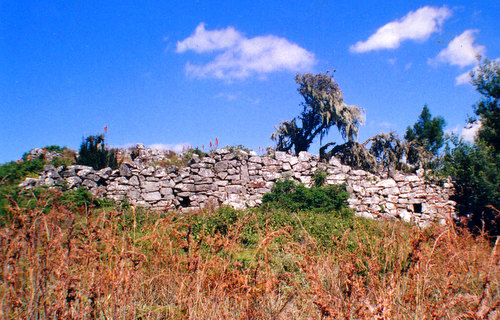
The whole country from the Nyanga uplands, north to the Ruenya River and westwards to the Nyangombe River, was strewn with relics from their stay – dozens and dozens of loopholed stone forts, look-out points, pit structures, furnace sites, grinding stones, monoliths and miles of terracing stretching along the mountain sides; the latter were often irrigated by means of furrows that carried water long distances from the streams.

Nyahokwe Ruins with Sedze Mountain (the “Rhino mountain” as we called it) in background. Note monolith.

The amount of rock that had been moved to build all this was astonishing although, as Herculean as their labours had been, the stone fortifications tended to suggest that the ordinary villagers had lived in constant fear of attack. Clambering over the piles of rocks I had, in my youth, always imagined some fabulous Rider Haggard vision of lost mines and lost worlds but the sad reality is that the people were probably desperately poor (in his book The Shona and Zimbabwe 900-1850, the academic D.N.Beach describes it as a “culture of losers”. That is as maybe but they certainly appear to have been very hard-working ones!), because the soils they had cultivated were, for the most part, thin and infertile – although they probably supplemented them with kraal manure.

Our farm was no exception. From beacon to beacon it, too, was covered in a jumbled mass of ruins. Exploring them, I was seized by a kind of incredulity. It was impossible not to marvel at the intensity of the endeavour that went in to their construction.

My sister, Nicky, among ruins on Muchena mountain, old farm. Picture courtesy of John Louch.

And where had all that passion and effort gone? That was the mystery for me.

One of the aspects of this now abandoned civilisation which especially intrigued me were the endless piles of gathered stones that lay scattered all over the veld. What was their purpose? Why all the effort for so seemingly pointless a task? Again I was flummoxed.

Endless piles of gathered stones. Picture courtesy of Paul Stidolph.

To me, the ruins seemed very old – none of the local tribes people we spoke to appeared to know much about who had constructed them – yet the consensus amongst the experts is that they were mostly built between the 16th and 19th Century by the Tonga people from Zambezi. Adding to the air of mystery, no one seems to be able to state with any degree of certainty why the whole complex was eventually abandoned.

Our own sojourn in this hot, dry, haunted valley came to an end during the Rhodesian Bush War. Remote, cut-off and situated close to the Mozambique border, our farm became an obvious target for the incoming liberation forces. Our only two neighbours were killed, the roads regularly mined, the few cattle we had which had survived drought and disease were rustled and we were eventually forced to move, our farm becoming part of, in the military parlance of the day, a “frozen” area.

Our old house.

It was twenty-years after the war ended before I got to go back to the farm again, only it was no longer a farm. In the interim it had become a black resettlement area.

There was not much left to remind me of the years we had spent there. Time – and the war – had taken its toll. Of our old house little remained. At the one end, where the lounge had been, the old fireplace still stood; elsewhere our former home, once so full of life, had been reduced to the cement squares and oblongs that marked our vanished rooms.

Here and there bits of the old wall survived but it no longer supported the roof which had completely vanished. Of my mother’s once extensive garden there was no trace other than one lone bougainvillea which still clung stubbornly to the hillside.

My sister, Nicky, and my mother, Monica, among the remains of our old home.

Everywhere else wild nature had come back and reclaimed its own.

As I wandered around looking at all the places that had once meant so much too me I could not help but reflect on the transitory nature of things. As a young boy I had been intrigued by the ancient ruins that lay scattered across the farm; now our old house had joined them.

I found myself thinking about those early Afrikaner settlers too. Like us, they had arrived here, full of innocent optimism and hope that they could create a future and yet few if any of the families had stayed beyond one generation. Now, all that remained of their hard work and industry were a few old bricks, stones and mortar and the occasional gum tree.

The same had happened to us.

What hadn’t altered were the mountains themselves. It is difficult to capture in words the feelings they engendered in me. Looking at them I realised it did not make any real difference what we did. They would live on without us, watching the next generation grow up in a place we had once called home. We had only been there for a few moments and all that mattered was that we had cherished the place and made the most of the time we had had there.

View of Nyanga range from north of farm, Nyangui mountain on left.

As I pulled over, onto the edge of the road, for one final look back, I realised it was not so much the fact that I had come back but rather that the farm had never left me.

FOOTNOTE:

For the sake of convenience the extensive Nyanga ruin system is often separated in to the Upland and Lowland Cultures. Because our farm lay in the Nyanga valley, the ruins on our farm obviously fell in the latter category.

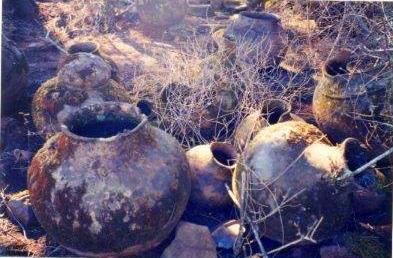
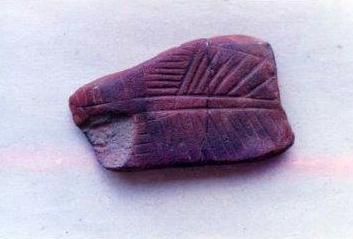
Below are a selection of photographs showing examples of both types of ruin.

A special thanks to my brother, Paul Stidolph, for providing many of the old black and white pics. A semi-retired farmer still living in Zimbabwe, Paul has conducted an enormous amount of research of his own in to the early history of the country and unearthed a great deal of fascinating material on both its ruins and ancient mine-workings.