Exit, Pursued by a Serpent: Hiking the Wild Coast

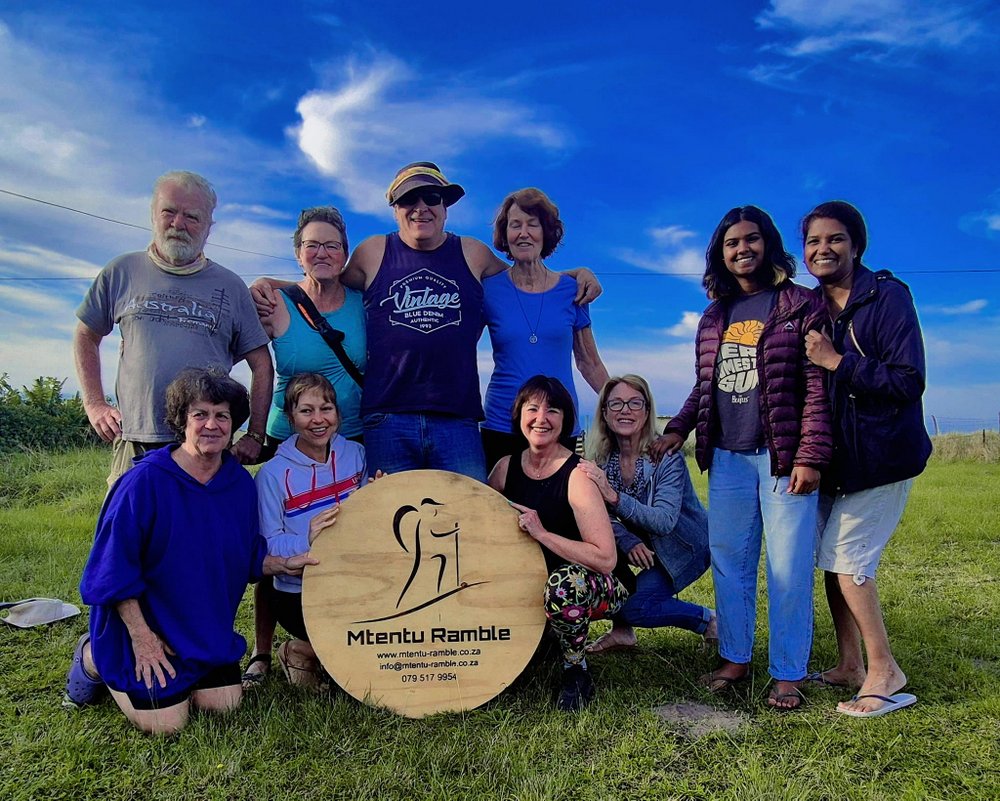
In March 2025, I made my fifth journey, in as many years, to Mtentu. Purpose of journey: to attend a 21st birthday party, organised by that intrepid pair of African travellers, Ian and Mandy Tyrer. My memory of that milestone in my life is so vague, I needed to be reminded why it is important. This time, instead of walking in, we had decided to spare ourselves some tired legs and catch a local taxi. Given the state of the Transkei roads, I am not convinced it was any wiser a decision.

Traffic jam, on the road to Mtentu.

Still, the scenery was magnificent. The road led us over a roller-coaster of hills, topped by ridges of weathered rock and cut by deep ravines, over grassy balds, from which you could catch occasional glimpses of the Indian Ocean, glimmering in the east, a sliver of silver beyond the verdant green. Patches of indigenous forest clung to some of the river valleys, but most of the trees had long ago been felled, leaving vast stretches of open grassland. In places, small parcels of land had been cleared to grow a few straggly-looking mielies and other food crops, the cultivation of which was left mostly to the women.

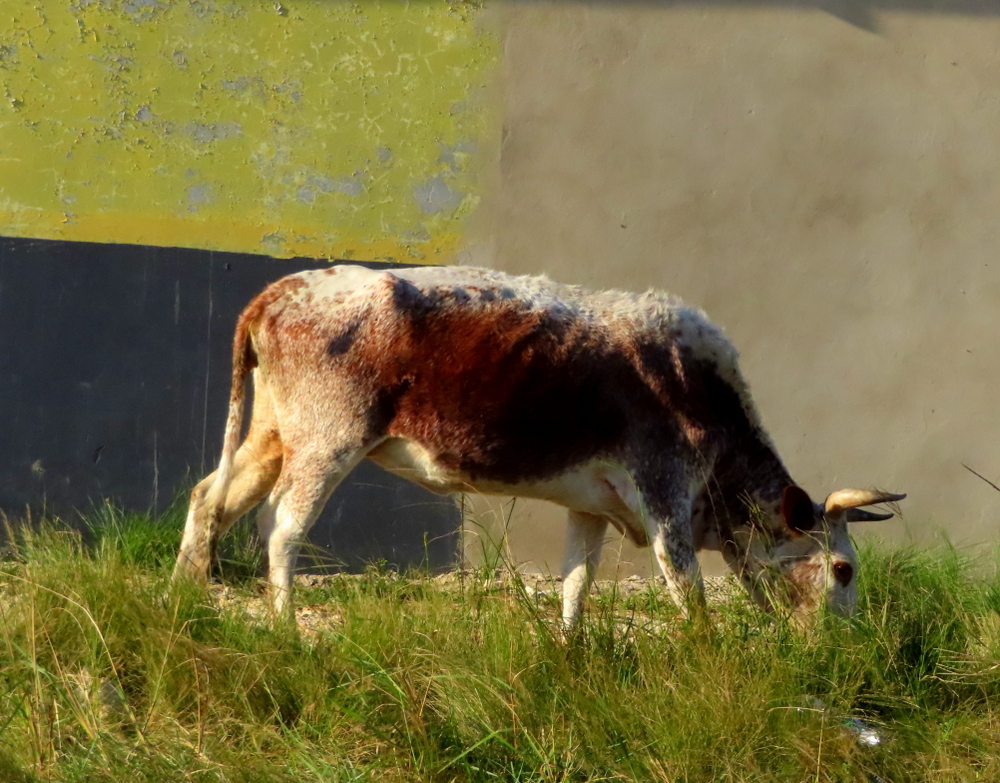
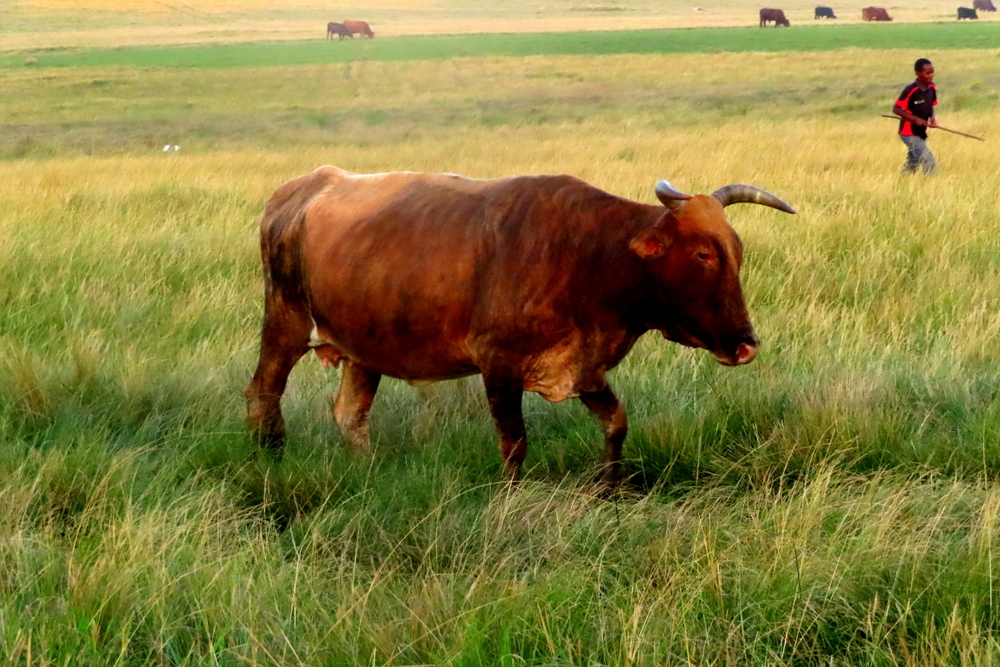
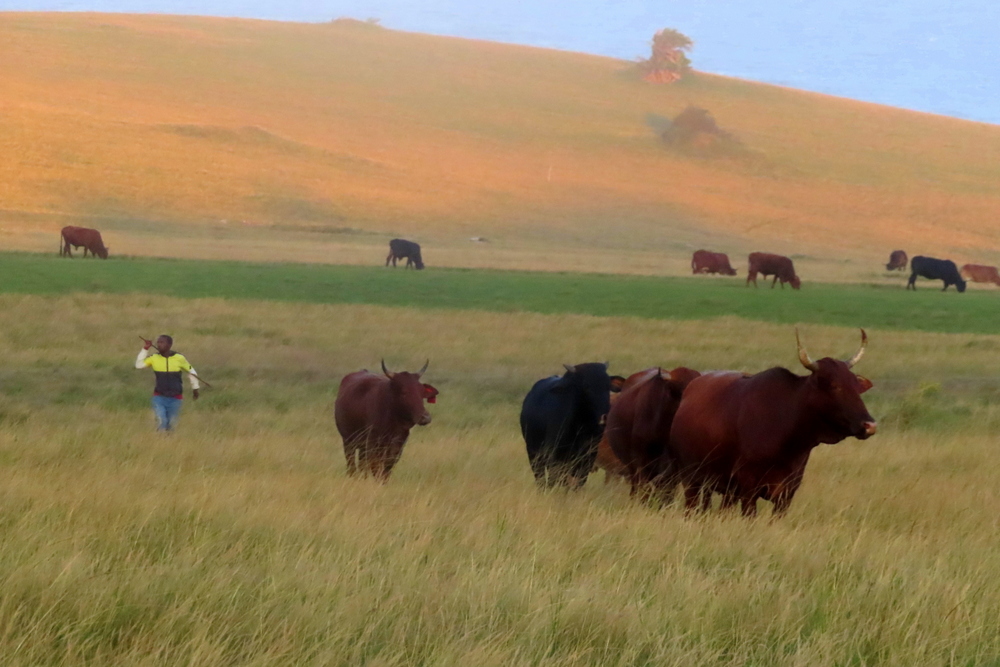
As we drove, goats raised their heads and stared querulously at us from the roadside. Cattle grazed on the hillsides. Here, as elsewhere in South Africa, they have always been at the core of traditional culture, a symbol of both status and wealth. And, of course, a source of food.

The further we travelled towards our destination, the worse the road got. Our driver was obviously accustomed to the challenges and navigated each obstacle with practised skill. At about fifteen kilometres before our destination, we swapped our mode of transport, abandoning the relative comfort of the minibus taxi to get crammed, sardine-like, into the back of a covered bakkie. This exchange of vehicles seemed to coincide with a further deterioration in the road, over which the new driver now proceeded with painstaking deliberateness.

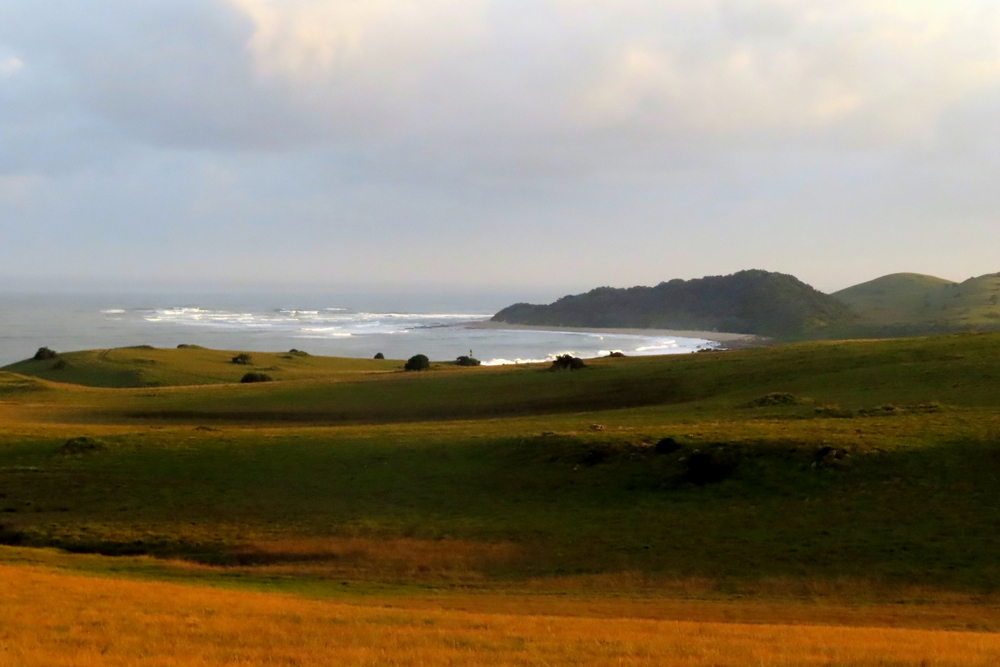
Bumping along, we eventually crested a ridge, which afforded us a long view over the coastline.

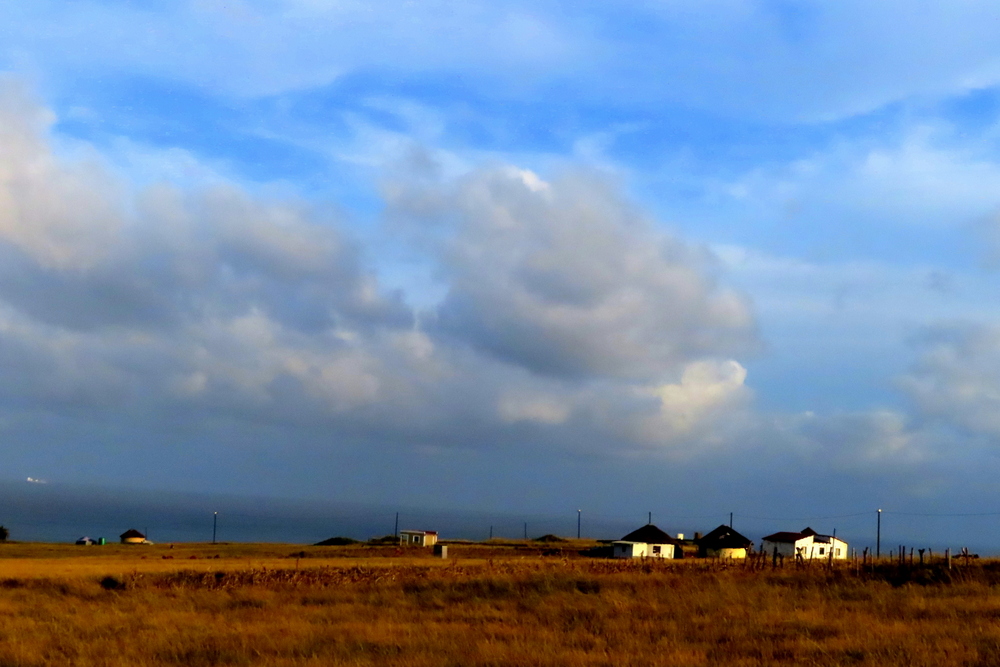
What struck me most about it, as on my previous trips, was the almost complete absence of habitation directly on the shoreline. Perhaps this reluctance to build there stems, partly, from an awe for the almost supernatural power of the sea, with its wild, angry winds and ferocious storms. There is another reason, however. Because of its history as a supposedly “independent” Bantustan under the old National Party government, the Transkei mostly escaped the unbridled development and continuous ugly urban sprawl which is now the predominant feature of so much of the South African coastline.

The road continued its winding descent. Taking a small side track off the main Mtentu Beach road, we eventually drew to a halt outside a scattering of brick, cement, wood and mud buildings. In the forefront stood our destination – the Hiking Shack – where Kelly Hein, the ever-cheerful and hospitable organiser of the Mtentu Ramble, was waiting, with a pile of fresh fruit and cold drinks, to greet us. Despite the discomforts of the journey, I could feel the place beginning to work its familiar magic over me.

That evening, I opened a quart of beer and sat outside, under a star-smattered sky. The grass was already wet with dew, the air salty with the faintest taste of wood smoke. Down below, where the land meets the sea, I could hear the relentless crashing of waves on rocky shores.

We were up just as the first hint of daylight appeared on the horizon, ready to greet the sun as it rose over the sea. We were by no means the first to do so. Others were already going about their chores.

There is a daily rhythm among all the creatures that inhabit these beautiful green hills. At around three in the morning, the village roosters do their trial run. Close to four thirty, they strike up again in unison and force their triumphant clarion calls to the rising sun, echoing across the landscape, getting picked up and echoed by every other strutting, chauvinistic, vain, peanut-brained rooster in the area. They were not alone. Outside my window, pigs grunted, dogs barked, a horse whinnied, children yelled excitedly as they got ready for school, and a bakkie spluttered into life. This was followed by the bawling of cows and the whooping and whistles of the herdsmen as they ushered their herds out into the fields.

As we sat outside, our chairs placed in a neat row, drinking coffee, dozens of Barn Swallows began congregating along the power line directly in front of us, chattering excitedly amongst themselves. It was now late March, and they were presumably psyching themselves for the long flight back to Europe. I am always sad to see them go.

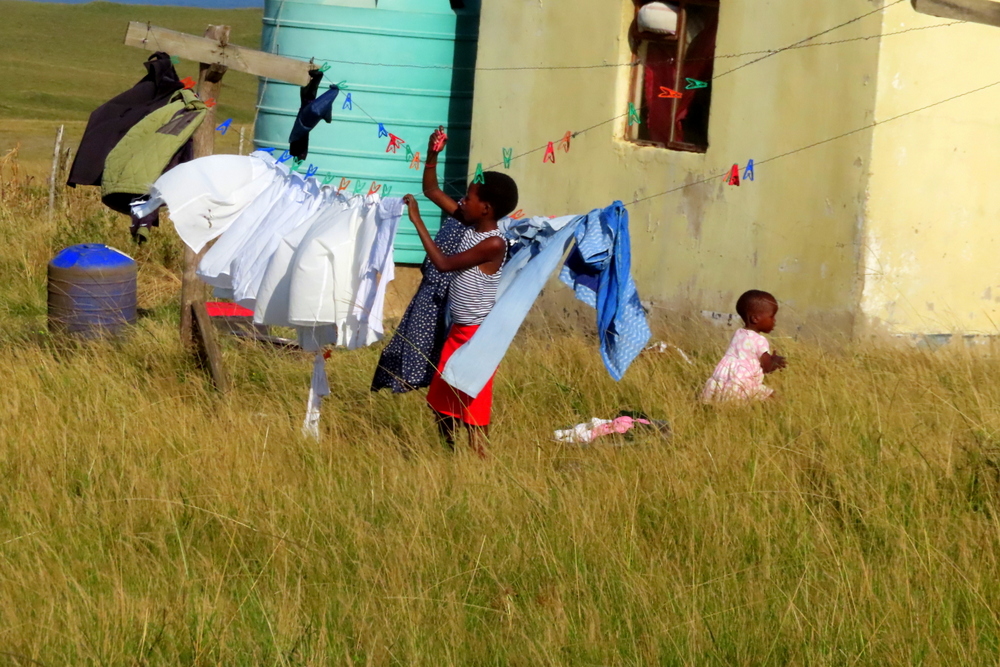
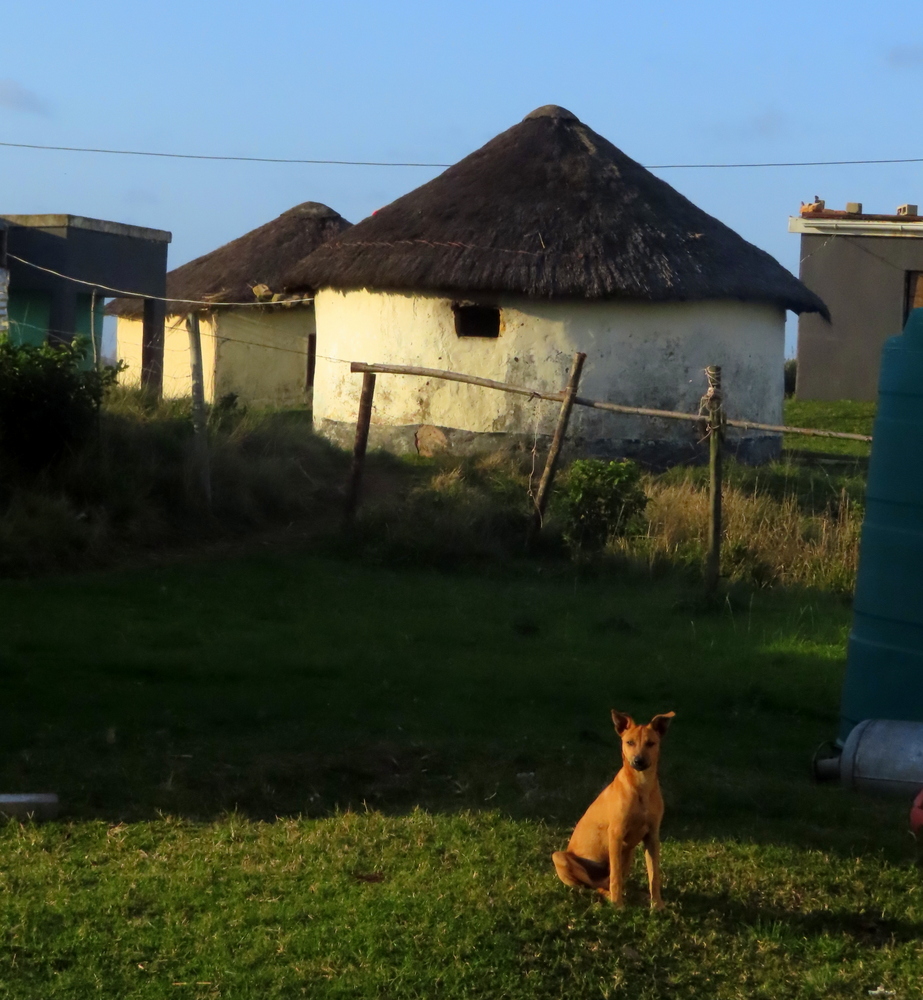
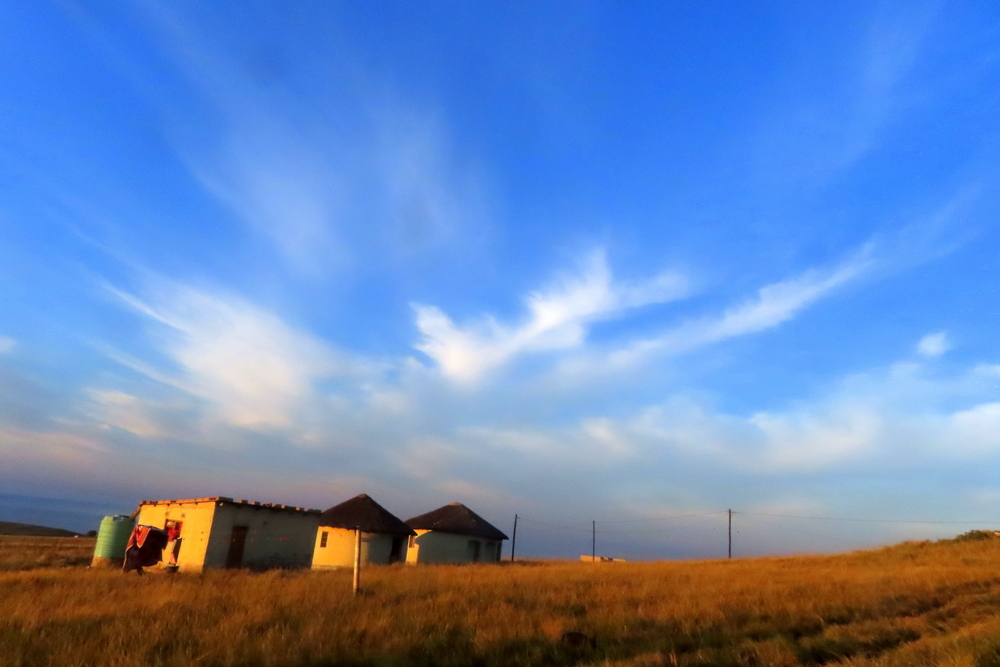
Next, a legion of goats, led by an impressive old billy, sporting a fine beard and schimitar-like horns, came trooping past. From one of the three thatched rondavels on the other side of the road, a lady in a colourful dress emerged, holding a broom. Washing danced on a nearby line as if manipulated by unseen hands.

On the surface, the Pondo people, amongst whom we were now staying, appear to live simple, carefree lives, in harmony with nature. Dig a little deeper, however, and a more intricate, complex society emerges, one strictly regulated by tribal structures and bound together by custom and ritual.

After breakfast, eager to be off, we set forth, once again, into the familiar vastness of rolling grassland. We were headed southwards, on a 20-kilometre circular hike which ended up at the Mkambati Falls, a beautiful, half-amphitheatre-shaped, natural feature, which falls, in a series of steps, directly into the sea.

I love hiking. On foot, you feel the soul of Africa seeping up through your shoes. You have time to stop, stand and soak up the beauty, romance and mystery of this ancient landscape – something you can’t really do in a speeding car, train or aeroplane.

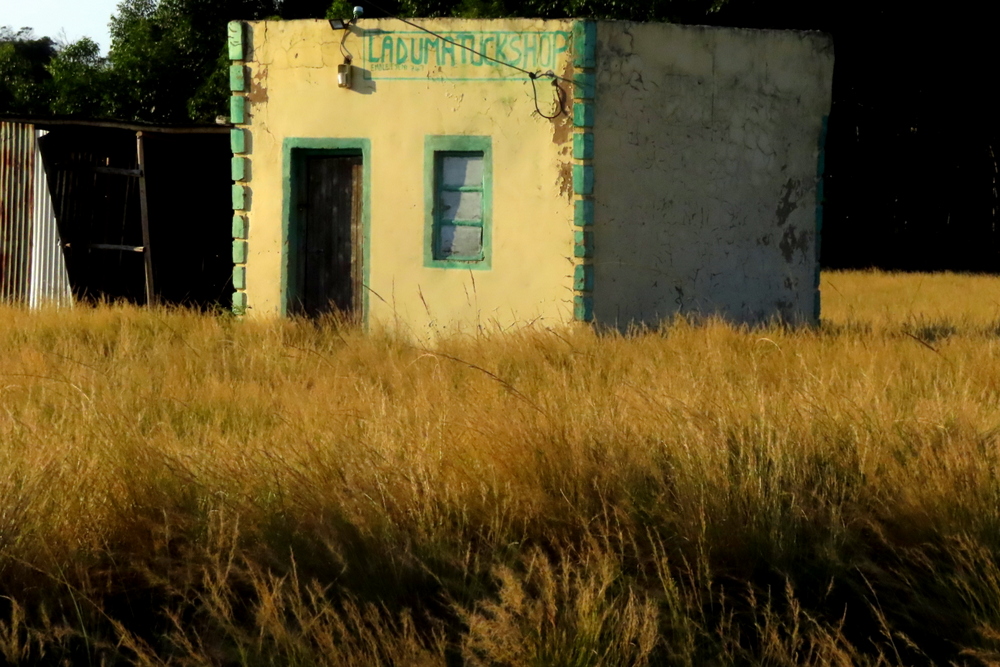
Apart from a bank of grey cloud hanging low over the ocean but the rest of it was a cloudless blue. The grassland was still a burnished gold, still blowing. Despite the early hour, the regulars were already gathering at the local shebeen, perched strategically on top of a hill, just above our shack.

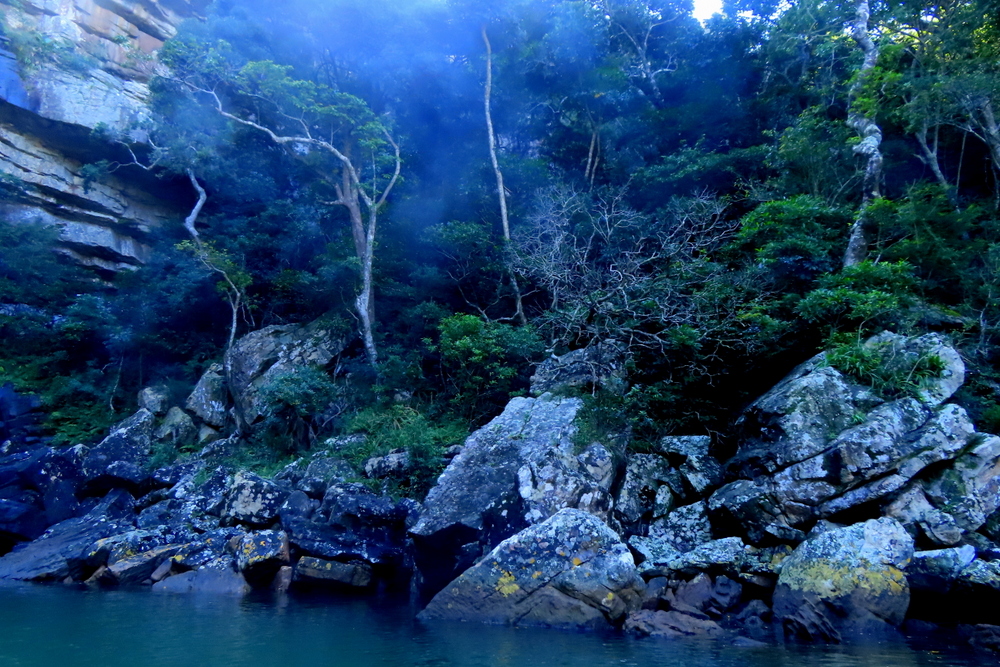
Descending the winding track, we came in sight of the imposing Mtentu River Gorge, with its massive cliffs of soaring rock, stained with lichen and fringed with mangroves and indigenous forest. Where the gorge narrows and its brackish waters darken, the thick trees have the feel of jungle.

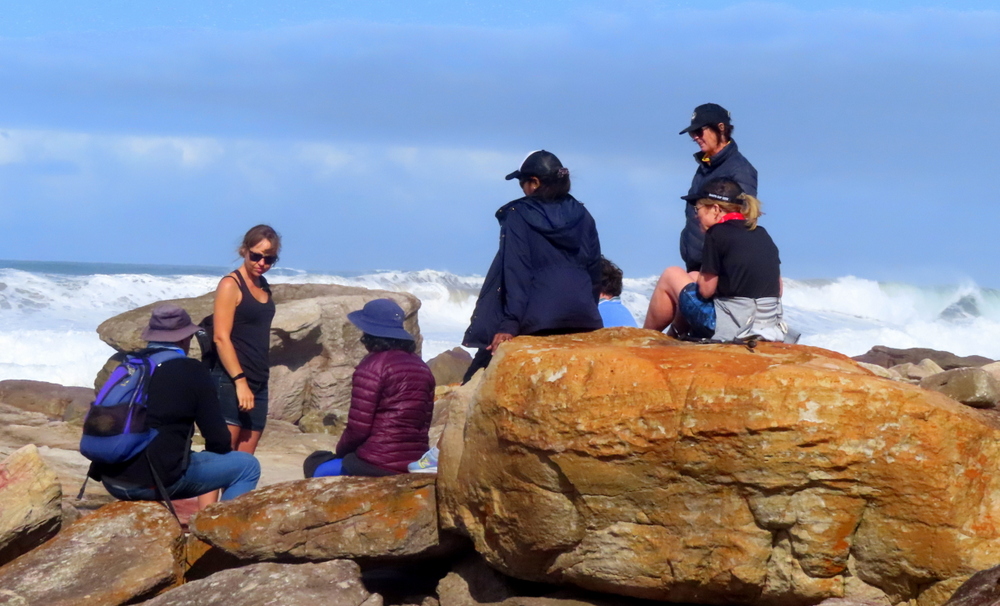
Here, we were obliged to hire a canoe to ferry us across the wide estuary. Once on the other side, we rounded a grassy point, where a sign marked the northern boundary of the Mkambati Nature Reserve. Amongst a vein of tumbled rocks, littered with debris and deadwood, that cut down into the sea, we came across the bleached bones of a large whale, which the waves had effortlessly tossed onto the land. Beyond the dead leviathan, a beautiful beach stretched ahead. The sand was firm and easy to walk on. It was bordered by dunes covered in wild bananas and gnarled trees, hunched down against the howling sea gales, their branches interlocked and twisted together like piles of mangled, long-legged spiders. Ahead, the rest of the group strung out along the sand. It made me think of pilgrims, on a quest for the purpose and meaning of holiness.

I was beginning to think maybe I had found it…

I walked on in soulful mood. Above me, palm fronds rustled in the sea breeze. Hermit crabs scuttled along in their mobile shell homes, retreating inside them when I bent over to investigate.

Hermit crab in Turbo cidaris shell (common name: Crowned Turban). Identity provided by Ken Borland.

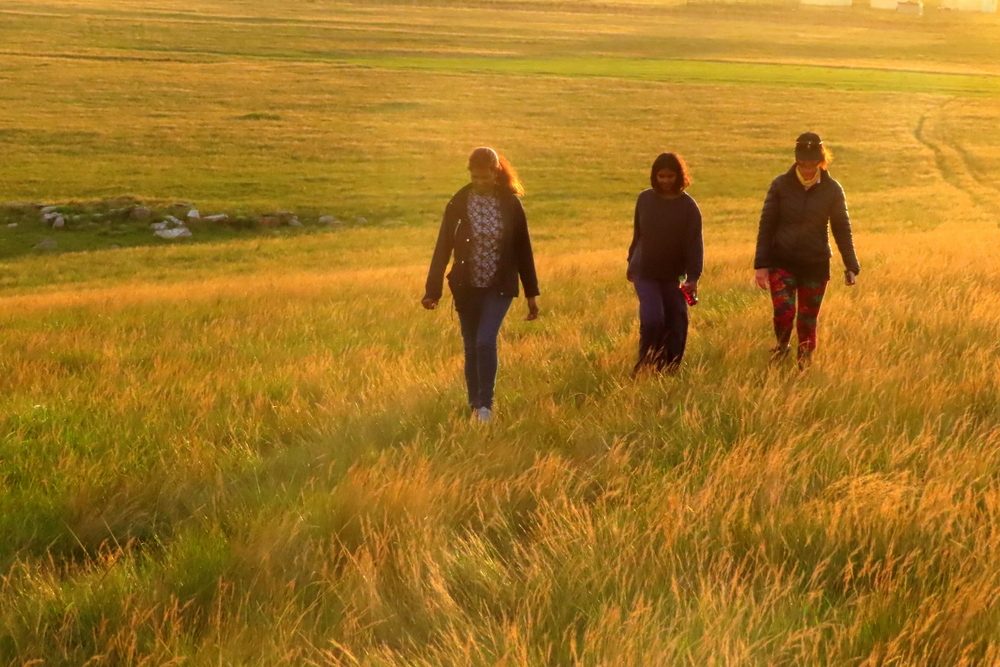
Leaving the beach, we climbed steadily up a hillside, covered in flowers. There had been plenty of rain here, and the ground was wet and squelchy underfoot. A group of round-haunched zebras, tails swishing, stood on the round edge of a hill. As soon as they saw us, they broke into an easy run and vanished over the horizon. Apart from them, we didn’t see a soul.

The sun was now as hot as toast, but it didn’t bother me. I found a lovely lyrical quality in warm sunshine, the riotous whooshing of the waves below, the tufted green grass, and that endless blue sky. My spirits were high. I was on another journey of discovery.

The indistinct track we were following eventually linked up with an old road which led directly down to the falls. Having posed for the obligatory photos on a promontory overlooking them, I headed upstream for a swim.

Choosing a suitable spot, I eased my way into the cold water and felt the cool go through me. After the long walk, I felt alive, tingly, happy to be in the water. The pool where I swam was fed by a large waterfall, which crashed through a cleft in the rock shelf, churning the water into a creamy lather of eddies and wavelets. I stroked out towards where I could feel the edge of the current and then, deciding that was enough for me, swam back.

As I was hoisting myself out, I happened to glance over my shoulder and, from the corner of my eye, caught a glimpse of a long, dark, serpent-like thing speeding, torpedo-like, directly upwards towards my foot. It was a deeply unnerving experience. My first reaction was one of fright. I launched myself onto dry land.

“There is something after me!”I exclaimed, excitedly, pointing back to the water from whence I had so hastily extracted myself, “I think it is a big barbel!”

We all gathered around the point where my pursuer had now surfaced. It wasn’t a barbel, as I had thought. It was an enormous eel! Its size was a tremendous surprise.

As a child, swimming in the streams and rivers that flowed directly out of the Nyanga mountains, I had often had this faint worry – no doubt part of some deeply ingrained, built-in, primordial, survival mechanism – about what might be dwelling in the murky depths below me. Now, I realised there was some basis for my fear.

One of the younger members of our party – a professional bird guide – had the presence of mind to do a quick Google check on his cell phone. He identified it as a Giant Mottled (also known as Marbled) Eel (Anguilla marmorata), a little understood and secretive creature which is primarily an Indo-Pacific species but can also be found in some freshwater habitats in South Africa..

Their life story is an unusual and, in many ways, unique one. Like other eels, they are spawned at sea but spend most of their lives in freshwater, often undertaking perilous journeys to find a suitable home. Incredibly, the young ones are even capable of scaling such natural barriers as Howick Falls. Later in life, they will return whence they came, spawn and die. The female Giant Mottled Eel can grow up to two metres in length, the male up to 1,5 metres (ours, whatever its sex, was about this long) and weigh up to 25 kilograms. They are long-lived, with some individuals reaching forty years.

A spirited discussion followed on what our eel’s true intentions were – good or bad? Was it just driven by curiosity in following me? Or was it some form of aggressive, territorial display? Or was there something more to it?

I found it a little eerie. Looking in its pale, bottomless, blue eyes, I felt, for a moment, like I had been transported through a portal into some enchanted, fantastical realm.

Perhaps not surprisingly, these huge eels have found their place in traditional Zulu and Xhosa folklore. They gave rise to the Inkanyamba legend, the fearsome monster that lives at the bottom of the Howick Falls, not far from where I live. Giant eels are similarly linked to the story of Nyami Nyami, the Zambezi River God or Snake Spirit, who – the belief goes – stalled the construction of the Kariba Dam wall, because it controlled the weather and was capable of summoning up both floods and drought.

There is a widespread consensus amongst most African groups that the ancestors can come to visit the living in animal form, both in dreams and while the person is awake. Snakes are a particularly common form of such ancestral manifestation, and eels have a strong physical resemblance to them..

Interestingly, these snake spirits, particularly those that manifests themselves in the form of a python (which sometimes has a glowing light attached to its head) tend to inhabit deep pools in rivers, often below waterfalls, where the water is fast moving and “living” (which, in turn, is often associated with its ability to generate foam – foam appearing to have a symbolic purpose). Furthermore, the pools are often associated with steep banks and are surrounded by dense indigenous forest. The natural sites where these beings are believed to reside are typically located in remote and relatively untouched places.

The Mkambati River.

The one I had just innocently jumped into completely fitted the bill…

The fact that this one seemed so unafraid of humans and kept circling through the reeds and out into the pool, like a shade moving through dim corridors, and then swimming back to eyeball us again and again, made me wonder whether it could be one of these mystically charged beings. It was almost as if it were anxious to communicate something. But what?! The sceptical, rational side of my brain began a wrestling match with its more psychic, superstitious sub-strata where all the symbols, archetypes and images of our collective unconscious lurk.

In the end, I decided it was a good sign. Far from civilization, on this elemental stretch of African coastline, it seemed an appropriate spot for some sort of divine revelation. It also made me realise that such beliefs, while outside traditional Western perspectives, are often rooted in carefully observed natural phenomena and reflect something of the spirit of the landscape.

Anxious to transfix so great a mystery, I grabbed my camera and started snapping away…

After a snack lunch, we left the eel to continue patrolling its remote, watery domain and headed back down to the beach, where lay – flipped high on the rocks by a violent storm – one of the many rusting wrecks of old ships that stand as mute testimony to this notoriously treacherous stretch of coastline. There was not much left. Its old smoke stack could be seen sticking out of the rocks, with the rest of the hulk – at least what remained – lying clear out of water, its iron panels eaten away and only a bare skeleton left.

Our relationship with the sea – especially waters as moody and temperamental as that of the Wild Coast – is a complex and ambiguous one. Despite its fearsome reputation amongst mariners, the warm Agulhas Current that washes these shores is also viewed, by those that dwell alongside it, as a source of benevolence – as well as violence and destruction.

For the Nguni-speaking people of Southern Africa’s eastern seaboard (which includes the local Pondo and Xhosa), water, be it from rivers, pools, lakes, springs or the sea, is integrally connected to the living at a spiritual level. The sea, however, is seen as the ultimate resting place for the ancestors; it is the great place of the departed souls, especially those who lived long ago, beyond living memory, who can still provide guidance to help the living. Many deeply revered customary practices and rituals are linked to it. For such rituals, signs of ancestral presence and approval are sought through the appearance of creatures associated with the site, such as whales, dolphins, sea birds, turtles, etc.

When Shell sought permission to conduct seismic blasting along the Wild Coast, followed by oil drilling, the possible desecration of these sites and its impact on local livelihoods and the environment were among the arguments against it.

Having just experienced my near-mystical encounter with a messenger from the deep, I knew whose side in this ongoing battle between ‘progress’ and conservation, traditional and non-traditional, I was on…

MORE PICTURES:

REFERENCES

There and Back: The Elusive and Secretive Lifestyle of the Freshwater Eels of South Africa by Celine Manzen

Messages from the Deep. Water Divinities, Dreams and Diviners in Southern Africa. Doctoral Thesis by P.S. Bernard
A Telling of Omens: More Adventures on the Wild Coast

Since childhood, I have always been a compulsive walker but, in recent years, the habit has taken on a more urgent aspect. Only too aware of the passing years, it has become a vanity issue, part of my need to achieve something measurable and definable before the lights go out. To prove to myself I still have it in me. That I am not completely past my prime.

To this end I like, every now and again, to test myself by undertaking a seriously long hike. Which is where the Wild Coast comes in. I have now done the Wild Coast Sun to Mtentu hike four times. Each time we have followed more or less the same route. Each time, it has felt different.

It is a beautiful hike. The Wild Coast has its own unique atmosphere and character. It is like travelling through a time warp, being one of the few places where you can still get a glimpse of what the South African coastline must have looked like before the property developers moved in and – all in the name of progress of course – stripped it of everything that made it special in the first place.

The Wild Coast.

An opportunity to go there again fortuitously presented itself, when Mary Ann, my regular hiking companion and long-time side-kick, decided she wanted to celebrate her birthday there. When it arrived, I readily accepted her invitation. Here, was another chance to prove my metal, get the muscles working again, pump some fresh salt air into my (chlorine-damaged – don’t ask!) lungs. I wanted a little of that swagger that comes from testing yourself against nature and coming out triumphant on the other side.

For me, the wilderness is, however, more than just, a resource to be mastered or a place where I go to prove how tough and resilient I am. There is a spiritual element to my meanderings. Released from all obligations, it is a way of reconnecting with myself, feeding my soul, transcending the monotony and tedium of everyday life and getting that sense of emotional engagement that comes from immersing yourself in the beauty of a place. Fording the rivers, hiking along the deserted beaches, listening to the reassuring crash and hiss of the waves breaking alongside you as you walk becomes a form of secular pilgrimage, an exercise in humility, a way of savouring the grandeur of sacred nature.

Along the way you get to know your fellow hikers a little better, and become part of an informal clump sharing a simple objective – get to your next destination.

Determined to be fit for the hike I went into training, scrambling up and down the rocky slopes of the farm. The closer we got to our day of departure, the more my excitement grew. Alas, fate has other plans for me. An old hernia problem chose to flare up again. I consulted a specialist. He told me an operation was necessary. He also advised me against putting too much strain on the offending appendage which is what would happen, he informed me, if I walked the distance required, especially the uphill parts.

I was determined I was not going to miss out. Fortunately, it turned out I was not the only one sporting an injury. Another past hiker had damaged her foot and conveniently for me had decided to drive to Mtentu in her 4X4 (my old banger would not have made it over the Transkei roads).

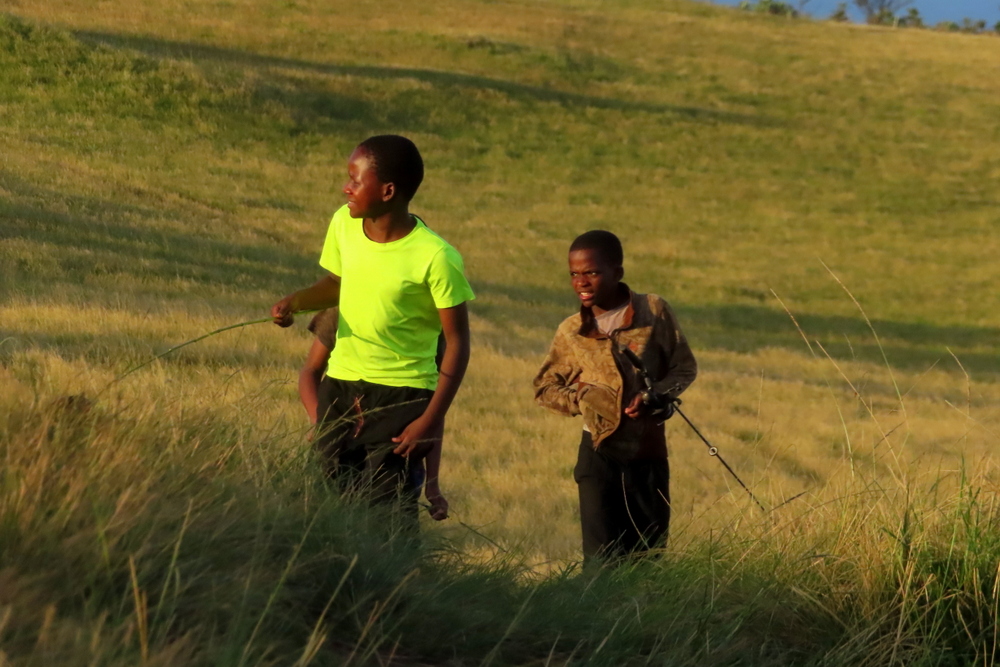
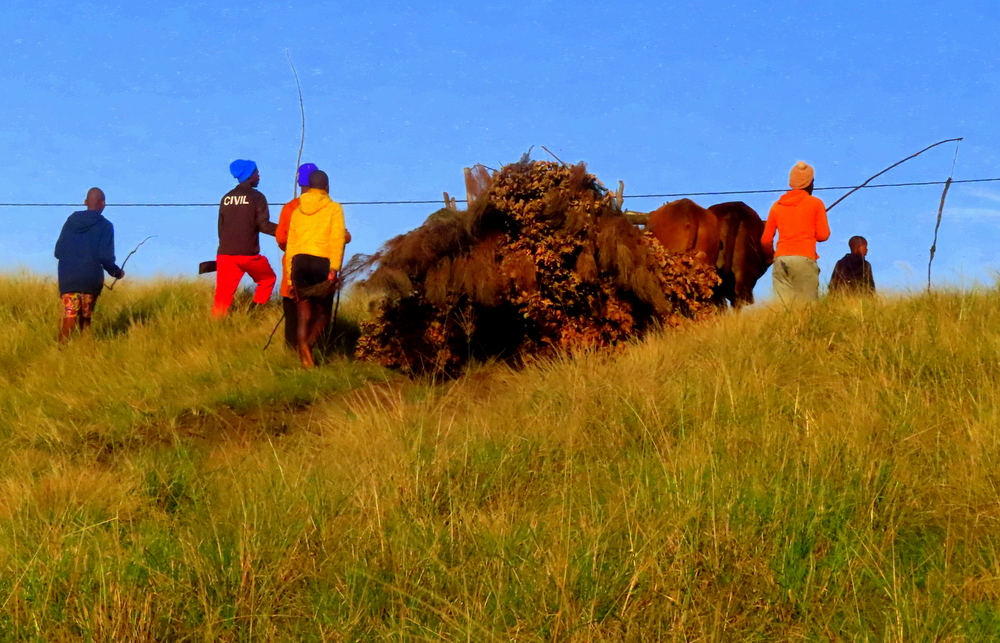
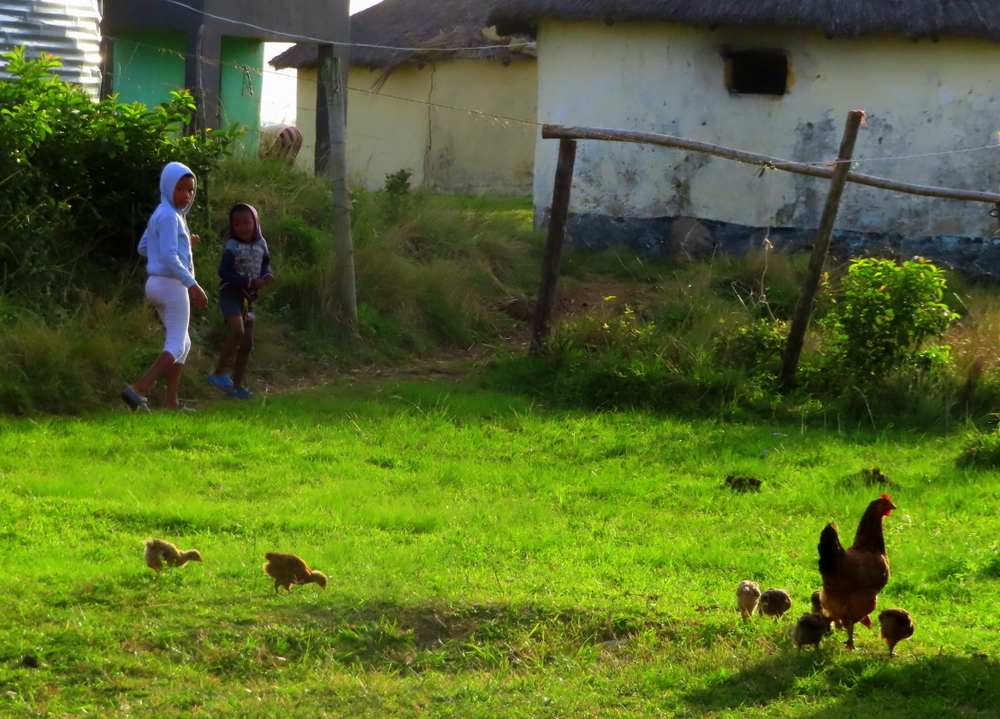
And so, while the others were hiking along the beach, we set off. The dirt road – or rather excuse for one – on which we found ourselves travelling wound its way through rolling hills, slashed by the odd river gorges, towards the coastline. The landscape was dotted with traditional thatched rondavels although in places these had been replaced by more Western-style rectangular houses with pillars and corrugated iron roofs. There were groups of cattle everywhere. Sometimes small boys and herders would appear mysteriously from nowhere and wave at us, There were also dogs, some a lot less friendly than others. They would come bursting out of the hut yapping their heads off as we drove past.

We eventually reached our destination – a simple, dormitory-like, structure built of cement and stone and capped with corrugated iron – ‘” The Hiking [formerly Fishin’] Shack” – set amidst a scattering of thatched huts and outbuildings which belonged to a respected local leader. Here, we were received with the same wonderful warmth we had on our previous visits by our host, Kelly Hein who runs the Mtentu Ramble ( http://www.mtentu-ramble.co.za/ ) and her family. I immediately felt at home.

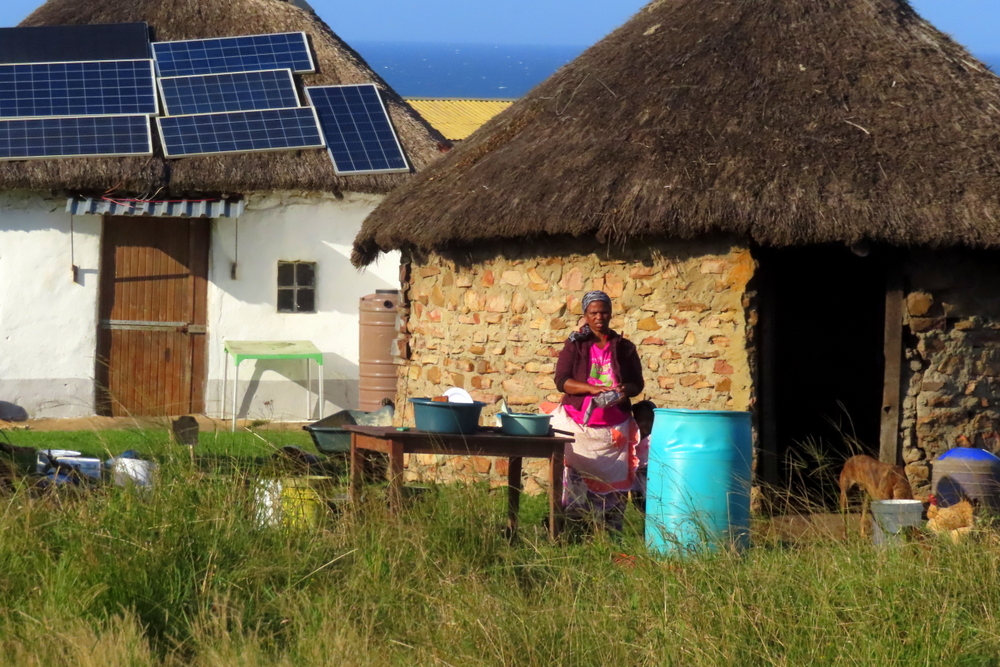
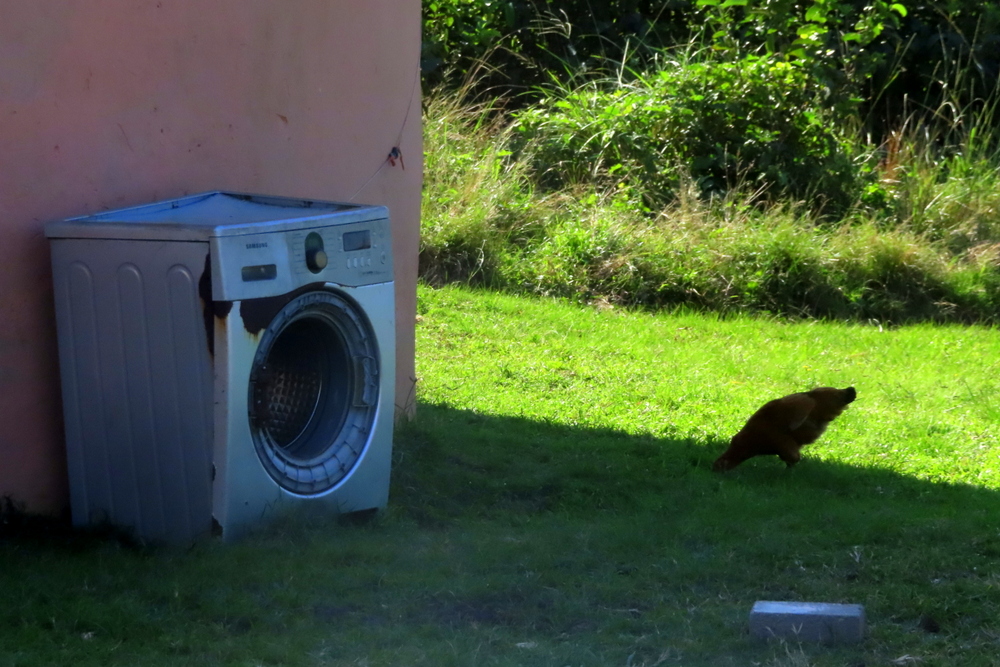
The Pondo, who inhabit this southern part of the Transkei, continue to live a way of life that has changed little over the centuries although you can see signs that the 21st Century has begun to encroach even here. The last time we visited, the area had not been connected to the national grid but now virtually every hut you passed had an electricity pole standing sentry-like outside. I was sure the hut inhabitants must have drawn comfort from the fact they were no longer being discriminated against and could now share the joys of load-shedding, courtesy of the ANC Government and Eskom. As if half anticipating this, many of the dwellings had solar panels attached, higgledy-piggledy, to their roofs. There were other signs of the influx of Western consumerist values. Many of the houses, for example, had large, twin-cab bakkies parked outside of them, a sure indication of increasing affluence and upward mobility.
Not wanting to be dismissed as a romantic traditionalist, stuck in a discredited past, I shrugged my shoulders and tried to feel philosophical about it all. At times, it is better not to arrive with pre-packaged notions of what a place should look like..

After lunch, we set off northwards towards the estuary, where we planned to wait for the rest of the group slogging their way down the coast. We had barely got a hundred metres or so when we were greeted by the somewhat incongruous sight of three Ground Hornbills striding purposefully through the blonde tufted grass. Their size is always a tremendous surprise. Immense and black with their huge beak, seductive, boudoir-fluttering eyelashes and red throat and facial patches, they are one of the most engaging of birds. When they spotted us, they veered off back the way they had come and disappeared over the ridge.

Thrilled by this welcoming and seemingly prearranged encounter with these now endangered birds (our good fortune was to continue – we saw another four as we drove out at the end of the trip), we carried on. We had left it too late, however, to greet the wearied hikers at the estuary. Hungry and tired of waiting for us to arrive with their packed lunches, they had pressed on regardless, so we met them at the halfway point.

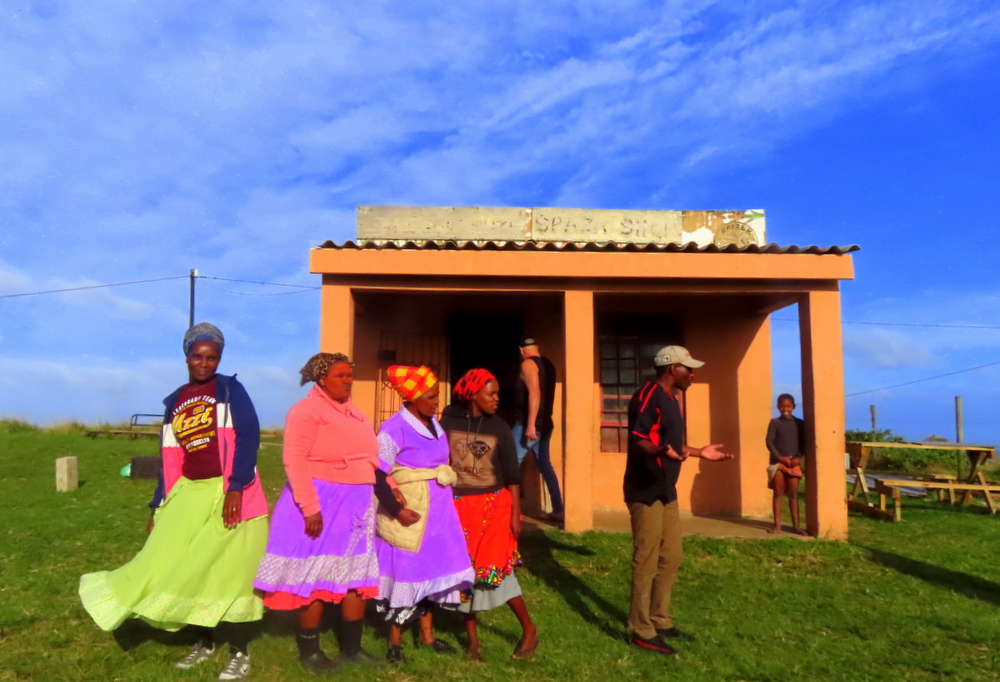
The afternoon passed. It was nearly sunset. Glorifying in the voluptuous twilight, I strolled up the road that leads past the local shebeen which, at all hours of the day and night, seemed to be alive with stumbling drunks. A group of uniformed school children trooped by. I strolled on, soaking up the atmosphere. Below me, a few horned cattle, followed by a flock of goats, were slowly wending their way home. A few independent-minded pigs snuffled in the rubbish. Washing flapped on washing lines.

The local shebeen.

It felt wonderful to have escaped all those demons masquerading under the guise of the new technology and the ubiquitous cellphone (although – since the small hillock above our shack was the one point where you could occasionally get a signal – a few of my fellow hikers were frantically waving their phones around in the air as they desperately struggled to establish contact with their loved ones). Resigned to the fact that not many people would likely be missing me, I had other thoughts on my mind. Watching the flecked white horses out at sea and the waves crashing and wheezing into the shingle, I felt a wonderful sense of peace and tranquillity.

Although it looked calm enough now, the weather along the coastline can rapidly change. The sky can curdle and blacken with thunder. Bolts of lightning will lighten up the ocean and the sky above it. Battered by strong winds and violent storms, the Wild Coast earned a bad reputation and presented a formidable challenge to the early European sailors (their modern counterparts too). Adding to the hazards of the route were the hidden shallows and underwater rocks; many ships got wrecked in these treacherous waters. You pass a few such rotting hulks on the hike, their rusted ribs and skeletons protruding above the sand or lying, scattered in pieces, over the weed-encrusted rocks.

The Transkei region has an equally turbulent history. The Kei River, further south, in Xhosa territory, once marked the thin dividing line where two alien cultures met: the white settlers moving north from the Cape and the black tribes pushing south, who were themselves part of a much larger migration which had its roots in Central Africa. Needless to say, it became an area of huge friction which lasted over many years and led to the outbreak of numerous frontier wars, in which some of my ancestors fought, earning them a black mark in revisionist history.

In the bad old days of Apartheid, the Transkei was turned into a supposedly self-governing – if impoverished – Bantustan with its own fake border posts and puppet government. Resistance to the system soon arose, with many of the leading figures of the liberation struggle coming from these parts, the most famous, obviously, being Nelson Mandela.

But that was then. Now was now. Turning my collar against the sudden chill wind that had come sweeping in from the sea, I crunched back towards where the sun was sending golden bars of light onto the surrounding hills,

The next morning, woken by the crowing of the noisy rooster next door, I got up early, wanting to catch the rising sun. On the one side of the horizon, the long vapour trail of a climbing jet sliced up the grey-blue dawn. On the other side, yellow-bellied from the rising sun, an endless caravan of clouds drifted over the ocean to wherever it is clouds go. Sitting on the verandah, sipping my mug of coffee, this was followed by the propitious sight of three Grey Crowned Cranes, propelling themselves through the cold, still, air with measured wing beats, their long elegant necks outstretched in front and legs trailing behind. Cranes are special. Shy and wary, it is always a privilege to encounter them anywhere in the wild; here it seemed especially so, almost a blessing, a sign of good things to come..

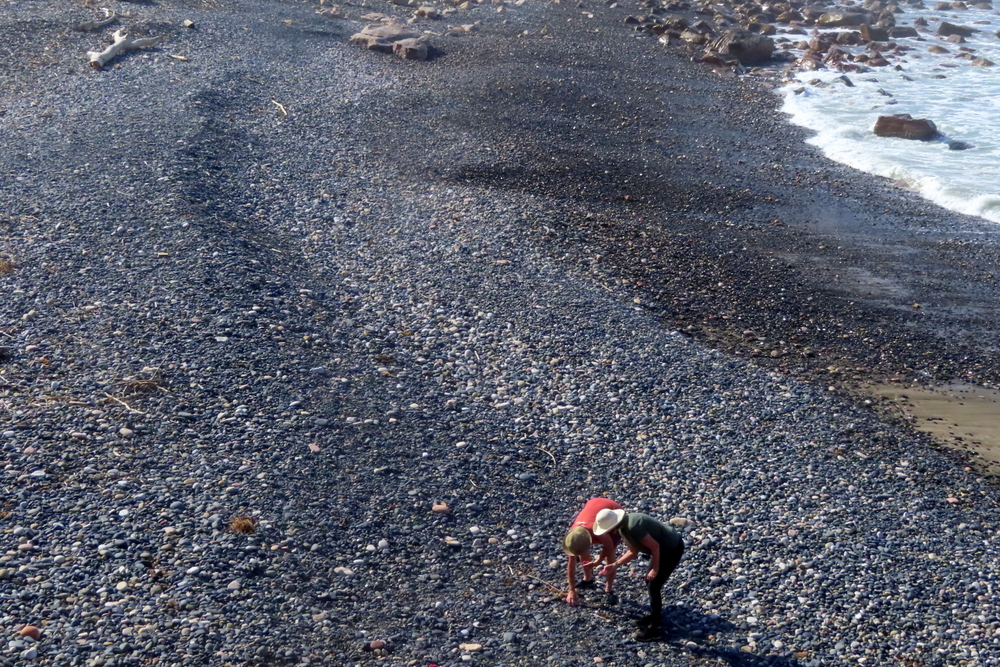
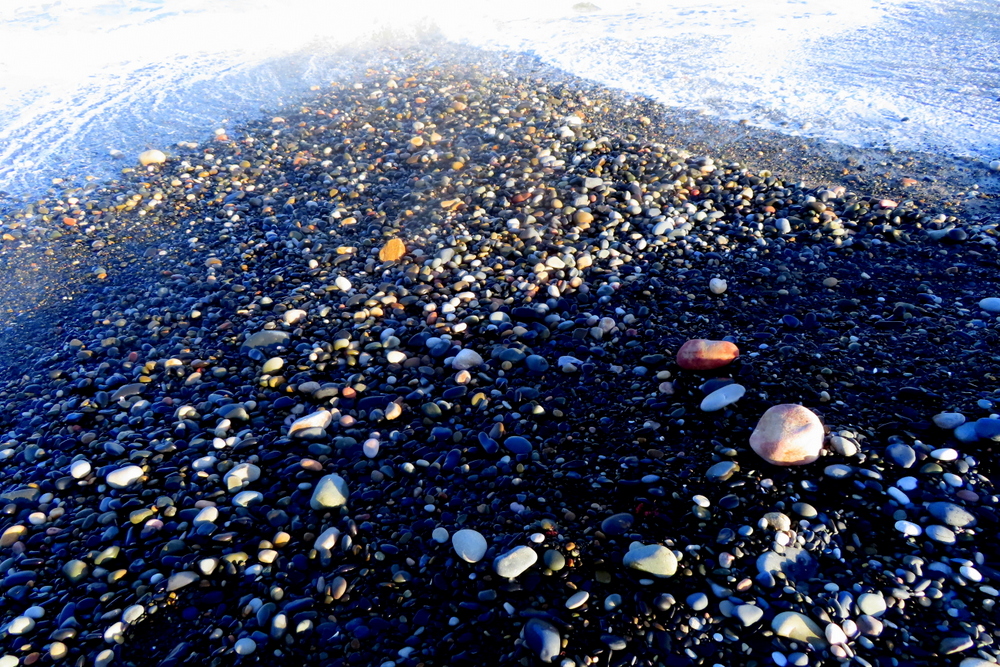
After a delicious breakfast, we decided to head down to the nearby Pebble Beach. Sunshine was bejewelling the dew that still lay on the fields as we squelched our way down through the grassy sponge to where the waves were collapsing and wheezing into the shingle on this secluded and deserted beach. Not wanting to get their stomachs wet by lying on the soaked grass, hordes of goats snoozed in the middle of the road.

Pebble Beach.

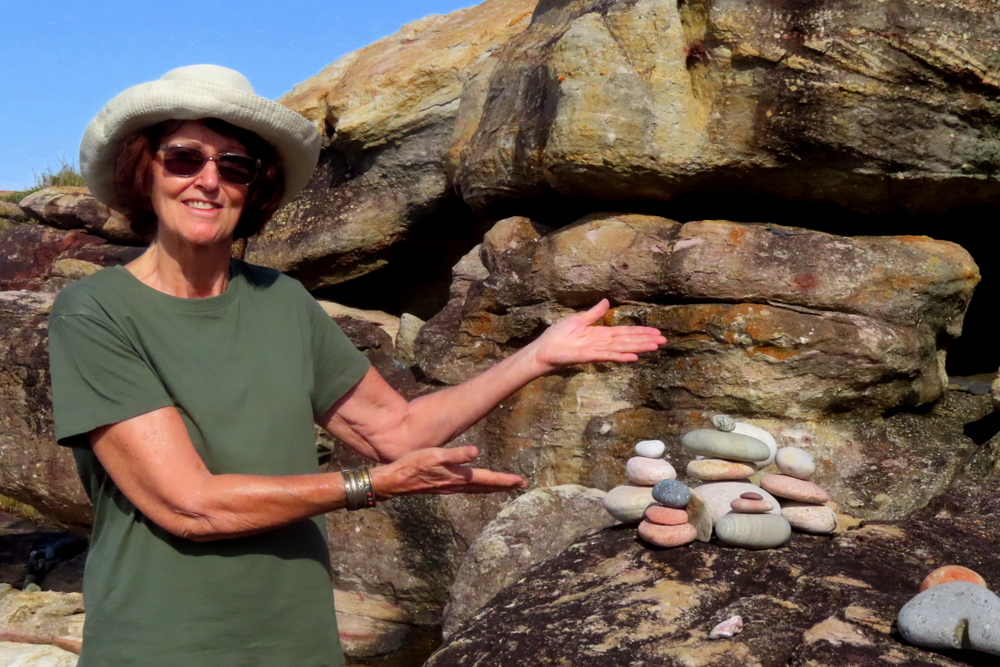
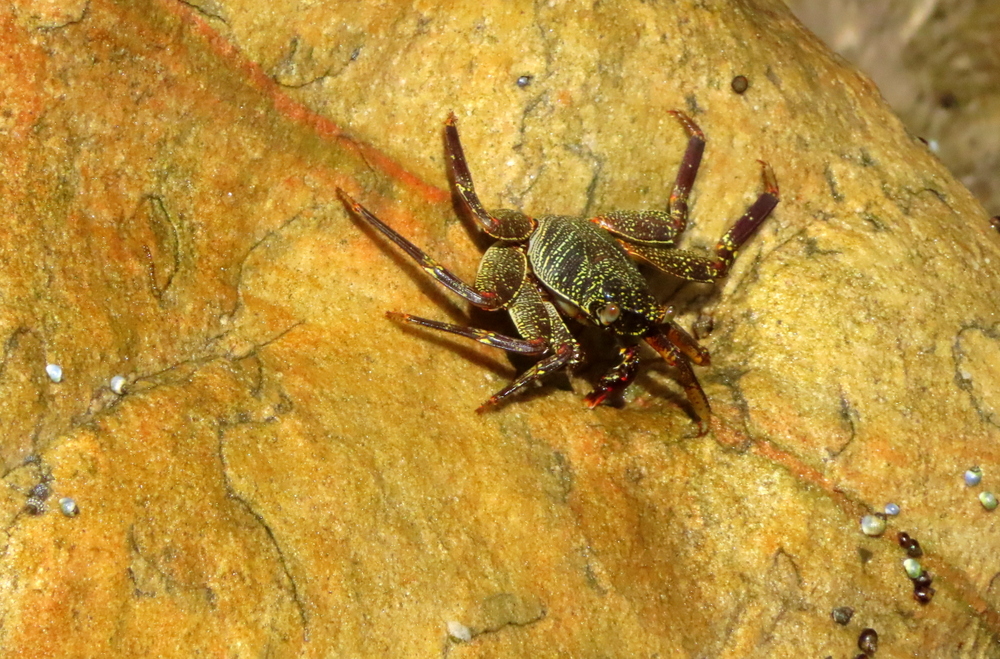
We spent a happy hour or two strolling up and down the beach, stooping over every now and again to pick up and inspect a stone whose surface had been polished smooth and shiny by the tumbling action of the waves. Afterwards, I stood on the outcrop of rocks, that protruded out at the one end of the beach, and watched the crabs playing Russian Roulette with the incoming tide as it surged up through the crevasses and exploded into the sky in a whale-like plume (late on, we saw several of those leviathans cavorting in the currents). The sea in front of me heaved with belches of brilliance and the waves crashed around.. Everything about the morning was magical: being surrounded by water, the pleasing tidiness of the hills behind us, the foraging cattle and goats, the small rural settlements scattered like wheat chaff along the horizon. A solitary Jackal Buzzard suddenly swooped over the hill and then hung in the air like some hovering messenger from the gods.
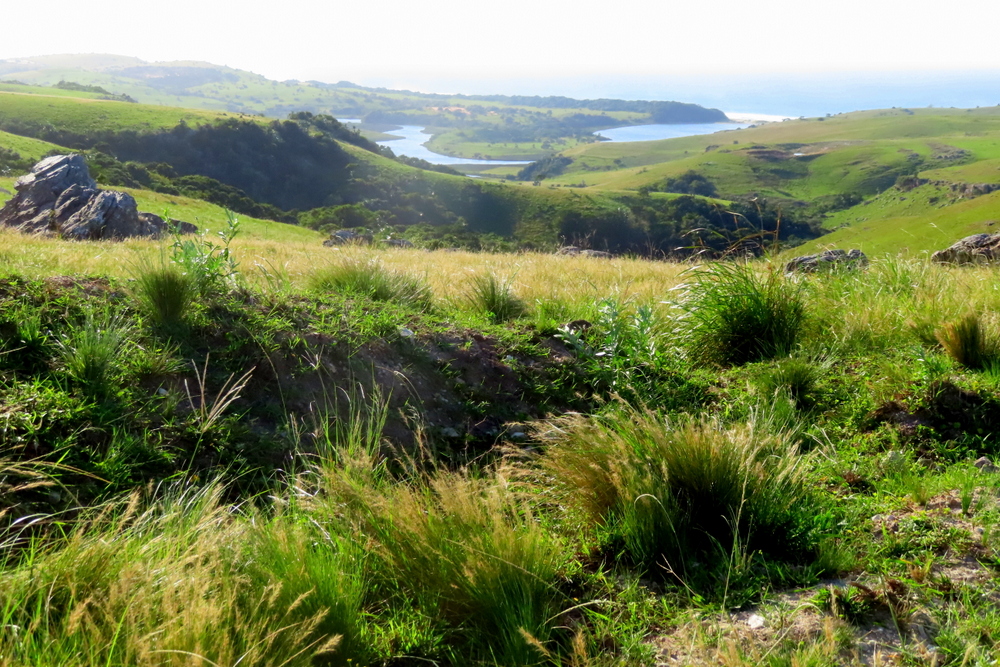
Later, a few of us went for another walk across the rolling countryside. The sun had dipped behind the distant hills but there was still plenty of light in the sky so instead of following the others back to the shack afterwards, I headed further up the road on my own. To my left a herd of cattle were standing atop a ridge, contentedly chewing the cud. I decided to go towards them. At the top, I stopped and surveyed the beautiful view. To my left, a winding river snaked its way through the hills before opening up into a reed-lined estuary over which an occasional heron drifted. In front lay the ocean, stretching out forever under an empty sky. To my right, I could make out the prominent bluff that marks the point where the Mtentu River enters the Indian Ocean. It all seemed ethereal, dream-like, a shifting evanescent panorama.

With the light rapidly fading, I turned and started back along the path. My reverie was interrupted when I became aware of a figure staggering towards me, arms waving frantically, trying to attract my attention. I instantly recognised him. He was one of the noisy revellers I had seen outside the shebeen earlier on, the one proudly sporting a brand new ANC Youth League T-shirt.

My habit of snapping away with a camera at anything that captures my fancy was about to land me in trouble…

Initially menacing the young man demanded to know who I was, why was I there and what was my reason for taking photographs? Was I a journalist, he asked suspiciously? “No,” I said, not strictly honestly (although, in fact, I’m a political cartoonist) -” I’m just an old man – a mkhulu – enjoying the view and taking in the sea air”. He seemed unconvinced by my explanation. Another barrage of questions and accusations followed which I had some difficulty following because of his confused diction and somewhat inebriated state. Then, his attitude abruptly changed. He gave me an ingratiating smile, bent over and scooped up a rusted old enamel dish lying abandoned in the grass. “” Here”, he exclaimed with a beam, “A gift for you. Something to remind you of the Transkei”. I thanked him profusely and – keen to avoid further inquisition – hastened back to the safety of our shack.

I felt saddened by the encounter. With national elections looming, part of my reason for coming to the Wild Coast had been to try and escape the bluster, sanctimony, slogans and ideological posturing. Now, I felt like I had been yanked out of my imagined pastoral idyll and thrust back into the harsh reality of modern-day South African politics.

The mood soon passed. Sitting outside under a star-smattered sky, the air wet from the sea mist and the faint taste of wood smoke drifting past, I witnessed one of those beautiful, long enchanting slides of a shooting star falling through the heavens. The good omens were piling up. Mary Ann’s birthday – which we were to celebrate with a sumptuous paella (Kelly’s cooking again) and bottles of champagne – had really received the blessing of the gods.

Another pleasurable surprise lay ahead. Peering through the encroaching darkness I next made out the outline of a cruise liner, steaming southwards like a massive, lit-up fairy castle. The contrast between it and our own simple rustic setting could hardly have been more striking. As I sat there, watching its progress, it suddenly dawned on me that this was the very ship transporting my geologist brother from Australia who I had arranged to meet in a few days, after he had docked in Cape Town. It was another sign from above..

Straining my eyes, I watched the ship until it was nothing more than a distant speck, Then it vanished and everything went dark again.

The next day, I sprang out of bed with a purpose. The Transkei interior gives rise to several major rivers and numerous lesser ones. The Mtentu, which passes through a steep cliff-lined gorge before discharging its contents into the Indian Ocean is one of the Wild Coast’s iconic rivers. Navigable for some distance, we hoped to canoe a small section of it.

The Mtentu River Gorge.

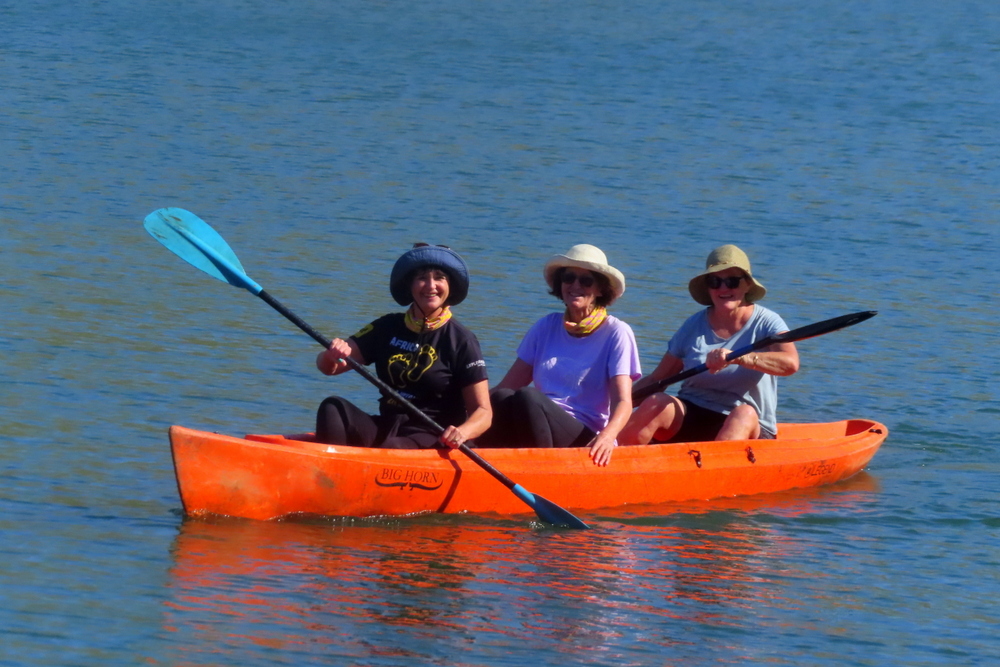
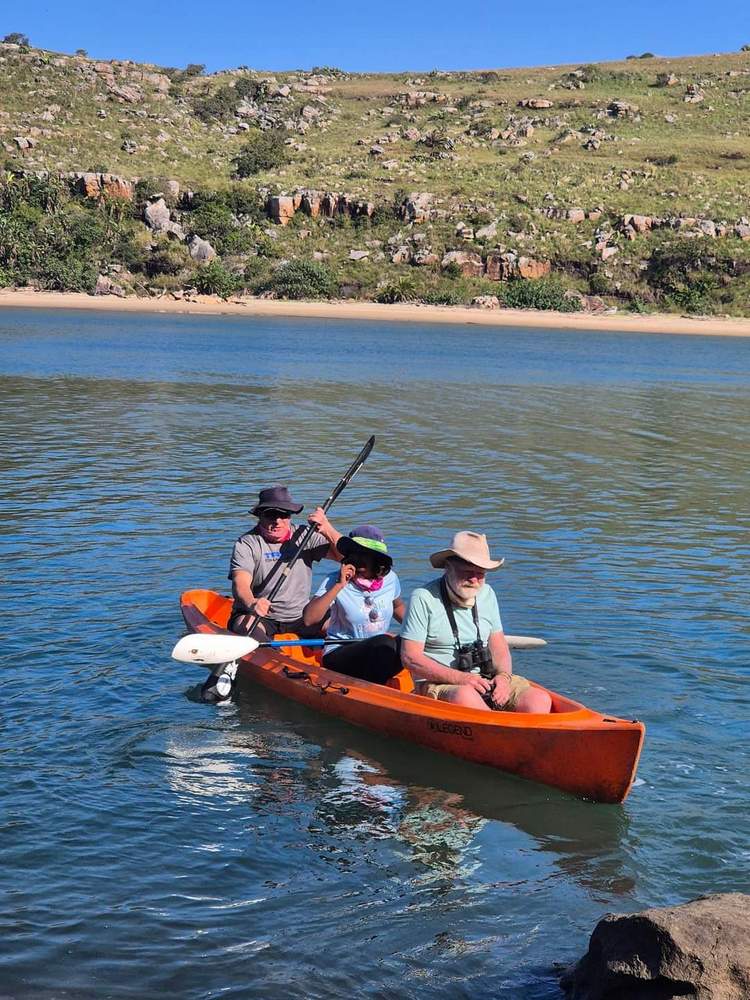
As it rose above a rampart of cloud hovering above the Agulhas Current, the morning sun was whispering enthralling promises of things to come as we headed down the winding track that led towards the river. Reaching its shore we clambered into the bright orange hire canoe, that had been made available to us, and turned its nose upriver towards the interior. Then, we started paddling.

The Mtentu Gorge has an enchantment about it. Sitting in the brow of the canoe, I felt a bit like Marlowe in Conrad’s Heart of Darkness, on a journey into the unknown. As we paddled, the river seemed to close in on us, tall trees and tangled masses of vegetation crowded down the steep cliffs, in an impenetrable thicket, to the water’s edge. Patches of mangrove clung to the shores (I had hoped to catch a sighting of the elusive Mangrove Kingfisher but I was to be disappointed). In places, the choppy waters, snatching this way and that, had ripped caves of soil out of the bank, leaving hundreds of metres of exposed rock and overhang.

A tangled mass of rocks and vegetation.

There was no sign of human habitation or any indication that anybody had penetrated the pristine jungle of trees along its shoreline in aeons. Apart from the odd bird and jumping fish, we appeared to be absolutely alone, face to face with the very elements of creation (although the last time we had been here, Tom Cruise had spent the day buzzing up and down the river in a yellow biplane filming a sequence for the latest Mission Impossible). Drifting through that quiet, deserted, mysterious landscape, with only the sound of the paddles sluicing through the water and the distant roar of the breakers crashing along the river mouth, everything seemed just right. I felt I had all my heart could desire in these troubled times – calm, peace, serenity and a timeless beauty.

A journey into the unknown

Rounding a corner, a waterfall on the right of the river, hove into view. Ian Tyrer, our (highly recommended) hike leader, who was paddling, arced the canoe close to the bank, before guiding it expertly through the rocks up to its base. Positioning ourselves so that we could best take in the spectacle, we sat quietly for a while in the shade cast along the edges of the river bed by the forest giants and high cliffs watching the cascade of water falling over the lip of rock high above us. As we sat, cloudy layers of falling moisture splattered softly on and around us.

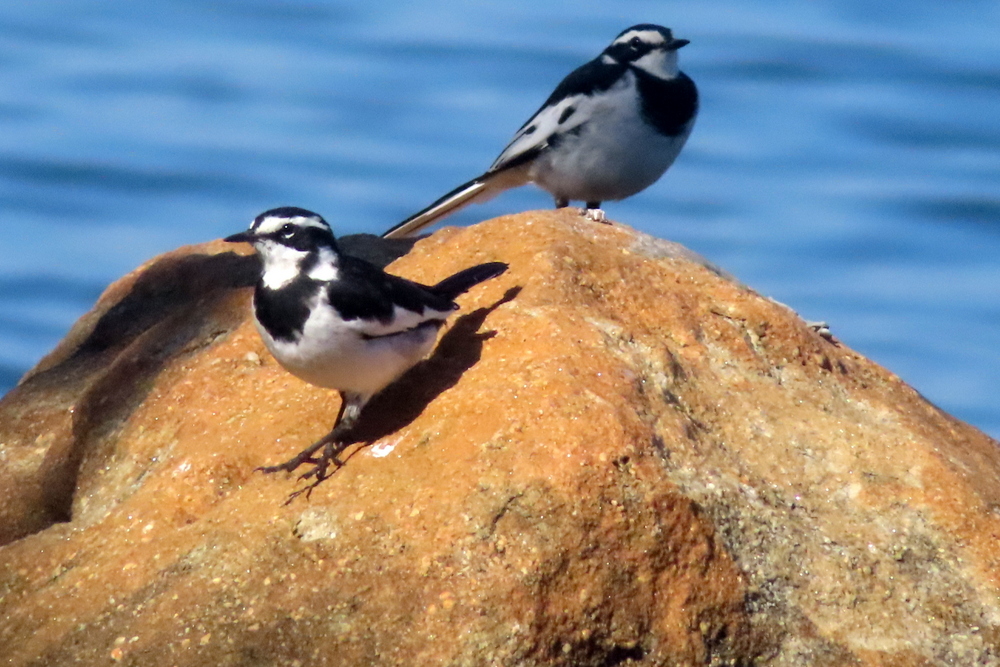
Having reached this dramatic landmark, we turned and headed back the way we had come ( I would loved to have explored further). By now we were approaching lunchtime and the weather had begun to change. Staccato gusts of wind jabbed the water, causing it to splash and thump against the side of the canoe. Ian paddled close to the banks where the water spirits were not so intent on upturning us, directing the canoe past a point where an enormous tree had been thrown into the shallows by some past flood, its twisted form providing a convenient observation point for kingfishers and cormorants. Further on, a pair of tail-bobbing Pied Wagtails struck poses on a rock and watched, with bemusement, our progress, as we battled against the tide.

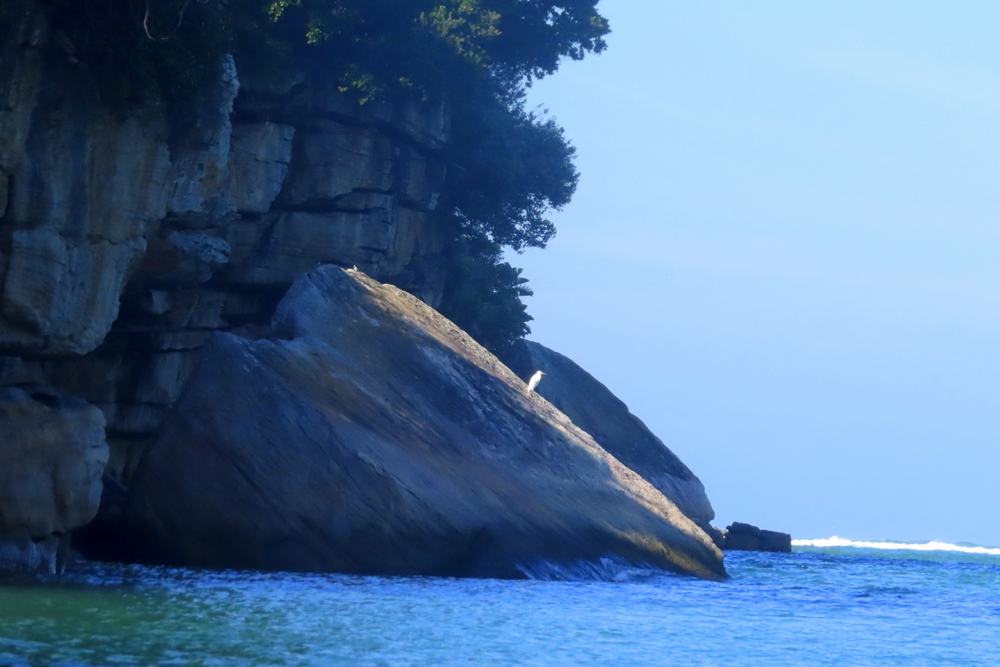
Instead of pulling in at our launching spot, Ian decided to head on down the river towards where the waves were breaking. Acting like some self-anointed guardian to this wild sanctuary, a solitary egret stood erect on a large sloping rock that demarcated the entrance to the river. By this stage, the swell was getting stronger so Ian called a halt. Turning the canoe around, we headed home.

And so the last day of our trip drew to a close.

That evening, I sat down and, over another beer, totted up the total distance I had walked during the course of the three days. It amounted to over thirty kilometres. Although it had not been my only motive for coming on this pilgrimage, it was an achievement of sorts, especially considering I had not done the main beach walk of about 25 kilometres.

Driving back to my home at Curry’s Post the next day, I felt I had notched up another successful jaunt to the Wild Coast. Not only had it met my inner needs but I had proved there was life in the old dog – that being me – yet…

GALLERY:

More Wild Coast Scenes:

Wild Coast Scenes with Animals:

Wild Coast Hikers:

Going with the Ebb and Flow: Hiking the Wild Coast (Part Two)

Ignoring warnings that a massive cold front was headed in the same direction I packed my backpack and, full of optimism for the journey ahead, headed south to join a group of equally intrepid hikers who were planning to hike the Mtentu section of South Africa’s iconic Wild Coast. Organised by local adventurers, Ian and Mandy Tyrer, it was a journey I had done the previous year (see Stidy’s Eye) but this time around we had decided to reverse the order – instead of walking from the Wild Coast Sun to Mtentu we would hire a local taxi to Mtentu and walk back from there.

We opted to use the small coastal resort of Trafalgar as our staging post because of its close proximity to our starting point. The next morning we all gathered in the Wild Coast Sun’s underground car park. It was an interesting mix of faces and personalities that milled around, most of them – like me – well past the first flush of youth. They seemed a mellow bunch – not given to postures, prepared to accept what lay ahead. Over the next few days I would get to know them better, the quiet and the talkative, the funny and the serious.

There were two bakkies into which we all squashed, like peas in a pod. Promptly, at seven, we were off, initially on tar and then down a rude dirt track. The road was in an awful state, made even worse by the recent April floods but at least the drivers were considerate edging their vehicles cautiously through the washed-out sections and all the ruts and bumps. It didn’t help. About halfway through the journey, the front vehicle ground to a stuttering halt, plumes of white smoke belching out of its cab. A fan belt had broken. The drivers remained completely unperturbed by this turn of events. Within fifteen minutes they had miraculously conjured up a replacement vehicle, seemingly out of nowhere, and leaving the broken truck parked in someone’s backyard we were off again to our destination, still several hours off.

Breakdown…

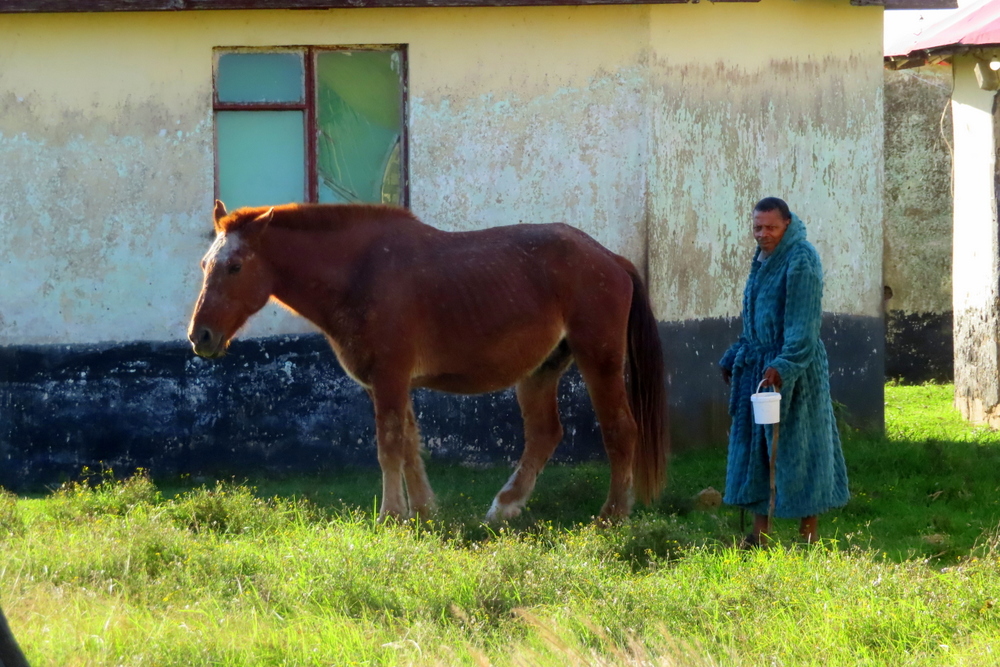
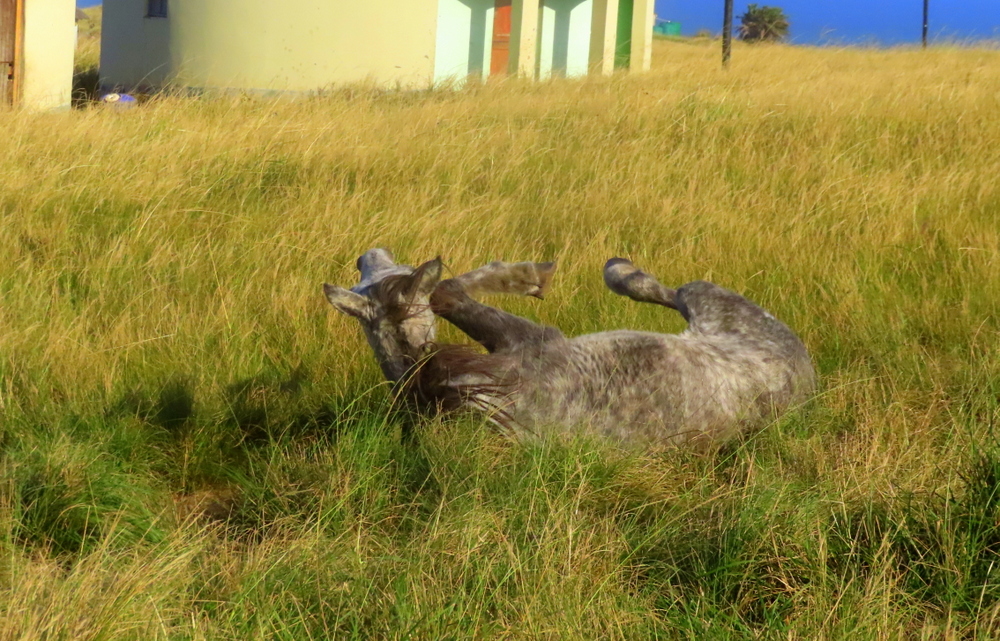
Our accommodation for the next two nights at Mtentu was a prefab – the Fishin’ Shack – run by the friendly, effervescent Kelly Hein and set amidst a scattering of huts and brick and cement buildings, huddled together as if for mutual protection from the elements, their interiors smoky from cooking fire. On the other side of the sagging fence that marked off our bit of turf, a large hairy black pig snuffled around looking for edible items. An assortment of chickens, dogs, goats, cattle and even a solitary horse also milled about, using the walls and roof overhangs for shelter from the rigours of the climate. The resident old woman shuffled past off to perform her daily chores while a gaggle of kids giggled and chatted and played games with one another. On the top of the hill, alongside, stood the local shebeen from which the occasional burst of drunken hilarity emanated.

I was delighted to be back.

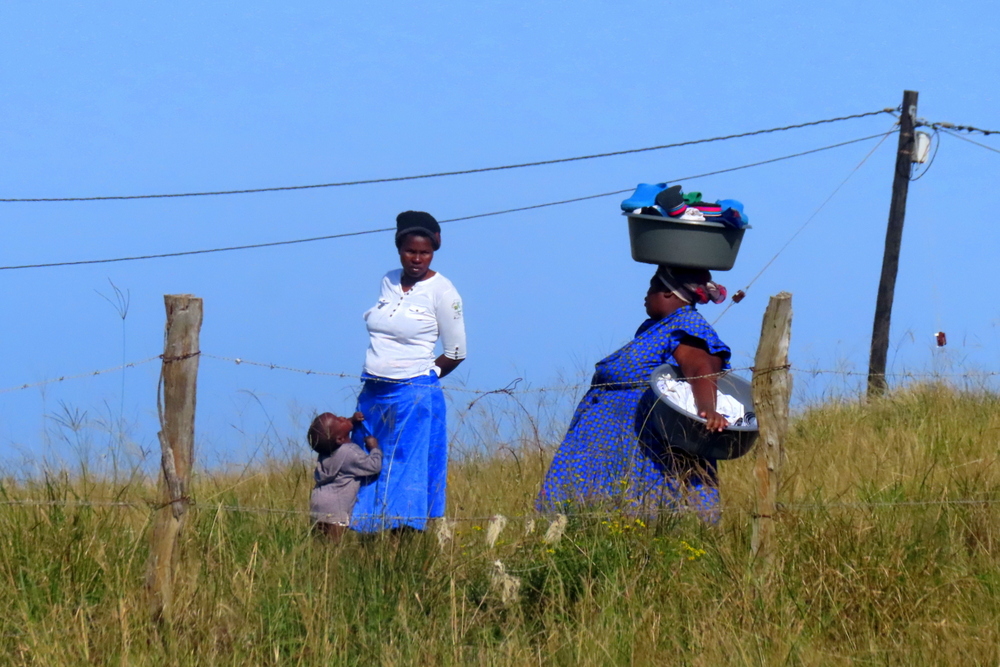
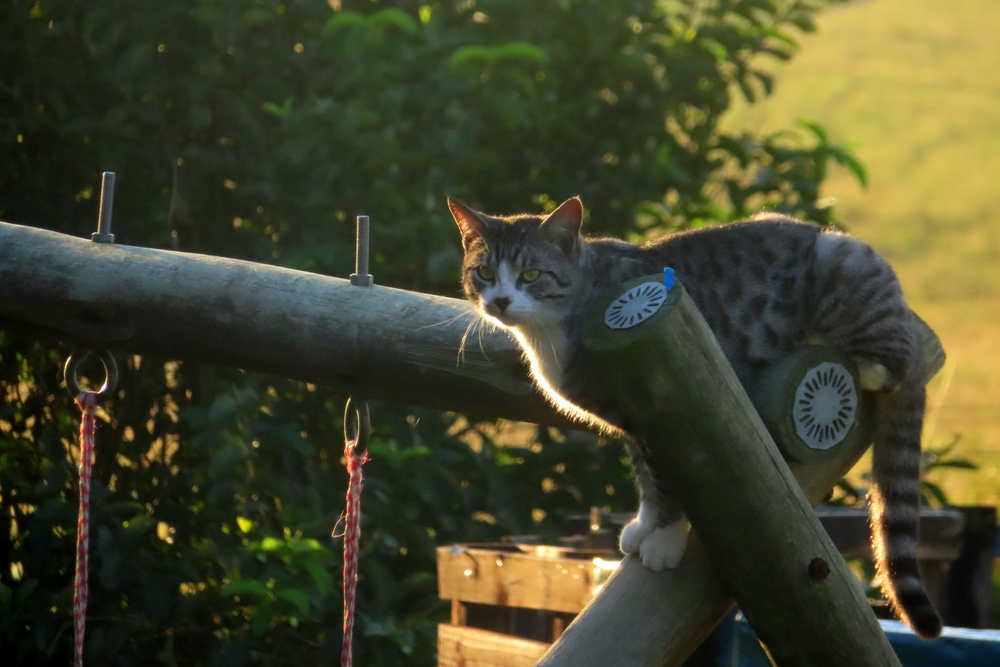
That afternoon, with the sky blackening and curdling around me, my hiking companion and I took a stroll down to the nearby Pebble Beach. Halfway down the hill, a grey cat decided to join us and then, a bit later, changed its mind and wandered back. A dog came bursting out of a yard, yapping its head off. Women with large bundles of wood on their heads strode through fields along slender paths. We carried on down the path to where a brown, brackish sea lapped against a beach littered with storm debris and driftwood and piles of multi-coloured stones scattered across the beach like an assortment of Smarties tossed aside by some rich giant’s spoilt, thoughtless kid.

Pebble Beach.

I had promised my sister I would collect a few of these beautifully smooth pebbles to place on the grave of her much-loved dog who had recently died. I was certainly spoiled for choice. but made a selection, just glad that this time I wouldn’t have to carry them all back (we had arranged with the taxi owners to carry our gear for us).

With the sun – or what we could make out of it – about to go down we hurried back. Huge clouds were beginning to stack themselves in the south.

The approaching storm...

That night, the predicted rain duly arrived, sheeting down something awful on the corrugated roof under which I lay. There had been no bed available for me inside the shack and so I had made a little home for myself in the corner of the stoep. Sleep was out of the question as I stretched out in my sleeping bag on its cold hard floor with the wind periodically gusting fine sprays of rain onto my face.

Towards dawn, the storm gradually faded away but I could hear the steady pounding of the waves against the rocks on the seashore down below us. In my drowsy state, they sounded like a medieval army on the march. As my consciousness flickered between sleeping and waking, some lines from Matthew Arnold’s On Dover Beach slunk into my head.

Listen! You hear the grating roar

Of pebbles which the waves suck back, and fling,

At their return, up the high strand,

Begin, and cease, and then again begin,

With tremulous cadence, slow, and bring

The eternal note of sadness in.

In this famous poem, the sea symbolises religious faith with the poet acknowledging the diminished standing of Christianity, unable to withstand the rising tide of scientific discovery. The cycle of belief and unbelief. More than that, the poem is about the battle against darkness, something which seemed to me as relevant now as it was back then.

As I watched the rain dripping off the roof, I reworked the poem’s lines through my imagination, adjusting the sentiments to our present time. With war raging in Ukraine, there was little doubt about the nature of these modern demons. Like the poet himself, I was overcome by a sense of sadness at the pointlessness and mass stupidity of it all:

And we are here as on a darkling plain

Swept with confused alarms of struggle and flight,

Where ignorant armies clash by night.

But there was no time to brood. It was time to get up. There were lots to explore. Our team leader decided he wanted to check the size of the river we would be crossing the next day so I volunteered to join him.

The sky was full of biliousness, the clouds unable to decide what shape they wanted to be. Out over the sea, wisps of mist were chasing one another. Every now and again the odd squall of rain would hit us but with nothing like the intensity of the night before.

We walked on. The land rolled and sloped away down to the sea with the occasional hunched tree sticking its head above the sun-burnished grass. Scattered over the hillsides were the odd settlements and small groves of Pondo palms. A flock of goats came striding purposefully by, off in search of the day’s grazing, studiously ignoring us as they went. Two black bulls nudged one another in mock combat, trampling the grass underfoot.

The sun was cutting through the cloud and sending golden bars dancing on the sea surface as we made our way down a grass embankment, that was oozing water from all the rain to the fat, curling river. Several cows were grazing along its banks.

With its treacherous currents, hidden reefs and unpredictable weather the Wild Coast has, over the centuries, provided a graveyard for countless ships – and, sure enough, lying on the beach, on the side of the estuary, were the skeletal remains of one such vessel. Some aspiring graffiti artist had painted a skull on its boiler. It seemed an oddly apt metaphor. Good artwork too.

Old wreck.

Having satisfied ourselves that the river was fordable, we set off back.

In the afternoon I elected to walk to the viewpoint that provides a panoramic view over the Mtentu Gorge. With cliffs that tower above the river, it is a compelling sight. Just to the left of where we stood a beautifully clear side river tumbled over a series of steps and then fell down into the main river. At the base of the cliff and along the gorge slopes grew a dense mass of vegetation, the trees and bushes crowding together, pressing out over the water to gather the direct and reflected sunlight. In front of them, Mangrove trees stood in the saline shallows. I spotted a pair of Egyptian Geese having a domestic quarrel on a spit of sand way below and then several Trumpeter Hornbill came flapping heavily over the forest canopy, shattering the peace with their extraordinary calling. As if on cue, an Eastern Olive Sunbird piped in with its far more tuneful little melody.

Standing on the edge of the cliff, looking along the river and then out to the choppy sea gave me an extraordinary uplifting feeling, one that immediately banished from my mind the sense of impending doom I had felt earlier on. For me, God is the Great Outdoors and the view certainly made me feel like I had ascended to a loftier plane of being. Here, surely, was the real meaning of holiness?

The Mtentu river and gorge.

Back at the Fishin’ Shack, I discovered we had been befriended by a dog. Because of her gentle, trusting, respectful nature, she was immediately dubbed Lady. The owner of the Fishin’Shack asked us if we would mind taking her back to her rightful home – our next stop along the way? Having all developed a deep fondness for the animal, we could hardly refuse.

Lady the Dog who became our constant travelling companion.

Lady seemed excited at the prospect of joining us, slotting in happily behind us as we set off the next day. Hiking along a beach like this, you soon settle into a steady rhythm. Behind me, I could hear a steady stream of chatter but I was content to be alone with my own lonely, mystical thoughts. We walked, hour upon hour, along the shoreline with all its shifting moods and then up over roller-coaster hills which led us, eventually, through the strangest of apparitions – a Mars-like, small red desert. For a moment it made me wonder if our host had slipped something into my meal which was now causing me to hallucinate? A desert? Here?

The shoreline – in all its shifting moods.

The stark beauty of these dunes could prove their undoing. The reason the sand is so red is that it contains titanium. Loads of the stuff. And several rapacious, international, mining companies are keen to get their hands on it even if it means destroying this undeveloped slice of paradise in the process.

The Red Desert

The Pondo, who have lived here for generations and see themselves as stewards of the land, have opposed any attempt to let them do so. Instead of siding with them, which would seem the morally right thing to do, the Government has, in the past, tended to back the mining corporations (just as it recently did with Shell’s plans to carry out seismic surveys off the Wild Coast). When it comes to the exploitation of natural resources and the possibility of making a massive profit, the noble principles on which the ruling party were founded and which were so well articulated by Nelson Mandela seem to have been quickly forgotten.

Once again my thoughts returned to On Dover Beach and the cold evil flooding every corner of the world. Greed.

We trudged on, Lady still trotting uncomplainingly behind us. Eventually, a raggle-taggle of brightly-coloured huts set up on a ridge dotted with strange rock formations and small ravines came into view. This was our final night’s accommodation. Just beyond it, lay the Mnyameni River gorge (with its stunning waterfall) where we would go for sundowners that evening.

Our final night’s accommodation.

We were a little disconcerted to discover, however, that there had been a misunderstanding. This was not Lady’s home. Nor was the owner in a position to adopt her. So a member of the group nobly offered to do just that. Lady, the rural Transkei hound, was now Hilton bound and about to discover a whole new level in healthcare and lifestyle.

My luck was running in the opposite direction. I had begun, by now, to realise I was seriously unwell. Somewhere along the way, I had picked up a chest infection. Feeling poorly, I retired to bed early that night. Unable to sleep, I lay in my tent and looked out into the star-smattered sky, as a bright, luminous moon rose out of the sea, looking like a large tangerine (Where the ebb meets the moon-blanch’d sand – Arnold again). The air smelt slightly wet and tainted with the faintest taste of wood smoke.

The next morning was warm and welcoming with not a cloud in sight as we set out on the final leg of the hike, taking Lady with us. She seemed pleased at the prospect. So did I. Energy levels can rise and flag on a strenuous journey like this but right now – wonky chest notwithstanding – I felt good. In the early morning glow, the countryside looked radiant, and the sea was as wild and dramatic as any romantic painter of scenes such as this could have hoped for. The waves were collapsing and wheezing along the shingle. I was excited to spot a Black Oystercatcher, ferreting around in the rock pools as the sea thundered behind it. Up until then, I had been a little disappointed by how few birds I had seen.

Black Oystercatcher.

The whole scene was wonderfully free of the crass commercialisation that typifies so much of the South African coastline although there was plenty of that just to the north. I was happy to cling to the illusion there wasn’t.

With the sun growing increasingly hotter in a brilliant blue sky, some of my earlier enthusiasm began, as the waves alongside me, to flow away as we toiled on along the beach. By now my face was as pink as a prawn from my laboured breathing and the physical exertion. There was to be no easy let off. Because of all the rain, we were unable to ford the Mzamba river at its mouth as was the normal custom and were forced to make a long detour inland to another crossing point upstream.

The hike to the top was steep, hot and seemingly endless but eventually, we staggered to the edge of the gorge. Then we plunged down a track that looked like it had been designed by a committee of goats to the river below which we crossed via a suspension bridge. The last few kilometres back to the Wild Coast Sun were sheer hell. My feet ached and thanks to my infected chest, my breath came out in slow, asthmatic gasps. My throat felt like I had accidentally swallowed a roll of sandpaper and it had got stuck there. As I hobbled into the parking area I felt like some ancient pilgrim who had just been forced to pay penance for his sins.

The final stretch

Judging by my fatigued state, I must have sinned a lot too. As I flopped down, exhausted, I reckoned I had purged the whole lot from my soul.

Inside the parking lot, it was a tender moment watching Lady driving off to her new home where we knew she would be well-loved and taken care of. Then it was our turn to drive out of the gate and I found myself shaken to be plunged back into a tumult of traffic headed north to Durban. After our three day hike, during which we had not encountered another soul on the beach, I found it quite unnerving. What could be more depressingly different than driving down a motorway? I drew comfort, though, that somewhere, far away from the shrieking commotion, lay the healing magic of waves crashing on a deserted shore…

GALLERY:

Seascapes

Village Life

More Village Life

The Passing Scene

Rapture on a Lonely Shore: Hiking the Wild Coast

There is pleasure in the pathless woods,

There is rapture in the lonely shore,

There is society where none intrudes,

By the deep Sea, and music in its roar:

I love not Man the less, but Nature more

George Gordon Byron

A fine salt mist hovered above the shoreline, putting the distant dunes and hills slightly out of focus and robbing the landscape of contrast. The huge sky above was empty except for a thin stream of puffy clouds hanging above the Agulhas Current.

There wasn’t a house or hut in sight. Surveying the emptiness and the rugged scenery, I began to get some understanding of why this remote area came to be called the Wild Coast.

Stretching from the Mtamvuma river in the north to the Kei River in the south, the Wild Coast is a part of South Africa I had woefully neglected. The northern part of the Transkei I had never explored at all. Keen to make amends for this gross oversight, I had jumped at the opportunity to go on a hike along its coast when my good friends, Ian and Mandy Tyrer (veteran travellers both) first suggested it – especially as it was to celebrate Ian’s 60th birthday.

The area has a long and rich history. For countless generations, the Pondo people have grazed their cattle on the lush green hills of the interior. Further south is Xhosa country, with the Great Fish River once providing the dividing line between them and the European settlers moving north.

Isolated from the rest of the world for centuries, the local inhabitants must have had little inkling that they would, one day, be visited by people from other realms.

Portuguese ships first rounded the Cape of Good Hope in 1488, heading up the eastern shores of Africa before nudging their carracks into the vast unknown of the uncharted Indian Ocean. They reached India just ten years later. Pushing farther and farther east, they eventually entered the coastal waters of China – a land of fabled riches – where they began a covert trade in silks and porcelain with the Ming dynasty. They also explored the numerous islands of the East Indies. In 1544 a blustery monsoon even caught the sails of one Portuguese vessel and swept it as far as Japan.

Where Portugese carracks once sailed modern container ships follow.

Where the Portugese blazed a trail, others followed, lured on by the fabulous tales these early explorers had returned with.

Many of the men on board the vessels that undertook these hazardous voyages might have had second thoughts if they had any notion of the distances and the dangers involved. The ocean could be wild and tempestuous and ships were frequently blown off course. Scurvy was common, discipline often broke down because of the horrendous conditions (troublesome crewmen were sometimes deliberately marooned). Many journeys ended in complete disaster.

The southeast coastline of Africa – and, in particular, this stretch of broken shoreline – was especially noted for its treachery. Fast-moving storms would suddenly sweep in, in the dark, it was easy to sail into reefs and rocks, rogue waves swallowed countless ships. There were few natural harbours they could sail into for shelter.

Over the years, its waters became a burial ground for numerous ships. Among the more famous are the Sao Bento (1554), and the two East Indiamen Dodington (1755) and Grosvenor (1782). One of the most compelling mysteries remains the fate of the luxury ocean liner Waratah and her complement of 211 souls, which simply disappeared in July 1909, while under-way from Durban to Cape Town.

Even in recent years, the notorious coastline has continued to exact its toll. On the 4th August 1991, the Greek cruise liner, Oceanos sunk off the coast near the Hole in the Wall. The captain and crew promptly abandoned ship leaving the remaining passengers to fend for themselves – shamefully ignoring the famous ‘women and children first ‘ order, given when, on the 26th February 1852, the HMS Birkenhead struck a rock and sunk, near Danger Point, further down the Cape coastline, with the loss of 450 lives (an ancestor of mine, Elizabeth Nesbitt, and her third son, Richard Atholl were among the few survivors).

Although many lives have been lost along the Wild Coast, some survived the ordeal. Once on land, a few of the castaways managed to make it to the nearest European outposts (the Portuguese-held Delagoa Bay to the north, the Dutch Cape to the south), many others died, while a small number were assimilated into the local tribes.

Turning this all over in my head, while I sat on a dune stained red by titanium (which a greedy Australian mining company now wants to exploit), munching a handful of raisins and peanuts I had brought along to give me energy, I found myself pondering what the Pondo must have thought when they first glimpsed those ghostly white sails bobbing along the horizon. I could imagine the feeling of fear, fascination, and incomprehension when they first encountered these strangely dressed interlopers.

My journey had begun much closer to home, at that symbol of mass-produced, uniform international tourist culture, the Wild Coast Sun. I had no real desire to linger there but, if nothing else, it had served as a good reference point, reminding me of what I wanted to leave behind and what I hoped to discover on the trek ahead.

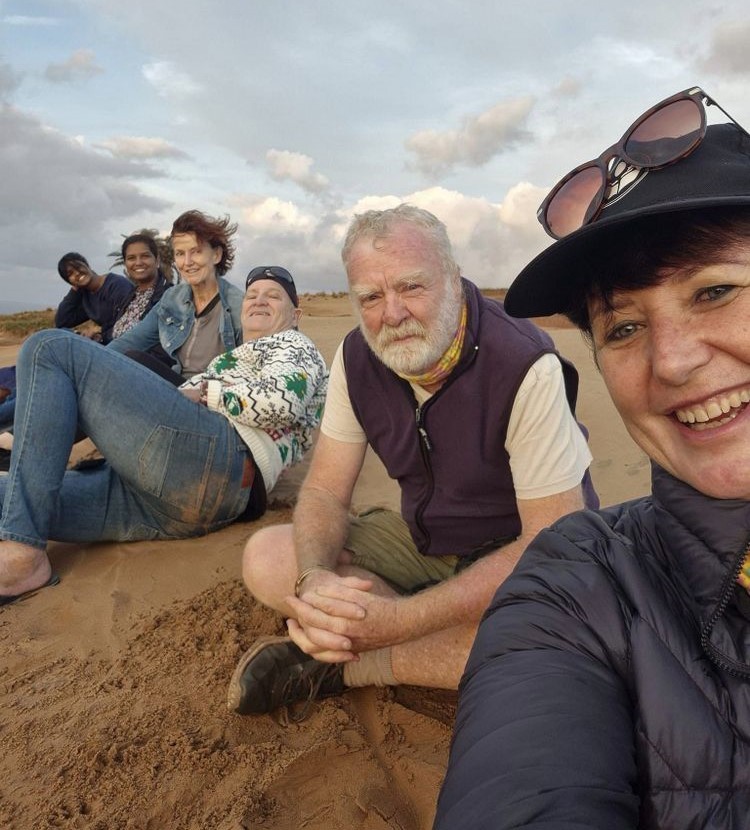
There were seventeen of us in the group. Looking like a meandering crocodile as we stretched out along the shore, our ages ranged from eighteen to seventy-plus. Over the next few days, I would learn just how convivial a bunch of beach pilgrims we were.

Within a few hundred metres of leaving the Wild Coast Sun complex, it was like we had entered a parallel universe, crossed through a portal, travelled back in time. The whole mood of the countryside changed, the landscape became grassy and uncultivated, the settlements few and far between. There was a quiet after the hullaballoo of the busy freeway and endless miles of asphalt, power lines, malls, and gated housing estates. It came like a fresh draught of air, beckoning us into a world that had little changed over time (other than the tinny music bellowing out of a few of the huts we would later pass by).

For the first stage of our hike, we walked mostly along the beach which was all but deserted apart from the odd fishermen casting from the rocks and the occasional seagull flying overhead.

Although we had timed it to cross at low tide the first big river we came to was still flowing strongly. The water pushed irregularly at our wastes and knees, sometimes embracing us like we were just another piece of flotsam to be swept out into the Indian Ocean. The clear shallows were speckled with little batches of fish, darting shoals of silver and green. Sunbeams danced along its surface.

Fording a river. Pic courtesy of Penny Meakin.

A little later we came to another river that needed fording. Once again it had a solid muscularity to it but we managed to push our way through the fast-flowing current and up the bank on the other side.

As we walked the sun climbed steadily up the back of the bluest sky. The sea became more boisterous, endless rollers crashed onto the rocky shore. Up ahead the chatter continued as each person got the measure of the other. I could sense we were beginning to cohere as a group.

A boisterous sea.

Out at sea, something large and grey suddenly shot out the water and fell back with a slap. A whale. Then another tail appeared – a great glistening V that hovered motionless for an instant before slipping slowly, vertically downwards. Over the next few days we were to see a lot more of them, their presence was invariably given away by a sudden spout of chalk-white spray.

Mid-morning we stopped for a break. Prone on the shaded river-beach, desperately trying to coax some life into my aching back, I found my thoughts returning to the crew and passengers who had survived the various shipwrecks along this coast. I was beginning to feel a certain kinship with them. Nor was this just idle fantasy. Cast adrift on this lonely shore, each of us had – like them – came with our prejudices, personality quirks and back story, shards of which began to appear as the long march continued. As with them, survival and reaching our destination had become all.

Time rolled on, my pack grew heavier, my watch ran slower. After walking along the beach for most of the morning we finally turned inland and headed up into the grass-covered hills. My tiring legs began to complain. The scenery was, however, breathtakingly beautiful in its rustic tranquillity. Stands of Pondo palms sheltered little settlements of thatched huts whose walls were sometimes painted white, sometimes with yellows and ochres and browns. Cattle and goats grazed in the long grass.

Tranquil rural scenes…

All but tumbling and tripping we finally staggered into the local village where we were to spend the night. There was, of course, no electricity, running water nor other modern conveniences here, but we were to find ourselves the subject of the most gracious hospitality and kindness.

Later that afternoon those of us who still felt up to it, after the long hike, hopped on the back of a local bakkie and headed off up a rutted road to Mnayemi Falls. To truly appreciate the full majesty of this spectacle, you have to climb down a parallel waterfall, situated slightly to its south. The descent was steep and slippery, one misstep could have left you in a heap of trouble. I was thankful I had decided to bring a mountain hiking stick to help keep my balance…

It was well worth the risk and effort. The place had an otherworldly enchantment about it. Surrounded by a great edifice of a high rock cliff, the falls exuded a powerful, dreaming holiness. The sun burnished the top, the rest of the falling water lay in deep shadow. I could imagine sacred rituals being performed here in the light of a glowing moon.

The Mnayemi Falls.

Wanting to experience its healing, restorative power, I eased myself into the water and felt the cool go through me. I felt alive, tingly, happy to be in the water. I swam out into the pool and back again. Hoisting myself out I felt incredibly vigorous and content.

Relaxing at the village later, I sat on a plastic chair and watched the rolling hillsides behind us turn to gold, then fade to dusty violet. There was a chill in the air. In front of me, a translucent blue-green sea shimmered like a mirage on the horizon.

More magic lay in store. That morning we had watched a gleaming sunrise above the ocean, now it was the moon’s turn to impress and impress it did. There was something eerily spectral about the scene, as the bright orange orb rose steadily into the star-smattered sky, its reflection glimmering across the ever-moving waves below.

Heading off again

The following morning we got up early and resumed our journey south, heading down towards the Red Desert, an area of undulating dunes that look uncannily like the surface of Mars. As I marched along, the sun slanted away behind me sending long thin shadows stretching over its red sands.

The Red Desert.

Back on the beach, we plodded on. At the end of one final long stretch, partly embedded in the sand, rested the rusted remains of a large ship boiler (I later discovered it belonged to the steel steamship The Guerdon which was abandoned due to engine trouble on the 9th July 1929). Just beyond this, we crossed another river and followed a wriggly path that led up a steep hillside.

Once again it was tough going but finally, we reached a long line of boxy houses, in the middle of which stood our destination – the Fishin’ Shack. For me, it was love at first sight.

There was a colour and exuberance about the place I had not expected. Beautifully patterned blankets hung over fences, multi-coloured chickens sauntered past doorways, stumpy black pigs milled around, goats made goat-noises, dogs barked, shouting schoolboys ran along grassy tracks to school, women with cans of water on their heads strode through the fields along slender paths.

In urgent need of an ice-cold beer, I quickly ascertained where the local shebeen was and headed up there as fast as my aching legs could carry me.

One of the patrons eyed me incredulously like I was some strange apparition who had just emerged from the frothy waves below. “What are you doing here mkhulu [elderly man]?” he asked. In the circumstances, it seemed a perfectly reasonable question.

On our first night, we feasted on crayfish prepared by our wonderfully warm and welcoming host, Kelly Hein. Afterwards, I had a Whisky nightcap before climbing into bed. Exhausted from the strain and long hours of walking I was soon asleep.

The Fishin’ Shack at night.

The next day we set out early for the Mkambati waterfalls. The track took us down to the Mtentu river which was once the subject of a TV documentary by David Attenborough, because of the, usually deep-sea dwelling, Kingfish who choose to swim up its fresh waters for no discernible reason. At its mouth, the river was too wide and deep for us to wade across so we hired a canoe and got to the other side that way.

Crossing the Mtentu river. Pic courtesy of the Tyrers.

After traversing a section of the Mkambati Nature Reserve, we reached the falls just before lunch. They are separated into two parts: an upper section where the river gushes into a large, deep, steep-sided pool and – a hundred metres or so below this – another section that drops, via a series of steps, directly into the sea. Because a group of cyclists had already claimed this beautiful spot as their own, we made for the upper pool. Thirsty from the long walk, I cupped my hands and lifted its water to my mouth. It tasted cool and vaguely root-flavoured. Every handful I took came out clear and sparkling.

Then I decided to go for another swim.

Once again, the icy water pounded my shoulders and thumped down on my head. By the time I scrambled out on the other side my body had lost all feeling so I danced a little jig to get the blood flowing again. There was something spiritual and very healing about doing it.

On the way back from the falls we came across another rusting skeleton of a ship that had been thrown high up onto the rocks. Surveying the twisted wreckage, I found myself wondering what angry, malevolent, and vengeful demon of the deep had managed to hurl the vessel so far ashore?

Chastened by such thoughts, I stumbled on, haunted by snatches of Coleridge’s Rime of the Ancient Mariner and Matthew Arnold’s Dover Beach (“Sophocles long ago, Heard it on the Aegean the turbid ebb and flow, Of human misery…”)

The next day, while the rest of our group were off paddling the Mtentu, my hiking companion, myself, and two others decided to head off on our own in search of a place called Paradise Pools, following minor and diminishing paths until they eventually disappeared altogether. It did not matter. Released into space, sky, grasslands, and patches of shade, I allowed my eyes to roam. To our left the high cliffs and gullied, forested slopes of the Mtentu river gorge moved towards us the further we clambered down the slope. Our destination, when we finally got there, more than lived up to its name.

Looking for Paradise Pools. Mtentu river gorge in background.

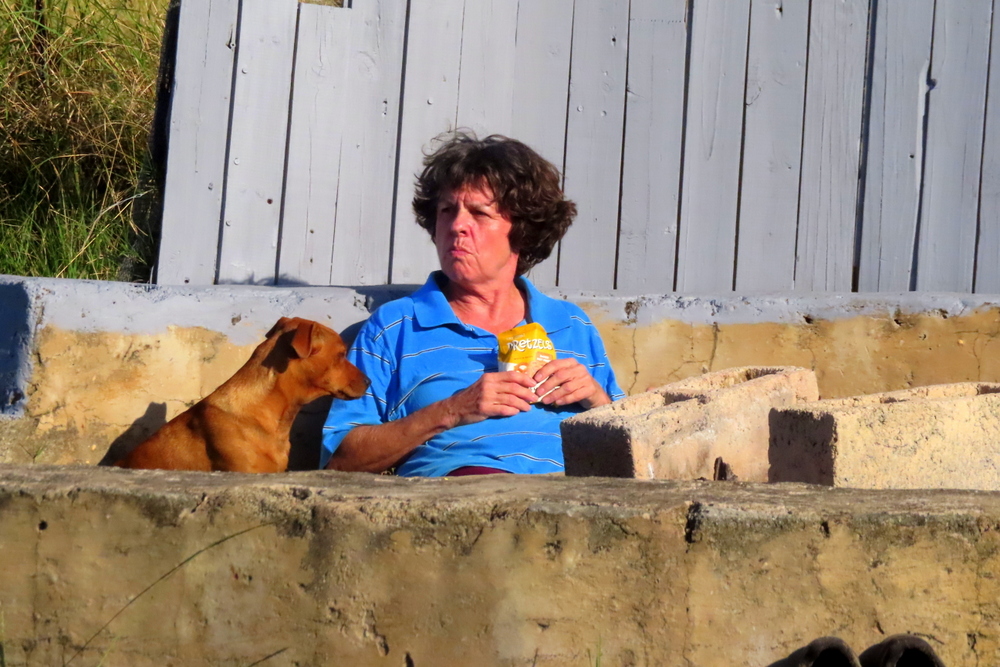
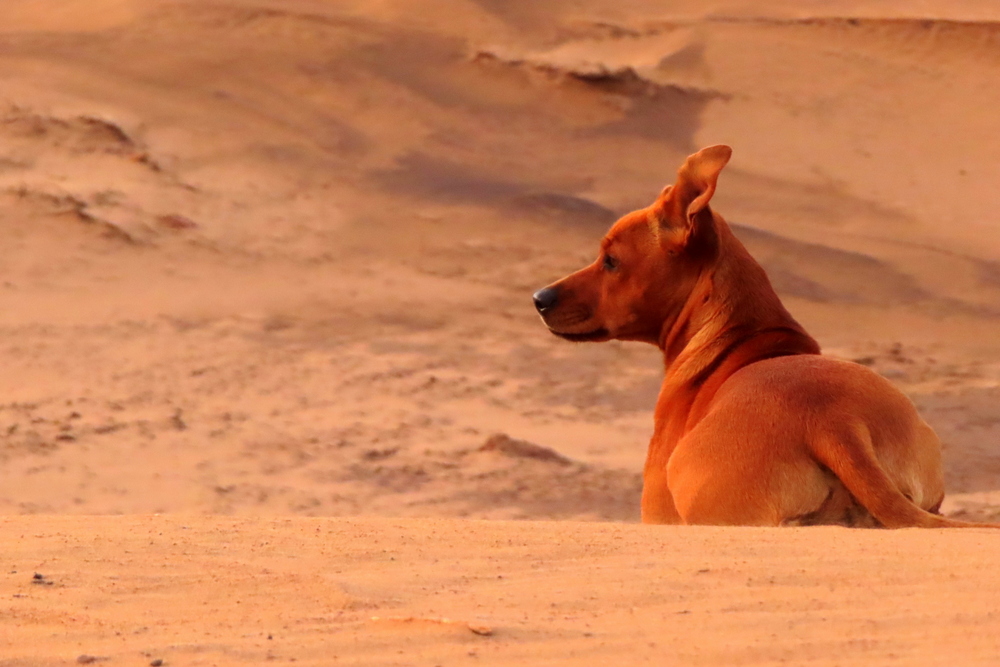
Wanting to make the most of my remaining time, I elected, that afternoon, to go down to the nearby Pebble Beach. One of the local dogs decided to escort me, there and back, presumably to make sure I didn’t get lost. Or maybe it was just in need of a friend and I looked like a possible candidate.

The scene that greeted me, when I got there, was so manifestly untamed I felt like jumping into it. Ahead of me the coastline swept confidently away through a series of bays, bluffs, inlets, and knolls. Out on the ocean, light and water bubbled and swam together. The pebbles on the beach below shone bright and glittery in the late afternoon light. I was transfixed by the beauty of it all.

A lonely dog on a lonely beach.

Dusk was falling by the time I returned. The sun was casting a furry, yellow light across the land and sea which was echoed in the gently waving golden grass and on the walls of the huts we passed by, their interiors smoky from cooking fires. For a while, I stood in silence and watched the sun sink in the west. The wind continued to blow in gusts down the slopes rattling the branches of some nearby trees. In between, I caught whiffs of meals being cooked and heard the low murmur of the voices of the folk gathered inside their cozy rural homes. The world of lockdown and Covid and urban paranoia seemed very far away. I felt completely at peace with the world.

The next morning we were up at another unseemly hour because it was time to depart. As we lugged our gear towards the waiting vehicles, a line of curious dogs gathered, like they had come to see the weird white-folk, with their incomprehensible customs, on their way. Wanting to preserve the moment, I circled about taking pictures of them. I was sad. I felt reluctant to leave, reluctant to say farewell to this homely old fisherman’s shack and my newfound friends and this beautiful, wild, storm-tossed scenery.

Saying farewell

Somehow we managed to cram ourselves into the two waiting bakkies and then we were off. During the long, bone-rattling journey back to the Wild Coast Sun I had plenty of time to reflect on the two Great Truths I had learned during my four days as a makeshift beach bum. Live simply. Carry a lighter backpack…

GALLERY

Some more pics from my Wild Coast adventure…

THE TEAM:

Pic courtesy of the Tyrers.

And finally, when the going gets tough, the tough keep going…

Hiking through the dunes. Pic courtesy of the Tyrers.