If there is one thing the Covid-19 pandemic has bought in to sharp contrast it is the deep divisions within society. Whereas some, have grown weary in the face of the protracted lockdown and adapted a devil-may-care attitude towards it, others have continued to shy away away from any form of social contact, concerned the virus is still raging.
Like many people, I have, at times, found myself perplexed by the ANC governments handling of the crisis. Some of its more stringent rules and regulations, for example, seem to have very little to do with logic or rationality or protecting our health. By the same token I can understand the need for caution and am reluctant to take any unnecessary risks which might expose me to Covid-19.
In part this stems from hard experience. Because of my compromised immune system (in my case damaged lungs) I have suffered from three bouts of pneumonia in the past. The first was so debilitating there were times when I wondered whether I was going to make it through.
It was, without doubt, the most frightening experience of my life and cured me of any appetite for misplaced displays of false bravado.
Which has meant that I have spent most of my lockdown time incarcerated alone at home. It is not something that has bothered me too much. There is solace to be found in solitude.
One of the few things I have missed, though, is my weekly trip to the Karkloof Farmer’s market. For me it has become a regular Saturday morning ritual.
Normally, I like to rise early and set off across the valley when it is still flooded in a honey-tinted light. No matter the time of the year, it is invariably beautiful then, with the sun’s rays lancing the plain in shafts, creating long shadows behind the rocks and trees.
The air is fresh, too, with a tingling, clean smell and the grass seems to dance as the wind ruffles through it. On the other side of the valley, the Karkloof hills rise up blue and purple and mauve and pink against the soft, early morning sky.
Sometimes, if I am really lucky, I might even get to see some cranes.

Once inside the large, metal-framed hall, my first order of business is to visit the coffee stand. The lady who works behind the till knows me so well I don’t even need to give her my order – one Americano with hot milk. I then take my cup of steaming coffee out to the verandah where I sit and watch the dairy cows grazing in the pasture below.
My next port of call is the artisan bread stall and then the Greytown cheese maker whose mature Boerekaas cheese I love. After that I might buy a steak for my evening braai.
The final and – by far – most important part of the ritual involves browsing through Huddy’s second hand book stall, in the far corner of the hall. Over the years it has proved to be a veritable treasure trove for me and I have uncovered many gems.
I have always loved the war poets, especially Wilfred Owen, so was thrilled to pick up an excellent biography on him by Jon Stallworthy, as well as one on Siegfried Sassoon written by John Stuart Roberts.
In similar vein, I was also able to obtain John Garth’s Tolkien and the Great War.


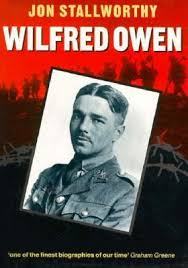
All three books are meticulously researched and exceptionally well written, describing, in detail, not only Sassoon, Owen and Tolkien’s experiences in the trenches of the first world war but showing how each, in turn, tried come to terms with the horrors they had seen.
While, obviously, not the most cheering of subjects to read about at a time when we are faced with our own insistent drums of doom they do serve as a reminder that troubles are constant, a given in life.
Perhaps because my father worked there, I have always been fascinated by the legend of “Arabia” and in tracing its development in the successive stories of the explorers who helped to create it.
Although these early travellers were, for the most part, men, one of the exceptions to the rule was the indefatigable Gertrude Bell. Wanting to find out more about what drove this exceptional woman, I was very pleased to be able procure a copy of Janet Wallach’s Desert Queen: The Extraordinary Life of Gertrude Bell.
A woman of fierce intelligence and focus- she was the first woman to graduate from Oxford with a history degree – her bold expeditions deep in to the Arabian desert led to a passion for the Middle East that lasted to the end of her life (she is buried in Baghdad). Her sensitivity towards its people and their culture set her apart from many of her era. Finding an ally and kindred spirit in TE Lawrence, of Lawrence of Arabia fame, she would go on to play an instrumental role in the creation of the modern state of Iraq.
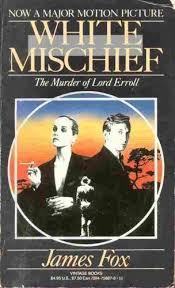
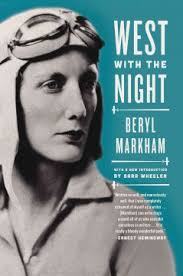
When I was going through my Kenya colonial history phase, it was at Huddy’s I found Elspeth Huxley’s marvelously evocative The Flame Trees of Thika, The Mottled Lizard, Out in the Midday Sun and Nellie: Letters from Africa; as well as James Fox’s White Mischief and Beryl Markham’s superb West with the Night, which Ernest Hemingway bluntly described as a “bloody, wonderful book.”

When this endless source of good books dried up because of lockdown, I was forced to fall back on my own resources. I decided now might be a good time as any to give my private library a revisit.
I began by dipping in to the four-edition Collected Essays, Journalism and Letters of George Orwell because I felt that if anybody could help me make sense of our confused and unsettling times it was him.
I discovered Orwell at a relatively early age and he has remained a strong, if not always comforting, presence in my life ever since. With his unflinching honesty and clear, precise, prose style he has, over the years, proved an incomparable guide for me.
As a young man, Orwell fought in the Spanish Civil War and subsequently wrote about it in Homage to Catalonia. The experience left deep emotional scars but also provided him with a valuable insight in to two of the major social dislocations of the Twentieth Century – in the shape of the former Soviet Union and the former Third Reich who, in supporting the opposing sides in the civil war, fought what has been called a “world war by proxy”.
Orwell’s fear of the dangers posed by autocratic leaders and absolutist governments would later find expression in the two books for which he is most famously remembered.
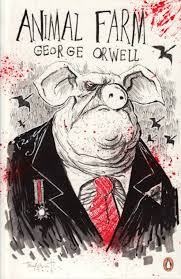
In his allegorical fable, Animal Farm, he showed just how easily those who have toppled a repressive regime can take on its trapping and habits. Having lived through a couple of revolutions myself, this is something I have got to see, first hand, in both Zimbabwe under ZANU-PF and in South Africa under the ANC.
There are other interesting parallels with today. Decades before “political correctness” and “cancel culture” became recognisable concepts, Orwell battled to get his trenchant masterpiece published because it was so obviously aimed at the Soviet Union who had been Britain’s ally during the second world war.
Orwell’s bullying boar, Napoleon, was transparently Stalin; his intellectual idealist rival, Snowball, obviously Trotsky. The prophet of revolution, Old Major, was a compound Marx and Lenin.
His usual publisher, Victor Gollancz rejected the book, as did Faber and Faber whose then director was no other than TS Eliot. Jonathan Cape also turned it down because he thought it unduly offensive to make the Bolsheviks pigs. Orwell responded by writing “balls” in the margin of the rejection letter.
The book was eventually published by Secker in August, 1945.
In his last, chilling, work, 1984, Orwell offered a similarly scary scenario, opening a horrific vista in to a suffocating world of party tyranny and non-stop surveillance.


Orwell’s writings would, in turn, influence a new generation of writers who picked up his torch of idealist humanitarianism. Amongst these is Margaret Atwood whose own books – such as Oryx and Crake, The Handmaid’s Tale and The Year of the Flood – have offered fictional excursions in to a nightmare world that could be just around the corner.
The warning signs are certainly there. It is not news that something is badly wrong with America, to say nothing of what is going on in both China and Putin’s Russia.
Indeed, with state surveillance back with a vengeance and fake news everywhere, I often find myself wondering what Orwell would have made of our times and how he would have reacted to the likes of Donald Trump, a man whose greed, small-mindedness, lack of empathy for the sufferings of others, promiscuous lying and abuse of language, encapsulates so many of the vices he warned us against.
Before sitting down to write both Animal Farm and 1984, Orwell obviously posed himself the question – what happens if we continue down the road we are already on? At a time when the dumbness of the many plays in to the hands of the scheming few it is perhaps something we ought to be asking ourselves now…
Having reacquainted myself with Orwell, I decided I might as well go the whole hog and read some Atwood too, so got out my copy of Curious Pursuits, a collection of her essays and journalism from 1970 to 2005.
Despite Atwood’s own dystopian visions of our future, her writing in this book is full of humour, charm and telling detail. A common theme in many of her essays is how women negotiate society’s obstacles.
Not too surprisingly, the book also includes an essay on Orwell in which Atwood acknowledges the debt she owes to the author and talks about the influence he had on her own writing.
Also, of great interest to me, was her Introduction to ‘Roughing it in the Bush‘ by Susanna Moodie because Moodie was married to a distant ancestor of mine.
Atwood is obviously an admirer, having also brought out The Journals of Susanna Moodie (first published in 1970), regarded by many as her most fully realised volume of poetry.


Hoping that it, too, might reveal some concealed truths about our topsy-turvy times, I also dug out my copy of Lewis Carroll’s epic nonsense poem, The Hunting of the Snark,
For some reason, I have always found it more accessible and much funnier than Carroll’s Alice in Wonderland books.
For those unfamiliar with the poem, it describes the adventures of nine tradesmen (all of whose professions begin with the letter ‘B’) and a beaver who embark on a quest to capture a “Snark”. There search is not made any easier by the fact that none of them actually knows what a Snark is although there is a worry it could be a “Boojum”, an equally mysterious creature which can “suddenly and softly vanish you away”.
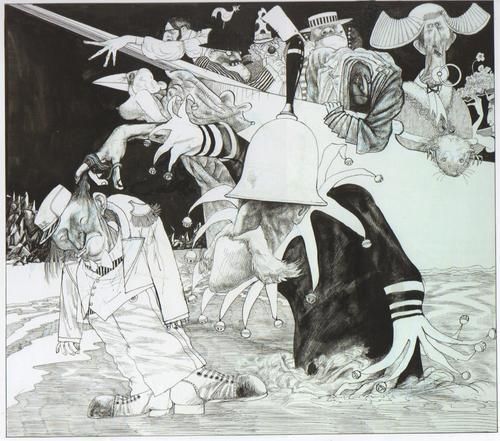
The Improbable Crew. 
The Beaver and the Butcher. Both illustrations by Ralph Steadman.
Their method of luring the Snark out of its hiding place is eccentric, to say the least:
“They sought it with thimbles, they sought it with care;
They pursued it with forks and hope;
They threatened its life with a railways share;
They charmed it with smiles and soap”.
Making a hard task even more difficult is the fact that the map they are using to look for the Snark is completely blank…
The Hunting of the Snark was originally illustrated by Henry Holiday. Again, I must confess, I prefer the more recent, 1976 ,Ralph Steadman drawings because his wonderfully warped, ink-splattered style seems custom-designed for Carroll’s off-the-wall, phantasmagorical tale..
Another odd fact about the poem is that Carroll reputedly wrote it backwards, writing the last sentence first.
There have been numerous theories as to what it all actually means. Some see the voyage as a search for truth and meaning; others think it is about the pursuit of happiness (a view Carroll, himself, apparantly favoured). There is another view that it deals with our existential angst.
This last theory ties in with my interpretation of the poem – that what they are desperately seeking is a cure for Covid-19.
Why else would they hunt it with soap?
 Stidy's Eye