From Shingwedzi to Satara: More adventures in Kruger

I was overcome by a sudden wave of apprehension as we drove into the Shingwedzi campsite. There were far too many people in it for my liking, and their obvious affluence made me only too aware of my lowly status as a permanently hard-up Political Cartoonist.

Perhaps it is a misplaced nostalgia for a simpler world, growing up on a remote farm on Zimbabwe’s eastern border, but, for me at least, much of the fun and romance has gone out of camping. Back then, you would just toss a few leaky canvas tents, some basic cooking equipment, a couple of wooden crates of beer, a sleeping bag, and a pile of fishing rods into the back of a battered old bakkie and head off to “The River” (as everybody called the Zambezi). Nowadays, to qualify as a serious camper, you have to drive a top-of-the-range 4 X 4 with all the mod cons and latest gadgetry built into it. Or, a ludicrously expensive vehicle that unfolds into a skyscraper.

During my life, camping has gone from ‘roughing it in the bush’ to ‘glamping’. With Ken’s battered Nissan X-Trail and our two tiny igloo tents, we were oddities, relics from a bygone era. All the other campers looked sorry for us.

I guess this is where we are headed. The whole attitude to the great outdoors has undergone a fundamental change. Wildlife is now viewed in terms of resource management, another commodity to be commercialised, marketed and exploited, a further branch of the ever-spreading tentacles of modern capitalism. To look the part, you need a massive bank balance, so you can upstage your neighbouring campers.

But maybe it is just a case of sour grapes, on my part. If it furthers the cause of nature conservation and animal preservation, who am I to object?

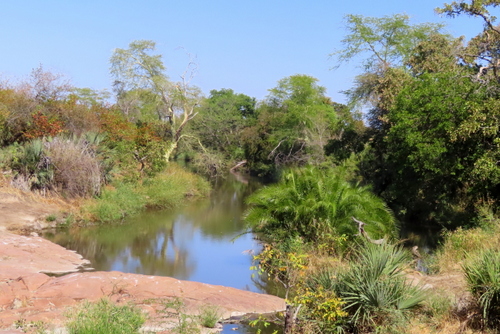
I cheered up immediately when, early the next morning, before the parrots were awake, we escaped, once more, into the familiar vastness of the bush. We had chosen to do the Shingwedzi River Loop, which is one of the most beautiful drives in Kruger. Huge riverine trees fringe the river, and its banks form big floodplains, bringing in the birds and animals. Statuesque Lala Palms are plentiful. Streamlined Palm Swifts swirl around and nest in them.

A highlight of the route is Red Rocks, a significant geological and historical site, known for its large, heavily potholed slabs of sandstone – part of the Karoo Supergroup – that have been eroded and exposed over the millennia. To the local indigenous people, this site was known as ‘Ribyenera-ra-Gudzani (Gudzani’s Rock), deriving its name from one of their gods. When passing through the area, they would always make an offering as a way of homage and to ensure safe travel. It was also visited in 1870 by the American Captain Frederik Elton, who panned for gold here.

Red Rocks. The exposed sandstone slab is slightly upriver.

The Thsanga Hill lookout, near the Bataleur Bushveld Camp, provided our breakfast spot that day. Before we started cooking, we unfolded our camp chairs and sat gazing out into the silence of the flats that stretched out below us, awed by the view. I couldn’t believe there was so much of it. Once again, I felt overwhelmed by the age and might of this old continent and all too aware of my insignificance in it.

My reverie was interrupted by Ken, in need of sustenance, firing up the skottle. It was a reminder that I had an integral part to play in this ritual – preparing the instant coffee

Although neither of us had sent out an invitation, a Giant Plated Lizard, which had its residence in a nearby pile of rocks, joined us. Despite his rough, scaly exterior, the lizard was a friendly sort and took a shine to Ken, in particular.

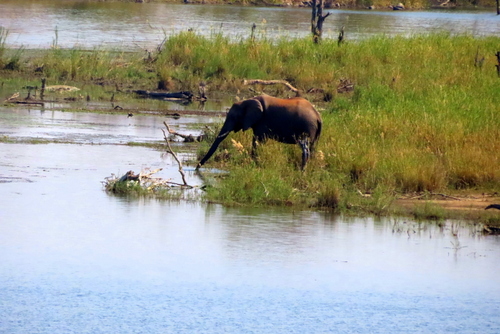
Heading back, our progress was stopped by an elephant at the point where the road crosses a sandstone shelf on the Shingwedzi River. It seemed to take some pleasure in holding us up, before, with a dismissive wave of its trunk, ambling off to drink.

After a short break back at camp, we headed out once more. The sun was sinking when we drove down the road that leads to the confluence of the Shingwedzi and Mphongolo rivers. Despite being a short drive, it proved productive. Sitting with its grey feet clamped to a favourite branch overhanging the edge of a pool was a Grey-hooded Kingfisher. Unlike its common brown-headed cousin, which you are likely to regularly see bobbing its head up and down in your garden, this Kingfisher is relatively scarce. It took me ages to find one and then – as often happens – I saw four in four days. Such is the nature of birding.

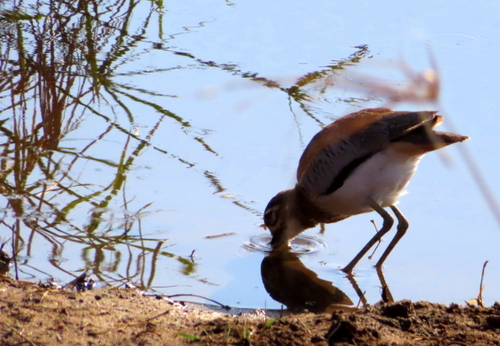
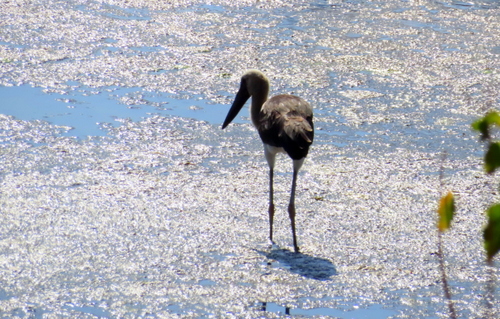
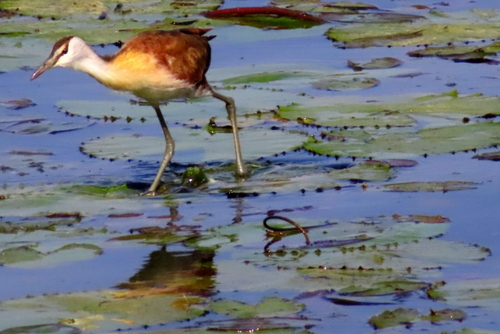
We scanned the water below where it was perched. A solitary Yellow-billed Stork stood, poised on one leg, lost in stork-like contemplation. I was angling to get an artistic photograph of the bird when Ken let out a gasp -” I don’t believe it! It is another Greater Painted Snipe!”

Yellow-billed Stork.

We had seen one in Mapungubwe and, because they are so scarce, assumed that was our quota for the trip. Now, we have found another. Instead of skulking around the reedbeds, as my Sasol bird book said it should, it was way out in the open. Someone must have forgotten to inform it about its correct habitat.

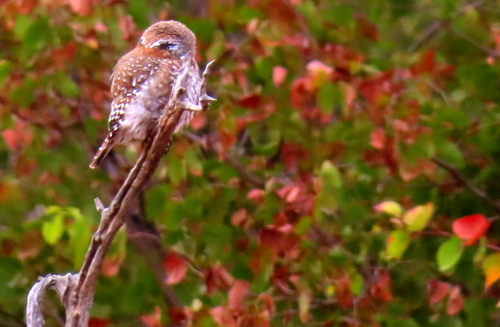
I didn’t want to allow Ken to, once again, be the one guzzling wine out of the “silver goblet” that night (the reward for having made the best sighting of the day), so I redirected my critical gaze to the surrounding trees as we drove away from the confluence. A bird flashed before me. I followed its flight path to a nearby tree. It was a diminutive Pearl-spotted Owlet grasping its kill – a White-rumped Swift. We were both puzzled. It is unlikely the Owlet could have caught the Swift in flight, so we could only assume it had ambushed it near its nest. The Owlet stared imperiously down on us, as if questioning our right to interrupt its hunting expedition.

It was a good sighting, but I was forced to acknowledge that Ken had trumped it with the Grey-headed Kingfisher and the Snipe. Maybe I was a bit off my game..

Pearl-spotted Owlet with White-rumped Swift.

Although the sun was now below the horizon, we decided to do a quick dash to the Kanniedood dam area and were immediately rewarded with the sight of two lions, dozing on the far bank. Then, we retraced our steps back to camp. It had been a good day. We decided to reward ourselves by dining at the restaurant that night.

On the day of our longest drive, along the S50 (an alternative to the main tarred road) and then on to Satara in the South, the sun finally arrived. By 0930, God had turned the temperature up to 42 degrees. It continued to rise thereafter. In this breathless air, even the birds had fallen silent (except the hornbills, of course. Nothing dims their racket).

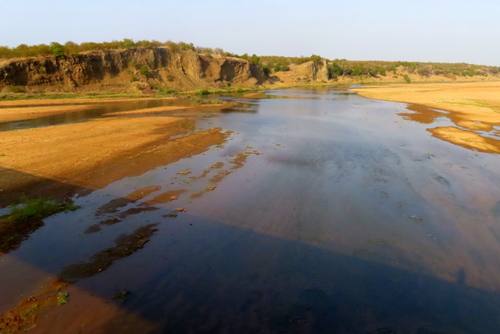
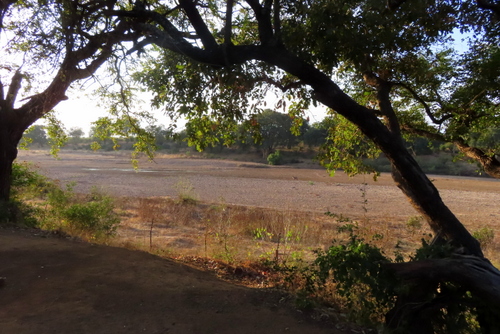
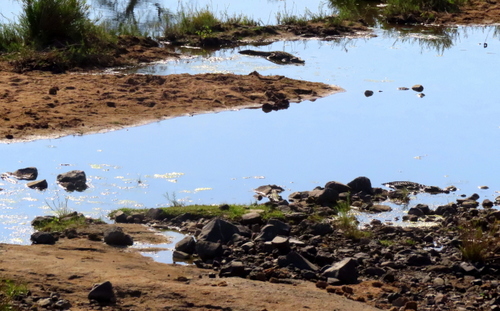
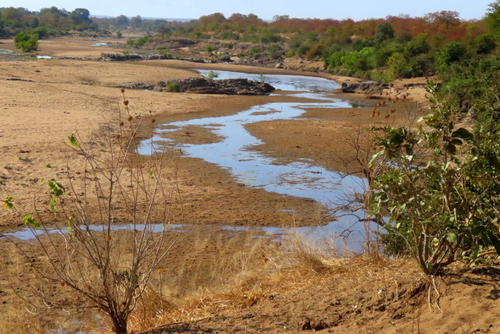
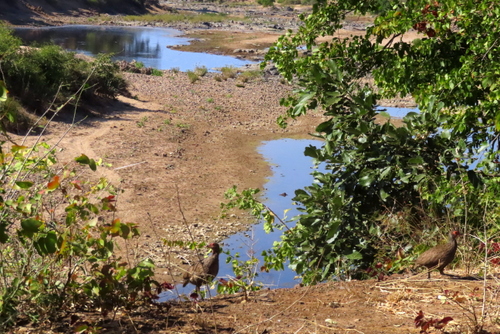
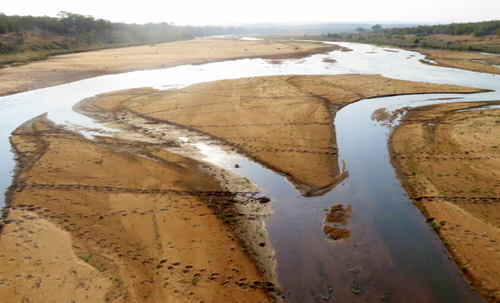
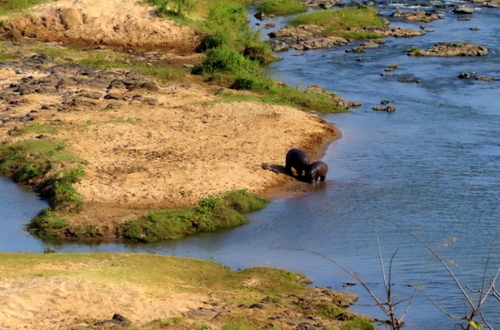
During these long, hot, dry months, before the rains break, life becomes a relentless battle for survival. The rivers dry up, and the animals are forced to travel great distances to find water. Amongst all the sand in the dry river beds are the odd soft pools where the hippo have congregated to puff and blow. The elephants, knowing where the underground water is, dig wells. Other creatures take advantage of their thoughtfulness.

Searching for water, Shingwedzi River.

Over their long evolutionary history, most animals have adapted to such extremities in weather; however. Because many have become specialist feeders, they can co-exist in times of drought.

We drove on through the thickening heat. Perhaps it was the sun messing with our heads, but between Shingwedzi Camp and Dipeni Dip, we got into a spirited, if nonsensical, discussion about what birdwatching must have been like in the Age of Dinosaurs. Later, back home in Curry’s Post, it would lead to this cartoon:

We rejoined the tar road just north of Mopane. The sun was still climbing steadily up the back of the bluest sky, and the temperature gauge in the car was now showing 45 degrees. Nearing the Olifants turn-off, it began to dawn on Ken and me that we were the only vehicle driving along with our windows down and no air-conditioner pumping. Some visitors were even shooting their Big Five photos through the glass for fear of letting a minuscule amount of hot air in to damage their sensitive, suntan-lotioned skins. Contrariwise, Ken believes that when you are in Kruger, you have to experience it in all its extremity to get the full feel of the place.

It’s another thing we agree on. Enduring such extremes of weather can be a form of mini catharsis, a kind of redemption. Like pilgrims on an arduous journey designed to test your faith, it is a way of separating the true travellers from the faint-hearted. You emerge from it feeling a better person and wiser.

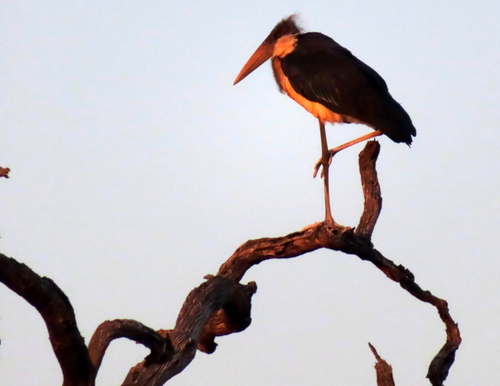
We were headed for Satara. The open plains surrounding it attract many species of ungulates. With them come the predators, including lions, leopards, cheetahs and the nomadic Wild Dogs. Also, vultures and Marabou Stork, the undertakers of the veld, who feed on the kills they leave behind.

Wiping the sweat from my brow, I suddenly became aware that something else had changed. Driving along the dirt back road earlier, it had felt like we had the whole park to ourselves. I was alone in the wilds of Africa, a modern-day David Livingstone opening up new territory.

The problem with fantasies of this sort is that sooner or later, they get punctured. That is what happened to mine as we neared Satara. The plains that make the area so attractive to wildlife also make Satara a magnet for the overseas tourist who gets bused in, in their hundreds, from nearby Hoedspruit. They are easy to identify by their trendy camouflage safari gear (Ken, on the contrary, was wearing a luminous pink shirt he had been given by a sponsor of one of the sports he writes about so well. Amazingly, it didn’t scare away the birds) and the fact that they are clearly not from these parts.

Confronted by a seething mass of them in the main reception/shop area, my mood changed. I grew edgy and irritable, urging Ken, who had begun dawdling over his grocery shopping again, to hurry up and make his purchases, so I could get the hell out. The whole mad pantomime was getting to me.

Walking back to the car, with Ken muttering about what a curmudgeon I’ve become in my dotage, my mood suddenly perked up when I heard, from a nearby tree, one of the defining calls of the Lowveld – a Woodland Kingfisher. Africa is a place of incongruities, and this bird is one of them – a kingfisher that lives in dry woods. Brighter than any illustration could ever be, this striking bird is also a migrant, and its loud, piercing “chip-cherrrrrrrrr…” is only heard in summer. We had been hoping to hear one all trip. Our wish had finally been granted. They were back.

Woodland Kingfisher.

My mood improved still further when, sitting outside under a sultry night sky, a pride of lions, setting off on their nightly hunt, began to roar close by.

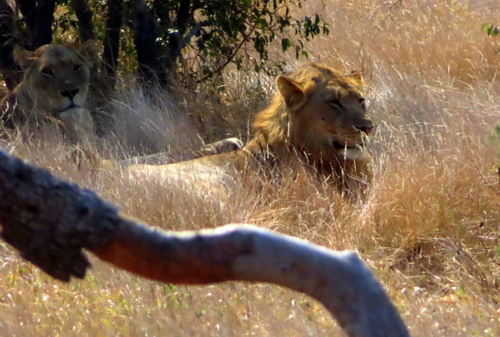
After an early morning shower and a cup of tea to wake us up, we set off in the direction of the Orpen Gate. We only had one full day left in the park and a lot to condense into it. We hadn’t gone far when we came upon a male lion and two lionesses lying stretched out in the shade, not far from the edge of the road. They were obviously sleeping off the previous night’s kill.

Word of the sighting had spread rapidly. A long convoy of cars lined the road, all clamouring to get the best viewing position. Seeing a lion is always an event, a small triumph, so we fought our way into the scrum.

Then, I started getting paranoid again. What the hell was going on? I had come here to escape the madding crowd. Why were they following me? On whose authority? I began to wonder, too, about my own motivation. Is this really how I want to experience life in the wilds? It felt more like I was part of an excited crowd at a rugby match.

The lions, on the other hand, were completely indifferent to all the clicking cell phone cameras and yawned and stretched with boredom.

I felt less jittery when, a little later, we branched off the main tar, onto the much quieter Timbavati Drive, which takes you along the banks of the river bearing the same name. It is another beautiful drive. Timbavati is justly famous as lion country, although they all seemed to be taking a nap too, because we didn’t see any on this stretch of the road.

We did see Bataleur, including several juveniles, one of which was tearing away at an old bone. These days, you don’t see many of these magnificent eagles, with their curved wings and short, stubby tails, outside of the major game reserves, so it was good to know they are still breeding and that a new generation was growing up to replace the one before.

Juvenile Bataleur.

Approaching the river, I noticed a solitary vulture wheeling towards us. As we sat there, more and more of the great birds came circling through the sky. News of the kill had obviously spread like a windstorm.

We soon discovered the reason why – a lone Black-backed Jackal had made a kill. Having landed, with a hollow wing thrashing, the vultures half-hopped, half-cantered forwards, looking, for all the world, like a gang of giblet-eyed, greedy thieves. The jackal snarled and bristled. The vultures maintained a strategic distance but showed no signs of fear. They knew the routine and that their turn would come.

There were four types of vulture present – the massive Lappet-faced Vulture with its raw skull and wrinkled, feathery neck; the more common White-backed Vulture, of which we had seen quite a few; the critically-endangered White-headed Vulture, ghostly beautiful in an ugly sort of way; and the diminutive and also scarce Hooded Vulture. Each vulture is a specialist feeder selecting different parts of the carcass to feast on.

Keeping a strategic distance Lappet-faced and White-backed Vultures.

I watched them through my binoculars as they continued probing forward while the outnumbered jackal stood its ground. Vultures get a bad rap, on account of their habit of sticking their crooked necks deep into piles of putrescent meat, but I like them. They have a filthy job to do, but they do it willingly, albeit with a lot of hissing and squabbling amongst themselves…

At the Timbavati picnic site, Ken hauled the skottle out again, and we set about cooking breakfast. A safari vehicle, with a raised platform for better viewing, drove in and parked. A couple of young bloods, wearing beanies and puffer jackets, hopped out of its back and began jabbering away in Swedish into some sort of recording device. Not wanting to lose my newly mellowed mood, I did my best to ignore them, scanning the surrounding bushes for birds.

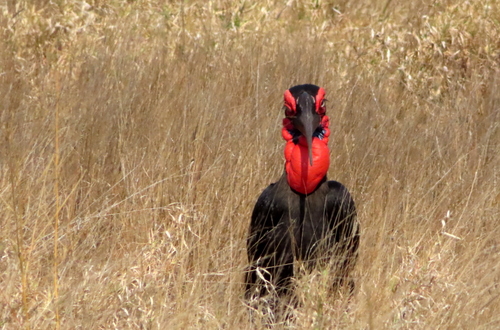
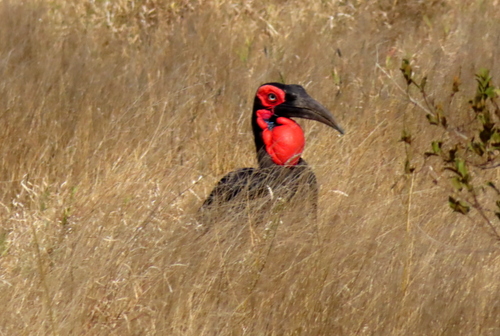
We pressed on. Close to the river, we came across a solitary Southern Ground Hornbill, rooting around in a debris of fallen leaves. It emerged with what appeared, at first glance, to be a beetle. It was only later, when I had downloaded my pictures back home, that I realised it was a tiny baby tortoise. I felt sorry for the poor creature. It had not had much of a life. In the wilds, there is no room for sentiment, however…

Southern Ground Hornbill.

In both Xhosa and Zulu belief, the Ground Hornbill’s booming call is regarded as a sign of impending rain. I glanced up at the sky but didn’t see much evidence that the heavens were about to erupt any time soon. I was wrong on that score. The next day, as we were driving back to Jo’burg, my sister sent me a Level 9 Weather Warning, saying severe conditions were on their way. It was on the mark. As we passed through the polluted, industrial hell-hole that is Steelpoort, it began to rain. The following day, on the long drive back to my home, in Curry’s Post, it bucketed down the whole way.

Back on the tar, Ken suddenly drew to a halt on the side of the road and pointed to a group of trees. Sitting under the one, staring at us with glowing eyes, was a leopard. Although a big leopard is small in comparison to a lion, they make stealthy, lethal hunters. Cornered, they can be as dangerous as any animal in Africa. After glowering at us, this one got up and stalked off into the gloom. I am not sure why – perhaps it was Ken’s garish, eye-blinding shirt – but not a single car of the many that drove past stopped to see what we were looking at.

In the late afternoon, we did a quick drive down the S100 N’wanetsi River Road. Heading back to camp, toward sunset, the grass began to turn silver, then gold. As often happens, Kruger had saved the best for last – in the strange half-light, we spotted an African Wild Cat scurrying across the road. Safely on the other side, it stopped to look back at us. It was by far the best sighting I’ve had of this shy, elusive animal.

‘The next day, we set off on the long, wearisome haul back to Jo’burg. It had been a good trip. All birders vary in skill, but according to some notes I consulted before coming to Kruger, if you get more than 150 birds in a week, you can consider yourself “a competent birder”. I got 160, which qualified me for this exalted honour. It got me wondering, though, how you measure an “incompetent birder”? Someone who spends a week in the park and can’t find any of the plague of cackling hornbills or a single Grey-headed Sparrow?

Heading home. The North Drakensberg in the distance.

I arrived back, in the pouring rain, at Kens house, where his wife had prepared a welcome meal, feeling triumphant…

GALLERY:

Finding Salvation on the Tsendze Loop Road

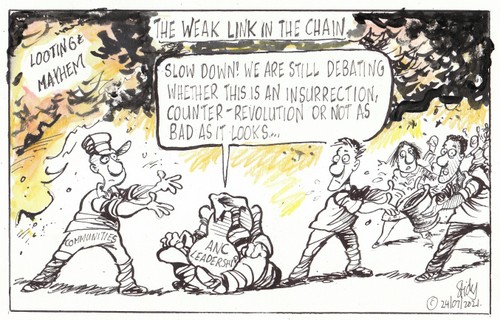
The insurrection or attempted coup or counter-revolution (the various ministers in the ANC defence cluster differed in their interpretation) began on a cool winter’s day in July. Spurred on by cynical ideologists, crowds of supposedly pro- Jacob Zuma loyalists went on the rampage, protesting his recent jailing. Supermarkets and warehouses across Kwa Zulu-Natal and parts of Gauteng were broken into, trashed and ransacked. Everything that could not be taken was destroyed, including the buildings themselves.

For several days after the looting, many shops were still closed, as was the main Jo’burg to Durban freeway. In the absence of effective policing, alarmed communities set up roadblocks in an attempt to protect themselves. Much to my consternation, I found myself having to go out on a night-time patrol, something I hadn’t done since the Rhodesian Bush War days.

My take on the unrest

It was something I had hoped I would never have to do again too…

From where I sat, on my hilltop home, it all seemed hideously unreal. I felt dazed, finding it hard to believe that almost thirty years after the ending of Apartheid something like this could still happen in South Africa. And yet I was not completely surprised either – given the rampant corruption and mismanagement in the country, as well as the grinding levels of poverty.

Worn out by the never-ending Zuma saga – as well as having our lives upended by the continuing Covid crisis – I found myself longing for an escape.

A chance to get away from it all duly came when my sister, in Mpumalanga, phoned to ask if I would be interested in joining them for a break in Kruger National Park. I said yes. I hoped such a journey would be redemptive. That it would remind me of why, in spite of everything, I still love living in Africa.

And so a week or so later I found myself passing through the Phalaborwa gate and into Kruger. It was good to be back. I suppose it is not surprising that I found the sights and sounds of this place so familiar and comforting since I have visited it countless times before both with my family and my regular birding companion, the sports journalist Ken Borland. I always revel in the sense of freedom and discovery the park gives me which even the occasional discomforts – it can get incredibly hot in summer, the mosquitoes can be a nuisance – cannot detract from.

It is all part of the experience.

Besides its animals and small, biting insects, Kruger is famous for its birds. The variety is bewildering with over 500 species having been recorded, representing roughly 60 per cent of the total for South Africa.

Because it was winter, a time of the year I had never visited the park before, I wasn’t sure what to expect, however. I was immediately reassured. We had not got far into the park when we came across a strangely behaving Spotted Hyena, intently ploughing its way through a small, muddy pan, its nose skimming close to the water’s surface as it went like it was searching for something it had mislaid. I wasn’t sure what that was although, later, I was told that they do sometimes hide the remains of their kills and scavenged carrion underwater.

Spotted Hyena

As we drove on I was rewarded with other happy reunions. I hadn’t anticipated seeing many swallows at this time of the year but as I scanned the sky, above the Letaba bridge, I spotted several beautiful Mosque Swallows – a bird confined mostly to the Kruger area – dipping and soaring over the river. Like the similar water-loving Wire-tailed swallow, they are one of the few swallows that overwinter in South Africa instead of heading north like the rest of their species.

We carried on. Overhead sailed vultures and Bateleur eagle, still relatively common in the park but hardly seen outside it now. In my head I had a sort of hit-list of birds I hoped to encounter and I found myself eyeing each bit of terrain we travelled through, trying to imagine what species might be lurking there. It is not as easy as it seems. Coming from the KZN mist-belt, it always takes me time to readjust to the harsh Bushveld but gradually I felt myself getting my eye and ear in and start to remember how things fit together and relate to one another.

Then I heard a party of Brown-headed parrots, shrieking overhead. Because of their relative rarity (and cheerful personalities), I was keen to locate them. The gaudy birds aren’t as easy to find as you might think, since they always seem to be flying away but these obligingly landed in a tree and started squawking away, giving us plenty of opportunities to study them as they clambered up and down the branches of the trees, playing their parrot games.

Resuming our journey we eventually joined the main tar road, that runs down the centre of Kruger, near the Mooiplaas picnic spot where we stopped for a short tea break. From here we headed north to our first stopover camp, Shingwedzi.

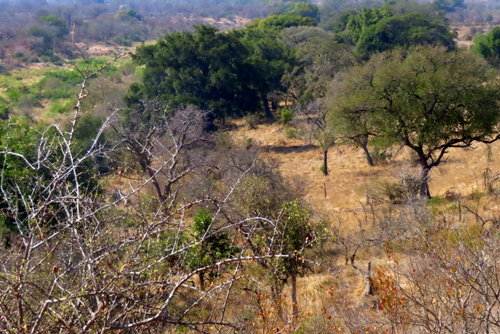
This is very much Mopani country. Stretching as far as the eye can see and farther they are the dominant tree of the northern part of Kruger.

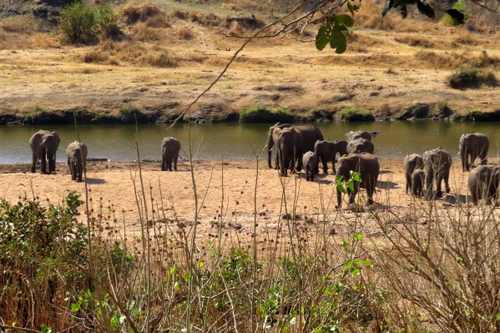
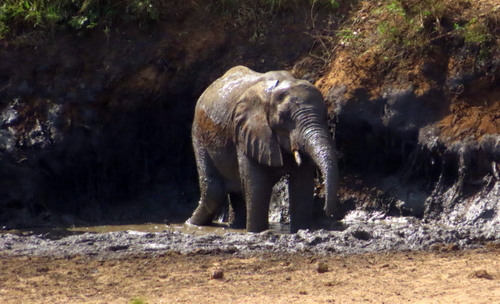
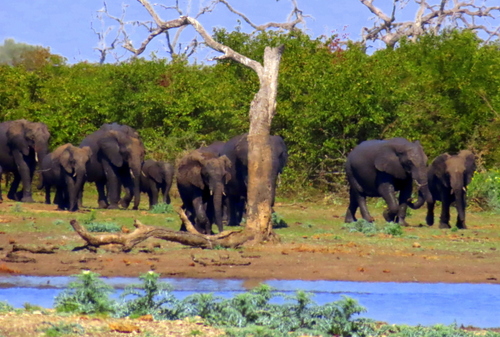
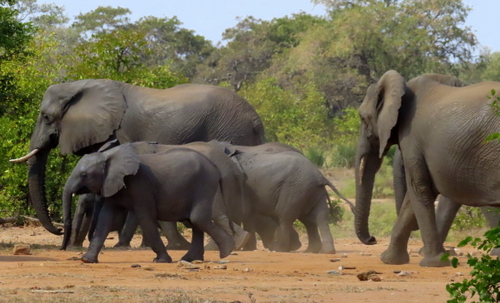
Shingwedzi, itself, is associated first and foremost with elephants and we were to see plenty of these, the largest of mammals, over the next few days. Even when we didn’t see them their impact on the environment was everywhere evident – branches strewn across the roads, entire trees shoved over, paths hammered through the thickets, water holes dug in dry river beds. To the uninitiated eye, the amount of damage the elephant cause may seem shocking but it serves a very useful purpose, reshaping the natural environment for the benefit of other smaller creatures. In this sense, they are regarded as an umbrella species although they require vast tracts of land to maintain their populations.

Our lodge could hardly have had a more perfect setting. Whereas most of the chalets have, for some reason, been built at some distance from the river our accommodation overlooked it.

That evening I sat on the river’s edge, sipping a beer and taking in my surroundings as our outside fire sent up its golden fountain of sparks. The light began to fade, the bushes and then the trees on the bank darkened and then got engulfed in the blackness. In the distance, the fiery-necked nightjar started calling. It is a heart-stealing sound, one that captures the very heart and soul of Africa.

Lying in my bed later, I could hear a restless lion roaring from the other side of the river, then, a bit later, the the spooky whooping of a hyena. Not to be upstaged, a convocation of baboons started barking and hurling obscenities from their sleeping positions in the treetops. I wondered what had got them so aroused? Maybe a leopard was on the prowl and they had scented it?

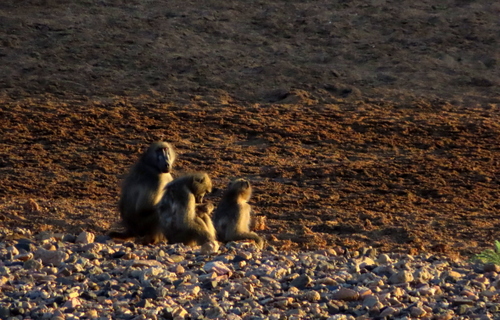
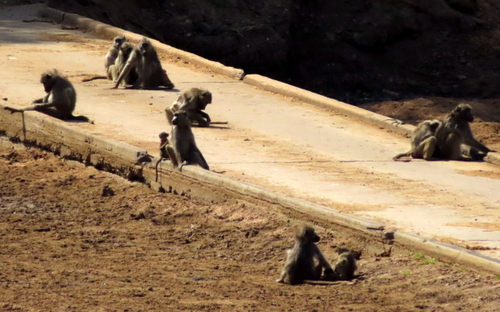
The next morning I woke with a new sense of wonder. The sun appeared. The pale golden tones it cast illuminated the animals drinking at the pool below the lodge, giving them a slightly ghostly appearance. The large troop of baboon that had kicked up such a row the night before now looked completely relaxed as they squatted on the dry river bed, peaceably grooming one other.

At moments like this, I felt I could live this sort of life forever.

The rush hour traffic grinds to a halt on the S51 road...

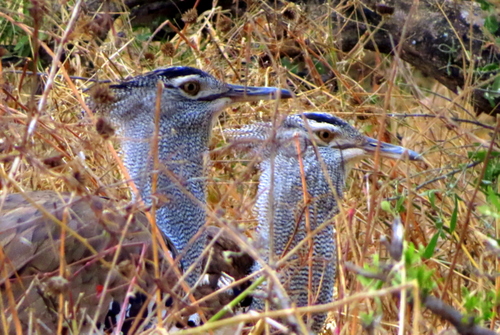
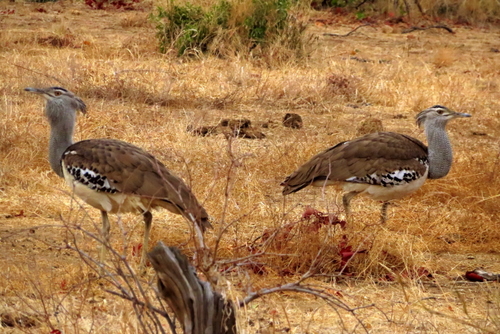
After a quick cup of coffee to warm us up, my nephew, his wife and I set off along the Red Rocks loop which follows the Shingwedzi upstream to a point where it crosses a band of Gubyane sandstone which has been eroded into a series of potholes. Every birdwatcher enjoys coming across the unexpected so we were understandably delighted to see three Kori Bustard – the heaviest of all flying birds on earth – and then, a little further on, another pair. We also saw – again, the first of several sightings – a Red-crested Korhaan, a bird famous for its peculiar flight display in which the male flies straight upwards, then folds its wings and drops, kamikaze-style, towards the ground, pulling out just before impact.

With their big, binocular eyes, distinctive flight, cuddly size and softy, dumpy shape owls have acquired a special mystique and status, figuring in folklore, myths and legends. I love all owls but have a particular affection for the three tiny ones that occur in South Africa – the African Barred Owlet, the African Scops Owl and the Pearl-spotted Owlet. I was as instantly as happy as a lark when my nephew’s wife spotted one of the latter sitting on a deadwood stump, not far from where we had stopped. What makes this particular owl somewhat unusual is that it is often active during the day. Another curious characteristic is that it has a pair of false “eyes” on its nape, presumably to confuse friend and foe alike.

Seeing it immediately made it my Bird of the Day.

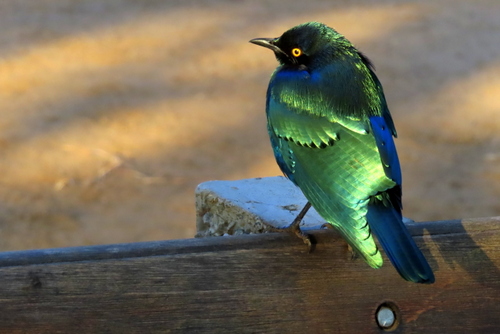
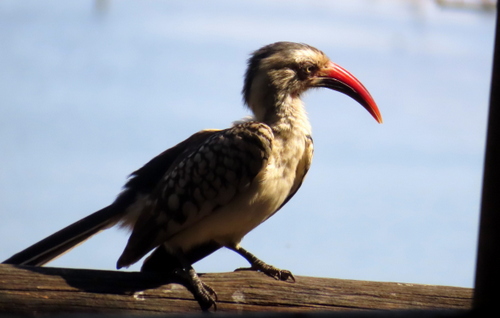
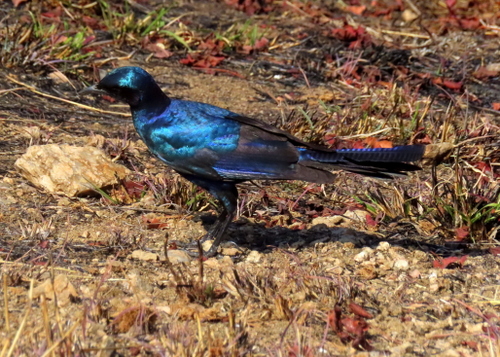
After lunch we headed up the tar road to the Babalala picnic site which marks the turn-off point to the Mphongolo River Route, to my mind, one of the best drives in the entire park, taking you through some exceptionally lovely riverine country. As we drove we were met by a dust-devil spinning a plume of red dust, burnt grass and ash. At the picnic site itself, I picked up a Bennet’s Woodpecker which is always nice to get. Plus the usual assortment of picnic site hangers-on: Greater Blue-eared Starlings, Red and Yellow-billed Hornbills and their cousin, the Grey Hornbill. Used to a steady flow of traffic they have become very tame here constantly filching for food.
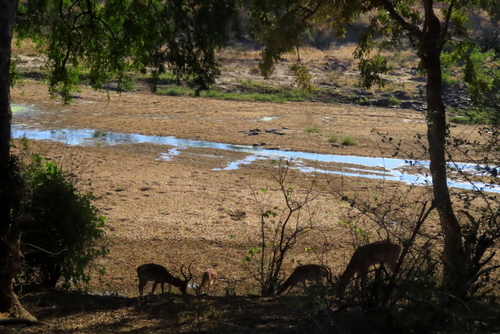
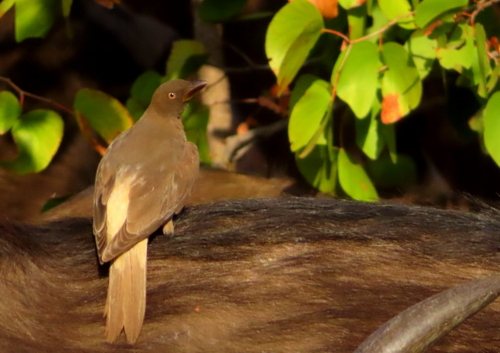
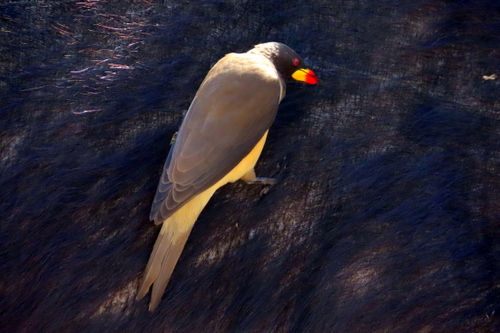
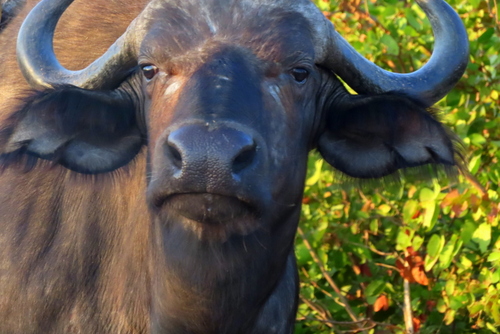
You invariably see elephants both here and along the loop. We hadn’t driven for too long when I heard the sombre crack of a branch being snapped and we rounded the bend to find our path barred by a small herd of them. They were feeding on both sides of the road and seemed in no hurry to depart so we had to sit and wait for them to move on. There are also several big herds of buffalo in this area, often carrying both Red and Yellow-billed Oxpeckers on their backs. They are said to be the most aggressive animal in Africa so it always pays to be wary around them.

We also saw several giraffes, their heads swaying gently above the trees. They are far less menacing creatures although a kick from one of them could land you in the next world.

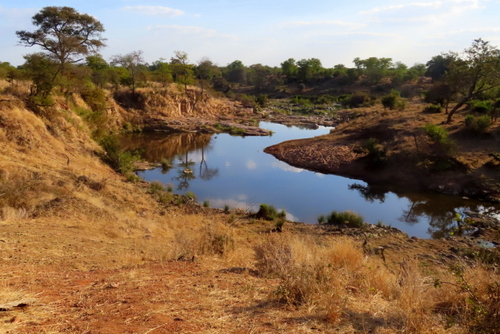
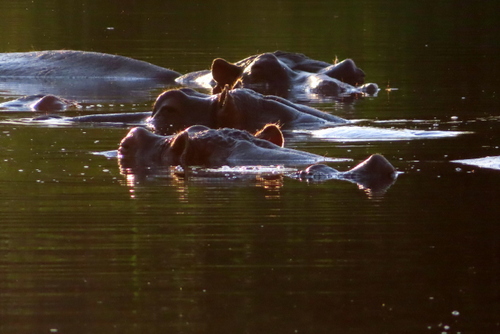
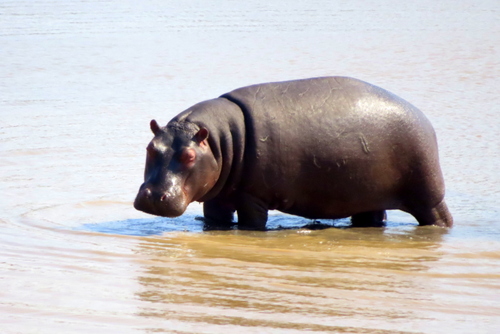
The next morning we set off for Mopani, taking the road that winds eastwards along Shingwedzi river to near the point where it cuts through the Lebombo mountains into Mozambique. Huge Jackalberry and Nyala trees lined its banks. Even though we were in the dry season there were still pools of water where wading birds were mirrored, crocodiles lay doggo in the sun and other animals came to slake their thirst. Game trails and hoof prints radiated out from each watering point. The deeper pools had pods of hippo blowing bubbles and snorting into the air.

At the base of the Lebombo mountains, we said goodbye to the river and turned southwards. Apart from this long low ridge, which provides Kruger with its spine, the low, hot woods around here lack rises or landmarks. Looking across it, as we did from the Nyawutsi viewpoint, halfway up the Lebombo, was like scanning an ocean. On foot, it would be very easy to lose your bearings.

We halted for breakfast at the Nyawutsi hide, a beautiful little glade with a winking, crystal-clear pool, surrounded by Lala palms, Fever Trees and some magnificent old Leadwood and Apple leaf trees.

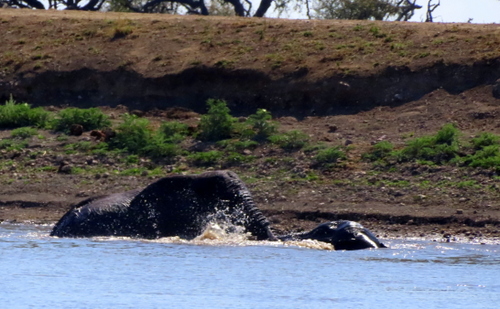
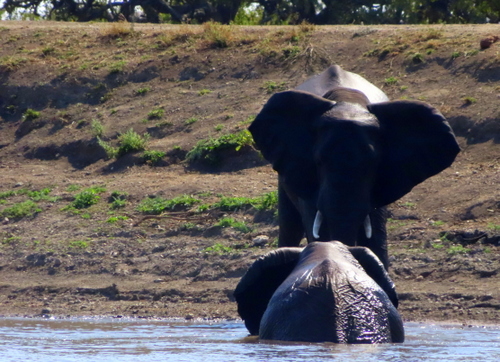
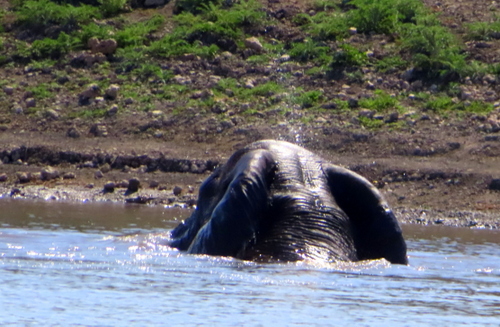
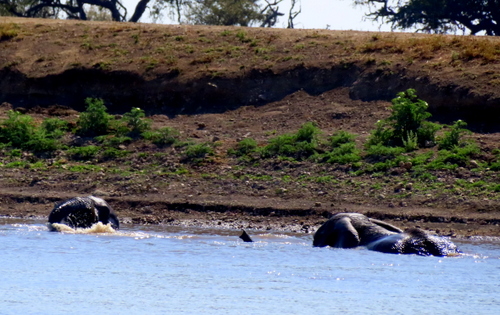
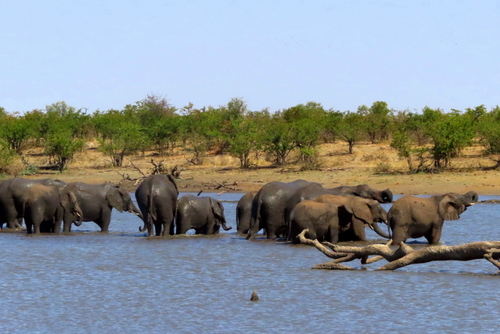
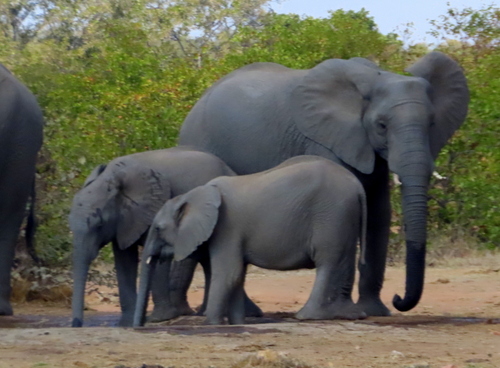
The scene that greeted us at our next stop, the Grootvlei dam, provided me with one of those spontaneous moments of happiness you only get when you loosen the bonds that tie you to civilisation and escape into the wilds. A small herd of elephants were swimming. Elephants form complex social bonds and language structures and there was ample evidence of this in their playful behaviour here. There was much good-natured jostling and sparring as they splashed around, spraying one another and rolling in the water.

As we watched them another, bigger, herd of elephants loomed through the trees on the other side of the dam, ears flapping, trunks waving, dwarfing the scrub and deadwood. A few minutes later, an even larger herd came lumbering out from a slightly different angle. It was a splendid sight. With all the comings and goings, I felt like I had been given a free front-row pass to some grandiloquent parade, a mesmerising piece of outdoor theatre.

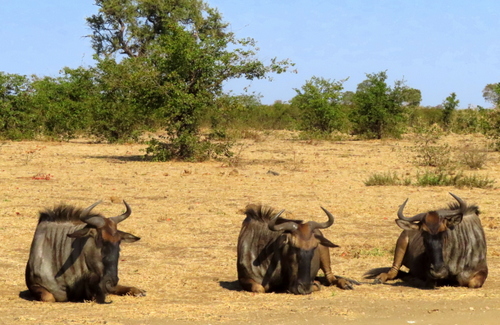
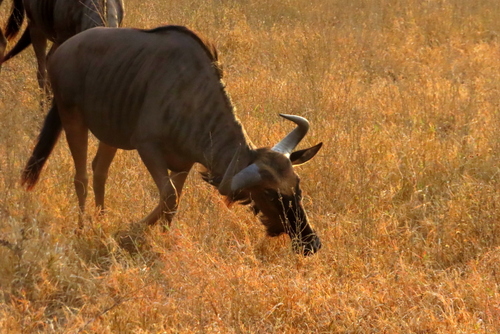
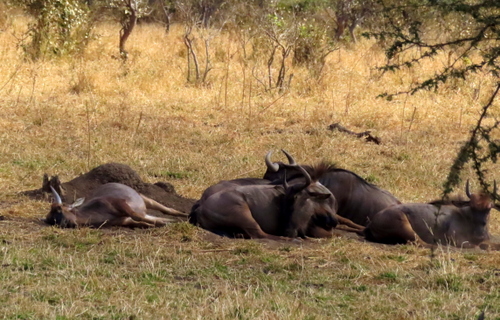
Time was not on our side so having lingered as long as we could we pushed on south past small companies of zebra and wildebeest and even some tsessebe who took mute note of us. We continued to see elephants everywhere.

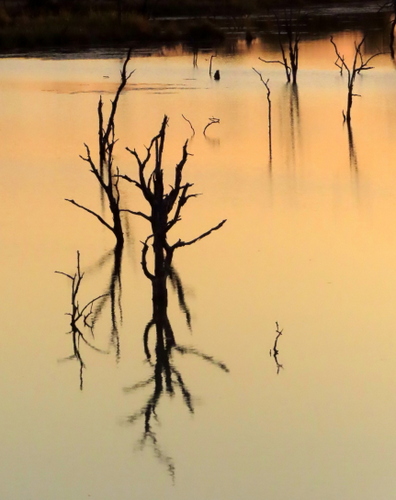
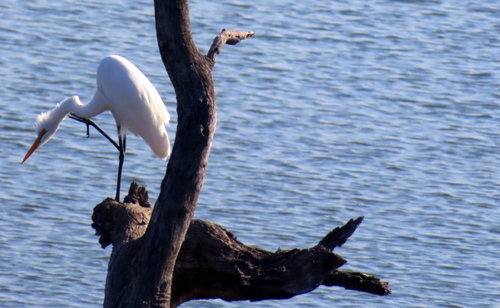
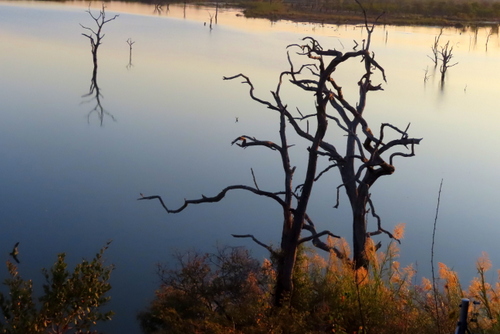
At Mopani, I was pleased to find we had been allocated the same chalet as last time. The view from it, across the Pioneer dam, was just as beautiful as I remembered. At sunset, the air became completely still and the water turned to gold, perfectly reflecting the dead trees that studded its surface, as well as the surrounding greenery. White-faced Whistling Ducks whistled to one other as they flew off to their sleeping quarters, Great White Egret flapped across the water with thick wings and guttural protests. Huge flocks of Red-billed Quelea landed in the trees below us, weighing down the branches as they did so while chattering non-stop. All around us bats flitted off to meet the dark.

I scanned the darkening sky for signs of the elusive Bat Hawk but didn’t see any this time.

Green-backed Heron

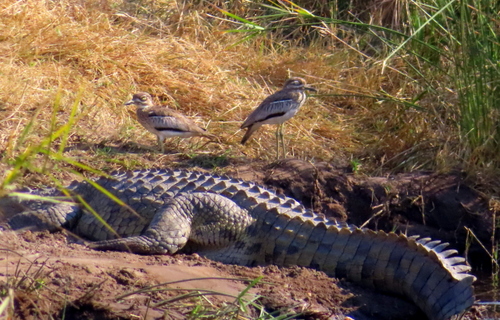
The next day we explored the S49 and S50 and the various loops along the Tsendze river, before driving down to the drift at the bottom of the Pioneer dam. In the past this has always proved a happy hunting ground for me and, sure enough, I quickly spotted a Green-backed (or Striated) Heron hunched up over a small pool, a study in single-minded focus and concentration. A few hippos rose and sank in the pool on the other side of the drift. On the far bank, a large crocodile sunned itself. Two Water Dikkop (now Thick-knee. I prefer the old name) stood just behind it, totally unconcerned by its ominous, cadaverous presence. Another large crocodile was swimming just beyond the hippo, with only its snout, eyes and a few ridges along its back visible.

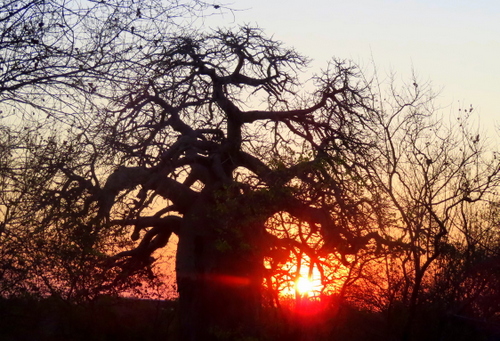
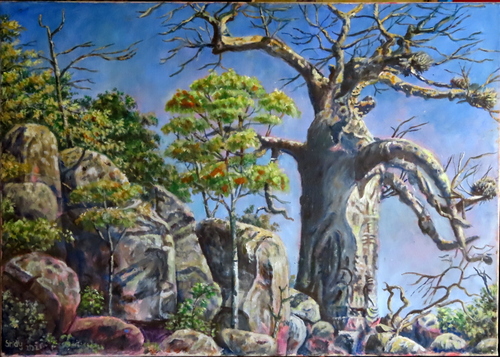
Having exhausted the drifts possibilities we drove on towards the Staplekop dam. A few small kopjes inset with elephant-coloured boulders rose out of the flat mopane veld. The one, which has a huge baobab growing out of its side, I once did a painting of.

Apart from another Korhaan, skulking on an old airstrip, we saw few birds and not many animals either but that didn’t bother me too much. The fact you don’t have any surprising experiences doesn’t necessarily make the journey an unrewarding one. For my part, I was content just to soak up the sun, heat and stillness of the scene.

What it also means is that when you do finally come across something unexpected you get doubly excited. I was to get proof of that the next morning, on our way out of the park.

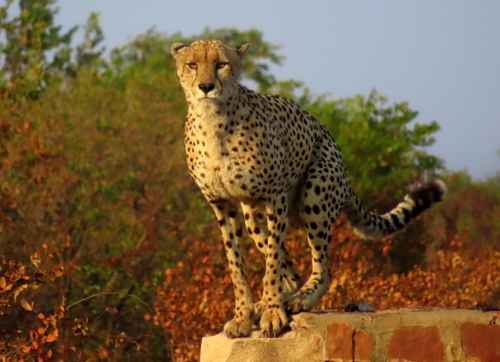
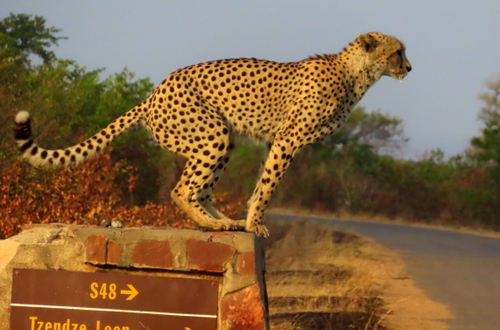
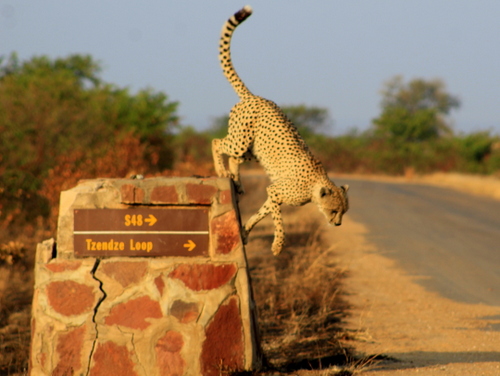
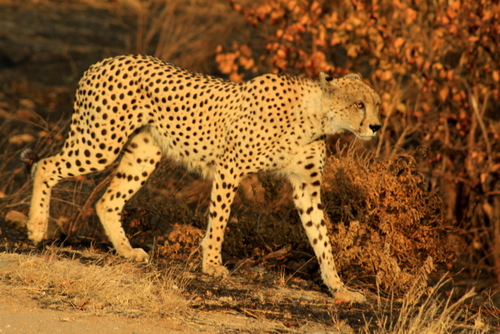
We had hit the road and driven south for about an hour when we came to a junction. There seemed to be some animal activity just to the left of it, so we left the tar and crunched down the dirt track for about fifty metres. I couldn’t see what was happening so I stuck my elbow out the window, gazed across the grass stubble and then gasped in amazement. Slinking towards us was a cheetah. Long-legged, streamlined and beautiful, they are an animal built for speed, the fastest in the world. Indifferent to our presence, this magnificent specimen strode disdainfully along, its small head hung low. I was worried I was not going to get any decent shots because it seemed intent on disappearing from view but, at the last moment, it changed its mind and instead of fleeing turned around and leapt up onto the large stone cairn, on the side of the road, that pointed the way to Tsendze Loop.

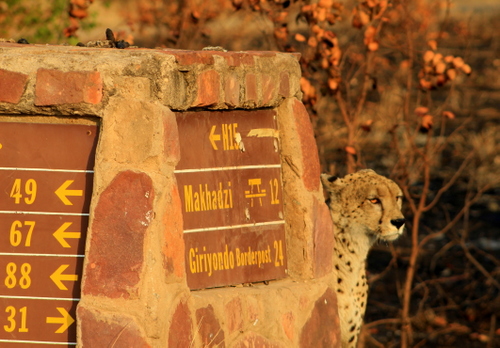
On top, it struck various poses, like a well-trained model on a ramp, and then – having marked its territory – leapt down and set off again, with its gaunt gait, across the tar road, still unafraid, still searching. It came to a stop at the opposing cairn on the other side of the road, peering around from behind it, as if inviting us to partake in a game of hide-and-seek. It sat there for a few more minutes and then, losing interest, strode off without looking back and got swallowed up by the encircling bush.

I am not normally given to religious flights of fancy but it was hard not to believe that the whole trip had been divinely arranged to lead up to this point. It was a moment of pure elation, one to savour and rejoice in. I may have not got any new ticks for my bird list but I had found a cheetah and, with it, salvation of sorts.

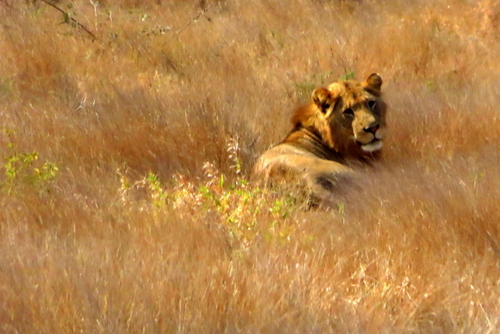
Nor was that the end of it. A little further on, as we were approaching Satara, we came across a pride of lions lazing in the long grass. Unlike the more solitary leopard, lions are social animals and this lot looked especially relaxed and happy in each other’s company although should a rival male appear I imagined the mood would swiftly change and there would be much snarling and gnashing of teeth. And maybe a rather brutal fight.

I would have been quite content for that to be my last big sighting but then, a few hundred metres on, we came upon a small group of those most lugubrious of birds, the Ground Hornbill, waddling across the veld in search of food while cautiously observing us through long eyelashes.

Here’s the funny thing though. I am convinced one of them winked at me, as if to say – see, miracles do happen, especially here in the Bushveld!

As we drove away, I found myself nodding in agreement…

GALLERY

More Kruger scenes:
More birds:

More animals:

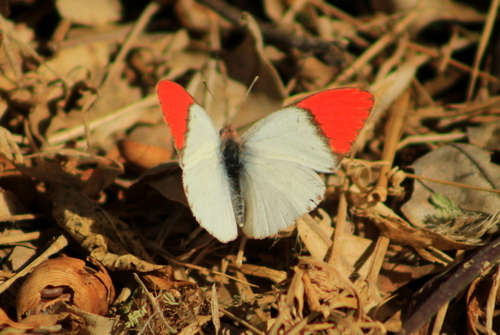
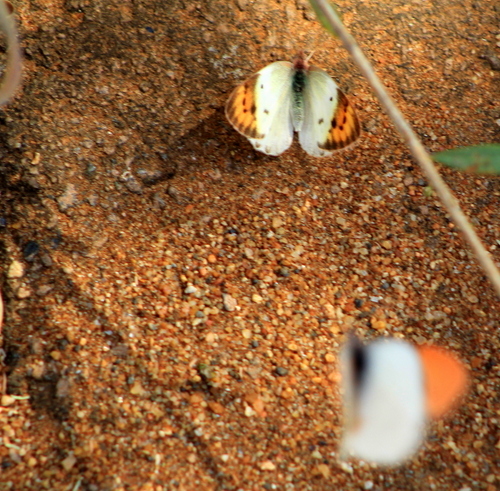
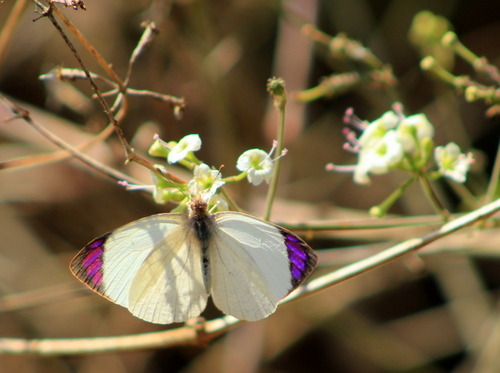
And a few butterflies:

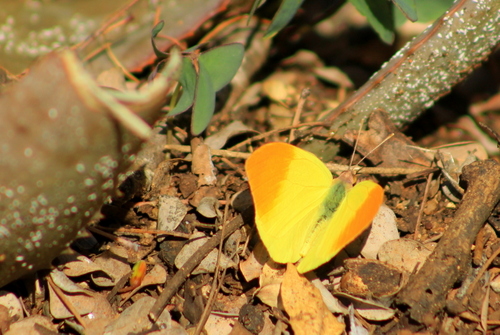
Autumn Leaf Vagrant, Orpen Gate