Book Review

published by Tafelberg

Ever since he first entered politics, Julius Malema has – like Donald Trump in America – been a divisive and controversial figure, a fact he has been only too happy to exploit to his advantage. Loathed by one section of the public, worshipped by another, over the years, a great deal of speculation has whirled around who he is and what drives his ambition. Many questions have also arisen as to how he has been able to underpin his lavish lifestyle. In this compelling, convincing and meticulously researched book, investigative reporters Micah Reddy and Pauli Van Wyk tear away the veil to reveal the unsettling truth.

Although not intended as a biography (Malema, unsurprisingly, refused to have anything to do with the authors), the book does give a brief resume of his career. Brought up in poverty, Malema became politicised at an early age. At school, he did not do well academically, although he would later explain this away by saying it was because he was too busy with politics. His less-than-stellar academic performance in no way dampened his unwavering thirst for power. He quickly made his presence felt. His personal charisma and larger-than-life personality went hand in hand with an instinctive feel for the masses which saw him rapidly rise through the political ranks until he eventually became president of the ANC Youth League.

As a member of the new elite, Malema openly displayed the self-regard and sense of entitlement that has become the trademarks of far too many of post-colonial Africa’s leaders. Like many others, too, he would use his new position to benefit from government tenders; in his case, mostly in Limpopo.

Malema was initially a fervent supporter of Jacob Zuma, vociferously defending the then Deputy President when he was charged with rape and playing an important role in his campaign to unseat Thabo Mbeki as president of the ANC. His outspokenness soon got him into trouble with the ANC hierarchy, however, and, despite his avowals of permanent support, he would later turn on Zuma after he expelled the young firebrand from the ANC for fomenting divisions and bringing the party into disrepute (ironically, Zuma would later suffer a similar fate).

Determined not to be silenced, Malema responded by forming the Economic Freedom Front (EFF), which advocated the radical redistribution of land and the nationalisation of mines. He was joined by his sidekick and former deputy president of the ANCYL, Floyd Shivambu, who would also become implicated in his share of shady financial and business activities (Shivambu would later deal a big blow to the EFF when, in a headline-grabbing move, he defected to Zuma’s newly formed MK Party. He did not last long there). As the undisputed leader and dominant member of the party, Malema was now able to unleash his demagogic talent freely.

Despite his pro-poor stance and professed aversion to Western capitalism, Malema has displayed few, if any, principles when it comes to accumulating wealth. Like many a populist leader, he has not been afraid to mix his political interests with his business ones or to use his political connections to bankroll both his party and himself. The proceeds from the latter went into luxury items, fleets of cars and a multitude of mansions, farms and properties.

Malema did his best to cover his tracks, but the press soon got wind of his activities and various investigations followed. Despite all the evidence that has been uncovered showing how he has benefited from his back-room deals, Malema has proved singularly adept at exploiting South Africa’s weak justice system and avoiding accountability.

In this deeply researched piece of investigative reporting, the authors provide a lengthy and detailed charge sheet of these. Looming large among the many cases is the scandal surrounding the Venda-based VBS Mutual Bank. A community-based bank, focusing on serving people with modest incomes, it collapsed in 2018 after being looted by corrupt municipal officials, middlemen, politicians, auditors, and even members of the Venda royalty, who had defrauded it of around R2 billion. As a result, many poor and elderly rural folk lost their life savings. Needless to say, both Malema and Shivambu were implicated in the unfolding scandal.

So far, the two politicians have managed to elude being brought to book for these and other corruption allegations, although investigations continue.

Engrossing and revelatory, Malema: Money. Power. Patronage provides a mountain of information on how Malema and other self-styled revolutionaries in the EFF have managed to enrich themselves, all in the name of the people. In doing so, the book also lifts the lid on the amoral careerism and licensed larceny that have become a defining characteristic of South African politics. Sadly, far too many members of the former liberation movements seem to have abandoned the fundamental values that first nourished them and learnt to tolerate the intolerable…

Published by UJ Press

In this well-researched, scholarly overview, the author provides detailed insights into the factors that led to the 2017 overthrow of the long-time Zimbabwean president, Robert Mugabe. One of the major focus points of the book is the often-overlooked role gender played in this and other military coups.

Tendi argues that Grace Mugabe – often sneeringly referred to as Gucci Grace because of her expensive tastes and extravagant lifestyle – was deliberately cast, by the coup plotters, as a scheming femme fatale, who had taken advantage of her husband’s frail health and declining mental state to position herself to take over the reins of power. This scapegoating of the First Lady was used as a cover for the general’s real motivations for the coup – to ensure that their preferred candidate, the recently sacked deputy president, Emmerson Mnangagwa (who they believed would protect their interests and positions. Mugabe was, reputedly, planning to get rid of some of them, and his rebuff of the generals when they sought a meeting with him to discuss their grievances was, undoubtedly, one of the main catalysts for the coup), would become president and not Mugabe’s own choice for successor – Dr Sydney Sekeramayi.

To bolster the case, as well as making it more appealing to the rank and file, the coup leaders portrayed Mnangagwa as a strong, bold, decisive, masculine figure as opposed to the more reserved, unassuming and, by implication, less manly, Sekeremayi. Mugabe was, likewise, feminised as “an old man” who had lost much of his former charisma and power and was, therefore, no longer up to ruling.

In addition to this, Tendi successfully demolishes the argument, put out at the time, that Mugabe’s overthrow was somehow not really a coup, in the strict sense of its definition, or that it differed markedly from how others had played out elsewhere in Africa. Because of Mugabe’s widespread unpopularity, both within and outside the country, coupled with the general feeling he had long overstayed his welcome in office, the AU and most Western leaders were happy to go along with this fiction. As a result, there was minimal public condemnation. There were even suggestions that Britain, for one, may have had a hand in what transpired or at least given tacit support to the Mnangagwa faction. The book includes personal testimonies and much interesting anecdotage from diplomats and politicians, in this connection.

Sadly, any hopes that the coup would usher in a better Zimbabwe would soon be dashed. As the author observes, most coups by generals tend to have conservative outcomes, and Zimbabwe proved no exception. There has been little meaningful change to the political status quo. Women’s participation in politics has declined, and there has been further repression and ongoing human rights abuses.

As Associate Professor of African Politics at the University of Oxford, Tendi has done his research, and his book includes a great deal of revealing behind-the-scenes detail. The most vivid parts of the book are those describing the fractured civil-military relations, and Mugabe’s failure to address or immediately deal with the generals’ grievances, an uncharacteristic lapse in judgment which resulted in the ageing president’s downfall. The author’s academic background does, however, occasionally show through in the numerous references to other scholars’ work and some rather dry theorising, which tends to slow down the pace of the narrative.

That said, The Overthrow of Robert Mugabe: Gender, Coups and Diplomats remains an important and engaging account of a pivotal moment in Zimbabwe’s recent history.

“I’m a G…nuuu…”: Cartoons for May and June 2024

Reflecting on 30 years of freedom, former president Thabo Mbeki described his successor Jacob Zuma as a wolf in sheep’s clothing. Mbeki said most of the country’s crises, including load shedding and the collapse of the South African Revenue Service had been orchestrated by the counter-revolution.

Suspended Msunduzi manager Lulamile Mapholoba said he would head to the High Court seeking an urgent interdict to get his job back. Mapholoba returned to work briefly following the Durban labour court judgement, which found his suspension in February unlawful.

President Cyril Ramaphosa signed the National Health Insurance Bill (NHI) into law, setting in motion the government’s fiercely contested plan for universal health coverage and prompting immediate legal challenges.

The Constitutional Court ruled that graft-tainted former president turned firebrand opposition challenger Jacob Zuma, is ineligible to stand for parliament. The top court backed an electoral commission decision that Zuma’s previous conviction for contempt of court prevents him from becoming a Member of Parliament, ruling that the constitution bars anyone sentenced to more than 12 months in jail, from doing so.

With voter discontent rising and shifting political alliances, the 2024 elections were marked by uncertainty and a desire for change.

In their first elections, the Umkhonto weSizwe (MK) Party swept the floor in KwaZulu-Natal securing 45.35% of the vote. The IFP got 18% while the ANC – who previously held the province – managed only 17%. In other news, a devastating tornado ripped through Tongaat in KwaZulu-Natal causing extensive damage to homes and infrastructure.

The MK Party instructed its MP members candidates not to attend the National Assembly swearing-in ceremony where the party’s 58 members would have been sworn in as members of Parliament. It also rejected the government of national unity (GNU) proposed by the ANC after the general elections produced no outright winner nationally.

At his second-term inauguration, President Cyril Ramaphosa struck an inclusive and unifying note while welcoming South Africa’s new reality. But behind the scenes, there were already signs the Government of National Unity (GNU) faced a rocky road ahead…

Impeached Western Cape Judge President John Hlophe was appointed Parliamentary leader for Jacob Zuma’s MY Party, marking a contentious new development in the country’s legislative history…

Book Reviews

published by 4th Estate

The 1994 Rwanda genocide, conducted mainly against the Tutsi minority ethnic group, was one of the great traumas of the twentieth century. During roughly 100 days between 500 000 to 662 000 people were killed. The scale and brutality of the genocide sent shock waves around the world although no country intervened in the slaughter.

The immediate trigger for the massacre was the downing of the jet carrying not only the Rwandan President Habyarimana but also his Burundian counterpart, Cyprian Ntarymira. Determined to avenge the slaying of their president, thousands of youth militia went on the rampage, bent on exterminating not only Tutsis but any Hutu deemed as being hostile to the regime. The long-standing tension and resentment between the two cultures provided the combustible fuel that sparked a raging riot.

In the aftermath of the genocide the rebel Tutsi-led Rwandan Patriotic Front (RPF), who swept through the country and restored some degree of order, was originally seen as the good guys – or at least the more virtuous of the various warring factions. It is a reputation which does not always stand up to scrutiny as author Michela Wrong shows in her often chilling but always compelling account of what transpired.

Wrong, who won deserved plaudits for her book about the rise and fall of Mobutu Sese Seko, In the Footsteps of My Kurtz, and who, as a reporter, witnessed many of the massacres that took place in Rwanda, is perfectly placed to write about the genocide.

In her introduction, she admits, however, the difficulties she had obtaining accurate and reliable information in a society where duplicity and lying are seen as a political virtue but her book nevertheless contains much intriguing anecdotage from many of the principal characters involved. It also has the ring of authenticity.

Opening her account with the assassination in South Africa, of the popular but now exiled Patrick Karegeya, the former Rwandan chief of Intelligence and one-time close friend of President Kagame (the book’s title comes from the sign the assassins left hanging on the door of his hotel room while they went about their grisly business), she then moves back in time, tracing the trajectory of the RPF from its origins in the Ugandan conflict of the 1980s to its present-day position as the ruling party in Rwanda. In the process, she strips away the carefully constructed façade and shows how a rebel movement that once inspired awe and respect and pitched itself as the party of ethnic reconciliation, has become, in true Orwellian tradition, as corrupt, autocratic, vindictive, ruthless and power-hungry as the regime it overthrew – and equally guilty of its own atrocities.

One of the many questions that springs to mind on reading the book is how ordinary people, people such as you and me, were able to act with such barbarity? In part, this can be explained by the country’s toxic history which allowed one side to dehumanise the other and consider them less than human. As Wrong observes “brutality is contagious” and the whole Great Lakes area has a long history of violence. Another interesting question that emerges from the book is just who shot down the jet carrying the two heads of state? Although the truth has never been completely established, much of the evidence points in one direction

Blended with vivid descriptions of place and character, Wrong manages to weld together all the myriad strands of this difficult and shocking period of recent African history in a language that is simultaneously poetic and down-to-earth. The result of much painstaking research, Do Not Disturb demonstrates with terrible clarity the ultimate potential consequences of racism, militarism and authoritarianism.

published by Melinda Ferguson Books

South African journalist, academic and former anti-apartheid activist, Malcolm Ray has set himself an epic challenge with this book – to attempt to explain how the social and economic turmoil that has engulfed so many post-colonial African states came about. This was always going to be a tough task but it is one he tackles with determination and enthusiasm and backs up with a great deal of hard research and careful analysis.

Fundamental to his argument is the whole concept of Growth Domestic Product (GDP) which has become the core creed of most countries’ financial planning. Ray devotes much of the earlier part of the book to explaining how it evolved and how an obsession with it has come to dominate economic thinking.

As originally conceived, the drive to identify and prioritise GDP had its merits. At the end of the Second World War, for example, the United States, as the world’s leading economic power, launched what became known as the Marshal Plan whose purpose was the revival of the world economy after the devastation caused by the conflict. As US Secretary of State George C Marshall, after whom the plan was named, made plain when discussing it, the doctrine was not directed against any country but against “hunger, poverty, desperation and chaos”. Noble in intention the plan initially worked well enough although by the 1970s (and thereafter) those innocent days were long gone. Since then, a growth-at-any-cost-doctrine and unchecked free-market economics have resulted in what Ray calls bandit capitalism which, in turn, has often gone hand in hand with bolstering up repressive regimes – like Zaire’s kleptocrat Mobutu Sese Seko. Poor countries have found themselves coming increasingly under the control of mostly American multinationals.

Perhaps hardly surprisingly, Ray examines the role played in all of this by organisations like the International Monetary Fund (IMF) and the World Bank, who were tasked with monitoring developing countries’ finances and whose extremely unpopular austerity measures had plunged many countries into seemingly intractable debt traps. He also shows how the whole aid for trade doctrine pushed by the US and its subsidiaries has in many cases been a tragic, epic failure.

South African readers will find the chapters devoted to this country especially interesting. Ray provides a compelling and convincing narrative to explain how President Thabo Mbeki’s ambitious economic reform programme came undone, paving the way for the rise of the opportunistic, predatory, Jacob Zuma whose “oligarchy was a populist manoeuvre to seize the ill-gotten gains of an old oligarchy, not for the benefit of the people who made it, but for himself.”

Well-informed, broadly convincing and certainly alarming, Tyranny of Growth is a timely and important book. The strength of Ray’s argument lies in his humanising Africa’s descent into economic chaos and also his posing of the all-important question – who exactly does the growth at all costs doctrine benefit when it has led to the marginalization of the continent and produced not only growing joblessness but an almost obscene inequality in the distribution of wealth?

The answer, he suggests, lies in the flawed economic model we are using…

Book Reviews

Published by Jonathan Ball Publishers

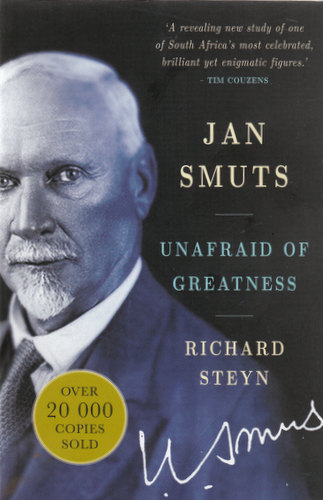
A man of great intellect and boundless drive, energy and vision, Jan Smuts’s contribution to the creation of modern South Africa has been rather glossed over in recent years probably because it doesn’t fit into the current political narrative. It is a situation which author Richard Steyn – a former editor of the Witness – sought to redress in Jan Smuts: Unafraid of Greatness. His book struck a responsive chord. Since it was first published in 2015 it has sold over 20 000 copies and has now been reissued.

Born in Riebeek West in the Western Cape in 1870, Smuts had a fierce intelligence and focus that assured success at virtually everything he turned his hand to. After a distinguished academic career, he rose to political prominence when President Paul Kruger appointed him Transvaal State Attorney at the tender age of 28. Although vastly different, the two men established a good working relationship based on mutual respect for one another. As a guerilla leader, fighting against the English in the Anglo-Boer War, he displayed great physical bravery and a good grasp of tactics even though he had not trained as a soldier.

At the end of the war, believing the best way forward was to attempt to reconcile Boer and British interests, Smuts would play an instrumental role in the formation of the Union of South Africa.

At the outbreak of the First World War, Smuts returned to his role as a military leader helping to drive the Germans out of South West Africa and then taking part in the East African campaign. Lionised abroad for his achievements, he would go on to become an adviser to numerous leaders and heads of state and served in the British War Cabinet.

At the end of hostilities, Smuts, almost alone among Allied leaders, argued that it was a mistake to place a crippling burden on defeated Germany because he believed it would ultimately backfire. In this, he would be proved correct. Adolph Hitler would later exploit this sense of grievance.

After becoming Prime Minister, he lead South Africa into the Second World War as part of a pro-Interventionist group, further alienating himself from large sections of the Afrikaans community. The British Prime Minister, Winston Churchill made full use of his talents, however, and he became both his trusted confidant and adviser. More than any other Commonwealth leader Smuts commanded Churchill’s respect and affection in part, no doubt because he appeared to share the British world view.

The massive disruption and carnage caused by both wars had a profound effect on Smuts. Believing that the world could not carry on like this he set out to transform the whole international scene by advocating the establishment of the League of Nations which later morphed into the United Nations.. In many ways, it was an impossible ideal but it initiated something we are still trying to do: put the pieces back together.

Like Thabo Mbeki, much later, Smuts enjoyed far greater fame and prestige overseas than he did back home where he remained a divisive figure despite his best efforts to unify the nation. Failing to read the mood of the country, he was eventually defeated at the polls in 1948 by the more hard-line, pro-segregationist National Party who took over the reins of power. It was the end of an era.

In charting his astonishing career, Steyn does an excellent job in rescuing Smuts and restoring him to his rightful place in history. Although largely admiring of the man’s achievements, he does not spare us his failings: he could be aloof and high-handed, paternalistic and patronising. Although far-sighted in other matters, he never really got to grips or acted decisively on the race issue

Deeply researched, but light of touch and rich in insight, Steyn succeeds in performing one of the main duties of a historian (and a journalist for that matter): he provides a highly readable narrative.

Published by Jonathan Ball

As Governor of the Cape and High Commissioner of South Africa, Alfred Milner was a man who cast a long shadow and it is largely as a result of his, often devious, machinations that the country came to exist in its current form.

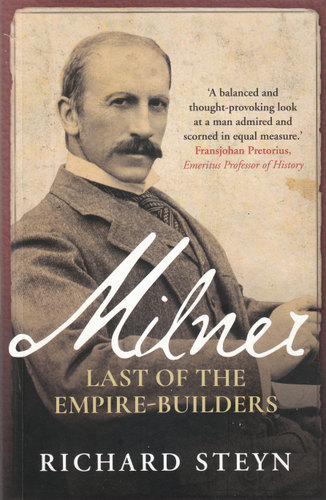
Having already written several acclaimed books on the era, including one on Louis Botha as well as the recently re-released Jan Smuts: Man of Greatness, Richard Steyn – a previous editor of the Witness – is the ideal candidate to resuscitate and re-examine Milner’s contribution and place in history. While researching and writing his recent series of books, Steyn has acquired a terrific knowledge of the subject and in Milner: Last of the Empire Builders he tackles the political circumstances, the personalities and the rationale behind their actions.

Sent to South Africa to try and resolve the heightening tensions between the Boers and the Uitlanders in the Transvaal, Milner was and remains a controversial figure. Entrenched in his belief in English racial superiority he was, as some commentators have mentioned, the wrong man to handle the country’s complex, multi-layered, problems. In negotiations, he showed little concern to appease grievances or try and bridge the gap between the two camps. Driven by his messianic belief in Empire his overriding aim was to unite the whole of Southern Africa under British rule.

What seems beyond doubt is that he was ready to go to war to achieve this goal and thanks to a bit of political skulduggery on his part he achieved just this. It soon emerged, however, that he had misjudged his adversary and instead of the hoped-for quick, decisive victory what he got was a long, clumsy, chaotically fought campaign that left him a detested figure in the eyes of the Boers, for whom he never showed any real sympathy.

As a man, Milner embodied a contradiction. A brilliant scholar, he could be warm, personable and charming (although he married late he seems to have been popular with women) but when it came to his life work he could, as an imperialist ideologue, be arrogant, haughty and single-minded. Convinced of his rightness and confident in his powers of persuasion he was not easily swayed from his chosen course of action.

He was hardly exceptional in his crusading zeal. Nowadays, it has become quite commonplace to look upon Empire as a bad thing but back then a whole generation of, often very gifted, young men grew up believing themselves to be the true heirs to the Romans and considered it their duty, as Englishmen, to bring civilization to decadent or barbarian people – by whatever means necessary.

(An irreverent aside: it has been observed elsewhere that the rise and fall of the British Empire coincided with that of the British moustache so it is interesting to see that most of the main protagonists in this book – Milner, Lord Roberts, Kitchener – all sported very fine examples of these).

After he left South Africa, Milner’s vision of a unified South Africa was partly realised by the group of carefully selected young administrators he left behind him – his Kindergarten as they came to be known. Back in England, he remained a prominent and respected public figure although not without his detractors. Steyn makes a convincing case that, as War Secretary in Lloyd George’s five-man War Cabinet, he played an instrumental role in shaping an Allied victory. In so doing, he not only cemented his legacy but partly redeemed himself for whatever damage he may have done to his reputation in his often high-handed handling of the South African crisis.

In writing about his achievements, Steyn has found a single life that illuminates a dark chapter. For any biographer, it is a fascinating story but the author is exceptional in bringing not only a thorough knowledge but also an elegant style and a gift for narrative,