I grew up in an era in which there was still a certain romance attached to train travel although, at my first encounter, its charms were not immediately apparent to me.
I was seven-years-old at the time and at the end of that railway track there existed a dark, foreboding place called ‘boarding school’ which, my parents had solemnly informed me, was where my destiny lay. Making that trip was not something I was particularly looking forward to. Sitting on my large black metal trunk with my name and that of my prospective school house freshly painted in white on its surface, I remember feeling more like a convicted felon than a young innocent setting off on an exciting, new, life-changing, adventure.
While train travel and boarding school will always be inextricably linked together in my mind with time my view of it did, indeed, begin to change.
I came to love the old fashioned compartments with their iron luggage racks, green bunks, polished woodwork and framed pictures featuring the best known local sights. I recall, as a young boy, also being intrigued by the signs that appeared in each compartment urging us not to “expectorate”. It took me some time to figure out that this was posh railway-speak for “spit”.
Being hit in the face by great gobs of phlegm was not the only thing you had to worry about when you put your head out the window. Since the locomotives were still mostly powered by steam you also ran the risk of being knocked unconscious by large lumps of coal.
Then
there was the whole complicated ritual of departure and arrival.
First, you would have to scan the notice boards to find what section
of the train you were in, then the frantic rush to get all your
luggage aboard. Trying to lay claim to our seats, people would
already be crammed in the corridor which made this an exceedingly
difficult manoeuvre.
Finally, the time would come for the train to leave. Somewhere down the end of the line, a whistle would blow, a flag would wave and the carriage would croak and grown beneath you as the train began to pull slowly out of the station. Because of some strange optical illusion it always seemed to me that it was the station and the surrounding buildings that were moving – taking with them my waving parents and other family members until they were just small dots on the horizon – while the train itself remained perfectly still.
As we began to gather momentum I would sit looking out the window as the lights of the suburbs and industrial plants gradually gave way to fields of crops and grazing lands and then the bush. Rattling along, I would catch the occasional glimpse of lights away in the darkness and settlements suggesting that some of the countryside we were passing through was inhabited. Sitting there I would find myself imagining their owners sitting at their dinner tables or asleep in their comfortable beds and envy them.
This
reverie would invariably be interrupted by the arrival of the
conductor in our compartment asking for tickets while behind him a
porter would move to and fro under his burden of sheets, blankets and
pillows making our beds.
At some point of our journey down the tracks, I would fall asleep, lulled by the methodical, rolling motion of the train. There was something about the rhythm of of the train wheels over those iron tracks and the clean smell of the bushveld sweeping away under stars towards the shadowy outlines of the Great Dyke that I found immensely comforting.
Now and again the train would ground to a halt with a massive groaning of brakes and a screeching of wheels. I had done the journey often enough to be used to this strange habit it had of stopping for interminable periods for no apparent reason in the middle of nowhere. Then, without warning, it would hiss and clang and start slowly pulling away again.
For the most part, the journey began and ended in darkness. Later on, when I went to university in Natal, we used to do most of the Botswana leg in daylight. The one feature of this stretch of the journey, I remember, besides the miles and miles of red Kalahari sand and interminable thorn and mopane scrub, was that in places where the train stopped to take in water dozens of enterprising salesmen and women would run along the side of the platform trying to persuade us to buy their goods.
Looking back on it all, I realise now how incredibly lucky I was. In an age in which regular jet flights have shrunk time and distance, and sucked most of the pleasure out of the experience, this was travel at its leisurely and meditative best.
As anybody who has tried it can tell you, birdwatching is something that can start as an innocent pleasure, then become a habit and finally morph in to something akin to an obsession.
Rupert Watson, who describes himself as “a lawyer, mediator, naturalist and writer”, is a person so afflicted. In the course of a 40-year career, the Kenya-based author has travelled the length and breadth of Africa seeking out its numerous and varied birdlife.
His latest book, Peacocks and Picathartes: Reflections on Africa’s Birdlife, is very much a distillation of these experiences. Drawing extensively on literature, history, science, avian miscellany and his observations, it is intended as a celebration of the diversity of African birds, especially those peculiar to the continent.
Chapter Two of the book, for example, is devoted to birds that occur only in Africa, Chapter Three to those that occur MAINLY in Africa and Chapter Four contains a list of his personal favourites.
Watson writes in a chatty, conversational style and most of the book’s pages are enlivened with little vignettes. In the course of its pages, he shows how certain birds – the Hamerkop and the Ground Hornbill are obvious examples – have acquired a special, even mythic status in local folklore and belief systems. Elsewhere he explains how some of the scientific names for birds have changed in the light of the most recent hypotheses about generic relationships. More controversially, common names have suffered a similar fate for the sake of international consistency, a factor which has led to some consumer resistance and resentment.
Other birds find themselves being shunted from one grouping to another, a factor that only serves to highlight the difficulty in resolving classification conundrums even with the advent of DNA analysis. The four African hyliotas, for example, now compromise their own family after being claimed by both the Old World warblers in Sylviidae and the batises and wattle-eyes in Platysteiridae.
There are many more insights and happy phrasings. We all thrill to an unusual sighting and you can feel Watson’s palpable excitement when he describes how he tracked down a rare White-necked Picathartes in the Bonkro region of Ghana. Even common birds can arouse his interest. There is an amusing description of the almost feral Egyptian Goose, a bird that has developed a singular attraction to swanky golfing estates where its habit of moulting and defecating on fairways has made it extremely unpopular with golfers.
The result of all of these reflections is a classic birder’s bedside book full of insight, anecdotes, information and an imaginative sympathy with the natural world. Hopefully, it will give non-birders some idea of what they are missing..
published by UKZN Press
The spectacular rise of bird-watching over the last fifty to a hundred years has led to a growing interest in not only avian territorial behavior but in other aspects of ornithology, including the question of how birds come by their names. While most of South Africa’s best-known bird books and field guides provide some explanation as to their vernacular names what has been needed is a book examining the subject in depth.
As the author of
Zulu Names (2002) and Zulu Plant Names (2015), Adrian
Koopman, who is also an emeritus professor at the University of
KwaZulu-Natal, has the intellectual armoury to fill this gap, at
least insofar as far as the Zulu names go. In a book that combines
scholarship with readability, his knowledge and learning is apparent
on every page of this book and he deserves full credit for the
remarkable amount of information he has amassed.
Utilising up-to-the-minute research (including information gleaned from a series of local workshops conducted between 2013 and 2017), his hugely detailed survey explores the link between birds, names and people. While intended primarily as a reference work the book is more than just that; it also includes all sorts of interesting critical, cultural, personal and historical observations
What rapidly emerges is just how complex a subject it is. In an early chapter, the author looks at the underlying meaning of African birds and shows how these are linked to identity and function. Thus there can be lexical meanings, connotative meanings, associative and symbolic meanings. These, in turn, can be broken down into other categories such as names based on appearance, song, habits, habitat, behaviour, motion, season and weather, superstition etc.
What also constantly astonishes is the radiant aliveness and poetic sensibility behind so many of the Zulu bird names. Koopman revels in explaining fascinating things that some readers may know little about. For example, the name impofana for the Eurasian Golden Oriole while meaning ‘slightly dun-coloured’, is also one of the nicknames of the Kaiser Chiefs Football Club, whose uniform is a striking half-yellow/half-black, just like the plumage of this bird. As apt as it is lyrical is the coined name umambathilanga for the Yellow Bishop which translates out as “the one that wears the sun as a blanket”.
The book is littered
with other similarly colourful examples.
In addition to
explaining how the birds got their wide range of Zulu names, Koopman
also examines the extremely important role birds play in Zulu praise
songs, proverbs, riddles, beliefs and traditional lore. Certain birds
are seen as omens, portents of things to come (the arrival of the
Red-chested Cuckoo, for example, heralds the start of the ploughing
season), others are regarded as charms, such as love charms and
protective charms. Linked to this are the taboos against killing,
eating or even imitating certain birds.
Leaving nothing to
chance, the author concludes his investigation by underlining the
critical role such knowledge can play in encouraging both
conservation and avitourism.
Prodigiously researched and sparklingly expressed, this is likely to remain the most comprehensive and authoritative book on the subject for some time. Koopman’s cabinet of curiosities is not only handsomely produced, with a neat bibliography and index, but is further enhanced by numerous colour photographs and his own fine watercolour bird paintings.
Since its first appearance in 1993, the SASOL Birds of Southern Africa has gained a reputation as one of South Africa’s best bird books, unsurpassed for its excellence as an all-round guide to identification. To my mind, its illustrations, which have been stripped down to exclude extraneous and distracting features of animation and context, are the most accurate and revealing of the current crop of field guides.
The revised 5th Edition edition, contains some real advances on its predecessors in the series. Probably the most novel of these is the inclusion a “bird call” feature which enables you to access calls by scanning barcodes with a free downloadable call app. It also contains calendar bars depicting species’ occurrence and breeding periods.
Very much a team effort, the book now has six contributing authors with new input from Dominic Rollinson and Niall Perrins, both well-known for their birding expertise. In addition to this, it has more than 800 new illustrations, including all-new plates for raptors and seabirds
As one would expect of a field guide of this sort the accompanying text has been simplified and limited to the essential differentia but should be more than enough to help with immediate bird identification. For the full treatment you can always turn to the comprehensive reference work, Roberts Birds of South Africa.
If you want to plunge even deeper in to the subject of bird identification, than Birds of Southern Africa and their Tracks & Signs by Lee Gutteridge might be another worthwhile addition to your birding library.
Normally when one attempts to identify a bird in the field one starts with its physical appearance – its size, shape, patterning and colour. One also looks at their movement – how they hop, run or jump on the ground; how they move through bushes and trees; how they fly in the air; how they swim or dive in the water.
This book approaches the subject from a slightly different perspective, one that doesn’t even require the bird to be present – by teaching you to identify its spoor or tracks and its dropping, as well as picking up other little tell-tale signs.
It is a slightly unusual approach, granted, but it is yet another way of celebrating bird diversity and of expanding our own range of experience of the natural world.
Adding to its appeal, the book is handsomely produced with a bibliography and index, plus hundreds of colour illustrations depicting not only the spoor and droppings but the birds themselves.
With the world in the grip of the Covid-19 pandemic hysteria and the economic climate as gloomy as the burning Msunduzi landfill site, getting out in to the country is the one thing we can still do which makes everything seem all right again. It is like a passport to a more ordered and contented world.
And perhaps no other creature better exemplifies this reassuring image of bucolic calmness than the humble butterfly.
I love birds, always have, but it is only since I moved up to the Karkloof area that I have begun to develop a deeper interest in these delicate but wonderfully self-contained insects, perhaps because there are so many of them active in our area at the moment, feeding on the spring and summer wild flowers. The more you watch and get to understand them the more wonderful they get.
South Africa is, indeed, singularly lucky in having over 671 species of butterfly which, as Steve Woodhall, the author of Field Guide to Butterflies of South Africa, points out, is an impressive number for a country outside the Tropics.
Anyone who, like me, wants to be able to identify and know more about them would do well to keep his handy field guide in close reach for it is a treasure trove of useful information.
First published in 2005 it has been fully revised and updated to reflect the most recent taxonomic changes. Taking full advantage of the rise in the use and quality of digital cameras, the book is also stuffed fill of beautiful images of butterflies in all their colourful variety.
For this edition a full two-thirds of the images have been replaced with new material showing both male and female forms – where they differ – as well as upper and undersides. The species accounts have also been comprehensively updated and expanded, covering identification, habits, flight periods, broods, typical habitat, distribution and larval food sources.
Like all the best field guides it is a book which inspires adventure, improvisation and the learning that comes from discovery. Since getting my copy I have managed to photograph and identify the Southern Gaudy Commodore, the African Blue Pansy, the Yellow Pansy, the Common Diadem, the Painted Lady, the Forest Swallowtail and the Green-banded Swallowtail.
Rife with similarly enticing names, Woodhall’s well organised guide brings home just how astonishingly refined and varied these creatures are. Hopefully it will, in this time of self-isolation and rampant gloom, reignite your own desire to escape in to the wild…
Tom Eaton is undoubtedly one of South Africa’s most witty and erudite commentators with a brand of humour that manages to be both razor-sharp and wryly tongue-in-cheek at the same time.
His latest collection, still fresh despite being mostly written before the Covid-19 pandemic struck, rails against current political shibboleths to entertaining and pointed effect. As is only to be expected, Eaton pulls no punches as he takes satirical swipes at a number of rather large and obvious targets – the ANC, Eskom, the SABC – but with his slightly skewed, off-centre approach he manages to illuminate this familiar territory with sharp flashes of novel insight..
Of course, no book about South Africa’s recent history would be complete without a dissection of the rotting cadaver of state capture that was the hallmark of Jacob Zuma’s time in office and Eaton duly obliges with a typically excellent, if typically depressing, essay on the man and the damage he inflicted on the country
In places, it is not at all a comfortable read. Eaton has a habit of shredding many of our common self-deceptions and irrational beliefs, as well as the sort of deluded wish-thinking that often characterises public debate. He includes, for example, a very thoughtful and balanced piece on the role of politics in sport in South Africa, arguing that it is naïve to think you can separate the two. In a chapter dealing with another vexed, contentious South Africa issue – the re-imposition of the death penalty – he puts forward a similarly persuasive argument, showing how we often allow our heated feelings on the subject to override common sense.
Eaton does not confine himself just to local matters. Elsewhere, he includes a perceptive essay on what is happening in the United States, a nation which seems to have been dumbed down to the extent where responsible and informed policy has largely ceased to exist under a regime that denies the reality of global warming and which has a president who advocates drinking bleach as a cure for Covid-19..
Eaton’s writing can be pithy. It can also be deadpan. Underpinning it all, though, is a deep vein of seriousness which forces you reconsider and look again at many of your own assumptions about the sort of society we live in. Or, as Eaton himself puts it, the book is “about trying to resist the knee-jerk responses that professional manipulators want us to have…”
Intelligent, well written and extremely funny, Is it Me or is Something Getting Hot in Here? is a terrific compendium of the incompetence and occasionally appalling behaviour of those in whom we have entrusted our vote. It also holds up a not always flattering mirror to ourselves…
Published by Bantam Press
With his blend of sardonic humour and noble integrity, Lee Childs’ laconic hero, Jack Reacher, is one of crime fictions most likeable and engaging characters.
In his latest outing we find him sitting on board a Greyhound bus, heading along the interstate highway, with no particular destination in mind. Across the aisle an old man sits asleep with a fat envelope of money hanging out of his pocket.
Reacher is not the only one who has spotted it. When the old man gets off, at the next stop, he is followed by another passenger with slicked-back, greasy, hair and a goatee beard. Naturally Reacher, his suspicions aroused, decides he better disembark as well, just in case the other guy has bad thoughts on his mind….
He has. Needless to say, by the time Reacher has finished with him he has good reason to regret ever harbouring them. While obviously grateful for Reacher’s intervention the old man is clearly reluctant to explain who the cash is intended for or to let him get further involved in his affairs.
This merely serves to pique Reacher’s interest further. Having insisted on accompanying the old man home, he eventually gets him to admit that he and his similarly elderly wife are the victims of an ugly extortion racket.
For a loner like Reacher who only becomes sociable when he meets good people in a jam, this goes against the grain and he immediately decides that the time has come to mete out his own particular brand of retributive justice against those who are making the old folks life a misery.
It takes Reacher little time to flush out the enemy but he also discovers he is vastly outnumbered. Despite finding himself caught up in the middle of a particularly vicious turf war, however, between two nasty rival gangs – the one Albanian, the other Ukrainian – he never seems to be in danger of losing his head.
Author, Lee Child, is a reliable performer and once again delivers an enjoyably familiar, violent, pacey, caper. The action sequences are handled with his customary elan while, at the same time, he convincingly manages to convey the sleazy, menacing, underbelly of modern city life.
Whatever happened to the small town hotel? When I was growing up they were all over the place. Now, they seem to have become an endangered species.
This is, of course, a rhetorical question and one which has an obvious answer. Their demise became inevitable once they started having to compete with all the cheaper bed and breakfasts and self-catering establishments that suddenly began springing up across the sub-continent like a contagious rash.
Others found themselves replaced by up-market, chain hotels or, because of a decline in bookings, were converted into slightly run-down-looking shops and boutiques. Or else they were simply knocked down to make way for something else.
Such is the nature of progress. I find it all rather sad because so many of those old hotels were architectural gems which gave the small towns both character and definition. Often they were the most distinctive buildings in them.
The ones, I remember, from my Rhodesian and Zimbabwe days, were invariably situated alongside the main road. Tall palms or blue-gums with peeling bark and rustling leaves cast pools of shadow over them.
Most had large wrap-around verandahs with arches and pillars and a few pot plants strategically scattered about to create the right ambience. Also an assortment of old wicker chairs and a few tables to put your drinks on. The roofs were steeply pitched and made of corrugated iron, often painted red or green. The outside walls were white.
Inside, the lounge
would be equipped with a tired-looking, over-stuffed couch and a few
mismatched, broken-backed chairs. Often there was a slightly strange
smell – a weird combination of stale beer, frying odours from the
kitchen and dust. Even the ancient looking fans that whirled from the
ceiling above you couldn’t disperse it…
I was always scared of those fans. Too often, they looked like they could, at any moment, come spinning off their bearings, decapitating some unfortunate soul in the process.
The rooms, themselves, were not exactly posh. The furnishings were minimal, the curtains gauzy, the carpets threadbare. A few pictures, often reprints depicting snow-capped Alpine mountains, would hang on the wall while the beds, with their lumpy mattresses, would sag in the middle. If there was a wash basin in the room, the tap often leaked. More often than not there was no en-suite bath; you were obliged to use the communal one at the end of the passage.
The walls were like matchwood. Through them you could hear the radio or TV (if they were lucky enough to have such modern contrivances back then) being played next door or people murmuring in low but hard-edged voices. Upstairs it sometimes sounded like there were platoons of soldiers practising their drills in hob-nail boots on the wooden floor boards.
Their departure
from the room would often be followed by a wall-shivering door slam..
Lying in bed, trying to get to sleep, you could hear engines throbbing, brakes screeching or cars thundering along outside. If you were near the railway line – again, many of these hotels were – your sleep would invariably be disturbed by the blast of a train horn as it came puffing grandly in to the station, before stopping with a loud squealing of brakes.
In the dining room,
the food, served by turbaned waiters, although edible would hardly
qualify as haute cuisine especially by today’s high culinary
standards. Mostly, it was meat and two vegetables, over-cooked, a bit
like the mush they dished up at boarding school
Invariably, the most well-frequented part of the hotel would be the bar. There were usually two kinds of these – the swanky cocktail bar which women (this was before the MeToo Movement) were allowed to frequent and men were expected to wear a tie; and the saloon bar which was Men Only.
The latter were spit n’ sawdust affairs and there was no real ‘dress code’ here except you had to wear long trousers after 6pm. If you wanted an insight into White Rhodesian “culture” this was the place to go. Easily identifiable were the regulars: a sad-eyed collection of red-nosed, old misfits staring gloomily in to their drinks. Most of them turned up as soon as the pub opened and stayed until it closed.
There wasn’t much talking, just a lot of guzzling. Having frequented the place for years most of them had exhausted their personal lives as conversational topics. Occasionally they would try some other subject.
Something like “Nice
weather we’re having,” might be tried as an opening gambit.
“Yeah – very
nice,” the grunted reply.
In stark contrast
you would get the groups of young bucks, throwing darts and playing
pool and yelling at each other about what a good time they were
having.
In my early twenties I rather liked frequenting these bars although I was never one of the dancing on the tables sort. When I was based in Sinoia (now Chinoyi), working for the District Commissioners Office (my penance for letting the Government pay part of my varsity fees), I practically lived in the local bar.
There was not much else to do…
The Specks Hotel in Gatooma (now Kadoma) was another one I got to know during my Mines Department days and which perfectly fulfilled all my expectations of it.
Specks Hotel, Gatooma (now Kadoma).
Not that all of
these small town hotels were tatty and down-at-heel and fallen- on-
hard- times.
The Cecil Hotel in Umtali (now Mutare) was a rather grand old lady until it got taken over by the army, during the Rhodesian Bush War, and converted in to an HQ. So was the Midlands Hotel in Gwelo (now Gweru), another period hotel which stood directly opposite the Boggie Clock Tower, a rather strange edifice erected in the middle of Main Street for no other reason, it often seemed, than to confuse out-of-town motorists ( it was actually built in 1928 to commemorate Major William James Boggie, an early big-wig in the town).
Boggie Clock Tower with Midlands Hotel on right. Gwelo (now Gweru).
After independence there were suggestions the Boggie Clock be pulled down. I am not sure whether that was because of its unfortunate colonial associations or because it was a traffic hazard. As far I am aware, it is still there, still bamboozling out of town motorists.
For me the most stylish and grandiose of all these hotels was the Old Meikles Hotel in Salisbury. Some might quibble, here, as to whether it actually qualifies as a small town hotel but since Salisbury was still in its adolescent stage when the hotel was built, back in 1915, I am including it.
Overlooking the gardens of Cecil Square where the first British settlers raised the Union Jack, it was a study in Victorian elegance and old world charm. Again there was a wonderful old verandah in the front where you could collapse in to a comfy seat and sip your gin and tonics and watch the folk passing by. Inside it was pleasantly dim, high-ceilinged and paved with cool tiles.
On Saturday mornings it would be packed solid with wealthy tobacco farmers come to town. Often there would be a man tinkling away on the piano in the background of the lounge where the farmers had congregated, with another man playing the double bass next to him, partly concealed by a potted palm tree.
In what can only be
counted as a resounding victory for the cultural philistines – and
an unmitigated disaster for the rest of us – the Old Meikles was
demolished in the mid-1970s and replaced by a functional, modern but
utterly character-less structure.
Having grown up with
it always being there, like a comforting blanket, I felt bereft. I
was never able to look at Salisbury through the same eyes after that.
When I moved to
South Africa in 1984 – the demolition of the Old Meikles was but
one of my reasons for taking this step – I found the situation very
much the same down here although here and there a few of the old
hotels still survived.
There is still one in Howick, the town nearest to where I now live, whose doors continue to remain open although how well it is doing I have no idea. It is just around the corner from the Howick Falls so is, not too surprisingly, called the Falls Hotel.
Howick Falls Hotel.
Somerset East, where my sister Nicky and her husband, John, moved to, around 2009, has one on its main street named – you guessed it – the Somerset Hotel.
My pub-crawling days were long over when I came drifting in to town so I never actually went inside but I am sure it would meet all the criteria for a small town hotel. The outside certainly does except it is painted a garish yellow instead of my preferred white, a black mark in my eyes.
The one morning, when I was staying with my sister, an almighty hullabaloo suddenly erupted from outside it which had me thinking the end of the world was upon us. When we went out to investigate we found ourselves confronted by a scene that looked like something from the set of a Mad Max movie. The bikers had come to town.
Bikers outside Somerset Hotel
Biker, strutting his stuff.
There seemed to be hundreds of them hurtling up and down the main drag, revving their engines, spinning their wheels and kicking up huge clouds of blue smoke, hydrocarbons and testosterene in to the air. Others were leaning from the balcony upstairs, clutching their brandy and cokes and shouting boozy instructions.
Folk thronged the street, some still in their Sunday finery, others in filthy T shirts and shorts. Kids dodged in and out of the traffic. There was so much haze and noxious gas and so many people you could barely make out the Dutch Reformed Church down the road.
It all kind of made sense. If the first thing you need in a small town is a kerk for your prayers, a mart for selling food and a pub where you can commit the sort of sins that would warrant praying about, than Somerset East filled the bill.
It was a classic Southern African dorp with a marvellous old hotel…
Once upon a time long ago, I found myself a very reluctant conscript
in the Rhodesian Army. After I had completed my basic training in
Bulawayo I was despatched to what the military hierarchy liked to
call The Sharp End where I ended up patrolling with a curious
mix of half-trained soldier-civilians in the hot, tsetse
fly-infested, Zambezi Valley.
In my platoon was a stocky, jovial, young, former rugby-player who carried in his back-pack a centrefold he had torn out of SCOPE magazine. For him it was a ritual. Every night he would unfold the picture and pin it to the nearest tree; every morning he would take it down again, refold it and return in to his back-pack.
By the end of our tour poor Marilyn Cole – for that was the model’s name – had become so stained and crumpled and yellowed by the rain and the sun and the wind you could barely make out her shapely figure any more. It didn’t really matter. For us her ongoing presence was about more than mere sexual titillation. She had become a symbol of defiance, a link to the world we had left behind..
That was one thing
the army did to you – it helped concentrate your desire for
something you once took for granted into a craving that narrowed your
focus intensely. Deprived of so much, the army taught me to take
nothing for granted: a bottle of good wine, a meal in a restaurant, a
hot shower, clean clothes, a comfortable bed.
Time passed. The war ended. I found myself at a crossroads, uncertain which way to turn. Worn out by seven-years of war, I decided, in the end, that I wanted another life, somewhere else. Scraping together what little money I had, I piled my few belongings in to my old Datsun 1200 and headed to South Africa.
The truth is that I
didn’t have much idea what I wanted to do. I had studied English
literature at university and held a BA degree so I had some notion of
finding something where I could finally put that to use.
My sister, Sally,
who had recently moved from Zimbabwe to Durban herself, kindly set up
several interviews for me. The first of these was with Republican
Press, at that stage, the biggest magazine publishers in South
Africa. One of their publications was the self-same SCOPE Magazine.
I was not confident. As a virtual unknown, with no previous experience in journalism, I thought it would be virtually impossible for me to break in to this highly competitive field. In the interview I probably did everything the career advisers would caution you against – I arrived ill-prepared, I stammered, I was apologetic, I could barely string a coherent sentence together.
Oddly enough, this
seemed to endear me to the company’s then MD, Leon Bennett. He told
me I made a refreshing change from the usual spoilt, rich,
presumptuous, white kids he had to interview.
As amateurish as
they then were, he also saw potential in my cartoons.
I got the job. And
so, by a strange twist of fate, I found myself working for the same
magazine whose centrefold had helped buoy up my mood throughout my
otherwise dispiriting National Service year.
These days some
people, younger ones, don’t know about SCOPE but back then it had
attained an iconic status in South Africa with it raunchy,
irreverent, anti-establishment style of journalism, so at odds with
the repressive morality of the times.
Describing itself,
somewhat euphemistically as a “Men’s Lifestyle Magazine”, it had
been launched in 1966 by Winston Charles Hyman with Jack
Shepherd-Smith as its first editor. At the time, most of the
magazines in South Africa were typically staid in tone, conservative
it outlook, and anything but bold in design. SCOPE changed all that
by pushing its maverick status and going where none had gone before.
Starting off as a newsy pictorial magazine it steadily ramped up its sexual content, then very much a taboo subject in the country. It began to publish lots of pictures of bikini clad girls. Later, it became famous for its nudes with strategically placed nipple stars.
Typical SCOPE covers…
In the first flush
of its glory days, the magazine sailed pretty close to the wind,
constantly challenging the country’s strict censorship laws to see
what it could get away with. It was routinely banned which only added
to its allure and popularity.
Its circulation
soared, advertising revenue increased. At its peak SCOPE was the
largest selling magazine in the country reaching a staggering peak of
250 000 copies sold a week.
Shepherd Smith was
succeeded as editor by a former Rhodesian, Dave Mullany. A tough,
uncompromising figure not disposed to blind obeisance or toeing the
line, he pushed the boundaries still further increasing the pin-up
content and encouraging an even wider-ranging, freer style of
reporting.
With his zippy and
acerbic retorts, he turned the Letters Page in to one of the most
popular and well-read sections of the magazine. Similarly reflective
of his rebellious outlook was the space he devoted to rock music
reviews.
In Richard Haslop –
a lawyer by profession but as equally at home writing about music as
playing it – he obtained the services of probably the most talented
and knowledgeable rock scribe of his generation. Having grown up in
an era of some of the giants of the music industry, what made
Haslop’s reviews so appealing was his verve, insight and his
eagerness to get you to listen to records as attentively as he did.
It wasn’t all just
sex, big boobs, nipple stars and rock ‘n roll however. SCOPE treated
serious matters seriously and produced a lot of good quality
journalism.
One of the biggest scoops we got, while I was there, was an exclusive interview with wanted bank robber, Allan Heyl, a member of the notorious Stander Gang who had captured the popular imagination and achieved an almost folk hero status in South Africa. At the time Heyl, the only surviving member of the gang, was holed up in London (Stander himself had been shot dead by police in Fort Lauderdale, Florida).
More serious themes…
Another notable
story which caused a huge furore, during my time, involved the
pioneering heart surgeon, Chris Barnard, who had just returned from a
big hunting safari in Botswana. One of the video operators, who had
accompanied the group, had been so appalled by the cruelty she had
witnessed on this hunt she leaked the story to SCOPE. We immediately
published it. Very protective of his high public profile, an angry
Barnard threatened to sue but the editor stood firm and he eventually
backed away.
SCOPE’s vigour,
humour, occasional vulgarity, big headlines and pin-ups gave it
immense appeal with the young and, just as it had with my generation,
it became a staple for South African ‘troopies’ serving on the
border.
Ownership of the
magazine changed hands when it was bought out by the Afrikaner-owned
Republican Press. Because of their close connections with the
government, its new corporate owners were never comfortable with the
magazine’s perceived permissiveness but because of its big profit
margins they were restrained from interfering too much. They did,
however, fire Mullany when he chanced his arm, once too often.
With his departure
something fundamental changed in the magazine. Deprived of its
distinctive, self confident editorial identity it drifted, by
default, in to the hands of lesser editors. It lost some of its
sparkle and wit. Attempts were made to turn it in to an upmarket
magazine for males but its old image had become too entrenched in the
public’s mind for that to ever work.
As its circulation
began to drop, management were eventually forced to eat humble pie
and recall Mullany.
My four-year sojourn
at the magazine fell in between his firing and rehiring.
As one would expect, the staff, when I arrived, were made up of a suitably ragtag group of disparate individuals. It was the heyday of “Gonzo” journalism and many journalists, inspired by the likes of Hunter S. Thompson, wore their outsider status as a badge of honour, galloping away from the sort of respectability and convention that was the hallmark of life in South Africa under the National Party (although this didn’t stop the government from implementing some pretty inhumane policies).
Tall, laid-back and laconic, Quentin – “Kanga” – Roux, the deputy-editor, moonlighted as a beach-bum, surfer and lifeguard at Winklespruit on the South Coast. He eventually married a beautiful young lady selected by SCOPE to sail around Mauritius as part of a tourist promotion and went to live on an island off Florida.
Chris Marais, our Jo’burg editor, played in a rock band before deciding that a small town in the dry Karoo was where he wanted to be (he now writes for South African Country Life). Bad boy Franci Henny, a feature editor, lived a borderline life of dissolution while nurturing an ambition to write the Great South African Novel.
Franci Henny (left) and Jo’burg editor, Chris Marais.
Irony was the
stock-in-trade of in-house humourist, Robin Hood, both in his writing
and conversation. An ex-BSAP policeman with a wonderfully dry world
view his weekly summary of the “Dallas” TV show plot line and
acting was, for me anyway, far more entertaining than the show itself
(which had a huge South African following).
My time at SCOPE
also coincided briefly with that of Frank Bate, another brilliant and
funny writer, whose booze and drug-fuelled escapades made him
something of a SCOPE legend. He died at the relatively young age of
fifty but managed to pack two lifetimes worth of living in to those
years.
I also struck up an
immediate and long-lasting friendship with Karen MacGregor, the first
woman reporter to be employed full-time by the magazine. A
highly-respected, award-winning, journalist, Karen would go on to
work for the Times Higher Education Supplement in London, write for
Newsweek and London newspapers such as The Independent and The Sunday
Times, and later become the founding editor of the on-line
publication, University World News.
Where she led,
others followed: Esther Waugh, Ann Jones and – another good friend
– Mandy Thompson (now resident in Majorca) all worked at the
magazine while I was there.
As a misfit-of-sorts myself I enjoyed the living-on-the-edge work ethic and environment and felt quite at home with SCOPE’s slightly disreputable image.
My plug in the 20th anniversary edition of SCOPE.
I was given my own
column, PERISCOPE, a mix of quirks and oddities gleaned from around
the world which I illustrated as well. I also worked as a re-write
man taking stories we had got from elsewhere and converting them in
to a more racy “SCOPE style”.
In 1988, I allowed
myself to be lured away when I got offered a job on the Jo-burg-based
Laughing Stock, a sort of local version of Britain’s Private
Eye. Although it employed some highly gifted humourists (among
them Gus Silber, Jeff Zerbst, Harry Dugmore, Arthur Goldstuck and the
creators of South Africa’s most successful ever comic strip, Madam
& Eve, Stephen Francis and Rico), the market wasn’t ready for
us and the magazine folded after a year.
Back in Mobeni,
Durban, SCOPE had also been having a hard time of it.
In a way it was
responsible for its own plight. For years it had campaigned against
the country’s censorship laws but when, after independence, these
were relaxed it found it could not compete with the more heavyweight
overseas girlie magazines such as Playboy and Penthouse which had
been allowed to enter the South African market.
The magazine
continued to be published but it had gone in to terminal decline. In
an effort to boost sales they messed around with the formula, it went
through several incarnations but none of them worked because, in a
sense, it couldn’t make up its mind whether it was one thing or the
other – an unpardonable sin in the industry. Time had also dulled
its edge, values had changed, society moved on.
It continued to
slide inexorably, a hollow shadow of its former rumbustious,
controversial, self.
The plug was finally
pulled in 1996 by which time I had long since moved away and was
happily ensconced as the first-ever, full-time political cartoonist
for the Witness newspaper in Pietermaritzburg.
“Mellow is the man who knows what he’s been missing.” – Led Zeppelin.
“Been dazed and confused for so long it’s not true…” – Led Zeppelin.
In 1974, I was living in London, sharing a damp, dingy, mouse-infested room with two young English drop-outs and earning about 13 pounds a week.
The facilities were basic. We did our cooking on a hot plate while the ablutions were in a small cubicle at the end of the passage-way. I used to go to the launderette down the road to do my washing.
I dressed in a style I thought appropriate to the then emerging “underground” culture: mostly grandpa vests and bell-bottom jeans. I sported a pair of sideburns and a moustache (inspired by Robert Redford in Butch Cassidy and the Sundance Kid) while my hair curled coquettishly around my ears. On top of it I wore a Donovan cap.
Waiting for a bus to London at Hunton Bridge, with my brother, Pete. This picture was taken during my turkey-plucker phase.
As an adjunct, I listened to a lot of loud rock music, treating it with all the seriousness usually reserved for classical music – all the while nurturing a vision of myself as part of a new generation of politically and socially aware young hipsters. The fact that I didn’t know nearly as much as I claimed to didn’t prevent me from persisting with the pretence.
Back then, Led Zeppelin were the King Kong of the genre, towering so large over the landscape they dwarfed almost everybody else. Naturally, I was a fan.
Fresh from the backwoods of Rhodesia, I had been first introduced to them during my varsity days by the rather mysterious young man who lived in the room next to mine.
The university I had enrolled in was primarily known for its agricultural faculty and, not too surprisingly, most of its students were fairly conservative in both dress and outlook..
My neighbour defied this image. He was part of the “long-haired revolution”, turning his back on conventional mores and wearing his outsider status as a badge of honour.
Because of his red mane, I called him the Little Red Rooster, after the old Willie Dixon blues song (later covered by the Rolling Stones). The name stuck.
I will always remember him, with affection, slouching down the road to and from lectures, his long hair enclosing a thin, pale face, his eyes broodingly directed in front of him. Occasionally he would nod as he passed a group of women among whom he might see a potential conquest.
He made quite an impact. It is hard to believe, in this age when anything goes, that there were folk, back then, who got so inflamed by the sight of men with long hair that they wanted to beat them up. They would drive past our residence and, leaning out their car windows and shaking their fists, shout: “You fokken communists” or “You look like bleddy girls” in their thick South African accents, revealing their rampant misogyny.
You could see the hate glowing in their eyes. It was quite unsettling.
The Rooster took his rock music seriously. Eager to learn as much as he could, he bought LPs by the dozen. To make sure the quality was just right he usually insisted on buying the more expensive “imports” in preference to the locally produced versions.
His extensive collection were arranged neatly next to his pride and joy – his Hi Fi set. Only he was allowed to handle them.
It was through the Rooster that I got my baptism in to Led Zeppelin. I was writing an essay one evening when he burst in to my room, glowing with excitement.
“I’ve got it!” he said brandishing an LP triumphantly above his head. My flat mates and I were all invited to his room to hear it.
The album was simply called Led Zeppelin
Allegedly named by Keith Moon of The Who, the band was essentially the creation of ex-Yardbirds guitar virtuoso, Jimmy Page and featured Robert Plant on vocals, bassist John Paul Jones – who had done session work with the Rolling Stones – and John Bonham on drums.
To get us in to the right mood, the Rooster insisted we all lie on the floor, in his room, with the lights switched off.
From the opening track, Good Times, Bad Times, it was a shock. The shrieks and demented guitar playing, overlayed with feedback and amplifier distortion, as well the excessive drumming, was more loud and overpowering than anything I had heard on record before. It was like an earthquake, opening up a whole new chapter in my musical education.
I was immediately hooked.
If the first album was an eye-opener, the second, Led Zeppelin II, which the Rooster duly bought, was the one that established them as the unchallenged premier hardcore rock band.
Blithely combining power-house melodies with industrial strength noise, the group continued to overload their songs to the point of explosion, creating a startling rush of momentum.
Nor was it all just raw noise, the band alternating between electric and acoustic instrumentation with a finesse few other performers managed. From Plant’s impassioned screaming on the opening track, Whole Lotta Love, to To Ramble On with it Tolkein-esque references to ‘the darkest depths of Mordor‘ the songs also displayed considerable variety and content and a unique chemistry.
In an era notable for its love of musical novelty, it was amongst the most novel of them all. Rolling Stone Magazine perhaps put it best when they described it as “rock as sculptured noise”.
This ability to alternate between ripping guitar leads and achingly tender melody lines was perhaps nowhere better shown than on their best known track, Stairway to Heaven, which would go on to become a staple on the radio and one of the most requested songs ever.
Not everyone reacted to their thunderous volume and edge-of-mayhem theatrics the way I did.
I remember, on one occasion, my brother Pete, a final year agricultural student, opening the door and looking on us with a mixture of bafflement and amusement as we lay there on the floor in the dark.
Pete, being Pete, did not try and save me from myself. He may not have liked or understood the music but he realised this unholy din meant something to me and left it at that.
The Rooster hung around at university until the release of the fourth Led Zeppelin album and then dropped out of our lives in the same mysterious way he had appeared. Despite that, my passion for the band carried on undimmed.
For their part, Led Zeppelin continued to lead the pack, their wildly charismatic live performances, which often featured Page’s novel use of the violin bow, going on to cement the legend. Unfailingly energetic and vital they played with such verve and skill they outshone most everyone else – a fact that led to some lesser acts refusing to appear on the same bill as them for fear they would be found wanting.
In spite of their enormous success – or perhaps because of it – they received no small criticism over the years. The music press, at first, was decidedly sniffy; there were charges of plagiarism while Jimmy Page’s well documented fascination with the occult and openly expressed admiration for the writings of the infamous Satanist, Aleister Crowley (whose Loch Ness residence Page bought), led to accusations that they were acting in league with the devil.
Their off-stage antics also won them a great deal of notoriety. In true Seventies rock-star style, cocaine was consumed by the cartload and distilleries drunk dry. Between them they slept with literally thousands of groupies, hotel rooms were regularly trashed and their were several unsavoury incidents involving the band’s thuggish bodyguards.
With all this controversy still swirling around them Led Zeppelin still found time to make some of the most exciting, potent and powerful music of all time (Led Zepellin II, Led Zeppelin IV and Physical Graffiti are now generally accepted to be rock classics).
I, meanwhile, had left university and got drafted in to the army. Very possessive of my hard won independence, I did not react well to either the discipline or the highly restrictive, regimented military way of life.
Desperately wanting to get back to living life on my own terms, I fled to England shortly after I completed my National Service.
Having hitherto only listened to British rock and blues on records and tapes, part of my reason for going there was because I wanted to experience the music live in its natural habitat. As it turned out, however, I spent my entire year living so close to the breadline I never could afford to go to any concert.
The biggest disappointment of all was when Led Zeppelin appeared live, just down the road in Earls Court, in a concert that is now generally regarded as marking the pinnacle of their career. I was out of work at the time with not enough money to even pay my rent so I was forced to give it a miss – something I have spent the rest of my life lamenting.
Thereafter, the relentless touring, drug-fuelled lifestyle and the inevitable personality clashes took their toll and the band began to slowly unravel. Drummer John ‘Bonzo’ Bonham’s death, after choking on his own vomit – an inquest in to his death calculated he had drunk in the region of 40 measures of vodka – spelt the end, although the surviving band members did briefly reunite in 2008 in a much publicised, kill-for-a-ticket, live reunion concert.
After they split up there were rumours that Plant and Page were going to form a band called XYZ but nothing ever came of it. Instead each of the remaining members of the group that spawned heavy metal decided to pursue solo careers ( Plant and Page did go on to make an album together in in 1994). For me, though, much of the romance had gone out of it and thereafter I only took a spasmodic interest in their various musical journeys.
That changed in 2007 when Robert Plant released Raising Sand, his surprise hit collaboration with blue-grass singer, Alison Krauss, which would go on to be nominated the Sunday Times’s album of the year. As unlikely as the pairing might have seemed on paper, their disparate voices and backgrounds made a brilliant meld. Filled with lyrical love songs and gently strident social anthems it is a strongly affecting work, full of style and character and a worthy summation of his career.
I think it is a wonderful album. I play again and again.
Looking at the cover picture of Plant, a lot craggier than the Adonis-like, golden-haired screamer of yore, made me realise that age had caught up with us all. It also reminded me of the time when, like the poet Robert Frost, I too, stood at the crossroads of my life and chose to take the road less travelled.
Led Zeppelin formed part of that. For me, their music had something to do with freedom. It accompanied me out in to the world at a time when I felt a bit lost and had no real interest in making money or having a career. It helped me expunge unwanted aspects of my past and gave my life a significance it might not otherwise have had.
“Somewhere, deep down in the heart of each one of us, something yearns for the old land, and the old kindly people”
R.L.Stevenson
Maybe it has something to do with the current uncertainty, the depth of longing for all to be well again, but as lockdown drags on I find my thoughts drifting back, more and more often, to my youth. Right now, it seems a much safer place to be. At least you have the comfort of knowing what happened and how it all worked out.
I think there is more to it, though, than a mere desire to retreat to the warmth and innocence of childhood. All our lives are an amalgam of past, present and future. Trying to see clearly and to record what has been seen helps me work out how I got from there to here.
It is also a chance to meet my parents again, back the way they used to be. Each generation passes on something to the next and by looking afresh at what they did and thought is a way of discovering how they have lived on through me.
The difficulty of doing this is, of course, being able to gain access to one’s past. Over the years my memories have grown hazy and dim. The further back I go, the more fragmentary they become.
Sometimes they takes on the aura of a dream, a few tangible threads emerge from the miasma that is my brain. I clutch at their dim outline. At other times, just looking at an old photograph or reading an old letter, will bring long-forgotten things back to the surface.
What I am certain of is that the pivotal event of my early life occurred when I was about nine-years old. It was the year my father decided to relocate us from our smallholding outside of Salisbury to a remote farm in the Eastern Highlands of Nyanga. If anything can be termed a life-changing experience for me, this was it.
The property he purchased was in an incredibly beautiful part of the world.
I can still recall, with pin-point clarity, the journey there, driving up through the granite hills and miombo woodland, along a winding road to a crest where the small Nyanga Village lay. From here, the trail dropped down, with sudden abruptness, in to a huge valley, speckled with rocks, bushes and shadows, shimmering in the parchment dry heat as it receded in to the far haze.
View over valley, Nyanga.
Along its eastern flank rose the solid wall of the main Nyanga range. Running parallel to it, on the other side of the enormous valley, ran the Nyangombe River, which would later join the Ruenya which, in turn, flowed in to the mighty Zambezi. Beyond that lay more hills and mountains.
In contrast to the sweltering valley, the plateau on top of the mountains was cool and covered in open moorland and icy streams and seemed hardly Africa. In the rainy season, waves of multi-shadowed clouds would come rolling ponderously over them in never-ending processions.
For a boy of my romantic disposition it was like entering an enchanted world. All was mysterious, unexplored, rich with infinite possibilities. I loved the wildness, the sense of freedom.
Years later, as an undergraduate, I would read Wordsworth’s poem, “The Prelude”. It struck an immediate chord in me:
“Fair seed-time had my soul, and I grew up
Foster’d alike by beauty and by fear;
Much favour’d in my birthplace, and no less
In that beloved Vale to which, erelong,
I was transplanted. Well I call to mind
(‘Twas at an early age, ere I had seen
Nine summers) when upon the mountain slope
The frost and breath of frosty wind had snapp’d…”
The mountains Wordsworth was writing about were those of the English Lake District. Mine were distinctly African ones.
There were many of them. On the Eastern side of the farm, the great brooding presence of Mount Muozi rose abruptly up from the plain to its castle-like knob. Even when covered in cloud you could feel its presence; its spirit seemed to permeate the very air. There was something ancient and troubling and mysterious about it which undoubtedly explained why it was held in awe by the locals and had become the focal point for an important rain-making cult.
View from old lands towards Muozi mountain. Note baobab.
The closer you got to it, the higher it towered above you. Again, the words of Wordsworth’s “The Prelude” seemed to fit:
“…growing still in stature, the huge Cliff
Rose up between me and the stars, and still,
With measured motion, like a living thing,
Strode after me…”
Looking north, from the top of the castle, the main range surged away to Nyangui (“The Place of Shouting”), the big, bulky, colossus that marked the end of the Nyanga range, as well as serving as our corner boundary. It was also the mountain from which our farm took its name.
Nyangui (“The Place of Shouting”) mountain. Picture courtesy of Patrick Stidolph.
If Muozi looked like a vessel striving to break loose of its moorings than Nyangui was the bulwark that anchored it back.
Like Muozi, though, it could, when the mood took it, get quite spooky, radiating an air of almost tangible menace, especially when the skies grew sullen and arbitrary bolts of lightning started slashing through the sky. At certain times of the year the wind would grow wild and angry and come hurling down its slopes with an almost end-of-the world fury.
The other mountain which looms large in my childhood memories is Sedze although it was not actually on our farm but situated further back, towards the Nyanga village.
Sedze (‘Rhino’) mountain.
At the one end of it, just above Bende Gap, rose two great rock pinnacles, steeper and more pronounced than any others in the range. From the innermost of the two towers, the mountain sloped upwards in to a massive, domed, bulky, behemoth of rock fitted with clefts and rib-like fissures that gave it the appearance of some ancient animal afflicted by a strange lethargy.
Because of its resemblance to a sleeping pachyderm we always called it the “Rhino” mountain.
Returning from boarding school I always felt elated and light-headed to see the “Rhino” and yet at the same time near to tears because it meant I was almost home again.
Although it slopes were steep and uninhabited, the valley floor below was littered with scores of thatched huts and cattle kraals and patches of cultivated lands. Straggling along the top of one ridge, along which the road traversed, was a cluster of little shops with corrugated iron roofs. This was the Sedze Business Centre. For some reason these old buildings imprinted themselves in my mind; so much so that years later I felt compelled to do a painting of them.
Sedze mountain. View from Business Centre. Painting by Anthony Stidolph.
Our own house was a low rambling affair, close to a stream that ran down from Muozi. Later, my one brother, Paul, would build a slightly more elaborate and stylish homestead near a rocky outcrop, using white quartz for the walls and thatch for the roof. Positioned next to an old baobab, it commanded tremendous views over the surrounding mountains
Having laid idle for years, turning this stretch of Africa back in to a farm was hard work. There was plenty of bush to clear, furrows to dig, fences to put up. Because we were always short of cash, all the children were expected to chip in during the school holidays.
We were always a close family. The bond between us all, already strong, was strengthened during the Nyanga years.
In some ways it was a cloistered childhood. Outside my siblings and the farm mutts I had no companions or acquaintances to share it with. This did not make me unhappy or fretful. Nor did it bother me that I was not able to participate in all the entertainments and amusements – movies, parties, dating, sport – that other teenagers took as a matter of course.
Being so restricted and yet so active actually had its benefits even if I didn’t always fully appreciate them at the time. I developed an early love of nature which has never left me. I created a world of my own in to which I could slip away unnoticed. I learnt how to fall back on my own resources.
When I was not on the farm, I was away at boarding school, an institution I hated because it took me away from my beloved mountains. What strikes me now is the narrowness of life in it.
At boarding school.
Palmer House Rugby Team (UBHS).
Ours was, of course, a segregated society and only white boys were allowed to attend the school. Beyond the cleaners, the ground staff and the kitchen workers we had little personal contact with the local African population.
It was a life, into which the great affairs of the world seemed hardly to intrude. Nor did any of us ever really bother to question the racial and quasi-Imperial doctrines of the time or the fairness of the system in to which we had, as relatively privileged white children, been born.
It was only during my final years at boarding school that the world of politics began to force its way in to my life.
In elections held in December, 1962, the right-wing Rhodesian Front, who had promised to deal ruthlessly with the nationalist menace and to entrench white rule permanently, had swept to power. One of their first demands was that the country be granted independence.
For the next three years the RF Government would be engaged in a series of fruitless negotiations with the British. With the situation at stalemate, it had become more and more obvious that we were headed for some sort of showdown. As young and ill-informed as I was, even I had become aware that, beneath the carefree surface of my life, the political sands were shifting fast.
On the 11th November, 1965, it finally happened. For weeks beforehand there had been much talk and speculation and an atmosphere of considerable excitement had built up, even among us schoolboys. Now, before a hushed nation, Smith made his big announcement – Rhodesia had declared its independence from Britain.
The effect was dramatic. Suddenly, politics occupied the minds of everybody in the country from the remote farms to the government offices, from prospector to priest.
It was an epochal event. Not only did it change the course of all our lives but it would eventually trigger a lot of soul-searching for me.
Caught in the same fusion of fear and excitement as everybody else, slowly, hesitantly, my attitudes began to change. Over the following years I would increasingly find myself wondering about the wisdom of the course of action the RF government had embarked on, especially once the Rhodesian Bush War began to exact its heavy toll.
I also started to look more critically at the society I had grown up in. Cut off as I was from the mainstream, even I could see that Rhodesia was not exactly a centre of cosmopolitan artistic energy and progressive thinking.
My family background, no doubt, played a factor in this growing awareness of the world around me. As a pilot, my father had travelled the length and breadth of the continent, as well as working in Arabia and Europe. Unlike many of his fellow countrymen who were hidebound, conformist and set in their ways of thinking (little realising they represented an age that was passing) his exposure to other people and cultures had left him relatively open-minded and tolerant about politics and race.
My parents and youngest sister: Monica, Nicky and Reg Stidolph. Nyangui in background.
Although he exuded a natural authority, my father was also at heart, something of an outsider, a maverick, a free thinker. While I may not have inherited his unwavering self-confidence, I like to think I did get a dose of his individualism, curiosity and refusal to be pigeon-holed.
In other areas we were different. I was the fourth son in a family of seven children and this undoubtedly impinged on my temperament. Whereas my three elder brothers were practical like my father I took after my mother, inheriting her artistic side. Unlike my brothers, too, I had no aptitude for the sciences.
Looking back at it all now, from the perspective of old age, I realise how much of my character and how many of my views and attitudes were forged back then. It also makes me realise how lucky I was to have the childhood I did.
Living in those beautiful surroundings helped foster my imagination. It taught me to see things and to value solitude and worship the ordinary dirt that sustains us. It also showed me that without peace and quiet you can miss your inner voice.
In that sense, those early years of deprivation and isolation helped prepare me for life under lockdown. I grew up used to keeping my own counsel and finding my way through the thickets.
Of course, the fact that I now live in one of the most breathtakingly scenic parts of the KwaZulu-Natal Midlands – the Karkloof – also made my incarceration a lot easier to bear…
Sunset over Kusane Farm in pre-Lockdown days. Myself, sister Sally and her daughter-in-law, Tammy. Picture courtesy of Craig Scott.
If there is one thing the Covid-19 pandemic has bought in to sharp contrast it is the deep divisions within society. Whereas some, have grown weary in the face of the protracted lockdown and adapted a devil-may-care attitude towards it, others have continued to shy away away from any form of social contact, concerned the virus is still raging.
Like many people, I have, at times, found myself perplexed by the ANC governments handling of the crisis. Some of its more stringent rules and regulations, for example, seem to have very little to do with logic or rationality or protecting our health. By the same token I can understand the need for caution and am reluctant to take any unnecessary risks which might expose me to Covid-19.
In part this stems from hard experience. Because of my compromised immune system (in my case damaged lungs) I have suffered from three bouts of pneumonia in the past. The first was so debilitating there were times when I wondered whether I was going to make it through.
It was, without doubt, the most frightening experience of my life and cured me of any appetite for misplaced displays of false bravado.
Which has meant that I have spent most of my lockdown time incarcerated alone at home. It is not something that has bothered me too much. There is solace to be found in solitude.
One of the few things I have missed, though, is my weekly trip to the Karkloof Farmer’s market. For me it has become a regular Saturday morning ritual.
Normally, I like to rise early and set off across the valley when it is still flooded in a honey-tinted light. No matter the time of the year, it is invariably beautiful then, with the sun’s rays lancing the plain in shafts, creating long shadows behind the rocks and trees.
The air is fresh, too, with a tingling, clean smell and the grass seems to dance as the wind ruffles through it. On the other side of the valley, the Karkloof hills rise up blue and purple and mauve and pink against the soft, early morning sky.
Sometimes, if I am really lucky, I might even get to see some cranes.
Wattled Crane, Karkloof.
Once inside the large, metal-framed hall, my first order of business is to visit the coffee stand. The lady who works behind the till knows me so well I don’t even need to give her my order – one Americano with hot milk. I then take my cup of steaming coffee out to the verandah where I sit and watch the dairy cows grazing in the pasture below.
My next port of call is the artisan bread stall and then the Greytown cheese maker whose mature Boerekaas cheese I love. After that I might buy a steak for my evening braai.
The final and – by far – most important part of the ritual involves browsing through Huddy’s second hand book stall, in the far corner of the hall. Over the years it has proved to be a veritable treasure trove for me and I have uncovered many gems.
I have always loved the war poets, especially Wilfred Owen, so was thrilled to pick up an excellent biography on him by Jon Stallworthy, as well as one on Siegfried Sassoon written by John Stuart Roberts.
In similar vein, I was also able to obtain John Garth’s Tolkien and the Great War.
All three books are meticulously researched and exceptionally well written, describing, in detail, not only Sassoon, Owen and Tolkien’s experiences in the trenches of the first world war but showing how each, in turn, tried come to terms with the horrors they had seen.
While, obviously, not the most cheering of subjects to read about at a time when we are faced with our own insistent drums of doom they do serve as a reminder that troubles are constant, a given in life.
Perhaps because my father worked there, I have always been fascinated by the legend of “Arabia” and in tracing its development in the successive stories of the explorers who helped to create it.
Although these early travellers were, for the most part, men, one of the exceptions to the rule was the indefatigable Gertrude Bell. Wanting to find out more about what drove this exceptional woman, I was very pleased to be able procure a copy of Janet Wallach’s Desert Queen: The Extraordinary Life of Gertrude Bell.
A woman of fierce intelligence and focus- she was the first woman to graduate from Oxford with a history degree – her bold expeditions deep in to the Arabian desert led to a passion for the Middle East that lasted to the end of her life (she is buried in Baghdad). Her sensitivity towards its people and their culture set her apart from many of her era. Finding an ally and kindred spirit in TE Lawrence, of Lawrence of Arabia fame, she would go on to play an instrumental role in the creation of the modern state of Iraq.
When I was going through my Kenya colonial history phase, it was at Huddy’s I found Elspeth Huxley’s marvelously evocative The Flame Trees of Thika, The Mottled Lizard, Out in the Midday Sun and Nellie: Letters from Africa; as well as James Fox’s White Mischief and Beryl Markham’s superb West with the Night, which Ernest Hemingway bluntly described as a “bloody, wonderful book.”
When this endless source of good books dried up because of lockdown, I was forced to fall back on my own resources. I decided now might be a good time as any to give my private library a revisit.
I began by dipping in to the four-edition Collected Essays, Journalism and Letters of George Orwell because I felt that if anybody could help me make sense of our confused and unsettling times it was him.
I discovered Orwell at a relatively early age and he has remained a strong, if not always comforting, presence in my life ever since. With his unflinching honesty and clear, precise, prose style he has, over the years, proved an incomparable guide for me.
As a young man, Orwell fought in the Spanish Civil War and subsequently wrote about it in Homage to Catalonia. The experience left deep emotional scars but also provided him with a valuable insight in to two of the major social dislocations of the Twentieth Century – in the shape of the former Soviet Union and the former Third Reich who, in supporting the opposing sides in the civil war, fought what has been called a “world war by proxy”.
Orwell’s fear of the dangers posed by autocratic leaders and absolutist governments would later find expression in the two books for which he is most famously remembered.
In his allegorical fable, Animal Farm, he showed just how easily those who have toppled a repressive regime can take on its trapping and habits. Having lived through a couple of revolutions myself, this is something I have got to see, first hand, in both Zimbabwe under ZANU-PF and in South Africa under the ANC.
There are other interesting parallels with today. Decades before “political correctness” and “cancel culture” became recognisable concepts, Orwell battled to get his trenchant masterpiece published because it was so obviously aimed at the Soviet Union who had been Britain’s ally during the second world war.
Orwell’s bullying boar, Napoleon, was transparently Stalin; his intellectual idealist rival, Snowball, obviously Trotsky. The prophet of revolution, Old Major, was a compound Marx and Lenin.
His usual publisher, Victor Gollancz rejected the book, as did Faber and Faber whose then director was no other than TS Eliot. Jonathan Cape also turned it down because he thought it unduly offensive to make the Bolsheviks pigs. Orwell responded by writing “balls” in the margin of the rejection letter.
The book was eventually published by Secker in August, 1945.
In his last, chilling, work, 1984, Orwell offered a similarly scary scenario, opening a horrific vista in to a suffocating world of party tyranny and non-stop surveillance.
Orwell’s writings would, in turn, influence a new generation of writers who picked up his torch of idealist humanitarianism. Amongst these is Margaret Atwood whose own books – such as Oryx and Crake, The Handmaid’s Tale and The Year of the Flood – have offered fictional excursions in to a nightmare world that could be just around the corner.
The warning signs are certainly there. It is not news that something is badly wrong with America, to say nothing of what is going on in both China and Putin’s Russia.
Indeed, with state surveillance back with a vengeance and fake news everywhere, I often find myself wondering what Orwell would have made of our times and how he would have reacted to the likes of Donald Trump, a man whose greed, small-mindedness, lack of empathy for the sufferings of others, promiscuous lying and abuse of language, encapsulates so many of the vices he warned us against.
Before sitting down to write both Animal Farm and 1984, Orwell obviously posed himself the question – what happens if we continue down the road we are already on? At a time when the dumbness of the many plays in to the hands of the scheming few it is perhaps something we ought to be asking ourselves now…
Having reacquainted myself with Orwell, I decided I might as well go the whole hog and read some Atwood too, so got out my copy of Curious Pursuits, a collection of her essays and journalism from 1970 to 2005.
Despite Atwood’s own dystopian visions of our future, her writing in this book is full of humour, charm and telling detail. A common theme in many of her essays is how women negotiate society’s obstacles.
Not too surprisingly, the book also includes an essay on Orwell in which Atwood acknowledges the debt she owes to the author and talks about the influence he had on her own writing.
Also, of great interest to me, was her Introduction to ‘Roughing it in the Bush‘ by Susanna Moodie because Moodie was married to a distant ancestor of mine.
Atwood is obviously an admirer, having also brought out The Journals of Susanna Moodie (first published in 1970), regarded by many as her most fully realised volume of poetry.
Hoping that it, too, might reveal some concealed truths about our topsy-turvy times, I also dug out my copy of Lewis Carroll’s epic nonsense poem, The Hunting of the Snark,
For some reason, I have always found it more accessible and much funnier than Carroll’s Alice in Wonderland books.
For those unfamiliar with the poem, it describes the adventures of nine tradesmen (all of whose professions begin with the letter ‘B’) and a beaver who embark on a quest to capture a “Snark”. There search is not made any easier by the fact that none of them actually knows what a Snark is although there is a worry it could be a “Boojum”, an equally mysterious creature which can “suddenly and softly vanish you away”.
The Improbable Crew.
The Beaver and the Butcher. Both illustrations by Ralph Steadman.
Their method of luring the Snark out of its hiding place is eccentric, to say the least:
“They sought it with thimbles, they sought it with care;
They pursued it with forks and hope;
They threatened its life with a railways share;
They charmed it with smiles and soap”.
Making a hard task even more difficult is the fact that the map they are using to look for the Snark is completely blank…
The Hunting of the Snark was originally illustrated by Henry Holiday. Again, I must confess, I prefer the more recent, 1976 ,Ralph Steadman drawings because his wonderfully warped, ink-splattered style seems custom-designed for Carroll’s off-the-wall, phantasmagorical tale..
Another odd fact about the poem is that Carroll reputedly wrote it backwards, writing the last sentence first.
There have been numerous theories as to what it all actually means. Some see the voyage as a search for truth and meaning; others think it is about the pursuit of happiness (a view Carroll, himself, apparantly favoured). There is another view that it deals with our existential angst.
This last theory ties in with my interpretation of the poem – that what they are desperately seeking is a cure for Covid-19.
When lockdown was first introduced in South Africa I went along with received opinion. I washed my hands thoroughly. I practiced social distancing. Realising I was in the at risk category, I only left the farm twice in the first seventy-eight days and when I did I wore a mask. I made sure I got in to town just as the shops were opening and didn’t spend any more time in them than I needed to.
In the same spirit, I tried to make lockdown a positive experience. Over the months I found different things to focus on. I developed interests I never had before. I re-established my connection with the living world.
Indeed, with hindsight, I think one of the most important things lock-down – and retirement for that matter – gave me was time to slow down and start noticing things. The sheer scale of the global catastrophe forced me in to a kind of retreat, a moment of reflection.
I began studying my immediate surroundings with an even greater interest.
For example: each day, since lockdown began, found me patrolling my garden forensically, in the manner of an East German border guard back in the Cold War era, except what I was on the look-out for was not defectors but butterflies. Instead of an assault rifle, I carried my old Canon.
As winter progressed so their numbers dwindled but every now and again I would come across one, fluttering along in all its flowery grace and fragile beauty. With every new butterfly I identified I felt a mounting sense of elation and achievement.
Steel-blue Ciliate Blue
Africa Grass Blue
Common Diadem
Forest Caper White.
Determined to remain upbeat, in spite of the grim trajectory the virus was taking, I deliberately limited my intake of news to what I deemed necessary for me to be able to produce my one topical weekly cartoon. It wasn’t always easy. At times the line between tragedy and farce grew very fine.
Like most people, I accepted the logic and rationale behind the initial lockdown but as the weeks stretched in to months I found my faith beginning to waiver. Having done its best to scare us in to staying indoors the ANC government began to flounder on some of its own draconian rules.
These included a ban on the sale of cigarettes and alcohol, both of which were based on a rather convoluted logic, as well as some sloppy and outdated science. Many of the other regulations – like what sort of clothes you could or couldn’t buy under Level 4 of the lockdown – were just plain nonsensical, verging on Kafka-like.
My suspicions that there was something both insidious and wrong with the handling of the pandemic was reinforced when the Judge in the High Court of Pretoria declared that many of the regulations failed the “rationality test” – and were also unconstitutional and invalid. Indeed, as the crisis dragged on, it became increasingly apparent that many of the government ministers were using the pandemic as a cover to pursue their own hidden agendas and conduct their own personal crusades – and that these often had very little to do with our health.
As so often happens in South Africa, ideology had trumped common sense…
Police Minister Bheki Cele and COGTA Minister Nkosana Dlamini-Zuma applying the screws…
Not that our problems were necessarily worse than anywhere else. The US, for example, was typically overconfident in its exceptional-ism and paid the price.
When the news seemed overwhelming, however, nature provided a balm. It became my escape. My therapy. My reminder of how much I have to be thankful for.
I am lucky to live in the country. In many ways my life carried on as it had before lockdown; there was no real adjustment required. I could still go for daily walks. There was my garden to work. My chickens to feed.
Nor was I all that bothered about being cut-off from the rest of society. As a cartoonist I am used to the solitary life. I have always worked from home so self-isolation is a habit for me.
I won’t pretend there weren’t things I missed – a cup of coffee with a friend, a simple hug, the freedom to drive where I liked.
By way of companions, I had the birds. There is not a day in my life that is not improved by seeing my resident pair of Boubous bouncing along or hearing the Cape Turtle Doves calling from the trees.
Resident male Southern Boubou, bouncing along...
The migrants were, of course, long gone. I missed them but we still had our regulars in my garden. Each morning I would wake up to the Cape Robin and the Olive Thrush singing outside my window. If I got up early enough I sometimes caught our skittish pair of Natal Francolin making a dash for it across my lawn.
With the breeding season over the weavers had lost their masks but still gathered on my food table every morning chattering away like excited schoolboys. They would be joined by the rock pigeons, doves and sparrows.
The South African lockdown officially started just as autumn was giving way to winter. I love winter. With the rains over everything begins to dry out and a smoky haze veils the sky, dulling the light and robbing the landscape of contrasts. Dust coats everything near the road, even the trees and houses.
Sunrise over the valley with pockets of mist.
There is a stark, minimalist beauty to the countryside at this time of the year. Sometimes Jack Frost comes calling overnight, leaving little patches of white icicles clenching the ground. On other occasions, a chill wind blows in the mornings and as I set off to take stock of the local state of nature the leaves that autumn stripped from the trees crunch and snap beneath my feet.
Across the valley thin sheets of mist hang suspended above the hollows. On the saddle path, the sun’s rays catch the dew drops hanging on the funnel spiders’ webs.
Funnel Spider webs.
You can smell the crisp, frosty, dryness in the air.
It is my favourite time of the year for walking. The icy cold appeals to the Spartan in me. I find it invigorating and oddly purifying. It sharpens my senses.
In the afternoon the light and temperatures fade early. By five-thirty the chickens have already put themselves to bed.
Sitting on my balcony, at twilight, sipping one of my hard-to-come-by-beers I could feel the breath of winter on my neck. It was cold. The soft evening skies at this time of year are beautiful though.
Below me I could sometimes hear the jackal calling as they set off on another night of hunting for food. In the moonlight the defoliated trees are silhouettes. The wind blowing up the rocky slopes rattle their branches.
There were other pleasures. Winter is also aloe season and with their beautiful orange-red flowers came the sunbirds (mostly Amethyst, Malachite and Greater Double- collared). It is also the time when the Wild Dagga (Leonotis leonorus) bushes flower, another sunbird favourite. I deliberately planted both species to try and seduce birds in to my garden and it has done the trick.
Malachite sunbird in aloe.
Winter is not all good. It can also be a time of violent drama. From where we are, safe in my sanctum overlooking the valley, you can often see huge fires sweeping across its floor, destroying countless creatures as it goes. I cannot imagine how many insects, reptiles and rodents must get enveloped and killed in the flames. This, in turn, impacts on the raptors that hunt them because it means less food. Winter can be hard on predator and prey alike.
Fire in the valley...
At such times the sun turns a pale yellow behind the plumes of smoke and the air is bitter with the smell of ash and burning debris.
This got me thinking about conservation, loss of biodiversity and what we are doing to the world. Thanks to agribusiness, agrochemicals, artificial fertilizer, farm mechanization and an intensification of arable farming much of our natural fauna and flora is being destroyed. Looking out over our urban landscapes, too, I see an ever-expanding mass of railway tracks, petrol stations, cement blocks, pylons and factories pumping effluent in to our streams and poison in to the air. And piles of plastic.
As a keen twitcher, I have noticed the steady decline of wildlife over the years. I grew up, for instance, with guineafowl abundant and all around; after harvesting, the fields were fill of them, pecking their way through the stubble in search of dropped mielie seeds. In the decades since there numbers seem to have grown less and less. It is like someone came along and removed them all.
Our resident guineafowl flock. We raised them from chicks.
It makes me very sad. And angry. Far too much of our wildlife is teetering on the edge of the ecological cliff.
Paralleling that has been the steady spread of invasive plants. Vast acreages have been given over to sterile pine, wattle and gum plantations inside which very little lives.
Nor is it confined to that. One of the biggest problems we face on Kusane is eradicating the bramble, an alien, invasive, species that creeps over the grasses and crawls over the plants. It is like a cancer and a nightmare to fight your way through because its thorns shred your legs.
Likewise bugweed. Our neighbour has a veritable forest of these and the seeds are picked up by the birds and dropped on our farm where they easily germinate and spread.
Invading our grasslands, all these plants reduce water run-off, and increase the severity of wildfires. It has been estimated that alien trees consume 5% of our scarce water and are a direct threat to almost half of the 1600 natural species listed in South Africa’s Red Data List.
Ruminating on this, I find my mind returning to lockdown. I can’t help but see the Covid-19 pandemic as a portent, an omen, a warning and a reminder of how much our economies, our livelihoods and our well-being depend on the health of nature. That seems to me to be our problem – we have become alienated from the natural world.
We need to re-learn that we are part of nature, not above it. Destroy it, in our blind pursuit of profit, and we destroy ourselves…
I will do my little bit to try and stop that. I am a tree man. To help make a greener world, I have opened up a new patch of ground, alongside Rubble Row, where I have already planted yet more indigenous species (Paperbark thorn, Tree Fuschia, Cheesewood, Ouhout). I know I won’t live long enough to see them mature but that is not the point. I am doing it for the next generation, a generation who face a far scarier future than ours did.
Part of my self-planted indigenous forest.
Lockdown has taught me other lessons. Being forced to stay at home made me realise that – as frugal as I like to think I am – I used to waste a lot of money on unnecessary shopping trips in to town.
It has also induced the waste not want not attitude of my parent’s generation. With the supermarket shelves rapidly emptying because of panic-buying I decided I needed to resurrect my vegetable garden. Luckily I have a source of manure both from our chickens and sheep, as well as the stables down the road. We also have our own compost heap.
There is something very comforting and rewarding about tending your own vegetables and eating the result. Growing your own food reminds you that you are part of a system and that everything we eat comes – in one way or another – out of the earth.
That is something we need to keep in mind long after lockdown ends. Or else we may face an even worse environmental and human catastrophe…


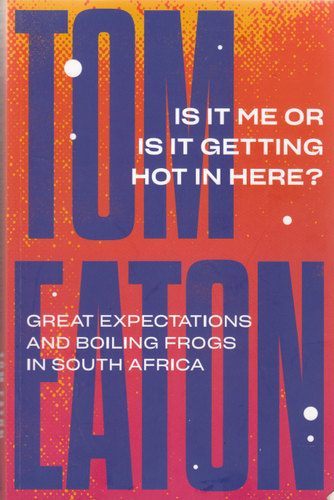


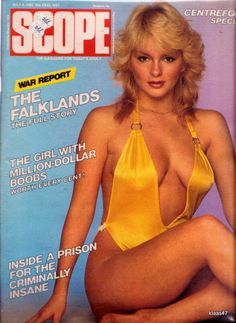


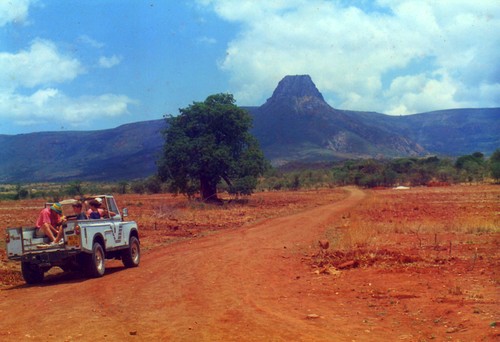

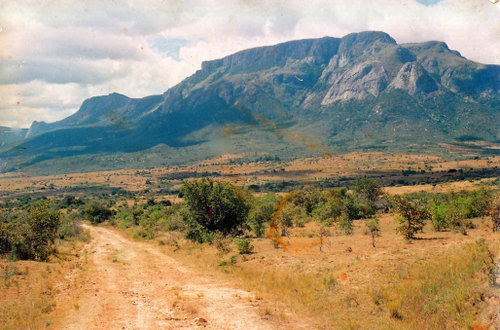


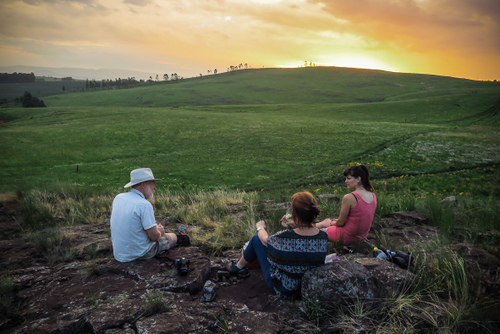


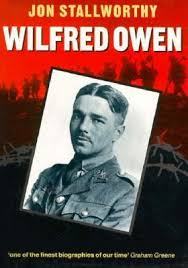

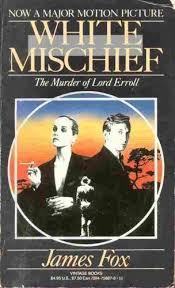
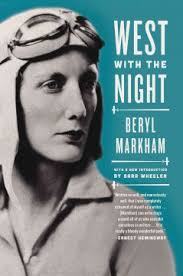

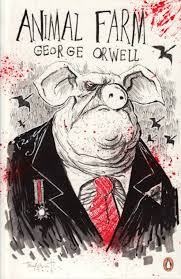


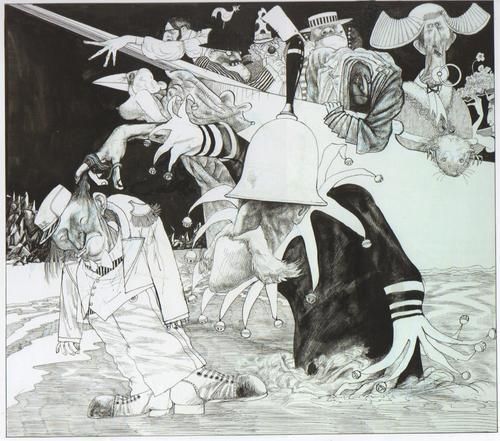


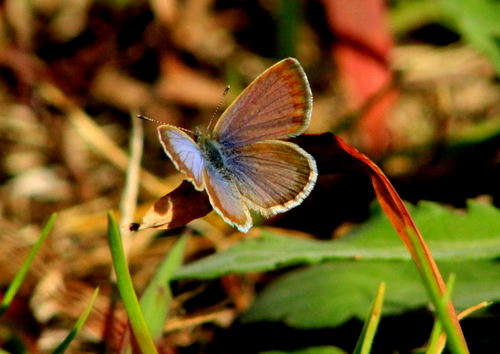
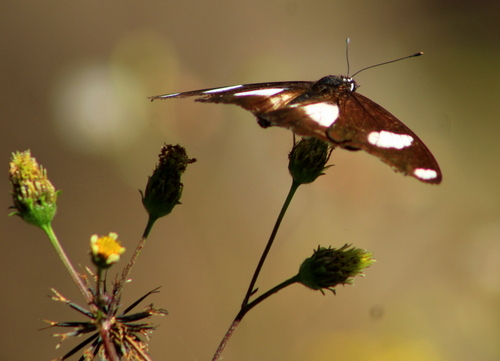
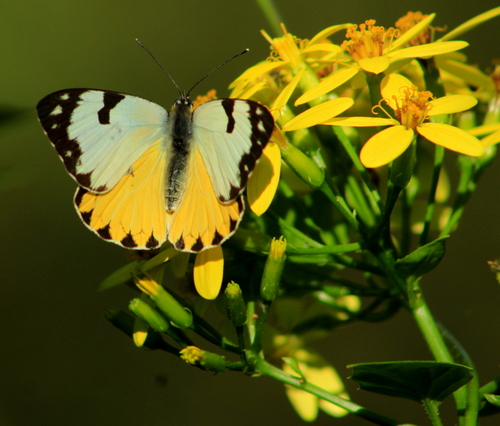
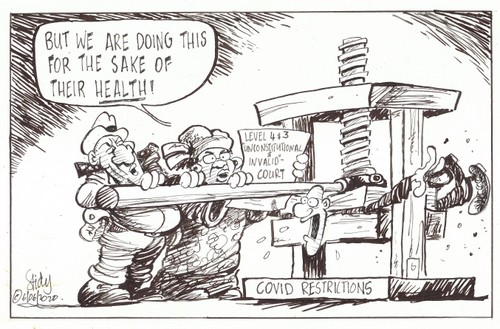
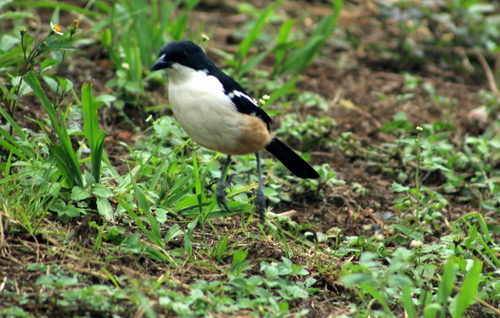
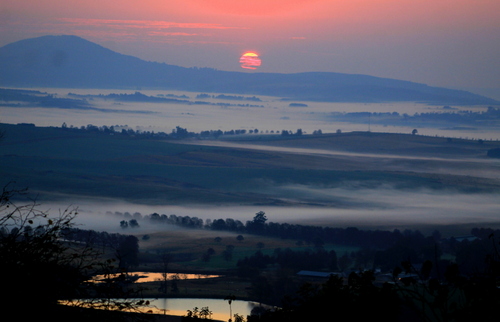


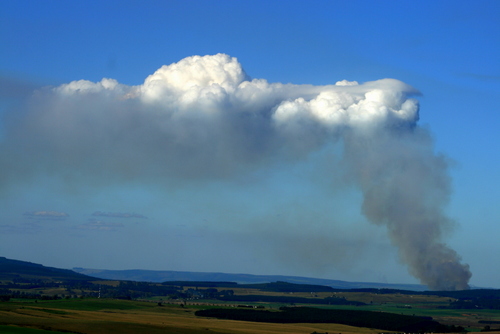

 Stidy's Eye