The Ever Hopefuls

Five-Stamp Mill.

When I left school I had absolutely no idea what I wanted to do with the rest of my life. In this respect, I was quite different from my three elder, more practical, brothers who all knew from a relatively early age in what direction their futures lay.

After considering one option after another, I finally elected to apply for a mining cadetship with the Rhodesian Ministry of Mines – for no other reason than a friend, Nick Bertram, had done this.

Much to my surprise, for my science exam results had been nothing to brag about, I was accepted. I was one of only twelve boys in the country to be selected.

As part of the course, we were expected to spend three months in each of the four departments that made up the Ministry of Mines – Geology, Mining Engineering, Metallurgy and the Office of the Mining Commissioner – to give us a feeling for where our future interest might lie. Depending on how well you performed, the Government would then decide whether to sponsor your further education and where best to send you if they did.

I enjoyed my time in the Geological Survey and the Mining Engineer’s Office (where I spent most of my time in the Mine Surveyor’s Office) but found I had no aptitude for the science of metallurgy and working in the Mining Commissioner’s Office – which mostly involved sitting behind a desk doing lots of paper work – bored the pants off me.

Ironically, many years later as the Rhodesian Bush War was dragging to its inevitable end, I got a job with the Mining Commissioner’s Office in Gwelo (now Gweru). I still found the work soul-destroying but I needed the money especially as it meant I would get back-up pay during my innumerable call-ups with the army.

While I was working in these various mining-related jobs I got to see a great deal of the country, or at least in Mashonaland and the Midlands, the two provinces I got posted to.

Most of the mines we visited were small-workings, often in extremely remote locations and usually operated by a lone individual or a small syndicate. Because they were invariably cash-strapped and operated on a shoe-string, their owners tended to chase the gold values rather than operate according to a clearly laid-out, strategic, plan-of-action, the way the big mining companies did.

As a result the shafts and tunnels were more like rabbit warrens, wandering up and down and around and about, seemingly without logic or purpose. They were usually low, unlined, poorly lit and jagged inside which made working in them a rather hazardous occupation…

Much to my own surprise, for I tend to be claustrophobic, I loved descending in to the cool, wet depths of these subterranean tombs. We usually began by dropping down the vertical shaft in some creaking, rickety, old bucket operated by a winch. Down at the bottom it was like another world. In the half gloom the mineworkers, in their dripping overhauls, looked like a race of Cyclops with their solitary lamps on their heads.

Ayrshire Mine in the early days. I went down shafts not to different to this one. Picture from Rhodesian Miners Handbook.

Sometimes, when we were taking a break, I would find some dark corner of the mine, switch off my helmet lamp and just sit there, alone with my thoughts, in the Stygian gloom. In the distance I could often hear the muffled thudding of picks or catch the occasional acrid whiff from the lasting.

Most of the old prospectors and small-workers whose claims we visited were drifters by nature. They tramped around the country with their geological picks and prospecting pans, ever hopeful that they would one day stumble on some undiscovered, gold-bearing reef that would make them rich beyond their wildest dreams.

In the process their faces were burned dark brown by the sun and were covered by creases and wrinkles from being outdoors all the time and through screwing up their eyes because of the harsh glare of the African sun.

Very few ever found their pot of gold at the end of the rainbow. Reluctant to accept normal work or hold down a steady job, that did not seem to bother them. Happiest when wandering, unable to settle down, for them it was a way of life. Even back then I could tell they were a dying breed.

In the early days, Southern Rhodesia had, of course, been linked to the fabled Ophir of the Bible. It is what drew a lot of the early adventurers and fortune-seekers in to the country in the first place.

Hans Schroeder – early Rhodesian prospector. Picture: National Archives of Zimbabwe

Nor was it all just wish-thinking or pie in the sky stuff.

There is ample evidence to show that there was a thriving mining industry in the country, long before the first whites set foot there. In fact, there are over 4 000 recorded gold deposits in Zimbabwe, nearly all of them based on ancient workings. Some of the country’s largest mines – including the Globe & Phoenix, Cam and Motor and the Shamva mines, which between them, at one stage, produced one third of the country’s gold – were discovered this way.

The gold trade was an important aspect of both medieval Great Zimbabwe and the Munuhumatapa Empire. The early Portuguese had also got wind of the rumours of gold and naturally wanted to get their hands on it as well.

A list of ‘Mines Known in the District of Senna’ was actually published in Lisbon in 1857 in response to a decree calling for an inventory of mineral resources south of the Zambezi. Compiled by Izidoro Correia Pereira, a Zambezi valley trader, the document represents the mining activities of various Shona dynastic rulers that existed in the 1500s when the Portuguese invaded the modern country of Zimbabwe to wrest the centuries-old Sofala gold trade from Arab-Swahili hands.

No doubt aware of all of this, Cecil John Rhodes was but one of the group of optimists who believed there were huge riches just waiting to be discovered. In fact, it was one of the principal reasons (another was its agricultural potential) he was so anxious to annexe the country for his British South Africa Company.

As it turned out he was wrong about what he referred to as the “exceedingly rich auriferous indications” which he believed would exceed anything found “south of the Zambezi”.

CJ Rhodes. Picture from National Archives of Zimbabwe.

Shortly after he penned these words the largest gold-fields the world had known were discovered on the Witwatersrand. Compared to its riches, the amount of gold produced in Southern Rhodesia was negligible.

And yet despite this, hordes of hopefuls kept making their way to the country. As an inducement to join the Pioneer Column, Rhodes had promised each member that they could peg fifteen claims once they got to Mashonaland. Many of these ‘pioneers’ were amateurs with little knowledge of either geology or prospecting.

Undeterred by their own lack of experience, within weeks of reaching Fort Salisbury on the 12th September, 1890, the majority of the new arrivals had headed off in to the veld in search of gold. As luck would have it, they discovered that a lot of the prospecting had already been done for them by the ‘ancients’. All they often had to do was bribe one of the locals to show them where the previously-worked reefs were.

Inspired by the rumours, others followed in their wake.

You can still see the fruits of their endeavours all over the countryside. For example, Shamva Hill, where I spent time both in the Mines Department and, later, as a very unhappy guest of the Rhodesia Army, is conspicuous from miles away because of the huge gash running almost through it. Originally pegged in 1893, this opencast gold mine grew and grew in size over the years, eventually forming a 700 metre long pit, 120 metres at its widest and nearly 170 metres deep.

When I went to work for the Mining Commissioner’s Office in Gwelo in the late 1970s there were still a few of these old-style prospectors about. Dirty and bedraggled, they would wander in to our offices clutching their bags of broken stones for assay or wanting to register their latest claims.

“I think I have struck it rich this time!” they would whisper to me with a conspiratorial wink and I would just nod my head, smile sympathetically and sign the relevant documentation.

As the Assistant Mining Commissioner for the Midlands area, I got to know a lot of them quite well. There was one old prospector who looked like Wild Bill Hickock with his long mane of flowing white hair and neatly trimmed beard. He was very well-spoken and his manners were impeccable although if you ever needed to find him the best place to look was the seediest dive in town.

There was another old timer who slept in a tent but still insisted on getting dressed up in a suit for dinner every night. He was scared of the dark so always had a candle burning by his camp bed. The person he employed as his “manservant” was expected to watch over him while he slumbered.

Some of them actually did make a bit of money but invariably squandered it just as quick.

One of those who carried on in the old way was my stepfather, Jim Hastings, a retired miner, who on marrying my mother, proceeded to install an old stamp-mill around the back of our house. It was a ramshackle piece of machinery held together with bush poles and bits of wire but I found it strangely comforting listening to its methodical “Thump! Thump! Thump!” echoing away in the background…

My step-father, Jim Hastings, next to his stamp mill.

Again, he never made much money out of it. For him, too, it was something he just wanted to do…

Jim Hastings and my sister, Nicky, next to his three-stamp mill.

The Battlefield area, where we lived at that time, had also once been – and still was to a diminished extent – gold country. In the old days prospectors had come wandering through with their meagre equipment, panning for gold in the river beds and crushing bits of rock in the hope of finding traces of the precious metal. The countryside was littered with old diggings, abandoned shafts, prospecting trenches and slimes dumps.

Strangely, there were no workings on our farm, Bowmont.

Battlefield had actually got its name not because it fell in an old war zone but because many of the mining claims and reefs in the area had been named after famous battles, such as Trafalgar and Tel-el-Kebir.
Given the tenacious way in which so many of these old prospectors fought on ever-hopeful, it always seemed to me a very appropriate name.

Some of my own ancestors and relatives caught the prospecting bug. My grandfather’s eldest brother, Neville Harold Stidolph – described, in one account, as “charming but unsettled, a wanderer and prospector both in Rhodesia and Australia” (Valerie Alberts) – was one who was afflicted by the malady.

Another one who contrived to make a life out of it, was a relative of his, through marriage – Percy Hughes. Percy learnt his trade at the aforementioned Shamva Gold Mine where he was employed from 1915. Thereafter he prospected all over the country and ended up working at the wonderfully named Bushtick Mine in Matabeleland during the 1930s.

Bushtick Mine where Percy Hughes worked.

Their genes were passed down.

My one brother Paul, a cattle/tobacco/maize farmer when he was not looking at stones, also did some prospecting in the Kadoma district when he was farming there and actually pegged a few claims. He has also done great deal of research in to – and made himself something of an authority on – the ancient workings of Zimbabwe.

He provided many of the old black and white photographs I have used here.

My eldest brother, Patrick, a qualified geologist, worked for the Rhodesian Ministry of Mines before emigrating to Australia. Among other things Patrick mapped much of the Shamva area where Percy Hughes had started out.

Patrick also became the Regional Geologist for Matabeleland where, strangely enough, old Percy had also ended up.

History has, of course, moved on since those days. Most of the old prospectors and smallworkers I knew back then have died, the syndicates have folded, many of the gold mines (including the Globe & Phoenix) have closed, their reefs having petered out. The stamp mills have fallen silent.

When I tried to find more information on it, on Google, I discovered the old Mining Commissioner’s Office, in Gwelo had been closed down some time after Independence because of ‘corruption’. That is not something I recall ever being a problem when I worked there although it was a long time ago so my memory on this might be faulty…

If nothing else, reading about its closure, made me realise the territory I had once thought of as mine was no longer mine at all.

In a sense, those grizzled old prospectors – and I – had become period pieces in our own lifetime…

*Somewhat ironically, the Mining Commissioner’s Office was housed in the Old Stock Exchange Building, erected back in 1902 when it was still believed boom times were just around the corner…

GALLERY:

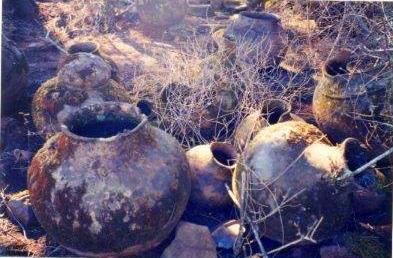
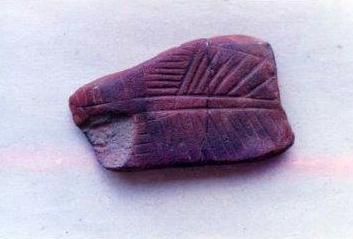
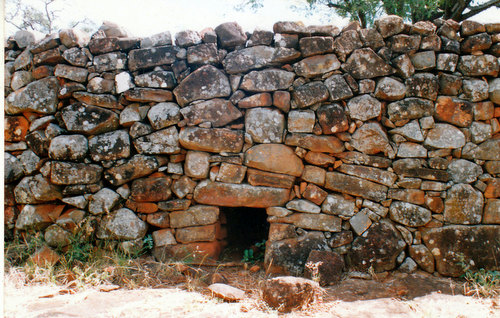
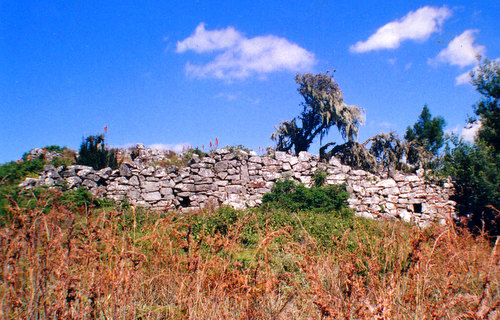
The following pictures, all of ancient workings, were provided by my brother, Paul:

The Circle of Life

Away to the north of Nyanga, in Zimbabwe, at the base of the range of mountains that forms its eastern wall, there was, once, an isolated group of farms. In a gesture which seemed quite out of character for a man who had never shown much sympathy for the Boer cause – and had, indeed, gone out of his way to thwart their political ambitions – they had been granted to a small party of Afrikaner farmers by the arch-imperialist, Cecil John Rhodes, himself.

In recognition of this fact, the dirt road that ran through the middle of them was known, in years gone by, as “The Old Dutch Settlement Road”.

The Old Dutch Settlement Road, looking from our farm towards Nyanga.

Although seldom visited by all the tourists who like to holiday in the more temperate Nyanga uplands (many staying at Rhodes’ old estate), it is an area I used to know well because it was here we had once farmed too.

When we arrived in the district, back in the 1950s, there was only one surviving remnant of this original group – Gert “Old Man” Mienie who farmed at Cream of Tartar Kops. A jovial giant of a man with twinkling eyes and invariably dressed in stained khaki, he had worked as a transport rider before ending up in Nyanga North where he grew mealies and farmed cattle.

Long before it became fashionable to do so Gert Mienie lived totally off the grid. He had a house generator that operated off a Pelton wheel with buckets on a water furrow. His wife made soap and candles from the fat stored in the tails of their Blackhead Persian sheep. They never bought medicines either, preferring to manufacture their own concoctions which they used to treat both man and beast.

He also had his own brandy still while his old ox-wagon remained parked around the back.

Mr and Mrs Gert Mienie with my parents, Reg and Monica Stidolph. Cream of Tartar Kops.

Although the rest of these pioneering farmers had either long since left or died, their presence still lingered on in the names of many of the properties – Witte Kopjes, Groenfontein, Summershoek, Doornhoek, Flaknek etc. Mount Pleasant, the farm to our immediate south, on which there stood the remains of some crumbling tobacco barns, was still referred to, in our day, as Bekker’s Place.

If you hunted around you could occasionally stumble upon the remains of their old homes (there was one on Witte Koppies, for example, which had been built out of white quartz quarried from the nearby hill) and even the odd graveyard. The two young Oosthuizen children who lay buried on our farm had both died of Black-water Fever back in the early 1900s, a common cause of death in those days.

There was something quite sepulchral about the mountain-fringed valley in which they had chosen to live. Maybe it had something to do with all the old ruins, perhaps it was the mountains themselves, with their constantly changing moods, but there seemed to be a presence here, a spirit. I sometimes felt I was walking among ghosts I could never see.

I had some idea who they belonged too. The original Afrikaners who had settled here, courtesy of Mr CJ Rhodes, had not been the first cultivators of this land to have suddenly packed up and left without explanation.

There had been others before them.

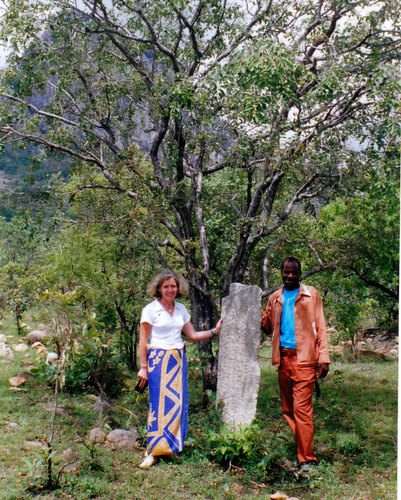
The whole country from the Nyanga uplands, north to the Ruenya River and westwards to the Nyangombe River, was strewn with relics from their stay – dozens and dozens of loopholed stone forts, look-out points, pit structures, furnace sites, grinding stones, monoliths and miles of terracing stretching along the mountain sides; the latter were often irrigated by means of furrows that carried water long distances from the streams.

Nyahokwe Ruins with Sedze Mountain (the “Rhino mountain” as we called it) in background. Note monolith.

The amount of rock that had been moved to build all this was astonishing although, as Herculean as their labours had been, the stone fortifications tended to suggest that the ordinary villagers had lived in constant fear of attack. Clambering over the piles of rocks I had, in my youth, always imagined some fabulous Rider Haggard vision of lost mines and lost worlds but the sad reality is that the people were probably desperately poor (in his book The Shona and Zimbabwe 900-1850, the academic D.N.Beach describes it as a “culture of losers”. That is as maybe but they certainly appear to have been very hard-working ones!), because the soils they had cultivated were, for the most part, thin and infertile – although they probably supplemented them with kraal manure.

Our farm was no exception. From beacon to beacon it, too, was covered in a jumbled mass of ruins. Exploring them, I was seized by a kind of incredulity. It was impossible not to marvel at the intensity of the endeavour that went in to their construction.

My sister, Nicky, among ruins on Muchena mountain, old farm. Picture courtesy of John Louch.

And where had all that passion and effort gone? That was the mystery for me.

One of the aspects of this now abandoned civilisation which especially intrigued me were the endless piles of gathered stones that lay scattered all over the veld. What was their purpose? Why all the effort for so seemingly pointless a task? Again I was flummoxed.

Endless piles of gathered stones. Picture courtesy of Paul Stidolph.

To me, the ruins seemed very old – none of the local tribes people we spoke to appeared to know much about who had constructed them – yet the consensus amongst the experts is that they were mostly built between the 16th and 19th Century by the Tonga people from Zambezi. Adding to the air of mystery, no one seems to be able to state with any degree of certainty why the whole complex was eventually abandoned.

Our own sojourn in this hot, dry, haunted valley came to an end during the Rhodesian Bush War. Remote, cut-off and situated close to the Mozambique border, our farm became an obvious target for the incoming liberation forces. Our only two neighbours were killed, the roads regularly mined, the few cattle we had which had survived drought and disease were rustled and we were eventually forced to move, our farm becoming part of, in the military parlance of the day, a “frozen” area.

Our old house.

It was twenty-years after the war ended before I got to go back to the farm again, only it was no longer a farm. In the interim it had become a black resettlement area.

There was not much left to remind me of the years we had spent there. Time – and the war – had taken its toll. Of our old house little remained. At the one end, where the lounge had been, the old fireplace still stood; elsewhere our former home, once so full of life, had been reduced to the cement squares and oblongs that marked our vanished rooms.

Here and there bits of the old wall survived but it no longer supported the roof which had completely vanished. Of my mother’s once extensive garden there was no trace other than one lone bougainvillea which still clung stubbornly to the hillside.

My sister, Nicky, and my mother, Monica, among the remains of our old home.

Everywhere else wild nature had come back and reclaimed its own.

As I wandered around looking at all the places that had once meant so much too me I could not help but reflect on the transitory nature of things. As a young boy I had been intrigued by the ancient ruins that lay scattered across the farm; now our old house had joined them.

I found myself thinking about those early Afrikaner settlers too. Like us, they had arrived here, full of innocent optimism and hope that they could create a future and yet few if any of the families had stayed beyond one generation. Now, all that remained of their hard work and industry were a few old bricks, stones and mortar and the occasional gum tree.

The same had happened to us.

What hadn’t altered were the mountains themselves. It is difficult to capture in words the feelings they engendered in me. Looking at them I realised it did not make any real difference what we did. They would live on without us, watching the next generation grow up in a place we had once called home. We had only been there for a few moments and all that mattered was that we had cherished the place and made the most of the time we had had there.

View of Nyanga range from north of farm, Nyangui mountain on left.

As I pulled over, onto the edge of the road, for one final look back, I realised it was not so much the fact that I had come back but rather that the farm had never left me.

FOOTNOTE:

For the sake of convenience the extensive Nyanga ruin system is often separated in to the Upland and Lowland Cultures. Because our farm lay in the Nyanga valley, the ruins on our farm obviously fell in the latter category.

Below are a selection of photographs showing examples of both types of ruin.

A special thanks to my brother, Paul Stidolph, for providing many of the old black and white pics. A semi-retired farmer still living in Zimbabwe, Paul has conducted an enormous amount of research of his own in to the early history of the country and unearthed a great deal of fascinating material on both its ruins and ancient mine-workings.

Book Review – Vietnam: An Epic Tragedy 1945-75

published by William Collins

Coming at the apex of the cold -war rivalry, the American withdrawal from Vietnam marked one of the more humiliating moments in its history. Believing that they could succeed where the French had so ignominiously failed in Indo-China, the country had put its immense might, power, prestige and reputation on the line and ended up being outsmarted and out-thought by a half-starved, rag-tag army of sandal-wearing peasants.

Acute analysis and fair-mindedness inform veteran war correspondent Max Hasting’s exhaustive study of the origins and course of the conflict. Drawing imaginatively on many personal testimonies and eye witness accounts from both sides, Vietnam: An Epic Tragedy provides a powerful panorama of a war that went horribly wrong.

Ignorance is a running theme in the book. It is extraordinary that America, with its vast resources, miscalculated so badly and often had little idea what was happening in the Far East. Decisions were made based on confused thinking and a misunderstanding of how Vietnamese society worked.

From the outset the communists in the North appeared better motivated and more skilled. Their Chinese and Russian backers also remained prudently in the background so it did not appear they were the aggressors or the ones calling the shots – as the Americans were doing in the south.

Indeed, as Hastings shows, successive American administrations ignored any claim by the people who inhabited the battlefield to a voice in determining their own fate. Instead they chose to concentrate on their own strategic interests – in this case countering the spread of communism.

Having committed themselves to the cause, the Americans found themselves mired down in a protracted war from which there appeared to be no escape – their commanders’ initial confident predictions of an early victory gradually replaced by a growing realisation that they could never win.

Hastings meticulously charts the failure of successive presidential peace initiatives. He also shows how, as the war dragged on, the morale and commitment of the US forces serving in Vietnam began to flag. Drug abuse, racial strife and a decline of discipline became rife. The growing anti-war movement back home further added to the pressure being piled on the American administration.

In the end, the inevitable happened and the Americans were forced to pull out, abandoning their former allies to communist retribution. The final irony, as Hastings notes, is that having lost the war militarily the United States has since seen its economic and cultural influence reverse this outcome as Vietnam increasingly moves away from the more repressive aspects of communist rule….

Book Review – The Graceless Fall of Robert Mugabe.


Published by Penguin

On the evening of 14th November, 2017, a phalanx of tanks rumbled into Harare, Zimbabwe and sealed off Munuhumatapa Building and the Parliament of Zimbabwe. Although the instigators would do there best not to portray it as such, a military coup was under way that would spell end of President Robert Mugabe’s long and ruinous grip on the country.

His sudden demise caught most of the world by surprise, especially as Mugabe had previously proved so adept at dealing with any challenges to his authority.

For any biographer there is plenty of meat here but Geoffrey Nyarota, a veteran of journalism in Zimbabwe, is exceptional in not only bringing his vast experience and insider knowledge but also an elegant style and a gift for narrative. Much of his story, especially the early parts, is inevitably familiar territory, but necessary to the completeness of the story.

Nyarota describes Mugabe’s upbringing in Kutama, his academic and political education, his rapid rise through the ranks which culminated in him becoming the first Prime Minister of an independent Zimbabwe. Initially, Mugabe preached a message of reconciliation but the hope his election engendered would gradually give way to disillusion as he turned from a Hero of the Struggle in to a vindictive bully with a taste for tyranny.

One of the defining moments in this transformation came with his marriage to the much younger Grace Marufu, his former typist. From here on it becomes the stuff of opera. Although Nyarota strives hard to be fair and even-handed, the picture that emerges is of a vain old man and a scheming diva whose political and social ambition, once ignited, burned furiously. In her quest for power the First Lady became every bit as ruthless as her husband, plotting against her rivals while grabbing vast tracts of land and amassing great wealth for herself and her children.

Emboldened by her success in helping to get rid of one of Mugabe’s two Vice Presidents, Joice Mujuru, Grace next set her sights on ousting Emmerson Mnangawa, her remaining rival for the presidency. It would prove to be a bridge too far and lead to her undoing.

Not for nothing was Mnangawa nick-named “The Crocodile”. It what effectively amounted to a Night of the Long Knives, the military, worried that their own interests were being threatened, moved in, on his behalf, and seized control of the country.

Nyarota’s account of how this all happened is first rate. In describing the machinations that went on behind the scenes and inside ZANU-PF itself, he shows a party riven with intrigue and internal conflict, much of it engineered and exploited by the former President himself. Despite having trashed the economy, undermined the rule of law and inflicted enormous damage and hardship on the country and its long-suffering populace, though, Mugabe’s self-belief remained undented to the end.

Now his successor is faced with the difficulty of how to undo the consequences of all these years years of violence, misrule and policy blunders. How committed he is to achieving this is, of course, another question…

REVIEWER’S NOTE – This review was written several months ago – before the current troubles in Zimababwe

Book Review: wtf-Capturing Zuma- A Cartoonist’s Tale


I think most editorial cartoonists will readily admit that they often find it difficult to send up politicians when they are making a so much better job of it themselves. This is, however, a problem that does not appear to faze South Africa’s best known caricaturist, Jonathan Shapiro (aka Zapiro), whose razor-sharp wit is on clear display in WTF: Capturing Zuma – A Cartoonist’s Tale, a book which demonstrates both his unerring eye for political failing and his powers of invention.

As its title implies, the anthology provides a front row seat in to the fractious – if at times almost symbiotic – relationship that developed between the artist and his ever dodging target, our erstwhile former Number One. The years of Zuma’s presidency certainly proved to be fertile ground for Zapiro which is perhaps hardly surprising, since, leaving aside the question of his private morality, it is difficult to argue that his effect on the country and its economy was anything other than disastrous.

From the outset Zapiro had the measure of his man. Five years before Zuma took over the ANC leadership he was already portraying him as damaged goods.

He also realised that for such a compromised and controversial figure he needed a far more hard-hitting, confrontational style of drawing than he had employed with, for example, Nelson Mandela. Refusing to recognise the limits imposed by decorum or good taste Zapiro hammered away at him again and again.

His Rape of Justice cartoon, in particular, provoked a storm of outrage and moral indignation especially within the ranks of the ruling ANC. Undeterred, Zapiro continued to rip apart his prey.

In the end his systematic and relentless caricature of Zuma probably did as much to destroy the President’s credibility than any number of columns, editorials or speeches from the opposition benches.

What Zapiro’s constant undermining of the president also proved is that cartoons still matter – a lot. They certainly mattered to Jacob Zuma who, in a misplaced attempt to silence him, served Zapiro with two lawsuits, totalling R22million, claiming the cartoons invaded his dignity.

Which begged the obvious retort – one that the artist himself was quick to seize on and make the subject of yet another witty, put-down, cartoon – what dignity? Needless to say, the matter never got to court.

Zapiro’s drawings have always tended to dominate the pages on which they appear. Wielding his pen like a scalpel, he manages to be both extremely funny and serious at the same time. As with all good satire, his cartoons are designed to entertain as well as to convince. Behind the often mordant humour one senses the fire of honest indignation that fuels all real political art.

Over the years he has carefully recrafted and subtly changed his depiction of Zuma. In doing so, he has, admittedly, been helped by the man himself, whose physiognomy, facial features and nervous tics and mannerisms have often unwittingly and unerringly betrayed his real character (his habit of shoving his glasses up his nose with his finger, his giveaway: “Heh, heh, heh”).

Probably Zapiro’s most inspired moment came when he decided to place a showerhead on Zuma’s oddly-shaped cranium after the then Deputy-President famously stated that he had taken a shower, following sex, because he believed it would reduce his chances of getting HIV (Zapiro admits he got the idea from the brilliant English cartoonist, Steve Bell, who delighted in drawing Prime Minister John Major all the time with his underpants outside his trousers).

The image was picked up and imitated by many. Even Julius Malema adopted it as a visual gesture of constant mockery.

In that sense, his showerhead became the defining symbol of the Zuma era (or “error” as Zapiro so aptly puts it). Like an ever dripping crown of shame, it perfectly captured the rotten-ness and moral bankruptcy of his chaotic, corrupt and scandal-ridden administration.                                                                                                     

‘Death of Truth’ – Book Review

Published by William Collins Books

We live in an age of deliberate misinformation and disinformation in which it has become increasingly difficult to tell where the truth lies or, indeed, if there is such a thing as objective truth.

The new technology has only added to the problem. The world wide web, which was originally envisioned as a benign universal information system, has turned in to something of a Frankenstein monster. It has been used, most notoriously by the Russians, to spread propaganda and falsehoods and erode voters faith in the democratic system. Rather than bring people together the use of social media has amplified polarization.

In this relatively short, sharp and utterly persuasive book, Michiko Kakutani – a Pulitzer prize-winning literary critic and former chief book critic of the New York Times – shows how the concept of truth has been corrupted to such an extent that it threatens the very pillars on which democracy has been built.

Drawing on the writings of the great critics of authoritarianism, such as George Orwell and Hannah Arendt, she shows a world in which the wisdom of crowds has usurped research and expertise and where people have been dumbed down and suckered in to accepting the most banal and irrational of beliefs.

Nowhere is the decline of reason better exemplified than in the rise of Donald Trump, a man who has proved an expert at sowing dissent and appealing to peoples base prejudices, rather than their intellects, with his simplistic, and mostly unachievable, utopian promises. Kakutani is clearly no admirer of the President. Self-serving, shallow, boastful, unreflective, sublimely ignorant of the outside world and unwilling to learn, she sees him as a man with few, if any, principles. The irony, as she so clearly shows, is that Trump, a man who is forever accusing the media of promoting “fake stories”, has done the exact same thing himself, on a mind-numbingly regular basis, throughout his career, both as a businessman and a politician. A further irony is that in pushing his populist, right-wing, message Trump has made use of tactics sharpened and perfected by the likes of Vladimir Lenin, who employed similar incendiary language and showed a similar disdain for the truth and reluctance to compromise. Small wonder then, that he is also an admirer of Putin, another master manipulator.

Elsewhere, other alt-right trolls (who share Trumps mania for tweeting) have employed relativistic arguments, once largely the domain of the post-modernists and the Left, to argue there are no objective truths any more – only different perceptions and different story lines. Kakutani makes short shrift of these arguments believing that they lead to the sort of cynicism and resignation that autocrats and power-hungry politicians depend on to subvert resistance.

Without commonly agreed-upon facts, she insists, “there can be no rational debate over policies, no substantive means of evaluating candidates for political office, and no way to hold elected officials accountable to the people.”