As international tensions rocketed over the invasion of Ukraine, Russia reminded South Africa about its own role in the fight against apartheid. Earlier, International Relations minister Naledi Pandor called on Russia to withdraw but appeared to be then overruled by President Cyril Ramaphosa, supported by the ANC, who called for mediation – not withdrawal – creating tension among the political leadership and uncertainty surrounding South Africa’s official stance on the conflict.
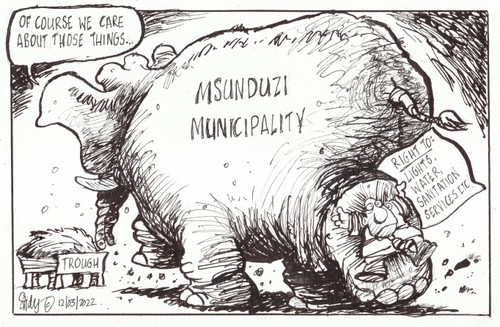
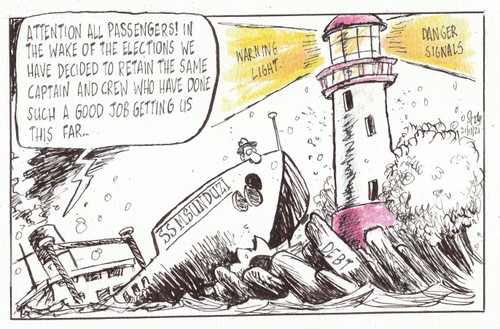
Disruption in water and electricity supply in Msunduzi Municipality continued to keep both residents and businesses at their wit’s end. The outgoing municipal manager, Mdoda Kathide, admitted the city is now in a state of disaster while the Pietermaritzburg and Midlands Chamber of Business (PMCB) said it was in economic ruin.
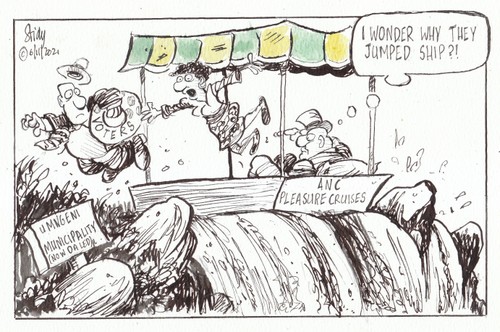
uMngeni Municipality is owed R2,5million by government departments with most debts sitting on over 90 days. Democratic Alliance Mayor Chris Pappas, who has been vocal about money owed to the municipality, urged residents to pay their accounts “to help bring the long-waited change in uMngeni Municipality.
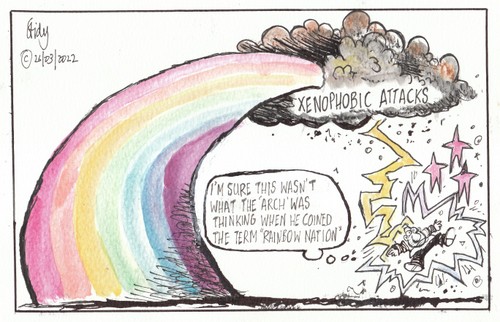
Opposition parties blamed the governing ANC – particularly the fumbling Department of Home Affairs – for the recent rise of xenophobia, exemplified by groups like Operation Dudula. The matter was being debated in Parliament.
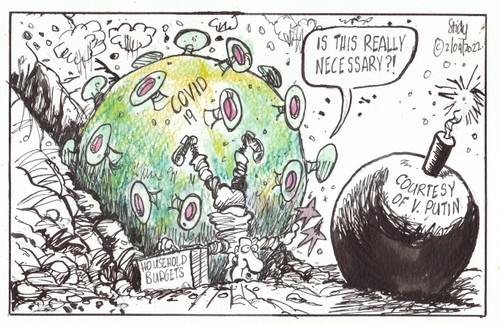
There was a rapid increase in the cost of the household food basket in KwaZulu-Natal according to the Pietermaritzburg Economic Justice and Dignity Group (PMBEJD). “The surge in the Brent crude oil price (which is an output in everything from the farm to the plate) including the higher cost of wheat, sunflower oil and other foods and agricultural outputs which South Africa imports, will drive prices up as the conflict in Ukraine continues,” said Mervyn Abrahams, the PMBEJD programme coordinator.
Msunduzi Municipality’s proposed rates and tariff hikes were met with fierce opposition from residents who said they were “excessive” and “unjustifiable”. They pointed out that service delivery and maintenance of infrastructure had deteriorated significantly over the last several years and residents had been forced to deal with these issues themselves rather than wait for council.
Addressing the nation on the government’s response to the catastrophic floods which have devastated parts of KwaZulu-Natal and the Eastern Cape, President Cyril Ramaphosa said the Finance Minister had made R1billion available to go towards rebuilding the affected areas. Instead of gratitude, the announcement was met with an overwhelming cynicism with most people believing the money will simply be stolen – as had happened during the Covid-19 pandemic.
With a fifth Covid-19 wave approaching, the Department of Health said it was keeping an eye out for new variants of concern. The warning came at a time when Covid fatigue had resulted in many disregarding the health protocols that are meant to protect them from the virus.
I grew up in an era notable for its love of musical novelty. A new assertive youth culture had come to the fore and their desire to push back the boundaries and challenge middle class values was reflected in the sort of music they listened to. The Beatles, the Rolling Stones, the Who and other British invasion groups had gone back to the roots of American music, reinterpreted it, and fed it back to an eager audience. In the US, itself there was also regrouping and experimentation which led to an explosion of sounds – folk- rock, psychedelic rock, country rock, jazz-rock, progressive rock, Southern rock, hard rock and heavy metal.
Stuck in my remote corner of the former British Empire, I lapped it all up. In the stifling atmosphere of conservative Rhodesian boarding school life, it filled a void and opened up as a whole web of influences and reactions. It was my ticket into a more exciting world.
When I moved on to university I started to listen to even more kinds of things and one song led me to another. I loved nothing more than ducking into a record shop and spending hours browsing through album covers looking for new artists, as well as ones I was already a fan of.
The first album I ever bought……and the second…and some others I bought.
Over the many years that have passed since then, rock music has continued to transform and evolve, not always for the better. Inevitably, it has been affected by changes in technology, media and demographics. More and more rock music has become a business. The old spirit of youthful rebellion has now mostly gone.
In American music folklore, it was, of course, the legendary Delta bluesman, Robert Johnson, who sold his soul at a crossroads to learn how to play the guitar. In his book, The Mansion on the Hill: Dylan, Young, Geffen and Springsteen and the Head-On Collision of Rock and Commerce, author Fred Goodman argues that a similar fate befell the entire rock n’ roll industry in the early seventies when the counter-culture movement allowed itself to be hijacked by the marketing men and bond dealers, losing, in the process, not only its old spirit of adventure but most of its more naïve illusions about itself as a force for social change.
As Goodman writes: “The underground scene started in earnest when rock assumed the mantle of meaning and intent from folk music, and it was founded on a search for authenticity and an explicit rejection of consumerism and mainstream values.” The man who played a pivotal role in this crossover of musical styles was a scrawny, young singer with a high nasal whine who passed by the name of Bob Dylan.
Dylan marked a turning point. Before him, most rock singers confined themselves to singing about such traditional adolescent concerns as “dancing or driving or teenage love lost and found”. Not only did Dylan bring a new thematic weight to his songs but he gave rock a sense of moral purpose and a direction it had never had before. The new music confounded all the old stereotypes with its sense of aesthetic urgency and pointed social comment.
Where Dylan led the way, others followed. In his book, Goodman focuses on a handful of the more influential of these – in particular Neil Young and, later, Bruce Springsteen – although there are a whole host of others one could easily add to the list.
In Goodman’s view, however, Springsteen marks a departure. Heralded as the keeper of the flame, “the Boss” – as he was nicknamed – was savvy enough to retain the air of rebelliousness that has always been such an ingrained part of rock’s appeal but he also benefited from having a very shrewd manager, in the intellectual Jon Landau, who knew just how to market him. “Colombia did not ‘make’ Dylan,’ Goodman writes. “His reputation owed everything to his artistic genius…Springsteen, the merits of his music notwithstanding, was quite a different story. By the ’70s the record companies had recognised the massive commercial rewards that the music had to offer, and they learned a great deal about how to sell it.”
These days it seems highly unlikely that anyone musician or band will ever again have the enormous influence of a Dylan or the Beatles or become so universally known as to be able to unite a generation. There are several reasons for this. The proliferation of dedicated TV channels and radio stations, as well as modern marketing techniques, has ensured that music is now divided into a whole series of sub-genres each with a specific audience that is ferociously targeted.
The internet has further changed the nature of celebrity. Like everything else, music has become fragmented in our social media-saturated society with a whole galaxy of stars vying for our attention. With music having become so niched, it is thus possible for a musician to have millions of followers on, say, the video-sharing YouTube but remain completely unknown to a large section of the population. With algorithms confining, defining and determining our tastes and “suggesting” what we should be listening to, there is even less chance of you hearing something you didn’t expect to hear or to cross over from one musical boundary into another.
The nature of fame has become more fleeting, illusory and superficial. Joni Mitchell, one of the ground-breaking singer-songwriters Goodman writes approvingly about in his book, expressed this well when she recently said: “I heard someone from the music business saying they are no longer looking for talent, they want people with a certain look and willingness to cooperate. I thought that’s interesting because I believe a total unwillingness to cooperate is what is necessary to be an artist – not for perverse reasons but to protect your vision. The considerations of a corporation, especially now, have nothing to do with art or music. That’s why I spend my time now painting.”
With the Covid-19 pandemic shutting down music venues and stadiums, the reliance on social media as a way of accessing and listening to music has grown even more pronounced. It has been estimated that lockdown has boosted streaming by 22% as more and more people resort to passive listening at home. Rather than bringing people together, as it once did, music now keeps them apart. As Duncan McLean sadly notes, in his otherwise highly entertaining, book, Lone Star Swing: “Music doesn’t change people’s lives today…it confirms the life you’ve already chosen, or had chosen for you.”
REFERENCES:
The Mansion on the Hill: Dylan, Young, Geffen, Springsteen and the Head-on Collision of Rock and Commerce by Fred Goodman (published by Jonathan Cape, London).
Lone Star Swing by Duncan McLean (published by Jonathan Cape, London)
For most of my life, I have lived with uncertainty although I have not always been consciously aware of it.
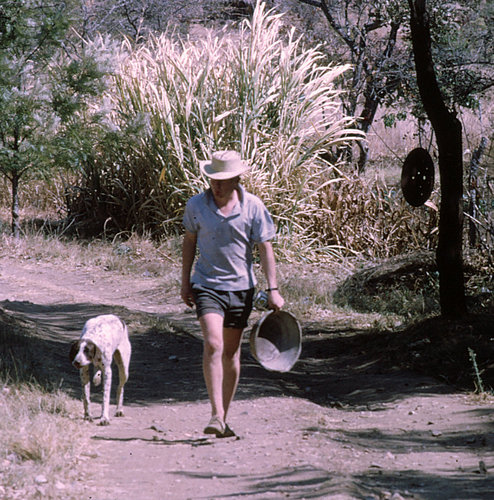
Indeed, as a child, growing up in a remote part of Rhodesia’s the Eastern Highlands my world seemed as secure as the mountains that surrounded our farm. With a sweat-stained hat on my head, veld skoens on my feet and wearing the regulation khaki shirts and shorts that had got too worn from continual use to take back to school, I would set out in the early morning, a gun cradled in the crook of my arm. In front of me, the farm dogs would range freely back and forth, panting happily. They were not trained to hunt but were still good at flushing out the birds, sending them clattering into the skies, a trail of feathers and bitching noise drifting behind them.
Returning home with Bonzo the Pointer.Feeding the cattle on our Nyanga farm. Mt Muozi in background.
Often I forgot that I had come to shoot, striding cheerfully across the bush through waist-high grass and leaping over rocks and feeling my life ahead of me while all the worlds ‘birds seemed to be calling. Sometimes I would disturb a duiker or startle a small herd of kudu or see a klipspringer peering down at me from some tall pillar of rock but I felt too exulted by their presence to want to put an end to their lives.
I always found the bush a good place to go to when I was upset or needed to sort out my feelings about the world.
Our local radio station and the occasional newspaper we bought did, of course, give us some inkling of the ferment and tensions created by new ideas and awakened hopes but, at that stage, these “troubles” seemed to be confined mainly to the cities and urban areas. Walking on my own across the farm I never felt a moment’s uneasiness.
The fact that I would shortly be witness to the last days of White Rhodesia did not occur to me. Nor did I realise how beleaguered the farming community would soon become, with farmhouses turned into mini-fortresses, equipped with Agric-alerts and surrounded by security fences, while their owners rode around heavily armed over dirt roads that frequently had land-mines buried in them.
The reality of what lay in store would, however, hit home when I received my call-up papers.
My drafting into the Rhodesian Territorial Army on the 3rd January 1972, came at an auspicious moment in the country’s history.
A fortnight earlier, ZANLA forces had launched what would become known as the second chimurenga war (the first being the 1896 Shona uprising against white colonial rule) with an attack on Marc de Borchgrave’s d’Altena farm in the Centenary district during the course of which his nine-year-old daughter, Jane, received a slight wound in the foot.
Although there had been several military incursions in the 1960s from neighbouring Zambia these had been easily dealt with by the Rhodesian Security Forces leading most whites to believe that the country’s small defence force could defeat any conventional invasion or guerilla infiltration.
While hardly a resounding military success in itself, the attack on de Borchgrave’s farm signalled a new phase in the war of liberation, one that saw both a change in direction and a gradual intensification of the conflict. The liberation army had obviously learnt from their previous mistakes. Avoiding direct confrontation with the enemy they now employed classic hit-and-run tactics, attacking white farms, mining dirt roads and going all out to undermine the government’s authority and hold over the tribes’ people.
The growing fears about the country’s security led, in turn, to an increasing militarization of civilian life.
It was my bad luck, too, to be called up for the army (Intake 129) just as the government decided to increase the initial period of service from nine months to one year in response to the growing threat. For me, that extra three months was destined to seem like an eternity.
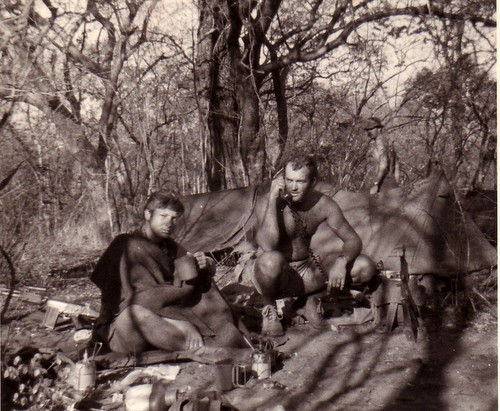
Waking up in the bush. National Service 1973.
This was only the beginning. Between 1974 and 1975, the years after I completed my National Service, worked for the District Commissioner’s Office in Wedza and then went to England for a year’s holiday, attacks on whites other than farmers still remained relatively rare. This all changed, however, with the overthrow of the government of Portugal by a junta of disillusioned officers which led, in turn, to a rapid transfer of power in Mozambique, where independence was recognised in 1975. This had the immediate effect of opening up the entire Eastern border of Rhodesia to guerilla infiltration.
Most of this area was mountainous and wild making it extremely difficult to monitor and patrol. As someone who had grown up in the area, I knew only too well, just how difficult it would be to police or stop any groups of heavily-armed soldiers from slipping undetected into the country. Because of its extreme isolation and close proximity to the border, my family made the decision to get my mother off our cattle ranch in Inyanga North, which she was then running all on her own. Although my mother was understandably reluctant to leave, it turned out to be a wise precaution because our only two neighbours were subsequently killed.
Mountainous terrain. Nyanga, Eastern Highlands.
Over the following months and years, thousands of insurgents would come pouring over the border in an escalating conflict that saw minds and bodies shattered, and many left dead. I was to discover just how much the situation had changed when I returned home from an extended holiday to England and found myself back in uniform within days of stepping off the plane.
For the purposes of this particular call-up, we were deployed to the Sipolilo (now Guruve) district, a fairly remote farming area that stretched up to the edge of the Zambezi escarpment and which was known to have been heavily infiltrated by ZANLA guerrillas. Arriving at our base camp – an old farmhouse that had been recently abandoned by its occupants after they had been subjected to several attacks – our major wasted little time in sending us into action. At 10 o’clock that night we clambered aboard the waiting convoy of trucks and headed off, under the cover of darkness, into the white commercial farmland. To keep the element of surprise on our side we were dropped off at another deserted farm homestead and then proceeded to march, in single file and as silently as we could, along an old footpath that led us deep into the adjacent Tribal Trust Land.
The track wound up through great blocks of granite fringed with trees and across the dusty stubble of ancient mielie fields. As I walked I tried to empty my mind of everything except what I could see and hear around me. I had no desire to be caught with my defences down. Despite growing fatigue, I was aware of the adrenaline coursing through my body.
Every now and again a breeze would spring up and I would smell the smoke drifting across the veld from countless wood fires. There was something both eerie and beautiful about the night. The moon was vanishing behind the distant hills but everywhere the dogs were barking. High up on a ridge ahead of us we could make out the dim shapes of a group of conical-shaped huts. As we got closer the phantom dogs, picking up our scent, grew more hysterical, breaking into a series of short, angry yelps.
Drawing alongside the hut line, a dark figure suddenly emerged from the central brick building, paused, looked carefully about and then stepped quietly and purposefully towards where we had all ground to a stop. To our collective astonishment, he then proceeded to call out the archaic challenge: “Halt! Who goes there?”
In a different, more chivalrous, age this might have been an appropriate response. In this war, it was signing your own death warrant. Not needing any further prompting we all dived for cover. There was a moment’s silence and then all hell broke loose as the fire of thirty rifles was bought to bear on the sentry who had called our bluff.
As the mass of lead buzzed towards them, a group of dimly lit figures came spilling out of the huts and darted for cover from whence they began to return fire at us. Lying low on the ground I fired off several volleys of my own even though I had nothing clear to aim at.
And then there was silence once more. I gripped my rifle and lifted my head carefully above the grassy verge, on the side of the path, behind which I had tried to conceal myself. I could see no sign of movement. At the platoon commander’s say so we rose and moved forward cautiously, in extended line, through the settlement but it soon became obvious that the enemy had fled. We decided to clear out of the area as quickly as we could and find a good defensive position in case they returned with retribution on their mind.
Floundering around in the impenetrable darkness our stick somehow managed to get detached from the remainder of the group. Realising it would be dangerous to keep moving blindly around we opted to stay put and hide as best we could in the surrounding bush.
Lying half concealed in a grove of trees, my ears tuned to any sounds that might indicate what was out there waiting for us, the cold reality of my situation began to sink in. It was a strange sensation – as if time had suddenly stopped and the past had become as irrelevant as the future. I found it hard to believe that only a week before I had been sitting in the dim-lit, cosy Red Barn pub near South Godstone sipping pints of English bitter, reflecting on how good life was while listening to rock music.
Hoping to provoke a reaction, the guerillas fired off a few mortars in our general direction. After what seemed like an eternity – actually only a few seconds – I heard the flat blap! blap! of their explosions as they landed harmlessly, some distance from where I lay huddled in a ball. Shortly afterwards a machine began to traverse but again it seemed they had no real idea where we were. Not wanting to give away our position, for fear of attracting a more accurate barrage, we refrained from returning fire.
This was to be but the first of several contacts we had over the next six weeks of intense patrolling through this remote, chequerboard landscape of hills and fields and villages. What I saw was enough to convince me that the war had become a whole different ball game from what I had previously experienced and that the insurgents had established a big foothold in the country. I also realised that this was but a warm-up for what lay ahead as we desperately tried to hold the front line. This war was not going to be over any time soon and I knew many similar call-ups and a lot of intense fighting lay ahead…
And so it proved to be.
About to head off on another call-up…On call-up at Hoya, Zambesi Valley. I think this was the only time I ever wore a helmet.
On the 21st December 1979, the seventh anniversary of the attack on Altena Farm, the end finally came into sight with the signing of the Lancaster House Agreement by all parties. In terms of the agreed-to cease-fire, the Rhodesia security forces were to be confined to their bases while the Patriotic Front was supposed to bring all their forces into the proposed sixteen Assembly Points which would be administered by the British Monitoring Force.
Edgy and distrustful, the guerilla forces, initially at least, showed little inclination to enter their designated AP’s fearing, no doubt, that if they did they would be providing a perfect target for the Rhodesian Air force. For a while it looked like the whole operation might be doomed to failure. Despite the supposed ceasefire attacks on civilian targets also continued.
It was also becoming increasingly obvious that many of those entering the APs were not genuine guerrillas but ‘mujibhas’ (collaborators) and that their more experienced troops had been instructed to remain at large in the countryside
At this crucial point, the British Monitoring Force who had been tasked with ensuring an orderly and peaceful transfer of power suddenly got cold feet and decided to pull their troops out of the Assembly Points. As members of the Rhodesian Territorial Army, we were ordered to step into the breach. In a sense, we were being called upon to supervise our own defeat.
And so, in a final ironic twist, I found myself back at Mary Mount Mission (Assembly Point Charlie) in the extreme North-East corner of Rhodesia, the very place where I had had my first real encounter with the enemy back in 1973– although we had barely got there when we were given orders to redeploy to Assembly Point Alpha at Hoya in the Zambezi Valley.
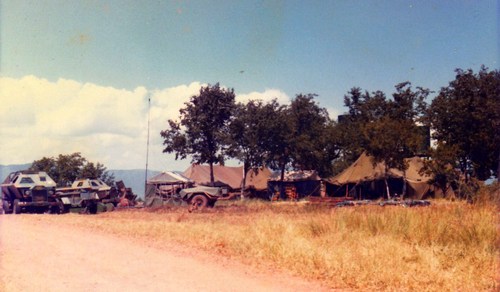
Close to the Mozambique border, it was an area of intense heat and thick bush. The ZANLA forces already at the Assembly Point had taken good advantage of this, spreading themselves out, no doubt with an eye for both attack and defence, over a wide area. A few of their commanders did set up camp near us but the rest of their troops remained hidden well out of sight. Knowing they were out there somewhere, probably very suspicious and trigger-happy and with their weapons pointed towards us, was not a comforting feeling. To say we were both outnumbered and outgunned would be an understatement – there were over 1 600 ZANLA guerillas and only 26 of us, living under tents supplied by the US Army.
Assembly Point Alpha. Our entire force……versus theirs. We were outnumbered and outgunned.
Although on the surface, we were able to establish a sort of peace between us there was no escaping a deeper atmosphere of distrust and hostility. This was hardly surprising considering how long we had fought as bitter enemies. This would lead to several scary incidents – including one when I had an AK47 barrel shoved up against my head by a drug and alcohol-crazed guerilla who threatened to blow my brains out as another soldier and I were escorting him and a group of his unruly comrades down the infamous Alpha Trail. Fortunately, he toppled over backwards and passed out before he could carry out his threat
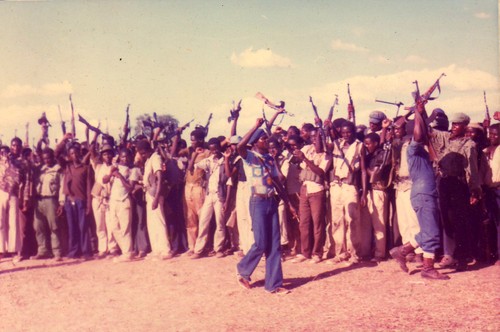
Meeting of opposing armies, Assembly Point AlphaComrade “Chippie”, officer in charge of discipline, rallies his troops. In conversation, it emerged he and I had been involved in a shoot-out earlier on in the war.
I can’t say I was sorry when it all came to an end with Robert Mugabe’s victory in the election or that, in spite of winning so many little battles, I had wound up on the losing side. Most soldiers like clarity and in the end it had become increasingly difficult to work out just what we were fighting for or hoping to achieve. I had long ago realised that we just did not have the resources or manpower to contain the conflict. Certainly, the situation on the ground wasn’t improving, in fact, it was getting worse. Nor was it possible for me to convince myself that we held the moral high ground.
I was just glad it was all over and that I had got out of it alive and in one piece. I did not have a coherent plan of what I was going to do with my future. Mostly this was because I had been so deep in the war I had closed my eyes to everything else.
All I knew was that, in the interim, I wanted to go somewhere quiet, a place where the eyes of the world might overlook me. More than anything I wanted a little peace. Bowmont – the small farm near Kadoma where my parents had recently retired to – seemed the ideal fit. For the next four years, I holed up there although my stay would be steeped in sadness because my father would finally succumb to the form of bone cancer that had ravaged his body.
Bowmont farm, Kadoma.
Much as I loved Bowmont I came to realise it was time to close this chapter of my life. And so I joined the general exodus to South Africa, knowing full well that country was also in political turmoil and that I faced an equally uncertain future down there (if I had any sense I would have left the continent but Africa has this way of gnawing itself into your soul). Driving. on my own, down that familiar road through an empty landscape where only a few years before I would have run the risk of being ambushed I found my mind drifting back to the war.
From the very outset, I had had my doubts as to the justness of our cause. Although I could never be sure whether my decision to ignore these niggling feelings was just another form of moral cowardice I had done what was expected of me.
I had stayed on through basic training, I had sweated it out in the “sharp-end”, I had resisted the temptation to stay put in England when I went over on holiday, I had remained (sort of) cool under fire. I had lost a few friends and found a few more. I had discovered how much I could take and still carry on.
The first of three volumes making findings and recommendations about state capture was officially handed to President Cyril Ramaphosa. The report put former president Jacob Zuma front and centre of the capture project saying he actively advanced the interests of the Guptas, intervening in operational matters to help them.
KwaZulu-Natal opposition parties slammed EFF leader Julius Malema for calling on the government to lift all Covid restrictions. Addressing EFF supporters in Durban Malema said the only purpose of the restrictions was to shield President Cyril Ramaphosa from his political opponents. Malema’s comments contradicted his earlier stand on the issue.
Former president Jacob Zuma continued to accuse the judiciary of being captured while he launched baseless litigation to attack the legitimacy of any process that sought to hold him accountable.
President Cyril Ramaphosa’s ongoing silence and lack of decisiveness on a wide variety of issues continued to be a cause of concern amongst commentators and the public at large. It almost seemed he was hoping that if he ignored a problem it would go away on its own.
The findings released in the second tranche of the Zondo Commission of Enquiry into Allegations of State Capture unleashed yet more shame on a government mired in charges of corruption. The report detailed how billions were extracted from Transnet and Denel but the themes from Zondo1 remained the same: ex-president Jacob Zuma was at the centre of it and the ANC helped the Gupta network.
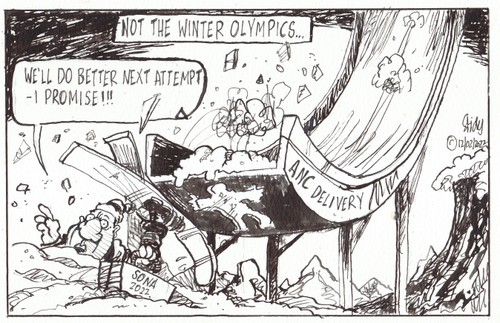
President Cyril Ramaphosa called for unity against those who are “tearing the country apart” in a State of the Nation Address (SONA) that didn’t gloss over the myriad problems facing the country – the floundering economy, corruption, and the state’s incapacity to quell the July unrest chief amongst them. He accepted the government could have done better…
Replying to the debate over his recent SONA speech, President Cyril Ramaphosa expressed his confidence in his beleaguered cabinet. “I preside over a Cabinet of ministers that are committed to their responsibilities, minister in whom I have the greatest confidence…” he said as heckles rose up from the opposition. His blanket of approval presumably covered Police minister Bheki Cele, one of the subjects of a damning report into the July unrest, who had just been ordered to apologise for and retract unwarranted accusations he had made against EFF leader, Julius Malema.
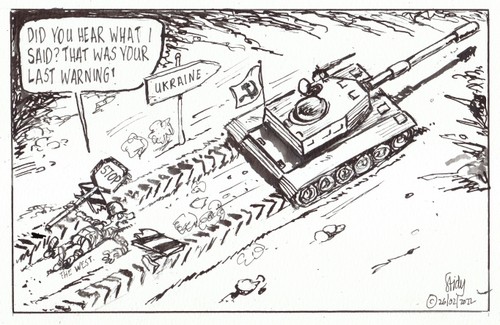
In what has been referred to as the “darkest hour since World War II”, Russian forces unleashed an attack on Ukraine on the orders of Vladimir Putin. The invasion sparked an international outcry with UN secretary-general, Antonio Guterres, urging Putin to “give peace a chance”, amidst widespread fear it could be the start of a war in Europe on Russia’s demands for an end to NATO’s eastwards expansion.
The history of war art has an ancient pedigree dating back to before early Egyptian times while the importance of this art form has long been recognised, not least by governments who have sought to utilise artists’ skills specifically for the furtherance of the war effort.
In Britain, for example, an official war art scheme was set up during the 1914-18 war which continued right up to the Falklands war, a unique experiment in Government patronage that has produced an unrivalled national collection of paintings, drawings and pieces of sculpture. Although theoretically employed by their governments as propagandists, many of these official war artists would go way beyond their original brief, producing work of genuine artistic merit.
An obvious example of this is the artist Paul Nash who joined the Artist’s Rifles in the First World War. Initially motivated by a straightforward patriotism, his belief in the rightness of war would, in time, begin to crumble as he was exposed to the horrors of trench warfare. His subsequent paintings of ravaged landscapes with trees shattered by shellfire bear comparison with the best of the war poems in their depiction of the nightmarish conditions in which the soldiers were forced to fight.
(Needless to say, Nash’s employers were less than enthusiastic about his work.)
Not all war artists are, of course, engaged in this capacity. Many self-employed ones take up the practice for more personal reasons – an interest in war from an emotional, social and psychological point of view or simply to produce a pictorial record that can be studied and interpreted by posterity, a mirror of the times.
The well-known Southern African war artist, Peter Badcock slots comfortably into this latter role. Having grown up in the region he fell into the business of war art almost by chance when he found himself serving in the Rhodesian security forces and decided to put his skill as an illustrator, working in an animation studio, to good use by producing a book about the conflict. The gamble paid off. Published in 1978, Shadows of War was an immediate success. Encouraged by its reception he would go on to bring out two more bestsellers covering the conflicts in white-ruled Southern Africa– Faces of War (Rhodesia – now Zimbabwe)and Images of War (South West Africa – now Namibia).
His latest book, A War Artist’s Diary, is essentially a distillation of these three books but also includes a realistic appraisal of the two wars – as well as his involvement in them – written from the vantage point of hindsight. Beautifully produced, and including 100 of Badcock’s best drawings, as well as a selection of his evocative poems, it provides a vivid, almost documentary-style, account of life in a war zone.
In his art, Badcock aims for a scrupulous integrity, although it is obvious that his association with the army necessarily influenced the subject matter available to him. As he writes in his introduction, the drawings are “not intended to eulogise or defend either side in the tumultuous history of these events but to capture the human dimension of men and women at war”.
Badcock deserves full credit for achieving just this. His drawings have an almost photographic accuracy of representation. They record not only the conflicts themselves but the life going on around the fighting, a sort of behind-the-scenes view of people going about their ordinary work in extraordinary circumstances.
Published by Simon & Schuster
Over 150 000 years ago mankind diverged from the cradle of the African plains and began spreading over the globe. This trend has continued until the present day and has been followed by “convergence” as disparate communities re-established contact with each other. What this ought to tell us is that migration is not an aberration or something you only undertake under duress. It is an essential component of the human condition, a natural urge, part of our make-up. It is, as it has always has been, about the pull of opportunity.
Despite this, there has been, especially in recent years, a great deal of nativist, anti-immigrant sentiment, much of it stirred up by populists of the Donald Trump ilk who insist on referring to it as “foreign invasion”. In this fascinating and thought-provoking book, author Felix Marquardt takes issue with such views arguing that, in many cases, it is in our best interests to welcome newcomers and share our spaces. As he points out, a new generation of migrants, well-educated, tuned in through their smartphones to global events, entrepreneurial and full of ideas have come into being and we would be foolish to turn them away.
Also, contrary to popular belief, most of these immigrants don’t sink into poverty or live in dingy apartments in high crime neighbourhoods. Rather, they have contributed to and flourished in their new countries because of their work ethic and determination to carve out a new life. Others have taken hazardous or poorly paid jobs shunned by the native-born and helped grow the economy that way.
Nor are all migrations necessarily about poor people heading to richer countries. The author cites many examples of the reverse – where young people, stifled or not seeing a future for themselves in the country of their birth, have moved to places like Africa where they are still trying to develop and modernise their economies and it easier to build something up from scratch. Technological advances have also led to increased mobility. These days you can, with a computer, do your work anywhere. For the author, these acts of migration can be transformative, it can teach you to open your eyes and ears to other people and grow from the experience.
Writing, in part, from his own experiences as a person of mixed heritage who has called many different countries ‘home’, the author has made an important contribution to the whole migration debate. Going beyond the usual headline cliches about helpless refugees, he finds a far more complex and, in the end, positive story. Amid the thought-provoking broad-brush picture, Marquardt also wields a vivid miniaturist’s pen as he describes the people involved in these modern- day migrations – those he calls the New Nomads.
That morning, I was woken by the alarm of bird calls; the sky was turquoise, becoming lighter close to the pencil-line horizon. I levered myself upright and began putting on my boots. Motionless, the land lay stretched out below me.
Charged with the army’s acrid coffee, I was sitting up against a large boulder enjoying the cool, morning air when the quiet was punctured by the dry snapping of rifle fire on the valley floor below. It didn’t take me long to grasp what had happened. One of our patrols had got caught up in what sounded like a very serious firefight.
Almost immediately our radio crackled into life. ZANLA forces had been encountered in large numbers. Our orders were to sweep down from our OP (Observation Point) in the foothills of the Mavuradonha Mountains and attempt to engage them from the rear (they had fled by the time we got there but they came back later and found us).
As I grabbed my rifle and webbing and slung on my backpack I found myself thinking, once again, about the weird unreality of it all. How in the hell had I, a pacifist by nature, managed to get myself mixed up in this vicious bush war? Landed in this strange situation where the unfamiliar had suddenly become familiar?
It was not a war of my choosing, nor one I particularly wanted to be part of. Even today I still cannot adequately explain why I stuck it out until the bitter end of the conflict and carried on fighting long after many of those who had believed far more passionately in the cause than I had decided to call it quits – “gapped it” to use the slang of the day – and left the country. It is also no use pretending I was anything else but an extremely reluctant soldier or that I showed any real aptitude or talent for military life. Indeed, for the most part, I never felt I was anything more than a resentful, inadequate, half-trained civilian.
Looking back across the years I sometimes have difficulty recognising that man in the grubby camouflaged kit as myself; there is an abiding strangeness about it all. It is as if I am looking into a broken mirror and all those experiences happened to someone who looked like me but was in fact an impostor. For me, the past is, indeed, another country.
An abiding strangeness. At Marymount Mission, in the extreme North-East of thecountry, near where the Mazowe River crosses into Mozambique. This was on my last call-up.
And yet, now that I reflect back on it, I realise the army was not all bad. It had some value. Firstly, it tested me in ways I would never have otherwise known. I learnt about physical and mental hardship, about dealing with extremes and staring into the abyss. I discovered what it was like being stripped down to my most basic self. At various stages, I was the hottest, coldest, most tired, thirstiest, hungriest, terrified, angry and miserable (but not the happiest) I have ever been in my life.
The fact that I survived these in extremis tribulations and emerged from it frayed, disenchanted and proud afterwards was, I suppose, an achievement of sorts.
Secondly, the army took me into areas I would have not otherwise seen and in so doing heightened my appreciation and love of the African landscape. In some perverse way, all the discomfort, fatigue and fear I experienced during those war days became a form of mini catharsis; it made me feel more part of the bush. We even had a term for it, one that suggested a temporarily disarranged self – one became “bush happy”.
The landscape affected me in other ways. Not sure whether my role was that of the hunter or the hunted I found my senses becoming sharpened to the sounds and smells of the bush. Far from the comforting normality of civilian life, I became increasingly feral in my habits, always watching and listening for anything that might threaten my chances of getting out alive.
For much of my initial national service – and in the subsequent seven years of military call-ups – the regiment I was with operated in the extreme North-East of the country, an area where civil administration, outside a few sandbagged strong points, had all but broken down. Not too far from the border with Mozambique, it was among the harshest and most rugged landscapes in all of the then Rhodesia and, along the escarpment itself, virtually uninhabited.
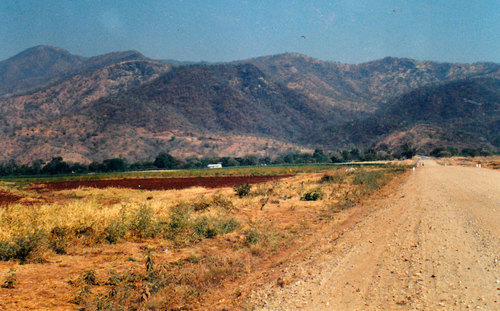
Assembly Point Alpha, Hoya, near Mozambique border, 1980. Mavuradonha is in the background. It was here my war came to an end…
What always struck me most about this landscape – apart from the heat and general sense of discomfort – was the feeling of immensity it evoked. Behind us, the Mavuradonha Mountains rose in a steep pitch from the Zambezi valley floor while ahead of us a vast plain stretched out almost without undulation. And beyond that lay more of the same, hundreds and hundreds of kilometres of raw, unspoilt, and untrammelled country leading up through Mozambique and then into the rest of Africa.
Mavuradonha, near Mzaribani. I took this pic on a return trip several years after the war ended.
The more time I spent in it the more I began to see the beauty in the timelessness and silence and hugeness of the land. The sheer vastness of it seemed to be immeasurably increased by the dryness. Then there was the silence, broken only by the occasional bird song or jackal howl at night or a sudden gust of wind blowing in waves of warm air. It is a kind of silence you just don’t get in the normal, urban world with its bustle and false pleasures.
This, in turn, brought with it a vague feeling of loneliness, a sense of being cast off from familiar moorings, an awareness that there was no one else within easy reach. Strangely enough, this only added to its appeal.
Operating in this sort of country was never easy. In summer the heat could be stupefying. Weighed down by my heavy pack and ammo I could feel the sweat trickling down my back and soaking my shirt. It chafed between my thighs.
On patrol.The bicycle we found abandoned in the middle of nowhere…
Thirst could plague us like a nagging toothache. We had to develop the will to endure it. Because we only carried a couple of bottles each, I was forced to restrict it to little sips. On several occasions, I suffered from severe leg cramps. Most awful of all was the time I collapsed from heat exhaustion and complete dehydration. My legs refused to function, my tongue became dry and swollen, like an old piece of leather while my throat felt like it was coated with fur.
If it wasn’t for a spotter plane that picked up our distress call and later returned to drop water, I often wonder if I might ever have got out…
The heat was not the only thing we had to contend with. The Shona word Mavuradonha roughly translates as Land of Falling Water and as the season progressed you could understand how it got its name. After months of nothing but sun and dust, the weather would begin to change. It would grow more unsettled and windy, moving smells around. Tall, purple-bottomed clouds would build-up to the north.
Once the rains broke we were put through the whole gamut: heavy rains, moist, intermittent rains, a half-hour sprinkle, a thundershower, drizzle. Our clothes and equipment became cold, damp, smelly. At night we had to endure all the discomforts as it poured down on us. Now and again, especially in the early stages of the storm, the darkness would be torn away for a second by a dazzling flash of lightning which would bathe the surrounding bush in a strange, otherworldly light. Then the thunder would roll, like the sound of cannon fire, and we would lie there dazed and stupefied and shivering in our sopping wet sleeping bags while the rain came pelting down around us.
Usually, the storm would pass as quickly as it came, the wind would die down and we would do our best to get back to sleep. In the morning the sun would shine through the wet leaves to where we lay sodden and miserable. Once we had dried out our gear and re-oiled our rifles we would continue on our patrol.
We couldn’t drop our guard. Such is the nature of guerilla warfare that we never really knew who we could trust – if, indeed, we could trust anyone – amongst the local civilian population. In most villages we visited the response was usually muted – neither friendly nor unfriendly. It was difficult to know, too, who the locals were more scared of offending – us or the other side. Many, accused of being “sell-outs”, had been arbitrarily killed by the guerillas as a warning of what would happen to those who chose to betray them. Others had been caught in cross-fire between the opposing forces and died that way.
While the more cautious hedged their bets, I am sure many did want to see a more representative government, one not made up solely of whites. For all we knew they could be in direct contact with the ZANLA forces, maybe even feeding them and passing on information about our movements.
In this sense, the war had already begun to highlight something of considerable political significance – it provided the ultimate test of the black “povos” ( English translation: the masses, the common people) real feelings. Although it helped, of course, to be armed we could never quite escape this sense of hidden danger or that, outside of our fellow soldiers, there was no one we could rely on.
Mavuradonha, view from the infamous Alpha Trail, scene of many ambushes and – before it was tarred – landmines.
For the most part, we operated in five-man ‘sticks’ sometimes linking up with another stick at night for added security. Patrolling in such small groups through a potentially hostile country, where the loyalty of the locals could not be relied on, I did my best to keep my eyes open, my mind alert to my surroundings or any movement in my peripheral vision. Alone like that, it was easy to feel eyes watching us, indeed the suspicions of being followed and watched became a constant companion. The uncertainty weighed on our minds.
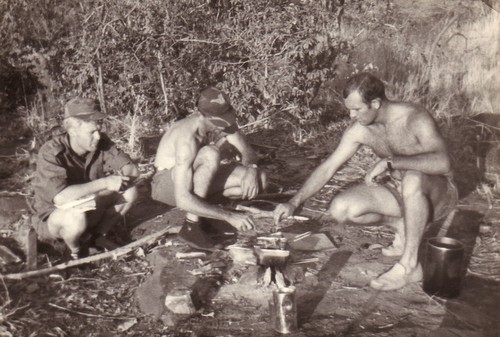
Towards evening we would usually stop for one last brew-up before moving into our final position for the night. It was the time of day I liked most. There is something about the dissipating violet light as the sun sinks which makes everything seem, holy, natural and familiar. It is a time when earth, rock and sky seem to marry, a time when surrounded by the great wall of the mountain the landscape seemed to acquire an uplifting, transcendental quality. I could feel its beauty penetrating my soul. It made me feel grateful for being alive, grateful for having survived another day, grateful that I would shortly be able to sleep.
Cook-up time in Zambezi Valley.
Far from the big city lights or man-made pollution, the night swarmed with stars while the sky above us seemed bigger than any I had ever seen before. Sitting in the middle of nowhere, staring into the enormity of space and feeling, in the most animal sense, my infinite littleness it was often hard to make sense of all. Perhaps that was the point of it. To make us feel very small, to remind us that we are just a speck and that our time on earth is short and fleeting.
Of what importance was I, caught up in this forgotten, war, in the grand scheme of things? Like many a soldier before me, I was forced to acknowledge the helplessness and insignificance of my lot – while at the same time cursing the old folk who had got us into this jam.
Not that these moments of philosophical introspection lasted long. Where, the night before, the world had seemed ethereal, dream-like, in the morning light I was only too aware of its hard contours, its physicality and my sense of discomfort.
One experience, in particular, still haunts my memory. It was our first major cross-border excursion into Mozambique, an exhausting march not made easier by the fact I was suffering from severe diarrhoea during the high summer heat and only had a limited amount of water to drink. There was something strange and spellbinding about crossing into an enemy country. It was like we had been passed through more than just a physical boundary. We had entered another dimension, reached the very edge of the known world. Civilisation, as I knew it, seemed a very long way away.
The further we penetrated, the more cracked, bleached, and wild the country became. The heat left me breathless. After days of tramping through the dry, Mopani-dominated scenery the vegetation suddenly began to green up and thicken and in the distance, we could make out the unmistakable sound of flowing water. We had reached the Zambezi.
The broadening river was full of cigar-shaped islands covered with reeds. Tall vegetable ivory palm trees, massive Ana trees and Natal Mahogany’s dotted the far shore under which grew a mass of riotous vegetation. Fed by several additional large tributaries the river had grown even wider and more powerful and imposing than the one I was familiar with, stretching out before us like a rumpled sheet of blue vinyl and measuring a good kilometre or two from side to side.
The emptiness of the country we had passed through was reflected in the emptiness of the river and its banks. There were no signs of human activity: no men polling along in dugouts, no fishermen, no women washing, no children playing on the water’s edge and no domestic animals. Indeed, the scene before us had probably changed little since David Livingstone and his mutinous crew came steaming up the river in the Lady Nyassa all those years ago.
The landscape itself – aside from the river – was similarly devoid of feature. No cliffs nor distant mountains were framing the river valley. There were few roads or paths to follow and the odd villages we passed through had long since been deserted. It all seemed strangely peaceful. For all intents and purposes, it appeared to be uninhabited although we knew were not alone. Somewhere out there was not only ZANLA but the Mozambique resistance movement, Frelimo, as well.
That thought kept us on our toes.
Reluctant to leave the cooling shade of the river we lingered as long as we could before turning around and heading back to our extraction point where we were due to be picked up and choppered back to our military base in Musengezi, just across the Rhodesian border. We could see no sign of life from the air either as we flew over the baked, engulfing landscape; just trees and more trees stretching from horizon line to horizon line.
Helicopter pick-up in typical dry season Zambezi Valley bush.
So undifferentiated was the landscape that if not for the occasional baobab, I would have lost all sense of perspective. Looking like prehistoric animals with enormous bodies and a multitude of limbs spreading out laterally, as if they wanted to pluck us from the sky, they towered above the surrounding trees.
As we skimmed over their outstretched branches, I remember thinking to myself that winning a war in this sort of country would be virtually impossible. All the enemy had to do was stage hit and run attacks and then allow themselves to be swallowed up by the empty space where no one was likely to notice them because there were so few people to notice anything and those that there were would be unlikely to be in any hurry to trek to the nearest Security Force outpost to report what they had seen.
Time, the Great Revealer, would prove me correct on this point…
The Great Fish River Valley near Committees Drift.
It is already early afternoon when I pull over on the top of the Nico Malan Pass, which drops a massive 673 vertical metres over 13,8 kilometres, into 1820 Settler Country. Taking a sip of the now lukewarm coffee in my Thermos, I look at the raw landscape around me. To my right, capped by a bluff of rock, are the Katberg which, in turn, become the Winterberg. To my left, the rest of the mountain chain stretches away toward the Hogsback and the Amatola.
The Katberg
Above me, I can see the pale puff of rain clouds receding over the mountain tops. The very air looks grey and dampness seems to rise up off the tarred road like mist. The road ahead tapers away through miles of dry East Cape thicket, sprinkled with aloes, euphorbia, succulents, sweet thorn, and spekboom..
Although I was not born here, I am, in a sense, back where it began, my home patch. It was here that many of my ancestors settled when they came to South Africa, way back in the early 1800s.
The first was Benjamin Moodie, the Seventh and last Laird of Melsetter in the Orkney Islands whose family fell upon hard times and who sailed from London on the brig Brilliant in March 1817, arriving at the Cape in June. From there he trekked up to Grootvadersbosch in the Overberg where he hoped to recreate his bit of feudal Scotland in the shadows of the Langeberg. It was his grandson, Thomas (Groot Tom) Moodie who led the Moodie Trek into the then Southern Rhodesia which explains how I came to be born and raised up there, among the beautiful Nyanga mountains.
And why I am driving down this road today.
Then there were the Nesbitts (my father’s mother’s side of the family), from Ireland, whose history I have only recently discovered, but whose story I am now trying to follow. Other ancestors too – the Colemans, the Arnotts, the Stirks as well as my immediate kin, the Stidolphs. All spent time in the Eastern Cape area.
As I descend the winding road that leads, through Seymour and Fort Beaufort, into the vast Great Fish River Valley, I feel my senses heightening, flaring. I look and listen, feel the air, try to see the country as they did, all those years ago. Coming from the lush, green pastures of Scotland and Ireland, it certainly must have seemed very different from anything they were used to.
There is an old military blockhouse at Fort Brown, where the modern bridge crosses over the Great Fish River, a reminder of the days when this was all disputed territory. It formed part of a chain of similar forts, strung along the banks of the river, which the British soldiers, garrisoned in them, used to pass messages to one other.
Fort Brown – still a police station.
It is here I establish my first connection. An ancestor of mine, on my father’s mother’s side, Lt Col Richard Athol Nesbitt CB, was posted to Fort Brown, as an inspector, in 1875. Later he would go on to form Nesbitt’s Horse which fought with distinction in both the Frontier and Anglo-Boer War. There is a memorial honouring their contribution, among others, to the war effort standing in Church Square, Grahamstown.
Monument honouring, amongst others, members of Nesbitt’s Horse.
Having stopped to snap an obligatory photo of the place, for record purposes, I continue on my way, still taking in the country as I go. Hill leads to hill leads to hill and in between is nothing but space and distance. The oceans my ancestors crossed to get here could hardly have been more solitary than this empty country still is.
It gets me thinking about the 1820 Settlers who settled in this region. Innocent of the reality of Africa, they must have been shocked to discover the arid country, with its harsh climate, they were about to settle on was nothing like the rich farm and pasture land that they had been promised by the propagandists back home. Although the land was theirs to do what they would with, there was another aspect the pamphlet writers had chosen to gloss over in their colourful descriptions– the fact that the settlers were to form part of a Government-approved military buffer zone, aimed at keeping the Xhosa on the other side of the Great Fish River. Inevitably they found themselves caught up in an escalating conflict for which they were mostly ill-prepared.
Perhaps not too surprisingly then, many found it too lonely and too harsh a life and, their faith shaken, put the country behind them to return to the comforts of town life. Others persevered; in some cases, their descendants are still on the same farms. For yet others, Africa proved to be a temporary aberration. Anxious to escape the heat, sweat, and weariness of it all, they packed up and sailed back to England.
For my part, I am bound for Grahamstown where my one sister, Sally, lives. It was here that the settlers decided to build their capital and – because the town never grew at the rate envisaged – you can still see many fine examples of colonial architecture and of their early houses (see Picture Library below). It is also now home to Rhodes University, as well as one of the most dysfunctional and corrupt municipalities in modern South Africa.
The military life seems to have run deep in the Nesbitt blood. Richard’s father, Alexander Nesbitt, had enlisted, at the age 19, in the 67th Regiment (South Hampshire) and was stationed for many years in Mauritius before being sent with the Reserve Battalion, in August 1851, to the Eastern Cape on HMS Hermes to participate in the 8th Xhosa War.
Not much is known about him but his wife occupies her own special spot in history, for she was a passenger on the HMS Birkenhead, which was conveying troops of ten different regiments from Ireland to participate in the Border War when it struck a rock near Danger Point on the Cape Coast and sank with a loss of 450 lives.
The sinking of the HMS Birkenhead is, of course, famous in the annals of maritime history because it was here the order “Women and children first…” originated. Safe in a lifeboat, Elizabeth Anne “Annie” Nesbitt and her third child, the self-same Richard Athol, were two of the only 193 survivors.
Many of the places the various Nesbitts (and there were many of them) had lived in while in the East Cape I have visited myself so I feel I have both set and principal actors. What I now need to do is write a few scenes. For a moment I think of going to the military cemetery in King William’s Town where Alexander Nesbitt lies buried but my time is short and I am not even sure where it is, so, instead I elect to explore the Great Fish River basin from where it crosses the N3 and then take the dirt road that backtracks all the way to Fort Brown – a part of the world that had changed little over time.
Frontier Country. The dirt road back to Fort Brown with Great Fish River in the mid-distance.
With its turbulent, blood-stained, history, the Great Fish has always loomed large in my imagination. Like the Zambezi and Limpopo, it is one of those rivers which has acquired almost mythical status.
The first section of the journey takes you along the crest of a ridge with extensive views on both sides. Although you probably won’t see it mentioned in any tourist brochure, I think it is one of the best drives in all of South Africa because of its wildness, its freedom, it’s feeling of immensity, the land sweeping back in great folds all the way to the distant range of mountains on the one side and the deep blue of Indian Ocean on the other.
Not far from Fraser’s Camp, we turn left off the tar onto a gravel road that runs roughly parallel with the looping river. Many of the place names around here carry echoes of their frontier past. Dropping down into the valley, the first settlement to come into view is Trumpeter’s Drift, one of the many strategically sited forts the British built along the Great Fish in an effort to secure the land south of the river. Unlike most of the others, which stand crumbling and neglected, this solid, block-like structure still forms part of a working farm and is in relatively good nick.
Trumpeter’s Drift – old fort on left of buildings.
We drive on. Alongside us, the river continues to follow the most circuitous of routes as it twists and turns its way through the landscape. Countless thorn trees swarm together along its banks creating a dense, impenetrable mass. Swollen by the recent unexpectedly good rains, its soup brown water gushes copiously along. Broken branches, old logs, chunks of floating vegetation, and mud sweep past. In places, driftwood is piled high along the banks.
Great Fish River – flowing fast. Note thorns.
Our next stop is Committees Drift, another military outpost established by the British during the Frontier war of 1819 (the name “committees” is pronounced by locals as “kommetjies” indicating that the origins may be Khoisan or Dutch).
A steel girder bridge, erected in 1887, spans the river at this point. On the other side of it lies former Ciskei, one of the Apartheid government’s grandiose, if ill-conceived, “homeland republics” where the National Party tried to entrench the principle of racial separation. Granted “independence” (but never internationally recognised as such) in 1980 after a rigged election, the idea that it could function as a separate state was, of course, a fantasy that could never work as the South African economy remained dependent on the black workers who lived in remote corners like this. Among the poorest and most neglected areas in South Africa, it was also too small and lacked the resources to ever manage its own affairs and govern itself. It would always be obliged to live in the pocket of its giant neighbour.
Bridge at Committees Drift.
We drive on again, passing a group of smartly attired church-goers as we do. I am not particularly religious myself but I rather approve of the fact that there are people who are still prepared to dress up to please their God. A solitary donkey walks along the side of the road with an air of utmost purposefulness as if it has a fixed destination in mind. A herd of goats scurries off as we approach them and force their way through a farm fence. Because of its large size, the ram is unable to get through and is obliged to reverse out. Mustering all the regal dignity he can he strides off, acting like this was all part of the plan.
Church goersDonkey on a mission. Ciskei on far side of river.Heading to Church through the mielie field…
Ahead, more hills, more flatness while the sun spreads a dry ruddiness everywhere. Occasionally we pass the empty shells of deserted farmhouses, rotting from the top downwards. Eventually, there will be little left to remind you that somebody lived there. Once they stood for Hope in the Future. Now they stand neglected and forlorn, a lonely reminder of the essential sadness and transience of life.
Our plan is to lunch at Double Drift, in the Great Fish River Nature Reserve, another old fort that once housed British troops sent out to Africa to defend the Empire. Completed in 1837, it protected the important route to Fort Willshire and the interior. Although in a rather dilapidated state of repair it, once again, serves as a memorial to a particular moment in South African history.
At the entrance gate to the reserve, we change our mind when we hear how much it will cost us for such a short visit (a substantial increase from when I visited last) so we decide to strike it off our list of Historic Places to Visit and have a tailgate lunch on the side of the road that leads to Kwandwe Private Game Reserve instead.
A tailgate lunch…
I don’t need to remind myself what the fort looks like anyway because Sally has done a beautiful painting of it (for more examples of her work see Sally Scott)
Double Drift fort. Chalk pastel. Painting by Sally Scott.
Entering Kwandwe, a little later on, I get a glimpse of another challenge the English settlers had to face – elephant. Although long shot out in most parts of the East Cape, they have been reintroduced into some of the larger local reserves, such as Kwandwe. We haven’t gone too far when we see one browsing in the dense thicket, his back stained a dusty yellow ochre from the local soil. A few kilometres on we see another, similarly camouflaged.
Elephants are awesome creatures. There is a mystery, a sense of enchantment, behind their wrinkled grey visage and massive bulk. I can watch them for hours. As intriguing as they are, they do, however, make difficult neighbours to live with, showing scant regard for fences or planted crops or humans for that matter. It is not wise to antagonize them.
On the crest of another ridge, we stop for a final look over the Great Fish River Basin. Below us roll plains, speckled with bush, patterned with cloud shadows, receding into the blue haze of the far mountains, indifferent to man. Once again, I feel overawed by the age and might of this old continent. In such a primaeval wilderness, is very easy to believe here is where all life originated.
A final look back.
By sleuthing around in these backwaters, I also feel I am beginning to get somewhere in establishing a link with my past. My discoveries may not be earth-shattering but they are a start. They provide the building blocks upon which my own life had been constructed.
After running a smooth, spirited campaign the Democratic Alliance snatched a historic victory in the hotly contested uMngeni Municipality, receiving 47% of the votes with 13 seats in the council, while the ANC had 39%, followed by the EFF with seven percent. uMngeni is the first municipality to be led by the DA in KwaZulu-Natal.
Outage turned to outrage as Eskom once again implemented load shedding with next to no notice. With the power utilities, woes showing no signs of improving CEO Andre de Ruyter came in for heavy criticism while industry, already battered by the economic effects of Covid-19, continued to suffer.
While politicians tried to make everyone believe that the coalition negotiations were being pursued in the interests of the residents in the country’s 70 hung municipalities the opposite appeared to be true. Rather than being about service delivery or good governance, they were used to advance narrow political interests to the detriment of voters.
With the reappointment of the old mayor, Mzimkulu Thebolla, and many of the same councilors there was a feeling that nothing much had changed in Msunduzi as a result of the recent municipal elections. In the same week, it was also announced that the municipality was drowning in debt, owing Umgeni Water an outstanding amount of R367 million.
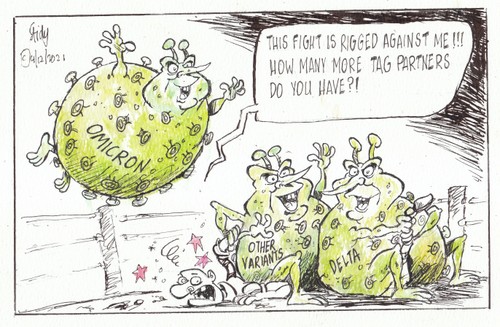
The recently identified Omicron variant had fuelled a worrying surge in coronavirus cases in South Africa and is rapidly becoming the dominant strain, health officials warned. With the imposition of various travel bans to and from South Africa, the government complained it was being punished – instead of applauded – for discovering the concerning new variant of Covid-19.
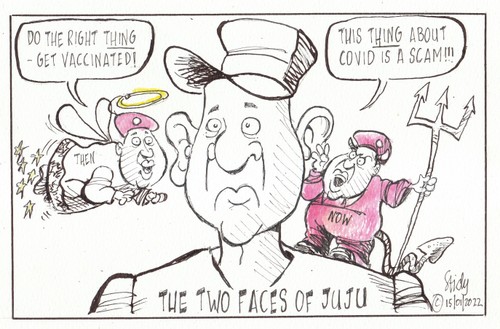
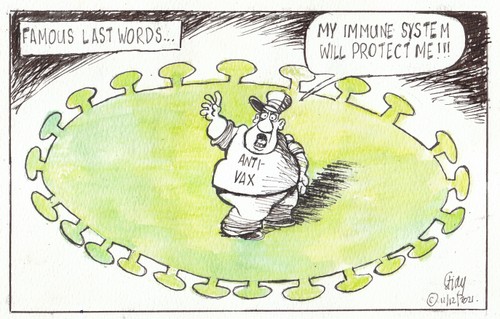
Despite the fact that the majority of people in hospital with Covid-19 are unvaccinated the roll-out campaign faced continuing scepticism and resistance from a section of the public…
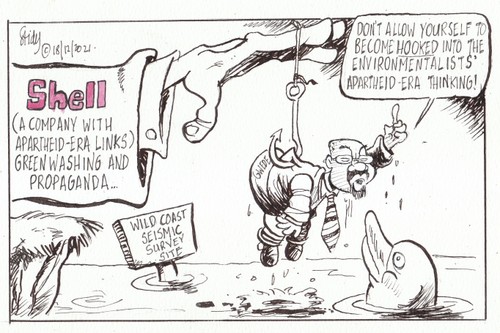
Minister Gwede Mantashe rubbed environmental organizations up the wrong way after saying protests against Shell’s seismic survey along the Wild Coast are examples of apartheid and colonialism of a special type.
While the holiday season should be about sending time with loved ones and doing things we enjoy, the Covid-19 pandemic continued to pose a threat to their health and well-being.
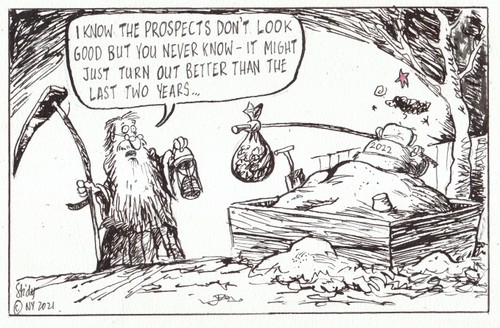
With the highly transmissible Omicron variant having driven cases of Covid-19 to record levels and with no end in sight to the pandemic, the prospects for 2022 do not look good. The one silver lining is that weekly cases appear to be on a downward trajectory.
“If a man does not keep pace with his companions, perhaps it is because he hears a different drummer. Let him step to the music which he hears, however measured or far away.”
Henry David Thoreau
It is probably my British heritage but there is nothing I love more than dashing madly about the countryside, in all types of weather – sunny, showery, cool, breezy – with a pair of binoculars in one hand and a camera in the other. Given this genetic predisposition of mine, it is perhaps just as well I live in an area where it is very easy to feed the habit.
A rambling man...Pic courtesy of Sally Scott.
Kusane is a farm with a commitment to conservation. All I have to do is step out of my front door, skip around the corner of the balcony and then slip across the gangplank that connects it to the ground beyond and I am into the unspoilt, open, pristine countryside. In a moment everything is altered. Any cares or worries I may have quickly get left behind. All my senses come alive. I am agog with anticipation. Another day of happy rambling awaits…
View from Kusane over Karkloof Valley
I never tire of these walks. The countryside is breathtakingly beautiful. There are subtle changes to it every day and every season. These become more pronounced after the first spring rains fall. The colours become more vivid and intense, wildflowers burst through the earth. As the summer storms intensify, the greater the profusion around me. In what seems like the blink of an eye, the deciduous trees start unfurling their new leaves. As sun and rain come together, the lengthening grass shimmies all around me. Great idle puddles lie across my path.
The first Yellow-billed Kites swoop over Kusane. Then swallows and other migrants arrive. They seem happy to be back and they let you know it. The cuckoos start calling, none more so than the ubiquitous ‘ Piet-my-Vrou‘ (Red-chested Cuckoo) who drones on for hours on end, often way into the night. In the dense canopy of trees up by the main house the Village Weavers go into a frenzy of nest-building as if operating according to some unconscious internal calendar.
While all this activity is erupting around me I ramble on. Amongst the comforting familiarity of everyday landmarks, I still stumble on the unexpected. One day, I might stop and watch a female Spurfowl emerge from a thicket with her stripey chicks in tow and scuttle over the road in front of me. Or a kestrel will skim across the edge of my vision, hover, then slip forward again, its head rock still, its sharp eyes scanning the wide landscape for the luckless rats, mice and moles that form its staple diet. On another day, I might see a regal Reedbuck ram, silhouetted against the outline of some rocky ridge, lord of all he surveys, Sometimes, too, in the magic of twilight, I will hear the plaintive, heart-wrenching call of a flock of cranes flying above me, wings gracefully waving. My heart soars out to reach them. They have become my spirit birds.
Living up here, close to the sky and the elements, nature has become both my solace and my passion. Nor is my love affair confined just to the boundaries of Kusane Farm. It extends down into the valley, laid out below as in a view from an aeroplane window, then stretches out across the plains to the Karkloof hills beyond – taking in, as it goes, the iconic Loskop hill which stands alone in the middle of it all like some ancient, all-knowing, sentinel. Local lore has it that this dominant feature once served as an important rain-making site. Judging by the tumultuous storms that get magically conjured up around it, I can believe that…
A mini-storm conjured out of nowhere. Note lighting striking Loskop hill, once a rain-making site.
This, then, has become my heartland.
By going out each day and covering the same patch – or patches – I am slowly building up a permanent record of it. In the course of my exploring, I have taken hundreds and hundreds of photographs. I am not a professional photographer but I love taking pictures because they help me to remember. The ones below are but a small selection of these…
They represent a year in a life. They are my act of homage and recognition, my salutation, my love letter to this extraordinarily beautiful valley and the creatures who inhabit it.
GALLERY:
Nature is all circles and cycles and living up at Kusane you soon feel yourself becoming part of the ever-changing seasons. Winter, for example, is a time of low temperatures and dryness in which the animals and birds have to go searching for food…
This year (2021), it snowed for the first time since I moved up to Kusane. Hailing originally from Zimbabwe, I haven’t had much exposure to this white winter wonderland experience beloved of newspaper headline writers but standing on my balcony, in the silvery half-light, it felt quite magical…
The strange white stuff that fell from the sky didn’t seem to bother most of the weavers at Kusane who carried on with their daily routines. A few were not so sanguine…
Winter is also the firebreak-burning season at Kusane. It is a busy time of the year for the farm manager, Michael Ndlovu, our one-man fire brigade…
As the weather begins to warm up, the first wildflowers appear. I did not plant them. Their seeds get harboured safely in the earth ready to burst forth when the first spring showers fall…
The flowers, in turn, bring in butterflies, bees and other winged insects. Soon, there is a whole world of life in the fields…
Summer is storm season. Sometimes, when I am out walking, I will spot a deep purple wall coming towards me. The next thing I know I will be engulfed in hissing water and rumbling thunder. I get back home drenched to the core…
Approaching storm…
…departing storm.
The real drama is often in the skies; an ever-shifting vista shot through with blue and rippling with an energy that can quickly turn explosive and jagged, even become slightly apocalyptic – a foreboding of mayhem…
A regular routine of mine, throughout the year, is to drive through the valley to the Karkloof Farmer’s Market on a Saturday morning. I go there, mostly, because I like browsing around Huddy’s second-hand books where there are regularly literary gems to be found. The journey can often be as rewarding as the destination…
African Spoonbill feeding in a dam in the Karkloof Valley.
The Karkloof is a good place to spot cranes. Cranes are becoming increasingly rare everywhere so we are lucky to have all three South African species (including the critically endangered Wattled Crane. There are only around 260 left) occurring here. There is not a day in my life that is not improved by seeing them…
Blue CraneWattled Crane (including immature)Blue Crane with chicksCrowned Crane feeding…
Occasionally, driving through the farmlands, you come across other unusual birds like these two…
Denham’s (formerly Stanley’s) Bustard
Bald Ibis
The road to the Karkloof Farmer’s Market takes me past the iconic Loskop, a hill that continues to exert a strange pull on my imagination…
The Karkloof area is good cycling and running country too…
The hour after dawn is nature’s happy hour, a moment when the world still belongs to animals such as this regal Reedbuck ram, surveying his domain…
It is also a good time to see birds because they are usually at their most active then…
Three Midland’s ‘specials’: Malachite Sunbird…
…Black-winged Lapwing…
…Buff-streaked Chat.
To try and seduce birds to come and live at my home I have erected two bird tables on either side of the building. By far the most regular and numerous visitors are the Village Weavers but a host of other birds have taken to frequenting it…
Rock Pigeon on bird feeder
Red-winged Starling (male)
This Cape Sparrow and African Firefinch like to drop in as well…
Seasons of mist and mellow fruitfulness. Kusane lies in the KwaZulu-Natal mistbelt. In summer the mist comes drifting in most evenings engulfing the countryside in a blanket of damp grey…
With the effects of climate change becoming more and more apparent, the need to shift to new “green” technologies has become a mantra and a rallying call for a generation. In the rush to embrace these supposedly cleaner and more efficient inventions what is often overlooked, however, is that many of them come with their own ecological cost.
Just as the disruptive effects of fossil fuel on the climate threaten our continued existence so, too, does this new revolution present its dangers. This is because so many of the items we now consider indispensable to modern living – wind turbines, electric batteries, solar panels, as well as smartphones computers and the like – are dependant for their manufacture on a cluster of little known rare metals found in terrestrial rocks in infinitesimal quantities.
Already, in some countries, most notably China, the mad rush to mine these metals has had dire consequences on the environment, as vast tracts of land are ripped up and rendered virtually uninhabitable by the extraction and refining methods. This pattern is being repeated elsewhere in the world – the DRC (Cobalt mining) and South America (Lithium) for example.
There are, of course, important geopolitical reasons for all of this. By capturing the lion’s share of the rare metal market China has been able to consolidate its growing global power, as well as gain greater economic and military leverage.
In short, rare metals have become the “new oil”.
One of the more worrying aspects of these developments is that the West seems to have been happy to allow China – in part because it means less pollution in their backyards, in part because of a poor assessment of China’s competitive streak – to develop its stranglehold on world production. Only now is the West waking up to the fact that they are lagging seriously behind in this new energy race – a case of closing the stable door after the horse has bolted – and that it could leave them very vulnerable.
In this extensively researched investigation into the subject, Guillame Petron, a French Award-winning journalist and documentary maker, has talked to many experts as well as travelled around the world gathering information. The amount of data he has collated is vast, yet he succeeds in making it (mostly) comprehensible to the lay reader.
The book’s timely message may make jarring reading for those pinning their hopes on a greener future. As the author writes: “The energy and digital transition is sending humanity on a quest for rare metals, and is doomed to aggravate divergence and dissent. Rather than abate the geopolitics of energy, it will compound them.” Petron also argues that we need to be more sceptical about how many of the new technologies are produced.
For all this, The Rare Metals War is by no means a hatchet job intended to reveal the evils of the new technological order. Instead, it’s a careful analysis that sets out to both pose and answer some pressing questions, as well as suggest possible solutions and alternatives.
Published by Manilla Press
This book tells the incredible true story of nine women resistance fighters during World War Two who find themselves imprisoned in a country that has itself become a criminal conspiracy. Having been captured while fighting against their German occupiers, they were interrogated, tortured and sent east into Greater Germany to a concentration camp at Leipzig where their lives were made a living hell.
What comes over with striking force, on reading about their experiences here, is, once again, the sheer barbarity and depravity of the SS and the Gestapo, as well as a Nazi government that saw fit to licence mass slaughter as a political process.
Not all the German soldiers were complicit in this almost unimaginable cruelty. In the Leipzig camp, for example, there was, one kindly older guard who, realising the game was up, smuggled in a pair of wire-cutters for the prisoners.
They never got to use it.
With the allies closing in on all sides, the women, already badly malnourished, were forced out onto the open road. The German plan seems to have been to march them to their deaths since there was no longer any food at Leipzig and they had no gas chambers or efficient ways to execute them en-masse. Many were indeed slaughtered by machine guns along the way.
Determined that this would not be their fate, the nine women, by now close friends, made plans to escape. Led by the indomitable, well-educated, Helene they finally seized their chance.
Gwen Strauss, the author, is the great-niece of Helene and in this riveting, impeccably researched and extremely moving story of hope and courage in the face of seemingly impossible odds, she tells the harrowing tale of their capture, imprisonment and subsequent flight to freedom.
Nor did problems end when they finally got back to their homes. At the time, the population was urged to put the war behind them as quickly as possible and get on with their lives. This was easier said than done. Damaged and changed forever by their traumatising experiences in the German camps, they suffered from depression, shame, rage, helplessness and guilt and found it hard to settle back into a peacetime existence they hardly recognised at all.
Written from the viewpoints of each of the women involved, The Nine is always absorbing, frequently horrifying but with odd unexpected moments of humour to lighten the load.