Bowmont Days: The Sound of Dragging Feet

In 1978 my parents purchased a new farm.

With the Rhodesian Bush War intensifying and many whites leaving the country because they saw no future for themselves, it was probably not the wisest of times to be considering such an investment – some might even have called it foolhardy – but my father was never one to doubt his own judgement and went ahead anyway.

He had recently come in to some money, as a result of finally selling our long abandoned Nyanga ranch to the new (and destined to be short- lived) Zimbabwe-Rhodesia Government who wanted it for resettlement.

With the proceeds my father bought a 1500 acre property adjoining my brother Paul’s cattle ranch in the Battlefields area (so named because many of the old gold mines and farms in the area had been named after famous battles) in the Rhodesian Midlands.

Situated in a marginal rainfall area about halfway between the towns of KweKwe and Kadoma the farm consisted mostly of mixed mopani woodland. Although there were some crops grown in the area (mainly cotton and wheat), usually where there was irrigation available to supplement the unreliable rainfall, this was mostly cattle country.

The ranches tended to be large, each one separated from its neighbour by miles and miles of rough, ribbed, ungoverned country. If I stood on top of the low range of hills that ran immediately behind the old homestead I could see no other sign of human settlement in all directions other than the cooling towers of the Umniati Power Station which protruded above the tree line and the electricity pylons that marched like an army of ungainly giants alongside the main Salisbury-Bulawayo Road.

There was already a house built on the farm, simple but comfortable in the old settler style. It consisting of whitewashed brick with a corrugated iron roof, big, bare rooms and a wide veranda which jutted forward over what remained of a lawn.

Bowmont house with vlei.

It had been built on a small shoulder of land, in front of which was a vlei that sometimes flooded in the rainy season but for the most part consisted of a series of potholes caked with cracked mud. On the other side of this stood a thin belt of thorn trees and beyond that a fenced enclosure that had once been a cultivated field but was now slowly being reclaimed by the bush.

Although my first loyalty will always be to the Nyanga farm, where I grew up, Bowmont came to exert a similar hold over me; it had the same haunting and mysterious familiarity although, on the surface, its attractions were a whole lot less obvious.

On the Inyanga farm our horizons had been ringed by mountains and no matter where you stood you were more or less guaranteed a great view. On Bowmont once you left the Big Vlei, the trees closed in around you and your vision became restricted to a few hundred metres on every side.

Whereas I had fallen for the Inyanga landscape almost on sight, Bowmont revealed its beauty in a more subtle, slower way.

Having bought the farm, my parents had to decide what to do with it. In her usual quiet, methodical way my mother immediately set about creating a garden, one that would provide a bright, colourful oasis in the middle of the dry veldt.

For his part my father decided that Bowmont was good sheep farming country. Unfortunately he could never persuade the sheep themselves to accept this fact. For some reason they didn’t like the area at all and despite my father best efforts to convince them otherwise they persisted in growing thin and dying with a monotonous regularity.

It soon became more than obvious that we would be hard-pressed to earn a living this way.

In a letter to my English cousin, Rebecca, I noted somewhat despairingly: “August is our cruellest month: the nights are still cold but the days are hot and we are pestered by an angry dry wind that blows dust into everything and slowly frazzles out the landscape. The grass turns harsh and tough and stubbly and in between the soil is dry and cracked, the blood sucked out of it; waiting to get whipped up along with the dead leaves and other winter-time debris and carried away by the meandering dust-devils. It is also the month when the sheep driven on by visions of green begin to stray and get preyed on by the equally hungry jackal…”

The advent of the rains – which could happen any time between October and December – always marked the turning point of the year. For weeks beforehand I would find myself anxiously panning the skies for the first tell-tale signs that they were on their way. Normally there would be a few false starts before the day would come when the dark storm clouds would start banking over head and the air became charged and tense and then suddenly you would hear the first big, shiny drops falling and hissing as they hit the sun-parched ground.

Living in a dry country, there was no nicer sound than lying in my bed at night listening to the rain drumming down on the corrugated iron roof while the old mango tree outside my bedroom window heaved and swung and the thunder rolled along the line of kopjes.

At his stage of my life I was – in between my numerous army call-ups – six weeks in, two months out – employed at the Mining Commissioner’s office in Gwelo. Built somewhat optimistically in 1896 as a Stock Exchange the building which housed our offices had that air of beguiling shabbiness one so often associates with government departments – especially those banished to the sub-regions. The work itself was of a fairly dull and routine nature – issuing prospectors’ licences, registering mining claims and trying to sort out disputes between farmers and miners over land rights. Most weekends I would jump into my battered old Datsun 1200 and together with my border collie, Bruce, head off to Bowmont.

In the meantime the war ground inexorably on towards its inevitable conclusion. The advent of majority rule finally gave me the excuse I needed to quit my government job and to move to the farm to help out my father who was becoming increasingly ill.

He eventually died in Harare on the 3rd February, 1983. After his death and with my mother now working during the weekdays at a boarding school just outside Chegutu I lived alone in the farm. During the holidays I would be joined by my young sister, Nicola, who was a boarder at Queen Elizabeth in Harare.

The solitude suited me. During the preceding years, my double life as as part-time civilian, part-time soldier had taken its toll. After seven years of fighting for a cause I had never really believed in I had found myself consumed by an increasing sense of futility.

When the war finally ended, I had left the army with a feeling of moral blankness but now I had plenty of time on my hands to think about my experiences and get back in touch my feelings.

Just being there and going for long tramps with the dogs through the bush was a therapy of sorts, a way of clearing the cobwebs out of my mind. I enjoyed fixing up the farm which when we had taken it over had been in a fairly dilapidated state. I planted lots of fruit trees and grape vines; I fenced off paddocks and built drinking troughs for the sheep. I even started making my own wines which, although they were unlikely to win any awards, were at least drinkable.

Cooling off in the trough…

I particularly liked the early mornings before the heat tired and numbed one and sapped out all your energy. I also loved sitting on the veranda in the evenings drinking gin-and tonics and listening to the comforting “kuk-cooo-kuks” (“Work harder, work harder”) of the Cape Turtle Doves while the francolin called from Kwali Corner and the guinea fowl clinked softly in the old lands. Sometimes, especially in summer, I would sit out there with my feet propped up on the veranda wall until way after dark, gazing at the large yellow moon as it rose above the tree line and listening to the jackal calling and the insects shrilling in the encircling gloom.

Two large tributaries of the Zambezi – the Umniati (corrupted from sanyati meaning “many buffalo in the area”) and the Umsweswe (derived from the onomatopoeic word sweswe – meaning “the sound of dragging feet”) – flowed through the area.

The former provided the southern boundary of my brother Paul’s next door property, Thetis. It provided a favourite walk. When I was not working the land, it was to here I often headed, a shotgun slung over my shoulder just in case of I was not sure what. I just felt comfortable with it. A hangover from the war, I suppose.

I would pick my way along the river’s bank, my senses alert to any sounds, my eyes peeled for a flicker of movement. Although there were no longer any menacing buffalo to worry about, the countryside still had a wild and uncultivated look.

There was other game about. I often saw kudu, and every now and again a male warthog would come trotting out in to the open with an impudent air, followed, shortly, afterwards by the rest of the family. Despite the shotgun, I was never interested in shooting at anything. The war had cured me of that.

Exploring the bush. Brother Paul and myself.

On some days I took a rod with me but although there were plenty of promising looking pools to fish in I never caught much. That was not really the purpose. I was content just to sit on the hot rocks, listening to the birds and watching the shreds of cloud drifting overhead

As happy as I thought I was it became increasingly apparent to me that I could not carry on indefinitely like this, that this was only a temporary stopping- off point.

I began to wonder what on earth I was going to do with the rest of my life. As much as I enjoyed the outdoors I didn’t really feel I was cut out to be a farmer; even if I had the farm was too small to be economical and I had no capital of my own to invest in it.

I had no idea what other form of employment lay open to me. Neither my qualifications nor my inclination fitted me for the few jobs on offer.

Indeed, I was no longer even sure if an independent Zimbabwe was the place for me. I was beginning to feel that I had come to the end of this particular road. My innate restlessness also played a part, a taste for change and new adventures, a fresh start in a place where I was not bogged down by memories.

The time had come for me to move on. But to where?

It was my sister, Sally, who suggested a way out of my predicament. After the war had ended she and her husband had emigrated to South Africa, settling first in Phalaborwa and then, later, Durban.

I had always been an inveterate scribbler, filling the margins of my exercise books at both school and university with drawings when I should have been listening to what the person in front of the blackboard was saying. It probably explains why so many of my exam results were not as good as they could have been.

Remembering this and believing in my talent – at that stage she had far more faith in it than I did – Sally set me up with a couple of interviews in Durban. So, at the end of 1983, I drove down to South Africa, feeling very sceptical about whether anybody would actually want to employ me.

Much to my surprise they did. In fact, I was offered a job by the first person who interviewed me – the MD of Scope Magazine.

That settled the matter. There could be no more dragging of feet. A new chapter of my life had begun.

The day before I left Bowmont for good, I set out for my last walk along the farm boundary fence, trying to memorise all the sights and scenes and take in all the scents and feelings in the hope I could carry them away with me. After that I went back to the old house, packed up my few possessions in to the boot of my car and early next morning set off down the familiar dusty road that crosses the railway track by the old Battlefields General Dealer store.

Then I branched off down the tar towards the border, desperately trying to keep the lid down on all my choked-up emotions as I did.

Roughing it in the Bush in South Africa and Canada

Sunset over the Langeberg. Looking towards Swellendam.

The sun was slanting away behind me sending long thin shadows down the slopes of the Langeberg as I drove past the sign post to Groot Vader’s Bosch.

I had jetted in to Cape Town from Durban that morning on a return pilgrimage to the farm, near Swellendam, where my ancestors, the Moodies, had first settled after their departure from the Orkney Islands, way back in the early 1800s. Ostensibly the purpose of my visit was to celebrate an important milestone birthday in my life with family and friends.

This was not, however, the only object of my journey.

I wanted to know more about the Moodies. I wanted to get a glimpse in to their lives and their thoughts and their feelings. I wanted to experience the sublime landscape they had settled in and try and see it through their eyes as well as my own.

The older I get the more fascinated I become with this stuff. It gives me a link, however tenuous, with my past and a society in some ways like ours, in other respects manifestly different.

On the trail of the Moodies – various family members and friends. Picture courtesy of Craig Scott.

I suspect there was another motive too. Maybe it was because, when the whole world seems under threat, it feels comforting to escape backwards.

Of course, things were not necessarily any safer or better back in those days. You only have to read any contemporary account of life in nineteenth century South Africa to realise they, too, faced their own peculiar set of challenges.

There were, for example, none of the comforts of modern travel. The sea voyage from Britain to Cape Town was a stomach-churning, gruelling, ordeal in those leaky, old, wooden, wave-tossed, sail boats, especially for those of a delicate constitution. In a letter home, dated August 1775, the Hon. Sophia Pigot (whose daughter would go on to marry an ancestor of mine) wrote “Lud! How weary one grows of salted meat. And of the Ocean too, I swear I am enamoured even of this monstrous queer-shaped Mountain flat as a Board after near four months of nothing but Water on every side”.

And if you were travelling on to India, like Sophia was, you still faced many more exhausting months at sea. The possibility of getting shipwrecked was something else you had to factor in to your calculations…

India was not, however, my area of concern. On this trip I wanted to follow up on a story which I had just scratched the surface of and which involved another ancestor of mine: John Wedderburn Moodie whose arrival in South Africa, exactly 200-years ago, I wanted to celebrate along with my own birthday. Even though I am descended from his elder brother, Benjamin, I have always felt a strange emotional bond with John Wedderburn.

Reading his book, Ten Years in South Africa I kept seeing bits of his character in myself. We even looked vaguely alike. In his struggle to create a new life on the African frontier, I also saw echoes of my parent’s attempts to tame their own wilderness back home in Rhodesia (now Zimbabwe).

Ten Years in South Africa is a delight to read. It is one of those books that appear as fresh and vivid now as on the day it was published. John was a gifted, observant, writer; intelligence and kindness go hand in hand with a keen sense of humour and a sharp – even satirical – eye.The book is full of interesting vignettes and insights in to the South Africa of the time.

Illustration from Ten Years in South Africa. Falling foul of an elephant.

While he obviously shared some of the prejudices of his class and era, he seems to have also possessed an instinctive feeling for the other side, displaying an almost anthropological interest in the country and its people which further endeared him to me.

John had originally joined his brother at Groot Vader’s Bosch in 1819. He was clearly taken with his new home among the mountains.

In front of the old, thatched, Dutch-style house, beyond a trim garden shaded by some towering trees, several fields of lush, green pasture-land shelved gently down to a small spruit concealed behind a wild tangle of briers, shrubbery and trees. Upstream the country grew increasingly hilly until, through a narrow cleft, the jagged blue outline of the Langeberg suddenly soared in to view.

Standing there, the day before my own birthday, I could easily see why the countryside had appealed to a man of John’s romantic sensibilities:

As may be supposed, amid scenes of such novelty and attraction to a young mind, many weeks elapsed before I felt much disposed to apply myself to any serious occupation. My brother, whose zest for the amusements of the country was renewed from sympathy, and not a little from the pleasure of showing his own proficiency in the language and manners of the colony, cordially entered in to my feelings, and scarcely a day passed that we did not ride out on some shooting excursion among the hills...”

They also paid courtesy calls on some of their Dutch neighbours, including one old Afrikaner towards whom John adapts a teasing, ironic tone:

Among the neighbours who we visited in the course of our rides in the vicinity of Groot Vader’s Bosch was an old man of the name of Botha. His house stood in a plain surrounded on all sides by high hills; and in front, towards the mountains, a scene met the eye which for wild and savage magnificence could hardly be exceeded in nature…Never was a man less live to the enjoyment of such scenery than Martinus Botha; nor could he conceive what pleasure we experienced in our contemplation. All that he knew or cared for was, that he had a constant run of water for his mill; but whether it came from a romantic chasm, or from a muddy lake, was to him a matter of the greatest indifference.”

A scene met they eye which for wild and savage magnificence could hardly be exceeded in nature…View from Groot Vader’s Bosch, looking in opposite direction to Swellendam.

Always on the look out for new opportunities, Benjamin and his two brothers would later trek up to the Eastern Frontier. Sir Rufane Donkin, who was Acting-Governor of the Cape in the absence of Lord Charles Somerset, had granted them land in the ceded territory between the Beka and Fish rivers, as well as a stake in the proposed new settlement of Fredericksburg which was to be situated just north of the present day Peddie.

When Somerset returned he took umbrage to these plans which had been made without his blessing and conflicted with his own ideas for the region. He immediately scuppered them.

By way of compensation the Moodie brothers were granted three farms in the Zuurveld, just south of the Bushmen’s River, namely: Long Hope (Benjamin), Kaba and Groot Vlei (John and Donald).

Kaba, the southernmost-property, is situated in a long, cigar-shaped valley which runs diagonally down to the sea. Standing on the apron of land between two hills, the turf as thick and spongy as a tended lawn, the two brothers could not believe their luck at having stumbled on this happy patch of ground. They were quick to appreciate its agricultural worth:

I have never met with any soil bearing such indisputable tokens of fertility as that of the Kaba, as this alluvial valley is called…” John enthused, “The level bottom was everywhere covered with rich vegetable mould, from one to three feet thick, containing land and sea shells in considerable quantities…Highly delighted with the appearance of this rich but lonely spot, we returned through the wood the same way we came, guiding ourselves by the tracks of our horses.”

The Kaba.

Groot Vlei, their other property, lies just to the north of this valley. Running parallel to the coastline between a sheltering ridge of hills on the one side and the large, active, Alexandria dune field on the seaward side, it consists of a series of wave-cut platforms which form a staircase-like feature down to the sea. As the sea-level has dropped relative to the land so the water table has dropped with it, leaving the whole valley dry except during rain.

Groot Vlei

Because of this problem John and Donald elected to build their home at Kaba which they nostalgically renamed Hoy after the island in the Orkney’s they had come from (it has since reverted to its original name) where there was a more plentiful supply of running water.

For a while the two brothers farmed together but then Donald began to spend more and more time away. The reason for his continued absences soon became apparent. While on a trip inland he had met and fallen in love with Eliza Sophia Pigot, daughter of one of the principal 1820 settlers. The two were married in 1824.

Thereafter Donald gave up farming, making use of his new family connections to secure the position of magistrate and Government Resident at the mouth of the Cowie river. In 1842 he and his family moved to Natal where he entered a career in politics eventually rising to the position of Colonial Secretary under Martin West, Natal’s first Lieutenant-Governor.

With Donald gone, John soldiered on alone first at Kaba and then Groot Vlei, to which he moved because he considered it a healthier spot.

Here he lived what he described as “a kind of Robinson Crusoe-life”. Separated by many miles from his nearest English-speaking neighbours, his farming operations limited by a lack of capital and the distance from the markets, the loneliness eventually got to him. Hungering for companionship he decided to return to England to look for a wife.

In England he met and married Susanna Strickland, one of six daughters in a close-knit, genteel, literary, if not very well-off Suffolk family who could have stepped out of the pages of a Jane Austen novel. With no career prospects in England, John was keen to return to Africa but his new bride had been put off by all his tales of lions, elephants and snakes and so the two eventually opted to settle in Canada, a place where the ever-optimistic John hoped “my exertions will meet with greater success”.

A young Susannna Moodie.

The reality was altogether different.

The most ‘English’ land had already been taken and so they were forced to head further north. The Canada they encountered here, in 1832, was a land of vast, gloomy, almost impenetrable forests broken up by swamps, rocky outcrops and clearings created by forest fires. In its own way it was every bit as wild and lonely as the African bush he had left behind.

The winters were bitterly cold and often the only sound they could hear in the icy dead of night was the howling of wolves. From the start their life was one long, exhausting struggle to survive in a harsh, unforgiving climate.

Susanna’s background, in particular, had hardly prepared her for such a life. She was painfully aware of her own inexperience, she made countless mistakes. Watching her trying to make the best of it, there must have been times when John longingly recalled the magnificent scenery and more agreeable climate of Groot Vader’s Bosch.

Eventually, like other rainbow-chasers before them, the Moodies would abandon the farming life and return to the comparative comforts of the streets.

Susanna Moodie would go on to become a Canadian literary icon. Her book Roughing it in the Bush, which described her experiences in the bleak north, is considered a classic. She and her sister, Catherine, are also the subject of author Charlotte Grey’s double biography Sisters in the Wilderness: The Lives of Susanna Moodie and Catherine Parr Trail which won the 2000 Libris award and became a national best-seller.

Among Susanna Moodie’s other admirers is Margaret Atwood, the author of a Handmaid’s Tale, who contributed an introduction to the 1986 edition of the book. Placing her with three other women writers, who were the first to produce much of anything resembling literature in Upper Canada, Attwood shrewedly observes that:“If Catherine Par Traill with her imperturbable practicality is what we would like to think we would be under the circumstances, Susanna Moodie is what we secretly suspect we would have been instead.”

Atwood also published a book of poetry, in 1970, titled The Journals of Susanna Moodie in which she adopted the voice of Moodie and attempted to imagine and convey Moodie’s feelings about life in the Canada of her era. It is regarded by many as her most fully realised volume of poetry and one of the great Canadian and feminist epics.

Back in the present, I decided I would pay my own little homage to John and his kin by immersing myself in the water – stained to the colour of a dark, red wine by all the fynbos it had passed through – of the same spruit he had described so lovingly in his book. It was icy cold. One dip and I felt my skin goosepimpling riotously.

Me – trying to purify my soul. Picture courtesy of Craig Scott.

I didn’t mind. There was something quite magical about the experience. I felt like I was being baptised in some sort of purifying, healing, sacred pool.

Standing there, shivering, in that hallowed spot, under the lowering majesty of the Langeberg range I felt a special linking of the spirits – that of the land, John Wedderburn’s and mine….

GALLERY:

Some more scenes from Groot Vader’s Bosch:

Below are some pics of us celebrating my birthday, as well as the 200th anniversary of the arrival of John Wedderburn Moodie in South Africa. The party was held at Honeywood Farm which adjoins Groot Vader’s Bosch and also belongs to the Moodies. While I was there I managed to spot some unusual birds as well (the theme of the celebration was Birds of a Feather):

BIBLIOGRAPHY:

Burrows, Edmund H – Overberg Outspan.

Burrows, Edmund H – The Moodies of Melsetter.

Miller, Maskew – Dark Bright Land.

Moodie, John Wedderburn – Ten Years in South Africa.

Remembering Reg – A Tribute to my Father, Wing Commander R.N.Stidolph DFC

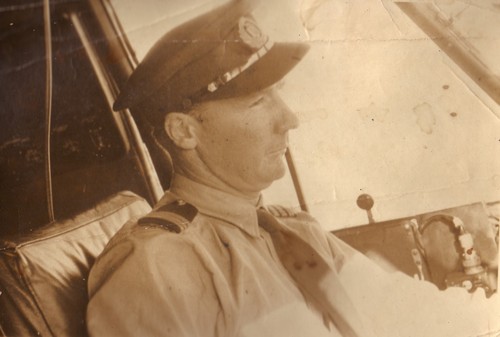
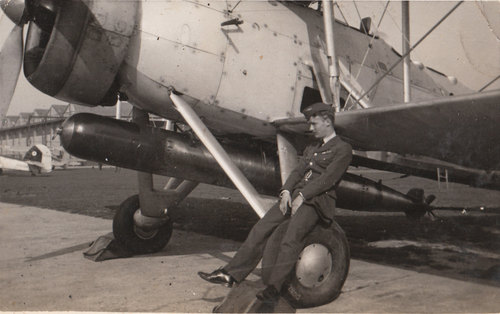
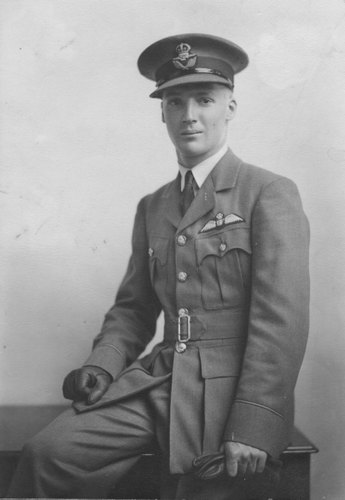
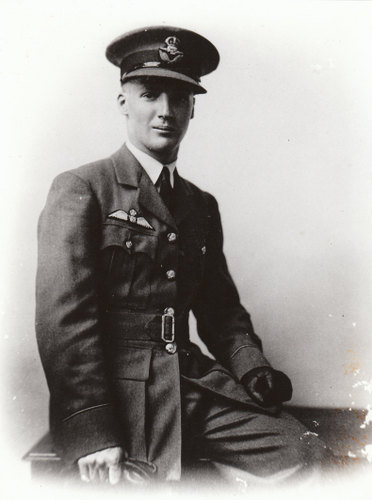
My father, Wing Commander Reginald Neville Stidolph, in RAF.

QUOTE: I could ask, ‘Why risk it?’ as I have been asked since, and I could answer, ‘Each to his element.’ By his nature a sailor must sail, a flyer must fly.

Beryl Markham on why she flew across the Atlantic to America (West With the Night)

xxx

During my teenage years, when we were living in the back of beyond, in Nyanga North, my father was seldom at home.

This was because the small amount of capital he had used to establish our farm was nearly exhausted. After several years of struggle against drought, disease, crop failure, packs of ravenous hyena, a pride of lion and the Land Bank, he had come to the realization that the only way to avoid getting deeper in to debt was for him to return to his old job – flying aeroplanes – leaving my mother behind to struggle on as best she could without him.

For the next seven-years my father all but disappeared out of our lives; the only communication, besides a monthly cheque, being the occasional scribbled letter from such exotic, far-off locations as the Persian Gulf, Sudan and Sierra Leone.

Although he was not present in the flesh, he was always there in spirit. The farm had been his dream and by working it, my mother and the rest of us children were, in a sense, living it for him.

By the time he finally returned home, I had already left school and gone to university. Because of this I still did not see a great deal of him although I did sometimes go and stay with him during my holidays when he was working for WENELA, based in Francistown, Botswana.

I came to love these visits especially because my father would usually arrange to take me up in the air with him. I would take an old camp chair and a Thermos of tea and sit up in the cockpit of the old DC3 or DC4 where I had an eagle’s view over the ground below.

Botswana is a country in which distances seem endless. Flying across the sparsely inhabited landscape, the plains stretch out for miles and miles and you really get to see how huge the Kalahari, Makgadikgadi Pans and Okavango Swamps are.

The droning engines. Flying over the Okavango Swamps in December 1970. Picture courtesy of Pete Stidolph.

There was something wonderful about flying in those jolting, rickety, oil-leaking old planes with their loud, droning engines. This was air travel before they took the edge and excitement out of it.

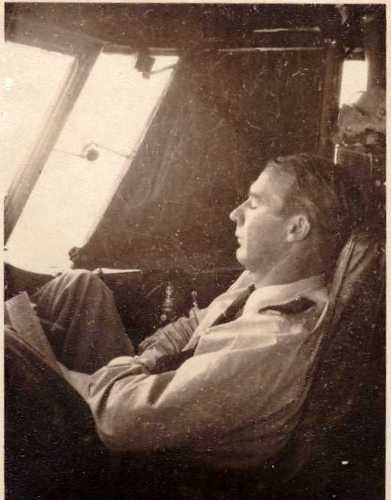
Being at the controls was so second nature to my father that he used to switch on to auto-pilot and sleep for most of the journey. Amazingly, he always knew exactly when to wake up.

Snooze time…


Not every flight went according to schedule. I remember the one time we had to change direction because a solid wall of angry, dark, rain clouds was advancing towards us at rapid speed with huge bolts of lightning slashing angrily out below them.

Storm over Botswana. Picture courtesy of Pete Stidolph.

We managed to outrun the full force of the storm, landing in Francistown just as it hit us. “I think we need a beer after that!” my father said, once we were safely inside the hangar, so we jumped in to his car and sped off to the Horseshoe Bar, just opposite the station in to which the old steam trains came puffing.

Flying in such conditions certainly provided its own unique set of challenges. On another occasion, a rhino came thundering on to the dirt airstrip, in a maelstrom of dust, just as we were about to touch down at Shakawe, at the northern tip of the Swamps, forcing my father to pull the plane’s nose back up in to the air.

It is not something I could imagine happening at, say, Heathrow or JFK Airport…

Sadly, it was only right at the end of his life that I began to spend a lot of time with my father and got to understand him better. He was retired and living with my mother on Bowmont, a small farm in the Midlands area. In the years that remained to him he was to suffer agonies from multiple myeloma (or myelomatosis), a particularly vicious strain of cancer that attacked his bones and caused them to disintegrate.

I had a job in nearby Gwelo (now Gweru) so I used to motor up most weekends to make sure they were okay. Eventually, I resigned and moved on to the farm full time.

In a strange way his illness brought us closer together.

As a child I had always been slightly in awe of my father. To me he was this outgoing, glamorous, figure who flew aeroplanes and for large tracts of time had been absent from my life, working in distant locations that I only knew as places on a map.

His life had all the ingredients an impressionable young boy could ask for – plot, action, adventure, a dashing hero. What I didn’t realise back then was that he never saw it quite like that. Nor did I fully understand the impact the war had on him.

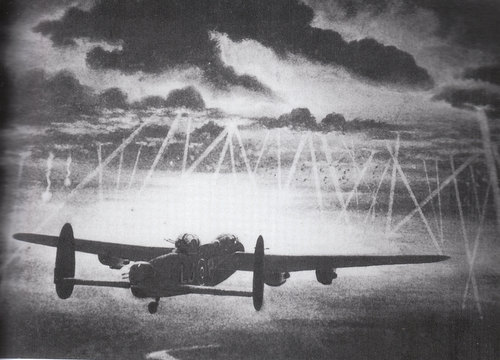
Perhaps it was his awareness that he would not last much longer or maybe it was the fact that I was now a serving soldier myself but for the first time in his life he began to open up about his experiences as a bomber pilot during the war. He talked about what it was like flying at night in slow, heavy bombers and being picked up in the lattice of searchlights and being strafed by the German anti-aircraft guns. He told me about the fear and how he had always tried to fly higher than everybody else in the hope that it would make it more difficult for the Germans to shoot him down.

He had served in all the major theatres of the war.

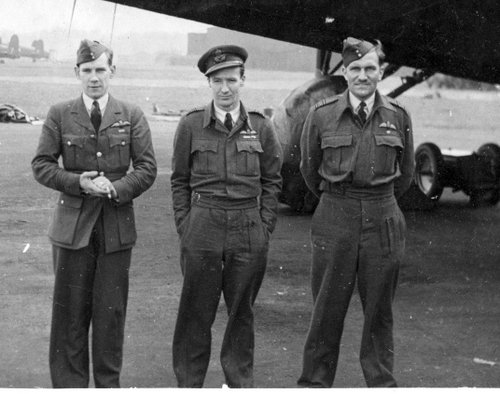
Starting off as a Flight Lieutenant he was promoted to Wing Commander in August 1941, an enormous responsibility to be placed on the shoulders of a young man still in his early twenties and one which must have forced him to mature at a very rapid rate. As the officer commanding 113 Squadron he saw action in North Africa and was also stationed, for a while, on Malta. At Giarabub (Italian for Jarabub), a remote oasis in the eastern Libyan desert, he got a taste of what it was like to be on the receiving end when his squadron and ground crew were bombed by the Luftwaffe while they were living among the gullies and wadis (see pic below).

In December 1941, he led the first group of bomber planes on the long flight to Burma, arriving there just as the unstoppable Japanese army was about to begin its long sweep through Malaya, Singapore and Hong Kong; even crossing the borders of India itself.

The road to Mandalay, Burma. My father seated.

His exploits in the area did not go unnoticed. He gets a mention in the book Retreat in the East by O.D.Gallagher, who was the London Daily Express’s war correspondent in Malaya and Burma (published by George Harrop, 1942). The author flew with my father on one of his missions. He also appears, together with other members of 113 Squadron, in a 22nd February, 1942, British Paramount newsreel (“Burma Blenheim Bomber Boys Part 1”) covering the retreat.

I only recently got to see this news clip. It felt quite strange looking down the long passage of time and seeing my father as a young man, surrounded by his crew. They all looked tanned and fit in their khaki outfits and surprisingly relaxed, given the hammering the British were taking, but also a little self-conscious, pinning their smiles on for the benefit of the cameraman.

After his stint in the Far East he returned to Bomber Command and took part in some of the big raids over Europe. Among them was one which the Times of London, on November 20, 1943, described as the largest ever over Berlin: “In half an hour a great force of Lancasters dropped more than 350 4,000lb block-busters on the German capital, in addition to a great weight of incendiary bombs”. A total of 32 bombers were lost.

One of the many planes he flew was the legendary “Just Jane” which would go on to complete a total of 123 sorties. It was only one of 35 Lancasters to achieve the “Ton-Up” mile-stone during the war. It is included in the book Ton-up Lancs: A Photographic History of the 35 Lancasters That Each Completed 100 Sorties by Norman Franks (Published by Bounty Books).

He is also mentioned in Bruce Barrymore Halpenny’s Action Stations 2: Military airfields of Lincolnshire and the East Midlands while the same author devotes an entire chapter – headed A Rhodesian’s adventure over Stettin – to his exploits in To Shatter the Sky: Bomber Airfield at War (Published by Patrick Stephens Cambridge).

There is another, later, film by British Pathe (“Berlin Raids 1943”) which features an interview with my father, this one taken after he had just returned from leading a huge bombing raid on Berlin. It tells a different story to the earlier newsreel. You can see from his eyes that the strain of the war has begun to take its toll, the smiles have all gone and there is a faint tremor in his voice as he talks.

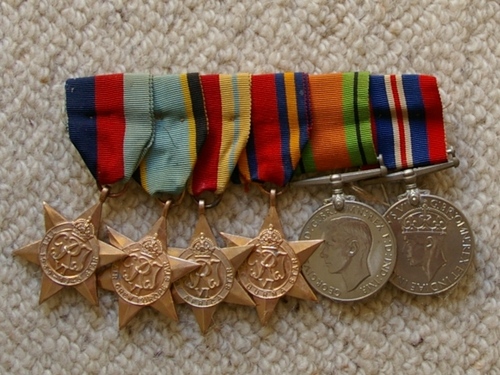
He was awarded the Distinguished Flying Cross for bringing his badly shot-up Lancaster safely back to England (see citation below*) after a bomb drop over Stettin. It warranted a story in the Rhodesia Herald back home.

Sitting listening to him talking about those times I began to get a glimpse of what it must have been like, piloting a four-engined Lancaster, taxi-ing down the runway and then lurching off into the dark, rainy night and heading out across the channel to drop thousands of tons worth of bombs on some heavily defended target. In the back of his mind there must have always been the fear he might not return or see his family again.

He was, in fact, one of the exceptionally luck ones who did survive the war – virtually every other pilot on his officers’ training course was killed in action.

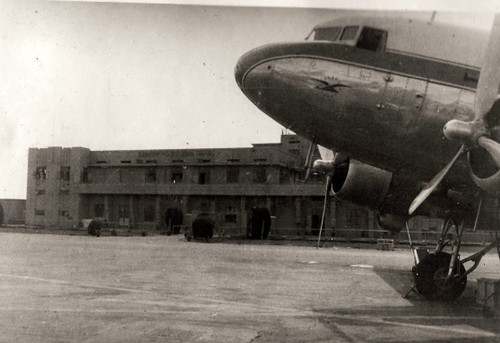
By any standards he lived a full life. At the end of the war, as part of the Berlin Airlift, he started flying a plane that was already a legend and remains so today – the DC3 or Douglas Dakota. Considered a reliable old warhorse it was a plane that would play a large part in and shape his future.

After demobilisation he returned to Southern Rhodesia and become a commercial pilot working for Central African Airways flying both inside and outside the country.

In those days the flight from Salisbury to London took six-days and by the end of it a strong sense of comradeship had invariably developed between passengers and crew.

He resigned from CAA in 1956 after a dispute and joined Hunting Clan Airways, principally flying within Southern Rhodesia and further afield to Tanzania, Kenya, Mozambique and South Africa. My main memory of those days is him returning home from Vilanculos in Mozambique weighed down with big demijohns of Portuguese wine, coconuts and apple boxes full of fresh crab.

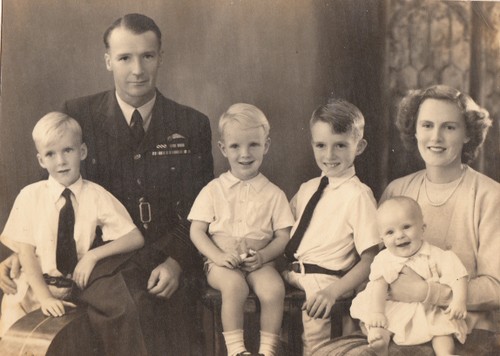
With young family – from left: Paul, Peter, Patrick, Anthony.

As an airman he lived in a more swashbuckling era when commercial aviation was still in its infancy and few people thought of going by plane, the majority opting to travel by ship. Flying in and out of dusty, fly-infected airfields in those rattling, bouncy, propeller-driven crates with a minimum of on-board comforts and only limited navigation aids it was an adventure.

It was a lifestyle which certainly suited my father. A non-conformist in a uniform, who somehow managed to combine a strong sense of duty with an inate rebelliousness, he never cared much for the rigidly scheduled, heavily regulated industry flying was to become with planes cruising in the stratosphere with hundreds of passengers, air-conditioning, on-flight movies and pre-prepared meals.

He was, however, very excited by his late conversion to flying jets.

As a pilot he had gone where he wanted, he had travelled the length and breadth of the continent in the days before Rhodesia had become a pariah state, cut off from the rest of the world and when Africa was still accessible to all. Equally at home gambling in a casino on the French Riviera or marooned on some remote frontier, he liked solitude and rough living but also good company, friends, good food and drink and laughter.

You never knew who you might find breakfasting in the kitchen after a night out at the local pub. One such person was an engineer named John Louch who needed a place to stay for the night and ended up living in our Francistown house for two-years.

He was good at what he did and his colleagues always talked with reverence of Dad’s flying skills. It was easy to understand why my mother had been so attracted to him when she had first met him as a young flight officer fresh out from Rhodesia. In her memoirs, she recalls how she had lived all her life in country villages “not knowing any boys, let alone glamorous young men”.

Equally smitten with the shy but beautiful young English rose, my father went out of his way to impress, even going so far as to swoop down low over her school in his open cockpit bi-plane – a highly illegal act – while she was playing netball, causing her to fall and graze her knee. Handsome, ebullient and full of life, he was a born optimist with a natural talent for minimising life’s problems and a great faith in his own ability to get a job done.

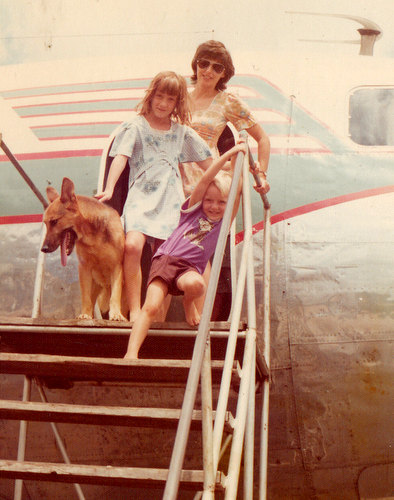
My father (briefly sporting a moustache) and mother, Wing Commander and Mrs Stidolph.

He had charm, wit and sparkle. He could also be irritable, quick tempered, impetuous, tactless and impatient – personality traits which, I suspect, could be partly traced back to the accumalative stress of flying on so many dangerous missions during the war.

Beneath his jovial, practical, no nonsense, manner and intolerance of dull people and wishy-washy thinking, lay a vein of creativeness which found expression in his, at times, rather Heath Robinson inventions and in fixing up dilapidated old cars (he didn’t buy second hand, more like – tenth hand).

His creativity did not end there. In his early years he had dabbled in oil paintings – one of his pictures (of a demijohn of wine) hung on the wall of every house we ever lived in. It was rather good.

I didn’t realise until after he died and I got to read some of the poignant letters he had written home to my mother that he had also once harboured ambitions to be a writer. That he had a talent for it is certainly born out in a wonderfully evocative piece he wrote titled: A Trip from Muscat through Oman to Qatar in the Persian Gulf.

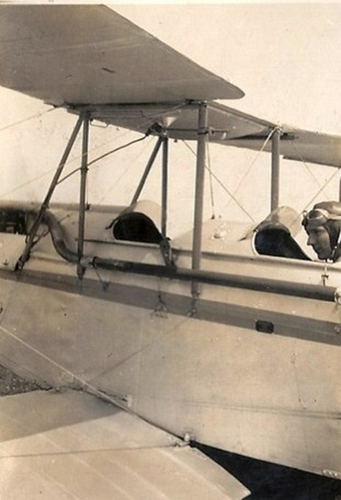
Despite his foray in to farming he remained first and last a pilot. From an early age he had been obsessed with the romance of flying and the sound of humming propellors – even defying his father’s orders by signing up with the RAF before the war– and it was here he really made his mark. During his career he completed 23,817 hours of flying over 42-years, including over 20,000 hours in command. He flew 48 types of aircraft for eight organisations on three continents in 44 countries. He landed in over 350 different airfield.

To the end he remained very much his own man and, despite his illness, still retained something of his old zest for life and vitality. He was larger-than-life, one of a kind, a bit of a legend.

Like his beloved Dakotas, they don’t make them like that any more…

* The award was gazetted on the 25 January 1944 (Issue 36346, pages 481 – 482) and reads:

Distinguished Flying Cross.

Wing Commander Reginald Neville Stidolph (375I3). Reserve of Air Force Officers, No. 61 Squadron.
One night in January, 1944, this officer was the pilot of an aircraft detailed to attack Stettin. Soon after bombing the target the aircraft was attacked by a fighter. The enemy aircraft was eventually driven off, however, and was seen to dive steeply smoke pouring from one of its engines. In the encounter, Wing Commander Stidolph’s aircraft sustained extensive damage, making it extremely hard to control; 1 engine was also rendered useless and had to be feathered. In spite of this Wing Commander Stidolph flew the disabled aircraft to an airfield in this country and effected a safe landing. He displayed skill, courage and resolution of a high order. This officer has completed very many attacks against targets such as Berlin, Hamburg and Dusseldorf.

The above are three of the squadrons my father served in and whose badges hang on my wall. There were others…

GALLERY:

(1) My father joined the RAF, before the war, in November 1935 and served right through to its end in 1945. Here are more some photographs from that period.

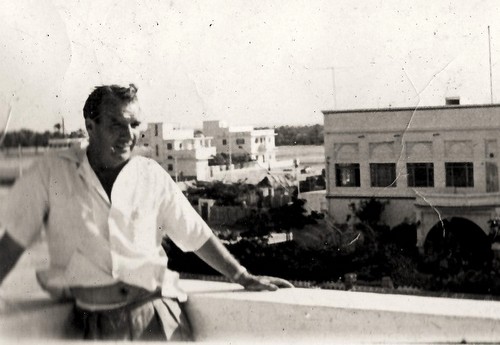
(2) From March, 1960, to about February, 1966 my father worked outside the country, based, in turn, at Bahrein in the Persian Gulf, Sierra Leone and in Khartoum where he was employed by Sudan Airways.The following photos come from this period of his life:


ACKNOWLEDGEMENTS: A special thanks to my brother, Patrick, whose extensive research in to my father’s flying career I have been able to draw on here. Pat’s research now forms part of the No50 and No61 Squadron Association official record.It was Patrick who also drew my attention to an article written by Ross Dix-Peek about my father’s war-time career.

In The Shadow of Mount Muozi

Mount Muozi, in whose shadow I grew up.

When it comes to mountains I am with the ancient Greeks – I believe they are the right and proper dwelling place for the Gods. My own sense of awe and wonderment when in their presence stems, in large part, from my childhood experiences on our farm, Nyangui, which lay at the very end of The Old Dutch Settlement Road, in Nyanga North, Rhodesia (now Zimbabwe).

The mountain range which ran along our eastern boundary was shrouded in legend and was dominated by Mt Muozi, a steep, semi-detached peak attached to the main Nyanga plateau by a narrow saddle. Looking like some great fortress and frequently masked by cloud, it played a pivotal role in local belief system.

To the Saunyama people, who live nearby, Muozi had always been an extremely sacred site, harbouring a protective, if somewhat touchy, deity through whom all life was cycled and who had an important influence over both their lives and the weather. Upset it and you would be punished with the curse of no rain; give it the proper respect and make the right offerings, your crops would flourish and all would be well.

In an area where every stream, knoll, rock, cranny, glade, cleft and grove seemed to have its own special spiritual connection, it was the most revered of them all, the epicentre of an important rain-making cult, a mountain whose significance extended way beyond the mere physical. It was a gateway to another dimension, a bridge between past, present and future.

Muozi – the centre of an imporant rain-making cult.

When we were still on the farm a new chief was chosen for the Saunyama people and was then led by an ox up the mountain as tradition dictated. The fact that it rained, as he proceeded up its slopes, was taken as a sign that the ancestors had given their blessing to his appointment.

It may or may not have been coincidental that the three mission stations established in our area – St Mary’s, Mount Mellary and Marist Brothers – had all been built in the long shadow cast by Muozi (or Rain God Mountain as my father liked to call it).

To the bringers of light in a great darkness, carriers of the word of God to a heathen race, such beliefs and superstitions must have provided ready proof that their presence was urgently required. Here were souls in need of salvation!

One of the taboos concerning the mountain was that ordinary tribes-people were forbidden from climbing it. Determined to prove, once and for all whose God, was the more omnipotent, a local missionary decided to lead a party of school children to its summit.

The summit of Muozi with my sister Sally sitting on cliff edge. Nyangui mountain in background. Picture courtesy of Sally Scott.

Again, it may or may not have been a coincidence, but that year the whole region experienced a devastating drought.

Depending on what angle you tackle it from, it would, admittedly, have been a fairly tough climb. Vaguely volcanic in outline, although that is not how it was formed back in early geological time, the mountain has, at its top, a massive tower of square-sided, near vertical, rock. The easiest way to reach the summit would, in fact, be to double back to Nyanga and drive along the old road that runs along the top of the range and then walk over the saddle that links Muozi to the main plateau. That, however, would probably have felt like a cop-out – far better the little children suffer for their sins by making them slog their way up from the bottom!

Muozi – connected by a saddle to the main Nyanga plateau. Nyangui in background. Picture courtesy of Paul Stidolph.

Another legend concerning Muozi was that if there was ever a cloud in the sky, there would always be one hovering over it. We were constantly amazed by how often this proved to be true although I suppose a meteorologist may be able to come up with a perfectly logical and reasonable scientific explanation about precisely why this should be so.

It was easy to see why Muozi should have become an object for such devotion. Although by no means the highest peak in the range (neighbouring Nyangui, for example, exceeded it in height), its magnificence consisted of something else. With its dramatic cliffs and crags it was more sharply formed and was much more striking to look at than any of the other mountains in the Nyanga range

I was always fascinated by this mountain amongst whose vapours both good and bad spirits seem to have learnt how to co-exist. One moment it could seem dark and threatening, the next it was as welcoming as some benevolent old giant.

Cranky, changeable, a totem for our more fearful imaginings, it has, for me, come to symbolise an Africa that has increasingly become consigned to the world of books, banished by the rising tide of humanity and economic development. Here, something of the old magic still clings to the earth.

From this point of view, I, too, felt the mountains should be treated with circumspection – it was a deity to be wooed and won over and then revered and respected; its was not one you wanted to trifle with or cross.

The original Summershoek house. Mt Muozi in background.

When we were still in the process of moving out to the farm, way back in the early 1960s, we had often stayed in the cottage that J.Bekker, one of the original Afrikaner settlers in the district, had built, in the traditional Dutch-style, at its base. When we moved out there, Summershoek, the farm on which it stood, was owned by Marshall Murphree, an American missionary who in 1970 would become Rhodesia’s inaugural Professor of Race Relations. He and his family did not live there permanently but used it as a holiday home.

At night, with its peak washed white in the moonlight and a gentle wind sighing down from the slopes, I often used to feel like I had crossed through some portal into another world, one that was both a little scary and also unimaginably beautiful – a feeling that only intensified as more stars appeared and the nightjars started calling.

Adding to its allure was the fact that there were still leopard living on it. One of them attacked old Charlie, the aged caretaker of the property, as he was out rounding up cattle and was then swiftly despatched by his equally ancient wife who brought an axe down on its skull. Displaying still more commendable fortitude – as well as devotion to her spouse – she then staggered back home, carrying Charlie, so that my mother could attend to his wounds.

I was not the only one who felt Muozi’s strange power. Our Malawian gardener, Devite, who we had bought out with us from Salisbury (now Harare), lived in such fear of the mountain – he talked about seeing white, ghostly figures going in and out of it – that after a few months he decided he had had enough. Packing his few possessions in a battered old suitcase, he caught a train and headed ‘Down South’ to Jo’burg, to look for a job on the gold mines.

A couple of years later – by which stage we had moved to our new house on the neighbouring Witte Kopjes farm – we were astonished to see his thin, skeletal figure hobbling up the road. For him at least, South Africa had not proved to be the land of money and opportunity. He also appeared to have had a rethink and decided he could live with the ghouls and malign spirits that inhabited the mountain for he carried on working for us for the rest of his remarkably long life.

All that remained of the old Summershoek house when I went back to visit it twenty-years after the Rhodesian bush war ended.

When we were forced off the farm during the Rhodesian Bush War, I was sad to say goodbye to that great brooding mountain and the wild country at its feet.

Looking back on those days I realise what a pivotal role it played in my life. No other landmark has affected me as deeply or had such influence on my imaginative development or provided me with such a rich vein of memories. Living in its shadow, imaginative doors were opened, creative juices started to flow, ways of seeing begun.

,

Book Review – The Empty Planet: The Shock of Global Population Decline

Conventional wisdom has it that one of the biggest threats facing the planet is is our burgeoning population. No less a body than the United Nations has forecast that it will increase from seven billion to eleven billion before levelling off after 2100.

In this provocative book, authors, Darrell Bricker and John Ibbitson take a contrary view, insisting that this is simply not true. Rather than continuing to increase exponentially, they maintain, the global population is, conversely, headed for a steep decline.

At the heart of their argument is the world wide trend towards rapid urbanization. The more a society urbanizes, they believe, and the more control women exert over their bodies, the fewer babies they choose to have.

This declining birth rate will, in turn, produce its own set of challenges – an ageing society, fewer workers, a smaller tax base. These forces will compel people to put off retirement; they’ll force them to spend more time and energy looking after their parents than they had planned.

One of the obvious ways to offset a declining population is through immigration. Far from posing a threat, they maintain immigration may actually help save some countries economies: these migrants fill gaps in demand for high skilled workers, create jobs through their entrepreneurial drive and rarely generate competition for jobs between immigrants and the native-born.

In this respect, they argue that Donald Trump is fighting a lost cause with his divisive policies and hard line stance on immigration. Contrary to what he believes, the only way for America to remain great is to continue welcoming immigrants.

Not that the USA is in any way unique in its position. Most Asian countries accept virtually no refugees at all and many are now paying the consequences. Japan’s population, for example, is not only ageing but shrinking, leaving a much smaller work force. This is, in turn, has lead to a weakening of their economy.

They cite Canada as an example of a country whose more progressive immigration laws have worked in its favour.

With regard to Africa the UN doesn’t hold out much hope either, believing that the fertility rates will remain high for decades to come. Again the authors don’t agree, predicting a slightly more encouraging scenario. While acknowledging the huge problems the continent faces they believe the commingling of capitalist and traditional values will very likely slow the massive population growth that most modern modelers are projecting.

While careful not to overstate their case, Bricker and Ibbitson’s central thesis is quite different to the bleak world view and dismal remedies of the neo-Malthusians. Nor is it just wish-thinking either; they have obviously put in a great of research in to the subject and marshalled a great deal of material together with commendable skill.

With immigration and population-control both hot political topics at the moment, the book’s arrival is perfectly timed. Its conclusions will certainly warm the hearts of the increasingly beleaguered multiculturalists and those who oppose isolationism.

Book Review – Arabia: A Journey Through the Heart of the Middle East

published by Hodder and Stoughton

There is a class of travel writer who seem to delight in deliberately seeking out danger and are at their happiest when the going is manifestly not good. For them such journeys can be redemptive. They escape feeling a little wiser and – equally important – they have an exciting story to tell.

Levison Wood clearly belongs to this group: a man who is not one to flinch in the face of adversity.

Ignoring the advice of the pundits and the doom-sayers he, in 2017, embarked on an epic 5000 mile journey through the Mid-East, knowing full well that much of it was in turmoil and that as a Westerner he could have easily found himself a target..

Travelling sometimes on foot, at other times by camel, mule, donkey and battle tank, his 13-country odyssey would take in such hotspots as Syria, Iraq (where he would find himself witness to a battle between its Government forces and ISIS) Yemen and the pirate-infested waters of the Gulf of Aden.

The Arab world he journeyed through has, of course, long exerted a mysterious fascination on a certain type of English adventurer; in part because its landscape is so dramatically different from the one back home and partly because its people seemed to embody strengths and virtues that challenged European arrogance.

The world that these classic “British Arabists” – Richard Burton, TE Lawrence, C.M Doughty, St John Philby, Wilfrid Thesiger, Gertrude Bell etc – wrote about has, of course, been radically transformed by the discovery of oil, with even the Bedu now swapping their camels for the latest 4 X 4s. Part of Wood’s self-imposed mission was to discover just how much it had, in fact, changed.

Following in the footsteps of Thesiger he crossed the waterless Empty Quarter. He also retraced the route taken by his idol, Colonel T.E.Lawrence, along the old Hejaz railway line.

Rich in character and anecdote Wood’s book conveys with unusual immediacy both the stark beauty and the volatility of the Middle-East. While the scale of the problems that beset the region defies anything that could be dignified as solutions, he finds its people stoical in the face of adversity and not without hope.

Book Review – The Last Hurrah: South Africa and the Royal Tour of 1947


published by Jonathan Ball Publishers

In 1947 South Africa welcomed King George VI and Queen Elizabeth and their two daughters, Princess Elizabeth (the future Queen) and Princess Margaret on a Royal Tour which the then Prime Minister, General Jan Smuts, hoped would put a positive spin on the country and its achievements. For their part the British saw the visit as an opportunity to not only thank South Africa for their contribution to the war effort but also to reinforce the concept of a constitutional monarchy as the binding force behind the Commonwealth.

As the author of The Last Hurrah: South Africa and the Royal Tour of 1947, Graham Viney, shows, in his persuasive and beguiling guide, not all went quite to script. Indeed, the whole lengthy and carefully planned shindig proved to be something of a double-edged sword.

While most English-speaking, white South Africans greeted their Royal Guests with an enthusiasm and patriotic fervour that is now hard to imagine, others saw it as a golden opportunity to highlight their various causes. Many Afrikaners, still smarting from their treatment during the Boer War, were deeply resentful and used the visit as a platform from which to push their conservative, pro-republic, agenda. At the other end of the political spectrum, the ANC saw it as a chance to expose the evils of racial segregation

Although it brought the world’s focus on to South Africa and it policies, the Royal Tour of 1947 was not able to stall the country’s massive lurch to the right. Shortly afterwards, Smut’s government was defeated at the polls and the National Party took over the reins of power. The apartheid era was about to begin.

Reading about it all, seventy-odd years on, it is hard not to be impressed by the sheer stamina of the Royal Party as they travelled 11 000 miles, mostly by train, visited hundreds of out of the way dorps, shook hands with over 25 000 people, attended countless boring functions, and were seen by 60-70 per cent of the country’s population. Queen Elizabeth, in particular, proved a fine ambassador. Gracious, friendly, beautiful and reassuringly normal, she seems to have charmed everyone she met.

Very much a blast from the past, Viney’s book offers a revealing snapshot into a now all but vanished world. Shrewd and absorbing in the way it captures the complicated politics of the time, his fast-paced account pedals along with never a dull paragraph as facts, events, characters and period photographs flash by.

The Ever Hopefuls

Five-Stamp Mill.

When I left school I had absolutely no idea what I wanted to do with the rest of my life. In this respect, I was quite different from my three elder, more practical, brothers who all knew from a relatively early age in what direction their futures lay.

After considering one option after another, I finally elected to apply for a mining cadetship with the Rhodesian Ministry of Mines – for no other reason than a friend, Nick Bertram, had done this.

Much to my surprise, for my science exam results had been nothing to brag about, I was accepted. I was one of only twelve boys in the country to be selected.

As part of the course, we were expected to spend three months in each of the four departments that made up the Ministry of Mines – Geology, Mining Engineering, Metallurgy and the Office of the Mining Commissioner – to give us a feeling for where our future interest might lie. Depending on how well you performed, the Government would then decide whether to sponsor your further education and where best to send you if they did.

I enjoyed my time in the Geological Survey and the Mining Engineer’s Office (where I spent most of my time in the Mine Surveyor’s Office) but found I had no aptitude for the science of metallurgy and working in the Mining Commissioner’s Office – which mostly involved sitting behind a desk doing lots of paper work – bored the pants off me.

Ironically, many years later as the Rhodesian Bush War was dragging to its inevitable end, I got a job with the Mining Commissioner’s Office in Gwelo (now Gweru). I still found the work soul-destroying but I needed the money especially as it meant I would get back-up pay during my innumerable call-ups with the army.

While I was working in these various mining-related jobs I got to see a great deal of the country, or at least in Mashonaland and the Midlands, the two provinces I got posted to.

Most of the mines we visited were small-workings, often in extremely remote locations and usually operated by a lone individual or a small syndicate. Because they were invariably cash-strapped and operated on a shoe-string, their owners tended to chase the gold values rather than operate according to a clearly laid-out, strategic, plan-of-action, the way the big mining companies did.
As a result the shafts and tunnels were more like rabbit warrens, wandering up and down and around and about, seemingly without logic or purpose. They were usually low, unlined, poorly lit and jagged inside which made working in them a rather hazardous occupation…

Much to my own surprise, for I tend to be claustrophobic, I loved descending in to the cool, wet depths of these subterranean tombs. We usually began by dropping down the vertical shaft in some creaking, rickety, old bucket operated by a winch. Down at the bottom it was like another world. In the half gloom the mineworkers, in their dripping overhauls, looked like a race of Cyclops with their solitary lamps on their heads.

Ayrshire Mine in the early days. I went down shafts not to different to this one. Picture from Rhodesian Miners Handbook.

Sometimes, when we were taking a break, I would find some dark corner of the mine, switch off my helmet lamp and just sit there, alone with my thoughts, in the Stygian gloom. In the distance I could often hear the muffled thudding of picks or catch the occasional acrid whiff from the lasting.

Most of the old prospectors and small-workers whose claims we visited were drifters by nature. They tramped around the country with their geological picks and prospecting pans, ever hopeful that they would one day stumble on some undiscovered, gold-bearing reef that would make them rich beyond their wildest dreams.

In the process their faces were burned dark brown by the sun and were covered by creases and wrinkles from being outdoors all the time and through screwing up their eyes because of the harsh glare of the African sun.

Very few ever found their pot of gold at the end of the rainbow. Reluctant to accept normal work or hold down a steady job, that did not seem to bother them. Happiest when wandering, unable to settle down, for them it was a way of life. Even back then I could tell they were a dying breed.

In the early days, Southern Rhodesia had, of course, been linked to the fabled Ophir of the Bible. It is what drew a lot of the early adventurers and fortune-seekers in to the country in the first place.

Hans Schroeder – early Rhodesian prospector. Picture: National Archives of Zimbabwe

Nor was it all just wish-thinking or pie in the sky stuff.

There is ample evidence to show that there was a thriving mining industry in the country, long before the first whites set foot there. In fact, there are over 4 000 recorded gold deposits in Zimbabwe, nearly all of them based on ancient workings. Some of the country’s largest mines – including the Globe & Phoenix, Cam and Motor and the Shamva mines, which between them, at one stage, produced one third of the country’s gold – were discovered this way.

The gold trade was an important aspect of both medieval Great Zimbabwe and the Munuhumatapa Empire. The early Portuguese had also got wind of the rumours of gold and naturally wanted to get their hands on it as well.

A list of ‘Mines Known in the District of Senna’ was actually published in Lisbon in 1857 in response to a decree calling for an inventory of mineral resources south of the Zambezi. Compiled by Izidoro Correia Pereira, a Zambezi valley trader, the document represents the mining activities of various Shona dynastic rulers that existed in the 1500s when the Portuguese invaded the modern country of Zimbabwe to wrest the centuries-old Sofala gold trade from Arab-Swahili hands.

No doubt aware of all of this, Cecil John Rhodes was but one of the group of optimists who believed there were huge riches just waiting to be discovered. In fact, it was one of the principal reasons (another was its agricultural potential) he was so anxious to annexe the country for his British South Africa Company.

As it turned out he was wrong about what he referred to as the “exceedingly rich auriferous indications” which he believed would exceed anything found “south of the Zambezi”.

CJ Rhodes. Picture from National Archives of Zimbabwe.

Shortly after he penned these words the largest gold-fields the world had known were discovered on the Witwatersrand. Compared to its riches, the amount of gold produced in Southern Rhodesia was negligible.

And yet despite this, hordes of hopefuls kept making their way to the country. As an inducement to join the Pioneer Column, Rhodes had promised each member that they could peg fifteen claims once they got to Mashonaland. Many of these ‘pioneers’ were amateurs with little knowledge of either geology or prospecting.

Undeterred by their own lack of experience, within weeks of reaching Fort Salisbury on the 12th September, 1890, the majority of the new arrivals had headed off in to the veld in search of gold. As luck would have it, they discovered that a lot of the prospecting had already been done for them by the ‘ancients’. All they often had to do was bribe one of the locals to show them where the previously-worked reefs were.

Inspired by the rumours, others followed in their wake.

You can still see the fruits of their endeavours all over the countryside. For example, Shamva Hill, where I spent time both in the Mines Department and, later, as a very unhappy guest of the Rhodesia Army, is conspicuous from miles away because of the huge gash running almost through it. Originally pegged in 1893, this opencast gold mine grew and grew in size over the years, eventually forming a 700 metre long pit, 120 metres at its widest and nearly 170 metres deep.

When I went to work for the Mining Commissioner’s Office in Gwelo in the late 1970s there were still a few of these old-style prospectors about. Dirty and bedraggled, they would wander in to our offices clutching their bags of broken stones for assay or wanting to register their latest claims.

“I think I have struck it rich this time!” they would whisper to me with a conspiratorial wink and I would just nod my head, smile sympathetically and sign the relevant documentation.

As the Assistant Mining Commissioner for the Midlands area, I got to know a lot of them quite well. There was one old prospector who looked like Wild Bill Hickock with his long mane of flowing white hair and neatly trimmed beard. He was very well-spoken and his manners were impeccable although if you ever needed to find him the best place to look was the seediest dive in town.

There was another old timer who slept in a tent but still insisted on getting dressed up in a suit for dinner every night. He was scared of the dark so always had a candle burning by his camp bed. The person he employed as his “manservant” was expected to watch over him while he slumbered.

Some of them actually did make a bit of money but invariably squandered it just as quick.

One of those who carried on in the old way was my stepfather, Jim Hastings, a retired miner, who on marrying my mother, proceeded to install an old stamp-mill around the back of our house. It was a ramshackle piece of machinery held together with bush poles and bits of wire but I found it strangely comforting listening to its methodical “Thump! Thump! Thump!” echoing away in the background…

My step-father, Jim Hastings, next to his stamp mill.

Again, he never made much money out of it. For him, too, it was something he just wanted to do…

Jim Hastings and my sister, Nicky, next to his three-stamp mill.

The Battlefield area, where we lived at that time, had also once been – and still was to a diminished extent – gold country. In the old days prospectors had come wandering through with their meagre equipment, panning for gold in the river beds and crushing bits of rock in the hope of finding traces of the precious metal. The countryside was littered with old diggings, abandoned shafts, prospecting trenches and slimes dumps.

Strangely, there were no workings on our farm, Bowmont.

Battlefield had actually got its name not because it fell in an old war zone but because many of the mining claims and reefs in the area had been named after famous battles, such as Trafalgar and Tel-el-Kebir.
Given the tenacious way in which so many of these old prospectors fought on ever-hopeful, it always seemed to me a very appropriate name.

Some of my own ancestors and relatives caught the prospecting bug. My grandfather’s eldest brother, Neville Harold Stidolph – described, in one account, as “charming but unsettled, a wanderer and prospector both in Rhodesia and Australia” (Valerie Alberts) – was one who was afflicted by the malady.

Another one who contrived to make a life out of it, was a relative of his, through marriage – Percy Hughes. Percy learnt his trade at the aforementioned Shamva Gold Mine where he was employed from 1915. Thereafter he prospected all over the country and ended up working at the wonderfully named Bushtick Mine in Matabeleland during the 1930s.

Bushtick Mine where Percy Hughes worked.

Their genes were passed down.

My one brother Paul, a cattle/tobacco/maize farmer when he was not looking at stones, also did some prospecting in the Kadoma district when he was farming there and actually pegged a few claims. He has also done great deal of research in to – and made himself something of an authority on – the ancient workings of Zimbabwe.

He provided many of the old black and white photographs I have used here.

My eldest brother, Patrick, a qualified geologist, worked for the Rhodesian Ministry of Mines before emigrating to Australia. Among other things Patrick mapped much of the Shamva area where Percy Hughes had started out.

Patrick also became the Regional Geologist for Matabeleland where, strangely enough, old Percy had also ended up.

History has, of course, moved on since those days. Most of the old prospectors and smallworkers I knew back then have died, the syndicates have folded, many of the gold mines (including the Globe & Phoenix) have closed, their reefs having petered out. The stamp mills have fallen silent.

When I tried to find more information on it, on Google, I discovered the old Mining Commissioner’s Office, in Gwelo had been closed down some time after Independence because of ‘corruption’. That is not something I recall ever being a problem when I worked there although it was a long time ago so my memory on this might be faulty…

If nothing else, reading about its closure, made me realise the territory I had once thought of as mine was no longer mine at all.

In a sense, those grizzled old prospectors – and I – had become period pieces in our own lifetime…

*Somewhat ironically, the Mining Commissioner’s Office was housed in the Old Stock Exchange Building, erected back in 1902 when it was still believed boom times were just around the corner…

GALLERY:

The following pictures, all of ancient workings, were provided by my brother, Paul:

The Circle of Life

Away to the north of Nyanga, in Zimbabwe, at the base of the range of mountains that forms its eastern wall, there was, once, an isolated group of farms. In a gesture which seemed quite out of character for a man who had never shown much sympathy for the Boer cause – and had, indeed, gone out of his way to thwart their political ambitions – they had been granted to a small party of Afrikaner farmers by the arch-imperialist, Cecil John Rhodes, himself.

In recognition of this fact, the dirt road that ran through the middle of them was known, in years gone by, as “The Old Dutch Settlement Road”.

The Old Dutch Settlement Road, looking from our farm towards Nyanga.

Although seldom visited by all the tourists who like to holiday in the more temperate Nyanga uplands (many staying at Rhodes’ old estate), it is an area I used to know well because it was here we had once farmed too.

When we arrived in the district, back in the 1950s, there was only one surviving remnant of this original group – Gert “Old Man” Mienie who farmed at Cream of Tartar Kops. A jovial giant of a man with twinkling eyes and invariably dressed in stained khaki, he had worked as a transport rider before ending up in Nyanga North where he grew mealies and farmed cattle.

Long before it became fashionable to do so Gert Mienie lived totally off the grid. He had a house generator that operated off a Pelton wheel with buckets on a water furrow. His wife made soap and candles from the fat stored in the tails of their Blackhead Persian sheep. They never bought medicines either, preferring to manufacture their own concoctions which they used to treat both man and beast.

He also had his own brandy still while his old ox-wagon remained parked around the back.

Mr and Mrs Gert Mienie with my parents, Reg and Monica Stidolph. Cream of Tartar Kops.

Although the rest of these pioneering farmers had either long since left or died, their presence still lingered on in the names of many of the properties – Witte Kopjes, Groenfontein, Summershoek, Doornhoek, Flaknek etc. Mount Pleasant, the farm to our immediate south, on which there stood the remains of some crumbling tobacco barns, was still referred to, in our day, as Bekker’s Place.

If you hunted around you could occasionally stumble upon the remains of their old homes (there was one on Witte Koppies, for example, which had been built out of white quartz quarried from the nearby hill) and even the odd graveyard. The two young Oosthuizen children who lay buried on our farm had both died of Black-water Fever back in the early 1900s, a common cause of death in those days.

There was something quite sepulchral about the mountain-fringed valley in which they had chosen to live. Maybe it had something to do with all the old ruins, perhaps it was the mountains themselves, with their constantly changing moods, but there seemed to be a presence here, a spirit. I sometimes felt I was walking among ghosts I could never see.

I had some idea who they belonged too. The original Afrikaners who had settled here, courtesy of Mr CJ Rhodes, had not been the first cultivators of this land to have suddenly packed up and left without explanation.

There had been others before them.

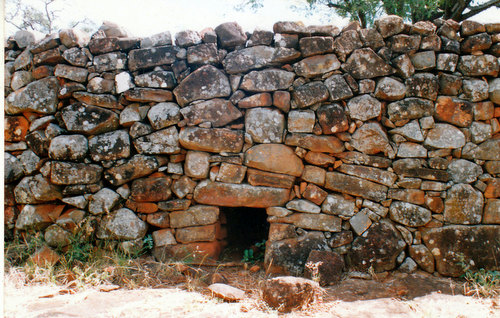
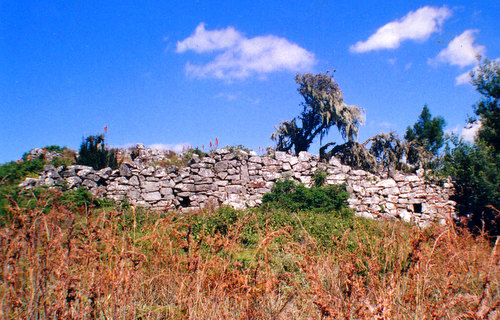
The whole country from the Nyanga uplands, north to the Ruenya River and westwards to the Nyangombe River, was strewn with relics from their stay – dozens and dozens of loopholed stone forts, look-out points, pit structures, furnace sites, grinding stones, monoliths and miles of terracing stretching along the mountain sides; the latter were often irrigated by means of furrows that carried water long distances from the streams.

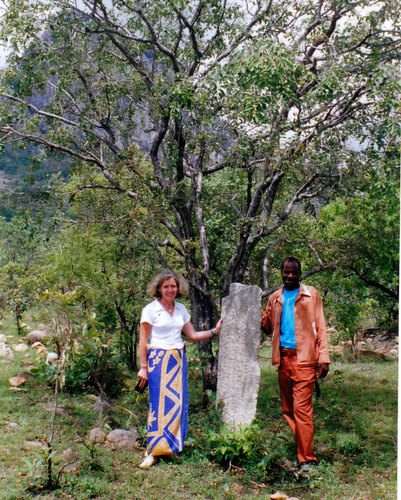
Nyahokwe Ruins with Sedze Mountain (the “Rhino mountain” as we called it) in background. Note monolith.

The amount of rock that had been moved to build all this was astonishing although, as Herculean as their labours had been, the stone fortifications tended to suggest that the ordinary villagers had lived in constant fear of attack. Clambering over the piles of rocks I had, in my youth, always imagined some fabulous Rider Haggard vision of lost mines and lost worlds but the sad reality is that the people were probably desperately poor (in his book The Shona and Zimbabwe 900-1850, the academic D.N.Beach describes it as a “culture of losers”. That is as maybe but they certainly appear to have been very hard-working ones!), because the soils they had cultivated were, for the most part, thin and infertile – although they probably supplemented them with kraal manure.

Our farm was no exception. From beacon to beacon it, too, was covered in a jumbled mass of ruins. Exploring them, I was seized by a kind of incredulity. It was impossible not to marvel at the intensity of the endeavour that went in to their construction.

My sister, Nicky, among ruins on Muchena mountain, old farm. Picture courtesy of John Louch.

And where had all that passion and effort gone? That was the mystery for me.

One of the aspects of this now abandoned civilisation which especially intrigued me were the endless piles of gathered stones that lay scattered all over the veld. What was their purpose? Why all the effort for so seemingly pointless a task? Again I was flummoxed.

Endless piles of gathered stones. Picture courtesy of Paul Stidolph.

To me, the ruins seemed very old – none of the local tribes people we spoke to appeared to know much about who had constructed them – yet the consensus amongst the experts is that they were mostly built between the 16th and 19th Century by the Tonga people from Zambezi. Adding to the air of mystery, no one seems to be able to state with any degree of certainty why the whole complex was eventually abandoned.

Our own sojourn in this hot, dry, haunted valley came to an end during the Rhodesian Bush War. Remote, cut-off and situated close to the Mozambique border, our farm became an obvious target for the incoming liberation forces. Our only two neighbours were killed, the roads regularly mined, the few cattle we had which had survived drought and disease were rustled and we were eventually forced to move, our farm becoming part of, in the military parlance of the day, a “frozen” area.

Our old house.

It was twenty-years after the war ended before I got to go back to the farm again, only it was no longer a farm. In the interim it had become a black resettlement area.

There was not much left to remind me of the years we had spent there. Time – and the war – had taken its toll. Of our old house little remained. At the one end, where the lounge had been, the old fireplace still stood; elsewhere our former home, once so full of life, had been reduced to the cement squares and oblongs that marked our vanished rooms.

Here and there bits of the old wall survived but it no longer supported the roof which had completely vanished. Of my mother’s once extensive garden there was no trace other than one lone bougainvillea which still clung stubbornly to the hillside.

My sister, Nicky, and my mother, Monica, among the remains of our old home.

Everywhere else wild nature had come back and reclaimed its own.

As I wandered around looking at all the places that had once meant so much too me I could not help but reflect on the transitory nature of things. As a young boy I had been intrigued by the ancient ruins that lay scattered across the farm; now our old house had joined them.

I found myself thinking about those early Afrikaner settlers too. Like us, they had arrived here, full of innocent optimism and hope that they could create a future and yet few if any of the families had stayed beyond one generation. Now, all that remained of their hard work and industry were a few old bricks, stones and mortar and the occasional gum tree.

The same had happened to us.

What hadn’t altered were the mountains themselves. It is difficult to capture in words the feelings they engendered in me. Looking at them I realised it did not make any real difference what we did. They would live on without us, watching the next generation grow up in a place we had once called home. We had only been there for a few moments and all that mattered was that we had cherished the place and made the most of the time we had had there.

View of Nyanga range from north of farm, Nyangui mountain on left.

As I pulled over, onto the edge of the road, for one final look back, I realised it was not so much the fact that I had come back but rather that the farm had never left me.

FOOTNOTE:

For the sake of convenience the extensive Nyanga ruin system is often separated in to the Upland and Lowland Cultures. Because our farm lay in the Nyanga valley, the ruins on our farm obviously fell in the latter category.

Below are a selection of photographs showing examples of both types of ruin.

A special thanks to my brother, Paul Stidolph, for providing many of the old black and white pics. A semi-retired farmer still living in Zimbabwe, Paul has conducted an enormous amount of research of his own in to the early history of the country and unearthed a great deal of fascinating material on both its ruins and ancient mine-workings.

Book Review – Vietnam: An Epic Tragedy 1945-75

published by William Collins

Coming at the apex of the cold -war rivalry, the American withdrawal from Vietnam marked one of the more humiliating moments in its history. Believing that they could succeed where the French had so ignominiously failed in Indo-China, the country had put its immense might, power, prestige and reputation on the line and ended up being outsmarted and out-thought by a half-starved, rag-tag army of sandal-wearing peasants.

Acute analysis and fair-mindedness inform veteran war correspondent Max Hasting’s exhaustive study of the origins and course of the conflict. Drawing imaginatively on many personal testimonies and eye witness accounts from both sides, Vietnam: An Epic Tragedy provides a powerful panorama of a war that went horribly wrong.

Ignorance is a running theme in the book. It is extraordinary that America, with its vast resources, miscalculated so badly and often had little idea what was happening in the Far East. Decisions were made based on confused thinking and a misunderstanding of how Vietnamese society worked.

From the outset the communists in the North appeared better motivated and more skilled. Their Chinese and Russian backers also remained prudently in the background so it did not appear they were the aggressors or the ones calling the shots – as the Americans were doing in the south.

Indeed, as Hastings shows, successive American administrations ignored any claim by the people who inhabited the battlefield to a voice in determining their own fate. Instead they chose to concentrate on their own strategic interests – in this case countering the spread of communism.

Having committed themselves to the cause, the Americans found themselves mired down in a protracted war from which there appeared to be no escape – their commanders’ initial confident predictions of an early victory gradually replaced by a growing realisation that they could never win.

Hastings meticulously charts the failure of successive presidential peace initiatives. He also shows how, as the war dragged on, the morale and commitment of the US forces serving in Vietnam began to flag. Drug abuse, racial strife and a decline of discipline became rife. The growing anti-war movement back home further added to the pressure being piled on the American administration.

In the end, the inevitable happened and the Americans were forced to pull out, abandoning their former allies to communist retribution. The final irony, as Hastings notes, is that having lost the war militarily the United States has since seen its economic and cultural influence reverse this outcome as Vietnam increasingly moves away from the more repressive aspects of communist rule….